You got your blood work back, ran your eyes down the page, and somewhere in the complete blood count you hit three letters with a percentage next to them: RDW. No bolded flag, no scary asterisk, so you kept scrolling. Here is the thing almost nobody tells you. RDW is one of the quietest numbers on the entire report, and in a growing pile of research it turns out to be one of the most telling.
Most explainers treat RDW as a footnote to anemia. It is far more interesting than that, and understanding it changes how you read your own results.
Part of our Complete Blood Count guide.
What is RDW in a blood test?
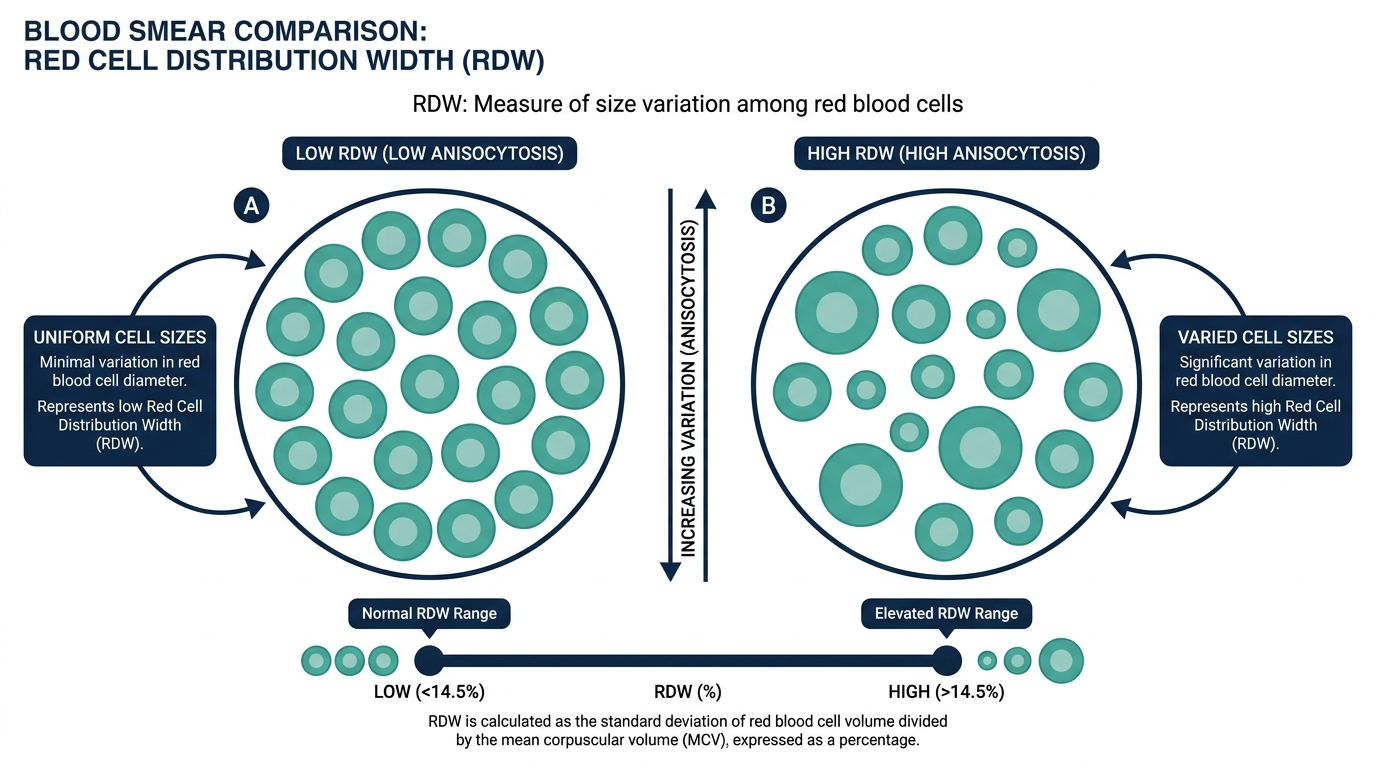
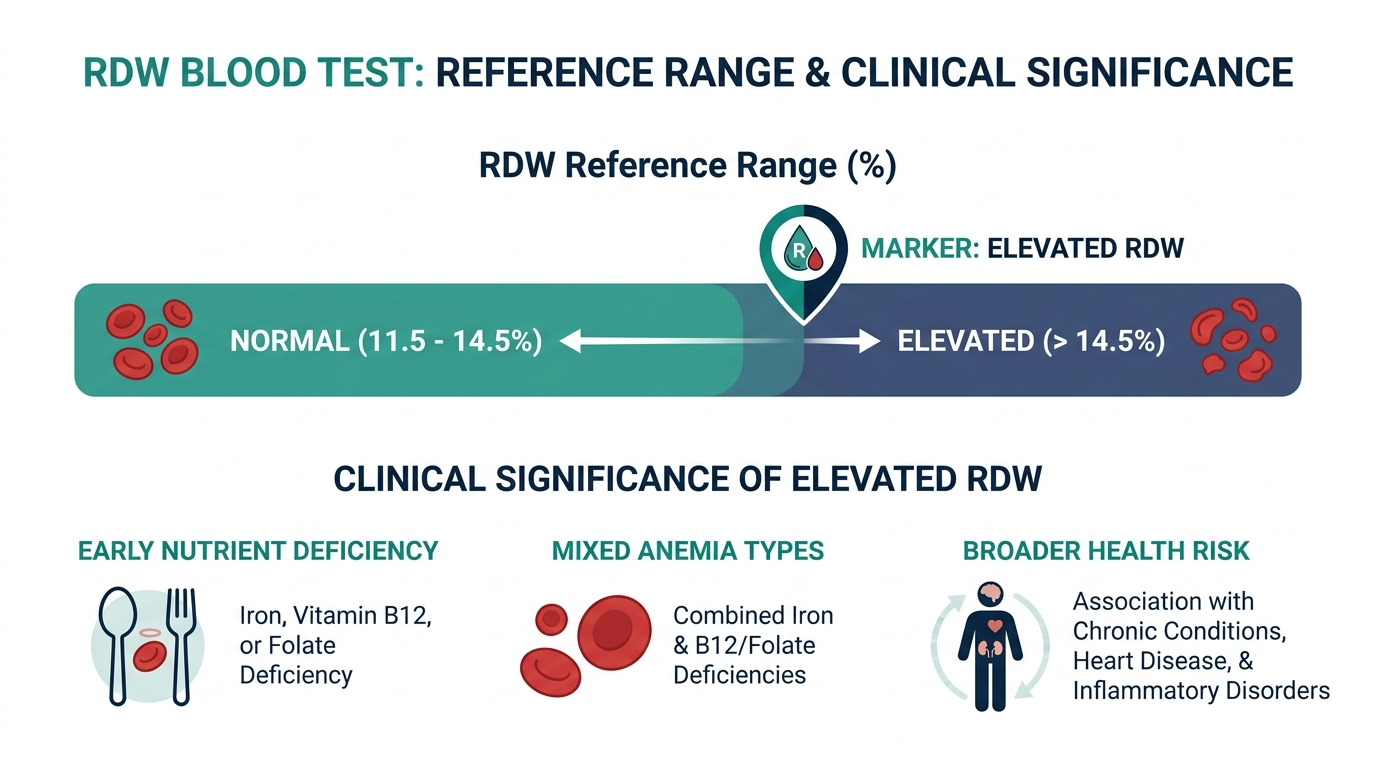
RDW stands for red cell distribution width, and it measures how much your red blood cells vary in size. It is reported automatically as part of a standard complete blood count (CBC) (MedlinePlus). A low RDW means your red cells are fairly uniform in size. A high RDW means they range widely, from small to large. In plain terms: RDW is a consistency score for your red blood cells, and a typical adult result sits around 11.5 to 14.5 percent.
That single idea, variation in size, is the key to everything below. Healthy bone marrow stamps out red cells that are reasonably alike. When something disrupts production, the cells start coming out in mismatched sizes, and RDW climbs.
What does RDW actually measure?
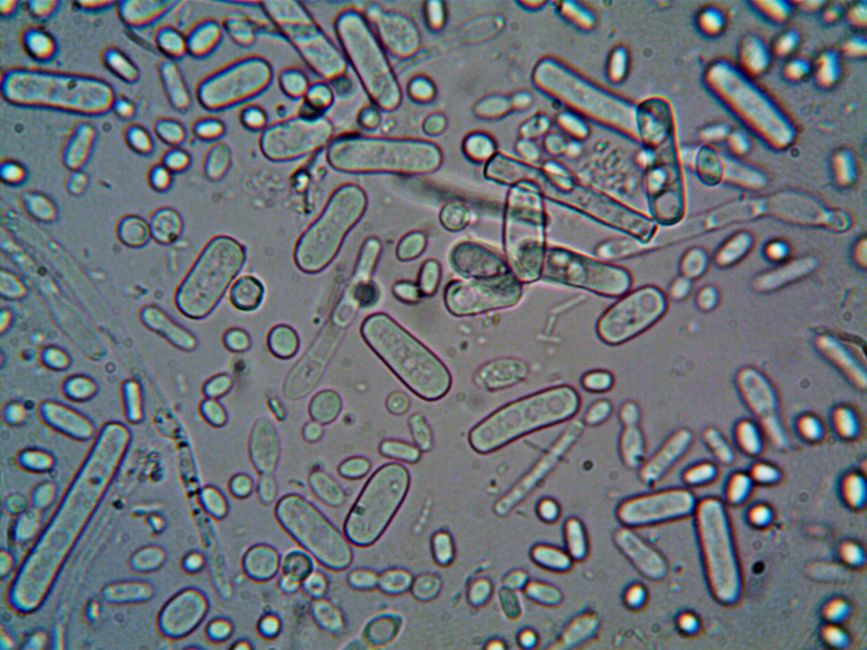
Your red blood cells are not all identical. Even in healthy blood they cluster around an average volume of roughly 80 to 100 femtoliters, but there is always some natural spread. RDW puts a number on that spread. The clinical word for a wide mix of red cell sizes is anisocytosis, and RDW is essentially how the lab quantifies it.
You may see RDW reported in one of two ways. RDW-CV is a percentage, the version most labs print and the one most people see. RDW-SD is an absolute measurement in femtoliters. They describe the same underlying thing, the variation in cell size, just on different scales. If your report shows RDW-CV, the 11.5 to 14.5 percent ballpark applies.
What is a normal RDW level?
A normal RDW-CV is generally in the range of about 11.5 to 14.5 percent, although the exact cutoff varies slightly by laboratory and instrument (Cleveland Clinic). Cleveland Clinic, for example, lists a typical range of 11.6 to 14.6 percent. Always read your result against the reference range printed on your own lab report, because that is the range your lab actually calibrated.
Here is the practical takeaway: a result of 15 percent or higher usually means a meaningful share of your red cells are different sizes, and that is the point where clinicians start asking why.
What does a high RDW mean?
A high RDW tells you your red blood cells vary a lot in size, which is a clue that red cell production has been disrupted. It is not a diagnosis by itself, but it points to a short list of common culprits (Cleveland Clinic):
- Iron deficiency. A varied size distribution of red cells is a hallmark of iron deficiency anemia, and a high RDW is one of its common early fingerprints (Cleveland Clinic).
- Vitamin B12 or folate deficiency. These produce large, immature red cells, and RDW is commonly raised (MedlinePlus).
- Mixed anemia. When more than one process is happening at once, for example iron deficiency plus B12 deficiency, the size scatter widens and RDW rises.
- Recovery after blood loss, when fresh young cells of varying size flood the bloodstream.
Now here is the insider point that rarely makes it into the patient version. RDW often starts climbing early in iron deficiency, sometimes before your MCV (average red cell size) has even dropped out of the normal range. That makes a rising RDW a useful early tripwire. If your hemoglobin still looks fine but your RDW has crept up, it can be the first quiet signal that your iron stores are running down. This is exactly the kind of detail that gets lost when a report just says everything is normal.

Why is RDW read together with MCV?
RDW rarely tells the full story alone. Clinicians read it next to MCV, which is the average size of your red cells, and that pairing is what makes RDW genuinely useful for narrowing down a cause of anemia (MedlinePlus). Think of MCV as the average and RDW as the spread. Together they sketch the shape of the whole red cell population.
A simplified version of how the two combine:
- High RDW with low MCV: classic for iron deficiency anemia.
- High RDW with high MCV: points toward B12 or folate deficiency.
- High RDW with normal MCV: can appear in early iron deficiency or a mixed picture.
- Normal RDW with low MCV: more typical of thalassemia trait, where cells are small but uniformly small.
That last row is why RDW earns its keep. Both iron deficiency and thalassemia trait can produce small red cells, but iron deficiency tends to scatter the sizes (high RDW) while thalassemia trait keeps them uniform (normal RDW). One cheap number helps separate two conditions that look alike on the surface.
What does a low RDW mean?
A low RDW is generally good news, or at least neutral. It means your red blood cells are similar in size, and on its own it is not considered a sign of disease (Cleveland Clinic). There is no widely recognized condition defined by an abnormally low RDW. If your RDW is on the low side and the rest of your CBC is unremarkable, it is usually nothing to chase.
The part most people never hear: RDW and how long you live
This is where RDW goes from a minor anemia clue to something genuinely worth watching. Over the last fifteen years, a large body of research has found that a higher RDW is an independent predictor of death and cardiovascular events, even in people who are not anemic and even after accounting for the usual risk factors.
The pattern shows up across very different groups of patients. In people with diabetes, those in the highest RDW group had more than double the risk of all-cause death after adjusting for seventeen other variables (PMC, RDW and mortality in diabetes). After an acute coronary syndrome, RDW independently predicted both short-term and long-term major cardiac events (PMC, RDW after acute coronary syndrome). In patients undergoing coronary procedures, a higher RDW tracked with higher one-year mortality (PubMed, RDW and mortality after PCI).
Why would a measure of red cell size variation predict survival? The honest answer is that researchers are still working it out, and not everyone is convinced it should be used as a standalone risk tool (PMC, RDW in cardiovascular risk, useful or hype). The leading idea is that a high RDW is a quiet readout of underlying inflammation, oxidative stress, and poor nutrition, the same forces that age the cardiovascular system. RDW may simply be a sensitive, inexpensive mirror of how much background stress your body is under. You will not get a diagnosis from a single elevated RDW, but it is a reasonable reason to look closer rather than scroll past.

How the lab actually calculates RDW
It helps to know how the number is produced, because it explains both its power and its quirks. A modern hematology analyzer passes your red cells one at a time through a narrow channel and records the volume of each. From thousands of individual measurements it builds a histogram, a distribution curve of cell sizes. RDW is a description of how wide that curve is. RDW-CV expresses the width as a percentage of the mean, which is why it scales with average size. RDW-SD measures the actual width of the curve in femtoliters at a set height, independent of the mean.
This distinction matters in one practical situation. RDW-SD tends to detect a small population of oddly sized cells earlier than RDW-CV, because RDW-CV can be pulled around by shifts in the average. Most reports show RDW-CV, and it is perfectly serviceable, but if your two versions ever seem to disagree, this is why. Neither is wrong, they are measuring the width of the same curve in two ways.
Preparation and what can distort an RDW result
RDW is part of the CBC, which usually does not require fasting, so you can generally eat and drink normally before the draw. Still, a handful of factors can nudge the number and are worth knowing before you assume a high result means trouble:
- Recent blood transfusion. Transfused cells differ in size from your own, so mixing them in artificially widens the size distribution and raises RDW for weeks.
- Recovery from bleeding or hemolysis. When marrow floods the blood with fresh young cells (reticulocytes), which are larger, the temporary size mix pushes RDW up. This is expected and resolves.
- Cold agglutinins. Antibodies that clump red cells at room temperature can confuse the analyzer and distort red cell indices, including RDW.
- Very high white cell counts. Extreme elevations can interfere with the red cell measurement.
- Sample handling. Blood analyzed after long delays can swell, subtly shifting the size profile.
If a high RDW appears in isolation with no anemia and no symptoms, a repeat draw handled promptly is often the sensible first move before deeper testing.
The full MCV and RDW interpretation grid
Because RDW is most powerful paired with MCV, it helps to see all the combinations in one place. This grid is how clinicians pattern-match a CBC at a glance. It does not diagnose anything on its own, but it shows where the story is likely heading.
| MCV (average size) | RDW (size spread) | What it commonly suggests |
|---|---|---|
| Low | High | Iron deficiency anemia (small, uneven cells) |
| Low | Normal | Thalassemia trait or anemia of chronic disease (small, uniform cells) |
| High | High | B12 or folate deficiency (large, uneven cells) |
| High | Normal | Alcohol use, liver disease, some medications (large, uniform cells) |
| Normal | High | Early iron deficiency or a mixed deficiency, before MCV shifts |
| Normal | Normal | Often a normal result, or anemia of chronic disease, or acute blood loss |
The two rows to remember are the ones where RDW does real work. A low MCV with high RDW leans iron deficiency, while a low MCV with normal RDW leans thalassemia trait. And a normal MCV with high RDW is the tripwire, the picture that can catch iron deficiency before the average size has budged.
Causes of a high RDW beyond simple anemia
RDW is best known as an anemia clue, but a widened size distribution can arise from processes that have nothing to do with running out of iron. Knowing these prevents both false alarm and false reassurance:
- Liver disease. Chronic liver conditions alter red cell membranes and can raise RDW even without classic anemia.
- Chronic kidney disease. Impaired erythropoietin signaling produces an uneven cell population.
- Thyroid disorders. Both underactive and overactive thyroid states can influence red cell production and size.
- Chronic inflammation. Ongoing inflammatory conditions can widen RDW, which is one proposed reason it tracks with cardiovascular and mortality risk.
- Recent significant blood loss or hemolysis. The burst of new cells of varying age and size lifts RDW temporarily.
This breadth is exactly why a high RDW is a prompt to look at the whole picture, not a diagnosis. It says the red cell population is heterogeneous. It does not say why.
What to do after a high RDW result
If your RDW comes back elevated, a reasonable sequence looks like this. First, read it alongside your hemoglobin and MCV to place it in the grid above. Second, look at whether you have symptoms of anemia such as fatigue, shortness of breath, or pallor. Third, expect your clinician to pursue the targeted next test the pattern suggests: an iron panel with ferritin when cells are small, B12 and folate when cells are large, and a reticulocyte count to see whether marrow is responding. Fourth, if the CBC is otherwise clean and you feel well, a high RDW may simply warrant a repeat in a few weeks to see whether it is a trend or a blip.
The key mindset is that RDW is a starting question, not an ending answer. It rarely stands alone, and treating the underlying cause, iron, B12, thyroid, or something else, is what moves the number, not chasing the number itself.
Who benefits most from watching RDW, and why the trend beats the snapshot
RDW is measured on every standard CBC, so you almost certainly already have a value on file. It deserves closer attention in a few groups. People with unexplained fatigue or shortness of breath, where a rising RDW can flag brewing iron or B12 deficiency before hemoglobin falls. Menstruating and pregnant people, who carry higher iron demands. Older adults, in whom B12 absorption declines and chronic conditions accumulate. Anyone with known heart, kidney, liver, or thyroid disease, where RDW can move with the underlying process.
The most underrated way to use RDW is longitudinally. A single value sits inside a fairly wide normal band, so one reading tells you less than a series. A number that is stable at 13 percent year after year is reassuring. A number that has quietly climbed from 12.5 to 14.5 over several draws, even while staying technically normal, is a different signal, it suggests something in your red cell production is drifting. Because red cells live around 120 days, meaningful RDW changes unfold over weeks to months, which is exactly the timescale a trend captures and a one-off cannot. If you track your bloodwork over time, RDW is one of the quiet lines worth plotting rather than glancing at once and forgetting.
Common misconceptions about RDW
- “A high RDW means I have a serious disease.” Usually not. It most often reflects a common, treatable nutrient issue like iron or B12 shortage, and is read in context rather than as a verdict.
- “A normal RDW rules out a blood problem.” Not always. Thalassemia trait and some early or chronic-disease anemias can keep RDW normal while other markers are off. RDW is one lens, not the whole view.
- “A low RDW is something to fix.” There is no recognized disease defined by a low RDW. Uniform cell size is fine, and a low value with an otherwise normal CBC is not worth chasing.
- “RDW alone can predict my lifespan.” Research links higher RDW to greater risk on average across large groups, but it is not a personal crystal ball. A single elevated value is a reason to look closer, not a forecast.
- “If my hemoglobin is normal, RDW does not matter.” A rising RDW with normal hemoglobin can be the earliest hint of developing iron deficiency, which is precisely when it is most useful.
Can you lower a high RDW?
You cannot lower RDW directly, and that is the whole point of the marker. RDW is a readout of how uniform your red cells are, so it only comes down when the process that made cells uneven in size is corrected. Chasing the number itself does nothing. Fixing the cause is what shrinks the spread of cell sizes over the following weeks.
In practice that means addressing whatever the pattern pointed to:
- Iron deficiency: Once iron stores are rebuilt, the marrow starts producing normally sized cells again, and as the older small cells age out, the RDW gradually narrows.
- B12 or folate shortfall: Correcting the deficiency lets the marrow stop turning out oversized cells, and the size distribution tightens as the population turns over.
- An underlying condition: When thyroid, liver, or another chronic process is driving the spread, managing that condition is what settles the RDW.
The timescale is the reason patience matters. Red cells live around 120 days, so even a well-treated cause takes weeks to months to fully show up as a lower RDW. A recheck a month or two after starting treatment, rather than a week, is the sensible way to confirm the number is heading the right way.
RDW across ages: children, pregnancy, and older adults
The same RDW value can carry different weight depending on who it belongs to, because red cell demands and common causes shift across life. Reference ranges themselves vary somewhat by age and by lab, which is one more reason to read your result against the range printed on your own report rather than a single universal cutoff.
In children, rapid growth raises iron needs, and iron deficiency is a common reason for a widened RDW, so a high value often points toward diet and growth rather than anything ominous. In pregnancy, blood volume expands and iron demand climbs steeply, which makes a rising RDW a familiar early signal of developing iron deficiency well before hemoglobin drops. In older adults, the picture broadens: B12 absorption tends to decline with age, chronic conditions accumulate, and a higher RDW is more likely to reflect one of several overlapping processes at once. This is also the group in whom large studies most consistently tie a higher RDW to greater overall risk, which is why an unexplained, rising value in an older person tends to earn a closer look rather than a shrug.
Frequently asked questions
Is a high RDW something to worry about?
Not on its own. A high RDW is a clue, not a diagnosis. It most often points to iron, B12, or folate deficiency, and is interpreted alongside MCV and hemoglobin (Cleveland Clinic). If it is elevated, your clinician will usually look at the rest of your CBC and may order follow-up tests.
What is a normal RDW level?
A normal RDW-CV is generally about 11.5 to 14.5 percent, though ranges vary slightly by lab, with some reporting up to 14.6 percent (Cleveland Clinic). Compare your result to the reference range on your own report.
Can RDW be high without anemia?
Yes. RDW can rise before anemia develops, for example in early iron deficiency when hemoglobin still looks normal, and a higher RDW has been linked to health risks even in people who are not anemic (PMC, RDW and mortality in diabetes).
What does high RDW with low MCV mean?
That combination is the classic signature of iron deficiency anemia, where red cells are both small and varied in size (MedlinePlus). Normal RDW with low MCV points more toward thalassemia trait.
Should I be concerned about a low RDW?
Generally no. A low RDW means your red cells are uniform in size and is not considered a sign of disease on its own (Cleveland Clinic).
This article is for general educational purposes and is not medical advice. It cannot diagnose or treat you and does not replace your clinician. Always discuss your lab results and any health decisions with a qualified healthcare professional.
Vital Signs Today may earn a commission if you buy through links on this page. It does not affect our editorial assessments.