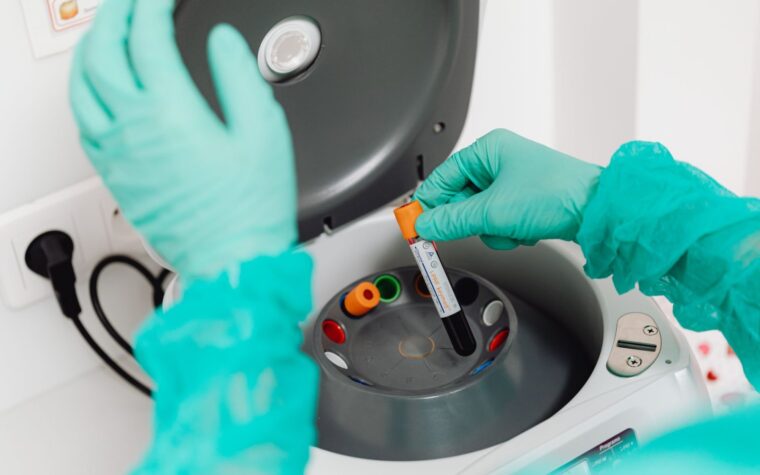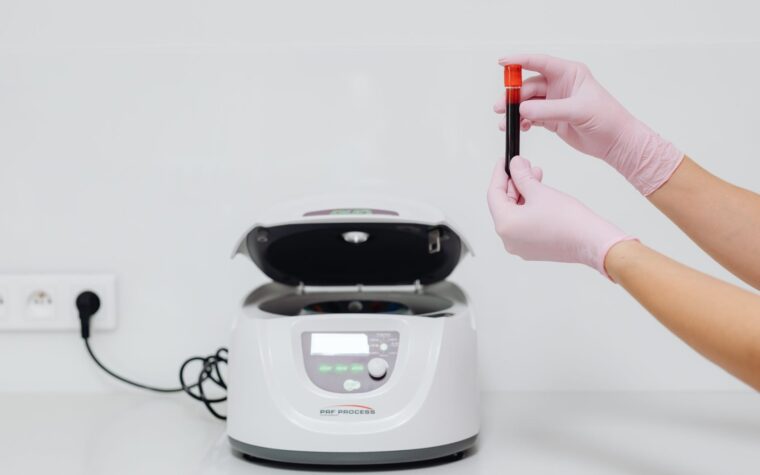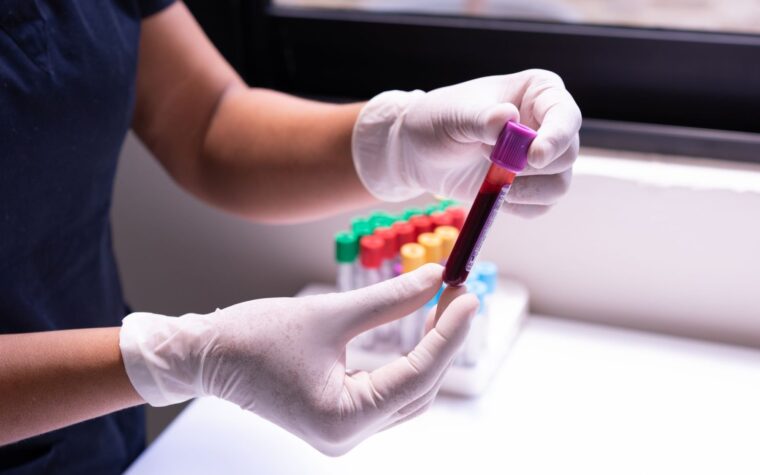
- Sodium in a blood test measures the milliequivalents of sodium per liter of your blood serum, with a normal adult range of roughly 135 to 145 mEq/L (MedlinePlus).
- A high blood sodium above 145 mEq/L (hypernatremia) most often signals dehydration or water loss, while a level below 135 mEq/L (hyponatremia) usually signals too much water relative to sodium.
- Hyponatremia is the most common electrolyte disorder, appearing in up to 30% of hospitalized patients, which is why sodium is on nearly every routine blood panel (StatPearls).
Part of our Comprehensive Metabolic Panel guide.
What is sodium in a blood test?
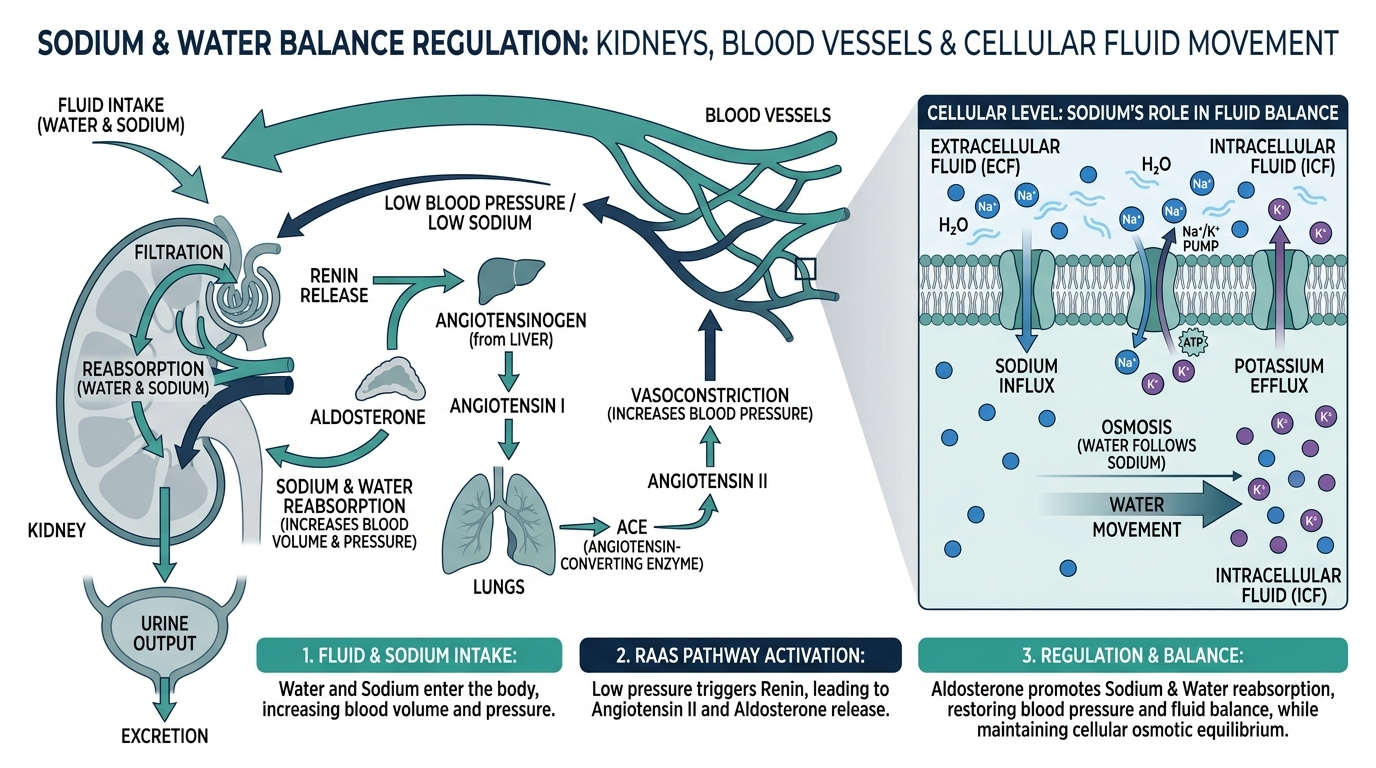
Sodium in a blood test is the concentration of the sodium electrolyte in the liquid part of your blood, reported in milliequivalents per liter (mEq/L). The normal adult reference range is about 135 to 145 mEq/L (MedlinePlus, Sodium Blood Test). Sodium is the body’s main extracellular electrolyte, and it works with potassium and chloride to control fluid balance, nerve signaling, and muscle function.
Sodium swings can come from hydration, diet, or something worth tracking. See where yours sits alongside 100+ other markers. One at-home Superpower draw checks 100+ biomarkers, physician-reviewed.
The test is almost always part of a larger panel rather than a standalone order. You will see it inside a basic metabolic panel (BMP) or a comprehensive metabolic panel (CMP), the routine blood draws ordered at most checkups. A lab technician collects blood from a vein in your arm, and an analyzer measures the sodium ion concentration in your serum or plasma. Results usually return within a day.

Why is sodium measured?
Sodium is measured because it is the single best blood indicator of your body’s water and electrolyte balance, and abnormal values flag problems with the kidneys, hormones, heart, or hydration. Because hyponatremia alone appears in up to 30% of hospitalized patients, clinicians treat sodium as an early warning signal (StatPearls, Hyponatremia).
Your kidneys, along with hormones such as antidiuretic hormone (ADH) and aldosterone, normally keep serum sodium inside that tight 135 to 145 mEq/L window. When the number drifts, it tells your clinician something upstream has changed. Common reasons a provider checks sodium include:
- Routine screening: a baseline value at an annual physical.
- Symptom workup: confusion, weakness, severe thirst, swelling, or seizures.
- Monitoring: tracking kidney disease, heart failure, liver disease, or diuretic use.
- Fluid status: checking dehydration or fluid overload in hospital patients.
What does a high sodium mean?
A high blood sodium, called hypernatremia, is a serum level above 145 mEq/L and almost always means your body has lost more water than sodium, not that you ate too much salt (Cleveland Clinic). It is fundamentally a water problem. Severe symptoms typically appear only when sodium climbs above 160 mmol/L.
The most frequent driver is plain dehydration: not drinking enough, fever, heavy sweating, vomiting, or diarrhea. Older adults and people who cannot access water freely are at higher risk because thirst signals weaken with age. Other causes include diabetes insipidus, certain kidney conditions, and some medications.
Typical signs of hypernatremia:
- Early: intense thirst, dry mouth, and reduced urination.
- Moderate: restlessness, irritability, and muscle twitching.
- Severe: confusion, lethargy, seizures, and in extreme cases coma.
Treatment focuses on carefully restoring water, because correcting a high sodium too quickly can be dangerous to the brain.
What does a low sodium mean?
A low blood sodium, called hyponatremia, is a serum level below 135 mEq/L and usually means you have too much water diluting your sodium, rather than a true sodium deficiency (kidney.org). It is the most common electrolyte abnormality in both hospital and outpatient settings (StatPearls).
The cause is often an underlying condition that makes the body retain water. Heart failure, kidney disease, and liver cirrhosis are frequent culprits. So is the syndrome of inappropriate antidiuretic hormone (SIADH), certain medications such as some diuretics and antidepressants, and, occasionally, drinking extreme amounts of water during endurance events. Symptoms track with how low and how fast the sodium drops.
Common signs of hyponatremia:
- Mild: nausea, headache, and fatigue.
- Moderate: confusion, irritability, and muscle cramps or weakness.
- Severe: seizures, decreased consciousness, and coma.
As with high sodium, clinicians correct a low value slowly and deliberately to protect the brain.

How is sodium interpreted with other markers?
Sodium is interpreted alongside the rest of your metabolic panel, never in isolation, because the same number can mean opposite things depending on your fluid status and the other electrolytes. A sodium of 130 mEq/L in a swollen heart failure patient points to a very different problem than the same value in a marathon runner.
Clinicians read sodium together with these companions on a BMP or CMP:
- Potassium: the other major electrolyte, reviewed in tandem to assess overall balance and kidney handling.
- Chloride and bicarbonate: used with sodium to calculate the anion gap and check acid-base status.
- BUN and creatinine: kidney markers that show whether the kidneys are causing or responding to the sodium shift.
- Glucose: very high blood sugar can pull water into the blood and lower sodium artificially.
This is why your clinician will not act on a single off value without the full picture, and often a repeat draw.
The insider nuance: a normal number can still hide a problem
Here is the nuance most patients miss: a sodium reading inside the 135 to 145 mEq/L range does not always mean your sodium handling is healthy, and how fast the value changed often matters more than the value itself. A sodium that dropped from 140 to 133 in two days can cause more symptoms than a stable 130 someone has carried for months, because the brain adapts to slow shifts but not sudden ones.
Two other quiet traps are worth knowing. Pseudohyponatremia happens when very high blood fats or proteins make sodium look falsely low on certain analyzers, even though the true level is normal. And severe high blood sugar can dilute sodium, so a low reading sometimes corrects on its own once glucose is controlled. These are reasons your clinician may repeat the test or order additional labs before concluding anything. The single number is a starting point, not a verdict.
How your body defends the 135 to 145 window
To understand why an out-of-range sodium matters, it helps to see how tightly your body guards it. Sodium concentration is essentially a readout of the ratio between sodium and water in your blood. Because the value is a ratio, it can move because sodium changed, because water changed, or both. In most people it is the water side that moves.
Two control systems do most of the work. The first is thirst, which drives you to drink when blood becomes too concentrated. The second is antidiuretic hormone (ADH, also called vasopressin), released by the brain to tell the kidneys how much water to hold onto or release in urine. When you are dehydrated, ADH rises and the kidneys conserve water, pulling the concentration back down toward normal. When you drink too much, ADH falls and the kidneys dump the excess. Aldosterone, from the adrenal glands, fine-tunes how much sodium the kidneys keep. When any link in that chain fails, the kidneys, the hormones, or access to water, sodium drifts. That is why an abnormal sodium is rarely about salt on your plate and almost always about fluid regulation.
Why dietary salt rarely moves your blood sodium
One of the most common misunderstandings is that eating a salty meal will spike your blood sodium reading. In a person with healthy kidneys, it does not, at least not in a way a routine test would catch. Extra dietary sodium briefly makes you thirsty, you drink, and the kidneys excrete the surplus, so the concentration barely budges. Dietary salt matters enormously for blood pressure and long-term cardiovascular health, but it is not the lever that sets your serum sodium number. This distinction is why a high result points a clinician toward hydration, kidneys, and hormones rather than your diet.

How to prepare and what can skew the result
Sodium is a robust, well-standardized measurement, but a few things can shift the number or produce a misleading value. Knowing them helps you read your own report and avoid a needless scare.
- Fasting is not required for sodium itself. Sodium does not change meaningfully with a recent meal. However, it is almost always drawn inside a metabolic panel that includes glucose, so you may be asked to fast 8 to 12 hours for the panel as a whole. Follow the instructions you are given.
- Hydration at the moment of the draw counts. Being significantly dehydrated or overhydrated when blood is taken nudges the ratio. A single value taken while acutely dehydrated is a snapshot of that moment, not necessarily your baseline.
- Medications can move it. Diuretics (“water pills”) are a leading cause of a shifted sodium, and some antidepressants (SSRIs), certain anti-seizure drugs, and NSAIDs can lower it. Bring your medication list when you discuss results.
- Very high blood fats or protein can fake a low value. On some older analyzer methods, extremely high triglycerides or proteins crowd out the water fraction the machine measures, producing pseudohyponatremia, a falsely low sodium when the true level is normal. This is a lab artifact, not a real electrolyte problem.
- High blood sugar genuinely dilutes sodium. Markedly elevated glucose pulls water out of cells into the blood, diluting sodium. Clinicians often apply a correction factor and recheck once glucose is controlled.
- Sample handling. A prolonged tourniquet, the wrong tube, or delayed processing can affect electrolyte readings. This is one reason a surprising single value is often repeated before anyone acts on it.
Who should have sodium checked, and how often
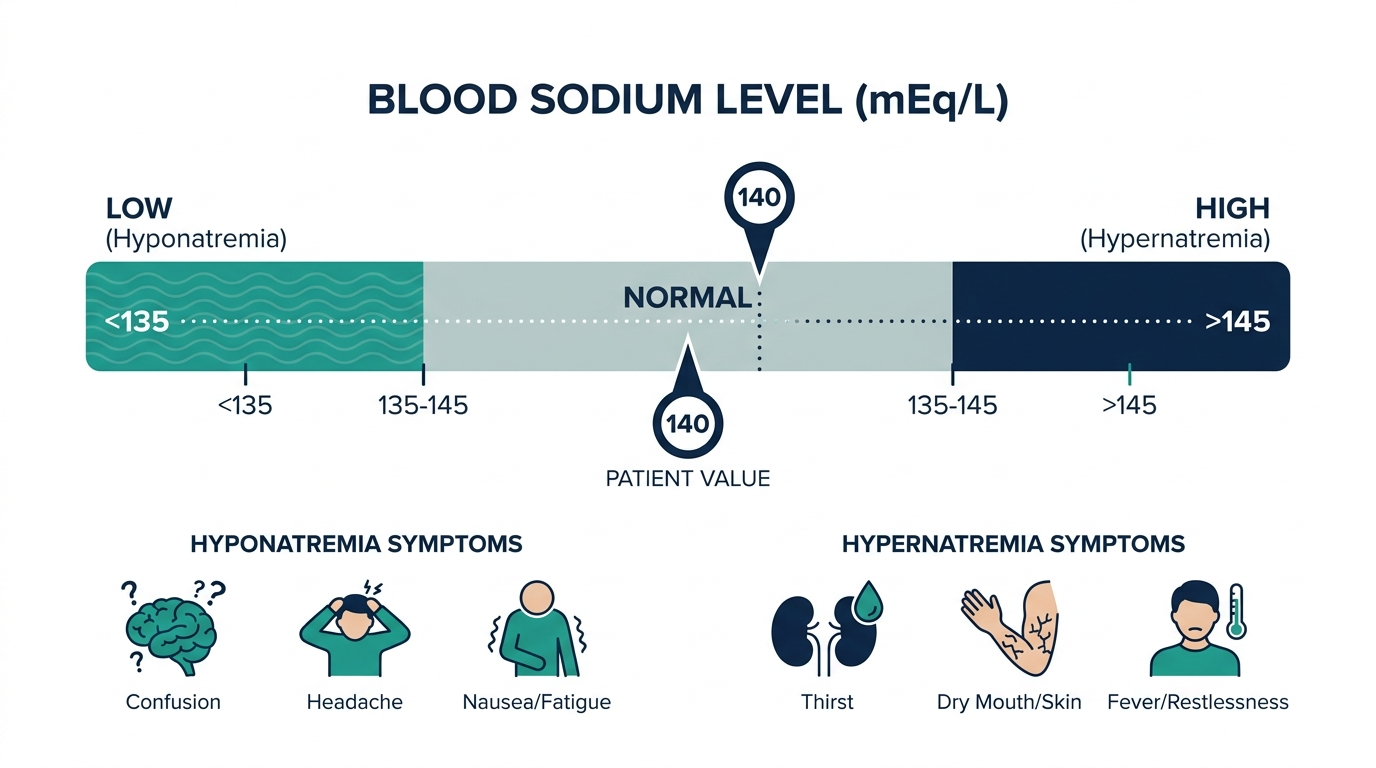
Because sodium rides along on the basic and comprehensive metabolic panels, most adults have it measured at routine checkups without asking for it specifically. Certain situations warrant closer attention:
- People on diuretics or with heart, kidney, or liver disease. These conditions and their treatments are the classic drivers of both high and low sodium, so periodic monitoring is standard.
- Older adults. Thirst perception weakens with age and kidney reserve declines, raising the risk of dehydration-driven hypernatremia and drug-related hyponatremia alike.
- Anyone with new confusion, unusual weakness, seizures, severe thirst, or significant swelling. These can be signs of a sodium disturbance and justify a prompt check.
- Endurance athletes. Drinking large volumes of plain water during long events can dilute sodium (exercise-associated hyponatremia), which is why sports medicine emphasizes electrolytes, not just water, over long distances.
For a healthy adult with no symptoms and no relevant conditions, sodium checked at your regular physical is generally enough. If you carry a condition that affects fluid balance, follow the monitoring cadence your clinician sets.
Why correction is done slowly: a safety detail worth knowing
If your sodium is far out of range, the instinct is to fix it fast. Clinicians deliberately do the opposite, and understanding why can make an abnormal result less frightening. The brain adapts to a slowly changing sodium by shifting its own internal solutes to protect its cells. If sodium is then corrected too quickly, that adaptation cannot keep pace and brain cells can be injured, a rare but serious condition called osmotic demyelination syndrome.
For this reason, current clinical guidance generally limits how fast a low sodium is raised, commonly to no more than about 8 mEq/L over 24 hours, and even slower in higher-risk patients such as those with liver disease, alcohol use disorder, or malnutrition. A very high sodium is likewise brought down gradually to avoid brain swelling. The takeaway for patients: careful, measured correction is a feature of good care, not a delay. It is why a hospital may adjust your fluids step by step and recheck your sodium repeatedly rather than all at once.
Sample interpretation scenarios
Numbers make more sense in context. These illustrative scenarios show how the same reading points to different stories depending on the rest of the picture. They are teaching examples, not a substitute for your clinician reading your actual chart.
- Sodium 148, plus intense thirst and dark urine after a stomach bug. The pattern points to water loss and dehydration. The fix is careful rehydration, not cutting salt.
- Sodium 131 in someone with leg swelling and known heart failure. Here the body is retaining water, diluting sodium. Management centers on the underlying condition and fluid balance rather than adding salt.
- Sodium 132 with markedly high blood sugar. The elevated glucose is likely diluting the sodium. The value often corrects once blood sugar is controlled, so the diabetes is the target.
- Sodium 133 that dropped from 141 in two days. Even though 133 is only mildly low, the speed of the change can produce more symptoms than a stable lower number. Rate of change, not just the value, guides the response.
- Sodium 134 in a healthy person, no symptoms, on a repeat that reads 138. A borderline value that normalizes on a recheck is often just lab-to-lab or hydration variation, which is exactly why clinicians repeat surprising results before acting.
High sodium vs low sodium at a glance
Because the two disorders share several symptoms, it helps to see them side by side. The table summarizes the practical differences, but remember that symptoms overlap, so only a blood test can tell them apart with certainty.
| Feature | High sodium (hypernatremia) | Low sodium (hyponatremia) |
|---|---|---|
| Definition | Above 145 mEq/L | Below 135 mEq/L |
| Core problem | Too little water for the sodium | Too much water for the sodium |
| Common causes | Dehydration, fever, heavy sweating, vomiting, diarrhea, diabetes insipidus | Heart failure, kidney or liver disease, SIADH, diuretics, some antidepressants |
| Typical early signs | Intense thirst, dry mouth, less urination | Nausea, headache, fatigue |
| Higher-risk groups | Older adults, people without easy water access | Older adults, people on multiple medications, endurance athletes |
| First-line direction | Careful rehydration | Treat the cause, manage fluid intake |
Notice that confusion, weakness, and seizures can appear at the severe end of both columns. That symptom overlap is exactly why a number on a panel, not a guess from symptoms, is what a clinician relies on to decide which direction your sodium has moved and how urgently to respond.
Where a single sodium value fits in the bigger picture
One sodium reading is a moment in time. Its real value grows when it sits inside a full panel and, ideally, alongside your own prior results. A sodium of 137 means one thing on its own and something richer when you can see it has held steady across several years while your kidney markers and glucose stayed normal. That trend view is what turns a data point into a baseline you can actually act on. If you only ever see sodium as an isolated flagged or unflagged value, you lose the context that makes it useful, which is why reading it as part of your metabolic panel, and over time, is the habit worth building.
Does eating salt raise your blood sodium?
This is the single most common misunderstanding about the sodium number, and clearing it up changes how you read your own result. It feels obvious that a salty diet should push your blood sodium up, yet in a person with healthy kidneys and a working thirst mechanism, it generally does not, at least not in the way people expect. Blood sodium reflects the balance between sodium and water in your body, not simply how much salt you ate. When you take in more salt, your body responds by making you thirsty and by having the kidneys hold or release water to keep the concentration inside that tight 135 to 145 window.
The practical consequence is that a normal or abnormal sodium result is usually telling you more about water balance and how your body is regulating it than about your salt shaker. That is why dehydration, certain medications, and hormonal signals tend to move the number more reliably than dietary salt does in a healthy person. It also explains a frequent source of confusion: dietary sodium absolutely matters for blood pressure and heart health, but that is a separate story from the sodium concentration measured on a metabolic panel.
None of this means salt intake is irrelevant to your health. It means you should not read a normal blood sodium as permission to ignore a high-salt diet, nor panic that one salty meal will show up as a high value. The blood test answers a question about water and sodium balance, while the advice to watch salt for blood pressure answers a different one. Keeping the two questions separate is what keeps you from drawing the wrong conclusion from a perfectly ordinary number.
Symptoms that go with abnormal sodium, and when to act
Because sodium sits at the center of fluid balance in and around your cells, the symptoms of an abnormal level are mostly neurological, and they scale with how far the value has drifted and, crucially, how fast. A slow, mild change often produces almost nothing you would notice, which is one reason a modest abnormality is frequently discovered on routine bloodwork rather than because someone felt ill.
When low sodium becomes more pronounced, common symptoms include headache, nausea, fatigue, confusion, and muscle cramps, and in severe or rapid cases it can progress to seizures. High sodium, which usually reflects a water deficit, tends to show up as intense thirst, dry mouth, restlessness, weakness, and, when severe, confusion. The pattern to remember is that the brain is the organ most sensitive to these shifts, so changes in alertness or thinking are the warning signs that matter most.
The reason speed matters as much as the number is that the brain adapts to a gradual change but is overwhelmed by a sudden one, which is exactly why correction is done slowly, as covered earlier. For everyday purposes, a mildly abnormal sodium in someone who feels well is typically a prompt to repeat the test and look at the surrounding markers, not an emergency. But new confusion, a seizure, severe weakness, or a marked change in alertness alongside an abnormal sodium is a reason to seek care promptly rather than wait, because those symptoms suggest the level is either far from normal or moving quickly.
Curious where your sodium really sits?
Baseline sodium and 100+ biomarkers today and retest as life changes, all in one membership with physician review.
Frequently asked questions
What is a normal sodium level in a blood test?
For most adults, the normal serum sodium range is about 135 to 145 mEq/L (MedlinePlus). Exact reference ranges vary slightly by laboratory, so always read your result against the range printed on your own lab report.
Is high sodium in a blood test caused by eating too much salt?
Usually no. High blood sodium (hypernatremia) is mostly a water problem, not a salt problem. It most often reflects dehydration or water loss from fever, sweating, vomiting, or diarrhea rather than dietary salt intake (Cleveland Clinic).
What does a low sodium level mean?
A sodium below 135 mEq/L (hyponatremia) usually means too much water is diluting your blood sodium. Common causes include heart failure, kidney or liver disease, certain medications, and SIADH (kidney.org, StatPearls).
Should I fast before a sodium blood test?
Not for sodium alone. However, sodium is usually drawn as part of a metabolic panel that may include glucose, and your clinician may ask you to fast for 8 to 12 hours for those other markers. Follow the instructions you are given.
What symptoms suggest a sodium imbalance?
Watch for nausea, headache, confusion, weakness, muscle cramps, intense thirst, or, in severe cases, seizures. These symptoms overlap for both high and low sodium, so a blood test is needed to tell them apart. Seek care for severe symptoms.
Sources
- MedlinePlus, Sodium Blood Test
- MedlinePlus, Sodium blood test (Medical Encyclopedia)
- StatPearls (NCBI Bookshelf), Hyponatremia
- Cleveland Clinic, Hyponatremia
- National Kidney Foundation, Hyponatremia (low sodium level in the blood)
This article is for general educational purposes and is not medical advice. It cannot diagnose or treat you and does not replace your clinician. Always discuss your lab results and any health decisions with a qualified healthcare professional.
Vital Signs Today may earn a commission if you buy through links on this page. It does not affect our editorial assessments.