
Last updated 18 June 2026. Educational content, not medical advice. Talk to a licensed clinician before taking any peptide-based supplement or therapy.
Short answer: A peptide is a short chain of 2 to 50 amino acids linked by chemical bonds. Your body already makes thousands of them, insulin and GLP-1 among the most famous. The same molecular principle now drives a global market worth roughly $88 billion in 2025, projected to double by 2035.
Insulin and GLP-1 are peptides your body already makes in an $88 billion market, so what do your own peptide-driven markers show? One at-home Superpower draw checks 100+ biomarkers, physician-reviewed.
What exactly is the chemical definition of a peptide?
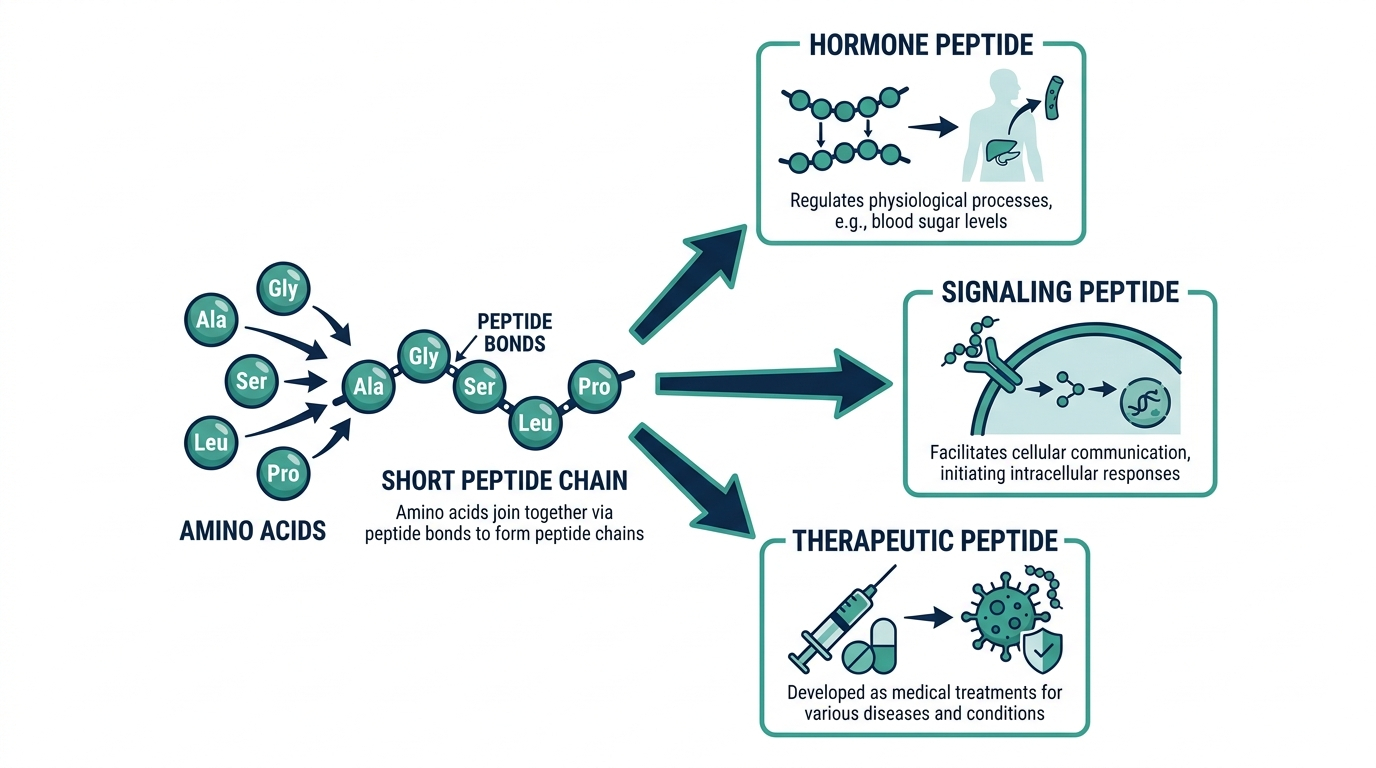
The word comes from the Greek peptos, meaning “digested.” Structurally, a peptide is built the same way a protein is built: amino acids, linked end to end by a covalent bond called a peptide bond. That bond forms when the carboxylic acid group of one amino acid reacts with the amine group of the next, releasing a molecule of water in the process. This condensation reaction happens constantly inside your cells, catalyzed by ribosomes, the molecular machines that read your DNA and assemble proteins.
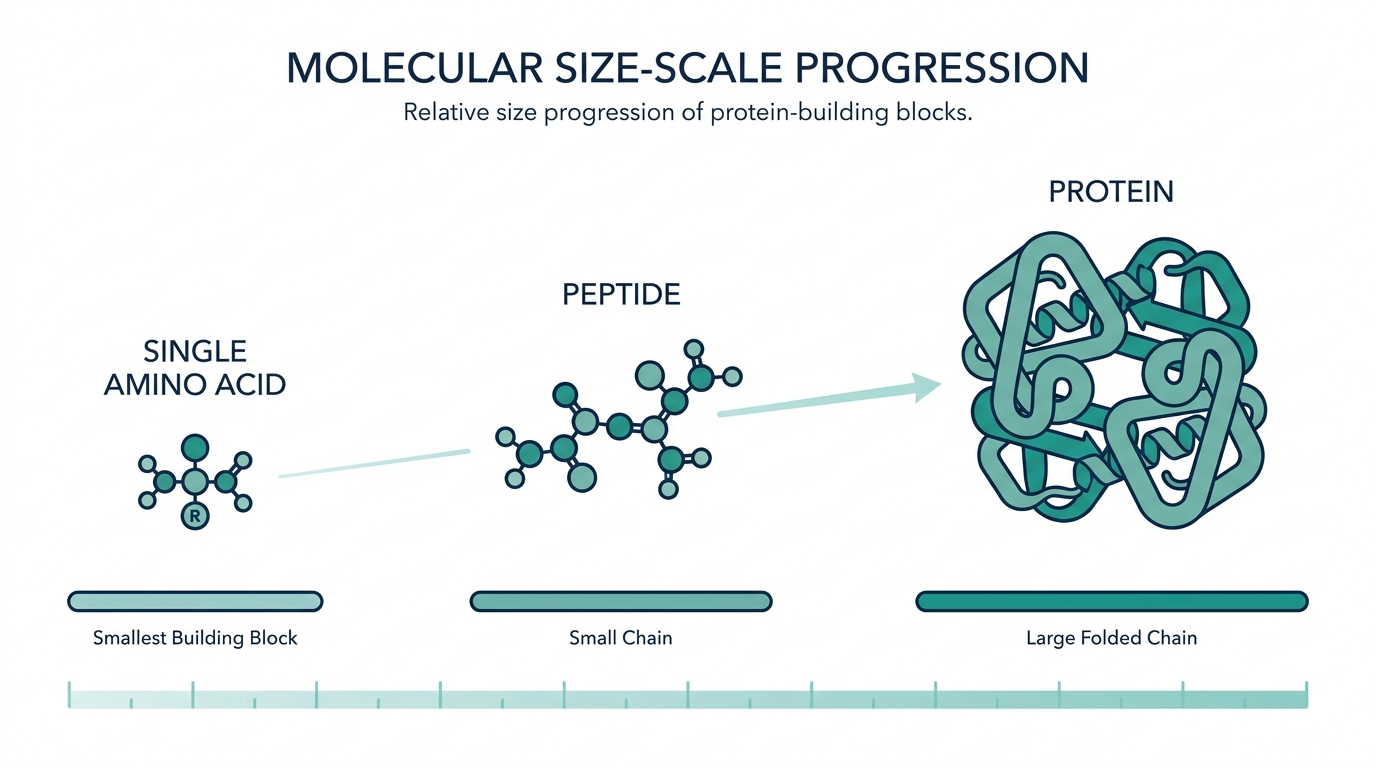
What separates a peptide from a protein is length. Most biochemists draw the line at roughly 50 amino acids: two to fifty amino acids make a peptide, and more than that makes a polypeptide or protein. The distinction matters in practice, not just semantics. A short chain rarely folds into a stable three-dimensional shape on its own, which makes peptides faster to synthesize, easier to modify, and far more specific as signaling molecules. A full-sized protein enzyme has to fold, and folding takes time and energy. Peptides skip most of that.
This is why pharmaceutical chemists love the peptide size range: small enough to engineer precisely, large enough to carry real biological information.
How do peptides actually do anything inside the body?
The simplest way to actually get this done
Superpower is a full-body lab membership that runs 100+ biomarkers, has each result reviewed by a doctor, and tracks your numbers year over year (about $199/year). It is what we point readers to when they would rather get one clean, complete draw than chase single tests one at a time. Here is superpower reviewed in full.
Peptides are the body’s messaging system. They do not build structure the way a structural protein like collagen does, and they do not catalyze the way enzymes do. Their primary job is to bind to a receptor on the surface of a cell and change what that cell does next.
Think of it like a key and a lock. The peptide’s specific amino acid sequence is the key shape. The receptor on the cell surface is the lock. When the key fits, the lock turns, and the cell downstream fires a cascade of chemical reactions: produce more of this enzyme, slow down that inflammatory signal, release this hormone. The cascade is the whole point. A single peptide molecule binding to a single receptor can trigger a chain of changes across hundreds of molecules inside one cell, and across millions of cells if the receptor is widespread.
Most peptide hormones bind to G protein-coupled receptors (GPCRs), the largest receptor family in the human genome. GLP-1, the peptide that made semaglutide famous, binds to GLP-1R receptors on pancreatic beta cells, on gut cells, and in the brain. One 30-amino-acid peptide molecule, three locations, dramatically different downstream effects at each one. That specificity is exactly what makes peptides compelling as drugs and equally why using them outside clinical supervision is not the same as taking a vitamin.
What are the main types of peptides your body already makes?
You carry thousands of peptides right now. Here are the categories that matter most to understand before you encounter the term in a medical context, a supplement ad, or a longevity clinic brochure:
Peptide hormones
The most commercially significant class. Insulin, discovered in 1921 by Frederick Banting and Charles Best at the University of Toronto, is a 51-amino-acid peptide and the first drug in history to be extracted from a biological source and injected into a human. It was not called a “peptide drug” at the time because the field did not yet exist, but it launched a century of work. GLP-1 (glucagon-like peptide-1), oxytocin, ghrelin, and leptin are all peptide hormones produced naturally in your body, regulating appetite, blood sugar, bonding behavior, and satiety.
Neuropeptides
Peptides released in the nervous system that act as neuromodulators. Endorphins are neuropeptides; they bind to opioid receptors and reduce pain signaling. Substance P is a neuropeptide that amplifies pain. This class blurs the line between hormone and neurotransmitter because the same molecule can act differently depending on where in the body it is released.
Antimicrobial peptides (AMPs)
Your immune system makes short cationic peptides that puncture bacterial cell membranes and kill pathogens. Defensins, found in skin and gut epithelial cells, are among the best-studied. The broader class of AMPs is the subject of intense drug development, partly because bacteria cannot easily develop resistance against a mechanism that physically tears their membranes apart.
Structural and signaling peptides derived from larger proteins
When collagen breaks down, the fragments released are peptides. Some of those fragments, called matrikines, go on to signal fibroblasts to produce more collagen. This is partly the rationale behind oral collagen peptide supplements: the idea is that the digestive breakdown of hydrolyzed collagen produces bioactive dipeptides and tripeptides like Pro-Hyp (proline-hydroxyproline) that survive digestion and signal collagen synthesis. The evidence is genuinely real. A randomized, double-blind, placebo-controlled trial published in Cosmetics found that six weeks of low-molecular-weight collagen peptide supplementation reduced wrinkle volume by 46%, wrinkle area by 44%, and improved skin hydration by 34% compared to placebo.
Peptide vs. protein: where does one end and the other begin?
This is the question that trips up most readers of supplement labels, because brands use the terms loosely.
| Feature | Peptide | Protein |
|---|---|---|
| Chain length | 2 to ~50 amino acids | ~51+ amino acids (no hard ceiling) |
| 3D structure | Usually unfolded / flexible | Folded tertiary/quaternary structure |
| Stability in solution | More stable (fewer fold-dependent bonds) | Denatures more easily |
| Manufacturing | Primarily solid-phase chemical synthesis | Biological expression systems (fermentation, cell culture) |
| Absorption via gut | Small dipeptides/tripeptides absorbed intact; larger peptides degraded | Fully broken down to amino acids before absorption |
| Drug delivery route | Injection, topical, sublingual, oral (limited) | Injection, infusion |
| Examples | Insulin, GLP-1, oxytocin, collagen tripeptides | Antibodies, albumin, hemoglobin |
The absorption row is the one that most supplement marketing papers over. Oral bioavailability for peptides intended to act systemically is typically less than 1% under standard conditions, with some pharmaceutical-grade formulations reaching 2 to 5%. Collagen supplements work around this because the target is not systemic peptide delivery; it is the production of bioactive fragments in the gut lumen and early absorption of small di- and tripeptides. Larger injectable research peptides do not benefit from the same workaround. That distinction matters enormously when you are reading product claims.
Why did peptides become a $100 billion industry?
The short version: four of the ten best-selling medicines in the world in 2025 were GLP-1 peptides, led by semaglutide (Wegovy/Ozempic) and tirzepatide (Mounjaro/Zepbound). Novo Nordisk held over 17% of the entire peptide therapeutics market, and Wegovy sales alone grew 44% in 2025 to reach DKK 11,854 million (approximately $1.7 billion for that reporting period alone).
The origin story of this juggernaut is stranger than most people know. In the early 1980s, an NIH-funded researcher named Dr. Jean-Pierre Raufman found unusual molecules in Gila monster venom that affected the pancreas. In 1992, Dr. John Eng isolated the active compound, exendin-4, a peptide in the venomous saliva that mimics human GLP-1 but resists breakdown by the enzyme DPP-IV, giving it a far longer half-life. Amylin Pharmaceuticals licensed the technology and developed exenatide (Byetta), the first FDA-approved GLP-1 drug, cleared in 2005. Semaglutide arrived in 2017. Modern versions are entirely synthetic and contain no lizard-derived material, but the lizard laid the intellectual foundation for a molecule generating tens of billions of dollars annually.
The broader pipeline is equally striking. Over 100 peptide drugs are now FDA-approved, with more than 1,200 candidates currently in clinical trials worldwide. The metabolic disease segment alone accounts for 64% of the market, driven by GLP-1 class drugs. That concentration in one therapeutic area is both a sign of how dominant GLP-1 has become and a reminder of how much of the peptide landscape lies outside the weight-loss conversation.
Full-body lab membership: 100+ biomarkers, doctor-reviewed, tracked over time.
How GLP-1 peptides actually drive weight loss
Since GLP-1 is the reason most people have heard the word peptide at all, it is worth understanding what the molecule does rather than treating it as a magic appetite switch. GLP-1 is a 30-amino-acid peptide your gut releases after you eat. The synthetic versions (semaglutide, tirzepatide) copy that signal and resist the enzyme that would normally break it down in minutes, so one weekly dose keeps the signal running for days.
The weight loss comes from three linked effects, not one. First, GLP-1 receptors in the brain reduce hunger and the constant food noise many people describe. Second, the drug slows gastric emptying, so a smaller meal keeps you full longer. Third, it improves the insulin response to food, which matters for anyone with insulin resistance. Stack those together and average intake falls without white-knuckle willpower, which is why the trial results reach 15 to 22 percent of body weight where diet alone rarely does.
The honest caveats: the effect depends on staying on the medication, muscle loss is a real risk without enough protein and resistance training, and nausea is common early. It is a prescription medicine with a clinician-managed dose, not a supplement. It suits people with a meaningful amount to lose, or metabolic markers such as insulin and HbA1c that are already drifting, more than someone chasing the last five pounds.
What is the difference between a peptide and a supplement?
Collagen peptides sold in the supplement aisle and the injectable BPC-157 sold on research websites are both technically peptides. They are not in any meaningful sense the same category of product, risk, or regulation.
Supplement-grade peptides (collagen hydrolysate, copper peptide serums, some oral bioactive peptides from food proteins) are regulated as dietary supplements or cosmetics in the US. The FDA does not require proof of efficacy before sale, and the evidence base varies from robust randomized controlled trials (collagen) to very thin (most “anti-aging peptide” serum claims).
Therapeutic peptides, including everything from insulin to semaglutide to sermorelin, are regulated as drugs and require a prescription. The FDA has approved sermorelin and tesamorelin as prescription peptides, and the GLP-1 class is fully within the licensed medical framework.
Research peptides, sold online as “not for human use,” occupy a grey zone. They are legal to manufacture and sell for laboratory research. Using them on yourself puts you outside every layer of regulatory protection, pharmacy quality control, and clinical dosing guidance. This is not a legal opinion; it is a description of the risk structure.
Do not believe the framing that “peptide = natural = safe.” Insulin is a peptide and a lethal dose is a fraction of a milliliter if you miscalculate. Every molecule with a biological effect has a dose range, a context of use, and a population for whom it is wrong. The fact that your body makes a peptide does not mean supplementing with its synthetic analog is consequence-free.
What is a peptide in skincare, and does it actually work?
The skincare industry uses “peptide” for a range of compounds that mostly fall into three functional groups: signal peptides (which stimulate fibroblasts to produce collagen), carrier peptides (like GHK-Cu / copper tripeptide-1, which deliver trace elements necessary for enzymatic repair), and neurotransmitter-inhibiting peptides (like Argireline, which mimics botulinum toxin’s mechanism at the neuromuscular junction, less potently and reversibly).
The evidence for topical peptides is genuinely better than for most cosmetic ingredient categories. A 2026 systematic review and meta-analysis in Frontiers in Medicine evaluated randomized controlled trials of oral and topical peptides for skin aging and found statistically significant improvements in wrinkle parameters and hydration. The effect sizes are real, though modest compared to retinoids or in-office procedures.
Personally, I find the copper peptide data more compelling than most of the signal peptide marketing. GHK-Cu has direct evidence for collagen synthesis in fibroblast studies, and it is inexpensive enough that the risk-reward ratio tilts toward trying it. The neuromuscular-inhibiting peptides (Argireline, Leuphasyl) require far higher concentrations to show effect than most retail formulas provide.
The myth to bust here: “peptides in a serum go directly to your collagen.” Topical peptides work at the skin surface and the upper dermis. They do not penetrate to deep collagen architecture, and they do not replace structural treatments. That is not a reason to dismiss them. It is a reason to set accurate expectations.
Full-body lab membership: 100+ biomarkers, doctor-reviewed, tracked over time.
What is the one number that puts peptides in context?
Four of the ten best-selling medicines worldwide in 2025 were GLP-1 peptides. The tenth most-prescribed drug class in the US a decade ago was barely on the map. That shift happened not because marketing changed but because the underlying biochemistry was always real: peptides that mimic endogenous hormones can produce clinical outcomes that small-molecule drugs historically could not reach. The obesity, diabetes, and metabolic disease outcomes from semaglutide and tirzepatide (22.5% mean body-weight loss in the SURMOUNT-1 trial) are not marketing artifacts. They are peptide chemistry doing exactly what the molecular logic predicts.
The same molecular logic applies to the research and therapeutic peptides outside the GLP-1 category. That is why the category is worth understanding at a foundational level, rather than only when you encounter a specific product.
Don’t just read about your health, track it.
A single result is a snapshot. Superpower re-tests 100+ markers over time so you can watch them move as you change sleep, food, and training.
Frequently asked questions
What is a peptide in simple terms?
A peptide is a short chain of amino acids, the building blocks of proteins. Your body makes thousands of them to act as chemical signals: telling cells to release hormones, repair tissue, regulate blood sugar, or fight pathogens. When people talk about peptide supplements or peptide therapy, they are referring to either synthesized versions of peptides your body already makes, or novel peptides engineered to target specific receptors.
What is the difference between a peptide and a protein?
Length and structure. Peptides are chains of roughly 2 to 50 amino acids, too short to fold into a stable three-dimensional shape. Proteins are longer chains that fold into specific shapes enabling complex functions like enzymatic catalysis, structural scaffolding, and immune recognition. Collagen is a protein; the hydrolyzed collagen fragments in a collagen supplement are peptides.
Are peptides hormones?
Many hormones are peptides, but not all peptides are hormones. Insulin, GLP-1, oxytocin, and growth hormone-releasing hormone (GHRH) are all peptide hormones. Peptides also serve as neurotransmitter modulators, antimicrobial agents, and structural signal molecules that are not hormones by the strict physiological definition.
Do oral peptide supplements actually work?
It depends on the peptide and what “work” means. Hydrolyzed collagen supplements have multiple randomized controlled trials showing modest but real effects on skin hydration, wrinkle depth, and joint comfort. The mechanism is partly dipeptide and tripeptide absorption intact through the gut, and partly signaling effects from fragments produced during digestion. For larger therapeutic peptides intended to act systemically, oral bioavailability is typically under 1%, which is why most are administered by injection. Do not assume “it’s a peptide” means it works the same way regardless of how you take it.
What is GLP-1 and why is it a peptide?
GLP-1 (glucagon-like peptide-1) is a 30-amino-acid peptide your intestinal L-cells release in response to food. It tells the pancreas to release insulin, tells the brain to feel full, and slows gastric emptying. Semaglutide (Ozempic, Wegovy) and tirzepatide (Mounjaro, Zepbound) are synthetic peptides engineered to bind the same receptors but resist the enzyme DPP-IV that would normally break GLP-1 down within minutes. The extended half-life, measured in days rather than minutes, is what makes once-weekly dosing possible.
Are peptides safe?
The safety profile depends entirely on which peptide, what dose, how it is administered, and who is taking it. FDA-approved peptide drugs administered through licensed medical channels have well-characterized safety profiles. Supplement-grade collagen peptides have an excellent safety record. Research-use-only injectable peptides purchased outside medical supervision have unknown real-world purity, dose, and safety data, which is a genuinely different risk category. The label “peptide” does not confer safety across all three groups.
How are peptides made for drugs and supplements?
Therapeutic and supplement peptides are made through solid-phase peptide synthesis (SPPS), a chemical process where amino acids are added one at a time to a growing chain anchored to a resin. The process allows pharmaceutical chemists to specify the exact sequence, modify individual amino acids to improve stability, and manufacture at industrial scale with verified purity. Collagen hydrolysate is made differently: enzymatic or acid hydrolysis of bovine, porcine, or marine collagen breaks the larger protein into shorter peptide fragments. The two production methods explain why drug-grade peptides carry batch-specific Certificates of Analysis, while collagen supplements are standardized mainly by molecular weight range.
Can peptides help with weight loss?
Some can, dramatically, but only the GLP-1 class with real clinical evidence, and only by prescription. Semaglutide and tirzepatide are peptides, and their trials show 15 to 22 percent average body-weight loss. The research peptides marketed online for fat loss, such as various growth-hormone secretagogues, do not have comparable evidence and carry unknown purity and safety when bought outside a pharmacy. If weight loss is the goal, the peptide that matters is the one a clinician can actually prescribe and monitor.
Do you need bloodwork before starting a GLP-1 peptide?
A responsible clinician will want a baseline first. Fasting glucose, HbA1c, a lipid panel, thyroid, and kidney and liver markers give context for both safety and whether a metabolic problem is driving the weight in the first place. It also gives you a before picture to compare against once you are a few months in. Starting a powerful metabolic drug with zero baseline data is the part most grey-market sellers skip.
Are GLP-1 peptides safe to stay on long term?
Under clinical supervision they have a well-characterized safety profile, and long-term use is increasingly common for a chronic condition like obesity. The important qualifiers are that dosing is titrated slowly to limit nausea, protein intake and resistance training protect against muscle loss, and a clinician monitors for the less common risks. This is exactly why the medication belongs in a licensed telehealth or clinic setting rather than a research-chemical order.
Full-body lab membership: 100+ biomarkers, doctor-reviewed, tracked over time.
Author: Vital Signs Today Editorial Team, [credential]”]. Educational content, not medical advice. Sources linked inline.
Primary sources:
- NHGRI Genetics Glossary, Peptide definition: https://www.genome.gov/genetics-glossary/Peptide
- OneTwenty Peptide Statistics 2026: https://onetwenty.com/blog/peptide-statistics
- Novo Nordisk FY2025 SEC filing: https://www.sec.gov/Archives/edgar/data/0000353278/000035327826000006/caq42025.htm
- SURMOUNT-1 tirzepatide trial (NEJM): https://www.nejm.org/doi/full/10.1056/NEJMoa2206038
- GLP-1 / Gila monster origin (Fella Health): https://www.fellahealth.com/guide/what-is-glp-1-lizard-venom
- Collagen peptide RCT, Cosmetics 2024: https://www.mdpi.com/2079-9284/11/4/137
- Frontiers in Medicine 2026 systematic review (oral/topical peptides for skin aging): https://www.frontiersin.org/journals/medicine/articles/10.3389/fmed.2026.1618306/full
- Oral peptide bioavailability review (PMC): https://pmc.ncbi.nlm.nih.gov/articles/PMC10990675/
- Peptide hormone cell signaling (PubMed): https://pubmed.ncbi.nlm.nih.gov/20478429/
- Bachem, antimicrobial peptides overview: https://www.bachem.com/knowledge-center/white-papers/introduction-to-antimicrobial-peptides/
- Rethink Peptides, insulin discovery history: https://rethinkpeptides.com/articles/the-discovery-of-insulin-how-a-peptide-changed-the-world
- FDA-approved peptides list 2026 (Peptide Stack): https://peptidestack.io/blog/fda-approved-peptides-list-2026
- Superpower blood test review 2026: https://athletechnews.com/superpower-blood-test-review/
Want a real clinician to run the numbers, not a guess?
Joi + Blokes is a telehealth clinic that prescribes GLP-1 medication (Zepbound, compounded semaglutide and tirzepatide), hormone therapy (TRT, HRT), thyroid care, and peptides after a real lab panel and clinician review, with no membership or consult fee (prescriptions from about $59/month, lab panels from $149). If the scale will not budge, this is where you find out whether insulin, thyroid, or hormones are the real reason. Here is Joi + Blokes reviewed in full.
Related reading
Vital Signs Today may earn a commission if you buy through links on this page. It does not affect our editorial assessments.