Quick answer: In the quest vs labcorp matchup, neither lab is clearly better for everyone, because the choice usually comes down to which one your doctor and insurance already use and which has a closer location. Both are CLIA-certified national labs that run the same standard blood work to similar quality. Quest tends to have more standalone patient service centers and a slightly more polished app, while Labcorp often wins on insurance contracts and in-network pricing in many regions. For routine results, both post most blood work to their online portals in 1 to 3 business days.
Here is the honest insider take after years of reading lab printouts from both: the lab logo at the top of your report matters far less than whether the order was billed in-network and whether your clinician knows how to read the reference ranges that lab uses. The two companies use slightly different analyzers and reference intervals, so a result that reads ‘high’ on a Quest report can read ‘normal’ on Labcorp simply because their cutoffs differ by a hair. That is fine for a one-time draw, but it is exactly why you should not bounce between labs when you are tracking a number over time. Let me break down where Quest and Labcorp actually differ so you can pick the right one for your situation.
Choosing between Quest and Labcorp for a routine draw? See how one draw can cover 100+ biomarkers instead of a handful. One at-home Superpower draw checks 100+ biomarkers, physician-reviewed.
Quest vs Labcorp: the head-to-head comparison
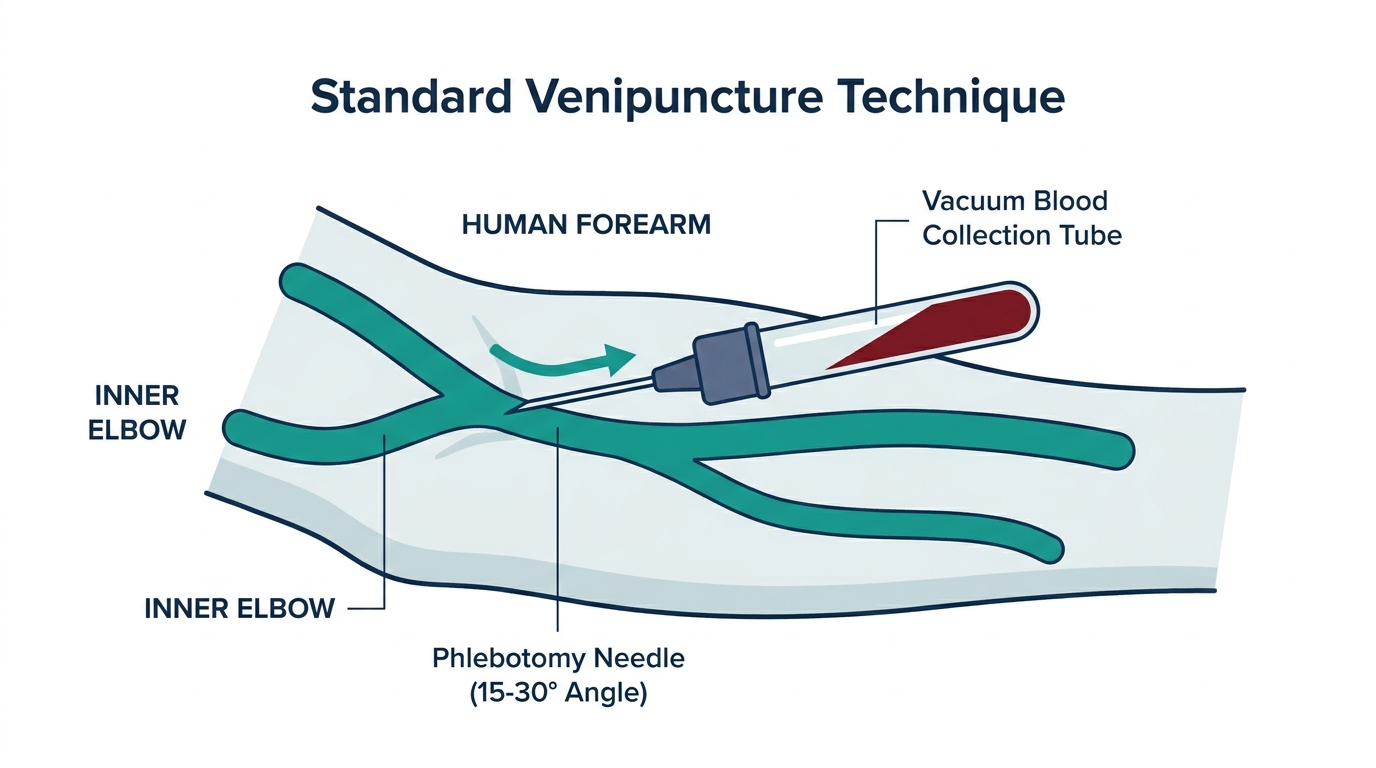
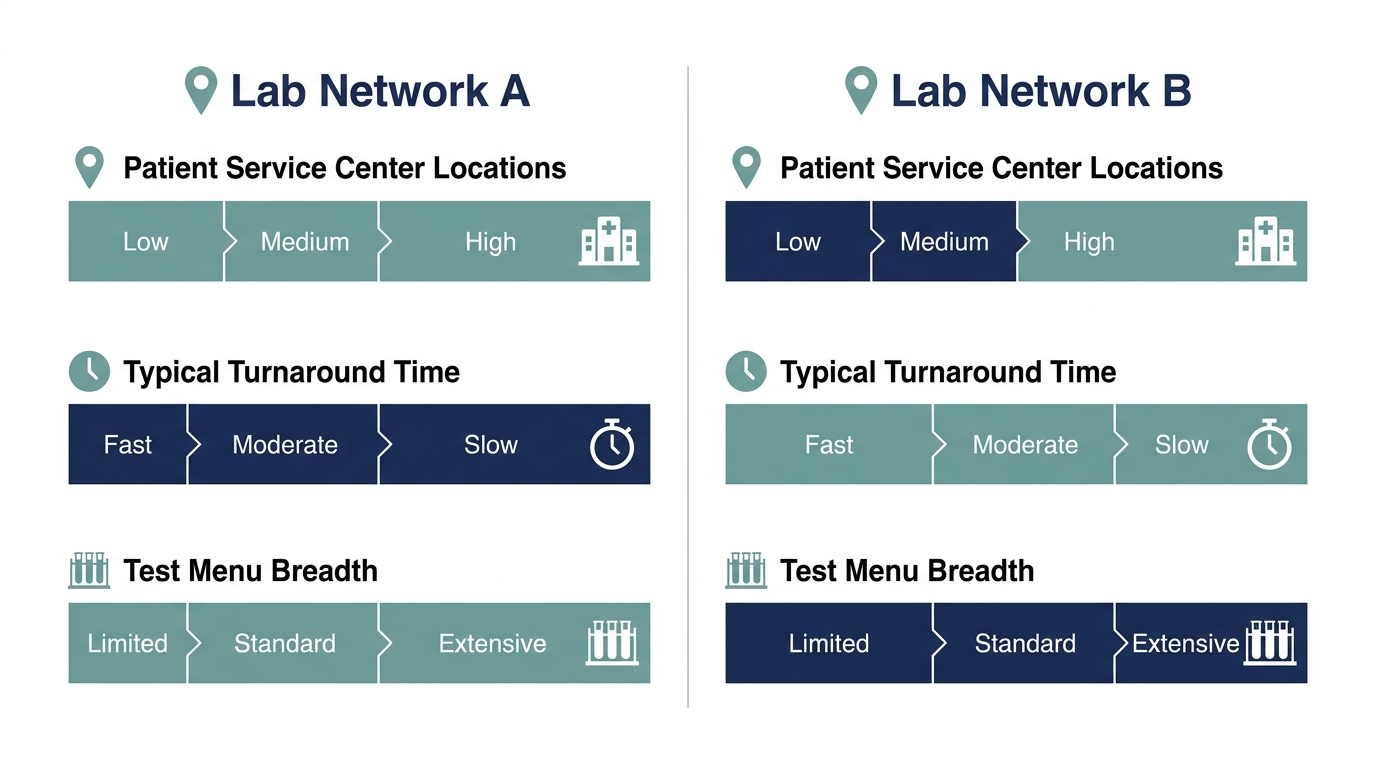
Quest Diagnostics and Labcorp are the two largest reference labs in the United States, and together they process the overwhelming majority of outpatient blood work in the country. The practical differences are about access, billing relationships, and software, not lab science. Both are accredited, both run automated chemistry and hematology lines that meet the same federal CLIA standards, and both have decades of validated assays. So when people ask which lab is ‘more accurate,’ the honest answer is that for routine panels the difference is statistical noise. Here is how they stack up on the things people actually ask about.
| Feature | Quest Diagnostics | Labcorp |
|---|---|---|
| Patient locations | Roughly 7,000+ access points, including many inside Walmart and some Safeway stores | Roughly 2,000+ patient service centers, plus draws inside many Walgreens |
| Insurance | In-network with most major national plans | In-network with most major national plans, exclusive lab for some BlueCross plans |
| Appointment | Walk-ins accepted, but appointments strongly preferred | Walk-ins accepted, but appointments strongly preferred |
| Results portal | MyQuest app and web, results typically in 1 to 3 business days | Labcorp Patient app and web, results typically in 1 to 3 business days |
| Direct-to-consumer | questhealth.com, order without a doctor | Labcorp OnDemand, order without a doctor |
| Typical cash blood work | About $29 to $150 per common test or panel | About $29 to $150 per common test or panel |
| Mobile or home draws | Available in some metros through Quest Mobile and partner services | Available in some metros through Labcorp partners and at-home kits |
The biggest real-world variable is your specific health plan. Some insurers sign exclusive deals, so one lab is in-network and the other is not. Always check your plan before you go, because an out-of-network draw is the fastest way to turn a $0 preventive test into a surprise bill. If you want to see how those numbers move with and without coverage, we broke it down in How Much Does Blood Work Cost? Real 2026 Prices With and Without Insurance.
Where each lab tends to win
Quest usually wins on sheer convenience. With roughly 7,000 access points, including draw stations tucked inside Walmart, you are statistically more likely to have a Quest within a short drive, especially in suburban and rural areas, and its MyQuest app is a little more refined. Labcorp usually wins on insurance economics, since it is the contracted or exclusive lab for a large share of Anthem and BlueCross plans, which makes Labcorp the in-network choice for those members while Quest may not be. For specialty and esoteric testing, both run capable reference divisions, so neither has a clear edge there for the average patient.
Does Quest Diagnostics take insurance, and does Labcorp?
Yes, both Quest and Labcorp take insurance and are in-network with most major national plans, including most Medicare, Aetna, Cigna, and UnitedHealthcare products. The catch is at the plan level, not the lab level. Anthem and several BlueCross plans steer members to Labcorp as their exclusive or preferred lab, while other Blue plans default to Quest, so the same insurer can point you to a different lab depending on your state and product.
Here is the part the front desk rarely explains. A test ordered as preventive screening can be reprocessed as diagnostic if a result comes back abnormal or if the diagnosis code on the order does not match a covered screening, and diagnostic tests are subject to your deductible. That is why two people can get identical panels at the same lab and one pays nothing while the other gets a bill. To protect yourself, confirm the lab is in-network for your specific plan and ask your doctor’s office which diagnosis code they are submitting.
How to verify your lab is in-network before you go
Do not trust a general statement that ‘Quest takes my insurance.’ Verify it at the plan level in three steps. First, log into your insurer’s member portal and use the find-a-provider tool, filtering for laboratory or diagnostic services, then search both Quest and Labcorp by your zip code. Second, if your plan lists a ‘preferred’ or ‘exclusive’ lab, use that one, because going to the other can mean full out-of-network cost. Third, when you book the draw, give the lab your insurance card up front rather than choosing self-pay, so the claim routes through your benefits.
One worked example shows why this matters. Say you have an Anthem plan that designates Labcorp as exclusive. You go to Quest out of habit for a comprehensive metabolic panel. In-network at Labcorp, that panel might cost you $0 under preventive coverage. Out-of-network at Quest, you could be billed the full chargemaster rate, which can run well over $100 for the same handful of values. Same blood, same result, very different bill, decided entirely by which door you walked through.
| Scenario | What you typically pay |
|---|---|
| Preventive screening, in-network lab, met criteria | $0 (covered at 100% under ACA preventive rules) |
| Diagnostic test, in-network, deductible not met | Negotiated rate applied to deductible, often $20 to $120 per panel |
| Diagnostic test, in-network, deductible met | Coinsurance only, often $0 to $30 |
| Out-of-network lab | Full or near-full chargemaster price, can exceed $100 to $250 |
| Self-pay (cash, no insurance) | Discounted cash menu, about $29 to $150 per common panel |
Notice that self-pay can sometimes beat running a diagnostic test through an unmet deductible. If you are uninsured or have a high-deductible plan you have not touched yet, ask both labs for their cash price and compare it against what the insurance claim would apply to your deductible. Many patients overpay by reflexively handing over an insurance card when a $29 cash panel would have been cheaper.
How long does Quest Diagnostics take for results?
Most routine Quest blood work posts to your MyQuest portal within 1 to 3 business days, and many common tests like a basic metabolic panel or lipid panel show up the next morning. Labcorp runs on the same schedule through its Labcorp Patient portal. The lab is rarely the bottleneck for how long Quest lab results take.
Three things actually slow results down. First, send-out tests, meaning specialized assays the local lab ships to a central facility, can take 5 to 10 business days regardless of which company drew your blood. Second, your doctor’s office may hold results for clinician review before releasing them to you, which adds a day or two on top of the lab turnaround. Third, anything drawn late Friday effectively waits over the weekend. If you need a number fast, ask whether the test is run locally or sent out, because that single detail predicts your wait better than the lab’s name.
Typical turnaround by test type
Turnaround is driven by the assay, not the brand. Here is a realistic spread for common orders at either Quest or Labcorp.
| Test | Typical result time | Why |
|---|---|---|
| Basic or comprehensive metabolic panel | Same day to next morning | Run on automated local chemistry lines |
| Complete blood count (CBC) | Same day to next morning | High-volume automated hematology |
| Lipid panel, A1C | 1 to 2 business days | Standard local assays |
| Thyroid panel (TSH, free T4) | 1 to 3 business days | Common but batched |
| Vitamin D, B12, ferritin | 2 to 4 business days | Sometimes batched or regionalized |
| Hormone or specialty assays | 5 to 10 business days | Often sent out to a reference division |
| Genetic or esoteric testing | 1 to 3 weeks | Specialized labs, manual review |
If you see a result sitting in ‘pending’ or ‘in process’ longer than expected, it is almost always a send-out, not a lost sample. You can call the lab’s patient line and ask whether the test was performed in-house or shipped, which tells you whether to keep waiting or follow up.
Can I go to any Quest, and do I need an appointment?
Yes, you can generally go to any Quest Diagnostics patient service center for blood work, because your electronic or paper order is not tied to one specific location. The same is true at Labcorp. What you cannot always do is walk in without a wait. Both labs technically accept walk-ins, but they openly prioritize booked appointments, so an unscheduled visit at a busy center can mean an hour in the waiting room or being turned away near closing time.
Book online through MyQuest or the Labcorp Patient app, pick the earliest morning slot if your test requires fasting, and bring a photo ID, your insurance card, and the order from your provider. If you do not have a paper requisition, the lab can usually pull an electronic order your doctor sent, but call ahead to confirm it arrived. Yes, Quest does blood work for the full range of standard panels, from a complete blood panel to thyroid, hormone, and metabolic testing.
What to bring and how to prep
A draw goes faster and cleaner when you arrive prepared. Use this short checklist for either lab.
- Photo ID and insurance card. Both are scanned at check-in, and a name or date-of-birth mismatch with the order is the most common reason a visit stalls.
- The order itself. Either a paper requisition or confirmation that your provider sent an electronic order to that specific lab company. Quest cannot pull a Labcorp order and vice versa.
- Fasting status. If your lipid panel or glucose requires fasting, do not eat for 9 to 12 hours and book a morning slot. Water and most medications are usually fine, but confirm with your provider.
- Hydration. Drinking water before a draw plumps your veins and makes the stick easier, which matters if you are a hard draw.
- A list of medications and supplements. Biotin in particular can skew thyroid and hormone results, so many clinicians advise pausing high-dose biotin for a couple of days before testing.
The simplest way to actually get this done
Superpower is a full-body lab membership that runs 100+ biomarkers, has each result reviewed by a doctor, and tracks your numbers year over year (about $199/year). It is what we point readers to when they would rather get one clean, complete draw than chase single tests one at a time. Here is superpower reviewed in full.
Direct-to-consumer: ordering without a doctor
Both Quest and Labcorp now let you order your own blood work without a doctor’s visit, and this is one of the most underused features in the quest vs labcorp comparison. Quest runs questhealth.com and Labcorp runs Labcorp OnDemand. You pick the test online, pay cash, a network physician reviews and signs off on the order, and you walk into a regular patient service center for the draw. Results land in the same portal you would use for a doctor-ordered test.
This route shines when you want a number your insurance will not cover, like a broad wellness panel or a hormone check your doctor declined to order, and it gives you price transparency since you see the exact cost before you buy. The tradeoff is that no clinician interprets the result, so line up a telehealth or primary care follow-up for anything abnormal.
Worked example: building a wellness panel yourself
Say you want a lipid panel, A1C, a CBC, a comprehensive metabolic panel, TSH, and vitamin D. Ordered piecemeal as self-pay through a direct-to-consumer site, each of those runs roughly $15 to $60, so the stack can total somewhere around $120 to $250 depending on the lab and the day’s pricing. That is a fair deal for six data points. The friction is that you are assembling the panel yourself, deciding which markers matter, and interpreting six separate result lines with no context. To pick the right markers, it helps to know the biomarkers worth tracking before you check out, so you are not paying for tests that will not change anything you do.
How much is a drug test or hair follicle test at Labcorp?
A standard urine drug test at Labcorp typically runs about $50 to $100 cash, while a hair follicle test at Labcorp usually costs more, often in the $100 to $150 range, because hair testing is more labor-intensive and detects use over a longer window. Quest prices land in the same neighborhood for comparable panels.
The detection window is the reason to care which test you order. A urine panel generally catches use within the past few days, while a hair follicle test can flag use over roughly the prior 90 days, which is why employers use it for pre-employment screening and courts use it for longer-term monitoring. If an employer is paying, you usually go to whichever lab their occupational health vendor has contracted, and you will not get a choice of Quest versus Labcorp. If you are paying out of pocket, call both and compare, because cash pricing on drug screens varies more than it does on routine blood work.
Drug test types and windows at a glance
| Test type | Typical cash cost | Detection window | Common use |
|---|---|---|---|
| Urine, standard 5-panel | $50 to $80 | Roughly 2 to 4 days | Pre-employment, random workplace |
| Urine, expanded 10-panel | $70 to $110 | Roughly 2 to 7 days | Safety-sensitive jobs, probation |
| Hair follicle | $100 to $150+ | Roughly 90 days | Pre-employment, court monitoring |
| Saliva | $40 to $90 | Roughly 24 to 48 hours | Recent-use checks, on-site |
A couple of insider points the order form does not spell out. An employer-mandated test almost always runs through a chain-of-custody process, which is more rigorous and a touch pricier than a personal-curiosity test, so a screen billed to occupational health is not the same product as a self-pay screen even at the same lab. And if you are sent for a lab-based confirmation after a positive rapid screen, that confirmation uses a more precise method and is what actually determines a true positive, so do not panic over a preliminary result alone.
Common mistakes people make with Quest and Labcorp
Most lab headaches are self-inflicted and avoidable. These are the ones I see over and over.
- Going to the wrong company. Your doctor sent the order to Labcorp, but you walk into Quest because it was closer. The Quest center cannot see a Labcorp order, so you get turned away or pay out of pocket. Always confirm which company your provider used.
- Ignoring the in-network rule. Walking into the lab that is not your plan’s preferred lab is the number one cause of surprise bills. A two-minute check on your insurer’s site prevents it.
- Switching labs mid-tracking. Because Quest and Labcorp use slightly different reference ranges and analyzers, a marker you are watching over time can appear to jump simply because you changed labs. Pick one and stay with it for trend data.
- Eating before a fasting test. Coffee with cream, a granola bar, or juice can throw off triglycerides and glucose. If the test says fasting, the only safe input is water.
- Assuming preventive means free. A screening reclassified as diagnostic, or coded against a condition you already have, can land in your deductible. Ask the ordering office how it is coded.
- Booking an afternoon slot for a fasting draw. Fasting all day is miserable and error-prone. Take the first morning appointment.
- Not asking whether a test is sent out. People assume the lab lost their sample when a result is slow, when it is almost always a send-out with a longer turnaround.
Edge cases: uninsured, minors, Medicare, and employer-required tests
The standard advice shifts at the edges, so here is how each lab handles the less common situations.
If you are uninsured
Both labs have a self-pay cash menu that is usually far below the chargemaster price billed to insurance. Use the direct-to-consumer sites (questhealth.com or Labcorp OnDemand) to see exact prices up front. For a basic wellness check, a self-pay panel through these channels can be cheaper than a doctor-ordered diagnostic test run through an unmet deductible. Hospital-based draws are the option to avoid, since the same comprehensive metabolic panel that costs about $29 at a discount or self-pay lab can be billed at $200 or more through a hospital outpatient department.
If the patient is a minor
A parent or legal guardian generally needs to be present and provide consent for a child’s draw, and both labs have staff trained for pediatric sticks, though not every center is equally comfortable with very young kids. Call ahead and ask whether a specific location routinely draws children. Results for a minor post to the parent’s portal account in most cases, subject to state laws on adolescent privacy for certain test types.
If you have Medicare
Both Quest and Labcorp are enrolled Medicare providers, and medically necessary lab tests ordered by your physician are typically covered under Part B with no copay for the lab work itself. The key word is ‘medically necessary’: Medicare will not pay for screening tests it does not deem indicated, so a test your doctor cannot justify with an accepted diagnosis code may be billed to you. If a test might not be covered, the lab should ask you to sign an Advance Beneficiary Notice acknowledging you may owe the cost.
If a test is employer-required
You usually do not get to choose Quest or Labcorp for an employment drug screen or pre-hire physical. The employer’s occupational health vendor designates the lab and location, and the test runs under a chain-of-custody process the employer pays for. Show up with the authorization form or barcode they gave you, bring photo ID, and do not eat or drink anything unusual beforehand if a physical or fasting component is involved.
So which lab should you actually pick?
Pick the lab your doctor already orders from and your insurance lists as in-network, in that order. That single rule resolves most of the quest vs labcorp debate, because it keeps your results flowing into the chart your clinician reads and keeps you from a surprise out-of-network bill. When both labs are in-network, choose the one with a closer location or earlier morning appointment, since fasting draws are easier when you can get in and out before breakfast.
A quick decision guide
- Your plan names an exclusive lab. Use it. Anthem and many BlueCross members should default to Labcorp. The choice is made for you.
- Both are in-network. Pick by location and earliest morning slot. The science is equivalent for routine panels.
- You are tracking a marker over months. Stay with one lab the whole time so reference ranges stay consistent.
- You are uninsured or self-paying. Compare cash prices on questhealth.com and Labcorp OnDemand, and avoid hospital draws.
- You want a broad baseline explained, not just a printout. A full-body membership that interprets your numbers is a better fit than either national lab.
One thing neither national lab does well is help you make sense of the numbers afterward. Both hand you a PDF of values against reference ranges and leave interpretation to you and your provider. If you are getting blood drawn anyway, it is often smarter to capture a full baseline at once and have it explained, rather than ordering one test at a time and guessing. If you want the deeper math, see how much Superpower costs against a stack of individual Quest or Labcorp orders, and a look at what Superpower tests for shows how a single membership draw stacks up against ordering a dozen panels piecemeal. Whatever you choose, talk to a clinician about your results rather than self-diagnosing from a reference range alone.
Curious what your own levels look like?
Baseline 100+ biomarkers today and retest as life changes, all in one membership with physician review.
FAQ
How long for Quest lab results in most cases?
Most routine Quest blood work appears in the MyQuest portal within 1 to 3 business days, and many common panels are ready the next morning. Specialized send-out tests can take 5 to 10 business days, and genetic or esoteric tests can take a few weeks.
Does Quest take insurance for blood work?
Yes, Quest is in-network with most major insurers and Medicare, but coverage depends on your specific plan. Confirm Quest is in-network for your plan before your visit, since some Blue plans steer members to Labcorp instead.
Do you need an appointment for Quest Diagnostics?
You do not strictly need one, since Quest accepts walk-ins, but appointments are strongly preferred and booking online cuts your wait substantially. The same is true for Labcorp, where an unscheduled visit at a busy center can mean a long wait.
Does Quest Diagnostics do blood work without a doctor?
Yes, you can order many tests yourself through questhealth.com, and Labcorp offers the same through Labcorp OnDemand. You pay cash and a network physician signs off on the order, so you skip the office visit. Line up a follow-up for any abnormal result, since there is no clinician interpreting it for you.
Can I go to any Quest Diagnostics for blood work?
Generally yes, because your order is not locked to one location, so you can choose any nearby Quest patient service center. Call ahead if your doctor sent an electronic order to make sure it reached the site you plan to visit, and remember a Quest center cannot pull a Labcorp order.
How much is a hair follicle test at Labcorp?
A hair follicle test at Labcorp typically costs about $100 to $150 cash, more than a urine screen, because it is labor-intensive and detects use over roughly the prior 90 days. Quest charges in a similar range. If an employer requires it, their vendor usually picks the lab and pays for it.
How much is a drug test at Labcorp?
A standard urine drug test at Labcorp usually runs about $50 to $100 cash depending on the panel size, with expanded panels at the higher end. Saliva tests can be a bit cheaper and hair tests cost more. Employer-paid tests run through occupational health and follow a chain-of-custody process.
Is Quest or Labcorp more accurate?
For routine blood work, neither is meaningfully more accurate, since both are CLIA-certified and run validated automated assays. The practical difference is their reference ranges and analyzers differ slightly, so do not switch labs mid-way through tracking a marker or a normal value can look like it changed when it did not.
Can I use my insurance at the lab my doctor did not choose?
Only if that lab is also in-network and can access an order. If your provider sent the order to Quest, a Labcorp center cannot retrieve it, and vice versa. Ask your provider to send the order to whichever lab your plan prefers before you go.
Why was my preventive blood test billed when it was supposed to be free?
A preventive screen gets reclassified as diagnostic when a result is abnormal or when the diagnosis code on the order does not match a covered screening, and diagnostic tests apply to your deductible. Ask the ordering office which diagnosis code they are submitting and confirm the lab is in-network to avoid the surprise.
Vital Signs Today may earn a commission if you buy through links on this page. It does not affect our editorial assessments.