
Last updated June 2026. Educational content, not medical advice. Talk to a licensed clinician before adding any supplement to a treatment plan.
Short answer: Take 10 grams of hydrolyzed collagen peptides daily, ideally 30 to 60 minutes before exercise or in the morning with a vitamin C source. Results for skin elasticity show up in 4 to 12 weeks at 2.5 to 10 g/day in the most rigorous trials. Joint and tendon goals need at least 12 weeks of consistent use. Muscle goals are the one area where whey wins outright.
You know the collagen dosage science, but do you know if your body is actually absorbing and using it well? One at-home Superpower draw checks 100+ biomarkers, physician-reviewed.
Collagen is the most abundant protein in the human body, making up roughly 30 percent of total protein mass. After age 25, your body produces about 1 percent less of it each year, and that loss accelerates after 40. Supplementing with hydrolyzed collagen peptides is not a workaround for that biology; it is a genuine nutritional input that shows measurable effects in well-designed trials, and a category with enough nuance that getting it wrong means spending months with no result.
This guide covers exactly how to use collagen peptides: the dose, the timing logic, the type that matters for your goal, what to mix it with, and the honest limits of the evidence.
Why does your collagen level drop, and can a supplement actually help?
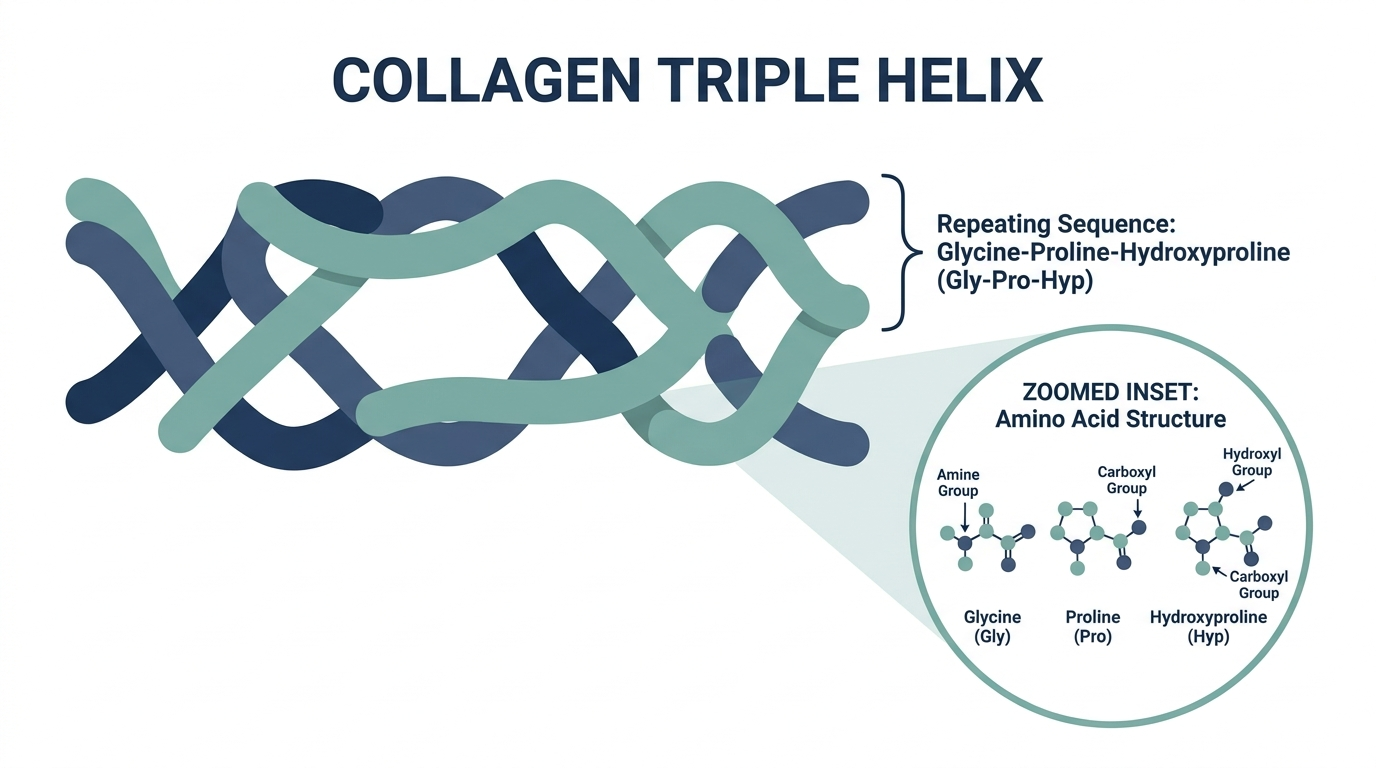
The decline is structural. From your mid-twenties, skin fibroblasts become less productive, growth hormone and IGF-1 taper off, and existing collagen fibers break down faster than new ones form. UV exposure, smoking, and high-sugar diets accelerate that process through oxidative damage to fibroblasts and glycation of collagen fibers.
The supplementation hypothesis works differently than most people assume. You are not swallowing collagen and expecting it to arrive intact at your knee or your jaw. Hydrolyzed collagen is broken down by digestion into small peptides, and some of those peptides, specifically the hydroxyproline-containing dipeptides like Pro-Hyp and Ala-Hyp-Gly, survive the digestive tract and appear in blood within 60 minutes of ingestion (PMC 2024). Once circulating, they appear to act as signaling molecules, telling fibroblasts in skin, cartilage, and connective tissue to increase their own collagen production.
That mechanism is why the timing window matters at all, and why a random scoop of collagen stirred into a midnight snack is not the same thing as a timed dose before a training session.
The key structural feature: Pro-Hyp is unusually resistant to digestive proteases because of the ring structure of hydroxyproline, which lets it survive digestion at rates that ordinary amino acids do not (Frontiers in Nutrition 2024). Lower-molecular-weight hydrolysates produce higher blood concentrations of these bioactive peptides compared to standard gelatin, at 169 nmol/mL versus 94 nmol/mL in a 2024 crossover study. That is the real argument for hydrolyzed powder over plain gelatin powder.
What dose of collagen peptides should you actually take?
The right dose depends on your goal, and the clinical evidence is specific enough to give you real numbers.
For skin hydration, elasticity, and wrinkle reduction: 2.5 to 5 grams per day. A 2024 randomized, double-blind, placebo-controlled trial using 2.5 g of low-molecular-weight collagen peptides daily showed significant improvements in facial skin roughness, peak-to-valley wrinkle depth, and hydration within 6 weeks. A separate 12-week trial published in Dermatology Research and Practice in 2024 found improvements in skin elasticity, hydration, and scalp condition at similar doses (Wiley 2024). The skin dose is lower than most people expect.
For joint pain, cartilage, and osteoarthritis support: 10 grams per day of Type I/III hydrolyzed collagen, or 40 mg per day of undenatured Type II collagen (UC-II). These are genuinely different mechanisms and different products. The 10 g/day hydrolyzed dose is used in most connective-tissue studies. The 40 mg UC-II dose works immunologically, tolerizing the immune system to cartilage proteins, and a 2016 trial in 191 adults showed measurable pain reduction after 6 months on that regimen (ScienceDirect).
For athletic recovery, tendon support, and connective tissue remodeling: 15 to 20 grams, taken 30 to 60 minutes pre-exercise. This is the Shaw protocol window (discussed below). A 2026 randomized controlled trial published in Frontiers in Physiology found that specific collagen peptide supplementation increased Type I collagen content in skeletal muscle after 12 weeks of high-load resistance training (Frontiers 2026).
General wellness baseline: 10 grams per day consistently. Most commercial products are sized for one or two scoops at around 10 to 20 g per serving, which aligns with the dose range used across the largest body of positive trials.
| Goal | Dose | Form | Minimum trial period |
|---|---|---|---|
| Skin hydration and wrinkles | 2.5 to 5 g/day | Hydrolyzed Type I/III powder | 6 weeks |
| Joint pain (hydrolyzed) | 10 g/day | Hydrolyzed Type I/III powder | 12 to 24 weeks |
| Joint pain (cartilage-specific) | 40 mg/day | Undenatured Type II (UC-II) | 6 months |
| Tendon and connective tissue | 15 to 20 g pre-exercise | Hydrolyzed powder with vitamin C | 12 weeks |
| Muscle support (secondary) | 15 to 20 g/day | Hydrolyzed powder | Not a primary use case |
| General daily maintenance | 10 g/day | Any hydrolyzed source | Ongoing |
Does the timing of collagen peptides actually matter?
Yes, for the exercise-related goal specifically, and the reason is physiological, not marketing.
The key study comes from Keith Baar’s lab at UC Davis (Shaw et al., 2017): subjects ingested 15 g of gelatin with 48 mg of vitamin C one hour before a brief rope-jumping bout. Serum from those subjects, drawn at peak circulating peptide levels, significantly increased collagen synthesis in engineered ligament tissue in vitro. The mechanism is that exercise increases blood flow to connective tissues, and having peak circulating collagen peptides in the bloodstream during that window delivers a raw material signal to fibroblasts in tendons and ligaments exactly when they are most metabolically active.
Personally, the 60-minute pre-exercise window is the one timing rule I would not skip if tendon or ligament health is your goal. For skin or general use, the evidence does not support strict pre-exercise timing, and any consistent daily time works.
Morning use: Taking collagen in the morning, often in coffee, makes it part of a daily ritual that ensures consistency. That matters more than the exact hour for skin and joint goals.
Fasted versus fed: Unlike BCAAs or whey, collagen peptides do not compete strongly with muscle protein synthesis at typical doses. There is no strong evidence that fasted morning dosing outperforms a with-breakfast dose for skin or joint outcomes.
With vitamin C: Vitamin C is a required cofactor for the enzymes prolyl hydroxylase and lysyl hydroxylase, which build hydroxyproline into the collagen triple helix. Without adequate vitamin C, your fibroblasts cannot efficiently produce stable collagen regardless of circulating peptide levels. Taking 50 to 100 mg of vitamin C with your collagen dose, through orange juice, a supplement, or a kiwi, is an inexpensive insurance policy. The Shaw protocol used 48 mg.
Which type of collagen peptides do you actually need?
The type labeling on collagen products confuses more buyers than it helps. Here is the plain breakdown.
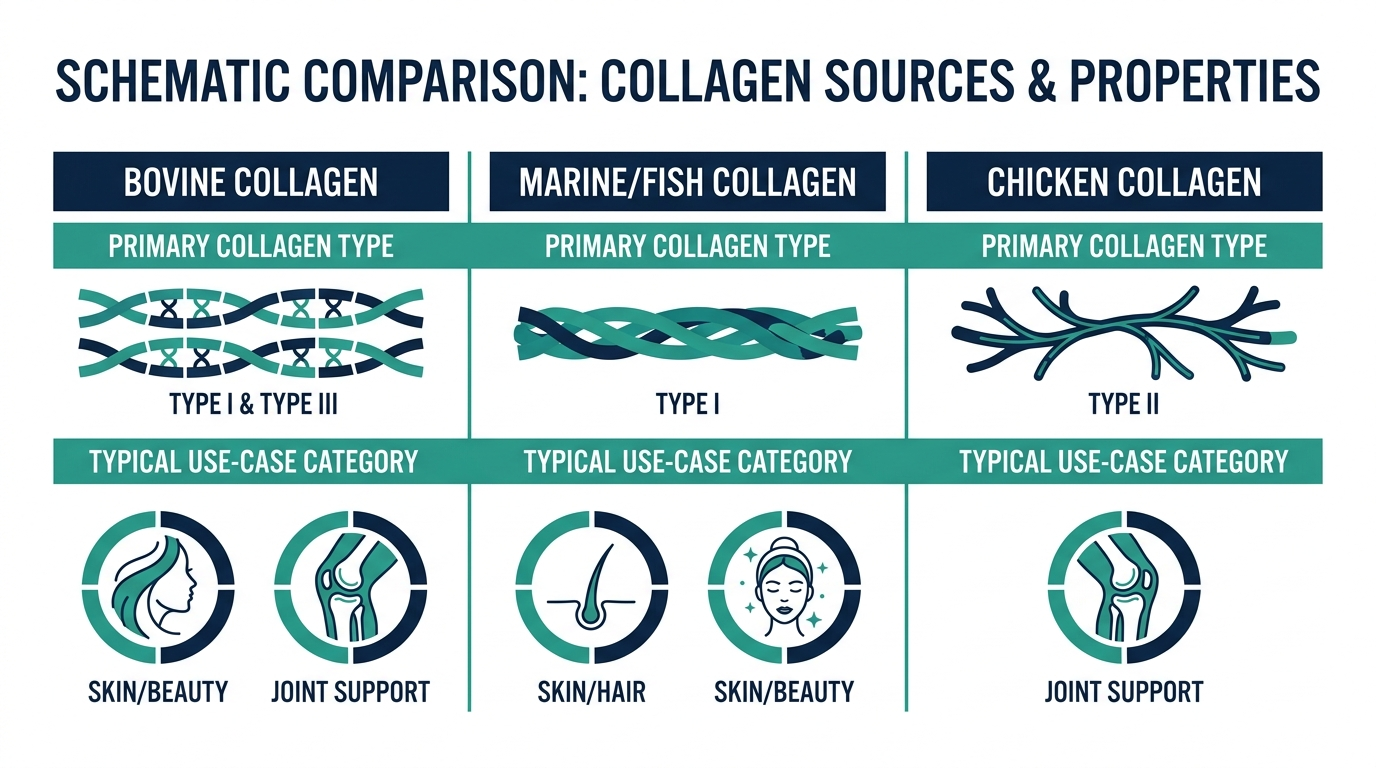
Type I and Type III: Found in skin, bones, tendons, ligaments, corneas, and the walls of blood vessels. Type III is often called the flexible complement to Type I, forming the thinner, more elastic fiber networks in muscle sheaths and organ walls. Almost all bovine (cow) and marine (fish) collagen peptides supply both, in roughly the proportions found in those tissues. This is what the majority of the skin and joint research uses.
Type II: Found almost exclusively in cartilage. For hydrolyzed supplementation, Type II is primarily relevant for joint pain and osteoarthritis goals. For undenatured UC-II at 40 mg, the mechanism is immunological and completely separate from the amino acid supply story. Do not mix these up: a 10 g dose of hydrolyzed Type II is not the same product category or mechanism as 40 mg of UC-II.
Do not believe the marketing that claims you need a product with five or ten collagen types. A 2025 meta-analysis of 26 randomized controlled trials found no convincing evidence that multi-type products outperform single-source hydrolyzed products for skin or joint outcomes (American Journal of Medicine 2025). The bioactive peptides that matter, specifically the Pro-Hyp and Ala-Hyp-Gly dipeptides, appear in blood after ingesting any well-hydrolyzed collagen source, regardless of what the label says about type count.
Marine versus bovine: Marine collagen (from fish skin and scales) yields higher plasma concentrations of hydroxyproline-containing peptides than porcine skin gelatin in some comparative studies, likely because of differences in molecular weight distribution after hydrolysis. It is also free of common beef and pork allergens. Bovine is more cost-effective per gram and the source used in most of the large clinical trials. Both work; choose based on allergy profile, sustainability preference, and price per dose.
Full-body lab membership: 100+ biomarkers, doctor-reviewed, tracked over time.
How do you actually mix and take collagen peptides powder?
This is the practical section most guides skip, but getting the mechanics wrong is the fastest way to waste a good product.
In hot liquids: Hydrolyzed collagen powder is designed to dissolve in hot water, coffee, or broth with simple stirring. Add the powder after the liquid has been poured; dumping powder into an empty mug and adding liquid on top creates dry clumps in the corners. Temperature does not denature hydrolyzed collagen, because the hydrolysis process already broke the triple helix. Your morning collagen coffee is fine.
In cold drinks: Cold liquids are the one legitimate mixing challenge. Collagen powder clumps in cold water because the particles bind before the hydrogen bonds that drive solubility can form. The two reliable techniques: pre-dissolve the scoop in two tablespoons of warm water first, then add to your cold drink; or use a handheld frother for 10 to 15 seconds in the cold liquid directly. A blender eliminates the problem entirely for smoothies.
In food: Collagen peptides have a very mild, slightly savory taste in unflavored form. They dissolve into oatmeal, yogurt, and soups without changing the texture noticeably. One tablespoon stirred into tomato soup or a grain bowl is a painless way to hit a 10 g dose without any additional liquid.
Consistency beats optimization. A 10 g dose taken every day in whatever your morning ritual already is beats a perfectly timed 15 g dose that you actually remember maybe four days a week. Pick a delivery method you will not skip.
Can collagen peptides replace whey protein for muscle building?
No, and conflating the two is the most common mistake buyers make when first encountering collagen peptide marketing.
Collagen is not a complete protein. It lacks tryptophan, one of the nine essential amino acids, and it is low in leucine, the amino acid that most directly triggers muscle protein synthesis (MPS) via the mTOR pathway. Whey protein, particularly whey isolate, is the highest-leucine protein source in the human diet and remains the evidence-based choice for maximizing MPS after resistance training.
A 2023 randomized trial published in the International Journal of Sport Nutrition and Exercise Metabolism found that partly substituting whey for collagen peptides did not improve muscle damage indices or functional recovery compared to whey alone in trained males (Human Kinetics 2023).
What collagen does in the muscle compartment is different: it supports the connective tissue scaffold around muscle fibers (fascia, tendons, the endomysium) rather than contractile protein synthesis. The 2026 Frontiers in Physiology trial cited earlier found increased Type I collagen content in skeletal muscle tissue after resistance training plus collagen peptides, but this reflects matrix remodeling, not bigger muscles.
Think of it this way: whey builds the engine; collagen maintains the chassis.
For anyone doing serious resistance training, the evidence-based approach is to use whey or a complete protein for post-workout MPS, and collagen as a separate tendon and connective tissue support tool, timed pre-exercise.
What are the real benefits of collagen peptides? (And where the evidence is thinner)
Well-supported by multiple RCTs:
– Skin hydration, measured by corneometry, improves within 4 to 8 weeks at doses of 2.5 to 10 g/day (Wiley 2024).
– Skin elasticity shows consistent improvement in trials with at least 8 weeks duration and a dose of 5 g or more per day.
– Wrinkle depth reduction, particularly periorbital wrinkles, appears in multiple blinded trials using standard 2.5 to 10 g protocols.
– Nail brittleness reduction: a 2017 open-label study by Hexsel et al. in the Journal of Cosmetic Dermatology found that 2.5 g/day for 24 weeks reduced nail breakage by 42 percent and increased growth rate by 12 percent.
Promising but inconsistent:
– Joint pain and function in osteoarthritis: the evidence is generally positive but heterogeneous; different doses, different collagen sources, and different trial durations make pooled conclusions difficult. The 2023 review in PMC concluded the evidence is “possibly effective” rather than “definitely effective.”
– Tendon repair and athletic recovery: the Shaw pre-exercise protocol has strong mechanistic support but limited large-scale human RCTs to confirm clinical outcomes at the injury-repair level.
– Gut lining support: early data is interesting (some peptides modulate the microbiome and reduce intestinal permeability markers), but this is not a well-established clinical use yet.
Where the evidence is weak or industry-funded:
The 2025 American Journal of Medicine meta-analysis found that when trials with pharmaceutical company funding were removed from the skin elasticity analysis, statistical significance weakened considerably. This does not mean collagen supplements do not work for skin; it means the effect size is moderate and some of the louder claims overstate the trial quality.
Hydrolyzed type I & III collagen peptides, third-party tested, unflavored.
Who should be cautious with collagen peptides?
Collagen peptides have a very clean safety profile at standard doses. WebMD lists the most common side effects as mild gastrointestinal upset, fullness, and occasional loose stools in the first one to two weeks of use, affecting fewer than 5 percent of users, and typically resolving on their own (WebMD).
A few groups warrant a conversation with their clinician first:
Kidney disease: A 10 to 20 g daily protein supplement adds meaningful amino acid load. People with reduced kidney function who are managing protein intake carefully should check whether adding collagen fits within their total protein targets before starting.
Fish or shellfish allergy: Marine collagen is sourced from fish skin and scales. If you have a fish allergy, choose bovine collagen, which is sourced from cattle hides.
Anticoagulants: No documented dangerous drug interactions exist at standard doses, but patients on warfarin or heparin should mention any new supplement to their prescribing clinician. Some marine fish oil products are combined with collagen in blended supplements, and fish oil can affect coagulation at higher doses.
Calcium supplement stacking: Some collagen products, particularly bone broth concentrates, contain meaningful calcium. Combining a calcium-rich collagen product with a separate calcium plus vitamin D supplement increases the theoretical risk of hypercalcemia, especially in people with parathyroid conditions.
Pregnancy and breastfeeding: No documented harm exists at food-equivalent collagen doses, but clinical trial data on supplementation during pregnancy is sparse. The conservative position is to discuss with your OB before adding any new supplement regimen.
Turn what you just learned into action.
Superpower lets you test 100+ biomarkers from home, then re-check them over time so you can actually see progress, physician-reviewed at every step.
Frequently asked questions
How long does it take for collagen peptides to work?
Skin hydration changes appear as early as 4 weeks in some RCTs, with more consistent results at 8 to 12 weeks. Skin elasticity and wrinkle depth respond more slowly, with the most reliable improvements reported at 12 weeks and beyond. Joint and tendon changes take at least 12 weeks and up to 6 months for measurable clinical benefit. Do not evaluate a collagen protocol after 3 weeks; the biology is slow.
Can I take collagen peptides every day long-term?
Yes. Multiple clinical trials have used daily collagen peptides for 6 to 12 months without reported safety issues. Consistency matters more than cycling on and off. The tissues that benefit, skin dermis, tendon extracellular matrix, and joint cartilage, have slow turnover rates, so sustained daily input is necessary.
Does cooking destroy collagen peptides?
No. Hydrolyzed collagen peptides are already fully denatured; there is no intact triple helix to “destroy.” High cooking temperatures do not degrade the bioactive dipeptides further in any meaningful way. Stirring collagen into hot soup or baking it into oatmeal cookies does not reduce its efficacy.
Can I take collagen peptides with coffee?
Yes. Hot coffee dissolves hydrolyzed collagen powder easily. Caffeine does not interfere with collagen absorption or with vitamin C if you add the vitamin C source separately. The main thing to avoid is adding collagen directly to cold brew on ice; pre-dissolve in a small amount of warm water first to prevent clumping.
Is there a difference between collagen powder and collagen pills?
Yes, practically. Pills limit you to 2 to 4 grams per serving by capsule volume; reaching a therapeutic 10 g dose requires swallowing a very large number of capsules per day. Powder lets you reach clinical doses in one or two scoops mixed into a drink. Most clinical research uses powder, which is the format where the dose-response data actually exists.
Do I need to take collagen peptides with vitamin C?
Not strictly required, but highly recommended. Vitamin C is a cofactor for the hydroxylation enzymes that create stable collagen structure in your fibroblasts. Taking 48 to 100 mg of vitamin C alongside your collagen dose is the protocol used in the most-cited exercise and connective tissue studies, and the cost is negligible.
What is the difference between collagen peptides and bone broth?
Bone broth contains collagen in a partially hydrolyzed form, along with minerals, glycosaminoglycans, and other connective tissue compounds. It provides variable and uncontrolled collagen doses (typically 2 to 5 g per cup, depending on preparation) and requires sustained cooking time. Collagen peptide powder provides precise, consistent doses and is more practical for hitting a clinical 10 to 15 g target daily. Bone broth is a nutritionally interesting food; peptide powder is the supplement if dose control matters.
Hydrolyzed type I & III collagen peptides, third-party tested, unflavored.
Author: Vital Signs Today Editorial Team, [credential]”]. Educational content, not medical advice. Sources linked inline.
Primary sources:
– PMC 2024: Absorption of bioactive peptides following collagen hydrolysate intake: https://pmc.ncbi.nlm.nih.gov/articles/PMC11325589/
– Frontiers in Nutrition 2024 (PEPT1 transport of Hyp dipeptides): https://www.frontiersin.org/journals/nutrition/articles/10.3389/fnut.2024.1416643/full
– MDPI Cosmetics 2024 (2.5g RCT, 6-week wrinkle): https://www.mdpi.com/2079-9284/11/4/137
– Wiley Journal of Cosmetic Dermatology 2024 (LMW peptides RCT): https://onlinelibrary.wiley.com/doi/10.1111/jocd.16026
– Wiley Dermatology Research and Practice 2024 (12-week skin/hair RCT): https://onlinelibrary.wiley.com/doi/10.1155/2024/8752787
– Frontiers in Physiology 2026 (Type I collagen in skeletal muscle + resistance training): https://www.frontiersin.org/journals/physiology/articles/10.3389/fphys.2026.1839695/full
– American Journal of Medicine 2025 (meta-analysis, industry funding caveat): https://www.amjmed.com/article/S0002-9343(25)00283-9/abstract
– Human Kinetics IJSNEM 2023 (collagen vs whey for recovery): https://journals.humankinetics.com/view/journals/ijsnem/34/2/article-p69.xml
– PMC systematic review (collagen peptides body composition and connective tissue): https://pmc.ncbi.nlm.nih.gov/articles/PMC8521576/
– ScienceDirect: Collagen supplementation in skin and orthopedic diseases review: https://www.sciencedirect.com/article/pii/S2405844023021680
– WebMD Collagen Peptides overview and side effects: https://www.webmd.com/vitamins/ai/ingredientmono-1606/collagen-peptides
Related reading
Vital Signs Today may earn a commission if you buy through links on this page. It does not affect our editorial assessments.