
Last updated June 2026. Educational content, not medical advice. Talk to a licensed clinician before starting any supplement.
Short answer: Dissolve 10 to 20 grams of hydrolyzed collagen peptides powder in any hot or cold liquid once daily. Pair it with a vitamin C source. For joints, take it 30 to 60 minutes before exercise. For skin, the time of day matters less than consistency. Expect to wait 8 to 12 weeks before you see measurable skin changes.
You’re dosing collagen peptides by the gram, but do you actually know your joint and inflammation markers? One at-home Superpower draw checks 100+ biomarkers, physician-reviewed.
Most people get the dose right and the timing wrong, or they mix it correctly and never stop to think about which type they actually need. This guide covers all of it: the real evidence on dose by goal, the mixing trick that stops clumping in cold drinks, why vitamin C is not optional, the collagen-type decision most labels obscure, and the one category of “collagen powder” that is not collagen peptides at all.
What exactly are collagen peptides powder, and why does “hydrolyzed” matter?
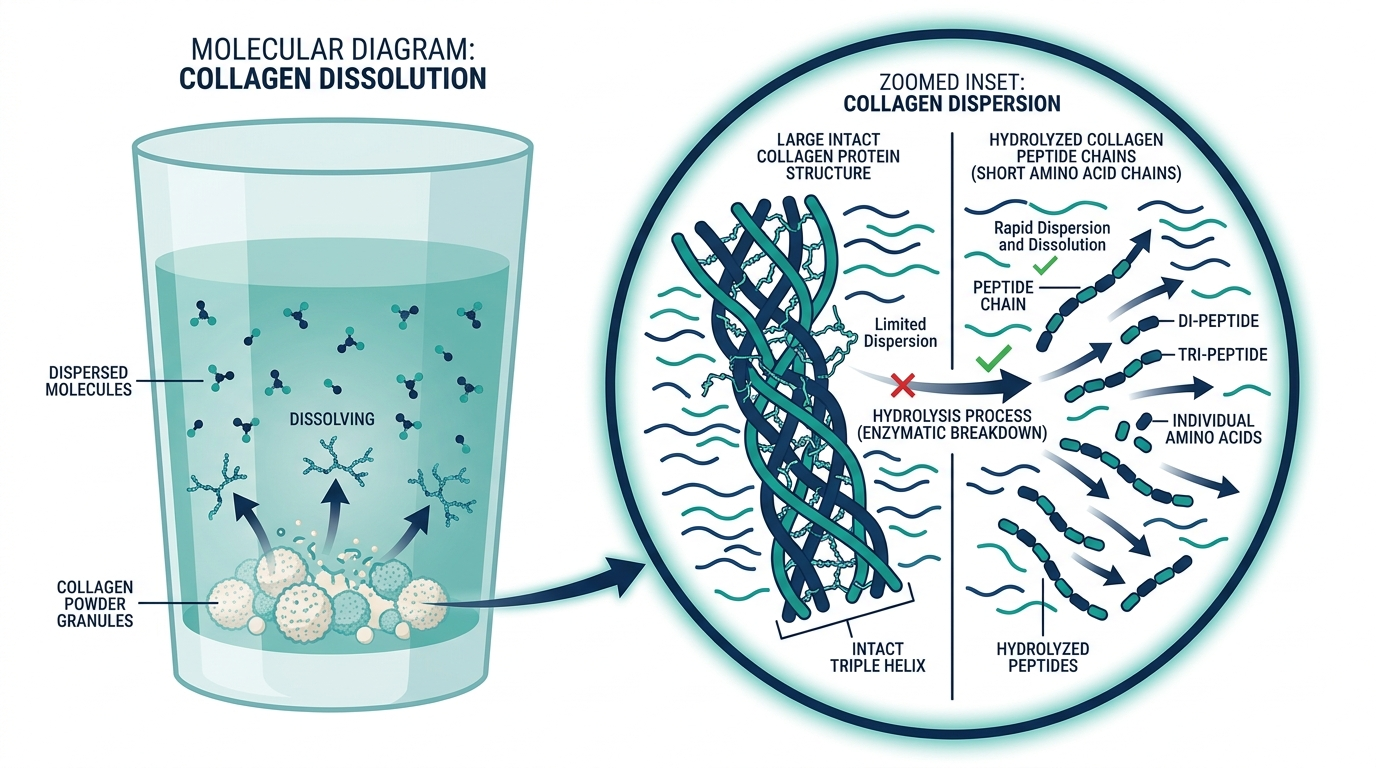
Collagen is the structural protein that makes up roughly 30% of your total body protein. It is the scaffolding inside skin, the cushion in cartilage, the tensile material in tendons, and the matrix in bone. Your body makes it from scratch using amino acids, but natural production falls steeply after the mid-20s, about 1 to 1.5% per year by most estimates.
Collagen peptides powder is collagen that has been broken down by enzymatic hydrolysis into short chains called peptides, typically fragments of 2,000 to 5,000 daltons in molecular weight. “Hydrolyzed collagen” and “collagen peptides” mean the same thing. The intact collagen molecule is too large to be absorbed through the intestinal wall; once hydrolyzed, the fragments are absorbed directly into circulation.
A 2024 randomized, double-blind crossover study published in Frontiers in Nutrition measured plasma hydroxyproline concentrations after a single 10 g dose of collagen hydrolysate. Free hydroxyproline concentrations increased by an average factor of 7.2 for fish-derived hydrolysate, 9.9 for porcine, and 6.2 for bovine, compared to baseline, confirming that the peptides do pass through the gut wall and enter the bloodstream (PMC). The key tripeptide Gly-Pro-Hyp, the repeating unit of native collagen, is partially absorbed intact and partially cleaved to Pro-Hyp, a bioactive dipeptide detected in skin fibroblast stimulation assays.
The practical upshot: not all collagen powders are equivalent. A low-molecular-weight hydrolysate absorbs measurably better than a gelatin or a whole-protein powder that has not been properly hydrolyzed.
That distinction matters when you are looking at a label that says “collagen protein” without specifying “hydrolyzed.” Whole collagen protein, usually sold as a gelatin powder for cooking, is not the same product and will not behave the same way in your bloodstream.
How much collagen peptides powder should you take per day?
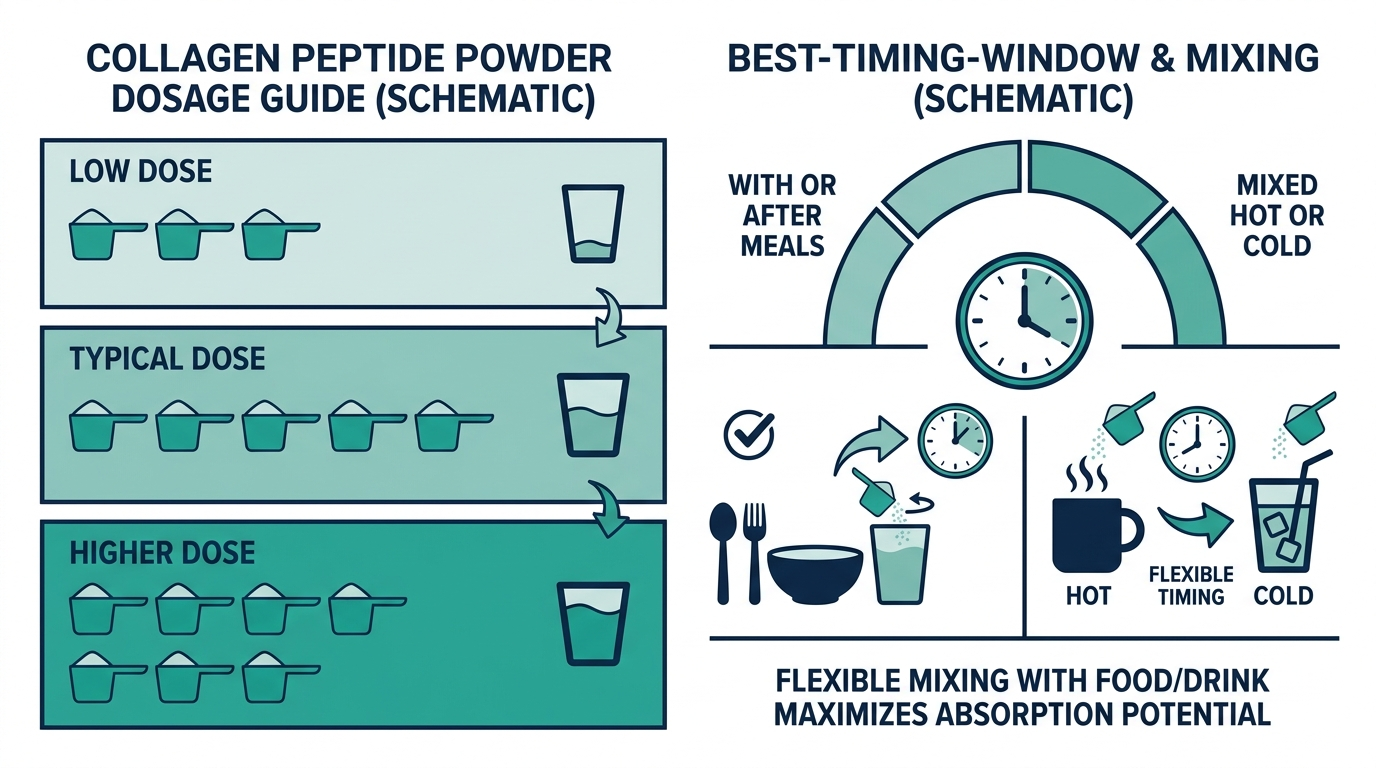
The dosage range in published trials is wide, 2.5 grams to 40 grams daily, because different goals have genuinely different evidence bases. Here is what the data actually supports, not what a brand’s marketing department settled on:
| Goal | Studied dose | Duration to effect | Evidence quality |
|---|---|---|---|
| Skin hydration and wrinkle reduction | 2.5 to 10 g/day | 6 to 12 weeks | Multiple RCTs, moderate strength |
| Joint pain reduction | 5 to 10 g/day | 12 weeks | 2024 RCT, 182 participants |
| Achilles and patellar tendon adaptation | 5 g/day + resistance exercise | 14 weeks | Wiley SJMSS 2022 |
| Muscle mass support (combined with training) | 15 g/day | 12 weeks | Meta-analysis, PMC 2021 |
| Bone mineral density support | 5 to 15 g/day | 12 months | Systematic review |
| General connective tissue maintenance | 10 g/day | Ongoing | Standard industry starting point |
A 2024 randomized controlled trial tested 5 grams of specific collagen peptides (SCP) daily against placebo in 182 participants with joint discomfort. After 12 weeks, the SCP group showed significant reductions in pain at rest and during walking (MDPI). That same dose, 5 grams, combined with calf-strengthening exercises, also increased Achilles tendon cross-sectional area compared to exercise alone in a separate trial, which matters if you are managing tendinopathy rather than just soreness.
For skin, a six-week RCT published in Cosmetics (2024) found that daily oral collagen reduced wrinkle volume by 46%, wrinkle area by 44%, and wrinkle depth by 9% compared to placebo, with a 34% greater increase in skin moisture (MDPI Cosmetics). The dose in that trial was 2.5 grams, which is lower than most commercial serving sizes.
Personally, 10 grams daily is where I land as a general starting point. It is the midpoint of the studied range, it is one standard scoop for most brands, and it is well within the safety ceiling. The FDA has classified hydrolyzed collagen as “generally recognized as safe” (GRAS), and clinical trials have used doses up to 10 grams daily for up to six months with no serious adverse events reported (WebMD).
Do not believe brands that tell you to use 30 or 40 gram scoops for general wellness. That is a dose appropriate for muscle-focused recovery in resistance athletes, not for someone who wants better skin or joint comfort. Bigger is not always better, and you are paying per gram.
When is the best time to take collagen peptides?
This question generates more disagreement than it deserves, partly because the answer is goal-dependent and partly because the marketing varies wildly by brand.
For joint and tendon health, pre-exercise timing has real support. A landmark study from Keith Baar’s lab at UC Davis showed that 15 grams of vitamin C-enriched gelatin taken 60 minutes before exercise significantly increased collagen synthesis in engineered ligaments (Shaw et al., American Journal of Clinical Nutrition, 2017). Collagen synthesis spikes during and immediately after exercise, and having circulating collagen peptides available during that window appears to amplify the adaptation. For most people, 30 to 60 minutes before a workout is the practical target.
For skin, consistency matters more than clock time. There is no published evidence that morning versus evening changes skin outcomes. The skin trials with positive results used once-daily dosing at whatever time participants preferred. If you will reliably take it with your morning coffee, take it in the morning. If your dinner routine is more consistent, take it then.
Does fasting status matter? A 2025 study confirmed that coffee polyphenols do not meaningfully reduce collagen peptide bioavailability when co-consumed, which dispels one circulating myth. Having a full or empty stomach also does not appear to change absorption in a clinically significant way. Collagen peptides are digested and absorbed across the small intestinal brush border regardless of what else is present.
The one timing rule worth keeping is this: if you are using collagen specifically for tendon or joint adaptation alongside a structured training program, take it 30 to 60 minutes before the session, paired with vitamin C. For every other use case, pick a time you will sustain.
Why do you need to take collagen peptides with vitamin C?
Vitamin C is a required cofactor for prolyl hydroxylase and lysyl hydroxylase, the two enzymes that catalyze the hydroxylation reactions needed to synthesize stable collagen triple helices. Without adequate vitamin C, your body cannot assemble new collagen strands even when it has the raw amino acid inputs.
This is not a supplement brand selling you a bundle. It is basic biochemistry that has been understood since the mechanism of scurvy was established. When you take collagen peptides, you are providing the amino acid building blocks (glycine, proline, hydroxyproline). Vitamin C determines whether your fibroblasts can actually use them.
In practice, 50 to 100 mg of vitamin C is enough to saturate the cofactor requirement. You do not need a megadose. A small glass of orange juice (about 60 mg), a kiwi (64 mg), or half a bell pepper (75 mg) alongside your collagen is sufficient. Many collagen products now include vitamin C in the formulation, which is a genuinely useful addition rather than marketing padding.
Full-body lab membership: 100+ biomarkers, doctor-reviewed, tracked over time.
How do you mix collagen peptides powder without clumping?
Most hydrolyzed collagen peptides dissolve easily in hot liquids. The problem arrives with cold drinks, where the powder can ball up on contact if added dry to a cold surface.
The fix is simple and takes 10 seconds: dissolve the powder in a small amount of warm water first, about one to two tablespoons, then pour it into your cold drink. The pre-dissolution step eliminates clumping entirely. A milk frother or blender also works if you want to skip the warm-water step.
What collagen peptides can be mixed into:
- Hot coffee or tea: stir directly after brewing. Let the temperature drop for 30 seconds first to avoid destabilizing any heat-sensitive nutrients if you are using a fortified product.
- Cold brew or iced coffee: pre-dissolve in warm water, then add. A 2025 study confirmed coffee polyphenols do not reduce peptide bioavailability, so this combination is nutritionally fine.
- Smoothies: add directly to the blender with other ingredients. Fruit-based smoothies are ideal because they naturally supply vitamin C.
- Plain water: the least interesting option but fully functional.
- Oatmeal, soups, and sauces: collagen peptides are heat-stable and flavorless, making them one of the more versatile powders to cook with. They will not gel at normal cooking temperatures the way gelatin does.
- Yogurt or overnight oats: stir in and refrigerate. The powder will absorb into the moisture fully by morning.
The flavor profile of a quality unflavored hydrolysate is genuinely neutral. If your collagen powder has a noticeable taste in water, that is worth investigating: either the product quality is lower, or flavoring additives are included.
Which type of collagen peptides powder should you buy?
The collagen type question is where a lot of labels mislead by omission. Here is the practical map:
Type I makes up about 90% of your body’s total collagen and is the primary structural protein in skin, bones, tendons, and ligaments. Almost every bovine (cow hide) and marine (fish skin) collagen product is predominantly Type I. If your goal is skin, hair, nails, or tendon health, Type I is the right starting point.
Type III is found alongside Type I in skin and blood vessel walls. Most bovine collagen products contain a blend of Types I and III, which is appropriate for skin and connective tissue goals.
Type II is the primary collagen in cartilage. This is where the story gets complicated. There are two very different products sold as “Type II collagen,” and they work by different mechanisms:
- Hydrolyzed Type II collagen peptides provide amino acid building blocks, same mechanism as Type I hydrolysate. This form comes from chicken sternum cartilage and works like other peptides.
- Undenatured (native) Type II collagen, at a dose of around 40 mg per day, works by a completely different oral tolerance mechanism. The intact molecular structure triggers immune regulation in the gut-associated lymphoid tissue, which reduces joint inflammation through a process called clonal anergy. This requires the molecule to stay intact, so hydrolysis destroys this specific benefit. The two products should not be compared directly.
If joint inflammation is your primary goal, undenatured Type II at 40 mg is the studied route. If joint structural support alongside skin and tendon goals is what you want, a hydrolyzed bovine or marine product at 5 to 10 grams covers the spectrum.
Marine vs. bovine: Marine collagen is predominantly Type I with a lower average molecular weight, which the 2024 bioavailability data suggests absorbs somewhat more efficiently than bovine in some comparisons. It is also the default for people avoiding beef for dietary or religious reasons. The practical difference in real-world outcomes between a well-formulated marine and a well-formulated bovine product at the same dose is likely small.
A word on multi-type blends: Products like Ancient Nutrition Multi Collagen Peptides combine Types I, II, III, V, and X in a single formula. For someone who wants one product to cover joint, skin, and connective tissue goals without researching each type separately, these blends are genuinely useful. The trade-off is that you get each type at a lower dose than a single-type product, which may matter if you have a specific therapeutic goal.
Hydrolyzed type I & III collagen peptides, third-party tested, unflavored.
What does the 2024-2026 clinical evidence actually show?
Let’s be direct about what the trials show and where the caveats live.
A 2025 meta-analysis published in The American Journal of Medicine reviewed 23 randomized controlled trials covering 1,474 participants and found that collagen supplements significantly improved skin hydration, elasticity, and wrinkle depth (ScienceDirect). The meaningful caveat: trials funded by supplement companies showed larger effect sizes than independently funded trials. That does not invalidate the results, but it is information worth holding.
A 2025 double-blind RCT published in Nutrients (NCT07516756) specifically examined low-molecular-weight collagen peptides for anti-aging outcomes in healthy adults and found significant improvements in facial wrinkles and skin hydration at 8 weeks with 2.5 grams daily (PMC). That is a clinically conservative dose and a result worth noting.
A 2024 12-week RCT by Reilly et al. in Dermatology Research and Practice found that daily supplementation of hydrolyzed collagen was significantly more effective than every-other-day dosing for skin parameters, supporting the importance of daily consistency rather than just dose size (Wiley).
For bone and muscle, a 2025 meta-analysis in PMC examined collagen peptide supplementation’s effects on bone mineral density and lean mass and found promising signals particularly when combined with resistance training and vitamin D (PMC).
The honest summary: the evidence is strong enough to be confident that collagen peptides do something measurable, especially for skin hydration and joint comfort. It is not strong enough to claim a specific brand’s formula at 5 grams beats another at 10 grams. The mechanism is real. The dose response above 10 grams for non-athlete goals remains unclear.
Is collagen peptides powder a protein supplement?
Technically yes. Practically, no, and this distinction matters if you are also trying to hit a protein target.
Collagen is not a complete protein. It is missing tryptophan, one of the nine essential amino acids, which means it cannot replace a complete protein source for muscle protein synthesis. It is extremely high in glycine, proline, and hydroxyproline, amino acids that are specifically needed for connective tissue but are not the limiting factor in muscle growth.
Whey protein delivers approximately 2.5 grams of leucine per 25-gram serving, which is near the threshold for maximally stimulating muscle protein synthesis. A 10-gram serving of collagen peptides provides minimal leucine. If you use collagen to “hit your macros” after a resistance training session, you are underdosing the stimulus that drives muscle adaptation.
The right mental model: collagen peptides are a connective tissue supplement that happens to contain protein, not a protein supplement that happens to support connective tissue. Use it alongside a complete protein source, not instead of one.
For athletes specifically: the pre-workout timing strategy works best when collagen is added to an existing protein and training program, not when it replaces post-workout whey.
Who should be cautious with collagen peptides powder?
The overall safety profile is strong. Clinical trials have not found significant adverse effects at doses up to 10 grams daily for six months. That said, a few groups warrant attention:
Fish or shellfish allergy: Marine collagen is derived from fish skin. If you have a documented seafood allergy, use bovine or chicken-derived collagen and disclose it to your clinician.
Beef allergy: A small subset of people with alpha-gal syndrome (a tick-bite triggered red meat allergy) may react to bovine collagen. This is rare but worth knowing.
Kidney disease: Collagen peptides provide a significant hydroxyproline load. Hydroxyproline is metabolized to oxalate, which can contribute to kidney stone formation in susceptible individuals. People with a history of oxalate stones or CKD should discuss collagen supplementation with a nephrologist before starting.
Pregnancy and breastfeeding: There is no specific safety data on collagen peptide supplementation during pregnancy. The default recommendation from most clinicians is to avoid unnecessary supplements during pregnancy unless there is a clear clinical indication.
Medications: There are no well-documented drug interactions with hydrolyzed collagen at standard doses, but if you take anticoagulants or immunosuppressants, flag any new supplement to your prescriber.
The most common side effects reported in trials are mild digestive discomfort, bloating, or a feeling of heaviness after large doses. Starting with 5 grams and titrating up over a week avoids most of this.
What should you realistically expect, and when?
The timelines matter because people often quit before the window where results become visible.
Skin hydration: some trials have shown detectable improvements in skin moisture as early as 4 weeks. Wrinkle volume and depth changes are more consistently reported at 6 to 8 weeks with daily dosing.
Joint comfort: the 2024 RCT showing pain reduction used a 12-week protocol. Most joint-focused trial results are reported at 12 to 16 weeks. If you are taking collagen for joint reasons and stopping at 4 weeks because nothing has changed, you are quitting two months early.
Tendon adaptation: the Achilles tendon cross-sectional area increases observed in the Jerger et al. 2022 Wiley study occurred over 14 weeks of combined collagen and resistance training. Tendons remodel slowly because their blood supply is limited. A 3-month minimum commitment is not optional for tendon goals.
Hair and nails: anecdotally reported at 6 to 8 weeks but with much weaker clinical data than skin and joints. Nail strength improvements have been reported in observational studies but not well-characterized in RCTs with collagen as the sole variable.
The meta-lesson here: collagen peptides are a slow-build supplement. They support tissue synthesis processes that operate on weeks-to-months timescales. Anyone selling you visible results in 7 days is not describing what the biology actually allows.
Hydrolyzed type I & III collagen peptides, third-party tested, unflavored.
Don’t just read about your health, track it.
A single result is a snapshot. Superpower re-tests 100+ markers over time so you can watch them move as you change sleep, food, and training.
Frequently asked questions
How many grams of collagen peptides powder should I take per day?
For general connective tissue and skin support, 5 to 10 grams daily is the best-evidenced starting range. For joint pain reduction or tendon adaptation with exercise, studies use 5 grams paired with training. For muscle support in resistance athletes, trials have used 15 grams or more. Above 10 grams, the marginal benefit for skin and general wellness goals is less clear.
Can I take collagen peptides on an empty stomach?
Yes. No published research shows meaningful absorption differences between fasted and fed states for collagen peptides. Take it with whatever routine you will sustain.
Does mixing collagen powder into coffee destroy it?
No. Hydrolyzed collagen peptides are heat-stable to at least 300 degrees Fahrenheit, well above coffee temperature. A 2025 study specifically confirmed that coffee polyphenols do not meaningfully reduce collagen peptide bioavailability. Stir it directly into hot coffee without concern.
How long before a workout should I take collagen for joint health?
30 to 60 minutes before exercise, with a vitamin C source. This is based on the Baar lab research showing that collagen synthesis is amplified during and immediately after exercise, and that having circulating peptides during that window supports tendon and ligament adaptation.
What is the difference between collagen peptides and gelatin?
Both come from hydrolysis of animal connective tissue, but gelatin is partially hydrolyzed and will gel when cooled. Collagen peptides are fully hydrolyzed to a smaller molecular weight and remain liquid in cold. Collagen peptides absorb more efficiently. Gelatin is better for cooking applications where gelling is desired.
Can I take collagen peptides every day long term?
Clinical trials have demonstrated safety at up to 10 grams daily for six months with no serious adverse events. Long-term data beyond one year is limited, but the ingredient is derived from food sources (hide, bone, fish skin) and has GRAS status. Most practitioners consider daily supplementation appropriate for ongoing connective tissue maintenance.
Do collagen peptides break a fast?
Yes. Collagen peptides contain approximately 35 to 40 calories per 10-gram serving and will trigger an insulin response. If you are following a strict fasted protocol for metabolic reasons, take your collagen at the start of your eating window rather than before your first meal.
Author: Vital Signs Today Editorial Team, [credential]”]. Educational content, not medical advice. Sources linked inline.
Primary sources
- Absorption of bioactive peptides following collagen hydrolysate intake (Frontiers in Nutrition, 2024)
- Effects of Collagen Supplements on Skin Aging: Systematic Review and Meta-Analysis (Am J Med, 2025)
- Skin Anti-Aging and Moisturizing Effects of Low-Molecular-Weight Collagen Peptide Supplementation (PMC, 2025)
- Anti-Aging Effects of Low-Molecular-Weight Collagen Peptide: Six-Week RCT (MDPI Cosmetics, 2024)
- A Clinical Trial Shows Improvement in Skin Collagen Following 12-Week Oral Intake (Wiley Dermatology Research, 2024)
- Impact of Specific Bioactive Collagen Peptides on Joint Discomfort: RCT (MDPI IJERPH, 2024)
- Effects of Specific Collagen Peptide Supplementation on Achilles Tendon (SJMSS / Wiley, 2022)
- Efficacy of collagen peptide supplementation on bone and muscle: meta-analysis (PMC, 2025)
- Collagen Peptides Overview, Dosing, Side Effects (WebMD)
- Shaw G et al., Vitamin C-enriched gelatin supplementation and collagen synthesis (AJCN, 2017)
- Vital Proteins Collagen Peptides (Amazon)
- Sports Research Collagen Peptides (Amazon)
Related reading
Vital Signs Today may earn a commission if you buy through links on this page. It does not affect our editorial assessments.