
- To lower your A1C, combine a lower-carbohydrate eating pattern, at least 150 minutes of weekly exercise, and 5 to 7 percent weight loss, the same approach that cut diabetes risk by 58 percent in the Diabetes Prevention Program.
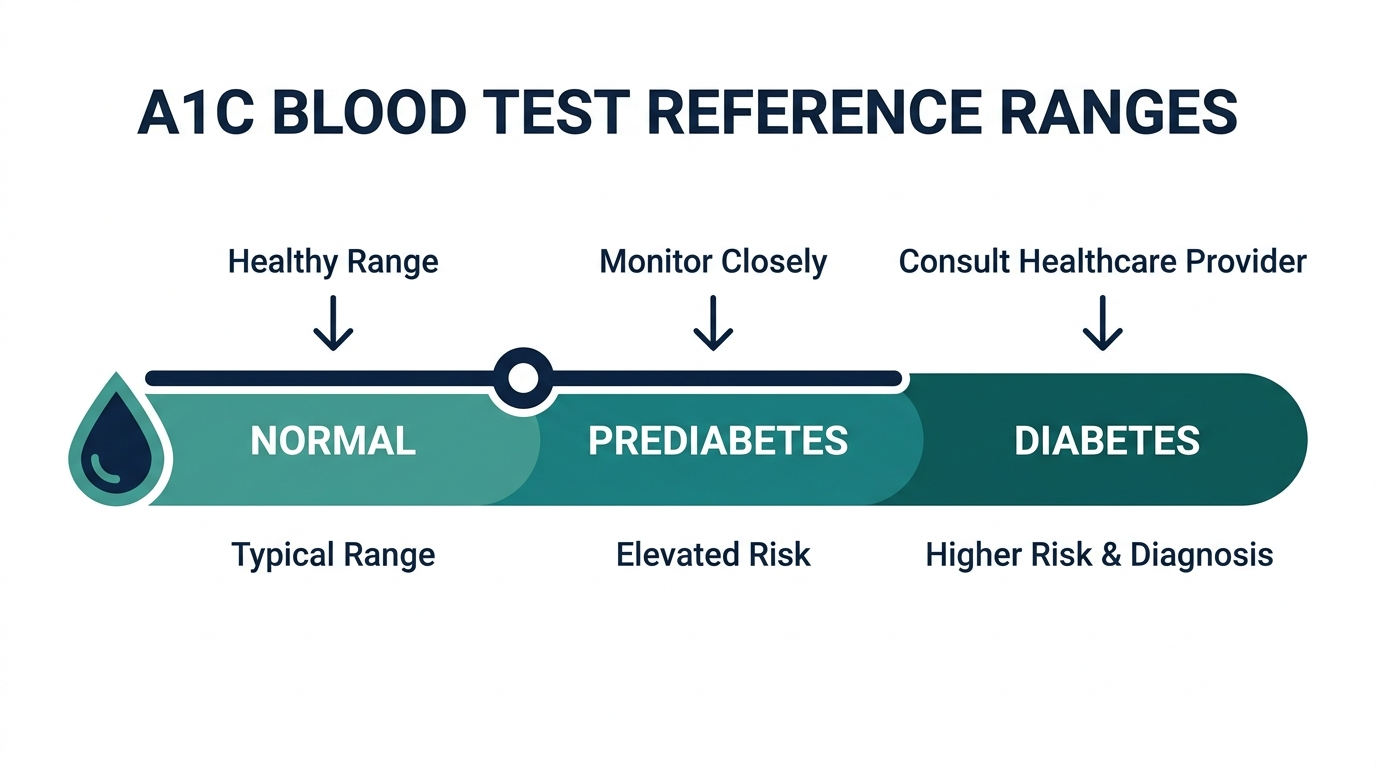
- An A1C below 5.7 percent is normal, 5.7 to 6.4 percent signals prediabetes, and 6.5 percent or higher indicates diabetes, according to the American Diabetes Association.
- Because A1C reflects your average blood sugar over 2 to 3 months, meaningful changes usually take 2 to 3 months to show on a lab test, not days.
An elevated A1C is one of the most modifiable numbers in medicine. Most people can move it with consistent changes to food, movement, sleep, and, when needed, medication. The key is understanding what the number measures and giving your body enough time for the test to reflect your effort.
What counts as a high A1C?
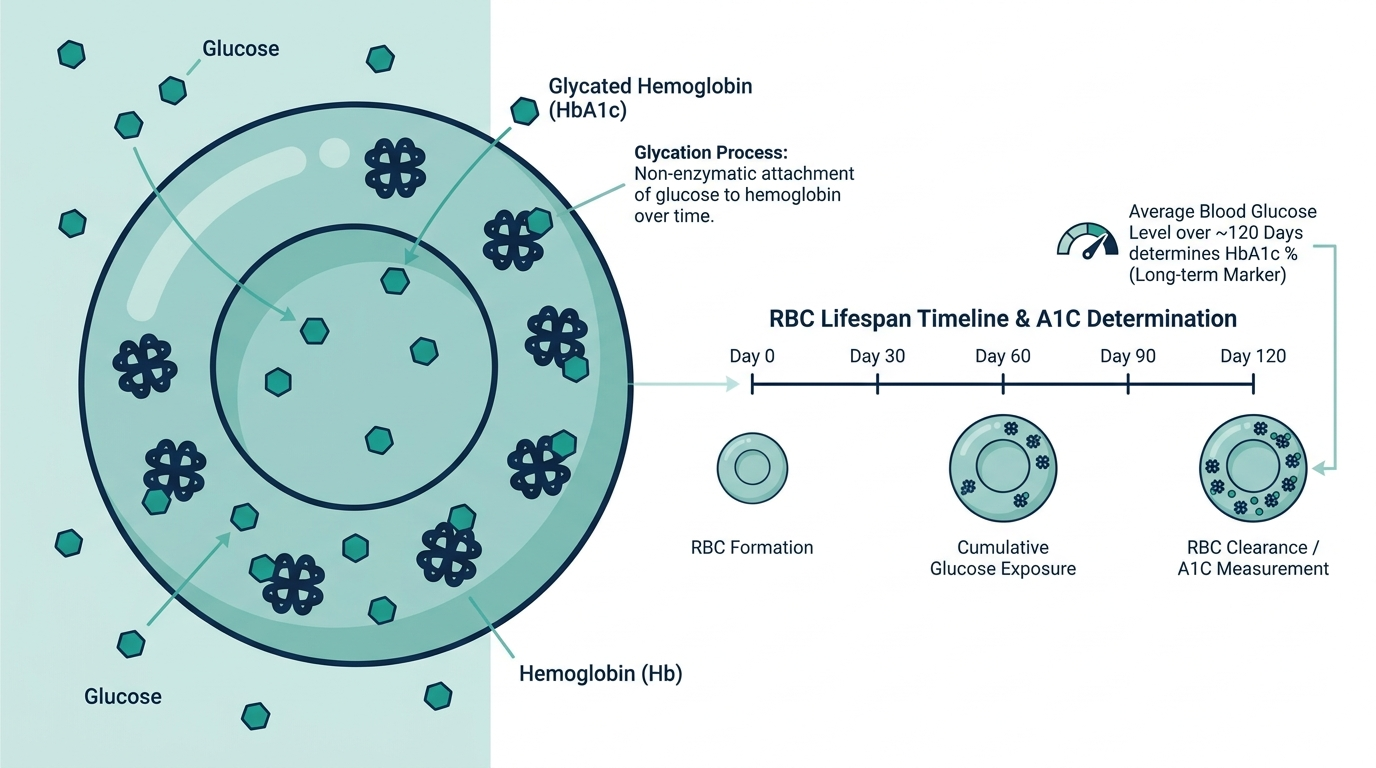
An A1C of 6.5 percent or higher meets the diagnostic threshold for diabetes, while 5.7 to 6.4 percent is classified as prediabetes and anything below 5.7 percent is considered normal, per the American Diabetes Association (ADA). The A1C test measures the percentage of your hemoglobin that is coated with sugar, which reflects your average blood glucose over the previous 2 to 3 months (Cleveland Clinic).
Higher A1C values map to higher average blood sugar. For context, an A1C of 7 percent corresponds to an estimated average glucose of about 154 mg/dL, and 8 percent corresponds to roughly 183 mg/dL (ADA). For most nonpregnant adults already diagnosed with diabetes, the general treatment target is an A1C below 7 percent, though the ADA stresses this is individualized and may be looser for older adults or those with other health conditions.
Your A1C as an everyday glucose number
The A1C percentage can feel abstract, so it helps to translate it into estimated average glucose (eAG), the same units your home meter shows. An A1C of 5.7 percent is roughly 117 mg/dL, 6.5 percent is about 140 mg/dL, 7 percent is about 154 mg/dL, 8 percent is about 183 mg/dL, and 9 percent is about 212 mg/dL (ADA). Seeing that a jump from 6 to 8 percent means your blood ran nearly 60 mg/dL higher on average for months makes the stakes concrete.
When the A1C number can mislead you
A1C measures sugar stuck to hemoglobin, so anything that changes red blood cells changes the result, sometimes without any change in real blood sugar. It can read falsely low when red cells turn over fast, such as in recent blood loss, hemolytic anemia, late pregnancy, or after a transfusion. It can read falsely high in iron-deficiency anemia and some kidney disease. People with sickle cell trait or other hemoglobin variants may get unreliable values on certain lab machines. If your A1C and your daily glucose readings disagree, tell your clinician, who can confirm with a fasting glucose, an oral glucose tolerance test, or a fructosamine test that is not affected by hemoglobin.
Why lower it?
Lowering an elevated A1C reduces the long-term risk of the complications that high blood sugar drives: eye disease, kidney disease, nerve damage, and cardiovascular events. In the landmark Diabetes Prevention Program, structured lifestyle change reduced progression to type 2 diabetes by 58 percent in high-risk adults (NIDDK).
Even modest improvements matter. Among people with diabetes, lowering A1C is associated with fewer microvascular complications over time. For someone with prediabetes, pulling the number back below 5.7 percent can mean avoiding a diabetes diagnosis altogether. The earlier you act, while beta cells still function well and damage is reversible, the more leverage each change gives you.
What high blood sugar feels like
Prediabetes and early diabetes are usually silent, which is why so many people are surprised by the number. As glucose climbs higher, classic signs appear: increased thirst, frequent urination, blurred vision, fatigue, slow-healing cuts, frequent infections, tingling in the hands or feet, and unexplained weight loss. Silence is not safety here, because the vascular damage begins long before symptoms do, so acting on the number itself is the point.
A1C is not the only lens
A1C gives a three-month average but hides the swings. Two people with the same 7 percent can have very different days, one steady and one whipsawing between highs and lows. That is why clinicians increasingly pair A1C with time in range from a continuous glucose monitor, or with a fasting glucose, to see the pattern behind the average. Lowering A1C while also flattening the daily spikes is the fuller goal.
What drives a high A1C?
Two engines push the number up. The first is insulin resistance, where muscle, liver, and fat stop responding well to insulin, so the pancreas pumps out more to compensate. The second is beta-cell decline, where the pancreas gradually loses the capacity to keep up. Type 2 diabetes is usually both at once, and knowing which is dominant helps explain why a given plan works.
Everyday factors feed those engines. Excess body fat, especially around the abdomen, worsens insulin resistance. A diet heavy in refined carbohydrate and sugary drinks pushes repeated glucose spikes. A sedentary routine leaves muscle glucose stores full, so there is nowhere for the next meal to go. Short or broken sleep and chronic stress raise cortisol, which raises blood sugar. Some medications, notably corticosteroids and certain antipsychotics, push glucose up as a side effect. Genetics and family history set the baseline risk on top of all of this, which is why two people eating the same way can land at different numbers.
Evidence-based ways to lower A1C
The strongest evidence supports a stacked approach: change what you eat, move more, lose a modest amount of weight, and add medication when lifestyle alone is not enough. The Diabetes Prevention Program achieved its 58 percent risk reduction by combining 5 to 7 percent body weight loss with at least 150 minutes of weekly activity (NIDDK).
Diet
Reducing refined carbohydrates and added sugars has the most direct effect on blood glucose, because carbohydrate is the macronutrient that raises it most. Practical, guideline-aligned moves include the following.
- Cut sugar-sweetened drinks: Soda, sweet tea, and juice spike glucose fast with little satiety. Swapping to water or unsweetened drinks is often the single highest-yield change.
- Choose high-fiber carbohydrates: Whole grains, beans, and non-starchy vegetables raise blood sugar more slowly than white bread, white rice, and pastries (MedlinePlus).
- Build plates around protein and vegetables: The ADA plate method fills half the plate with non-starchy vegetables, a quarter with lean protein, and a quarter with quality carbohydrate.
- Watch portion size: Even healthy carbohydrates raise glucose if portions are large. Consistency across meals helps smooth the daily curve.
Beyond swapping foods, a few ordering and pattern tricks reliably flatten the curve.
- Eat vegetables and protein before the carbohydrate: starting a meal with salad or protein and saving the rice or bread for last lowers the post-meal glucose peak compared with eating the carbohydrate first.
- Favor a Mediterranean or lower-carbohydrate pattern: both are supported for improving glycemic control. There is no single mandatory diet, so pick the pattern you can actually keep for years.
- Mind the liquid sugar hiding in “healthy” choices: smoothies, flavored yogurts, granola, and many “protein” bars carry surprising sugar loads. Read the grams of added sugar, not the front-of-box claim.
- Be careful with alcohol: sugary mixers and beer raise glucose, while alcohol on an empty stomach can later drop it too low, especially on insulin or sulfonylureas.
Lifestyle
Physical activity lowers blood glucose both during exercise and for hours afterward by making muscles more insulin-sensitive. The ADA and Diabetes Prevention Program target at least 150 minutes of moderate activity per week, roughly 30 minutes on 5 days (NIDDK).
- Move after meals: A 10 to 15 minute walk after eating blunts the post-meal glucose rise.
- Add resistance training: Building muscle increases the tissue that stores and burns glucose.
- Lose 5 to 7 percent of body weight: For a 200-pound person that is about 10 to 14 pounds, the amount tied to the 58 percent risk reduction (CDC).
- Protect sleep and manage stress: Poor sleep and chronic stress raise cortisol and worsen insulin resistance.
Two more levers get overlooked. First, break up long sitting: standing or walking for a couple of minutes every half hour lowers average glucose more than one long workout paired with an otherwise sedentary day. Second, time some activity for your highest-carb meal, usually dinner, so the muscles soak up that glucose when the load is largest. None of this requires a gym, and the after-meal walk remains the highest-yield habit for most people.
Medical options
When lifestyle change does not get the number to goal, medication is added, and metformin is the usual first-line drug for type 2 diabetes (ADA). Many people need more than one agent over time, and that is expected, not a personal failure.
- Metformin: First-line oral medication that reduces glucose production by the liver and improves insulin sensitivity.
- GLP-1 receptor agonists: Injectable or oral drugs that lower glucose and often produce meaningful weight loss, increasingly favored when weight or heart risk is a concern.
- SGLT2 inhibitors: Lower glucose through the kidneys and offer added heart and kidney protection.
- Insulin: Used when other agents are insufficient or A1C is very high at diagnosis.
The class landscape has shifted. GLP-1 receptor agonists such as semaglutide, and the dual GIP and GLP-1 agonist tirzepatide, now lead when weight or cardiovascular risk drives the picture, because they lower A1C substantially and cause meaningful weight loss. SGLT2 inhibitors are favored when heart failure or kidney disease is present. Older, cheaper options such as sulfonylureas and DPP-4 inhibitors still have a place. The point is that medication choice is personalized to your weight, heart, kidneys, cost, and how far you are from goal, and needing a second or third agent over time is the natural course of the disease, not a failure of willpower.
How fast can A1C change?
Because A1C reflects average blood sugar over the prior 2 to 3 months, it changes gradually, and most clinicians recheck it about every 3 months when treatment is being adjusted (ADA). You may see day-to-day improvement in fingerstick or continuous glucose readings within a week of changing your diet, but the A1C lab value lags behind.
The pace also depends on starting point. Someone moving from an A1C of 9 percent toward 7 percent often sees faster early drops than someone fine-tuning from 6.2 toward 5.6, where progress is slower and steadier. Rapid, large drops are not always the goal either, since very fast correction can temporarily worsen diabetic eye disease, which is why a clinician guides the speed of change.
Here is a realistic arc. A 52-year-old finds an A1C of 8.1 percent. She cuts sugary drinks, walks 20 minutes after dinner, starts metformin, and loses about 12 pounds over three months. Her repeat A1C comes back at 6.8 percent, and her daily meter readings improved within the first two weeks even though the lab number took the full quarter to catch up. Contrast that with someone at 6.0 percent nudging toward 5.6: the same effort moves the needle more slowly because there is simply less sugar to clear off the hemoglobin. Both are winning; they are just on different parts of the curve.
When do you need medication or a doctor?
See a clinician promptly if your A1C is 6.5 percent or higher, if it is rising despite lifestyle effort, or if you have symptoms like excessive thirst, frequent urination, blurred vision, or unexplained weight loss. The ADA recommends starting medication at diagnosis for most people with type 2 diabetes alongside lifestyle change, especially when A1C is well above target.
You also need professional guidance before making big changes if you already take glucose-lowering medication, because cutting carbohydrates or losing weight quickly can cause low blood sugar if doses are not adjusted. A doctor can order the right tests, rule out other causes, set a personalized A1C target, and choose medication that fits your weight, heart, and kidney profile.
Frequently asked questions
Can I lower my A1C without medication?
Yes, many people with prediabetes or early type 2 diabetes lower A1C through diet, exercise, and 5 to 7 percent weight loss. The Diabetes Prevention Program cut diabetes risk by 58 percent with lifestyle change alone (NIDDK). Whether medication is needed depends on your number and overall risk.
How much can A1C drop in 3 months?
It varies. People starting with higher A1C often see larger drops, sometimes 1 to 2 percentage points, while those near goal see smaller, slower changes. Because A1C reflects 2 to 3 months of average glucose, 3 months is the standard window to remeasure progress (ADA).
What is a good A1C target?
For most nonpregnant adults with diabetes, the ADA suggests an A1C below 7 percent, but targets are individualized. Older adults or people with other conditions may have a higher target, while younger, healthier people may aim lower. Your clinician sets yours.
Does losing weight lower A1C?
Yes. Losing 5 to 7 percent of body weight improves insulin sensitivity and lowers blood glucose, which is why it was central to the Diabetes Prevention Program (CDC). For a 200-pound person that is roughly 10 to 14 pounds.
What foods raise A1C the most?
Sugar-sweetened beverages, refined grains like white bread and white rice, sweets, and large portions of any carbohydrate raise blood glucose the most. Replacing them with high-fiber carbohydrates, lean protein, and non-starchy vegetables helps lower A1C over time (MedlinePlus).
Do I need to fast before an A1C test?
No. Unlike a fasting glucose test, A1C does not require fasting because it reflects a two to three month average rather than your level at that moment. You can have it drawn any time of day, which is one reason it is so convenient for screening.
Can stress or poor sleep raise A1C?
Yes, indirectly. Chronic stress and short sleep raise cortisol and other hormones that increase insulin resistance and blood sugar, so a stretch of bad sleep or high stress can nudge your average up. Protecting sleep and managing stress are legitimate parts of a plan to lower A1C.
Is prediabetes reversible?
Often, yes. Many people with prediabetes return an A1C below 5.7 percent with diet, activity, and modest weight loss, and doing so lowers the chance of progressing to type 2 diabetes. The earlier you act, while insulin-producing cells are still healthy, the better the odds.
What is the difference between A1C and fasting glucose?
Fasting glucose is a single snapshot of your blood sugar after not eating, while A1C is the two to three month average. A fasting glucose can look fine on a good morning even when the longer-term A1C is elevated, so clinicians often use both together to get the full picture.
Sources
- American Diabetes Association, Understanding A1C
- Cleveland Clinic, A1C: What It Is, Test, Levels and Chart
- NIDDK, Diabetes Prevention Program (DPP)
- CDC, Prediabetes: Your Chance to Prevent Type 2 Diabetes
- MedlinePlus, Diabetic Diet
This article is for general educational purposes and is not medical advice. It cannot diagnose or treat you and does not replace your clinician. Always discuss your lab results and any health decisions with a qualified healthcare professional.
Related: compare GLP-1 telehealth options.
Vital Signs Today may earn a commission if you buy through links on this page. It does not affect our editorial assessments.