Medically reviewed by the VST Editorial Board. Last updated August 24, 2026. This article contains affiliate links.
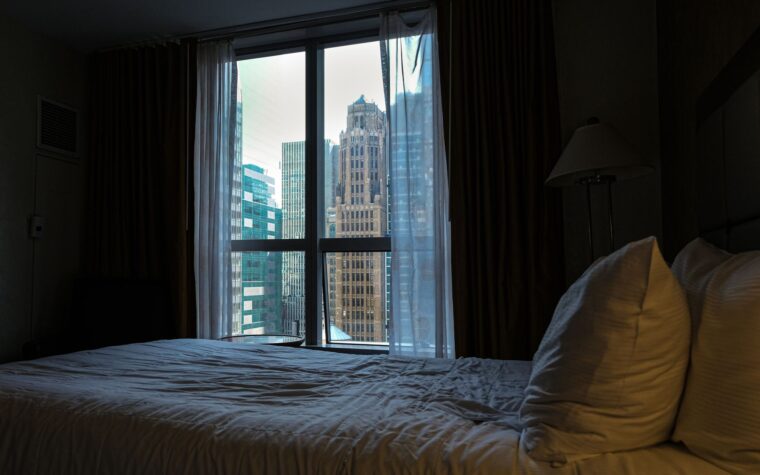
The hotel gym has two treadmills, one of which is broken, and it closes at nine. Your room has a floor.
A hotel room workout is worth doing because the World Health Organization’s target of 150 to 300 minutes of moderate activity per week plus two muscle-strengthening sessions does not pause for a business trip, and 20 minutes of bodyweight circuit training in a two-metre square covers the strengthening half. The goal on the road is not progress. It is defending the floor: keeping the habit, the joints and the circulation intact until you are home. Here is a circuit that needs no equipment, a version for a room where the person below you is asleep, and the parts that matter more than the exercises.
Key takeaways
- WHO recommends 150 to 300 minutes of moderate aerobic activity weekly plus muscle strengthening on two or more days.
- Twenty minutes of bodyweight circuit work in a hotel room satisfies the strengthening component with no equipment.
- After a long flight, walking and mobility matter more than intensity for the first 24 hours because of circulation, not fitness.
What should the first session after a flight look like?
Not a workout. A reset.
After eight or more hours of near-total immobility, your priority is venous return and joint mobility, not training stimulus. Twenty minutes of walking outdoors does both, and it doubles as the timed light exposure that shortens jet lag. Walk in the morning if you flew east, late afternoon if you flew west.
If you have any clot risk factor, this is not optional and the reasoning is in our guide to compression socks for flying. Hard training on arrival day with dehydration and swollen ankles is the wrong first move.
The 20-minute hotel room circuit
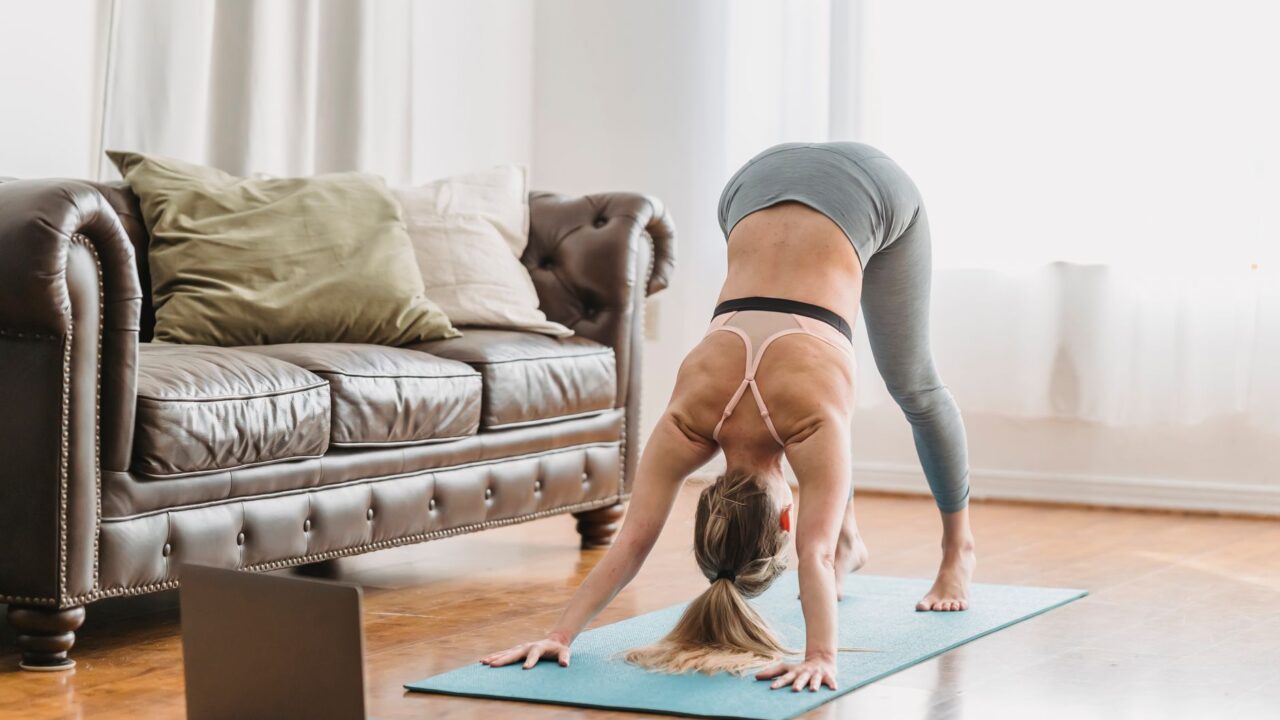
Four rounds. Forty seconds of work, twenty seconds of rest, one minute between rounds. No equipment, roughly two square metres of floor.
- Bodyweight squats. Feet shoulder width, sit back as if to a chair, chest up. Use the desk chair as a depth target if you are unsure.
- Push-ups. On the floor, or hands on the desk or bed edge to reduce load. Elbows at about 45 degrees, not flared.
- Reverse lunges, alternating. Step back rather than forward. Easier on the knees and quieter.
- Plank. Forearms down, ribs pulled in, glutes engaged. Stop when your lower back starts to sag, not when the timer ends.
- Glute bridges. On your back, heels close, drive through the heels. This is the direct antidote to a day in a seat.
- Dead bug. On your back, opposite arm and leg extending slowly. The one that looks easy and is not.
That is roughly 20 minutes including rest. Do it three times across a five-day trip and you have covered the WHO strengthening recommendation with room to spare.
The quiet version, for thin floors
Anything with a jump is out. Replace the circuit with slow tempo work, which is harder anyway and completely silent.
| Exercise | Tempo | Reps |
|---|---|---|
| Squat | 3 seconds down, 1 second pause, 1 second up | 10 |
| Push-up | 3 seconds down, 1 second pause | 8 to 10 |
| Split squat, each side | 3 seconds down | 8 |
| Wall sit | Hold | 45 seconds |
| Side plank, each side | Hold | 30 seconds |
| Hip flexor stretch, each side | Hold | 60 seconds |
Three rounds. The hip flexor stretch is not filler. After ten hours seated, the front of the hip is the tissue actually causing the low back ache you are blaming on the mattress.
(Aside: I stopped packing running shoes for short trips and my compliance went up, not down. Shoes are what made the workout feel like it required a plan. A carpet and twenty minutes require nothing.)
Pack for the workout you will actually do
A packable daypack that holds a change of clothes and a band takes almost no space in a carry-on and removes the excuse. G4Free makes lightweight folding daypacks and gym bags built for exactly that.
Affiliate link. We may earn a commission at no cost to you.
What actually determines whether you train on a trip?
Not motivation. Three logistical things, in order.
When it is scheduled. Morning, before the day has a chance to eat it. Evening workouts on business trips lose to dinner roughly every time.
Whether the clothes are visible. Unpack the workout clothes onto the chair when you arrive. This sounds trivial and it changes compliance more than any app.
How low the bar is. Set the minimum at one round, not four. A trip where you did one round every morning beats a trip where you planned four and did zero.
Hotel choice matters too, more than most people account for. A property with a 24-hour fitness room and a walkable neighborhood removes two obstacles at once, which is worth more on a five-night stay than a slightly better room rate.
Where you stay decides whether you move
If you book on points, topping up a World of Hyatt balance through Points.com is how most travelers close a short gap for a specific property with the gym and location they want.
See World of Hyatt points options
Affiliate link. We may earn a commission at no cost to you.
What about the rest of the day?
Twenty minutes of exercise does not undo eleven hours of sitting, and on a conference day you will sit more than you do at home. Break it up: stand for phone calls, take stairs, walk between sessions rather than waiting in the lobby. Aerobic minutes accumulate in short bouts, and the WHO guidance explicitly counts them.
Movement after meals also helps the digestive slowdown that shows up as travel constipation in the first days of a trip. A walk after dinner is doing two jobs.
When should you not train?
Skip the session and rest, or get medical advice, if you have:
- Calf pain, warmth or one-sided swelling within eight weeks of a long flight. Do not stretch it or foam roll it, get it assessed
- Fever, or symptoms of an infection acquired abroad
- Symptoms of altitude sickness. Exertion at altitude with a headache makes things worse, as covered in altitude sickness prevention
- Chest pain, unusual breathlessness, palpitations or dizziness on exertion, which need evaluation before you train again
- A new injury from carrying luggage, particularly a lower back strain with leg numbness or weakness
Call emergency services for chest pain, breathlessness at rest, fainting, or one-sided weakness. Do not attempt to walk it off in a hotel room in a city where you do not speak the language.
Frequently asked questions
Can you stay in shape with only hotel room workouts?
You can maintain strength and habit for weeks. Building strength further usually needs progressive load, which bodyweight work eventually stops providing.
How many days off before you lose fitness?
Meaningful losses in cardiorespiratory fitness generally take more than a couple of weeks of complete inactivity. A five-day trip is not the problem. A pattern of five-day trips is.
Should I train on arrival day after a long flight?
Walk instead. Save the circuit for the following morning at local time.
Do resistance bands help?
They weigh almost nothing and add a pulling movement, which bodyweight circuits are otherwise missing. The best single item to pack.
Is the hotel gym better than the room?
Only if you go. A room circuit you complete beats a gym session you skip because it closed at nine.
The bottom line
Unpack your workout clothes onto the chair, set the bar at one round, do it in the morning, and walk after dinner. Four rounds of six bodyweight movements takes twenty minutes and covers what the guidelines ask of you. On arrival day, skip all of it and walk outside in the right light instead. The trip is not where you build fitness. It is where you refuse to give it back.
Sources
- World Health Organization. Physical activity fact sheet and guidelines on physical activity and sedentary behaviour. who.int
- U.S. Department of Health and Human Services. Physical Activity Guidelines for Americans, 2nd edition. health.gov
- UK Civil Aviation Authority. Physiology of flight, guidance for health professionals. caa.co.uk
- Centers for Disease Control and Prevention. CDC Yellow Book, travel and health. cdc.gov
This article is for general information and is not medical advice. See our medical disclaimer.