
Last updated June 2026. Educational content, not medical advice. Consult a licensed dermatologist or trichologist before starting any hair loss treatment.
Short answer: Yes, but it depends on which peptide you use, how you use it, and what type of hair loss you have. GHK-Cu (copper peptide) applied topically produced a median 26.5% scalp regrowth in a 2025 clinical study when delivered with microneedling alongside standard treatments. Acetyl tetrapeptide-3 matched 3% minoxidil in a 24-week randomized controlled trial. Collagen peptide supplements increased hair density by 27.6% versus placebo in a 12-week study. None of these work the same way, none work for everyone, and two of the three are things you can buy over the counter right now.
GHK-Cu shows real regrowth results in trials. Want to know if copper and nutrient levels are holding your hair back? One at-home Superpower draw checks 100+ biomarkers, physician-reviewed.
Why are so many people suddenly asking if peptides work for hair?
Hair loss affects up to 80% of men and 50% of women at some point in their lives, with androgenetic alopecia (pattern hair loss) accounting for roughly 37.7% of all nonscarring alopecia cases, according to epidemiological data. That is a very large, very motivated group of people who have already tried minoxidil and either found the results underwhelming or disliked the side-effect profile.
Into that void came peptides. What started as a skincare ingredient trend, led by GHK-Cu copper peptide serums for the face, migrated to the scalp in 2024 and 2025 as clinical researchers started testing the same molecules on hair follicles. The beauty industry noticed: one Glossy.co analysis from 2025 called the influx of new peptide hair products one of the fastest-growing subcategories in haircare.
The good news is that there is actual science here now, not just marketing. The less good news is that the science is more nuanced than the bottle claims, and at least one widely-sold category of “peptide” for hair barely registers in the clinical literature.
Full-body lab membership: 100+ biomarkers, doctor-reviewed, tracked over time.
What are peptides, and how would they work on hair?
A peptide is a short chain of amino acids, essentially a fragment of a protein. In hair biology, the relevant proteins are keratin (the structural material of the hair shaft), collagen (the scaffolding of the dermis that surrounds each follicle), and a set of signaling proteins that tell follicle cells when to grow, rest, or shed.
Peptides can influence hair in two distinct ways, and conflating the two is a common source of confusion.
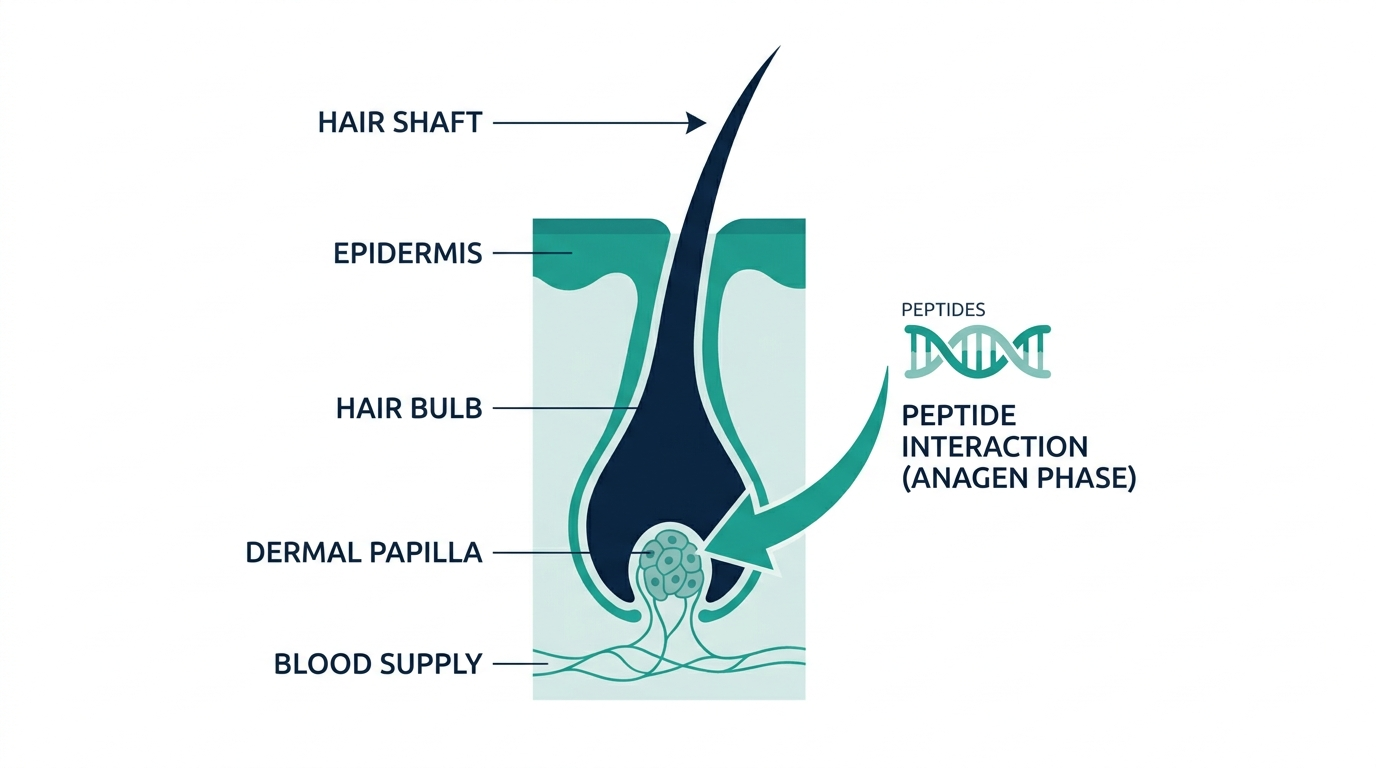
Signaling peptides act on receptors in dermal papilla cells, the specialized cells at the base of each follicle that orchestrate the hair cycle. GHK-Cu, for example, activates the Wnt/beta-catenin pathway and stimulates VEGF (vascular endothelial growth factor), both of which drive the anagen (growth) phase of the hair cycle. When these signals are amplified, follicles that have miniaturized or prematurely entered the resting (telogen) phase can be nudged back toward active growth.
Structural peptides, like hydrolyzed collagen, supply amino acids that the body uses to build new hair and repair the dermal matrix. They do not directly trigger follicle cycling; they provide materials.
The distinction matters. A signaling peptide serum applied topically can, in principle, change what a follicle does. An oral collagen supplement improves the substrate the follicle works within. They are not interchangeable, and neither one is a substitute for addressing the root cause of hair loss.
Which peptides actually have evidence for hair growth?
GHK-Cu (copper tripeptide-1): the strongest topical evidence
GHK-Cu is a naturally occurring tripeptide (glycyl-L-histidyl-L-lysine) complexed with copper. It was discovered in human plasma in the 1970s, but the hair research is recent and increasingly compelling.
The most specific recent data comes from a 2025 retrospective clinical study involving 7 male patients aged 28 to 55 with Norwood-Hamilton grade III to IV hair loss, all of whom had failed standard treatments for at least one year. A combined protocol, 0.5% minoxidil, 0.1% dutasteride, and 1.2% copper peptides, was delivered to the scalp via microneedling at 1,890 perforations per second over five monthly sessions. The outcome: a median 26.5% improvement in scalp coverage (SALT score dropping from 40% to 7.5%, p less than 0.001), with 71.4% of patients achieving more than 10% regrowth and zero adverse events. The same protocol over only three sessions produced just 10% regrowth, which tells you the treatment requires consistent repetition to work.
The mechanism is well-characterized at the cellular level. Ex vivo studies show that AHK-Cu (a close analog) stimulates human hair follicle elongation at concentrations as low as 10 to the minus 12 molar, reduces pro-apoptotic signaling in dermal papilla cells by 42.7% to 77.5%, and increases VEGF-driven microvascular support to the follicle.
Personally, I find the copper peptide story more credible than most ingredient claims in haircare, specifically because the mechanism traces back to basic cell biology that has been replicated in multiple labs, not just the brand’s own data.
One important caveat: the 2025 study used microneedling to drive copper peptides past the scalp barrier, a method that creates thousands of micro-channels per second. Rubbing a serum onto an intact scalp delivers far less active material to the dermal papilla level. Topical serums still have supporting evidence, but the most dramatic clinical results came with enhanced delivery.
Acetyl tetrapeptide-3 (Capixyl): the one that matched minoxidil
Acetyl tetrapeptide-3 is a synthetic peptide that acts on the extracellular matrix proteins anchoring each hair follicle to the dermis. When these anchor proteins weaken, follicles miniaturize faster.
A 24-week, triple-blind, randomized controlled trial with 32 participants (16 male, 16 female) compared a topical combination of biochanin A, acetyl tetrapeptide-3, and ginseng extract against 3% minoxidil solution for androgenetic alopecia. Terminal hair count increased by 8.3% in the peptide group versus 8.68% in the minoxidil group, a difference that was not statistically significant (P = 0.306). The hair mass index improved 13.8% with peptides versus 31.48% with minoxidil, again with no significant between-group difference (P = 0.158). One subject in the minoxidil group developed scalp eczema; nobody in the peptide group reported any adverse reaction.
That is not the same as saying acetyl tetrapeptide-3 is as effective as 5% minoxidil (the more commonly used strength), or as oral minoxidil, or as finasteride. But for patients who cannot tolerate minoxidil’s side effects, a topical peptide formula that produces comparable results at 3% concentration is a clinically meaningful option.
Biotinoyl tripeptide-1: the one with the most market penetration
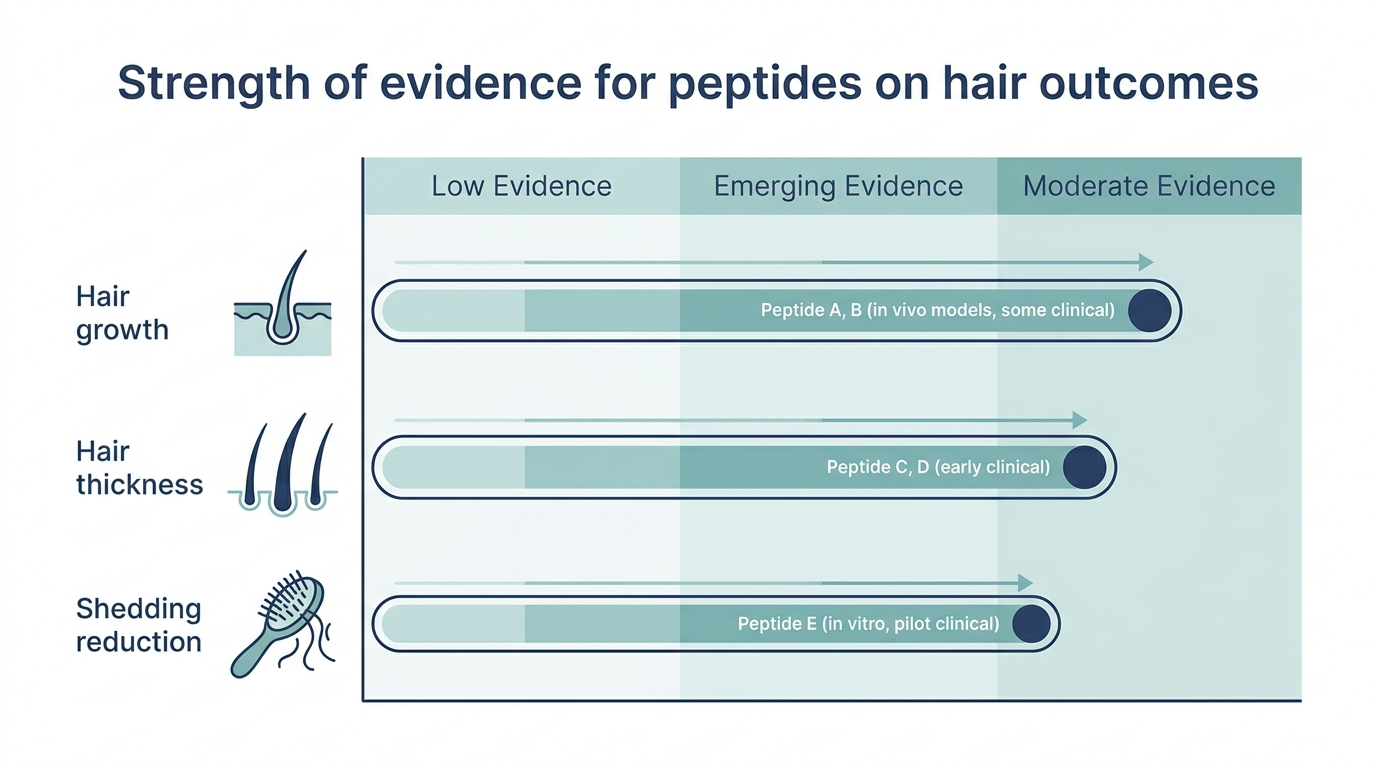
Biotinoyl tripeptide-1 is frequently listed in product ingredient decks because it has real published data behind it. An open-label study in patients with androgenetic alopecia or telogen effluvium using once-daily overnight application reported statistically significant improvements in hair density, hair thickness, and time spent in anagen over six months.
The mechanism combines biotinyl (a biotin derivative that supports keratin biosynthesis) with a tripeptide sequence that activates anchorage proteins at the follicle base. It is found in products like Hairgenetix, Neugaine, and a growing number of professional in-salon lines.
Collagen peptides (oral): modest but real evidence for structure
A 2025 randomized, double-blind, placebo-controlled trial with 100 adults aged 19 to 60 given 2,000 mg of low-molecular-weight collagen peptides daily for 24 weeks found significant improvements in hair luster, shaft surface integrity, tensile strength, diameter, and density versus placebo.
A separate 12-week clinical study found that a hydrolyzed collagen and vitamin C supplement produced a 27.6% increase in the number of hairs per unit area versus placebo, alongside an 11% improvement in scalp scaling.
Do not expect oral collagen to regrow hair from dormant follicles. What it appears to do is support the structural integrity of the follicle environment, reduce the rate of shaft damage, and improve the quality of hair that is already growing. For people with brittle hair, notable shedding, or postpartum telogen effluvium, that is a meaningful benefit. For pattern baldness driven by DHT miniaturization, it is not enough on its own.
What about injectable GHK-Cu? The category that is worth understanding carefully
Some people research injectable GHK-Cu for hair, either subcutaneously or via mesotherapy (shallow intradermal injections). The injectable route bypasses the scalp barrier entirely and is the mechanism used in the 2025 microneedling study’s dramatic results.
Injectable GHK-Cu sold by research-chemical vendors is a different matter from the clinical protocol described above. It is labeled “for research use only,” which is the legal fiction that lets it be sold without FDA oversight. The same enforcement environment that closed Peptide Sciences and Science.bio in late 2025 and early 2026 applies to anything sold under that label. More importantly, no clinician stands behind the dose, the purity, or the administration, all of which matter considerably when you are injecting something into your scalp.
The safer route for anyone who wants the enhanced-delivery approach is a licensed telehealth clinic or dermatology practice that offers professional mesotherapy. Several platforms now include scalp peptide infusion as part of hair restoration programs, and they use pharmacy-grade material with real monitoring. The price is higher than a research vial. The protocol is also the one that produced the 26.5% regrowth result.
What type of hair loss responds best to peptides?
Not all hair loss is the same, and this is the part that product marketing consistently obscures.
| Hair Loss Type | What’s Happening | Peptide Potential | Realistic Expectation |
|---|---|---|---|
| Androgenetic alopecia (pattern) | DHT miniaturizes follicles over years | Moderate (adjunct) | Slow progression, modest regrowth with copper peptide + standard treatment |
| Telogen effluvium (stress/hormonal) | Mass shift into resting phase | High | Good recovery once root cause addressed; peptide serums accelerate return |
| Alopecia areata (autoimmune) | Immune cells attack follicles | Low to unclear | Requires immunological treatment; peptides not a primary therapy |
| Damaged/brittle hair (mechanical) | Shaft breakage, not follicle loss | High (collagen/structural) | Improved shaft quality, less breakage, within weeks |
| Hair thinning with age | Reduced follicle cycling speed | Moderate | GHK-Cu and biotinoyl tripeptide-1 have the most relevant data |
A comparative study in 45 females with telogen effluvium found that a cytokine and peptide combination (including acetyl tetrapeptide-3) produced a 54.6% reduction in hair shedding and a 64.74 hair per square centimeter density increase over 90 days, statistically significant at P = 0.001. That is the best context for topical peptides: a hair system that has been disrupted and needs a signal to restart normal cycling, rather than a system fighting sustained androgen-driven miniaturization.
The myth worth busting: biotin is not a peptide
Here is a genuinely widespread confusion. Biotin (vitamin B7) supplements are sold relentlessly for hair growth, often labeled alongside “peptide” ingredients, and many buyers assume they are in the same category.
They are not. Biotin is a water-soluble vitamin that supports keratin biosynthesis. It helps hair grow only if you have a biotin deficiency, which is uncommon in people eating a normal diet. A review of the evidence published in 2025 found that biotin supplementation produces measurable benefit for about 18 cases of documented biotin deficiency in the literature. For the general population with adequate biotin status, the tablets do essentially nothing for hair.
Collagen peptides and signaling peptides like GHK-Cu work through mechanisms that have nothing to do with vitamin status. They are not interchangeable with biotin, and no amount of biotin will replicate what a copper peptide signaling cascade does at the follicle level.
Hydrolyzed type I & III collagen peptides, third-party tested, unflavored.
How to actually use peptides for hair: the practical breakdown
Topical copper peptide serums: Apply to a dry scalp, not wet or just-washed. Distribution matters more than quantity. Part the hair in sections and apply directly to the skin. Products in the current market range from The Ordinary’s Multi-Peptide + Copper Peptides 1% Serum at around $28 to Hairgenetix’s 10% GHK-Cu + 5% AHK-Cu formula at around $50 (approximately EUR 49.95). Neurogan’s copper peptide spray at $59 one-time or $47 per month is formulated as a lighter daily mist. Concentration is not everything because penetration depends on vehicle and molecular weight, but undisclosed or very low concentrations (below 1%) are unlikely to be bioactive at the follicle level.
Microneedling with copper peptides: The 2025 study used a professional device delivering 1,890 perforations per second at 2 mm depth. At-home dermarollers operating at 0.25 mm to 0.5 mm depth do enhance serum penetration meaningfully, and pairing a dermaroller session with a copper peptide application one to three times weekly is a practical DIY version of the clinical protocol. It is not the same intensity, but it is in the same direction.
Oral collagen peptides: 2,000 to 2,500 mg per day, low-molecular-weight formulation for better absorption, taken consistently for at least 12 weeks to see structural changes. Some products add vitamin C, which is required for collagen synthesis. The GELITA VERISOL study used 2.5 g daily for 16 weeks in women aged 39 to 75 and found a significant increase in hair thickness at the end of supplementation.
Frequency and patience: Every published peptide study showing meaningful hair outcomes ran for a minimum of 12 weeks. Most ran 16 to 24 weeks. If a product claims visible results in two weeks, that is incompatible with how hair cycling actually works. The anagen phase lasts months. Setting a 3-month minimum before assessing results is not pessimistic; it is the timeline the biology requires.
A detail that never appears on product packaging: the scalp’s stratum corneum is about 15 to 20 micrometers thick, and peptides larger than roughly 500 daltons struggle to cross it passively. GHK-Cu has a molecular weight of about 403 daltons, which is why it penetrates better than many other peptide actives. AHK-Cu, at a slightly smaller molecular weight, is similarly positioned. Larger peptides found in some “hair density” formulas may not reach the dermal papilla layer in meaningful concentrations without a delivery aid.
How do peptides compare to the gold-standard treatments?
Minoxidil remains the most extensively studied topical treatment for androgenetic alopecia, with FDA approval for both men (5%) and women (2% and 5%). Finasteride and dutasteride (oral DHT blockers) are the most effective systemic interventions for male pattern hair loss. Peptides do not replace these in clinical practice.
What peptides offer is an adjunct that can enhance results when layered with standard treatment (as the 2025 microneedling study demonstrated), a viable alternative for patients who cannot tolerate minoxidil-related irritation or systemic finasteride side effects, and a standalone option for structural and growth-phase support in non-androgenetic hair thinning.
Do not believe the marketing copy that positions any single topical peptide serum as equivalent to pharmaceutical intervention for advanced pattern baldness. The 24-week comparison to 3% minoxidil is encouraging, but 3% is the lower concentration, and the study had 32 participants, not 3,200.
Turn what you just learned into action.
Superpower lets you test 100+ biomarkers from home, then re-check them over time so you can actually see progress, physician-reviewed at every step.
Frequently asked questions
Do copper peptides actually regrow hair?
Clinical evidence suggests yes, as an adjunct rather than a standalone treatment. A 2025 study using copper peptide microneedling alongside minoxidil and dutasteride achieved 26.5% median scalp regrowth over five sessions in patients who had already failed standard therapy. Topical serums alone show more modest results, but consistent use of high-concentration GHK-Cu (10% or above) over 3 to 6 months is supported by cell biology data and a growing number of clinical observations.
Can I use peptide serums with minoxidil?
Yes. The most effective protocols in the literature combine them. Apply minoxidil first, allow it to dry completely, then apply copper peptide serum. Do not mix them in the same application since pH and vehicle differences can affect each ingredient’s performance. Some evidence suggests the combination produces additive benefit beyond either alone.
Are oral collagen peptides actually useful for hair?
For hair shaft quality, thickness, and density in the context of age-related thinning or damage-related shedding, yes. A 24-week placebo-controlled study with 100 participants found significant improvements in hair density, diameter, and tensile strength at 2,000 mg per day. For follicle-level regrowth from androgenetic alopecia, oral collagen is not an effective primary treatment.
How long do peptides take to work on hair?
Minimum 12 weeks for any measurable change in shedding rate or density. The published trials showing meaningful results ran 16 to 24 weeks. Anagen hair cycling biology operates on this timescale regardless of the ingredient. Anyone claiming two-to-four week results is either measuring something other than regrowth or extrapolating from in vitro data.
Is injectable GHK-Cu for hair safe?
Injectable GHK-Cu sold through retail or research-chemical channels is not an FDA-regulated product, carries no pharmaceutical-grade purity guarantee, and has no clinician oversight over dosing or administration. The injectable protocol in the 2025 clinical study was administered by physicians using a controlled formulation at known concentrations. If you want the injectable approach, do it through a dermatology clinic or licensed telehealth provider offering professional mesotherapy, not a research vial.
Which peptide is best for hair loss specifically?
For androgenetic alopecia, the combination of GHK-Cu plus a DHT inhibitor (topical or oral) has the strongest combined evidence. For telogen effluvium, a cytokine and acetyl tetrapeptide-3 combination produced the best shedding reduction in a head-to-head comparison. For structural hair quality, low-molecular-weight collagen peptides at 2,000 to 2,500 mg daily show consistent benefit across multiple RCTs.
Do I need a prescription for hair peptides?
For topical copper peptide serums and oral collagen peptides, no. These are sold as cosmetics and supplements without restriction. For injectable peptide therapy or any program involving prescription agents like dutasteride or minoxidil, you need a clinician’s prescription. Telehealth clinics now offer hair restoration consultations that can provide that pathway without an in-person dermatology visit.
Hydrolyzed type I & III collagen peptides, third-party tested, unflavored.
Author: Vital Signs Today Editorial Team, [credential]”]. Educational content, not medical advice. Sources linked inline.
Primary sources:
– Hairgenetix (2025). Copper peptide microneedling hair regrowth study summary. https://hairgenetix.com/blogs/articles/copper-peptide-microneedling-hair-regrowth-2025-study
– Miar S et al. (2021). An Herbal Extract Combination (Biochanin A, Acetyl tetrapeptide-3, and Ginseng) versus 3% Minoxidil for Androgenetic Alopecia. PMC7840088. https://pmc.ncbi.nlm.nih.gov/articles/PMC7840088/
– Reilly et al. (2024). A Clinical Trial Shows Improvement in Skin Collagen, Hydration, Elasticity, Wrinkles, Scalp, and Hair Condition following 12-Week Oral Intake of a Supplement Containing Hydrolysed Collagen. Dermatology Research and Practice. https://onlinelibrary.wiley.com/doi/10.1155/2024/8752787
– Comparative analysis of various hair peptide serums in managing telogen effluvium in females. JCAS. https://jcasonline.com/comparative-analysis-of-various-hair-peptide-serums-in-managing-telogen-effluvium-in-females-efficacy-safety-and-patient-satisfaction/
– Low-Molecular-Weight Collagen Peptides Improve Hair Health in Adults with Damaged Hair: A Randomized, Double-Blind, Placebo-Controlled Trial (2025). Springer Nature. https://link.springer.com/article/10.1007/s10989-025-10802-2
– Chemist4U (2025). Hair Loss Statistics 2025. https://www.chemist-4-u.com/guides/hair/hair-loss-statistics/
– Hairgenetix. Scientific research: copper peptide ingredients. https://hairgenetix.com/pages/ingredients
– Biotin and Collagen Peptides Myths and Facts for Hair Growth (2025). Liquid Youth. https://myliquidyouth.com/blogs/strictly-the-science/biotin-and-collagen-peptides-myths-and-facts-for-hair-growth
– Hairgenetix. Copper Peptide Hair Growth Serum product page. https://hairgenetix.com/products/copper-peptide-hair-growth-serum
– Glossy.co (2025). The beauty industry welcomes a flood of new peptide products. https://www.glossy.co/beauty/the-beauty-industry-welcomes-a-flood-of-new-peptide-products-as-peptide-therapy-trends-online/
Related reading
Vital Signs Today may earn a commission if you buy through links on this page. It does not affect our editorial assessments.