
Last updated June 2026. Educational content, not medical advice. Peptide safety varies widely by compound, source, and how it is used. Talk to a licensed clinician before starting anything injectable or therapeutic.
Short answer: Collagen and topical peptides have a strong human safety record backed by randomized controlled trials. FDA-approved therapeutic peptides like semaglutide and insulin have decades of clinical data. The research peptides that fill forum threads and wellness clinic menus, including BPC-157, CJC-1295, TB-500, and ipamorelin, have almost no published randomized human trials, carry real contamination risks when sourced from grey-market vendors, and in some cases carry theoretical concerns about cancer growth stimulation. Whether a peptide is “bad for you” depends almost entirely on which one, where it came from, and who is watching.
Peptide safety depends heavily on the compound and the person. See what your own bloodwork says before you start. One at-home Superpower draw checks 100+ biomarkers, physician-reviewed.
Why does “are peptides bad for you” have at least three different answers?
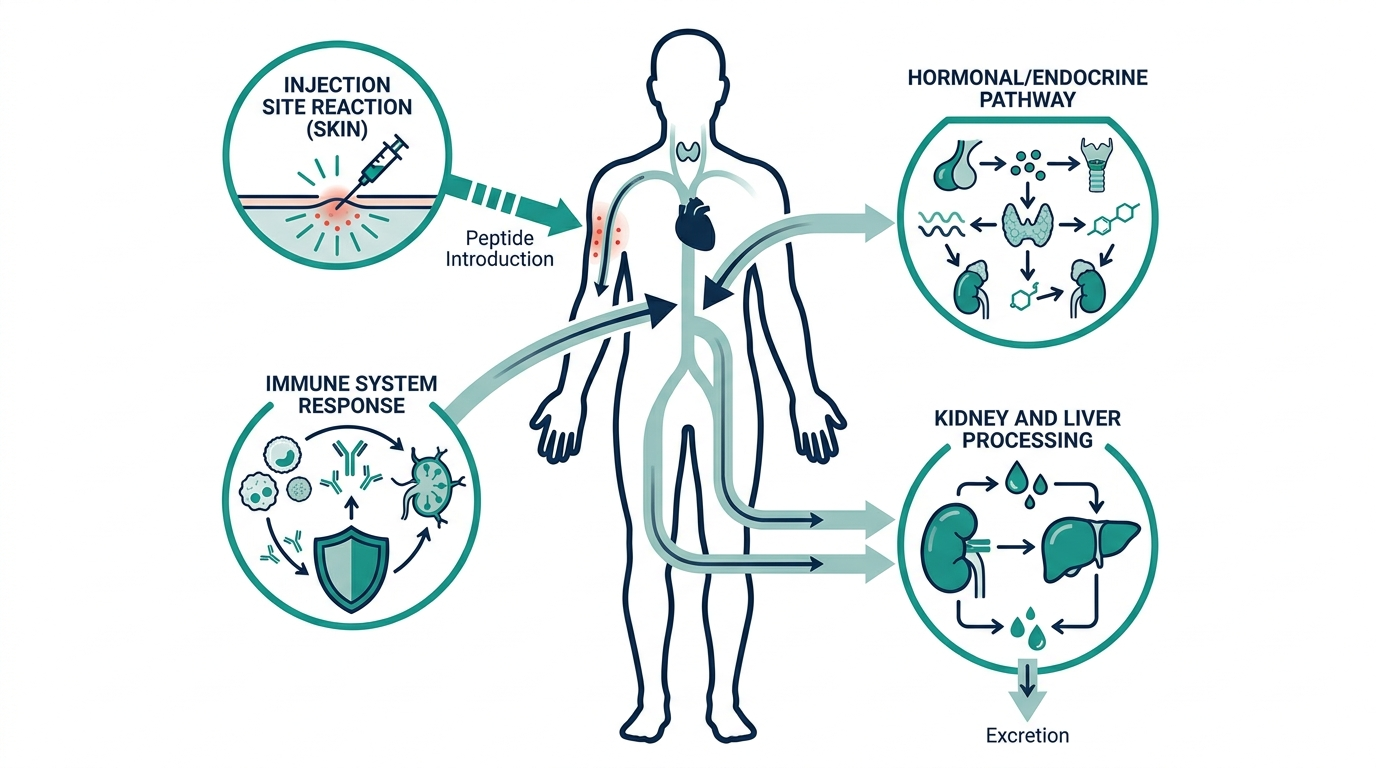
The word “peptide” covers a range that goes from your morning collagen powder stirred into coffee to injectable research chemicals reconstituted in a kitchen. Treating them as one category is like asking whether “chemicals are bad for you” and expecting a single answer.
There are roughly four categories in the wild right now, each with its own risk profile:
- Oral and topical cosmetic peptides (collagen hydrolysates, GHK-Cu serums): regulated as food supplements or cosmetics, extensively tested in humans, generally well-tolerated.
- FDA-approved therapeutic peptides (insulin, semaglutide, tirzepatide, sermorelin): prescription drugs with real clinical trial data, known side-effect profiles, and pharmacist accountability.
- Grey-market research peptides (BPC-157, TB-500, CJC-1295, ipamorelin, retatrutide): sold legally as “for laboratory research only,” injected by many people anyway, with essentially no randomized human trial data and significant contamination risk from unregulated suppliers.
- Investigational peptides (novel GLP-1 analogs, next-generation growth factors): in-trial compounds with protocols, monitoring, and defined endpoints, not the same as buying a vial online.
Most “are peptides dangerous” searches are really asking about category 3, which is where the honest answers get complicated.
Full-body lab membership: 100+ biomarkers, doctor-reviewed, tracked over time.
What does the research actually show about peptide side effects?
Here is the honest split that most wellness content refuses to make clearly.
For collagen peptides, the evidence is genuinely reassuring. A 2025 randomized double-blind trial published in Frontiers in Nutrition on low-molecular-weight collagen peptides for knee osteoarthritis found no serious adverse events over a six-month intervention period, with significant improvements in WOMAC pain scores by day 135 (Frontiers in Nutrition). A 2026 systematic review and meta-analysis in Frontiers in Medicine covering oral and topical peptides for skin aging confirmed the general safety pattern (Frontiers in Medicine). Oral collagen is digested like any protein. The side-effect ceiling is mostly limited to GI discomfort from high doses.
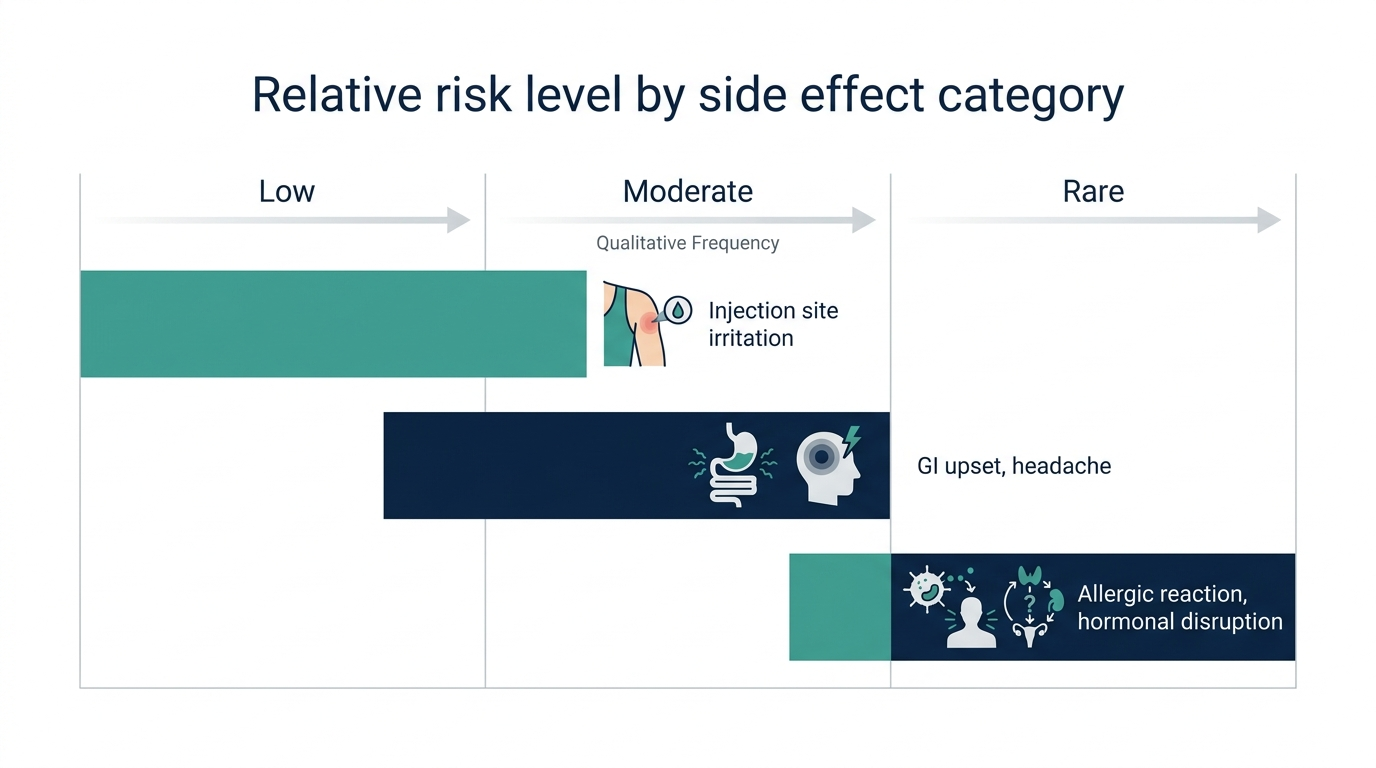
For FDA-approved injectable peptides, the risks are documented and manageable. GLP-1 receptor agonists like semaglutide have extensive trial data. The most common adverse effects are gastrointestinal, with nausea reported in 2 to 20% of patients and a roughly 10% discontinuation rate across studies (PMC). The concern about thyroid cancer, prominent in early black-box warnings, has been substantially addressed: a 2026 systematic review in Diabetes, Obesity and Metabolism found no increased thyroid cancer incidence among semaglutide-treated patients (less than 1% incidence, 0.001 cases per 100 patient-years) (Wiley). The FDA boxed warning still stands for individuals with a personal or family history of medullary thyroid carcinoma or MEN2 syndrome, and that is a hard contraindication, not a technicality.
For grey-market research peptides, the honest answer is: we do not have enough human trial data to be definitive, and the sourcing risks are real. As cardiologist and researcher Eric Topol stated bluntly: “there is no evidence from randomized trials in humans that any of these peptides provide the benefits that are advocated” (Ground Truths, Substack). That quote applies to BPC-157, CJC-1295, ipamorelin, TB-500, and nearly every compound that fills longevity forum threads. The animal data looks interesting. The human randomized controlled trial data is almost entirely absent as of June 2026.
What are the specific side effects you should know about?
Injection-site and acute reactions
The most commonly reported side effects across all injectable peptides are local: redness, swelling, and minor bruising at the injection site. These are typically self-limiting. More serious is the risk of infection from non-sterile reconstitution technique or contaminated bacteriostatic water. Anyone injecting any compound at home is the pharmacist, the nurse, and the QC lab simultaneously. A single sterility lapse can turn a “safe” peptide into a serious infection.
Hormone system disruption from GH secretagogues
Growth hormone secretagogues, including CJC-1295, ipamorelin, and sermorelin, work by stimulating the pituitary to release more growth hormone, which then raises IGF-1 levels. A 2017 review in PMC confirmed that growth hormone secretagogues are generally well-tolerated in controlled settings, but documented two patterns worth monitoring: fluid retention with associated edema and joint discomfort, and changes in glucose tolerance or insulin sensitivity, especially in people who already have metabolic dysfunction (PMC). Neither is trivial if you are running these unsupervised with no baseline labs and no follow-up testing.
The cancer question: theoretical but not dismissible
This is where the “bad for you” question gets the most nuanced. Two categories of concern exist.
First, GH-raising peptides elevate IGF-1. Research published in The Lancet Oncology found that higher circulating IGF-1 concentrations correlate with increased risk for colorectal, breast, and prostate cancers. The concern is not that these peptides cause cancer from nothing but that they could accelerate growth in a dormant malignancy that nobody has detected yet. The theoretical risk is strongest for people with a personal or family history of hormone-sensitive cancers.
Second, specific peptides have specific concerns. TB-500 has been shown in animal studies to accelerate dormant tumor growth and disrupt immune response. It is worth separating from BPC-157, which appears more neutral, even potentially protective through its anti-inflammatory mechanisms, though the 2025 PMC narrative review on BPC-157 for musculoskeletal healing notes that the mechanism via angiogenesis promotion also raises theoretical concern in a cancer context (PMC). Collagen peptides, topical copper peptides, and GLP-1 drugs do not carry this class of concern based on current evidence.
The key insider point that most longevity content skips: these theoretical cancer concerns are not reasons to panic about a collagen supplement. They are reasons to be thoughtful before stacking three injectable research peptides without knowing your cancer risk markers, inflammatory baseline, or IGF-1 level.
Contamination and mislabeling: the hidden risk
This is, practically speaking, the most likely way a grey-market peptide harms someone in 2026. An investigation reported that Janoshik Analytical found 43% of peptides tested in 2024 failed to meet their label purity claims. A separate 2026 investigation sent 10 peptide products to a lab; 3 failed (The Peptide List). Finnrick’s independent testing database, now spanning more than 8,000 tests across 225 vendors, has flagged products from even well-regarded vendors with purity readings as low as 75% (Finnrick).
Beyond purity, bacterial endotoxins are a genuine hazard. Endotoxins are heat-stable byproducts of bacterial contamination that survive even if the bacteria themselves are killed during manufacturing. At sufficient levels, endotoxins trigger a systemic immune response that looks nothing like a typical drug side effect and is easy to misattribute. Finnrick now includes endotoxin testing in its vendor ratings specifically because 8% of grey-market samples in their database show quantifiable endotoxin levels above trace.
The risk from a contaminated vial is not speculative. It is the documented, measurable, currently ongoing risk of the unregulated peptide market.
Are some peptides genuinely safe?
Yes, and separating “peptides are fine” from “these specific peptides have strong safety data” is the most useful thing this page can do.
| Peptide / Category | Form | Human trial data | Practical safety |
|---|---|---|---|
| Hydrolyzed collagen | Oral supplement | Extensive RCTs for skin, joint, muscle | High; well-tolerated in 6-month trials |
| GHK-Cu | Topical cosmetic | Clinical studies; 25% faster epithelial recovery in wound trials | High for topical; injectable is different risk class |
| Semaglutide / tirzepatide | Prescription injection | Large Phase 3 trials (SURMOUNT-1: 22.5% mean body-weight loss) | Manageable; known GI side effects, thyroid contraindication |
| Sermorelin | Prescription injection | Moderate; approved 1997, withdrawn 2008, still prescribed | Moderate; requires monitoring for GH/IGF-1 and glucose |
| BPC-157 | Research peptide | 3 small pilot human studies as of March 2026; no RCTs | Unknown long-term; contamination risk from grey-market |
| CJC-1295 / Ipamorelin | Research peptide | No published RCTs in humans | Unknown; fluid retention and glucose changes documented |
| TB-500 | Research peptide | No published RCTs; animal data shows tumor acceleration | Higher concern; avoid if any cancer history |
| Retatrutide | Investigational | Phase 2 trial; not approved | Not for self-administration; failed purity tests at Peptide Sciences |
The table makes the pattern obvious. The compounds with the longest safety track records are either food-category (oral collagen) or prescription drugs with clinical accountability baked in. The compounds dominating wellness discussion have the thinnest human safety data.
The myth worth busting: “peptides are natural so they must be safe”
Do not believe the “natural and therefore safe” framing. Insulin is a peptide. So is ricin. Both are natural; one will kill you in micrograms. The naturalness of a compound is not the relevant variable. The relevant variables are: what does it do at the dose you are taking, how pure is your supply, and is anyone medically qualified tracking what it is doing to your body?
The “peptides are just amino acids” rationalization is similarly incomplete. The sequence matters, the receptor it binds matters, and the systemic downstream effects matter. A growth hormone secretagogue at typical therapeutic doses is a different biological event from collagen peptides at typical supplement doses, even though both are peptides made of amino acids.
Personally, I find the “it is just amino acids” argument particularly frustrating to see used to justify self-administering multi-peptide stacks with no baseline labs. It conflates structural description with functional safety in a way that would not fly in any other context.
What regulators actually say in 2026
The FDA has not approved BPC-157, TB-500, CJC-1295, or ipamorelin as drugs. In 2023, the FDA placed 19 peptides on its 503A Category 2 list, effectively banning them from compounding pharmacies on the grounds of insufficient evidence and potential safety concerns (FDA).
The picture shifted in early 2026. In February 2026, HHS Secretary Robert F. Kennedy Jr. announced that approximately 14 of those 19 peptides, including BPC-157, TB-500, CJC-1295, ipamorelin, and sermorelin, are expected to return to Category 1 (permitted for compounding). The FDA removed BPC-157 from Category 2 on 22 April 2026. A Pharmacy Compounding Advisory Committee meeting is scheduled for 23 to 24 July 2026 to review these compounds formally (BioPharma Dive).
The regulatory door moving back toward licensed compounding pharmacies does not mean these peptides are now proven safe. It means the FDA has shifted toward allowing licensed pharmacists and physicians to prescribe and dispense them under supervised conditions, which is meaningfully different from a grey-market vial shipped with no accountability.
The important implication: the “legal shortcut” for these peptides is moving toward licensed clinical access, not toward widespread over-the-counter availability. The safe route and the legal route are converging.
Full-body lab membership: 100+ biomarkers, doctor-reviewed, tracked over time.
Who should be most cautious?
Not everyone faces equal risk from research peptides, and the nuance here matters.
High-risk groups for GH-raising peptides (CJC-1295, ipamorelin, sermorelin):
– Personal or family history of hormone-sensitive cancers (breast, prostate, colorectal)
– Active or recently treated malignancy of any type
– Pre-diabetes or insulin resistance (glucose tolerance changes are documented)
– Carpal tunnel syndrome or known fluid retention issues
High-risk groups for all injectable research peptides:
– Anyone who cannot or will not verify vendor COA and batch purity
– Anyone reconstituting peptides without sterile technique
– Individuals taking other medications with unknown interactions (research peptides have not been studied for drug interactions systematically)
– Anyone with an autoimmune condition (TB-500’s immune modulation is under-characterized in humans)
Lower-risk users:
– Individuals using only oral collagen or topical GHK-Cu serums under cosmetic conditions
– Patients taking FDA-approved peptides (GLP-1 drugs, sermorelin) through a licensed prescriber with lab monitoring
The distance between those two groups is not a matter of personal preference. It is a matter of data, accountability, and what happens if something goes wrong.
The stacking problem nobody talks about
One concern gaining attention in 2026 is the trend toward taking multiple research peptides simultaneously. Influencers frequently advocate stacks of two, three, or four peptides per month. The problem is not just that each individual compound has limited human safety data. The interaction data between peptides at human doses is essentially nonexistent.
A licensed clinician would not prescribe two drugs without checking for known interactions. With research peptides, the interaction database simply does not exist. Nobody has run a trial on CJC-1295 plus BPC-157 plus TB-500 in humans to know what the combined effect on IGF-1, inflammation, or cellular growth signaling looks like. This is not caution theater. It is an actual gap in the evidence.
What is the practical bottom line?
Collagen and topical peptide serums: no meaningful reason for concern. The evidence base is solid, the regulatory status is appropriate, and the side-effect floor is low.
FDA-approved therapeutic peptides: the risk profile is known and manageable. Get them from a licensed prescriber, take baseline labs, follow up. The side effects are real but documented.
Grey-market research peptides: the risk is not primarily the molecule, it is the supply chain and the absence of oversight. The most likely harm from a grey-market peptide in 2026 is not a theoretical cancer concern; it is a contaminated vial, a dosing error in reconstitution, or an infection from non-sterile technique. A licensed telehealth clinic, with a prescription from a real clinician and a named compounding pharmacy, addresses all three of those risks. It costs more. It is a different category of accountability.
Personally, I would not touch an injectable research peptide from any vendor, regardless of how clean its Janoshik key looks, without a baseline IGF-1, a comprehensive metabolic panel, and at minimum one conversation with a clinician who knows what they are looking at. That is not excessive caution. That is the minimum rational standard for any compound you are putting in your body when the human evidence base is this thin.
Full-body lab membership: 100+ biomarkers, doctor-reviewed, tracked over time.
Curious what your own levels look like?
Baseline 100+ biomarkers today and retest as life changes, all in one membership with physician review.
Frequently asked questions
Are peptides bad for your kidneys?
There is no strong evidence that collagen peptides or GLP-1 drugs cause kidney damage in people with normal kidney function. In fact, GLP-1 receptor agonists have shown kidney-protective effects in diabetic patients in several trials. Grey-market research peptides carry an indirect risk: if a contaminated product triggers systemic inflammation or infection, the kidneys can be involved as a secondary consequence. This is a supply-chain risk, not a pharmacological one.
Can peptides cause cancer?
The cancer question is not uniformly yes or no. Collagen peptides and topical copper peptides carry no meaningful cancer concern based on current evidence. FDA-approved GLP-1 drugs do not appear to increase overall cancer risk; postmarketing thyroid cancer incidence is less than 1% and the current evidence reviews are reassuring. Growth hormone secretagogues raise IGF-1, which has correlative associations with certain cancers in epidemiological research, creating a theoretical concern for people with elevated baseline cancer risk. TB-500 has shown tumor acceleration in animal studies and warrants caution for anyone with a cancer history. None of this is a reason to fear a collagen supplement. It is context for making an informed decision about injectable GH peptides.
Are peptides safe for long-term use?
Long-term human data exists for collagen peptides (6-month trials show a clean safety profile) and FDA-approved drugs (years of real-world data). For grey-market research peptides, long-term human data simply does not exist. “Long-term use” of injectable research peptides is fundamentally an experiment without a control group, and the individual bears all of the risk.
Are peptides bad for your liver?
Current evidence does not flag collagen peptides or approved GLP-1 drugs as hepatotoxic. GLP-1 agonists may actually benefit people with non-alcoholic fatty liver disease. For grey-market injectable peptides, the liver concern is primarily contamination-related rather than pharmacological: bacterial endotoxins and heavy metal contaminants documented in some grey-market products can cause liver stress at sufficient levels. Baseline liver enzyme monitoring (ALT, AST) before starting any injectable peptide is reasonable practice.
Are peptides dangerous for people with diabetes?
GLP-1 peptides (semaglutide, tirzepatide) are FDA-approved specifically for type 2 diabetes and have extensive trial data in that population. Growth hormone secretagogues are a different matter: they can reduce insulin sensitivity and affect glucose tolerance, which makes them higher-risk in anyone with pre-existing metabolic dysfunction. No injectable research peptide should be used by a diabetic individual without endocrinologist involvement.
Can you take peptides without a doctor?
Oral collagen and cosmetic topical peptides require no prescription and carry no meaningful risk that would require medical supervision. FDA-approved therapeutic peptides require a prescription by definition. Grey-market research peptides are sold without a prescription and injected without supervision by many people, but the absence of a regulatory requirement to see a doctor is not the same as medical endorsement of unsupervised use. The risk assessment above describes why medical involvement is the rational choice even when it is not legally required.
Are peptides bad for teenagers or young adults?
Growth hormone-related peptides carry a specific concern for anyone whose hypothalamic-pituitary axis is still developing or already functioning optimally. Artificially stimulating GH and IGF-1 in a young person with normal endogenous production offers no documented benefit and disrupts a system that is working. No legitimate prescriber would give a GH secretagogue to a healthy teenager. This is one of the cleaner lines in this otherwise nuanced space.
Author: Vital Signs Today Editorial Team, [credential]”]. Educational content, not medical advice. Sources linked inline.
Primary sources (verify live before publish):
– FDA bulk drug substances under 503A
– BioPharma Dive: FDA moves toward easing peptide restrictions
– Frontiers in Nutrition: Collagen peptides knee osteoarthritis RCT 2025
– Frontiers in Medicine: Oral and topical peptides systematic review 2026
– PMC: Growth hormone secretagogue safety review
– PMC: BPC-157 musculoskeletal healing narrative review 2025
– Wiley Diabetes Obesity Metabolism: GLP-1 thyroid cancer 2026
– PMC: Semaglutide thyroid carcinogenic risk systematic review
– Eric Topol Ground Truths: The Peptide Craze
– Finnrick: Why endotoxin testing matters for peptides
– The Peptide List: 10 peptides lab testing investigation 2026
– safemedication.com: Peptide therapy benefits and risks 2026
Related reading
Vital Signs Today may earn a commission if you buy through links on this page. It does not affect our editorial assessments.