Disclosure: Vital Signs Today may earn a commission if you buy through links on this page, at no extra cost to you. This does not influence our evidence-based assessments. We are not a medical provider; talk to a clinician before acting on test results.
Last updated 24 June 2026. Educational content, not medical advice. Several peptides discussed below are investigational or sold “research use only,” are not FDA-approved for weight loss, and are not endorsed here. Speak with a licensed clinician before starting anything.
Disclosure: Vital Signs Today may earn a commission if you buy through links on this page, at no extra cost to you. This does not influence our evidence-based assessments. We are not a medical provider; talk to a clinician before acting on test results.
Short answer: The honest, evidence-backed, legal answer to “best peptide for belly fat” is a GLP-1 medication (semaglutide or tirzepatide) prescribed through a licensed telehealth clinic. In the head-to-head SURMOUNT-5 trial published in the New England Journal of Medicine, tirzepatide cut waist circumference by 18.4 cm versus 13.0 cm for semaglutide over 72 weeks. Almost every other peptide marketed for “belly fat” (AOD-9604, fragment 176-191, CJC-1295, ipamorelin, sermorelin) has weak, indirect, or failed human fat-loss data and is sold gray-market with no FDA approval for weight loss. Tesamorelin is the one GHRH peptide that is FDA-approved, but only for HIV-associated lipodystrophy, not for general weight loss.
The honest framing matters because “best peptide for belly fat” lumps together molecules with radically different evidence levels, legal lanes, and safety profiles. Most ranked lists quietly steer readers toward research chemicals. Getting this wrong costs money at best and your health at worst.
Why does belly fat respond differently to peptides than general body fat?
Not all belly fat is the same, and the distinction changes the conversation. The soft, pinchable layer just under your skin is subcutaneous fat. The firm, distended belly that does not yield to a pinch is visceral fat, packed around your liver, pancreas, and intestines. Visceral fat is metabolically active in a way subcutaneous fat is not: it pumps inflammatory cytokines and free fatty acids directly into the portal vein, raising your risk of type 2 diabetes, cardiovascular disease, and metabolic syndrome, as explained by Cleveland Clinic.
Subcutaneous fat makes up roughly 90% of total body fat. Visceral fat is the smaller, far more dangerous compartment. GLP-1 medications (semaglutide and tirzepatide) produce large reductions in both compartments as part of total weight loss. Growth-hormone-axis peptides (tesamorelin and, in much weaker form, the gray-market GHRH analogs) are claimed to preferentially reduce visceral fat, but only tesamorelin has direct trial evidence for that, and only in a narrow approved population.
This distinction is the piece most “best peptide” lists skip, and it is exactly where the marketing gets ahead of the evidence.
Telehealth weight and metabolic program: provider-led GLP-1 care with lab work and ongoing support.
How do the peptides marketed for belly fat actually compare?
Here is the honest comparison, built from trial data rather than vendor copy. The “belly fat evidence” column reflects what human trials actually measured, not what clinics claim.
| Peptide | Mechanism | Approval / legal status | Actual human belly-fat evidence |
|---|---|---|---|
| Tirzepatide (Zepbound) | GLP-1 + GIP dual agonist | FDA-approved (obesity, T2D); legal by prescription | Strong. Waist -18.4 cm over 72 weeks (SURMOUNT-5, NEJM 2025) |
| Semaglutide (Wegovy) | GLP-1 agonist | FDA-approved (obesity, T2D); legal by prescription | Strong. Waist -13.0 cm over 72 weeks (SURMOUNT-5) |
| Tesamorelin (Egrifta) | GHRH analog, stimulates pulsatile GH | FDA-approved only for HIV-associated lipodystrophy; not approved for general weight loss | Direct but narrow. 15-18% VAT reduction in HIV patients (Phase 3, Lancet 2010) |
| Retatrutide | GLP-1 + GIP + glucagon triple agonist | Investigational; not legally available (NDA expected ~Q4 2026) | Promising in trials, but no legal product exists yet |
| CJC-1295 + Ipamorelin | GHRH + ghrelin mimetic stack | Not FDA-approved. Sold gray-market / “research use only” | Weak/indirect. No RCT measuring visceral fat in healthy adults |
| AOD-9604 | HGH fragment 176-191 | Not FDA-approved for weight loss; on FDA bulk-substance safety list | Failed. Largest Phase IIb trial showed no significant weight loss; development halted 2007 |
| Sermorelin | Short-form GHRH analog | Not FDA-approved for weight loss; off-label / gray-market | Weak. Modest GH effect; essentially no direct belly-fat trial data |
The pattern is hard to miss. The only column with strong, legal, directly-measured belly-fat evidence is the GLP-1 row. Everything below tesamorelin is either failed, untested for this purpose, or sold outside the regulated system entirely.
What makes a GLP-1 the strongest evidence-backed option for belly fat?
Tirzepatide’s edge over semaglutide is not marginal. In SURMOUNT-5, published in the New England Journal of Medicine, 751 participants were randomized to maximum-tolerated doses of either drug for 72 weeks. Tirzepatide produced 20.2% mean body weight loss versus 13.7% for semaglutide. Waist circumference shrank by 18.4 cm with tirzepatide versus 13.0 cm with semaglutide. Both reduce belly fat as part of whole-body fat loss; neither “targets” the abdomen in isolation.
The mechanism behind the difference is dual GIP and GLP-1 agonism. GLP-1 alone suppresses appetite and slows gastric emptying. Adding GIP receptor activation appears to amplify the effect on body composition. Importantly, these are real medicines with real trial data, prescribed and monitored by clinicians, not vials bought from a research-peptide website.
One thing worth understanding going in: the waist change is often larger than the scale suggests, because people losing significant visceral fat can drop inches off their waist while the scale lags as lean mass is preserved. That asymmetry is real. But do not believe any claim that a GLP-1 “targets” belly fat selectively. It produces whole-body fat loss, and the belly, as the largest and most metabolically active depot, tends to respond prominently.
If you are considering this route, the safe path is a licensed telehealth clinic that requires baseline labs and provider oversight, not an unverified vial. See our guide to the best GLP-1 telehealth providers for 2026 and our plain-English explainer on how GLP-1 medications work.
How do you measure belly fat and know it is actually working?
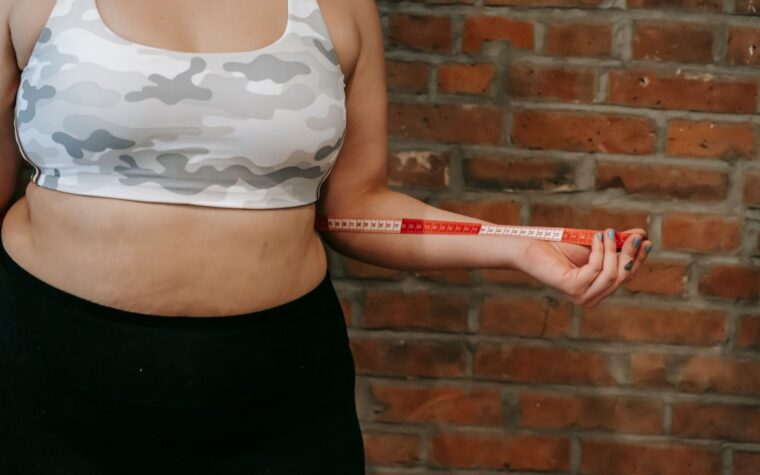
You cannot manage what you do not measure, and the bathroom scale is the wrong instrument for belly fat. Two people at the same weight can carry wildly different amounts of the dangerous visceral kind. The single most useful home number is your waist-to-height ratio. Measure your waist at the level of your navel with a soft tape, keep the tape snug and level, exhale normally without sucking in, and divide that number by your height in the same units. A ratio at or under 0.5 is the general target. Anything creeping above it points to more central fat than is healthy, regardless of what the scale says.
Track the waist measurement every two weeks under the same conditions, first thing in the morning, and you will often see it move before scale weight does, because visceral fat mobilizes early in an energy deficit. That lag is not failure. It is the pattern to expect. For a sharper picture, a DEXA scan can separate visceral from subcutaneous fat directly, though it is not something most people need to repeat often.
The other half of knowing it works is bloodwork. Visceral fat is metabolically loud, so as it falls, fasting glucose, triglycerides, and inflammatory markers should improve. Those numbers are the real scorecard. A treatment that trims your waist while your fasting glucose climbs is not a win, and you only catch that by testing.
The simplest way to actually get this done
Superpower is a full-body lab membership that runs 100+ biomarkers, has each result reviewed by a doctor, and tracks your numbers year over year (about $199/year). It is what we point readers to when they would rather get one clean, complete draw than chase single tests one at a time. Here is superpower reviewed in full.
Why is tesamorelin the only GHRH peptide with real visceral-fat evidence, and why is it still narrow?
Tesamorelin is the only peptide on this list with an FDA-approved label that references reducing excess abdominal fat, and that label is specifically for HIV-associated lipodystrophy, not general weight loss. Two Phase 3 trials published in The Lancet in 2010 demonstrated roughly 15% visceral adipose tissue (VAT) reduction at 26 weeks and 18% at 52 weeks in HIV patients, with little change in subcutaneous fat or total body weight.
The mechanism is precise. Tesamorelin is a synthetic analog of growth hormone-releasing hormone (GHRH). It prompts the pituitary to release growth hormone in a natural pulsatile pattern, which then drives lipolysis preferentially in the visceral compartment, where GH-receptor density is higher.
The practical limitation is the one most clinics gloss over: the only FDA-approved indication is HIV lipodystrophy. Off-label use in people without HIV is legally possible at a clinician’s discretion, but long-term safety data outside the HIV population is incomplete, insurance rarely covers it, and a gray-market “GHRH analog” vial is not the same FDA-grade compound. This is not a peptide to source casually.
Where does retatrutide fit, and why can’t you get it yet?
Retatrutide is an investigational triple agonist hitting GLP-1, GIP, and glucagon receptors. The glucagon activation, in theory, increases energy expenditure on top of appetite suppression. Trial results have been promising, and Eli Lilly is expected to file for FDA approval around Q4 2026, with a potential market launch a year or more after that.
Here is the safety reality: Eli Lilly does not sell research-use vials of retatrutide. Every vial of “retatrutide” currently sold on research-peptide sites is made by an unverified manufacturer with no clinical accountability, no guarantee that it is correctly folded, correctly dosed, or free of impurities. Independent testing has repeatedly flagged gray-market retatrutide for purity failures. Retatrutide from an unapproved source is not the drug studied in the trials; it is a look-alike. Waiting for the legitimate, approved version is the rational choice. The compound will still exist when it clears review.
Does CJC-1295 plus ipamorelin actually burn belly fat?
The claim circulating in clinics and forums is that the CJC-1295 plus ipamorelin stack amplifies natural GH pulses enough to preferentially reduce visceral fat. The mechanism is plausible on paper: CJC-1295 is a GHRH analog and ipamorelin is a selective ghrelin-receptor agonist, and together they raise GH more than either alone, as shown for CJC-1295 in a 2006 study in the Journal of Clinical Endocrinology and Metabolism.
But that study did not measure visceral fat, and there is no large randomized controlled trial measuring this stack’s effect on abdominal VAT in healthy adults. So the honest verdict is: weak, indirect evidence. “GH goes up, and GH can reduce visceral fat over time” is not the same as “this stack reduces your belly fat,” which is the endpoint that was never directly tested.
More important is what the marketing leaves out. CJC-1295 and ipamorelin are not FDA-approved for any use and are largely sold as research chemicals outside pharmaceutical controls, so identity, purity, and sterility are not guaranteed. The FDA has flagged both for immunogenicity risk, including potentially life-threatening reactions such as anaphylaxis, and has issued sterility-related recalls of compounded CJC-1295. A clinic presenting this stack as a tidy “fat-loss protocol” is overstating thin evidence and understating real risk.
What about AOD-9604 and sermorelin?
AOD-9604 is the fragment of human growth hormone (amino acids 176 to 191) once hoped to drive lipolysis without the glucose disruption of full HGH. The story is simple and disappointing: its largest Phase IIb trial failed to show statistically significant weight loss versus placebo, and development was halted in 2007. It is not FDA-approved for weight loss and appears on the FDA’s bulk-substance list as a substance of safety concern. If a clinic is offering AOD-9604 injections for fat loss, that is selling a compound that failed its pivotal trial.
Sermorelin is a GHRH analog used off-label for “GH optimization” for years, but it is also not FDA-approved for weight loss and has essentially no direct visceral-fat trial data. It is lower-potency than tesamorelin and sits in the same gray-market sourcing risk as the other GHRH analogs. There is no evidence base that justifies choosing it as a belly-fat treatment.
How fast should you expect belly fat to move, and is it safe?
Set expectations from the trial timelines, not from before-and-after ads. The large waist reductions in SURMOUNT-5 came over 72 weeks at maximum-tolerated doses, after a slow multi-month dose escalation. In real life, most people on a GLP-1 notice their waistband easing within the first six to ten weeks, with the bigger changes accumulating over the following year. Faster is not better here. Rapid loss raises the share of weight that comes from muscle and bone, and it increases the risk of gallstones, which is one reason clinicians titrate slowly rather than jumping to the top dose.
The common side effects are gastrointestinal: nausea, constipation, and reflux, usually worst right after a dose increase and easing as the body adapts. Eating smaller meals, front-loading protein, and cutting very fatty foods blunts most of it. The two things worth protecting deliberately are muscle and hydration. Aim for adequate daily protein and two to three resistance-training sessions a week so the fat you lose is not accompanied by the lean mass you want to keep. GLP-1 therapy is not for everyone. It is avoided in pregnancy, in people with a history of pancreatitis, and in those with a personal or family history of medullary thyroid cancer or MEN 2. This is exactly why a prescriber and a baseline panel belong in the picture before the first dose, not after a problem shows up.
Which approach is actually right for your situation?
There is no peptide that ethically belongs at the top of a “belly fat” list except the ones with real evidence and a legal path.
If your goal is total body and visceral fat loss: A GLP-1 (tirzepatide or semaglutide) through a licensed telehealth clinic is the strongest evidence-backed, legal option, with provider oversight and baseline labs. The SURMOUNT-5 data is real and the medicines are approved. Start with our GLP-1 telehealth comparison.
If you have isolated visceral fat and a clinician raises tesamorelin: It is the only GHRH peptide with direct VAT trial data and FDA-grade manufacturing, but its approved use is narrow (HIV lipodystrophy). Any off-label use needs a licensed provider, documented justification, and an honest conversation about incomplete long-term safety data.
If you are tempted by CJC-1295, ipamorelin, sermorelin, AOD-9604, or research-vial retatrutide: The honest recommendation is to not. These are not FDA-approved for weight loss, the human fat-loss evidence is weak, failed, or absent, and gray-market sourcing carries documented sterility and immunogenicity risks. They are not a cheaper version of a real treatment; they are a different, unverified product.
If someone is offering you injectable peptides without a prescription, a named compounding pharmacy, and required baseline labs: That is not medical peptide therapy. It is a gray-market transaction dressed in clinical language, and the two are not the same thing.
What does evidence-based belly fat loss actually look like in practice?
The most reliable pattern, seen with GLP-1 medications, is measurable waist reduction that often shows up before the scale fully catches up. Visceral fat mobilizes earlier than subcutaneous fat in a calorie deficit, so many people notice clothes fitting differently at the waist within roughly six to ten weeks while scale weight lags.
The myth worth busting: peptides do not spot-reduce fat. “Burning belly fat” is shorthand for reducing visceral and abdominal fat as part of a whole-body process. GLP-1s reduce belly fat because they reduce all fat, and visceral fat happens to be highly responsive to an energy deficit.
A final practical note: any intervention that produces meaningful fat loss deserves monitoring. Baseline fasting glucose, fasting insulin, HbA1c, a lipid panel, and waist circumference are the metrics that tell you whether it is working and whether your metabolic health is moving in the right direction. A treatment that drives fat loss while worsening fasting glucose is not a net win, and a legitimate prescribing clinician will require these labs before starting.
The recurring theme across every honest option on this page is the same: a real clinician and real labs are what separate medicine from a gray-market gamble. Whether the answer for you is a GLP-1, a narrow tesamorelin case, or simply confirming that diet and training are enough, the decision should be made by someone who has your bloodwork in front of them and can prescribe an approved product from a named pharmacy.
Want a real clinician to run the numbers, not a guess?
Joi + Blokes is a telehealth clinic that prescribes GLP-1 medication (Zepbound, compounded semaglutide and tirzepatide), hormone therapy (TRT, HRT), thyroid care, and peptides after a real lab panel and clinician review, with no membership or consult fee (prescriptions from about $59/month, lab panels from $149). If the scale will not budge, this is where you find out whether insulin, thyroid, or hormones are the real reason. Here is Joi + Blokes reviewed in full.
Frequently asked questions
What is the best peptide for burning belly fat?
The strongest evidence-backed, legal option is a GLP-1 medication (tirzepatide or semaglutide) prescribed through a licensed clinic. In SURMOUNT-5, tirzepatide reduced waist circumference by 18.4 cm over 72 weeks versus 13.0 cm for semaglutide. The peptides commonly hyped for belly fat (AOD-9604, fragment 176-191, CJC-1295, ipamorelin, sermorelin) are not FDA-approved for weight loss and have weak, failed, or untested human fat-loss data. No peptide “spot-reduces” only belly fat.
Is tesamorelin approved for weight loss?
No. Tesamorelin’s only FDA-approved indication is reducing excess abdominal fat in adults with HIV-associated lipodystrophy. It does have direct visceral-fat trial data in that population (15 to 18% VAT reduction in Phase 3 Lancet trials), but it is not approved for general weight loss, and off-label use requires a licensed clinician.
Can you legally buy a peptide for belly fat?
Tirzepatide and semaglutide are available with a prescription through licensed telehealth clinics. Tesamorelin is available with a prescription, on-label for HIV lipodystrophy or off-label at a clinician’s discretion. CJC-1295, ipamorelin, sermorelin, and AOD-9604 are not FDA-approved for weight loss and are largely sold as research chemicals in a gray market with no purity or sterility guarantees. Retatrutide is not legally available for human use.
Are CJC-1295 and ipamorelin safe for fat loss?
They are not FDA-approved, and the human fat-loss evidence is indirect at best. The FDA has flagged both for immunogenicity risk, including potentially life-threatening reactions such as anaphylaxis, and compounded CJC-1295 has been subject to sterility recalls. Gray-market vials carry additional risk of mislabeled or impure contents. This is not a recommended route.
What is the difference between semaglutide and tirzepatide for belly fat?
Both reduce belly fat as part of total weight loss. Tirzepatide produced larger waist reductions in the head-to-head SURMOUNT-5 trial: -18.4 cm versus -13.0 cm. The extra efficacy comes from tirzepatide’s dual GIP and GLP-1 mechanism. Pricing varies by provider and changes often, so check current telehealth pricing directly.
Do peptides work for belly fat without diet changes?
GLP-1 medications drive calorie reduction through appetite suppression, but every trial shows larger, faster results when combined with lifestyle changes. They shift how and how much you eat; they do not override energy balance entirely.
Will belly fat come back if I stop the medication?
Often, yes. GLP-1 medications manage appetite rather than permanently resetting it, and studies that stopped the drug saw much of the lost weight, including visceral fat, return over the following year. Durable results depend on long-term maintenance dosing or a careful taper paired with lasting diet and training habits.
What labs should I get before starting any treatment for belly fat?
At minimum: fasting glucose, fasting insulin (for HOMA-IR), HbA1c, a fasting lipid panel including triglycerides, and a waist circumference measurement. An inflammatory marker such as CRP gives a baseline on visceral-fat-driven inflammation. Any legitimate prescribing clinician will require these before starting.
Author: VST Editorial Board, Vital Signs Today. Educational content, not medical advice. Sources linked inline.
Primary sources:
– SURMOUNT-5 trial (tirzepatide vs semaglutide, NEJM 2025): https://www.nejm.org/doi/abs/10.1056/NEJMoa2416394
– ACC review of SURMOUNT-5 waist circumference data: https://www.acc.org/Latest-in-Cardiology/Journal-Scans/2025/07/10/09/09/SURMOUNT-5
– Tesamorelin Phase 3 (Lancet 2010): https://pubmed.ncbi.nlm.nih.gov/20541473/
– CJC-1295 GH elevation study (JCEM 2006): https://academic.oup.com/jcem/article/91/3/799/2843266
– FDA bulk drug substances 503A list: https://www.fda.gov/drugs/human-drug-compounding/bulk-drug-substances-used-compounding-under-section-503a-fdc-act
– Cleveland Clinic, visceral vs subcutaneous fat: https://health.clevelandclinic.org/visceral-fat-vs-subcutaneous-fat
Related reading
Related: best GLP-1 telehealth providers for 2026 and how GLP-1 medications work.