
Last updated 18 June 2026. Educational content, not medical advice. Consult a licensed dermatologist before beginning any new skincare treatment.
Short answer: GHK-Cu (copper tripeptide-1) is the most evidence-backed peptide for skin in 2026, with an IRB-approved human trial showing a 28% average collagen increase over three months, and one-month biopsy data placing it ahead of both vitamin C and retinoic acid for collagen induction with less irritation. For fine lines and wrinkle depth, Matrixyl 3000 at 3% delivers a measurable 20% reduction in wrinkle depth after 8 weeks. Argireline at 10% cuts periorbital wrinkle depth by around 27 to 30% in 30 days. The right peptide depends on what you are trying to fix and how much you are willing to spend on a serum.
GHK-Cu beats vitamin C and retinoic acid for collagen in trials. Want to see your own skin-related markers? One at-home Superpower draw checks 100+ biomarkers, physician-reviewed.
The global peptide cosmetics market hit USD 2.9 billion in 2026, growing at roughly 12% a year, with over 690 new multi-peptide products launched in 2023 alone. The shelves are crowded. The claims are louder than ever. That density makes it harder, not easier, to figure out which molecules are doing actual work.
This guide cuts through the noise. Every peptide below has at least one independently published or peer-reviewed clinical reference. Concentrations, trade names, realistic expectations, and the products that actually deliver the right dose are all covered in one place.
Full-body lab membership: 100+ biomarkers, doctor-reviewed, tracked over time.
What actually is a peptide, and why does it belong in skincare?
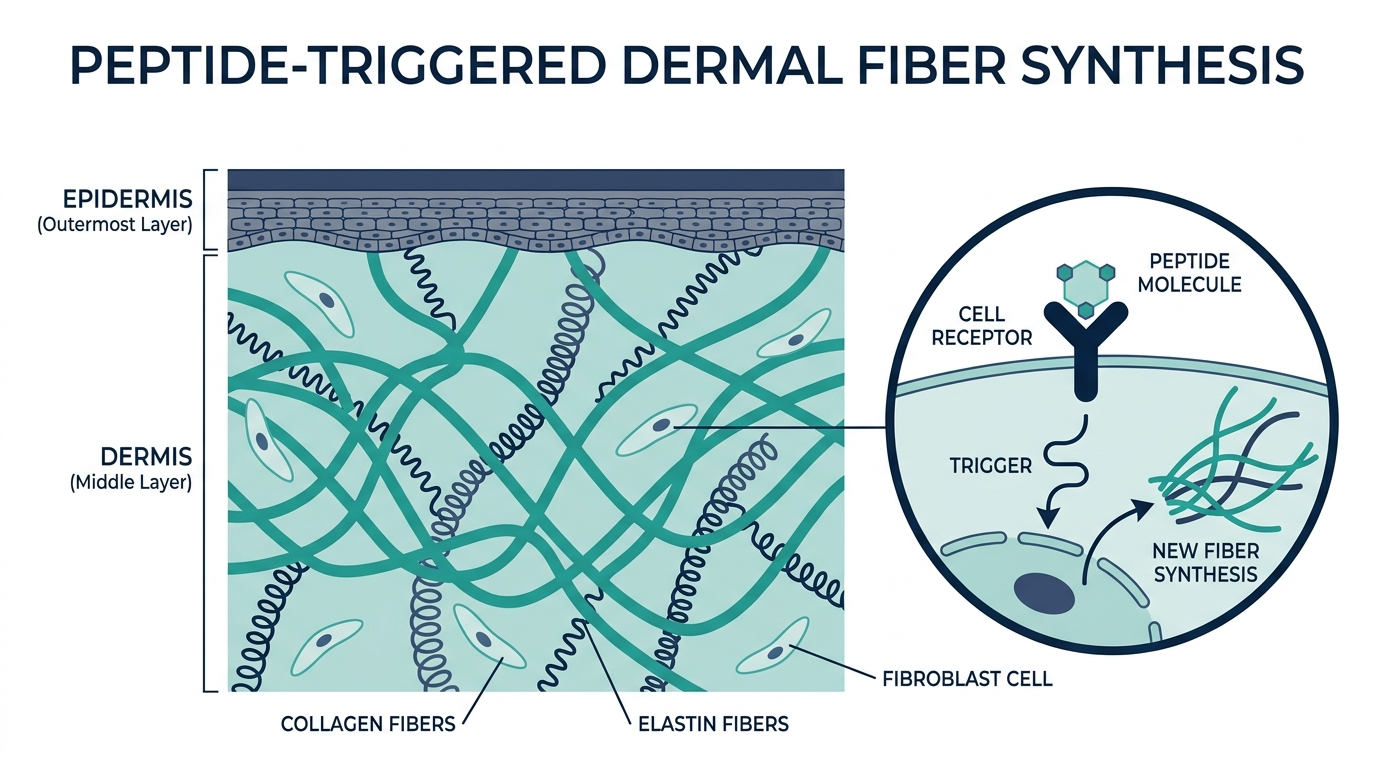
A peptide is a chain of two or more amino acids linked by peptide bonds. Your skin already runs on them: collagen is built from long chains of glycine, proline, and hydroxyproline; elastin relies on similar scaffolding. The idea behind topical peptides is that short synthetic fragments, called matrikines, mimic the breakdown products of collagen and signal fibroblasts to produce more. Other classes work differently. Carrier peptides chaperone trace minerals like copper directly to enzymatic sites. Neuropeptides interfere with the signaling cascade between nerves and muscles to soften expression lines.
The traditional objection to topical peptides was the 500 Dalton Rule: a molecule too large to cross the stratum corneum cannot work. Most peptides breach this ceiling. What modern formulation science shows is that the 500 Dalton Rule is a rough guide for passive diffusion, not an absolute barrier. Palmitoyl conjugation (attaching a fatty acid tail to the peptide) dramatically increases lipid solubility and penetration. Liposomal delivery, nano-emulsions, and low-pH vehicles all improve delivery further. Pentapeptides with five amino acids or fewer have the best passive penetration unaided.
The honest bottom line: topical peptides do penetrate, but not all of them at concentrations high enough to match what was used in the clinical study. That gap between “the study used 3%” and “this product contains an unspecified amount” is where most peptide serums quietly fail.
The 7 best peptides for skin, ranked by clinical evidence
1. GHK-Cu (Copper Tripeptide-1): the most versatile anti-aging peptide
GHK-Cu is a naturally occurring tripeptide, glycine-histidine-lysine, bound to a copper(II) ion. Loren Pickart first isolated it from human plasma in 1973, and decades of research have built an unusually dense evidence base around it.
The headline numbers are hard to ignore. A 2001 double-blind RCT found wrinkle reduction comparable to retinoic acid, but with a significantly better tolerability profile. A one-month thigh biopsy study showed collagen production increased in 70% of GHK-Cu-treated women, compared to 50% with vitamin C cream and just 40% with retinoic acid. Most recently, an IRB-approved clinical trial of 21 women applying a GHK-Cu gel daily for three months found a 28% average increase in skin collagen density, with the top quartile reaching 51%.
The mechanism goes beyond simple collagen stimulation. A gene ontology analysis by Pickart and Margolina, published in the International Journal of Molecular Sciences in 2018, found that GHK-Cu modulates expression of over 4,000 human genes, activating repair and regenerative pathways associated with younger skin. The Broad Institute’s Connectivity Map confirms it can reset more than a third of human gene expression toward a younger profile.
Practically speaking, GHK-Cu does two things most peptides cannot: it simultaneously rebuilds structure (collagen, elastin) and calms inflammation, making it especially useful for reactive, sensitized, or post-procedure skin.
Topical products to consider:
– The Ordinary Multi-Peptide + Copper Peptides 1%, $32 for 30 mL, stacks GHK-Cu with Matrixyl 3000, Argirelox, and Syn-Ake in one formula
– NIOD Copper Amino Isolate Serum 3 1:1 (CAIS3), $62 for 15 mL or $93 for 30 mL, delivers 1% GHK-Cu plus GHK tripeptide and tripeptide-29 in a stripped-down vehicle
– Allies of Skin Copper Tripeptide & Ectoin Advanced Repair Serum, $199 for 30 mL, accepted by the National Eczema Association and formulated with ectoine to improve peptide stability
Effective topical concentration: 0.1% to 1%. Most clinical studies used 0.05% to 1%.
2. Matrixyl 3000 (Palmitoyl Tripeptide-1 + Palmitoyl Tetrapeptide-7): the collagen-synthesis workhorse
Matrixyl 3000 is a two-peptide system: palmitoyl tripeptide-1 stimulates collagen and fibronectin synthesis by mimicking a breakdown fragment, while palmitoyl tetrapeptide-7 independently suppresses the inflammatory cytokines IL-1 and IL-6 that degrade the extracellular matrix under stress. The combination attacks wrinkle formation from both directions at once.
The Sederma manufacturer clinical trial found that twice-daily application for two months reduced deep wrinkle area by 45% and improved skin tonicity by nearly 20%. A more conservative multi-center study with 53 women using a 3% Matrixyl 3000 serum for 12 weeks found a 2.4% increase in collagen fiber density on histological analysis, plus significant improvements in firmness. A 28-day eye-area trial with 4% Matrixyl 3000 found wrinkle count decreased by 31.8% at day 14 and 33.3% by day 28.
The effective concentration is 3% in the final formula. The catch: most brands list “palmitoyl tripeptide-1” somewhere in the second half of the ingredient list, which typically signals a concentration well below 1%. Ask the brand for the exact percentage, or look for serums that list it within the first ten ingredients.
Drunk Elephant Protini Polypeptide Firming Moisturizer ($68 for 50 mL) includes nine signal peptides in a peptide-dense moisturizer that doubles as a delivery vehicle.
3. Argireline (Acetyl Hexapeptide-3): topical neuropeptide for expression lines
Argireline is a synthetic hexapeptide that partially inhibits the SNARE protein complex, the same target as botulinum toxin, though through a competitive rather than proteolytic mechanism. It reduces the amplitude of muscle contractions rather than blocking them outright, which is why the effect is softening rather than freezing.
In a placebo-controlled trial of 10 women applying 10% Argireline solution twice daily for 30 days, silicone replica analysis showed a 30% reduction in periorbital wrinkle depth. A parallel study reported a 27% reduction in the same window. A 2017 study found severity of wrinkles decreased 17% after 15 days and 27% after 30 days.
Three honest caveats: the studies are small (n = 10 in the flagship trial), largely funded by the raw-material supplier Lipotec, and the concentration used (10%) is higher than most commercial products contain. At the 2% to 5% concentration typical in retail serums, the effect is likely proportionally smaller. Independent peer-reviewed replication is still thin. Argireline works best as one layer in a multi-peptide formula rather than as a standalone at drugstore concentrations.
4. SNAP-8 (Acetyl Octapeptide-3): second-generation Argireline with broader coverage
SNAP-8 is an eight-amino-acid extension of Argireline’s sequence, developed to target a wider range of SNARE proteins. The manufacturer’s data reports up to 63% wrinkle depth reduction in 28 days at 4% concentration. Cosmetic chemist consensus rates it moderately ahead of Argireline alone in head-to-head formulation testing, largely because it targets slightly different binding sites.
Do not read those numbers as pharmaceutical-grade evidence. Like Argireline, the clinical data is largely manufacturer-sponsored and conducted over 28 to 60 days in small populations. What makes SNAP-8 useful in practice is that it layers well with GHK-Cu and Matrixyl without destabilizing either. Combining neuropeptide action with signal peptide collagen-building is the logic behind several of the better multi-peptide serums on the market.
5. Leuphasyl (Pentapeptide-18): the synergist for frown lines
Leuphasyl targets a different point in the neurotransmitter signaling cascade from Argireline and SNAP-8. It acts at the enkephalin receptor level, reducing the neural impulse that triggers muscle contraction rather than interfering with the vesicle-docking step downstream. In combination studies, Leuphasyl plus Argireline shows roughly additive relaxation effects, making the pair standard in premium neuropeptide formulations targeting forehead lines and the glabellar area.
Standalone Leuphasyl data is thin. Its value is as a synergist, not a solo ingredient. If you are buying a product specifically for forehead and frown lines, look for it alongside Argireline or SNAP-8 in the ingredient list.
6. Matrixyl (Palmitoyl Pentapeptide-4): the original signal peptide
The original Matrixyl, palmitoyl pentapeptide-4, is distinct from Matrixyl 3000. It is a single palmitoyl-conjugated signal peptide that mimics the N-terminal propeptide of type I procollagen. A 2009 RCT with histological confirmation showed collagen increase at 3%. It is now considered the benchmark signal peptide against which newer formulations are compared, and it appears in more skincare products than almost any other peptide because it was first, widely licensed, and well-tolerated.
The limitation: Matrixyl 3000 (the two-peptide system) outperforms palmitoyl pentapeptide-4 alone in comparative formulation studies, making the original Matrixyl the stronger choice mainly when you need a simpler, better-characterized ingredient with a long safety track record.
7. Palmitoyl Oligopeptide + Palmitoyl Tetrapeptide-7 (SYN-COLL, Collaxyl): anti-inflammatory support
Palmitoyl oligopeptide is a palmitoyl-conjugated fragment that stimulates the production of collagen, elastin, and hyaluronic acid simultaneously. Paired with palmitoyl tetrapeptide-7 (the anti-inflammatory arm of Matrixyl 3000), this combination addresses reactive skin that cannot tolerate aggressive retinoids or acids. Cosmetic trial data shows improvements in multiple skin quality parameters, though at effect sizes smaller than GHK-Cu or Matrixyl 3000 at equivalent concentrations.
Personally, I find this pair underrated in clinical discourse because the combined mechanism makes it the most appropriate starting point for anyone with rosacea-prone, sensitized, or eczema-adjacent skin who wants anti-aging benefits without the inflammation tax.
Evidence summary: what the 2026 meta-analysis actually found
A 2026 systematic review and meta-analysis published in Frontiers in Medicine analyzed 19 RCTs involving 1,341 participants. Key numbers:
| Outcome | Peptides vs. Placebo | Best performer |
|---|---|---|
| Wrinkle reduction | MD = 0.27 (p = 0.04, modest) | Oral polypeptides (MD = 1.5) |
| Skin hydration | MD = 5.79 (p < 0.01, significant) | Oral tripeptides (MD = 16.50) |
| Skin brightness | MD = 2.40 (p < 0.01) | Oral polypeptides |
| Skin roughness | MD = -8.47 (p = 0.05) | Oral tripeptides (MD = -43.60) |
| Elasticity | Minimal, non-significant | Mixed results |
The 2026 meta-analysis contains an important nuance most peptide marketing will never tell you: topical peptide formulations showed “minimal, non-significant effects” in the pooled analysis, while oral peptides drove most of the measurable improvements. This is partly a data imbalance (17 oral studies versus only 2 topical studies included) and partly a real formulation challenge. Topical penetration varies enormously by delivery vehicle, concentration, and skin condition. The meta-analysis is not saying topical peptides do not work; it is saying the published topical evidence base is thin compared to oral, and concentration matters more than label claims.
For oral collagen peptides specifically, a 2024 clinical trial in Dermatology Research and Practice found that 12 weeks of hydrolyzed collagen supplementation significantly improved skin collagen density, hydration, elasticity, and wrinkle parameters. The effective dose in most positive trials is 2.5 to 10 grams of hydrolyzed collagen peptides daily.
Topical peptides vs. oral collagen: do you need both?
The mechanism is different enough that they are not substitutes. Topical peptides (especially GHK-Cu and Matrixyl) work at the dermal level by signaling fibroblasts locally, stimulating collagen and elastin synthesis in the tissue where you apply them. Oral collagen peptides, mainly di- and tripeptides that survive digestion, reach the dermis through the bloodstream and supply the amino acid raw material for collagen synthesis systemically.
Do not believe the claim that oral collagen peptides are “useless because stomach acid degrades them.” Multiple RCTs confirm circulating collagen peptides in blood at 60 to 80 minutes post-ingestion, and dermal collagen fiber density improvements are histologically confirmed in trials. The degradation argument was correct for whole collagen protein but not for hydrolyzed low-molecular-weight peptides optimized for absorption.
The practical recommendation: use topical GHK-Cu or Matrixyl 3000 for local collagen signaling, and layer in 5 to 10 grams of hydrolyzed collagen peptides orally if you want to support the systemic substrate supply. Neither replaces the other.
Hydrolyzed type I & III collagen peptides, third-party tested, unflavored.
Comparison table: 7 best peptides ranked by clinical strength and practical use
| Peptide (INCI name) | Type | Best for | Effective concentration | Top clinical result | Evidence quality |
|---|---|---|---|---|---|
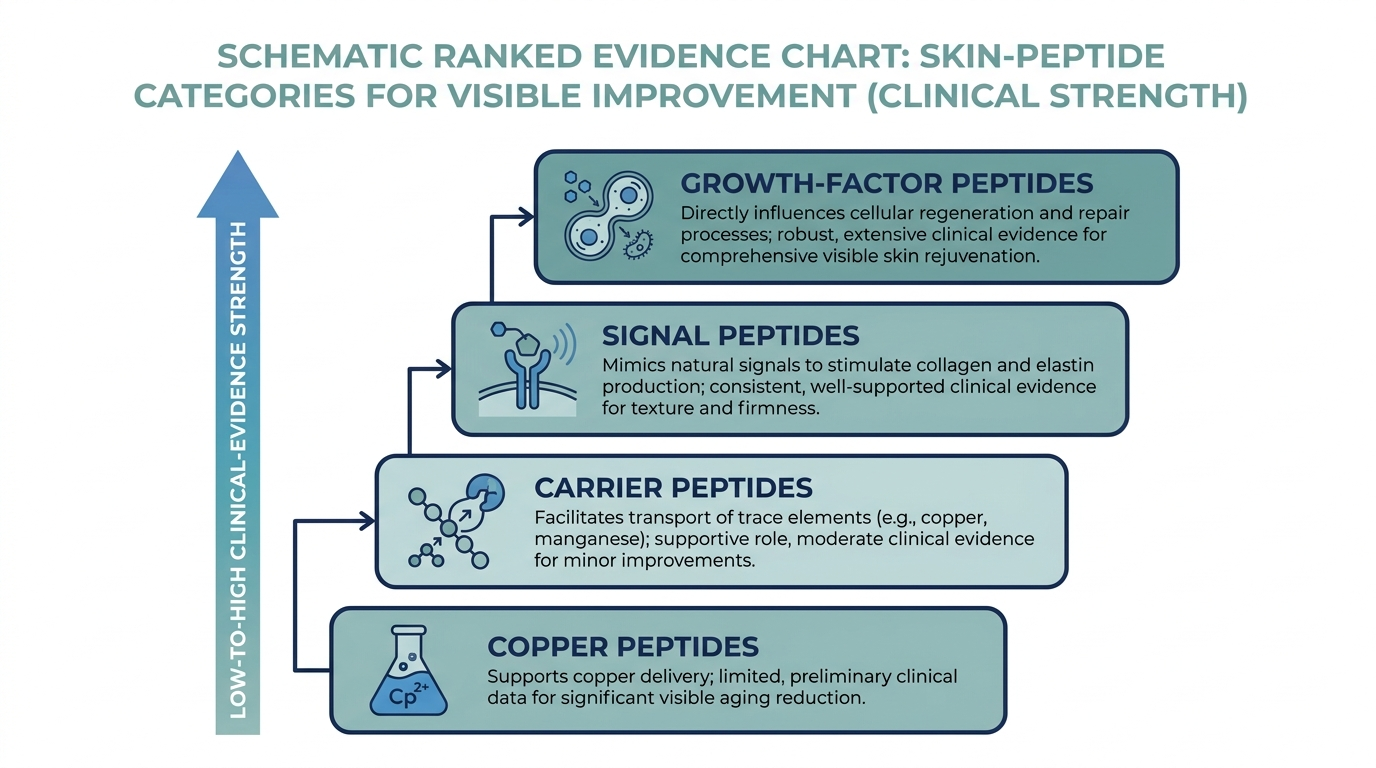
| GHK-Cu (Copper Tripeptide-1) | Carrier | Collagen, repair, sensitivity | 0.1-1% | +28% collagen density (3 months) | Strongest (multiple RCTs) |
| Matrixyl 3000 (Palmitoyl Tripeptide-1 + Tetrapeptide-7) | Signal + anti-inflammatory | Wrinkles, firmness | 3% | -45% deep wrinkle area (2 months) | Strong (RCT + histology) |
| Argireline (Acetyl Hexapeptide-3) | Neuropeptide | Expression lines | 5-10% | -30% periorbital wrinkle depth (30 days) | Moderate (small trials) |
| SNAP-8 (Acetyl Octapeptide-3) | Neuropeptide | Forehead, crow’s feet | 4% | -63% wrinkle depth (28 days, manufacturer) | Moderate |
| Leuphasyl (Pentapeptide-18) | Neuropeptide | Frown lines, synergist | 0.5-1% (with Argireline) | Additive with Argireline | Limited standalone |
| Matrixyl (Palmitoyl Pentapeptide-4) | Signal | Collagen baseline | 3% | Histological collagen increase (2009 RCT) | Strong (benchmark) |
| Palmitoyl Oligopeptide + Tetrapeptide-7 | Signal + anti-inflammatory | Sensitive/reactive skin | 2-4% | Multi-parameter cosmetic trial improvements | Moderate |
How to layer peptides correctly (and what kills their effectiveness)
The layering question comes up constantly, and the guidelines are simpler than beauty media makes them sound.
Morning routine sequence: Gentle cleanser, antioxidant serum (vitamin C, wait 60 to 90 seconds for absorption), peptide serum, moisturizer, SPF 30+.
Evening routine sequence: Double cleanse, peptide serum or peptide-rich moisturizer, retinol or tretinoin (10 to 15 minutes later), richer night cream if needed. Peptides applied before retinol help buffer the initial irritation and support overnight barrier repair.
Compatibility rules that matter:
Peptides are generally compatible with each other, with hyaluronic acid, and with niacinamide. The peptide-plus-hyaluronic acid combination is synergistic: peptides rebuild structure, HA delivers and retains moisture in the remodeled tissue.
The one pairing to approach carefully is GHK-Cu with direct-acid products (vitamin C at pH below 3.5, glycolic acid, lactic acid). At very low pH, the copper ion can be displaced from the chelate, reducing efficacy and potentially causing mild irritation. Apply them in separate sessions (vitamin C morning, GHK-Cu evening) or use an ascorbyl glucoside (vitamin C ester) formulation in the morning, which operates at higher pH.
Do not mix argireline or SNAP-8 with AHA/BHA exfoliants in the same application step. Acidic pH can hydrolyze the amide bonds in neuropeptides before they reach the muscle signal layer.
One thing formulators will not advertise: the serum vehicle matters as much as the peptide itself. A peptide dissolved in a watery, pH 7 vehicle with no penetration enhancers will perform worse than the same peptide in a lower-pH, emulsion-based vehicle with a palmitoyl carrier. That is why a $32 multi-peptide serum can outperform a $150 “peptide cream” that delivers the active in an unfavorable matrix.
What is the legal status of peptides in skincare? (FDA and cosmetic rules)
Topical peptide skincare products are regulated as cosmetics, not drugs, as long as the marketing stays in cosmetic territory: improving appearance, moisturizing, reducing the look of wrinkles. The moment a brand claims to “treat,” “cure,” or structurally alter skin function, it crosses into drug claim territory and triggers FDA scrutiny.
This distinction matters to you as a consumer because it determines how the product is tested. Cosmetics do not require pre-market approval by the FDA. The safety and efficacy evidence on the label is the brand’s responsibility to hold, not the FDA’s to verify in advance. That is why reading the underlying clinical studies, not just the marketing copy, is the only reliable signal.
Most topical peptides, including GHK-Cu, Matrixyl, and Argireline, carry a long cosmetic safety record and are on the International Cosmetic Ingredient Dictionary (INCI) with no restrictions on use in the US or EU. A 2026 ScienceDirect framework paper on cosmetic peptide safety evaluation concluded that the existing safety profile across these ingredients is well-characterized, with no evidence of systemic toxicity from topical application at approved cosmetic concentrations.
Injectable GHK-Cu and injectable research peptides are a different legal category entirely. The FDA classifies those as drugs, not cosmetics, and the same enforcement environment that shut down grey-market vendors in 2025 and 2026 applies. The smart play for anyone interested in skin-targeted peptides: start with the well-evidenced topical and oral cosmetic routes, both of which are legal, accessible, and increasingly well-documented in the clinical literature.
Turn what you just learned into action.
Superpower lets you test 100+ biomarkers from home, then re-check them over time so you can actually see progress, physician-reviewed at every step.
Frequently asked questions
Which peptide is best for wrinkles overall?
For deep static wrinkles (structural collagen loss), Matrixyl 3000 at 3% has the strongest published data, including histological collagen density increases. For expression lines (crow’s feet, forehead, glabellar), Argireline at 10% or SNAP-8 at 4% addresses the muscle-contraction driver. GHK-Cu at 0.1% to 1% is the best all-rounder when wrinkle type is mixed or skin condition is a factor.
How long before I see results from peptide serums?
The clinical trials that show measurable wrinkle reduction run 28 to 90 days of twice-daily use. Expect 8 to 12 weeks of consistent use before a meaningful assessment. One application will not do anything. The collagen remodeling cycle takes about 28 days, and you need to stack multiple cycles to see visible cumulative change.
Can I use multiple peptides together?
Yes. Most topical peptides are compatible with each other, and combining signal peptides (Matrixyl 3000) with carrier peptides (GHK-Cu) and neuropeptides (Argireline) in one formula is the logic behind the better multi-peptide serums. The caveat is pH: keep neuropeptides and copper peptides away from direct-acid formulations in the same step.
Does The Ordinary copper peptide serum actually work?
The Ordinary Multi-Peptide + Copper Peptides 1% at $32 delivers verified GHK-Cu (copper tripeptide-1 at 1%), Matrixyl 3000, Argirelox (an Argireline-adjacent compound), and Syn-Ake in a stable formula. It is the most cost-effective way to get the three major peptide classes in one product. Multiple independent reviewers confirm measurable skin texture and firmness improvements after 60 to 90 days. The honest limitation: the individual peptides may not all be at their clinical study concentration because several are packed into a $32 serum.
Are there any peptides to avoid for sensitive skin?
Most peptides are non-irritating. The exception is formulations that combine high-concentration neuropeptides with direct acids or retinoids in the same product, which can cause transient redness. GHK-Cu is specifically anti-inflammatory and is often recommended for sensitive skin types. Palmitoyl oligopeptide plus tetrapeptide-7 is the most sensitized-skin-friendly combination in the evidence base.
What is the difference between topical and injectable peptides for skin?
Topical peptides in cosmetic skincare products are regulated as cosmetics, widely available, and well-evidenced at current retail concentrations. Injectable peptides marketed for skin are classified as drugs, fall under the same FDA enforcement environment that shut down multiple vendors in 2025 and 2026, and come with significant liability if sourced outside a licensed clinical channel. For skincare goals specifically, the topical route supported by oral collagen peptides is sufficient for the vast majority of outcomes, and it is the legal, well-evidenced route.
Do I need to take oral collagen peptides if I use a topical serum?
They work through different mechanisms and are not substitutes. Topical GHK-Cu or Matrixyl signals fibroblasts locally. Oral hydrolyzed collagen peptides (at 2.5 to 10 grams daily) supply systemic amino acid raw material for collagen synthesis. The 2026 Frontiers in Medicine meta-analysis found stronger pooled evidence for skin hydration and roughness improvement from oral peptides than from topical in current literature. Using both is additive, not redundant.
What I would actually do
Do not believe the serum packaging that suggests any single product will reverse a decade of photoaging in four weeks. The clinical data is clear that peptides work, and that they work better over 12 weeks than over 4, and better at clinical concentrations than at “present in the formula somewhere” concentrations.
My practical starting hierarchy for most adults over 35:
- GHK-Cu serum at verified 1% applied nightly as the first serum layer. The Ordinary Multi-Peptide + Copper Peptides 1% is the most cost-efficient verified option. NIOD CAIS3 is the best single-ingredient GHK-Cu product if you want a cleaner vehicle and are willing to pay the premium.
- Matrixyl 3000 at 3% in a dedicated serum or moisturizer as the second layer, for collagen signal output. Any product listing palmitoyl tripeptide-1 in the top half of the ingredient list is a reasonable candidate.
- Argireline or SNAP-8 at meaningful concentration (5%+) if expression lines are the primary concern, in the morning routine where facial movement throughout the day gives the neuropeptide something to moderate.
- Oral hydrolyzed collagen peptides at 5 to 10 grams daily to support systemic substrate. The Frontiers in Medicine meta-analysis data on hydration and roughness supports this addition more strongly than topical alone in the current evidence pool.
- SPF every morning, because no peptide in the world outpaces unprotected UV damage.
Personally, I would not build a five-serum routine starting out. Start with GHK-Cu nightly. Add Matrixyl in the morning after 4 to 6 weeks. Introduce a neuropeptide if expression lines remain the dominant concern after another 6 weeks. Complexity compounds errors, and the single biggest predictor of peptide results is consistent daily use over 90-plus days.
Hydrolyzed type I & III collagen peptides, third-party tested, unflavored.
Author: Vital Signs Today Editorial Team, [credential]”]. Educational content, not medical advice. Sources linked inline.
Primary sources:
- Frontiers in Medicine 2026 systematic review, oral and topical peptides for skin aging: https://www.frontiersin.org/journals/medicine/articles/10.3389/fmed.2026.1618306/full
- EurekAlert / Yuvan Research GHK-Cu collagen clinical trial press release: https://www.eurekalert.org/news-releases/990464
- PeptideDeck evidence-ranked skin peptide guide: https://www.peptidedeck.com/peptides/peptides-for-skin
- Dermatology Research and Practice 2024 hydrolyzed collagen RCT: https://onlinelibrary.wiley.com/doi/10.1155/2024/8752787
- DermApproved Matrixyl ingredient review: https://dermapproved.com/ingredients/matrixyl/
- PRIME Journal GHK-Cu and Regenerative Aesthetics: https://www.prime-journal.com/copper-tripeptide-ghk-cu-and-regenerative-aesthetics/
- Acetyl Hexapeptide-3 clinical evidence, Aesthetic Cosmetology and Medicine 2021: https://aestheticcosmetology.com/wp-content/uploads/2021/06/ACM-2021-03-vJ-Kluczyk.pdf
- innerbody.com best copper peptide serum 2026: https://www.innerbody.com/best-copper-peptide-serum
- The Ordinary Multi-Peptide + Copper Peptides 1% product page: https://theordinary.com/en-us/multi-peptide-copper-peptides-1-serum-100625.html
- ScienceDirect cosmetic peptide safety framework 2026: https://www.sciencedirect.com/article/pii/S2666027X26000125
- PeptideJournal Matrixyl clinical studies: https://www.peptidejournal.org/research/matrixyl-clinical-studies-anti-wrinkle-evidence
- Meder Beauty peptide skincare myths blog: https://mederbeauty.com/blogs/blog/peptides-in-skincare
Related reading
Vital Signs Today may earn a commission if you buy through links on this page. It does not affect our editorial assessments.