
- To lower CRP, the highest-yield steps are losing excess body fat, eating a Mediterranean-style diet (which cut C-reactive protein by about 26% in clinical trials), exercising regularly, and quitting smoking; treating any underlying infection or chronic condition matters most.
- A high-sensitivity CRP (hs-CRP) above 3 mg/L signals high cardiovascular risk, 1 to 3 mg/L is moderate, and below 1 mg/L is low, according to American Heart Association and CDC cutoffs.
- CRP can fall within days once the trigger is removed because its blood half-life is only about 19 hours, but a lasting drop from diet and exercise usually takes weeks to months.
C-reactive protein (CRP) is a protein your liver releases when there is inflammation in the body. A high level is a signal, not a disease by itself. The goal of lowering CRP is to find and treat what is driving the inflammation, then support that with daily habits that calm low-grade inflammation over time. This guide covers what counts as high, why it matters, and the evidence-based ways to bring it down.
Part of our Inflammation Blood Tests guide.
A Mediterranean-style diet can cut CRP by 26%, but do you know your starting inflammation number? One at-home Superpower draw checks 100+ biomarkers, physician-reviewed.
What counts as high CRP?
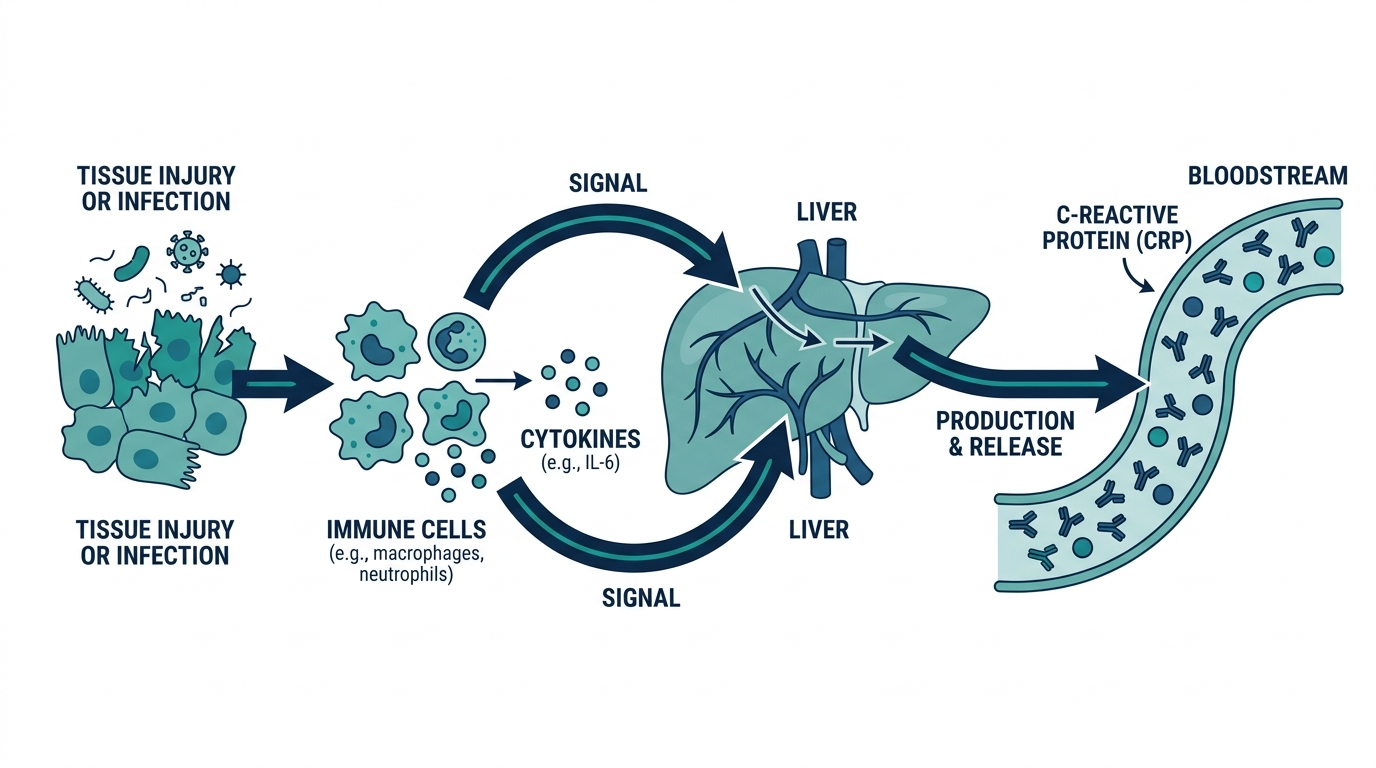
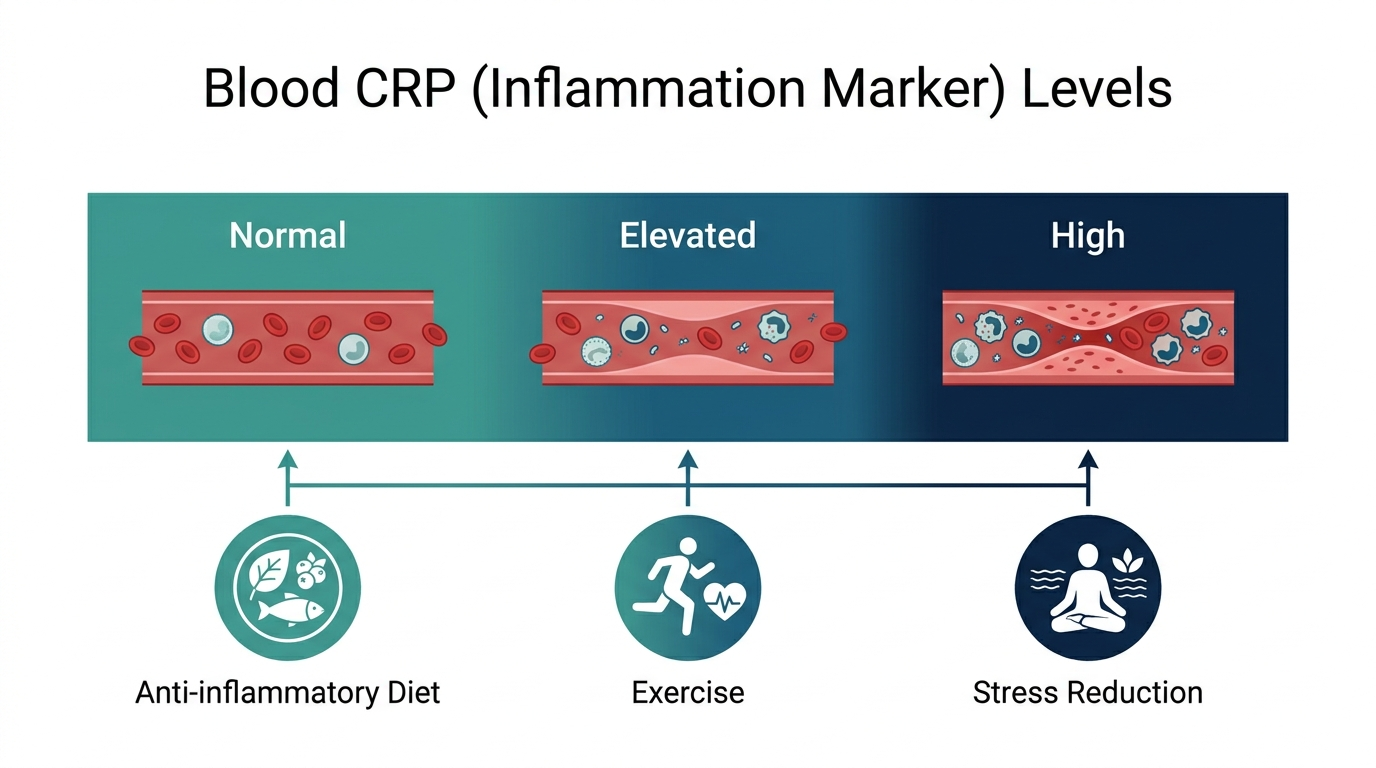
For cardiovascular risk, the high-sensitivity CRP (hs-CRP) test uses three bands set by the American Heart Association and CDC: below 1 mg/L is low risk, 1 to 3 mg/L is moderate risk, and above 3 mg/L is high risk (NCBI/PMC). A standard CRP test (not high-sensitivity) is usually reported as normal below about 3 to 10 mg/L and is used for infection and active disease rather than long-term heart risk.
Context changes everything. A reading of 50 or 100 mg/L almost always means an acute infection or major tissue injury, not a slow simmer of cardiovascular inflammation. Because a single result swings with recent illness, guidelines recommend measuring hs-CRP twice, at least two weeks apart, in a metabolically stable state and not during or just after an infection (NCBI/PMC).
The two versions of the test matter. A standard CRP test measures higher concentrations and is used to detect and follow active infection or inflammatory disease. The high-sensitivity version, hs-CRP, detects the much smaller changes in the 0 to 10 mg/L range that reflect the low-grade inflammation tied to heart disease. Ordering the right one matters: hs-CRP is the test for cardiovascular risk, while a standard CRP answers whether something is actively inflamed right now.
Keep two things in mind about the number itself. First, CRP is nonspecific. It tells you inflammation is present but not where or why, so it is a starting flag, not a diagnosis. Second, most United States labs report it in mg/L, and a lower value is generally better within the cardiovascular bands, though there is no benefit to obsessing over the difference between 0.4 and 0.8 mg/L. What matters is which band you sit in and whether the trend is moving the right way.
Why lower it?
A persistently elevated hs-CRP is linked to higher risk of heart attack and stroke, and the relationship is roughly linear, meaning risk climbs gradually as CRP rises rather than jumping at one cutoff (AHA, Circulation). CRP is a marker of inflammation, and chronic inflammation is part of how arterial plaque forms and becomes unstable.
Lowering CRP is worth doing because the same actions that bring it down (better diet, weight loss, exercise, not smoking) also lower blood pressure, blood sugar, and LDL cholesterol. In short, CRP is a dashboard light. You do not fix the light, you fix the engine, and the light goes off as a result.
The simplest way to actually get this done
Superpower is a full-body lab membership that runs 100+ biomarkers, has each result reviewed by a doctor, and tracks your numbers year over year (about $199/year). It is what we point readers to when they would rather get one clean, complete draw than chase single tests one at a time. Here is superpower reviewed in full.
What causes high CRP?
CRP rises for two very different reasons, and separating them is the first step. An acute spike, often into the tens or hundreds of mg/L, points to something happening now. A chronic, mildly elevated hs-CRP in the 1 to 3 mg/L range or just above points to a slow simmer that builds cardiovascular risk over years.
Acute causes include:
- Infection: anything from a chest infection to a urinary tract infection can send CRP soaring.
- Injury or surgery: tissue damage triggers a strong CRP response for days.
- A recent cold or flare: even a minor illness in the past couple of weeks can lift the result.
Chronic, low-grade drivers are the ones lifestyle can actually move:
- Excess visceral fat: abdominal fat actively secretes inflammatory signals, so it is one of the strongest drivers of a chronically high CRP.
- Smoking: tobacco keeps inflammation elevated throughout the body.
- Poor diet and inactivity: a diet heavy in refined carbohydrates and processed food, paired with little movement, raises baseline inflammation.
- Poor sleep and chronic stress: both are independently linked to higher CRP.
- Autoimmune disease: rheumatoid arthritis, lupus, and inflammatory bowel disease keep CRP elevated as part of the illness.
- Gum disease: chronic periodontitis is a quiet, common source of systemic inflammation.
- Poorly controlled diabetes: high blood sugar promotes inflammation.
What can throw off a CRP reading?
CRP is sensitive, which is its strength and its weakness. Before you read too much into a single number, account for what can move it temporarily:
- A recent infection or cold: a virus in the past two weeks can keep CRP elevated even after you feel better.
- Recent intense exercise: a hard workout causes temporary muscle stress that can briefly raise CRP, so avoid testing right after one.
- Injury, surgery, or a dental procedure: any tissue trauma lifts the result for days.
- Pregnancy and hormone therapy: pregnancy and oral estrogen can raise CRP.
- Higher body weight: a higher baseline is expected with more body fat, which is information, not an error.
This is exactly why the guidelines call for measuring hs-CRP twice, at least two weeks apart, in a stable state and away from any recent illness. A single high reading during a cold tells you almost nothing about your long-term heart risk. Two stable readings tell you a great deal.
Evidence-based ways to lower CRP
The most reliable way to lower CRP is to remove the source of inflammation and adopt anti-inflammatory habits; in trials, a Mediterranean-style diet reduced CRP by about 26% (NCBI/PMC). Below are the levers, from daily habits to medical options.
Diet
A Mediterranean-style eating pattern is the best-studied diet for inflammation. A meta-analysis of randomized trials found it significantly lowered hs-CRP and other markers such as interleukin-6 (Nutrition Reviews). Practical moves:
- Eat more: vegetables, fruit, whole grains, legumes, nuts, olive oil, and fatty fish like salmon or sardines.
- Eat less: refined carbohydrates, sugar-sweetened drinks, processed and red meat, and fried foods.
- Add fiber: a high-fiber pattern is consistently tied to lower CRP and steadier blood sugar.
A few specifics make the pattern more effective. Fatty fish twice a week supplies the omega-3 fats that dampen inflammation, and if you do not eat fish, this is one of the few areas where a supplement is reasonable to discuss with your clinician. Aim for a genuinely high-fiber intake, since fiber feeds the gut bacteria that help regulate inflammation. Colorful plants, olive oil, and nuts add polyphenols, the plant compounds linked to lower inflammatory markers. On the subtraction side, ultra-processed foods and sugar-sweetened drinks are the biggest offenders, and keeping alcohol modest matters because heavy drinking raises inflammation.
Lifestyle
Weight, activity, and smoking each move CRP independently. Even moderate weight loss reduces inflammatory markers including CRP, because fat tissue (especially abdominal fat) actively produces inflammatory signals (Obesity, Wiley). Key habits:
- Lose excess body fat: losing visceral fat is one of the strongest CRP-lowering moves available.
- Move regularly: aim for the standard 150 minutes per week of moderate activity plus two strength sessions.
- Quit smoking: tobacco use raises CRP, and stopping is tied to lower inflammation over time.
- Prioritize sleep: short or poor sleep is associated with higher CRP, so consistent 7 to 9 hours helps.
Two overlooked levers deserve attention. Chronic stress keeps inflammatory signaling switched on, so practices that genuinely lower stress, whether that is regular walking, breathing work, or protecting your evenings, show up in the number over time. And oral health is a real and underrated driver: untreated gum disease is a steady source of systemic inflammation, so brushing, flossing, and treating periodontitis can lower CRP for reasons that have nothing to do with diet. None of these replace treating an underlying medical cause, but stacked together they move a chronically borderline CRP in the right direction.
Medical options
When habits are not enough or risk is high, medication can lower CRP directly. In the JUPITER trial, the statin rosuvastatin lowered hs-CRP by 37% and reduced major cardiovascular events by 44% in people with normal LDL but elevated hs-CRP (American College of Cardiology). Statins are the clearest example, lowering both LDL and inflammation at once. Your clinician may also focus on treating the true driver, whether that is an autoimmune condition, a chronic infection, poorly controlled diabetes, or gum disease. Do not start or stop any prescription based on a CRP number alone; this is a conversation for your doctor.
How CRP connects to your other numbers
CRP earns its keep when it is read next to your other cardiovascular and metabolic markers, not alone. The most useful pairing is with LDL cholesterol. Someone can have a well-controlled LDL and still carry meaningful risk from inflammation, a situation cardiologists call residual inflammatory risk. That is the exact group the JUPITER trial studied, people with normal LDL but elevated hs-CRP, and it is why checking both gives a fuller picture than either alone.
Other companions sharpen the read. Blood sugar and A1C matter because poorly controlled glucose fuels inflammation, so a high CRP alongside a high A1C points clearly at metabolic health. ESR is an older inflammation marker often checked with CRP; it moves more slowly and can confirm a chronic pattern. Ferritin is worth knowing about because it is also an acute-phase reactant, meaning it can rise with inflammation and mislead an iron assessment. Reading these together turns a single flagged CRP into an actual risk profile, which is the case for looking at a broad panel rather than one number in isolation.
How fast can it change?
CRP can drop quickly once the trigger is gone because its blood half-life is only about 19 hours (Wikipedia, sourced to clinical references). After an infection clears or an injury heals, an acutely high CRP often falls back toward baseline within days.
Lasting reductions from diet, weight loss, and exercise are slower. Trials measuring Mediterranean-diet effects on CRP typically run over weeks to several months, so plan to give lifestyle changes at least 8 to 12 weeks before rechecking. Because a single recent illness can spike the result, retest in a stable state and ideally fasting, since food intake can shift readings (NCBI/PMC).
A realistic timeline looks like this. Say your first hs-CRP comes back at 4 mg/L. Your clinician has you retest two weeks later, away from any cold, and it is still 3.8 mg/L, confirming a real elevation rather than a passing illness. You start a Mediterranean-style pattern, walk most days, improve your sleep, and see a dentist about mild gum inflammation. A recheck at 12 weeks, not 12 days, is the fair test of whether those changes are working. If CRP is still high despite solid effort, that is the signal to look harder for an underlying driver with your clinician rather than to keep trying the same habits.
When do you need medication or a doctor?
See a clinician if your hs-CRP is repeatedly above 3 mg/L, or if a standard CRP is markedly high (for example, in the tens or hundreds of mg/L), which suggests an active infection or inflammatory illness that needs evaluation rather than lifestyle tweaks (NCBI/PMC).
You should also involve a doctor when CRP is high alongside other risk factors such as high LDL, high blood pressure, diabetes, or a family history of early heart disease, because the combination changes how aggressively to treat. Medication, most often a statin, is considered based on your overall cardiovascular risk picture, not on CRP in isolation. Seek urgent care if a high CRP comes with fever, severe pain, or signs of serious infection.
Don’t just read about your health, track it.
A single result is a snapshot. Superpower re-tests 100+ markers over time so you can watch them move as you change sleep, food, and training.
Frequently asked questions
What is a dangerously high CRP level?
For heart risk, an hs-CRP above 3 mg/L is the high-risk band. A standard CRP in the tens or hundreds of mg/L usually signals an active infection or significant inflammation and should be evaluated by a clinician promptly rather than managed with diet alone.
How quickly can I lower my CRP?
An acutely high CRP from infection or injury can fall within days once the cause resolves, since its half-life is about 19 hours. A lasting drop from diet, weight loss, and exercise generally takes 8 to 12 weeks or more, so recheck in a stable state.
What foods lower CRP the fastest?
No single food works overnight. A consistent Mediterranean-style pattern (vegetables, fruit, whole grains, legumes, olive oil, nuts, and fatty fish) cut CRP by about 26% in trials. Cutting sugar-sweetened drinks, refined carbs, and processed meat helps the most.
Can exercise lower CRP?
Yes. Regular physical activity is linked to lower CRP, largely through fat loss and improved metabolic health. Aim for about 150 minutes of moderate activity weekly plus strength training. Avoid testing right after an intense workout, since temporary muscle stress can briefly raise readings.
Do statins lower CRP?
Yes. Statins lower both LDL cholesterol and inflammation. In the JUPITER trial, rosuvastatin reduced hs-CRP by 37% and cut major cardiovascular events by 44%. Whether a statin is right for you depends on your full risk profile, so decide this with your clinician.
Why is my CRP high if I feel fine?
A mildly elevated hs-CRP often causes no symptoms at all, because it reflects low-grade inflammation rather than an active illness. Common quiet causes include excess abdominal fat, smoking, poor sleep, and gum disease. Feeling well does not mean the number is meaningless, since chronic inflammation contributes to heart risk over years, which is why it is worth acting on.
What is the difference between CRP and hs-CRP?
They measure the same protein but at different sensitivities. A standard CRP detects the higher levels seen in infection and active inflammatory disease. The high-sensitivity version, hs-CRP, picks up the small changes in the low range that reflect cardiovascular inflammation. For heart risk, hs-CRP is the correct test to order.
Does CRP rise with weight?
Yes. Body fat, especially around the abdomen, actively produces inflammatory signals, so a higher body weight is associated with a higher baseline CRP. This is one reason losing excess fat is among the strongest ways to bring an elevated CRP down, and why the number often falls as weight and waist size decrease.
Sources
- NCBI/PMC, The Use of High Sensitivity C-Reactive Protein in Clinical Practice
- American Heart Association, Circulation, C-Reactive Protein
- American College of Cardiology, JUPITER trial summary
- NCBI/PMC, A Traditional Mediterranean Diet Effectively Reduces Inflammation
- Nutrition Reviews, Mediterranean Diet Reduces Inflammation in Adults
- Obesity (Wiley), Mediterranean Diet With and Without Weight Loss and Inflammation
- C-reactive protein overview (half-life and kinetics)
- NCBI/PMC, Fasting and Nonfasting States and Acute Phase Proteins
- NCBI/PMC, Biomarkers for Infection vs Non-infectious Inflammation
This article is for general educational purposes and is not medical advice. It cannot diagnose or treat you and does not replace your clinician. Always discuss your lab results and any health decisions with a qualified healthcare professional.
Related: best GLP-1 telehealth providers for 2026.
Vital Signs Today may earn a commission if you buy through links on this page. It does not affect our editorial assessments.