
- Amylase is a digestive enzyme made mainly by your pancreas and salivary glands, and a blood test measures how much is circulating, with a typical normal range of about 30 to 110 U/L (Cleveland Clinic).
- A blood amylase level more than 3 times the upper limit of normal, combined with abdominal pain, strongly suggests acute pancreatitis under the Revised Atlanta Classification (StatPearls, NIH).
- Lipase is more specific and stays elevated longer than amylase, so most clinicians now order lipase as the primary marker for acute pancreatitis rather than amylase alone (StatPearls, NIH).
What is amylase in a blood test?

Amylase in a blood test is a measurement of an enzyme that breaks starches into sugars, released mainly by your pancreas and salivary glands. A normal serum amylase level is roughly 30 to 110 U/L (units per liter), though Cleveland Clinic notes some labs report ranges as low as 23 to 85 U/L or up to 140 U/L because methods differ between laboratories.
The test is simple: a technician draws blood from a vein in your arm, and a lab measures enzyme activity. Because amylase normally helps digest carbohydrates inside your gut, only a small amount belongs in your bloodstream. When pancreatic or salivary tissue is damaged or blocked, more amylase leaks into the blood, which is why this single number can flag a digestive emergency. Always read your result against your own lab’s printed reference range, not a generic figure, since the cutoff that counts as “high” varies by analyzer.

Why is amylase measured?
Amylase is measured mainly to help diagnose or rule out pancreas problems, especially acute pancreatitis, which is inflammation of the pancreas. According to MedlinePlus, doctors order it when you have symptoms such as severe upper abdominal pain, nausea, vomiting, fever, or loss of appetite. It can also help evaluate salivary gland disorders and certain causes of belly pain.
Historically, amylase was the default pancreas test, but practice has shifted. Lipase, another pancreatic enzyme, is now the preferred marker because it is both more sensitive and more specific. One emergency department study found roughly 20% of pancreatitis patients did not have elevated amylase on their first visit, while only about 3% had a normal lipase. So when amylase is ordered today, it is usually alongside lipase or as part of a broader workup, not in isolation. Think of amylase as one witness whose testimony is stronger when corroborated.
What does a high amylase mean?
A high blood amylase level (hyperamylasemia) most often points to a pancreas problem, and a value greater than 3 times the upper limit of normal plus characteristic abdominal pain meets a key criterion for acute pancreatitis under the Revised Atlanta Classification (StatPearls, NIH). Elevated amylase usually returns to baseline within 3 to 7 days.
However, high amylase is not specific to the pancreas. Many other conditions raise it, including:
- Salivary causes: mumps, salivary gland infection or blockage, and even recent dental work.
- Gut and abdominal issues: a blocked or inflamed gallbladder, bowel obstruction, perforated ulcer, or appendicitis.
- Other organs: kidney disease (which slows amylase clearance), ectopic pregnancy, and some cancers.
- Macroamylasemia: a harmless state where amylase binds to large proteins and cannot be filtered out, falsely raising the number.
Importantly, the size of the elevation does not predict how severe pancreatitis will be, so a very high number is not the same as a very sick patient (StatPearls).
What does a low amylase mean?
A low blood amylase level usually means the pancreas is producing less enzyme, which can happen in chronic pancreatitis, where long-term inflammation has scarred and worn out pancreatic tissue. Research in Gut and Liver found that low pancreatic amylase and lipase values are simple, useful predictors of chronic pancreatitis, with levels falling further as the disease progresses.
Other causes of low amylase include cystic fibrosis, severe liver disease, and damage from pancreatic surgery. Cleveland Clinic notes that a low result may signal a pancreas, liver, or kidney problem. In practice, a single low amylase is less alarming than a high one and is rarely the sole basis for a diagnosis. It is most meaningful when your clinician is already investigating long-standing digestive symptoms such as chronic upper abdominal pain, oily or floating stools, or unexplained weight loss, where reduced enzyme output fits the bigger picture.
How is amylase interpreted with other markers?
Amylase is rarely interpreted alone; clinicians read it alongside lipase, your symptoms, and imaging. Diagnosing acute pancreatitis under the Revised Atlanta Classification requires at least 2 of 3 criteria: typical abdominal pain, an enzyme level (amylase or lipase) 3 or more times the upper limit of normal, and imaging findings such as CT or ultrasound (StatPearls, NIH).
Because lipase is more specific and has a wider diagnostic window, a normal lipase with a mildly high amylase often points away from the pancreas and toward salivary glands or macroamylasemia. Doctors also factor in kidney function, since impaired kidneys raise amylase by clearing it more slowly. The practical lesson: do not panic over a single out-of-range amylase. The number gains meaning only inside the full clinical story, which is exactly why your clinician orders companion tests rather than acting on one line of a lab report.
The insider nuance most patients miss
Here is what experienced clinicians know that surprises patients: a normal amylase does not rule out pancreatitis, and a high amylase does not confirm it. In the emergency study cited above, about 1 in 5 patients with acute pancreatitis had normal amylase at first presentation. This is why many hospitals have quietly stopped ordering amylase reflexively and rely on lipase instead.
The second subtlety is timing. Amylase rises within hours of an acute pancreatic insult but falls quickly, often back to normal within 3 to 7 days (StatPearls). So a patient who waits several days before seeking care can have a deceptively normal amylase even during a genuine attack, while lipase stays elevated longer and catches the problem. If you are ever told your amylase is “fine” but your symptoms persist, ask whether lipase and imaging were considered too. The single number is a snapshot, not the whole movie.
Amylase vs lipase: why the switch happened
If you take one practical idea from this article, make it this: for suspected pancreatitis, lipase has largely replaced amylase as the go-to test, and understanding why helps you read your own results. Both are pancreatic enzymes that leak into the blood when the pancreas is injured, but they behave differently in ways that matter clinically.
| Feature | Amylase | Lipase |
|---|---|---|
| Main sources | Pancreas and salivary glands | Mostly pancreas |
| Specificity for pancreas | Lower (salivary and other sources raise it) | Higher |
| How fast it rises | Within a few hours of injury | Within a few hours of injury |
| How long it stays elevated | Often back to normal in 3 to 7 days | Stays elevated longer, up to a week or more |
| Misses early cases | More often normal at first presentation | Rarely normal in true pancreatitis |
The longer diagnostic window is the quiet advantage. A patient who waits two or three days before seeking care for abdominal pain may have an amylase that has already fallen back to normal, while lipase is still clearly high and catches the problem. That is why many hospitals order lipase first, or both together, and why a normal amylase alone should never reassure you if the symptoms fit pancreatitis.

What the pancreas does, and why these enzymes leak
To make sense of amylase, it helps to picture the organ behind it. The pancreas sits behind your stomach and has two jobs. Its endocrine role releases hormones like insulin into the blood. Its exocrine role, the one relevant here, produces digestive enzymes, including amylase (for starches) and lipase (for fats), that normally travel through the pancreatic duct into the small intestine to break down food.
In health, those enzymes stay corralled inside the ducts and gut, so only a small background amount circulates in blood. When the pancreas is inflamed, blocked, or injured, the enzymes escape into the surrounding tissue and bloodstream. That leak is what a high blood amylase detects. It is essentially the organ signaling that its digestive machinery is spilling where it should not. This is also why a duct blockage from a gallstone, which dams the enzymes behind it, can spike amylase just as inflammation does.
Causes of high amylase, sorted by system
High amylase (hyperamylasemia) is a clue, not a diagnosis, because several organs and situations can raise it. Grouping the causes makes them easier to reason about with your clinician.
- Pancreatic causes: acute pancreatitis (the classic reason), a flare of chronic pancreatitis, pancreatic duct obstruction, trauma, or a pancreatic tumor.
- Biliary and gut causes: gallstones blocking the shared duct, a blocked or inflamed gallbladder, bowel obstruction, a perforated ulcer, or appendicitis.
- Salivary causes: mumps, a salivary gland infection or stone, or irritation after dental work. Because salivary glands also make amylase, these can raise the total without any pancreas involvement.
- Reduced clearance: kidney disease slows how fast amylase is filtered out, so it accumulates in the blood.
- Other: ectopic pregnancy, diabetic ketoacidosis, some cancers, and certain medications.
- Macroamylasemia: a benign quirk where amylase binds to large proteins and cannot be cleared by the kidneys, producing a persistently high number with no disease behind it.
Because the list is broad, clinicians lean on lipase, symptoms, and imaging to narrow it down. The pattern often points the way: a high amylase with a normal lipase, for example, tilts the suspicion toward salivary glands or macroamylasemia rather than the pancreas.
Causes of low amylase and what they suggest
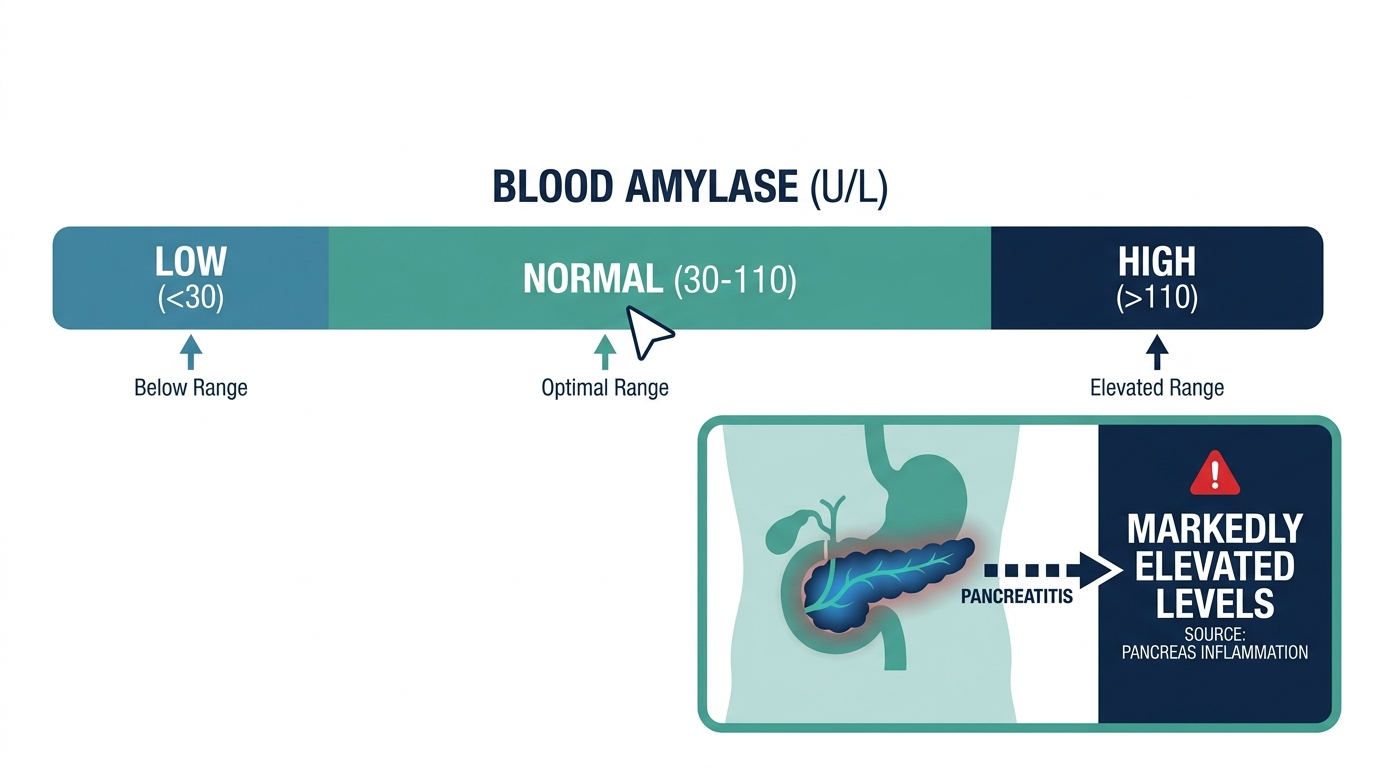
A low amylase draws less attention than a high one, but it is not meaningless. It generally reflects a pancreas that is making less enzyme, which fits a few scenarios:
- Chronic pancreatitis, where years of inflammation have scarred pancreatic tissue so it produces less enzyme over time.
- Cystic fibrosis, which can damage the exocrine pancreas and impair enzyme output.
- After pancreatic surgery, when part of the enzyme-producing tissue has been removed.
- Severe liver disease, which Cleveland Clinic notes can accompany a low result.
A single low amylase rarely stands alone as a diagnosis. It is most meaningful when a clinician is already piecing together long-standing digestive symptoms such as chronic upper abdominal pain, greasy or floating stools, or unexplained weight loss, where declining enzyme output completes the picture.

Symptoms, red flags, and when to seek care
The amylase number matters most in the context of symptoms. Acute pancreatitis, the main reason the test is ordered, tends to announce itself:
- Severe, steady upper abdominal pain, often boring straight through to the back, that may worsen after eating.
- Nausea and vomiting.
- Fever and a fast heartbeat.
- A tender, sometimes swollen abdomen.
Seek emergency care for sudden, severe abdominal pain, especially with vomiting, fever, or a racing heart. Acute pancreatitis can escalate quickly and is diagnosed and managed in a medical setting, not at home. Do not wait to see whether it passes, and do not try to eat or drink through it, since resting the pancreas is part of treatment.
How the test is done and what can throw it off
The amylase test itself is a routine venous blood draw with results usually back within a day. A few practical points about preparation and accuracy:
- Fasting is usually not required for amylase alone, but it is often drawn with other tests that do need fasting, so follow the instructions you receive.
- Tell your clinician your medications. Some drugs can raise or lower amylase, and alcohol is a notable influence, so an honest medication and alcohol history helps interpretation.
- Kidney function shapes the reading. Because impaired kidneys clear amylase more slowly, reduced kidney function can raise the value independent of the pancreas.
- Timing is everything in an acute event. Amylase rises within hours but falls within days, so the same attack can produce a high value on day one and a normal value on day four. If symptoms persist despite a normal amylase, lipase and imaging are the next questions to raise.
- Macroamylasemia can persistently inflate it without any illness, which is worth remembering if your amylase is chronically high but you feel completely well.
Sample interpretation scenarios
Amylase makes far more sense inside a story than as a lone number. These teaching examples show how the same result points different directions depending on lipase, symptoms, and context. They are illustrations, not a substitute for your clinician reading your actual chart.
- Amylase 4 times normal, lipase also very high, severe upper belly pain radiating to the back. This pattern fits acute pancreatitis and is a medical emergency. Two of the three Atlanta criteria (typical pain plus an enzyme over three times normal) are already met.
- Amylase mildly high, lipase normal, no abdominal pain, recent dental work or swollen cheek. The tilt is toward a salivary source, not the pancreas. Salivary glands make amylase too.
- Amylase persistently high for months, lipase normal, feeling completely well. This raises the possibility of macroamylasemia, a harmless protein-bound form that cannot be cleared, rather than any disease.
- Amylase normal, but two days of worsening abdominal pain and vomiting. A normal amylase does not rule out pancreatitis, especially if a few days have passed, because amylase falls quickly. This is exactly when lipase and imaging matter.
- Low amylase with a long history of belly pain and greasy stools. Reduced enzyme output can fit chronic pancreatitis and warrants a broader pancreatic workup rather than reassurance.
The throughline: never let a single amylase value, high or low, stand as a verdict. Its meaning emerges only alongside lipase, your symptoms, kidney function, and, when needed, imaging.
Who should have amylase checked, and how it fits a broader panel
Amylase is not a routine screening test for healthy people. It is ordered when there is a reason: symptoms that suggest a pancreas or salivary problem, or monitoring of a known condition. You are most likely to have it checked if you have:
- Acute severe abdominal pain with nausea or vomiting, where pancreatitis is on the table.
- Known pancreatic disease, such as chronic pancreatitis, that needs tracking.
- Risk factors for pancreatitis, including gallstones and heavy alcohol use, the two most common triggers.
- Salivary gland symptoms, such as painful swelling near the jaw.
For general wellness, amylase is usually not the marker that changes your day to day decisions. Its power is diagnostic, in the right clinical moment. That said, when amylase is measured as part of a broader biomarker panel, its real value is context: seeing it beside lipase, kidney markers, liver enzymes, and glucose lets a clinician interpret a borderline value correctly instead of chasing an isolated flag. Reading it as part of a full panel, rather than a single line item, is what keeps a mildly out-of-range amylase from becoming a needless worry.
Tracking amylase over time in ongoing conditions
In an acute setting, amylase is checked once or twice to help confirm or rule out a problem such as pancreatitis, and the single number matters most in that moment. But amylase can also be followed over time, and the trend often carries more meaning than any isolated value. In acute pancreatitis, for example, amylase typically rises quickly and then falls back toward normal over a few days, so a level that stays high or climbs again can signal an ongoing or new problem rather than a resolving one.
The picture is different in long-standing pancreatic disease. In chronic pancreatitis, so much of the enzyme-producing tissue can be damaged over the years that amylase may be only mildly elevated or even normal during a flare, which is exactly why a single normal result does not rule out pancreatic disease in someone with a long history. Here the trend, read alongside symptoms and imaging, is more informative than one figure. For people being monitored, comparing amylase across visits helps separate a genuine change from day-to-day fluctuation, especially since the same lab and method make the comparison cleaner. Watching amylase together with lipase over time, rather than reacting to one reading, is how these enzymes are best used outside the emergency setting.
How age, medications, and everyday factors shift amylase
Amylase does not read identically for everyone, and several non-disease factors can nudge it up or down. It is worth knowing these before assuming an out-of-range value means pancreatic trouble. Kidney function is one of the biggest influences, because amylase is partly cleared by the kidneys, so reduced kidney function can raise the blood level even when the pancreas is fine. Interpreting amylase without a glance at kidney markers can be misleading.
Certain medications are also known to raise amylase in some people, so a person’s drug list is part of the interpretation rather than an afterthought. Salivary gland problems can push amylase up as well, since a large share of blood amylase comes from the salivary glands rather than the pancreas, which is one reason lipase is often preferred when the question is specifically about the pancreas. Everyday variables matter too: recent alcohol intake, a very recent meal, and even pregnancy can shift the number. On the low side, extensive long-term pancreatic damage or certain liver conditions can pull amylase down. The practical point is that a mildly abnormal amylase should be read against the person’s kidney function, medications, salivary health, and habits before it is treated as a red flag, and often the companion lipase result settles the question.
Frequently asked questions
What is a dangerously high amylase level?
There is no single danger threshold, but a level more than 3 times the upper limit of normal (roughly above 300 to 330 U/L on a 110 U/L range) plus abdominal pain raises strong concern for acute pancreatitis and warrants urgent evaluation (StatPearls, NIH).
Can I lower my amylase naturally?
You cannot meaningfully lower amylase with home remedies. Levels normalize when the underlying cause, such as pancreatitis, gallstones, or a salivary blockage, is treated. Following your clinician’s plan and avoiding alcohol, a common pancreatitis trigger, is the real fix.
Do I need to fast before an amylase blood test?
Usually no special fasting is required for an amylase test alone, but follow your provider’s instructions, since amylase is often drawn with other tests that may need fasting (MedlinePlus). Tell your clinician about any medications, as some can affect results.
Is amylase or lipase better for pancreatitis?
Lipase is better. It is more sensitive and more specific than amylase, stays elevated longer, and is the preferred biochemical marker for acute pancreatitis. Many labs now favor lipase or order both together (StatPearls, NIH).
What does it mean if amylase is high but lipase is normal?
A high amylase with normal lipase often points away from the pancreas. Likely explanations include salivary gland problems, macroamylasemia (a harmless protein-bound form), or kidney issues. Your clinician will use symptoms and other tests to sort it out.
Sources
- Cleveland Clinic, Amylase Test: What It Is, Purpose, Procedure and Results
- MedlinePlus, Amylase Test: Medical Test
- StatPearls (NIH/NCBI), Analytical and Clinical Perspectives on Amylase
- StatPearls (NIH/NCBI), Acute Pancreatitis
- StatPearls (NIH/NCBI), Hyperamylasemia
- Gut and Liver (PMC), Low Serum Pancreatic Amylase and Lipase Values Predict Chronic Pancreatitis
This article is for general educational purposes and is not medical advice. It cannot diagnose or treat you and does not replace your clinician. Always discuss your lab results and any health decisions with a qualified healthcare professional.
Vital Signs Today may earn a commission if you buy through links on this page. It does not affect our editorial assessments.