
Reviewed by the Vital Signs Today editorial team for accuracy. Last updated 18 June 2026. Disclosure: This page contains affiliate links. If you buy through them, we may earn a commission at no extra cost to you. This does not influence our assessment.
Superpower has become one of the most talked-about names in consumer longevity testing, largely because it does something almost nobody else does at its price: it puts 100+ biomarkers, a physician-reviewed dashboard, and a year of digital care behind a single annual fee. We pulled the current numbers, compared it against the obvious alternatives, and laid out exactly who should buy it and who should look elsewhere.
Key takeaways
- Superpower is about $199 per year for 100+ biomarkers plus a physician-reviewed dashboard, the strongest value pick in this category.
- Members in New York and New Jersey pay $399 for a 90+ panel, so check your state before assuming the headline price.
- The lab draw is included at 3,000+ Quest locations, and the membership is HSA and FSA eligible.
- Watch the upsells: supplement recommendations and specialty add-on tests can outweigh the base fee if you follow them in full.
- Better fits for some buyers: Function Health for two draws a year, Everlywell for a single targeted kit, SiPhox for needle-free at-home testing.
Is Superpower worth it in 2026?
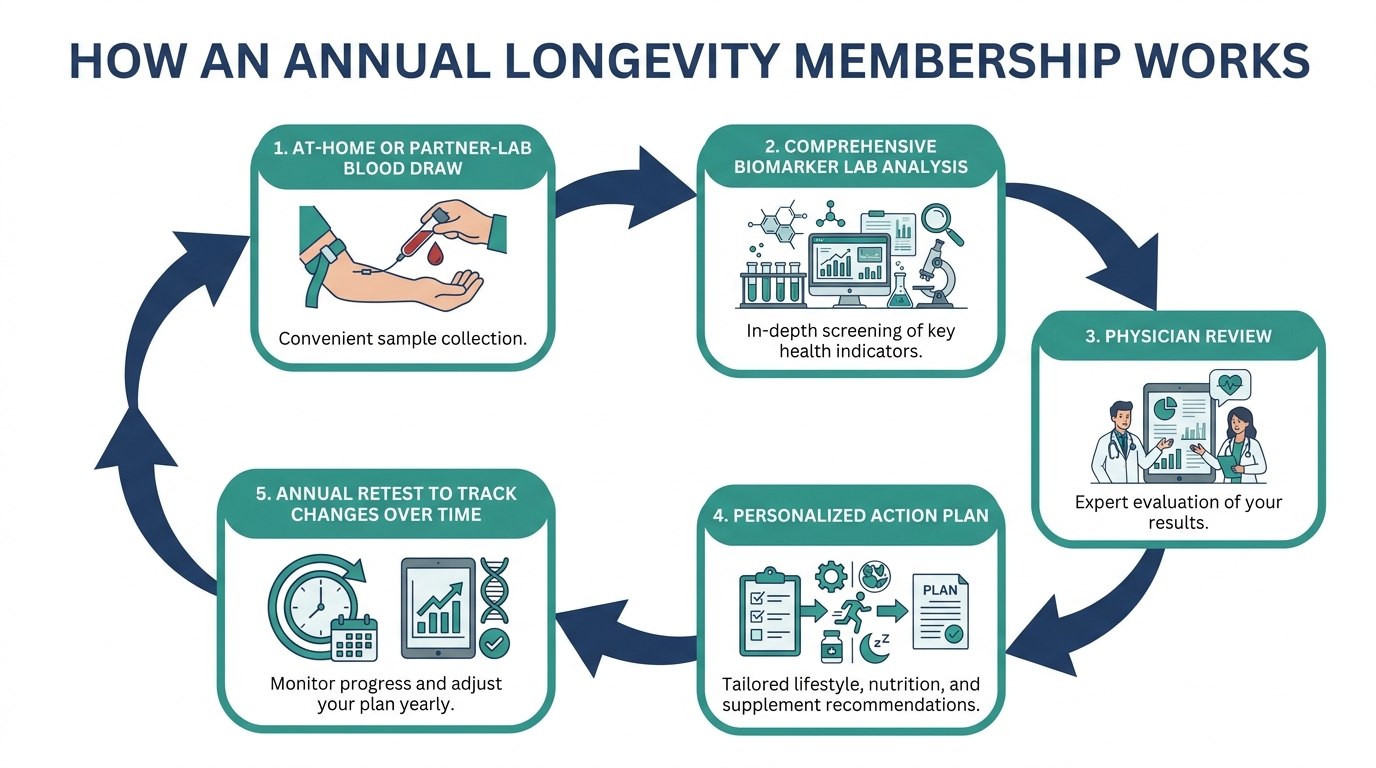
For most healthy adults who want a broad annual baseline, yes. At about $199 per year for 100+ biomarkers plus a physician-reviewed dashboard, Superpower delivers more tests per dollar than nearly any direct competitor, and the membership covers the lab draw at thousands of Quest Diagnostics locations. The main caveats are geographic pricing (members in New York and New Jersey pay $399 for a slightly smaller 90+ panel) and the upsells, which we cover below.
If you have never run a full panel and you want a single number to anchor your health for the year, Superpower is the easiest on-ramp at this price. If you want twice-a-year retesting baked in, Function Health is the more natural fit, and if you only care about one system like thyroid or hormones, a single Everlywell kit will cost you far less.

What you actually get for $199
You get a 100+ biomarker blood panel, a lab draw included at 3,000+ Quest locations, and a physician-reviewed dashboard that tracks results over time. The membership also includes a biological age estimate, 24/7 AI chat for questions about your results, and a personalized set of recommendations. Coverage spans the systems that matter most for long-term health: metabolic, cardiovascular, hormones, thyroid, liver, kidney, inflammation, and key nutrients.
A few practical notes from the current terms. The standard membership covers the in-person draw, but if you want a mobile phlebotomist to come to your home or office, that is roughly $119 extra. Specialty add-on tests for things like heavy metals, toxins, or gut microbiome are priced separately, with reported costs ranging from roughly $179 to around $300 depending on the panel, so check current pricing at Superpower before adding any. The whole membership is HSA and FSA eligible, which softens the real out-of-pocket cost for many buyers.
Superpower vs the alternatives at a glance
| Service | Price | Biomarkers | Draws / year | Best for |
|---|---|---|---|---|
| Superpower | ~$199/yr ($399 NY/NJ) | 100+ | 1 (Quest) | Widest annual baseline for the lowest fee |
| Function Health | ~$365/yr | 100+ | 2 | Built-in mid-year retesting |
| Everlywell | ~$49 to $249/kit | Targeted panels | Per kit | One specific concern at home |
| SiPhox Health | from ~$124/yr | 18 to 60+ | Varies | Needle-free, fully at home |
How Superpower compares to Function Health
Function Health is the premium competitor, and the gap narrowed in 2026 when Function dropped its price to about $365 per year, down from $499. For that fee Function tests 100+ lab markers and, importantly, includes a second draw of 60+ markers halfway through the year, so you see what changed. Results are clinician-reviewed and come with an action plan.
The decision comes down to retesting and budget. Superpower is the value pick at roughly $199 for a single deep annual panel. Function costs more but bakes in two draws a year, which matters if you are actively changing diet, training, or supplements and want to measure progress mid-year. Think of Superpower as your annual snapshot and Function as your twice-a-year tracker.

When a single Everlywell kit makes more sense
If you only need to check one thing, skip the membership and buy a targeted Everlywell kit instead. Everlywell sells individual at-home test kits, roughly $49 to $249 depending on the panel, for specific concerns like thyroid, hormones, metabolism, or food sensitivity. Samples go to CLIA-certified labs and you collect at home, usually with a finger prick.
This is the right call for the buyer who already knows their question. If your doctor flagged your thyroid, a single thyroid panel answers that for a fraction of a full membership. If you want a wide, repeatable baseline across many systems, the per-kit math stops making sense and a membership wins. Everlywell is precision; Superpower and Function are breadth.
The needle-free option: SiPhox Health
If the lab visit is your sticking point, SiPhox Health is the most convenient alternative. SiPhox runs entirely at home and in the US uses an EasyDraw device on the upper arm rather than a traditional venous draw, with panels starting around $124 per year and turnaround that tends to be fast. It is HSA and FSA eligible like the others.
SiPhox panels range from about 18 to 60+ biomarkers depending on the plan, so the breadth sits below Superpower’s 100+ but the experience is the least friction of any option here. Choose SiPhox if you will genuinely skip testing rather than go to a Quest location, because the best panel is the one you actually complete.
The catch: upsells and where Superpower falls short
The biggest watch-out is not the membership fee, it is everything that comes after. Superpower’s dashboard often surfaces supplement recommendations, and buyers report those suggestions can total $300 to $400 per month if followed in full, which would dwarf the $199 annual fee. Treat the recommendations as a menu, not a prescription, and bring them to your own clinician before spending.
Two more limits worth naming. Pricing is not uniform: New York and New Jersey members pay $399 for a 90+ panel rather than the $199 100+ panel available elsewhere, so check your state before assuming the headline price. And specialty tests for metals, toxins, or the gut microbiome are paid add-ons, reported anywhere from roughly $179 to around $300 each depending on the panel, not part of the base membership. None of this makes Superpower a bad deal, but the real first-year cost depends heavily on how many upsells you accept.
One framing that helps: the membership replaces the cost of ordering 100+ markers a la carte through a lab like Labcorp or Quest, which would run well into the hundreds on its own. The value is in the bundle and the dashboard, not in the add-ons.
Who should buy Superpower
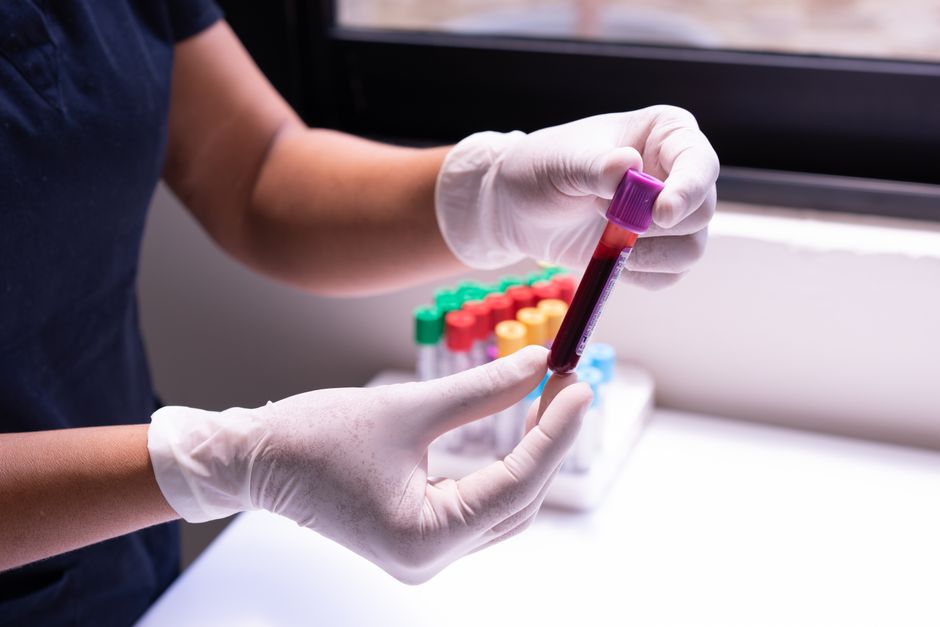
Buy Superpower if you want the widest annual baseline for the lowest membership fee and you are comfortable visiting a Quest location once a year. It is the strongest value pick in this category for a healthy adult running a comprehensive panel for the first time, especially using HSA or FSA dollars.
Look elsewhere if you want two draws a year (Function Health), if you only need one specific test (Everlywell), or if you will never leave the house for a draw (SiPhox Health). And if a clinician has ordered specific diagnostics, traditional labs like Labcorp or Quest, billed through insurance, may still be the cheapest route for that narrow set of tests.
What a 100+ biomarker panel actually covers
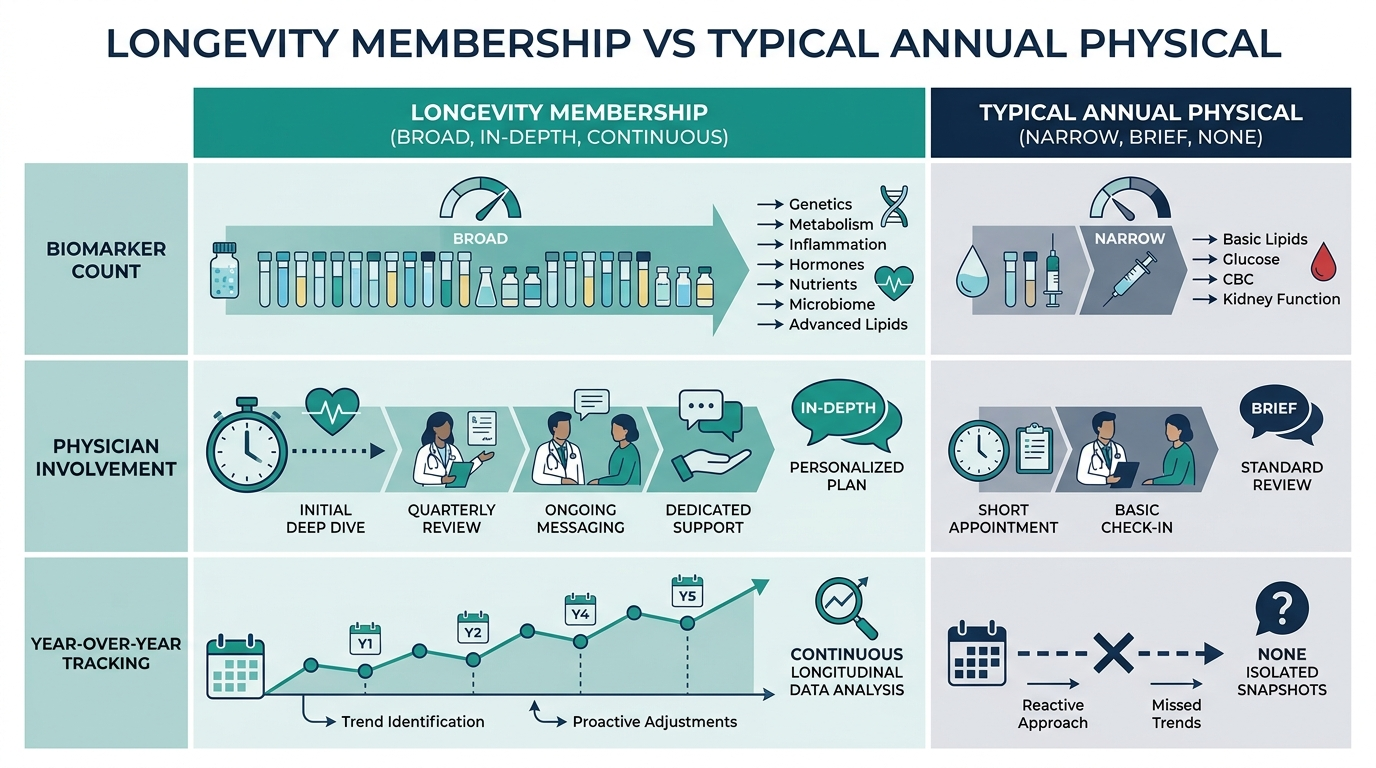
The phrase “100+ biomarkers” sounds impressive but stays abstract until you see what those markers are and what each system tells you. A broad longevity panel like this generally spans the same organ systems a physician would check in a thorough workup, just bundled into one draw. Here is the practical map of what tends to be included and why each cluster matters:
- Metabolic and blood sugar: fasting glucose, A1C, and insulin. These reveal how well your body handles sugar and can flag prediabetes years before symptoms.
- Cardiovascular and lipids: a full lipid panel plus advanced markers such as ApoB and Lp(a). ApoB counts the actual particles that drive plaque, and Lp(a) is a largely genetic risk factor most standard panels skip.
- Inflammation: high-sensitivity CRP and related markers that gauge the low-grade inflammation tied to heart and metabolic risk.
- Kidney function: creatinine, eGFR, and often urine albumin, which track how well your kidneys filter.
- Liver function: ALT, AST, and related enzymes that can flag fatty liver, common alongside metabolic issues.
- Thyroid: TSH and often free T4 and T3, governing energy, weight, and mood.
- Hormones: testosterone, estradiol, and others depending on sex, plus markers like DHEA.
- Complete blood count: red and white cells, hemoglobin, and platelets, screening for anemia and immune issues.
- Nutrients: vitamin D, B12, folate, ferritin, and iron studies that catch common, correctable deficiencies.
The value of seeing all of these at once is pattern recognition. A single high number rarely means much, but a cluster, say elevated A1C alongside high triglycerides, low HDL, and rising liver enzymes, tells a coherent story about insulin resistance that no single test would reveal. That is the real argument for a broad panel over a handful of a la carte tests.
How to prepare for your blood draw
Getting accurate results from any comprehensive panel depends partly on how you prepare, and a few simple steps prevent a wasted draw or a misleading number:
- Fast beforehand if instructed. Glucose and lipid measurements are most reliable after an 8 to 12 hour fast. Water is fine and encouraged, since being hydrated makes the draw easier.
- Time it in the morning. Several hormones, including testosterone and cortisol, follow a daily rhythm and are conventionally measured early in the day for comparable results.
- Skip intense exercise for 24 hours. A hard workout can transiently raise certain markers, including some liver and muscle enzymes and inflammation.
- Hold off on new supplements. High-dose biotin, for instance, can interfere with some lab assays. Ask whether to pause supplements before testing.
- Note recent illness. A cold, infection, or recent vaccination can temporarily elevate inflammatory markers, so it is often best to test when you are well.
Consistency matters as much as any single rule. Testing under similar conditions each time, same time of day, same fasting state, and ideally the same lab, means a change in your results reflects a real change in your body rather than a difference in circumstances.

What “biological age” really means
Superpower, like several longevity services, returns a biological age estimate, and it is worth understanding what that figure is and is not. Biological age is a modeled estimate of how your body is functioning compared with population averages, built from a combination of your biomarkers. The idea is that two people of the same calendar age can be aging at different rates internally, and a set of blood markers can hint at which direction you are trending.
Treat it as a motivational summary, not a precise clock. Different services calculate biological age with different formulas, so the same blood can produce different ages across platforms, and the number can move based on transient factors like a recent illness. Its best use is as a directional signal over time: if your biological age drops after a year of better sleep, food, and training, that trend is more meaningful than the absolute figure on any single report. Do not over-index on the headline number, and never let it substitute for the specific markers underneath it, which are what actually guide action.
How to actually act on a longevity panel
The most common mistake with a broad panel is running it once, glancing at the flagged values, and doing nothing. A results dashboard is only as useful as the follow-through. A sensible way to work through your report:
- Sort by what is actionable. Separate markers you can influence, glucose, lipids, vitamin D, inflammation, from those that are largely fixed, like Lp(a) or genetic factors, which mostly inform risk rather than day-to-day habits.
- Look for patterns, not outliers. One mildly high value is often noise. A cluster pointing the same direction is signal.
- Bring it to a clinician for anything abnormal. A dashboard and AI chat can explain a number, but they do not replace a physician who knows your history, especially for a result that could change treatment.
- Pick two or three changes, not twenty. Targeting the highest-impact issues beats chasing every marginal marker at once.
- Retest to confirm the direction. Because most markers reflect weeks to months, a recheck down the line tells you whether your changes are working.
This is where a membership model can genuinely help, since the tracking-over-time framing nudges you toward the retest that actually closes the loop. But the discipline has to come from you. The panel surfaces the questions; your habits and your clinician provide the answers.
Using HSA and FSA dollars, and reading the fine print
One underappreciated part of the value equation is tax-advantaged spending. Superpower and the alternatives in this roundup are described as HSA and FSA eligible, which means you can often pay with pre-tax dollars set aside for healthcare. For someone in a meaningful tax bracket, that effectively discounts the membership, and it is worth checking your specific plan’s rules and keeping the receipt and any required documentation.
A few fine-print habits protect you from surprises. Confirm the price for your state before signing up, since the article notes New York and New Jersey members pay more for a smaller panel. Read whether the membership renews automatically and how to cancel if you decide one deep annual panel is enough. And treat every add-on, mobile phlebotomy, specialty panels, and supplement suggestions, as an optional line item you opt into deliberately rather than a cost you drift into. The base value proposition stands on its own, and the extras are where first-year spending quietly balloons if you are not paying attention.
Where a service like this fits versus your regular doctor
A frequent question is whether a consumer panel replaces routine care from a primary care physician. It does not, and framing it correctly avoids both overpaying and under-testing. Your regular doctor orders tests based on your symptoms, history, and guidelines, and those tests are usually billed through insurance, which can make a narrow, indicated panel very cheap or free. A consumer membership fills a different gap: it gives you a broad, proactive baseline on your own schedule, often covering advanced markers like ApoB or Lp(a) that a standard checkup may not include unless you ask.
Think of the two as complementary rather than competing. The membership is for curiosity, prevention, and tracking trends over time. Your physician is for diagnosis, treatment, and anything that could change your care. The savviest users bring their panel results into a doctor visit, using the data to start a more informed conversation rather than to bypass one. That combination, self-directed breadth plus professional judgment, is where a service like Superpower delivers the most and the anxiety-driven pitfalls are smallest.
Who should think twice about broad screening
Broad biomarker panels are genuinely useful, but honesty requires naming the limits. For a young, healthy person with no risk factors and no symptoms, testing 100+ markers can surface incidental findings, mildly out-of-range values that are harmless but trigger anxiety and further testing. This is the well-known trade-off of wide screening: more tests mean more chances for a false alarm. If you are prone to health anxiety, a huge panel can create worry out of statistical noise.
There is also the risk of substituting a dashboard for real care. A comprehensive panel does not replace age-appropriate preventive screening like blood pressure checks, cancer screening, or the specific diagnostics a symptom warrants. And for a defined clinical question, a targeted test ordered by your doctor and billed to insurance may be both cheaper and more relevant. The best candidate for a service like Superpower is a motivated adult who will actually use the results to change behavior and follow up on abnormalities, not someone looking for reassurance or a substitute for a physician. Used that way, a broad annual panel is a strong tool. Used passively, it is an expensive number you scrolled past.
Frequently asked questions
How much does Superpower cost? Superpower is about $199 per year for 100+ biomarkers in most states. Members in New York and New Jersey pay $399 for a 90+ biomarker panel. The membership is HSA and FSA eligible.
Does Superpower include the lab draw? Yes. The standard membership covers a draw at 3,000+ Quest Diagnostics locations. A mobile phlebotomist visit to your home or office is an extra cost of roughly $119.
Is Superpower better than Function Health? Superpower is cheaper at about $199 for one deep annual panel. Function Health costs about $365 but includes two draws a year. Choose Superpower for value, Function for built-in retesting.
Are the supplement recommendations required? No. The dashboard suggests supplements, but these are optional. Reported recommendations can total $300 to $400 per month, so review them with your own clinician before buying anything.
Is there a needle-free alternative to Superpower? Yes. SiPhox Health runs entirely at home and uses an EasyDraw device on the upper arm instead of a venous draw, with panels starting around $124 per year. The trade-off is narrower coverage, about 18 to 60+ biomarkers depending on the plan, versus Superpower’s 100+.
Sources
- Superpower Blood Test Review 2026: Is It Worth $199? (Athletech News)
- Superpower Launches $199 Membership (Yahoo Finance)
- Superpower Membership FAQs
- Function membership is now $365/year (Function Health)
- Function Health Pricing
- Everlywell At-Home Lab Tests and Health Kits
- How much does SiPhox Health cost? (SiPhox Health)