3 Best Everlywell Alternatives in 2026
- If you want ongoing testing rather than one-off kits, a yearly membership like Superpower ($199/year, 100+ biomarkers) usually delivers more biomarkers per dollar than buying several Everlywell panels.
- Function Health ($365/year, 100+ lab tests twice a year) is the best premium pick for people who want clinician-reviewed, head-to-toe lab coverage.
- SiPhox Health (from about $125/year) is the budget-friendly, finger-prick option that is HSA and FSA eligible with fast turnaround.
Disclosure: This page contains affiliate links. If you sign up through them we may earn a commission at no extra cost to you. This does not change the price you pay or our editorial assessment. We only feature services we believe offer genuine value.
Why look for an Everlywell alternative?
The short answer: most people switch because Everlywell sells single-purpose kits, and the costs add up fast once you want more than one panel. Everlywell ($49 to $249 per kit) is excellent for a targeted question, such as checking thyroid function or food sensitivity, and it uses CLIA-certified labs with a clean, beginner-friendly experience. The friction shows up when you want a full picture of your health. A thyroid panel, a hormone panel, and a metabolic panel bought separately can quickly pass the price of a yearly membership that tests 100+ biomarkers at once.
Everlywell is not a bad product. It is simply built around one-off testing rather than a longitudinal dashboard you revisit over time. If you only need to answer a single specific question, Everlywell is still a fine choice. If you want broad coverage, trend tracking, or clinician review built in, the three services below tend to fit better.
The 3 best Everlywell alternatives
1. Superpower: Best overall value for broad biomarker coverage
Best for: people who want the widest biomarker panel for the lowest yearly cost.
Superpower is a longevity-focused membership that tests 100+ biomarkers once a year for $199, with a physician-reviewed dashboard that flags what is out of range and why. Compared with assembling several Everlywell kits, it usually wins on biomarkers per dollar, and the membership is HSA and FSA eligible. Collection mixes at-home sampling with a standard lab draw depending on your location.
Pros
- 100+ biomarkers in a single annual panel, far more than a typical one-off kit
- Low entry price ($199/year) relative to the depth of testing
- Physician-reviewed dashboard that explains results in plain language
- HSA and FSA eligible
Cons
- Pricing is higher in New York and New Jersey (about $399/year)
- The standard plan is one comprehensive draw per year, not multiple
- In-app supplement suggestions can nudge you toward extra spending
Pricing: $199/year (about $399 in NY and NJ).
2. Function Health: Best premium pick for clinician-reviewed coverage
Best for: people who want the most thorough, doctor-reviewed lab workup and are willing to pay for it.
Function Health is the main premium competitor in this space, offering 100+ lab tests with your annual test plus a mid-year retest, all reviewed by clinicians. At $365/year (recently reduced from $499), it costs more than Superpower up front, but you get two testing windows per year and an action plan built around your numbers. For someone replacing a stack of Everlywell kits with one comprehensive program, Function is the most clinically complete option here.
Pros
- 100+ lab tests on the annual panel plus a 60+ marker mid-year retest
- Clinician review with a personalized action plan and food guide
- Covers most major organ systems in one membership
- On-demand add-on testing available to members
Cons
- Highest yearly price of the three picks
- Requires a lab draw, so it is less convenient than a finger-prick kit
- Add-on tests cost extra on top of the membership
Pricing: $365/year.
3. SiPhox Health: Best budget and convenience pick
Best for: people who hate lab visits and want a low-cost, finger-prick option with quick results.
SiPhox Health is the most convenient and affordable alternative on this list, built around at-home finger-prick blood collection with fast turnaround and HSA and FSA eligibility. Plans start from about $125/year, and you can choose focused panels (such as heart and metabolic, thyroid, or hormone) or step up to broader programs. If Everlywell appealed to you mainly because of the at-home convenience, SiPhox keeps that ease while moving you toward repeatable, trackable testing.
Pros
- Fully at-home finger-prick collection, no lab visit needed
- Lowest starting price of the three (from about $125/year)
- Fast turnaround on results
- HSA and FSA eligible
Cons
- Entry panels cover fewer biomarkers than Superpower or Function
- Broader coverage requires stepping up to higher-tier programs
- Finger-prick samples are not ideal for every biomarker
Pricing: from about $125/year.
Everlywell alternatives compared
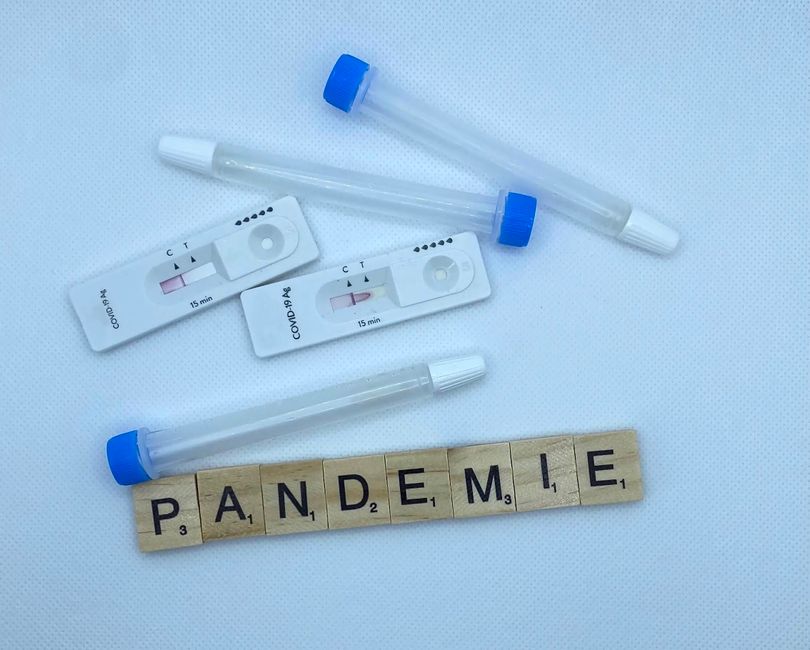
Here is how the three alternatives stack up against Everlywell at a glance.
| Service | Best for | Price | Coverage | Collection |
|---|---|---|---|---|
| Superpower | Best overall value | $199/year | 100+ biomarkers, once a year | At-home plus lab draw |
| Function Health | Best premium pick | $365/year | 100+ tests plus mid-year retest | Lab draw |
| SiPhox Health | Best budget and convenience | From about $125/year | Focused panels, scalable | At-home finger-prick |
| Everlywell | Single targeted panels | $49 to $249 per kit | One panel at a time | At-home, CLIA labs |
How to pick the right one for you
Match the service to your goal, not the other way around. If you want the broadest biomarker coverage for the lowest yearly cost, choose . If you want the most thorough, clinician-reviewed program and you do not mind a lab draw, choose Function Health. If your priority is convenience and a low entry price, choose SiPhox Health. And if you genuinely only need one specific panel and nothing else, Everlywell remains a reasonable single-kit option.
For the full landscape of at-home and lab-based options, including Labcorp OnDemand and other panels not covered here, it is worth comparing turnaround times and which biomarkers each service actually reports before you commit.

How to evaluate an at-home testing service
Choosing between these services is easier when you judge them on a consistent set of axes rather than headline price alone. These are the factors that actually determine whether a service fits you.
- Coverage: how many biomarkers, and which ones. A big number is only useful if it includes the markers relevant to your goals.
- Cadence: a one-time snapshot versus a program built to retest and show a trend over time.
- Collection method: finger-prick at home versus a venous lab draw, which affects both convenience and reliability for some markers.
- Interpretation: whether you get a plain-language, physician-reviewed explanation or just raw numbers.
- Total cost of your goal: the real comparison is the price to answer your whole question, not the cheapest single item.
Scoring each option this way turns a confusing list of prices into a clear match. The service that looks cheapest on one panel is often not the cheapest way to accomplish what you actually want.
What “100+ biomarkers” actually means
The phrase “100+ biomarkers” appears everywhere in this category, and it helps to know what tends to sit inside a broad panel so you can judge whether it covers what you care about. A comprehensive panel usually spans several systems.
- Metabolic: glucose, A1C, and often insulin, which speak to blood sugar control and diabetes risk.
- Lipids: total cholesterol, HDL, LDL, and triglycerides, and sometimes advanced particles, for cardiovascular risk.
- Organ function: kidney markers such as creatinine, and liver enzymes.
- Thyroid: TSH and thyroid hormones that affect energy and metabolism.
- Nutrients: vitamin D, B12, iron studies, and similar.
- Hormones and inflammation: often including markers like hs-CRP and sex hormones.
The practical point is that a broad panel is valuable precisely because it catches things you were not specifically looking for. A single-purpose kit answers the question you already had, while a wide panel can surface a problem you did not know to ask about. That difference is the core reason people move from one-off kits to a membership.
The math of one-off kits versus a membership
The strongest argument for switching away from single kits is arithmetic, and it is worth making explicit. A targeted kit is efficient when you need exactly one panel. The cost equation flips once you want to look at more than one system.
Consider what happens when someone buys a thyroid kit, then decides to also check hormones, then adds a metabolic panel. Each individual purchase is reasonable, but stacked together they can pass the price of a yearly membership that tests 100+ biomarkers in a single sitting. You also end up with several separate reports drawn on different days rather than one coordinated snapshot. The membership route wins on two fronts here: lower cost per biomarker and a single, comparable baseline. This is exactly why the comparison in this guide is framed around biomarkers per dollar rather than sticker price. The right question is not “which is cheapest,” it is “which is the cheapest way to see everything I want to see.”

When Everlywell is still the right choice
None of this means single-kit testing is obsolete. There are clear situations where Everlywell, or any focused kit, remains the better pick, and it would be dishonest to pretend otherwise.
- You have one specific question. If you only want to check thyroid function or a food sensitivity, a targeted kit is efficient and you avoid paying for markers you do not need.
- You want a one-time check, not a program. If you have no intention of tracking trends, a membership’s recurring value is wasted on you.
- You value the simplest possible experience. Single kits are beginner-friendly and require no commitment.
- You are testing on someone else’s recommendation. If a clinician asked you to check a particular marker, a focused kit does exactly that.
The honest framing is that Everlywell and a membership solve different problems. One answers a narrow question cheaply, the other builds a broad picture over time. Matching the tool to your actual intent matters more than picking a universal winner.
What the testing process actually looks like
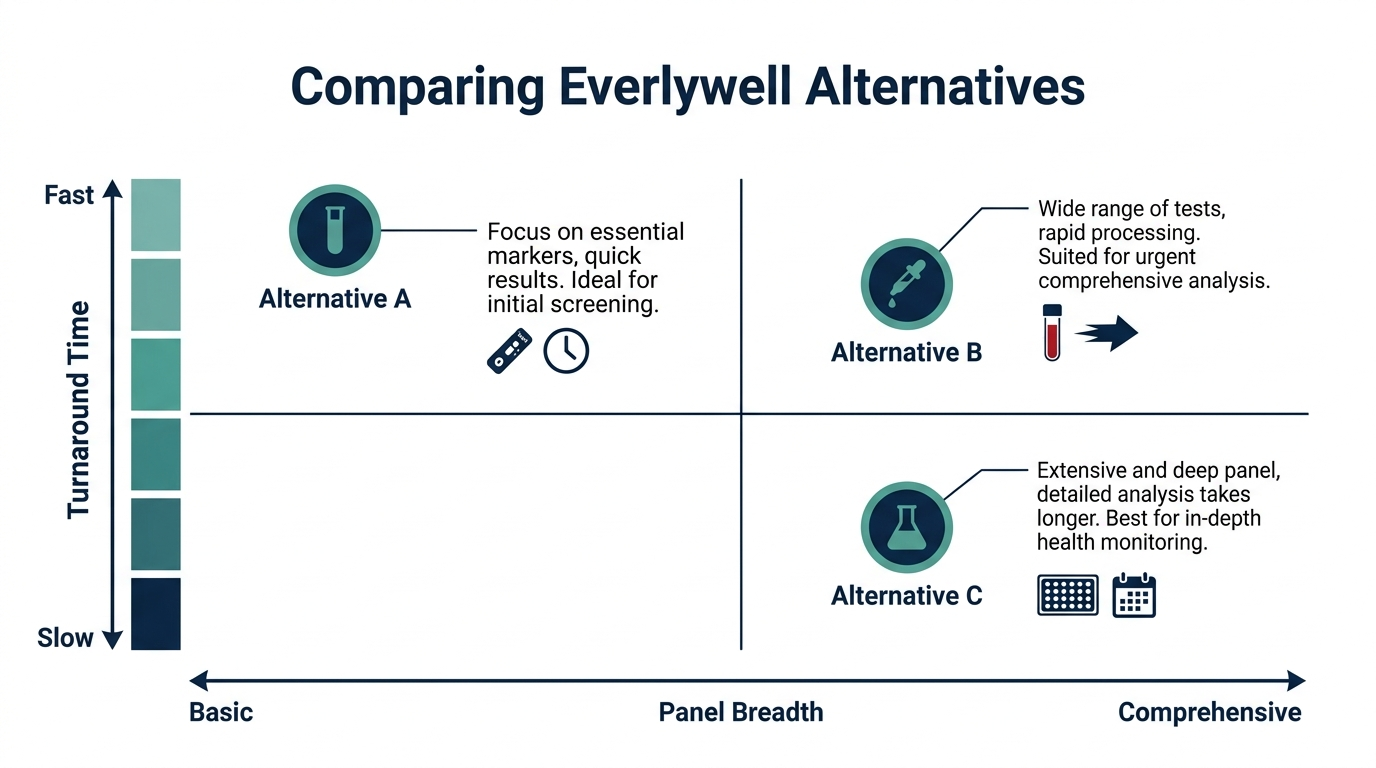
If you have only used single kits, the flow of a broader service is worth knowing so there are no surprises. The steps are similar across the options, with the collection method being the main difference.
- Order online. No physician referral of your own is needed, since the test is ordered on your behalf.
- Collect your sample. For fully at-home options this is a finger-prick you mail back. For comprehensive panels it is usually a standard venous draw at a lab location.
- The lab analyzes it. Samples run through CLIA-certified labs, and turnaround ranges from days to a couple of weeks depending on the service and panel size.
- Review your dashboard. Results arrive in an online dashboard, typically with physician review that flags what is out of range and explains it.
- Act and retest. With a membership, you make changes and retest later to see the trend, which is where the ongoing value lives.
Knowing this flow helps set expectations, especially the point that a comprehensive panel often involves a lab draw rather than a mailed finger-prick, a tradeoff of a little convenience for broader and sometimes more reliable coverage.
Which alternative fits which person
To make the tradeoffs concrete, here is how the choice tends to land for common situations, mapped to the options in this guide.
- The optimizer who wants the widest view cheaply: a broad annual membership that maximizes biomarkers per dollar is the natural fit, which is why is framed as the best overall value here.
- The thorough type who wants a clinician-led program: a premium option with two testing windows and a personalized action plan suits someone willing to pay more for depth, the role Function Health plays.
- The convenience-first, budget-conscious user: a low-cost, fully at-home finger-prick option keeps the ease that drew people to kits, which is where SiPhox Health fits.
- The single-question user: someone who truly needs just one panel and no tracking is still well served by a focused kit like Everlywell.
The pattern across all four is the same. Start from how you will use the results and how often, and the right service follows from that rather than from the lowest number on a pricing page.

Common mistakes when switching from single kits
A few avoidable errors undercut the value of moving to a broader service. Watch for these.
- Buying on sticker price alone. The cheapest option per panel can cost more overall once you add the panels you actually want. Compare price per biomarker.
- Choosing coverage you will not use. A 100+ marker panel is only worth it if the extra markers matter to your goals. Match coverage to intent.
- Skipping prep. Ignoring fasting or timing instructions for the relevant markers produces confusing results and can waste the test.
- Testing once and never again. The advantage of a membership is the trend, so a single untracked test forfeits most of the benefit.
- Expecting it to replace your doctor. These services inform and screen, but a clearly abnormal result still belongs with a clinician who knows your history.
Sidestepping these keeps every dollar tied to a result you can actually act on.
Accuracy, collection, and what to expect
A fair comparison has to address reliability, since these services differ in how they collect blood. All of them rely on CLIA-certified labs, a federal standard for accuracy in the analysis itself, so the lab work is held to a real bar regardless of brand.
The bigger variable is collection. Finger-prick sampling, used by fully at-home options, is convenient and adequate for many markers, but a venous draw yields a larger, more stable sample that can be more reliable for certain tests. This is why some services use a standard lab draw for their comprehensive panels. For a routine wellness snapshot, a well-run finger-prick test is usually fine, and a clinician can confirm any borderline or important result with a venous draw. Knowing this helps you weigh convenience against precision rather than assuming at-home means less trustworthy.
How to actually use your results
Whichever service you pick, the value comes from what you do with the numbers, and a few principles prevent both panic and complacency.
- Read against the service’s own reference ranges, which differ slightly by lab and method.
- Treat one out-of-range value as a prompt, not a diagnosis. Timing, collection, and normal variation can move a number, so a repeat often clarifies.
- Watch the trend. The real payoff of a membership is seeing how a marker moves after you change sleep, diet, or training, which a single kit cannot show.
- Loop in your own clinician for anything clearly abnormal or symptomatic. These services complement medical care, they do not replace it.
Protecting your health data and getting value from a membership
Two final practical points round out the decision. First, because these companies hold sensitive results, it is worth a quick check of each service’s privacy policy for how data is stored, whether it is shared, and whether you can delete it. A strong password and, where offered, two-factor authentication protect your dashboard.
Second, if you do choose a membership, you get the most from it by treating it as a program rather than a one-off purchase. Test at a consistent time of day and under consistent conditions so results are comparable, follow any fasting instructions for the relevant markers, act on the physician guidance between tests, and use the retest to measure whether your changes worked. A membership that you test once and never revisit delivers little more than a single kit, so the return comes from actually using the tracking you paid for. Approached that way, the biomarkers-per-dollar advantage turns into real, visible progress over the year.
Frequently asked questions
What is the best overall alternative to Everlywell?
For most people, Superpower is the best overall alternative because it tests 100+ biomarkers for $199/year, which typically beats buying multiple Everlywell kits on biomarkers per dollar. Function Health is the better choice if you want a more thorough, clinician-reviewed program with two testing windows per year.
Is Everlywell or a membership service cheaper?
It depends on how much testing you want. A single Everlywell kit ($49 to $249) can be cheaper than a membership if you only need one panel. Once you want broad coverage across several systems, a yearly membership like Superpower ($199) or SiPhox (from about $125) usually costs less than buying the equivalent panels separately.
Are these alternatives HSA and FSA eligible?
Yes, in most cases. Superpower and SiPhox Health are HSA and FSA eligible, and Everlywell accepts HSA and FSA payments as well. Eligibility can vary by plan and provider, so keep your receipts and confirm with your benefits administrator before purchasing.
Do any of these require a doctor visit?
No standard doctor visit is required to order. SiPhox Health uses fully at-home finger-prick collection. Superpower and Function Health use a standard lab draw for their comprehensive panels, but you do not need your own physician referral to sign up, and results are reviewed by their clinical teams.
Can these replace regular care from my own doctor?
No. These services are designed to give you broader visibility into your biomarkers and trends over time, not to replace diagnosis or treatment from a licensed clinician who knows your full history. Always discuss abnormal results and any health decisions with your own doctor.
Sources
- Superpower, “Superpower is now $199” and Membership FAQs, superpower.com
- Function Health, “Function membership is now $365/year” and Pricing, functionhealth.com
- SiPhox Health, “How much does SiPhox Health cost?” and pricing pages, siphoxhealth.com
- Everlywell, product and pricing pages (Thyroid Test, Food Sensitivity Test, Women’s Health), everlywell.com
- Athletech News, “Superpower Blood Test Review 2026: Is It Worth $199?”