Last updated June 2026. Educational content only, not medical advice. Consult a licensed clinician before starting any peptide therapy.
Short answer: Peptides for weight loss are short chains of amino acids that signal the body to reduce appetite, burn stored fat, or increase growth hormone output. The most clinically proven class, GLP-1 receptor agonists like semaglutide and tirzepatide, now deliver 15 to 22.5 percent average body weight loss in large trials, and the just-approved retatrutide hit 28.3 percent in its Phase 3 TRIUMPH-1 data released May 2026.
If the word “peptide” calls to mind obscure grey-market vials and forum debates, that mental model is about three years out of date. The same molecule class that runs your hunger signals and fat metabolism is now at the center of the most commercially significant drug launches in pharmaceutical history. Understanding the biology tells you why some peptides work dramatically, why others are still experimental, and which pathway is actually legal for you to access.
What exactly is a peptide, and why does it matter for weight?
A peptide is any short chain of amino acids, typically 2 to 50, linked by peptide bonds. Proteins are just longer versions of the same thing: once a chain passes roughly 50 amino acids, it gets reclassified as a protein. Your body makes thousands of natural peptides, many of which act as signaling molecules, including the hormones that regulate hunger, blood sugar, and fat storage.
That last detail is the whole story. Weight is not simply calories-in versus calories-out. It is a hormone-signaling problem. When peptide researchers cracked the structure of glucagon-like peptide-1 (GLP-1), the gut hormone that tells the brain you are full, they effectively discovered a biological dimmer switch for appetite. Synthesizing analogs that mimic or amplify that signal, while staying active long enough to matter, became the most productive pursuit in obesity medicine in a generation.
The reason peptides are interesting specifically for weight loss, as opposed to small-molecule drugs, is their precision. A peptide can be designed to bind one receptor with very little off-target activity, which is why the GLP-1 drugs produce large weight effects with a side-effect profile that is mostly gastrointestinal rather than cardiovascular or neurological.
Full-body lab membership: 100+ biomarkers, doctor-reviewed, tracked over time.
What are the main classes of weight-loss peptides?
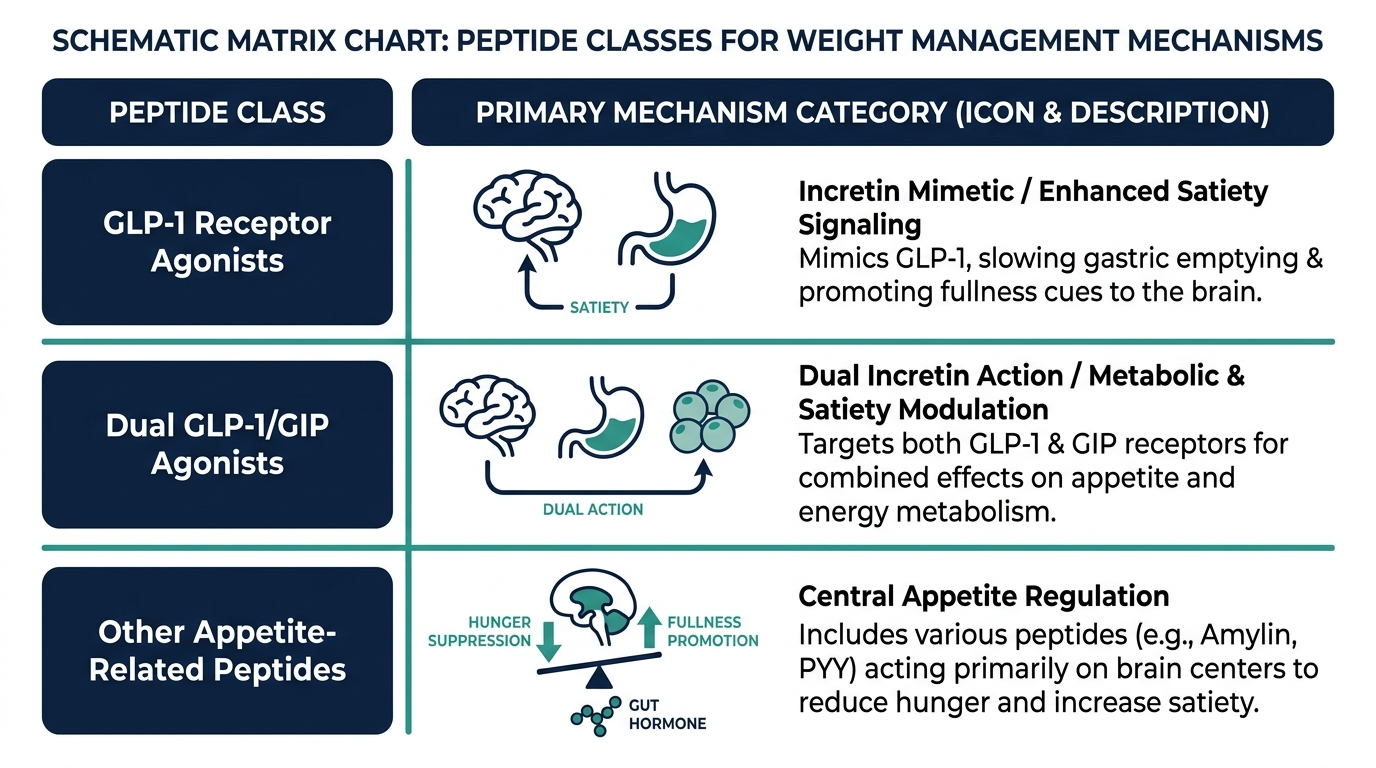
Not all peptides for weight loss work the same way. There are three distinct mechanisms, and the clinical evidence behind each is very different.
Class 1: GLP-1 receptor agonists (the strongest evidence)
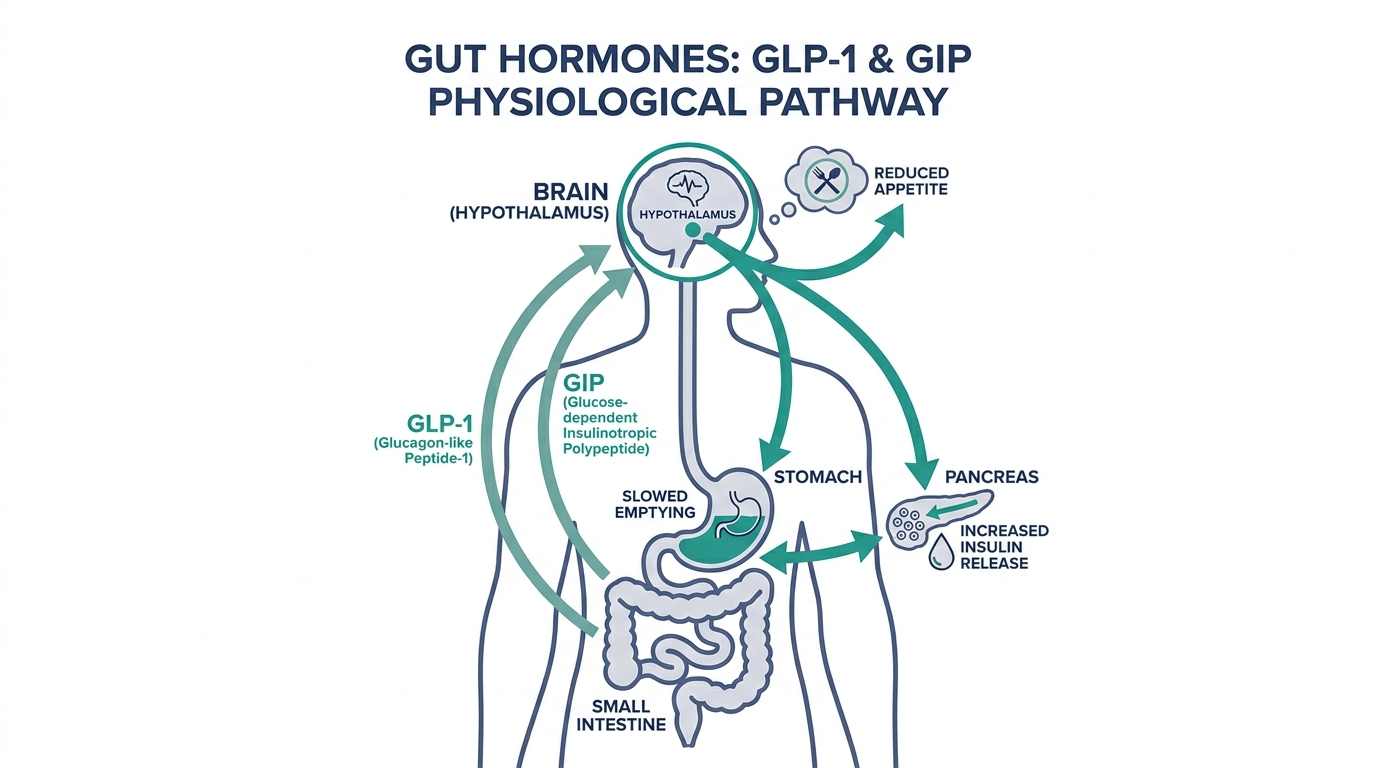
GLP-1 is a hormone secreted by L-cells in the small intestine after eating. It signals satiety to the hypothalamus, stimulates insulin release, slows gastric emptying, and reduces glucagon. Synthetic GLP-1 analogs mimic all of this but are engineered to resist enzymatic breakdown, extending the active window from minutes (natural GLP-1) to days or a week.
This class currently includes four FDA-approved compounds for weight management:
- Semaglutide injectable (Wegovy, 2.4 mg weekly): 15 percent average body weight loss over 68 weeks in the STEP 1 trial; 50.5 percent of participants lost 15 percent or more (NEJM 2021).
- Tirzepatide (Zepbound): A dual GIP/GLP-1 agonist that hits two incretin receptors simultaneously. In SURMOUNT-1 it produced 22.5 percent average weight loss at the highest dose, with 57.8 percent of participants achieving 20 percent or more (NEJM 2022).
- Oral semaglutide (Wegovy pill, 25 mg): FDA-approved in late 2025, broadly available as of January 2026 starting at $199 per month. In the OASIS 4 trial it produced 16.6 percent weight loss at 64 weeks, with one-third of fully adherent participants losing 20 percent or more (Novo Nordisk press release).
- Orforglipron (Foundayo): Eli Lilly’s oral GLP-1 pill approved April 1, 2026, no food or water restrictions, starting at $149 per month through LillyDirect. Produced approximately 11 to 12.4 percent body weight loss at 72 weeks in Phase 3 (Eli Lilly investor release).
The fact that both Novo Nordisk and Eli Lilly launched oral GLP-1 pills in the same six-month window signals how intensely the pharma industry is competing to own the “weight loss pill” consumer framing. The injectable era is not over, but the convenience story has permanently shifted.
Class 2: Growth hormone secretagogues (moderate, indirect evidence)
This class does not suppress appetite directly. Instead, it stimulates the pituitary to release more growth hormone (GH), which in turn promotes lipolysis, the breakdown of stored triglycerides, and helps preserve lean mass. The two most commonly prescribed combinations are:
CJC-1295 + Ipamorelin: CJC-1295 is a GHRH analog engineered for a long half-life, sustaining GH release. Ipamorelin is a GHRP (growth hormone-releasing peptide) that amplifies the pulse strength. Together they produce a 3 to 5 fold increase in GH output compared to either compound alone, according to prescribing clinicians at centers like Anderson Longevity Clinic. The weight-loss effect is real but modest and indirect, better described as body-composition improvement than obesity treatment.
Sermorelin: An older GHRH analog, simpler structure, shorter half-life. Available by prescription, typically $175 to $225 per month through telehealth. Its weight-related benefit is mostly via improved sleep quality and fat oxidation, not direct appetite suppression.
Do not believe the influencer framing that stacks CJC-1295/ipamorelin with GLP-1s as a magic combination for “burning fat while building muscle.” The interaction data at clinical doses is thin. If you have obesity as a primary concern, the GLP-1 class produces dramatically larger body weight reductions.
Class 3: Metabolic and experimental peptides (weak or pending evidence)
Tesamorelin (Egrifta): FDA-approved but only for HIV-associated lipodystrophy. Off-label for visceral fat; in trials it reduced visceral adipose tissue by 10.9 percent versus 0.6 percent placebo over six months. A real effect, but narrow and not approved for general obesity.
AOD-9604: A modified fragment of human growth hormone intended to stimulate fat breakdown without raising IGF-1. It has Australian TGA approval for general sale but failed to show statistically meaningful efficacy in Phase 3 trials and was never submitted for FDA approval. The clinical story here is not strong.
Retatrutide (investigational): A triple agonist hitting GLP-1, GIP, and glucagon receptors simultaneously, manufactured by Eli Lilly. In Phase 2 it produced 24.2 percent mean body weight loss at 48 weeks. In TRIUMPH-1, the first Phase 3 registrational trial (topline data May 21, 2026), participants on 12 mg lost 28.3 percent at 80 weeks, and those with BMI 35 or higher who completed full treatment lost up to 30.3 percent, an average of 85 pounds (Eli Lilly TRIUMPH-1 announcement, AJMC coverage). It is not approved, with FDA submission expected Q4 2026 and approval realistically late 2027 or early 2028. Retatrutide sold on grey-market research vendor sites today is unverified and untested against the real Lilly compound.
How do GLP-1 peptides actually produce weight loss? (the biology, simplified)
The brain’s hypothalamus runs a continuous calculation: how much energy do I have, and how much should I seek? GLP-1 receptor agonists interrupt that calculation at multiple points simultaneously.
Appetite suppression via the brain: GLP-1 receptors sit in the arcuate nucleus and other hypothalamic regions that govern hunger drive. When those receptors are activated, hunger signals quiet down noticeably. Users of semaglutide and tirzepatide consistently describe it as the internal food noise simply going silent, a subjective experience that matches the objective intake data from trials.
Slowed gastric emptying: Food leaves the stomach more slowly on GLP-1 therapy, extending the physical sensation of fullness after a meal. This effect moderates over time (the body partially adapts), but the central appetite suppression is more durable.
Insulin and glucagon regulation: GLP-1 agonists stimulate insulin release in a glucose-dependent manner, meaning only when blood sugar is actually elevated, which is why hypoglycemia is rare. They also reduce glucagon, the hormone that triggers the liver to release stored glucose.
No direct fat-burning: This is a common myth worth busting. GLP-1 peptides do not “burn fat” in the way a thermogenic supplement claims to. They reduce caloric intake so effectively that the body draws on fat stores to meet energy needs. The mechanism is upstream: less appetite, less food, more deficit, more fat mobilized over time.
The muscle-loss concern: A real issue worth taking seriously. Lean body mass can represent 15 to 40 percent of total weight lost on GLP-1 therapy without deliberate countermeasures. A March 2026 study in Cell Reports Medicine found that while absolute lean mass decreased, the lean-to-body-weight ratio improved in human participants, and muscle strength was preserved (Cell Reports Medicine). The practical implication: combine GLP-1 therapy with resistance training and 1.2 to 1.6 grams of protein per kilogram of body weight per day. Clinicians who do not discuss this are leaving your results half-finished.
How do weight-loss peptides compare to each other?
| Peptide | Class | Avg. weight loss | FDA status (June 2026) | Access route | Monthly cost (approx.) |
|---|---|---|---|---|---|
| Semaglutide 2.4 mg (Wegovy) | GLP-1 | ~15% | Approved | Telehealth / Rx | $199-$349 |
| Tirzepatide (Zepbound) | GLP-1 + GIP | ~22.5% | Approved | Telehealth / Rx | $299 via LillyDirect |
| Oral semaglutide (Wegovy pill) | GLP-1 | ~16.6% | Approved Jan 2026 | Telehealth / pharmacy | $199 |
| Orforglipron (Foundayo) | GLP-1 | ~11-12.4% | Approved Apr 1, 2026 | LillyDirect / Rx | From $149 |
| CJC-1295 + Ipamorelin | GH secretagogue | Modest (body comp) | Not approved | Telehealth / Rx (off-label) | $175-$250 |
| Sermorelin | GH secretagogue | Modest (body comp) | Not approved | Telehealth / Rx (off-label) | $175-$225 |
| Tesamorelin | GH-axis | ~10.9% visceral fat | Approved (HIV-lipodystrophy only) | Specialist Rx | $400+ |
| Retatrutide | GLP-1 + GIP + GCG | ~28.3% (Phase 3) | Investigational | Not available (grey market only) | Not applicable |
| AOD-9604 | GH fragment | Minimal | Not approved | Research only (limited) | Varies |
Personally, the table tells a clear story: the approved GLP-1 class is doing things in controlled trials that no other weight-loss intervention, pharmaceutical or lifestyle, has matched in 30 years of obesity research. The gap between tirzepatide at 22.5 percent and the best previous approved drug (orlistat at 3 to 5 percent in real-world use) is not a marginal improvement; it is a different category.
Who actually benefits from weight-loss peptides?
GLP-1 receptor agonists are approved for adults with a BMI of 30 or higher (obesity), or BMI 27 or higher with at least one weight-related condition like hypertension, type 2 diabetes, or dyslipidemia. That covers a very large share of the US adult population.
GH secretagogue peptides (CJC-1295, ipamorelin, sermorelin) are typically used by people who already have reasonable body composition but want to address age-related decline in growth hormone output, which begins declining around age 30. The target profile is lean, active, and looking for body-composition optimization, not obesity treatment.
The investigational metabolic peptides (tesamorelin off-label, AOD-9604, experimental stacks) have a much narrower clinical case and significantly less evidence. Most people asking about them are drawn in by forum buzz or marketing that outpaces the actual trial data.
Telehealth GLP-1 program with provider visits and pharmacy coordination.
What are the real risks and side effects?
The GLP-1 class has a well-characterized side-effect profile after roughly a decade of clinical use in type 2 diabetes (liraglutide was approved in 2010):
Common (nausea, vomiting, diarrhea, constipation): Reported in 30 to 50 percent of users, almost always in the first weeks as the dose is being titrated. Slow titration, eating smaller meals, and avoiding high-fat foods reduce severity significantly. Most users adapt.
Rare but serious: GLP-1 drugs carry a boxed warning for thyroid C-cell tumors based on rodent studies; a causal link in humans has not been established, but people with a personal or family history of medullary thyroid carcinoma or multiple endocrine neoplasia type 2 should not use them. Acute pancreatitis, gallbladder disease, and kidney injury from dehydration (secondary to GI side effects) are also listed.
Pregnancy: GLP-1 receptor agonists are contraindicated during pregnancy and breastfeeding. Women who become pregnant should stop immediately and notify their provider.
Interaction with type 1 diabetes: These drugs are not approved for type 1 diabetes and can cause hypoglycemia in combination with insulin.
For GH secretagogues, the main risks are water retention, joint discomfort, increased cortisol at high doses, and carpal tunnel symptoms. These are generally dose-dependent and reversible.
The risks of grey-market research peptides are a separate category entirely. Purity failures, contamination, dosing errors in self-reconstitution, and the total absence of any clinical oversight are all real. Independent testing platform Finnrick, which has now run more than 8,000 tests across 225 vendors, found retatrutide samples from grey-market vendors failing basic purity benchmarks before the major vendor shutdowns of 2025 to 2026. Buying research peptides to self-inject is not simply a risk-benefit trade-off; it is a situation where you cannot verify what you are actually injecting.
What about collagen peptides? Are those different?
Yes, they are fundamentally different. Collagen peptides (hydrolyzed collagen) are food-derived short chains of amino acids, primarily glycine, proline, and hydroxyproline, sold as supplements. They support skin elasticity, joint health, and bone density. Their contribution to weight loss is indirect at best: protein in general is satiating, and collagen peptides count as protein.
Nobody will lose meaningful body weight by taking collagen peptides. That category does not belong in the same sentence as semaglutide for weight management purposes, but it gets lumped in because all of these products share the word “peptide.”
Frequently asked questions
What are peptides for weight loss in simple terms?
Short chains of amino acids that act as signaling molecules in the body. The most effective ones for weight loss mimic or amplify gut hormones (especially GLP-1) that tell your brain you are full, reducing appetite significantly enough to produce large and sustained weight loss over months.
Do peptides for weight loss actually work?
The GLP-1 class has some of the strongest efficacy data in the history of obesity medicine. Semaglutide produced 15 percent average body weight loss in STEP 1 over 68 weeks; tirzepatide produced 22.5 percent in SURMOUNT-1. Retatrutide hit 28.3 percent in TRIUMPH-1 Phase 3 data (May 2026). These are outcomes no diet, exercise program, or earlier drug class has consistently matched.
Are peptides for weight loss safe?
The FDA-approved GLP-1 drugs have a well-characterized safety profile built on over a decade of clinical use. Common side effects are gastrointestinal. Serious risks are documented but rare, and they require specific exclusions (thyroid cancer history, pregnancy). Grey-market research peptides carry additional purity and safety risks with no oversight.
Can I get peptides for weight loss without a prescription?
For the GLP-1 class, no. Semaglutide, tirzepatide, and orforglipron are prescription medications. Accessing them legally requires a clinician’s prescription through a licensed provider. Telehealth platforms have made that process accessible and affordable, often completing the intake and shipping medication within two weeks.
What is the difference between semaglutide and tirzepatide for weight loss?
Semaglutide activates the GLP-1 receptor only. Tirzepatide activates both GLP-1 and GIP receptors simultaneously, which is why its weight-loss results in trials (22.5 percent) exceed semaglutide (15 percent). Both are injectable, weekly. Oral semaglutide (Wegovy pill) and orforglipron (Foundayo) are now available for people who prefer to avoid injections.
What is retatrutide and can I get it?
Retatrutide is a triple-receptor agonist (GLP-1, GIP, glucagon) in late-stage development by Eli Lilly, showing 28.3 percent weight loss in TRIUMPH-1 Phase 3 trials as of May 2026. It is not FDA-approved; FDA submission is expected Q4 2026 at the earliest, with realistic approval in late 2027 or 2028. Versions sold by research-chemical vendors today are not verified pharmaceutical-grade compound and should not be injected.
How do peptide injections for weight loss differ from the Wegovy pill?
Mechanism is the same, semaglutide in both cases. The injectable Wegovy reaches full systemic bioavailability straightforwardly. The oral pill (25 mg) requires an SNAC absorption enhancer and must be taken on an empty stomach with a small amount of water. Orforglipron (Foundayo) is a completely different small molecule, not a peptide technically, and has no food or water restrictions. Results are broadly comparable, with the oral route slightly less potent per unit dose.
Telehealth GLP-1 program with provider visits and pharmacy coordination.
Author: Vital Signs Today Editorial Team, [credential]”]. Educational content only, not medical advice. Sources linked inline.
Primary sources:
– STEP 1 trial: semaglutide 2.4 mg (NEJM 2021)
– SURMOUNT-1 trial: tirzepatide (NEJM 2022)
– TRIUMPH-1 Phase 3 retatrutide, Eli Lilly announcement May 2026
– TRIUMPH-1 data, AJMC coverage
– Wegovy pill (oral semaglutide) FDA approval and launch, Novo Nordisk
– Orforglipron (Foundayo) FDA approval April 2026, Eli Lilly
– GLP-1 and muscle mass preservation, Cell Reports Medicine March 2026
– Tesamorelin visceral fat data: prescribing information / clinical trials
– CJC-1295/Ipamorelin mechanism, Anderson Longevity Clinic
– GLP-1 telehealth pricing landscape 2026, Telehealth Ally
– Retatrutide Phase 2 NEJM
– APhA 2026: GLP-1 therapies, Pharmacy Times
Want a real clinician to run the numbers, not a guess?
Joi + Blokes is a telehealth clinic that prescribes GLP-1 medication (Zepbound, compounded semaglutide and tirzepatide), hormone therapy (TRT, HRT), thyroid care, and peptides after a real lab panel and clinician review, with no membership or consult fee (prescriptions from about $59/month, lab panels from $149). If the scale will not budge, this is where you find out whether insulin, thyroid, or hormones are the real reason. Here is Joi + Blokes reviewed in full.
Related reading
Vital Signs Today may earn a commission if you buy through links on this page. It does not affect our editorial assessments.