Quick answer: A TPO antibodies test measures thyroid peroxidase antibodies (TPO Ab) in your blood, the primary marker for autoimmune thyroid disease. Elevated levels, generally above 35 IU/mL at most labs, strongly suggest Hashimoto’s thyroiditis or Graves’ disease. The test is a routine blood draw ordered alongside TSH and free T4 when autoimmune thyroid disease is suspected, and it costs $29 to $150 cash depending on the lab and whether a panel is used.
What are thyroid antibodies and why does the TPO test exist?
Thyroid antibodies are proteins your immune system produces when it mistakenly attacks thyroid tissue. Thyroid peroxidase is an enzyme that sits on the surface of thyroid follicular cells and drives a critical step in hormone production: it attaches iodine to tyrosine residues to form T3 and T4. When antibodies bind to and block TPO, hormone synthesis becomes erratic and the gland sustains chronic inflammatory damage over years.
The TPO antibodies test detects the immunoglobulin G antibodies (TPO Ab or anti-TPO) circulating in your serum. It is the single most sensitive marker for autoimmune thyroid conditions, more useful as an initial screen than the anti-thyroglobulin (TgAb) antibody test, which is ordered second if TPO comes back borderline or clinical suspicion remains high. Anti-TPO is positive in roughly 95 percent of Hashimoto’s patients and 70 to 75 percent of Graves’ disease patients, which is why it anchors every autoimmune thyroid workup.
A clinician who sees low TSH and high TPO Ab will think differently than one who sees high TSH with high TPO Ab. The antibody level does not tell you which direction the thyroid is currently misfiring. It tells you the immune mechanism driving the dysfunction. That distinction matters for treatment planning, prognosis, and monitoring.
What actually flips the immune system into attacking thyroid peroxidase is a combination of genetic susceptibility and environmental triggers. The strongest genetic links are variants in the HLA-DR region and the immune-regulating genes CTLA-4 and PTPN22, which is why autoimmune thyroid disease clusters in families alongside type 1 diabetes and celiac disease. On top of that genetic background, common triggers include a sudden jump in iodine intake, certain viral infections, the hormonal shifts of pregnancy and the postpartum period, physical or emotional stress, smoking cessation, and low selenium status. None of these causes Hashimoto’s on its own. They tip an already primed immune system into active attack, which is why two people with identical antibody levels can have very different stories about when and why their disease began.
What is the TPO antibodies normal range?
The simplest way to actually get this done
Superpower is a full-body lab membership that runs 100+ biomarkers, has each result reviewed by a doctor, and tracks your numbers year over year (about $199/year). It is what we point readers to when they would rather get one clean, complete draw than chase single tests one at a time. Here is superpower reviewed in full.
Most US laboratories set the reference interval at less than 35 IU/mL, though the specific cutoff varies by assay and lab. Quest Diagnostics and Labcorp both use less than 9 IU/mL as negative and 9 to 35 IU/mL as borderline on some immunoassay platforms, while others report simply less than 35 IU/mL as the upper limit of normal. Always read the reference range printed on your own report, not a number from the internet.
Two practical traps come up here. First, units matter. Most US labs report TPO Ab in IU/mL, but a few older assays report in U/mL or use a different calibration entirely, so a result of 40 on one platform is not the same distance above normal as 40 on another. This is the single biggest reason online comparisons of raw numbers mislead people. Second, a positive result is far more binary than the figure suggests. Once you cross the lab’s cutoff, you are antibody-positive, and watching the value drift from 300 to 250 does not change your diagnosis or your monitoring plan. The value of a high number is confirmation that the immune process is real, not a score to optimize down over time.
| Result range (IU/mL) | Typical interpretation | Common next step |
|---|---|---|
| Less than 9 | Negative, no antibodies detected | Reassurance; revisit if symptoms persist |
| 9 to 34 | Borderline (lab-dependent) | Retest in 6 to 12 months, add TgAb |
| 35 to 200 | Mildly elevated | Correlate with TSH, free T4, ultrasound |
| 200 to 1000 | Moderately elevated | Strong indicator of Hashimoto’s; annual TSH monitoring |
| Above 1000 | Highly elevated | Hashimoto’s confirmed; discuss levothyroxine threshold |
One thing that surprises people: antibody levels do not correlate reliably with severity of symptoms or degree of thyroid dysfunction. Someone with TPO Ab at 2000 IU/mL can have a normal TSH and feel fine for a decade. Someone at 80 IU/mL can have overt hypothyroidism. The TPO Ab level tells you immune activity is present, not how fast the gland is being destroyed right now.
What does it mean when TPO antibodies are high?
High TPO antibodies almost always mean autoimmune inflammation is attacking the thyroid, and the most common diagnosis is Hashimoto’s thyroiditis. Outside of Hashimoto’s and Graves’ disease, mildly elevated TPO Ab appears in postpartum thyroiditis, de Quervain’s (subacute) thyroiditis, and non-thyroid autoimmune conditions including type 1 diabetes, rheumatoid arthritis, lupus, and Sjogren’s syndrome.
A few things clinicians track when TPO Ab is elevated:
- TSH trajectory: A single normal TSH with high TPO Ab is reassuring short-term, but TSH tends to rise over years as the gland is progressively damaged. Annual monitoring catches the transition before symptoms become disabling.
- Thyroid ultrasound: High-frequency ultrasound of the gland often shows heterogeneous, hypoechoic texture in Hashimoto’s, which confirms structural damage even when labs are borderline. It also screens for nodules that warrant biopsy.
- Pregnancy risk: Women with elevated TPO Ab have a four- to five-fold higher risk of postpartum thyroiditis and are at increased risk of miscarriage and preterm birth. Endocrinologists often recommend TSH monitoring every trimester.
- Medication effect: Amiodarone, interferon-alpha, lithium, and some checkpoint inhibitor cancer drugs can trigger or worsen anti-TPO positivity. If you started a new medication before your TPO came back elevated, that connection belongs in your chart.
What high TPO Ab does NOT automatically mean: treatment with levothyroxine. Many people carry elevated antibodies for years with completely normal thyroid function and need nothing except surveillance. The prescription threshold is TSH, not antibody titer.
What do low or negative TPO antibodies mean?
A negative TPO Ab result means no meaningful antibody attack on thyroid peroxidase was detected at the time of the draw. For most people this is reassuring, but it does not completely rule out autoimmune thyroid disease. Around 5 percent of Hashimoto’s patients and 25 to 30 percent of Graves’ patients are TPO-negative, carrying instead antibodies to thyroglobulin or the TSH receptor. If your TPO comes back negative but you still have clear thyroid symptoms, an abnormal TSH, or a suggestive ultrasound, the next step is to add TgAb, and TRAb if a hyperthyroid picture is present, rather than to conclude the thyroid is fine.
A negative result is also the expected finding in the two most common non-autoimmune causes of thyroid dysfunction: iodine deficiency and thyroid changes driven by medication or non-thyroidal illness. When TSH is abnormal but every antibody is negative, the workup shifts away from autoimmunity and toward those alternative explanations. This is exactly why antibodies are ordered alongside function tests rather than in place of them. The pair tells you both what the thyroid is doing and why it is doing it.
TPO antibodies and Hashimoto’s thyroiditis: the connection explained
Hashimoto’s thyroiditis is the leading cause of hypothyroidism in the United States, affecting an estimated 14 million Americans, and TPO antibodies are its defining biomarker. The condition is named for Hakaru Hashimoto, a Japanese physician who described lymphocytic infiltration of thyroid tissue in 1912, but the antibody test did not exist until decades later.
The mechanism is a CD4-positive T-helper cell response that recruits cytotoxic T cells and stimulates B cells to make anti-TPO and anti-thyroglobulin antibodies. Over time, the inflammatory infiltrate replaces normal follicular cells with fibrous tissue, shrinking the gland’s hormone-producing capacity. This is why Hashimoto’s almost always ends in hypothyroidism, though the timeline ranges from two years to four decades.
In the early or “Hashitoxicosis” phase, damaged follicles dump stored thyroid hormone into the bloodstream, causing a temporary hyperthyroid picture that can be mistaken for Graves’ disease. The difference: Graves’ shows TSH receptor antibodies (TRAb), stimulating the gland to overproduce hormone indefinitely. Hashimoto’s shows TPO Ab with transient hormone release followed by eventual gland failure. Ordering both markers in uncertain cases saves patients from being misdiagnosed and given antithyroid drugs for what is actually a self-resolving transient phase.
A typical real-world pattern looks like this. A 34-year-old woman sees her doctor for six months of fatigue, cold hands, and a resting heart rate in the low 50s. Her TSH comes back at 3.1, technically inside the reference range, and an ordinary panel would stop there. Adding TPO Ab reveals a level of 480 IU/mL. That single number reframes the whole picture. She is not simply tired, she is in the early years of Hashimoto’s with a gland already under attack even though its output still looks normal today. Her clinician now knows to recheck TSH in six months rather than reassure and discharge, and she finally understands why she feels the way she does. That is the practical payoff of testing antibodies, not just function.
If you are ordering a full thyroid panel, pairing the complete blood panel with thyroid antibodies in a single draw captures the broader metabolic picture, including anemia and inflammation that frequently coexist with Hashimoto’s.
How the TPO antibodies test is performed
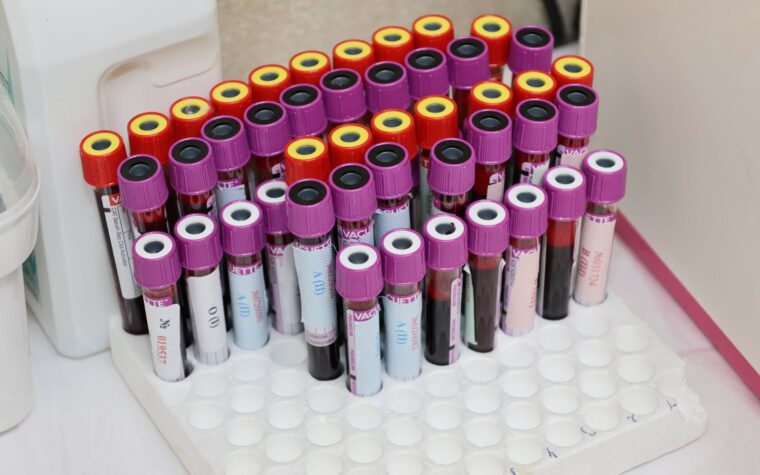
The test is a standard venous blood draw, usually 3 to 5 mL of serum. No fasting is required. Biotin supplementation, however, can falsely lower or raise results on certain immunoassay platforms, and clinicians routinely ask patients to hold biotin for 48 to 72 hours before thyroid antibody testing. The effect is assay-specific, but with biotin supplements now marketed at multi-milligram doses (far above the 30 mcg RDA), this has become a real clinical headache.
Results typically return in one to two business days at commercial labs. The test uses an enzyme-linked immunosorbent assay (ELISA) or electrochemiluminescence immunoassay (ECLIA). These platforms are highly reproducible within a single lab, but absolute values can shift significantly between labs due to different calibration. If you are monitoring a known Hashimoto’s diagnosis, try to stay with the same laboratory system for serial testing so the trend line is meaningful.
What does an autoimmune thyroid test workup look like?
An autoimmune thyroid test is not a single marker. When a clinician suspects autoimmune thyroid disease, the standard initial panel includes TSH, free T4, and TPO Ab. If TPO Ab is positive and the diagnosis is still unclear, free T3 and anti-thyroglobulin antibodies (TgAb) are added. If Graves’ disease is on the differential, TSH receptor antibodies (TRAb or TSHR Ab) complete the picture.
| Test | What it measures | When to add it |
|---|---|---|
| TSH | Pituitary signal to thyroid; best overall function screen | Always first |
| Free T4 | Circulating active hormone | Always alongside TSH |
| TPO Ab | Primary autoimmune marker | Whenever autoimmune disease suspected |
| Anti-thyroglobulin (TgAb) | Secondary autoimmune marker | TPO borderline or negative but suspicion remains |
| Free T3 | Active converted hormone | Fatigue with normal TSH/T4; T3 conversion issues |
| TRAb / TSHR Ab | Graves’ disease-specific antibody | Hyperthyroid presentation, new atrial fibrillation |
This multi-marker approach is important because a thyroid panel without antibodies misses 20 to 30 percent of Hashimoto’s diagnoses in patients who have normal TSH at the time of testing. The antibodies can be elevated for years before TSH shifts out of range. If you are approaching a comprehensive baseline and want to understand which markers matter most for long-term health tracking, the guide to best biomarkers to test puts thyroid markers in context of a full-body screen.
TPO antibodies test cost: what to expect cash-pay in 2026
The TPO Ab test ordered as a standalone costs $29 to $85 cash-pay at direct-to-consumer labs such as Ulta Lab Tests and Walk-In Lab, $30 to $60 at most Quest Patient Service Centers or Labcorp LabCorp PSCs when booked directly, and $80 to $150 at hospital outpatient labs or urgent care where the facility fee is built in. CVS MinuteClinic does not routinely offer standalone antibody tests; they refer out to Quest.
| Setting | Estimated cash-pay cost | Notes |
|---|---|---|
| Quest / Labcorp direct | $30 to $60 | Book online, no physician needed in most states |
| DTC lab services (Ulta Lab, Any Lab Test Now) | $29 to $85 | Competitive pricing; check individual state availability |
| Hospital outpatient draw | $80 to $150+ | Facility fees apply; insurance usually covers more |
| Full thyroid panel (TSH + T4 + TPO Ab) | $79 to $199 | Better value than individual tests |
| Comprehensive baseline (includes 100+ markers) | $199 to $399 | Most cost-effective per marker |
HSA and FSA dollars cover TPO Ab testing when ordered by or through a diagnostic service with a clinical indication. Most DTC labs satisfy this requirement. Medicare Part B covers thyroid function tests (including TPO Ab) when ordered for a covered diagnosis code, generally with a 20 percent cost-share after the deductible. Medicare Advantage plans vary.
A point most people miss: if you are already getting a blood draw for another reason, adding TPO Ab to the order costs almost nothing incremental. The phlebotomy fee is the expensive part of a lab visit, not the individual assays. Getting a complete blood panel and adding thyroid markers at the same appointment is standard practice in functional medicine and preventive care.
If you are getting blood drawn anyway, it is often smarter to capture a full baseline at once. Here is how a full-body panel compares to ordering single markers one at a time.
Who should consider getting a TPO antibodies test?
The test has the highest yield in specific populations, and ordering it without a clinical indication in a completely asymptomatic low-risk person adds noise more than signal.
Strong indications for TPO Ab testing:
- Symptoms of hypothyroidism with normal or high-normal TSH (fatigue, cold intolerance, weight gain, hair thinning, constipation, brain fog, dry skin, slow heart rate)
- Symptoms of hyperthyroidism (anxiety, palpitations, heat intolerance, weight loss, sweating, tremor, insomnia)
- Family history of Hashimoto’s or Graves’ disease in a first-degree relative
- Personal history of another autoimmune condition, particularly type 1 diabetes, celiac disease, lupus, rheumatoid arthritis, or vitiligo
- Women trying to conceive or currently pregnant with any thyroid symptom or prior pregnancy loss
- Unexplained infertility workup
- Postpartum fatigue, depression, or anxiety starting 2 to 6 months after delivery
- Goiter or thyroid nodule detected on physical exam or imaging
- Abnormal TSH on a prior test
- Starting medications known to affect thyroid function (amiodarone, lithium, checkpoint inhibitors, interferon)
Women are five to ten times more likely than men to develop Hashimoto’s, and peak incidence is in the third through fifth decades of life. That said, Hashimoto’s in men is under-diagnosed precisely because fewer clinicians think to test for it, and men often present with more subtle symptoms.
What getting the test actually looks like, step by step
Understanding the logistics removes the hesitation most people feel about ordering labs directly.
- Order the test: Your primary care physician, OB-GYN, endocrinologist, or functional medicine clinician can order it. You can also order directly at Quest, Labcorp, or a DTC service without a physician in most states. The requisition takes about five minutes online.
- Go to a draw site: Choose a patient service center near you. No fasting needed, but skip the biotin supplement for 48 to 72 hours before the draw. Wear a short-sleeved shirt.
- Blood draw: The phlebotomist draws one or two tubes. The whole appointment runs 10 to 20 minutes including check-in.
- Get results: Results are posted to the lab’s patient portal in one to two business days. Quest and Labcorp both have apps. DTC services email a PDF link.
- Interpret with context: A positive TPO Ab with normal TSH means autoimmune activity without current dysfunction. Talk to a clinician about what monitoring cadence makes sense for your specific result, because the management differs between a mildly positive result in a 28-year-old trying to conceive versus a 55-year-old man with a TSH of 4.8.
Understanding your thyroid antibodies sits alongside other markers like the adiponectin test and albumin test in a comprehensive metabolic picture, since metabolic dysfunction and thyroid autoimmunity frequently coexist in the same patients.
FAQ
Can TPO antibodies be elevated without any thyroid symptoms?
Yes, and this is common. Roughly 10 to 15 percent of the general population carries detectable TPO Ab without any current thyroid dysfunction. This is called euthyroid autoimmune thyroiditis. These individuals have a roughly two to four percent per year risk of progressing to overt hypothyroidism, which is why annual TSH monitoring is recommended even in the absence of symptoms.
What is the difference between TPO antibodies and thyroglobulin antibodies?
Both are autoimmune markers for thyroid disease, but they target different proteins. TPO Ab targets the enzyme that makes thyroid hormone; TgAb targets thyroglobulin, the protein that stores it. TPO Ab is more sensitive (positive in more Hashimoto’s cases), while TgAb is the more useful marker for monitoring thyroid cancer after thyroidectomy because thyroglobulin itself is used as a cancer surveillance marker and TgAb interferes with that assay.
Does a high TPO antibody level mean I definitely have Hashimoto’s?
A significantly elevated TPO Ab in the context of thyroid symptoms and a compatible ultrasound picture is strong confirmation of Hashimoto’s. However, the diagnosis is clinical and requires correlating antibody levels, TSH and free T4, symptoms, and ideally an ultrasound showing the characteristic heterogeneous texture. Mildly elevated TPO Ab alone, without any other supporting data, is not sufficient for a Hashimoto’s label.
Can TPO antibody levels go down on their own?
Yes, though it is uncommon and tends to happen at the end-stage of disease when the gland has been largely destroyed and there is little thyroid tissue left to attack. Gluten elimination in confirmed celiac disease has been associated with modest reductions in TPO Ab in some patients, but the evidence is not strong enough to recommend a gluten-free diet solely to lower TPO Ab in someone without celiac or confirmed NCGS. Selenium supplementation at 200 mcg daily has shown consistent modest reductions in TPO Ab titer in multiple randomized trials, and some endocrinologists recommend it in patients with elevated antibodies and early Hashimoto’s.
Is the TPO test the same as a thyroid function test?
No. A thyroid function test (typically TSH plus free T4) measures what the thyroid is currently producing. A TPO antibodies test measures immune activity against the gland. Both can be completely normal at the same time, or both can be abnormal. They answer different questions: function tests tell you what the thyroid is doing today; antibody tests tell you whether the immune system is actively attacking it.
Should I repeat the TPO test once it comes back elevated?
Repeating the TPO Ab once confirmed positive is generally not useful for diagnosis. The level fluctuates somewhat over time and does not reliably predict speed of progression. What matters is monitoring TSH annually (or every six months in pregnancy or in symptomatic patients) to catch the transition to hypothyroidism before it becomes clinically significant. Repeat TPO Ab testing is only useful if the original result was borderline and a false positive was suspected.
Can I order a TPO antibodies test without a doctor’s order?
In most US states, yes. Quest Diagnostics, Labcorp, Ulta Lab Tests, and Any Lab Test Now all allow direct-to-consumer thyroid antibody testing without a physician requisition. A few states including New York, New Jersey, and Maryland restrict direct ordering; residents there need a provider order or must cross state lines to a draw center. Cost is typically $30 to $85 cash at direct-access labs.
How does this test relate to an alkaline phosphatase result?
Indirectly but meaningfully: hypothyroidism from Hashimoto’s can lower alkaline phosphatase levels, because thyroid hormone is required for normal bone turnover and liver enzyme activity. A lab panel showing low-normal ALP alongside elevated TPO Ab and high TSH gives a clinician additional biochemical evidence of under-treated hypothyroidism and its downstream metabolic effects.
Do TPO antibodies affect fertility and pregnancy outcomes?
Yes, and this is one of the most clinically important reasons to test. Women with elevated TPO Ab, even with a normal TSH, have higher rates of miscarriage, preterm birth, and postpartum thyroiditis, plus a modestly higher chance of difficulty conceiving. Many fertility specialists and obstetricians manage antibody-positive women more closely, aiming to keep TSH below 2.5 during pregnancy and checking thyroid function each trimester. If you are TPO-positive and planning a pregnancy, this belongs in the conversation before you conceive, not after a problem appears.
What TSH level triggers treatment when TPO antibodies are positive?
Antibody status alone does not trigger a prescription. The decision to start levothyroxine rests on TSH, symptoms, and context. Most clinicians treat once TSH climbs above the lab’s upper limit, commonly around 4.0 to 4.5, on repeated tests, and many will treat a TSH in the high-normal 2.5 to 4.0 band if the patient is TPO-positive and symptomatic, pregnant, or trying to conceive. The presence of antibodies lowers the threshold at which treatment is considered, because it signals the direction the gland is heading.
Are elevated TPO antibodies linked to other autoimmune diseases?
Frequently. Autoimmune conditions cluster, so someone who is TPO-positive carries a higher background risk of type 1 diabetes, celiac disease, pernicious anemia, vitiligo, rheumatoid arthritis, and Sjogren’s syndrome. This runs in both directions. If you already have one of those diagnoses, a TPO antibody test is a reasonable addition even without obvious thyroid symptoms, because the thyroid is one of the most common second targets. Clinicians call this pattern polyglandular autoimmunity when several endocrine glands are involved.
Does Hashimoto’s always progress to requiring medication?
Not necessarily, but most endocrinologists consider it a progressive condition. Roughly 50 percent of Hashimoto’s patients will develop overt hypothyroidism requiring levothyroxine within 10 to 15 years of diagnosis. The conversion rate is higher in patients with higher initial TSH, those with a small gland on ultrasound, men, and older patients. Having elevated TPO Ab with a consistently normal TSH does not automatically mean you will need medication, but it does mean annual monitoring is not optional.