Disclosure: Vital Signs Today may earn a commission if you buy through links on this page, at no extra cost to you. This does not influence our evidence-based assessments. We are not a medical provider; talk to a clinician before acting on test results.
Quick answer: In a Superpower blood test vs Function Health matchup, the winner depends on how much data you actually want. Superpower covers 100+ biomarkers (about 150 counting calculated ratios) in one annual draw for $199 a year, with 17 plain-language health scores, a personalized action plan, and an AI concierge. Function Health is the heavier instrument: 160+ biomarkers, a baseline draw plus a follow-up retest (Function markets it as roughly twice-yearly testing) and typically a urinalysis, for $365. For most healthy adults building a yearly baseline, Superpower is the better value and the one we recommend. Choose Function only if you want maximum marker coverage and a built-in retest checkpoint.
Disclosure: Vital Signs Today may earn a commission if you buy through links on this page, at no extra cost to you. This does not influence our evidence-based assessments. We are not a medical provider; talk to a clinician before acting on test results.
| Service | Best for | Pricing | Visit |
|---|---|---|---|
| Function Health | Annual deep panel | Annual membership | View › |
Superpower Blood Test vs Function Health at a glance
| Feature | Superpower | Function Health |
|---|---|---|
| Price | $199/yr ($399 NY & NJ) | $365/yr |
| Biomarkers | 100+ (~150 with ratios) | 160+ |
| Draws per year | 1 annual draw | 2 draws + urinalysis |
| Standout | 17 health scores + action plan + AI concierge | 6-month retest, clinician-reviewed |
| Best for | Best-value full-body baseline | Most clinically thorough |
Superpower Blood Test vs Function Health: The Short Version
These two services get lumped together because they look alike from a distance: both are direct-to-consumer membership programs that order a wide blood panel, run it through accredited labs, and hand you a slick dashboard instead of a stack of lab printouts. That is where the similarity ends.
The real difference is philosophy. Superpower is built around one comprehensive annual snapshot you can read and act on without a medical degree. Function Health is built around clinical depth: more markers, more frequent retesting, more raw data to sift. One is a clean yearly baseline; the other is a closer-to-clinical workup. Neither is wrong. They are aimed at different buyers.
If you remember one thing from this superpower health vs function health comparison, make it this: pay for the depth you will actually use. Most people do not retest 160 markers twice a year and act on every one. They want a clear picture once a year and a plan. That is Superpower’s whole pitch.
Panel-by-Panel: What Each One Actually Tests
This is where the superpower function health debate gets decided, so let us be specific about the panels rather than waving at “100 plus” versus “160 plus.”
Superpower’s panel
Superpower runs 100+ biomarkers per draw, roughly 150 once you count calculated ratios (things like LDL particle ratios or kidney function estimates that are derived, not separately drawn). The panel spans the major systems a smart annual physical would want and then some: metabolic and blood sugar, a full lipid profile, liver and kidney function, thyroid, key hormones, inflammation markers, and a complete blood count. On top of the raw numbers, you get 17 health scores that roll those markers into plain-language categories so you are not staring at 150 rows trying to guess what matters.
The honest framing: this is broad enough to catch the things that quietly drift off-range for years (blood sugar creeping up, lipids worsening, thyroid sliding) which is exactly what an annual baseline is for.
Function Health’s panel
Function Health pushes wider: 160+ biomarkers, and critically, a baseline draw plus a scheduled follow-up retest, with a urinalysis typically included. Function markets this as roughly twice-yearly testing. That extra 60-or-so markers and the urine component mean Function reaches into territory Superpower’s single annual blood draw does not, and the retest gives you a second data point within the same membership year.
If your goal is the most exhaustive snapshot a consumer service will sell you, Function is the more clinically thorough product. We are not going to pretend otherwise. The question is whether that extra breadth changes what you actually do, and for most healthy people, it does not.
What the Big Marker Categories Actually Tell You
Both panels sort into the same handful of systems. Knowing what each cluster is watching for is what turns a wall of numbers into a decision, so here is the plain-language version of what you are buying in either service.
Metabolic and blood sugar
This cluster usually includes fasting glucose and HbA1c, and a good panel adds fasting insulin. Glucose is a single snapshot, HbA1c reflects your average over roughly the past three months, and insulin shows how hard your pancreas is working to keep glucose down. The reason this group matters more than any other for most adults is that blood sugar drifts up silently for years before anyone says the word prediabetes. Standard labs often flag HbA1c only once it crosses 5.7 percent. Plenty of people who want to stay sharp aim to keep it comfortably under that, and fasting insulin is the marker that tends to move first, often while glucose still looks fine.
Lipids and heart risk
A full lipid profile gives you total cholesterol, LDL, HDL, and triglycerides. The more useful numbers are the ones a basic panel skips: ApoB, which counts the actual particles that drive plaque, and Lp(a), a largely genetic risk marker you generally only need to measure once in your life. If a service reports ApoB, that is a meaningful upgrade over a bare cholesterol reading, because two people with the same LDL can carry very different particle counts and very different risk.
Thyroid
TSH alone is the bare minimum. A fuller thyroid look adds free T4, free T3, and thyroid antibodies. This matters because TSH can sit in the normal range while free T3 runs low, which is exactly the pattern behind fatigue, cold hands, and stalled weight that a single-marker physical misses. If thyroid symptoms are your reason for testing, check how many thyroid markers each panel actually runs before you assume they are equivalent.
Hormones
Depending on the panel and your sex, this can include testosterone (total and free), estradiol, DHEA-S, and often a marker or two of the pituitary signals that drive them. Hormones are the category where timing of the draw matters most, since testosterone in particular is highest in the morning, so a late-afternoon draw can read artificially low.
Inflammation
The workhorse here is high-sensitivity CRP (hs-CRP), a general signal of systemic inflammation that tracks with cardiovascular and metabolic risk. It is nonspecific, so a recent cold, a hard workout, or an injury can spike it. That is the single most common misread on any wide panel: a one-off high CRP that a repeat draw a few weeks later shows was just a passing infection.
Kidney and liver
Kidney function shows up as creatinine, BUN, and an estimated filtration rate (eGFR), which is one of those calculated ratios rather than a separately drawn value. Liver enzymes (ALT, AST, and often GGT) flag stress on the liver, which quietly rises with excess alcohol, certain medications, or fatty liver. These rarely produce dramatic symptoms early, which is precisely why a broad panel is worth running.
Complete blood count
The CBC covers red cells, white cells, and platelets. It is the least glamorous panel and the one most likely to catch something unexpected: an iron issue behind your fatigue, an infection you were shrugging off, or a red-cell pattern worth a second look. Both services include it, and you should read it even when everything else looks clean.
Draws, Retests, and Cadence
This is the most underrated line in any superpower blood test vs function health comparison, because it quietly drives both the price and the experience.
Superpower gives you one comprehensive blood draw per year. One appointment, one wide snapshot, one plan. For someone who wants a yearly checkpoint and intends to repeat it next year to watch trends, that rhythm is plenty.
Function gives you a baseline draw plus a follow-up retest, marketed as roughly twice-yearly testing, with a urinalysis typically included. If you are actively changing something (a new diet, a supplement protocol, training for an event) and you want to see the needle move at the retest instead of waiting a full year, that cadence is a genuine advantage. You pay for it, but it is real.
So the cadence question reduces to: are you tracking a baseline (Superpower) or running a half-year experiment on yourself (Function)?
Getting the Blood Drawn: What Actually Happens
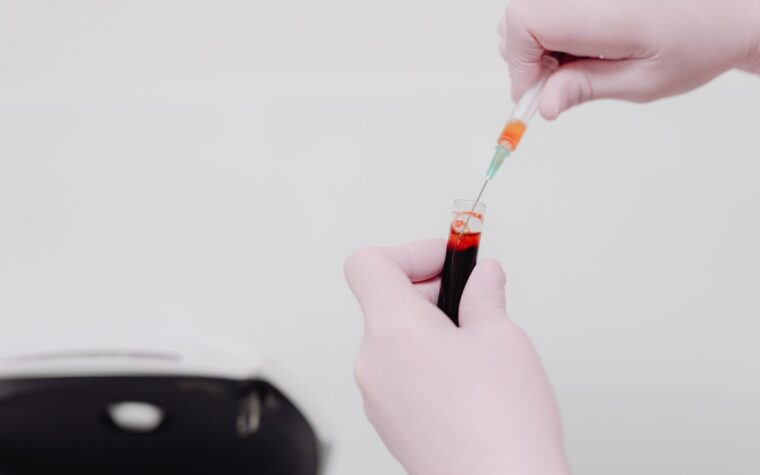
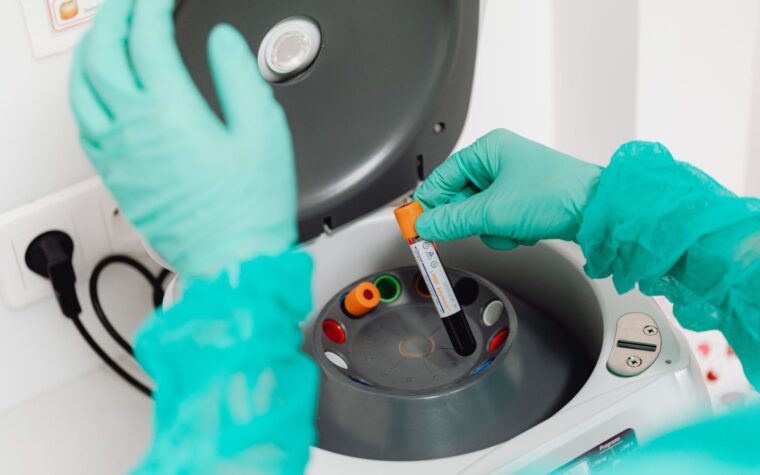
Both services separate the software from the sample. You sign up online, then get your blood drawn either at a partner lab location or, in many areas, by a mobile phlebotomist who comes to your home or office. The draw itself is a standard venous blood collection, the same few vials your doctor would order, done in about ten minutes. Function’s model, with its baseline plus a follow-up retest and a urinalysis, means you plan for more than one collection event across the membership year. Superpower’s single annual draw is one appointment and done.
Turnaround is usually a matter of days, not weeks, and results populate in the dashboard as each panel comes back from the lab, so you may see some markers before others. If you have ever had a standard physical, the physical experience is familiar. What changes is the breadth of what gets tested from those same vials and the tool you use to read it afterward.
How to Prep So Your Numbers Are Not Garbage
A wide panel is only as good as the morning you walk in for it. The same person can produce meaningfully different numbers depending on how they showed up, and neither Superpower nor Function can fix a badly prepped draw after the fact. A few specifics that actually move results:
- Fast when the panel calls for it. Glucose, insulin, and triglycerides in particular read cleanest after 10 to 12 hours with only water. Eating beforehand can push triglycerides and glucose up and make a healthy person look borderline.
- Draw in the morning. Beyond fasting, hormones like testosterone and cortisol follow a daily rhythm and are highest early. A consistent morning slot also makes year-over-year trends comparable, which is the entire point of an annual baseline.
- Hydrate. Being even mildly dehydrated concentrates your blood and can nudge sodium, hematocrit, and creatinine. Water is fine and encouraged during a fast.
- Skip the hard workout the day before. Intense exercise can transiently raise CRP and certain muscle and liver enzymes, which is a classic false alarm on inflammation markers.
- Know your meds and supplements. Biotin, common in hair and nail supplements, can interfere with some lab assays, including thyroid. Ask whether to pause it for a couple of days. Never stop a prescription to game a number without talking to the prescriber.
- Go easy on alcohol for a few days. A weekend of drinking before a Monday draw can lift liver enzymes and triglycerides enough to worry you for no real reason.
None of this is unique to one service. It applies to any blood test you will ever take, and getting it right is the cheapest way to make either membership worth the money.
Clinician Review and the AI Layer
Neither service is a clinic, and that matters for how you read your results. Both are screening and tracking tools, not diagnostic providers. Any result that lands outside the normal range should be reviewed with a licensed clinician before you act on it. Treat both dashboards as a starting point for a conversation, not the conversation itself.
On the software side, Superpower’s AI concierge is a notable strength: you can chat with it about your results in context, ask what a marker means, and get plain-English answers tied to your own numbers. Function has been rolling out its own AI chat, but it is newer than Superpower’s. If a friendly, mature “explain my results to me” layer matters to you, Superpower currently has the edge there.
The 17 health scores reinforce that edge. Function hands you more raw markers; Superpower does more of the interpretation for you. Whether that is a feature or a limitation depends on whether you enjoy reading lab data or just want to know what to do about it.
A Marker Came Back Off. Now What?
The first rule is do not panic on a single value. Labs report a reference range built from a broad population, and being slightly outside it is common and often meaningless on its own. The markers most prone to a scary one-off reading are CRP (inflammation from a recent bug or workout), liver enzymes (a heavy weekend), and anything sensitive to hydration or timing. When one of those is mildly off and everything around it looks fine, the sane move is usually a repeat draw in a few weeks, not a diagnosis.
The results that deserve attention are patterns, not points: HbA1c and fasting insulin both trending up, ApoB high alongside a poor lipid picture, or a thyroid cluster that tells a consistent story. That is where a clinician review earns its keep. Superpower’s 17 scores and AI concierge, or Function’s raw depth, are there to help you spot the pattern, but neither replaces a licensed clinician for anything genuinely out of range. Bring the actual numbers to that conversation.
On retesting, the useful cadence depends on the marker. Fast-moving metabolic markers like glucose, insulin, and triglycerides can show real change in 6 to 12 weeks if you change your diet or training, which is exactly the window Function’s built-in retest targets. Slower or more stable markers, and a general baseline, are fine to revisit once a year, which is Superpower’s rhythm. Match the retest interval to what you are actually trying to move.
Why the Year-Over-Year Trend Is the Real Product
A single blood test is a photograph. The value of a membership, either one, is the film reel you build over time. One HbA1c of 5.5 tells you little; three years of HbA1c going 5.2, then 5.4, then 5.6 tells you exactly where you are headed while you can still change it. That is the quiet argument for paying a yearly fee instead of buying a one-off panel: the second and third draws are where the insight lives.
This is also why consistency of conditions matters so much. Same lab network, same morning slot, same fasting state, so that a change in a number reflects a change in you and not a change in how you were tested. Superpower’s one-draw-a-year rhythm makes that easy to keep steady. Function’s twice-yearly cadence gives you more dots on the same curve within a single year. Either way, the trend, not any single dot, is the thing you are actually buying.
Price: The $199 vs $365 Question
Here is the math that ends most superpower health vs function health arguments.
Superpower is $199 per year for 100+ biomarkers, the 17 scores, the action plan, and the AI concierge. One caveat worth flagging up front: pricing has been reported as higher in a few states with stricter lab rules (New York and New Jersey have come up), so if you live there, confirm the current price at checkout before you compare, rather than assuming the headline $199.
Function Health is $365 per year for 160+ biomarkers, with a baseline draw plus a follow-up retest and a urinalysis typically included. So you are paying roughly 1.8 times as much for about 60% more markers and a built-in retest.
On pure cost-per-marker, the two are closer than the sticker prices suggest, because Function tests more. But cost-per-marker is the wrong metric for most buyers. The right question is cost-per-decision: how many of those markers will actually change what you do? For a healthy adult, Superpower’s narrower-but-readable panel at $199 usually delivers more decisions per dollar. For a data maximalist, Function’s depth justifies the premium.
Two Quick Scenarios
The busy 38-year-old who just wants a real checkup. No specific complaint, a family history of diabetes, tired of getting five markers at an annual physical. This person does not need twice-yearly testing. They need one broad, readable snapshot and a plan, then a repeat next year to watch the trend. Superpower fits the job and the budget, and the 17 scores mean they will actually understand what they are looking at.
The 45-year-old actively overhauling their health. New training block, a supplement stack, a real push on body composition, and they want proof it is working before a year passes. They will use a follow-up retest, they enjoy raw data, and the extra markers plus urinalysis feel worth it. Function is built for exactly this person, and the premium buys something they will use rather than something that looks good on a chart.
Which One Should You Pick?
Skip the hand-waving. Here is the straight call for the superpower function health decision.
Pick Superpower if you are: a generally healthy adult who wants one broad, readable annual baseline; someone tired of getting 5 to 10 markers at a standard physical; a person who values 17 plain-language scores and a plan over 160 raw numbers; or anyone optimizing for value at $199 a year.
Pick Function Health if you are: a data maximalist who genuinely wants 160+ biomarkers; someone actively changing their health who needs a follow-up retest to see progress; a person who wants a second checkpoint and a urinalysis in one membership year; or someone for whom maximum coverage beats price.
For the broad middle of the market, healthy people who want clarity once a year, Superpower is our recommended pick. It wins on value and readability, and the single annual draw is enough for what most people will act on.
Our Verdict
In the superpower blood test vs function health head-to-head, both are legitimate, well-run services, and you will not get burned by either. Function Health is the more clinically thorough product: more markers, a baseline draw plus a follow-up retest, and a urinalysis, for $365. Superpower is the better value and the easier to actually use: 100+ biomarkers, 17 health scores, a plan, and a mature AI concierge for $199 (a bit higher in a few states with stricter lab rules, so confirm at checkout).
Our recommendation for most readers is Superpower, on the simple logic that the best blood test is the one whose results you understand and act on. Function earns the nod only when you specifically want maximum depth and twice-yearly tracking. Buy the depth you will use, not the depth that looks impressive on a feature chart.
Related reading on Vital Signs Today
- Superpower vs Everlywell: Membership Panel vs Single Kits
- Superpower vs Rythm Blood Test: An Honest 2026 Comparison
- Superpower vs SiPhox Health: Full Draw vs Finger-Prick
- Superpower Blood Test Review (2026): Is It Worth the Membership?
Frequently asked questions
Superpower blood test vs Function Health: which tests more biomarkers?
Function Health tests more: 160+ biomarkers across a baseline draw plus a follow-up retest, with a urinalysis typically included. Superpower tests 100+ biomarkers (about 150 counting calculated ratios) in one annual draw. Function is broader; Superpower is the better value at $199 versus $365.
Is Superpower or Function Health cheaper?
Superpower is cheaper at $199 per year (a bit higher in a few states with stricter lab rules, so confirm at checkout) versus $365 for Function Health. Function costs more because it includes more markers, a baseline draw plus a follow-up retest, and a urinalysis. For one readable annual baseline, Superpower is the value pick.
Superpower health vs Function Health: which has better result reviews?
Both give you a dashboard, not a doctor. Superpower leans harder into interpretation with 17 plain-language health scores and a more mature AI concierge, so results feel easier to read. Function gives you more raw markers to dig through. Either way, review out-of-range results with a clinician.
Do I need a retest like Function Health offers?
Most healthy adults do not. Function’s baseline-plus-retest cadence helps if you are actively changing your diet, supplements, or training and want to see progress before a full year passes. If you just want a yearly checkpoint to track trends, Superpower’s single annual draw is enough.
Is the Superpower blood test legit compared to Function Health?
Yes. Both run samples through accredited labs and are legitimate screening and tracking services. Neither is a diagnostic clinic. The superpower function health debate is about depth and price, not about whether the testing is real.
Do I need to fast before the Superpower or Function Health blood draw?
For an accurate metabolic and lipid picture, yes. Glucose, insulin, and triglycerides read most reliably after a 10 to 12 hour fast with only water. Follow the specific instructions each service sends, and draw in the morning when you can, since that also keeps hormone timing consistent year to year.
Can Superpower or Function Health diagnose a disease?
No. Both are screening and tracking services, not diagnostic clinics. They can surface a marker that is off and help you see a pattern, but any out-of-range result should be confirmed and interpreted by a licensed clinician before you act on it.
How often should I actually retest?
It depends on the marker. Fast-moving metabolic markers can show real change in 6 to 12 weeks, which is where Function’s built-in retest helps. A general baseline is fine to repeat once a year, which is Superpower’s model. Match the interval to what you are trying to change.