Disclosure: Vital Signs Today may earn a commission if you buy through links on this page, at no extra cost to you. This does not influence our evidence-based assessments. We are not a medical provider; talk to a clinician before acting on test results.
Quick answer: The SiPhox blood test wins on raw convenience: you collect a few drops from a finger-prick at home, mail it back, and skip the lab entirely. Superpower goes the other way, asking for one standard venous draw a year but returning a far wider picture, 100+ biomarkers, 17 health scores, and a personalized action plan for $199 a year. If you want a true full-body baseline you can track over time, Superpower is the better value. Reach for SiPhox when a needle-free, mail-in kit is the only thing that will get you to actually test.
Disclosure: Vital Signs Today may earn a commission if you buy through links on this page, at no extra cost to you. This does not influence our evidence-based assessments. We are not a medical provider; talk to a clinician before acting on test results.
| Service | Best for | Pricing | Visit |
|---|---|---|---|
| SiPhox Health | Finger-prick convenience | Per-test / membership | View › |
The real trade-off: collection method vs panel breadth
This comparison is not really about which company is “better.” It is about one decision: how willing are you to sit for a real blood draw, and how complete do you want the resulting picture to be? Those two things pull against each other.
SiPhox Health is built around at-home blood testing with a finger-prick option and longevity-focused panels. You never leave the house and you never see a phlebotomist. Superpower is a screening and tracking membership built around one comprehensive annual venous draw, the kind a nurse does at a clinic or your home. More blood collected the standard way means more markers can be measured reliably.
So the honest framing is convenience versus breadth. A finger-prick is easier today. A full draw tells you more and gives you something to trend year over year.
Why the collection method decides the panel
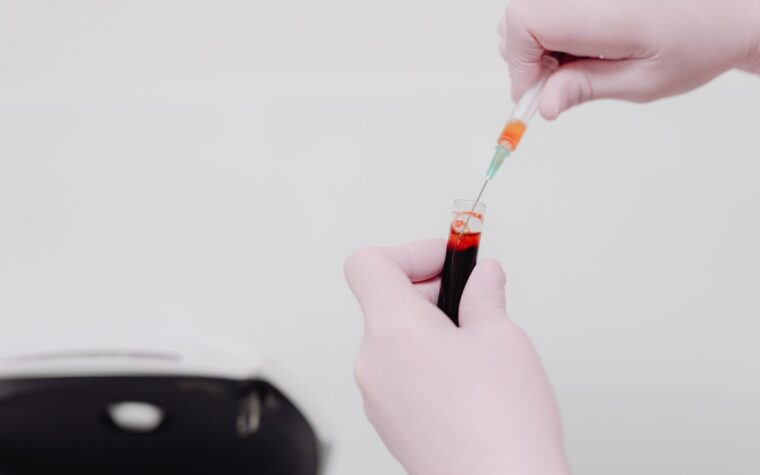
This is the part most comparisons skip, and it is the whole reason the two services look so different. A finger-prick collects capillary blood, a small volume squeezed from the fingertip. A venous draw pulls several milliliters straight from a vein in the arm. The amount of blood you can collect sets a hard ceiling on how many separate assays a lab can run, because each test consumes a fixed amount of serum or plasma. Fewer microliters means fewer tests, or the same tests run on tighter margins.
Volume is not the only factor. Capillary samples mix a little tissue fluid in with the blood, and the act of milking a fingertip can rupture red cells, a problem called hemolysis. Some markers tolerate that well. Others, potassium and certain enzymes among them, read falsely high when cells break open. Good at-home kits handle this by validating each marker for capillary collection and leaving off the ones that do not behave. That is why a curated finger-prick panel is a feature, not a limitation the company forgot to fix. It is the honest boundary of the method.
A standard venous tube sidesteps most of that. More blood, collected cleanly, means a lab can run a wide metabolic and hormonal panel from a single sitting without rationing. That is the mechanical reason Superpower can report 100+ biomarkers off one draw while a finger-prick service focuses its menu. Neither approach is cutting corners. They are optimized for different constraints.
How the SiPhox blood test works
SiPhox ships a kit to your door. You prick a finger, collect the sample, and mail it to a partner lab, with results delivered through an online dashboard. The pitch is friction removal: no appointment, no waiting room, no needle in the arm.
That convenience is genuine, and for some people it is the difference between testing and not testing at all. The honest caveat is that finger-prick (capillary) samples are smaller, so the menu of what can be measured well is narrower than a full venous tube. SiPhox leans into longevity and metabolic markers rather than trying to be an everything-panel. For current panel contents and pricing, check SiPhox directly, since at-home kit lineups change often.
If you have read a few siphox health reviews while researching, the themes users commonly report line up with that design: people like the no-needle collection and the simple online results, and the friction points tend to be around getting a clean finger-prick sample and the narrower marker list compared with a full lab panel.
What a finger-prick panel handles well, and what it skips
Capillary collection is reliable for a lot of the markers people actually want to track for longevity and metabolic health. Fasting glucose, HbA1c, a lipid panel, and several inflammation and metabolic readouts are commonly validated for at-home kits. Those are the numbers that move with diet, training, and sleep, so they reward frequent checking. If your question is “how is my metabolic health trending this quarter,” a curated finger-prick panel answers it without you booking anything.
The markers that get thinner on a small sample tend to be the ones that need volume or are sensitive to handling: a full hormone panel, some organ-function chemistries, and anything where hemolysis skews the number. That is not a knock on the technology. It is the reason a finger-prick service reads more like a focused metabolic and longevity check than a complete blood workup.
How to get a clean finger-prick sample
Most at-home testing frustration traces back to collection, not the lab. A few specifics fix the majority of it. Warm the hand first under hot water or with a heat pack so blood flows, and let the arm hang below heart level for a minute. Prick the side of the fingertip, not the pad, which hurts more and yields less. Wipe away the very first drop, which carries the most tissue fluid, then let large drops fall into the collection device without scraping the card against the finger. Do not squeeze hard, because milking the finger is exactly what causes hemolysis and a rejected or skewed sample. If a kit asks you to fill to a line, respect it, since an underfilled card is the top reason a lab cannot run every ordered marker.
How Superpower works (and why the draw is the point)
Superpower is a $199 per year membership. It includes one comprehensive annual blood draw covering 100+ biomarkers (about 150 once you count calculated ratios), 17 plain-language health scores, a personalized action plan, and an AI concierge you can chat with about your results. In New York and New Jersey the price is $399 because of state lab rules.
The single venous draw is the engine. It is what lets Superpower span metabolic health, hormones, organ function, inflammation, nutrients, and more in one sitting, then turn that into scores and a plan instead of a raw PDF. It is a screening and tracking service, not a diagnostic clinic, so think of it as your yearly full-body baseline.
What the single draw actually covers
The value of one clean venous draw is that it spans systems that usually require separate visits. In one sitting Superpower reports across metabolic health (glucose, HbA1c, insulin, lipids), organ function (liver enzymes, kidney markers), thyroid, key hormones, inflammation markers such as hs-CRP, and a nutrient set that often includes vitamin D, B12, ferritin, and iron. Instead of a raw PDF, the platform turns those into 17 plain-language health scores and a personalized action plan, with an AI concierge to ask follow-up questions. The point is not novelty. It is that a first draw becomes your baseline, and the same panel a year later shows you which direction each number moved.
How often to retest, and why the cadence matters
For a healthy adult using this as a yearly check, once a year is the design and it is enough to catch drift before it becomes a problem. If a specific number comes back off, that marker often deserves a recheck sooner, in the range of 8 to 12 weeks, because that is how long it takes for a change in diet, training, or a supplement to show up in the blood. Cholesterol and HbA1c in particular reflect the prior weeks to months, so retesting a week later tells you nothing. This is where breadth and trackability compound: a full annual baseline plus a targeted recheck on the one marker that moved is a smarter loop than testing everything every few weeks.
Side by side: what each one is for
SiPhox: best for finger-prick convenience
If a needle is a dealbreaker, or you just want to spot-check a focused set of longevity and metabolic markers from your kitchen table, SiPhox fits. It is the path of least resistance for at-home testing, and “the test you actually take” beats the more thorough test you keep putting off.
Superpower: best for a complete, trackable baseline
If your goal is to see the whole board, 100+ markers across every major system, and then watch those numbers move year over year, Superpower is the stronger pick. You trade one annual draw for breadth, structured scores, and an action plan. At $199 for that scope, the cost per insight is hard to beat. This is the better choice for most people building a long-term health record.
Where each one falls short
No test is all upside, and knowing the weak spot of each helps you avoid a purchase you regret.
The honest limits of a finger-prick kit
The narrower menu is the obvious one, but the subtler issue is variability from collection. Because you are the phlebotomist, a rushed or squeezed sample can produce a value you then worry about for no reason. There is also no one standing next to you to flag an obviously off reading in the moment. And because kits are ordered per panel, the “test a little, often” pattern can quietly cost more than you expect if you keep adding markers. Treat a finger-prick service as a focused metabolic and longevity tracker, not a substitute for a comprehensive workup.
The honest limits of a full annual membership
A once-a-year design is a poor fit if you are actively changing something and want to watch a single number move every few weeks. You will not want a full venous draw that often, nor should you pay for one. A membership is also a screening and tracking tool, not a diagnostic clinic, so an abnormal result still sends you to a doctor for the actual workup. And the one appointment, even done at home, is a real step that some people keep postponing, which is precisely the friction a finger-prick kit removes.
Price and value, plainly
SiPhox uses per-kit pricing that varies by panel, so the spend scales with how many markers and how often you test. Superpower is a flat $199 a year ($399 in NY and NJ) for the full annual panel and the dashboard around it. For reference, a more clinically thorough membership like Function Health runs $365 a year for 160+ biomarkers with two draws plus a urinalysis and a 6-month retest, which is pricier and more intensive than what most healthy adults need for a yearly check.
The math usually tilts toward Superpower once you want more than one or two markers. A handful of finger-prick kits across a year can quietly add up to more than a single $199 membership that already covers 100+ markers in one draw.
It helps to think in cost per marker rather than sticker price. A flat annual membership that returns 100+ biomarkers works out to a very low cost per result, which is why breadth tilts the value case once you want more than a marker or two. Per-kit finger-prick pricing is the opposite shape: cheap for a single focused check, but the total climbs each time you add a panel or retest. If you only ever want two or three metabolic numbers a few times a year, a kit can be the cheaper answer. The moment your list grows, a single comprehensive draw usually wins on math, not just on convenience of having everything in one place.
There is also a hidden value in structure. A raw results PDF is only as useful as your ability to interpret it. Turning 100+ numbers into 17 scores and an action plan is doing the second half of the job, the part where data becomes a decision. That is worth factoring in when you compare a bare per-kit price against a membership that bundles the interpretation.
How to get an accurate result either way
The collection method matters, but so does what you do the day of the test. A few things move numbers enough to change your read if you ignore them.
- Fasting. Glucose, insulin, and triglycerides respond to your last meal. If a panel includes them, a 9 to 12 hour fast (water is fine) gives a comparable baseline. Fast the same way every time so your trend is apples to apples.
- Time of day. Some hormones, cortisol and testosterone especially, follow a daily rhythm and run highest in the morning. Draw at a consistent hour so a change reflects your body, not the clock.
- Hard exercise. A tough workout the day before can transiently raise liver enzymes and inflammation markers. If you want a clean read, keep the 24 hours before a draw light.
- Hydration. Being well hydrated makes a venous draw easier and keeps concentration-sensitive markers honest. Dehydration can nudge several values up.
- Medications and supplements. Biotin, common in hair and nail supplements, can interfere with some lab assays, including thyroid and hormone tests. Many labs suggest pausing high-dose biotin for a couple of days first. Do not stop prescription medication to game a test, but do note what you take so results are interpreted in context.
These rules apply to both a finger-prick kit and a venous draw. The difference is that a small capillary sample has less margin for error, so prep and clean collection matter even more with an at-home kit.
Two quick scenarios
The needle-averse quarterly checker. You are healthy, you train, and you want to watch your metabolic numbers every few months without a phlebotomist appointment ever entering the picture. A finger-prick service is the right tool. You get glucose, HbA1c, lipids, and a few longevity markers on your schedule, and the convenience is what keeps you actually testing. The honest limit is that you are seeing a slice, not the whole board.
The full-baseline planner. You have not had comprehensive labs in years and you want one complete picture of metabolic health, hormones, organ function, inflammation, and nutrients, plus something you can trend annually. Here the single venous draw earns its place, because trying to reconstruct that breadth from a stack of small kits costs more and still leaves gaps. One draw, 100+ markers, scored and tracked, is the cleaner path.
So which should you buy?
Choose SiPhox if needle-free, mail-in collection is what gets you to test, and you are happy with a focused longevity panel. Choose Superpower if you want a genuine full-body baseline, plain-language scores, and a plan you can track for $199 a year. For most people researching a serious annual check, breadth plus trackability is what pays off, and that points to Superpower.
One note on safety: these are screening tools, not a diagnosis. Any result outside the normal range should be reviewed with a licensed clinician before you act on it.
Related reading on Vital Signs Today
- Quest Health Review (2026): Pay-Per-Test From a National Lab
- Vitals Vault Review: What It Offers and the Better Alternative
- SiPhox Health Review (2026): Finger-Prick Testing, Examined
- Superpower Blood Test Review (2026): Is It Worth the Membership?
Frequently asked questions
Is the SiPhox blood test accurate from just a finger-prick?
Finger-prick (capillary) samples can give reliable results for the markers a test is validated for, which is why SiPhox curates its panels rather than testing everything. The trade-off is breadth, not necessarily accuracy: a smaller sample limits how many markers can be run well. For a wide full-body picture, a standard venous draw like Superpower’s covers far more in one go.
What do siphox health reviews say about the experience?
Themes users commonly report center on convenience: people appreciate skipping the lab and getting results online. The recurring friction points are collecting a clean finger-prick sample and the narrower marker menu versus a full venous panel. We avoid quoting specific ratings, since those shift over time, and recommend checking current sources before you buy.
Does Superpower require an in-person blood draw?
Yes. Superpower is built around one comprehensive venous draw per year, done by a phlebotomist, which is what lets it report 100+ biomarkers and 17 health scores. If avoiding a needle entirely is your priority, a finger-prick service like SiPhox is the better collection method; if breadth matters more, the single draw is worth it.
Is SiPhox or Superpower cheaper?
It depends on how much you test. SiPhox uses per-kit pricing, so cost rises with each panel you order. Superpower is a flat $199 per year ($399 in NY and NJ) covering 100+ markers in one draw. For anything beyond a marker or two, the membership usually delivers more biomarkers per dollar.
Can I use both?
Some people do. A common pattern is one annual Superpower draw for the full baseline, then an occasional SiPhox finger-prick kit between draws to spot-check a specific marker without booking another full panel. They solve different problems, and using them together is a reasonable way to balance breadth and convenience.
Is a finger-prick or a venous draw more accurate?
For the markers a finger-prick kit is validated to run, accuracy is comparable. The real difference is breadth and margin for error. A small capillary sample limits how many tests can be run and is more sensitive to collection mistakes like squeezing the finger, which can skew certain values. A venous draw gives the lab more material and a cleaner sample, which is why it can span 100+ markers reliably. Choose by what you need measured, not by fear that one method is inherently wrong.
How should I prepare before either test?
If the panel includes glucose, insulin, or triglycerides, fast 9 to 12 hours with water only. Draw at a consistent time of day, especially for hormone markers. Keep hard exercise light in the 24 hours before, stay hydrated, and note any supplements, since high-dose biotin can interfere with some assays. Consistent prep is what makes your year-over-year trend trustworthy.
How often should I retest?
For a general baseline, once a year is enough for most healthy adults. If a specific marker comes back off, recheck that one in about 8 to 12 weeks, since that is how long changes in diet, training, or a supplement take to register. Retesting a few days later usually shows noise, not signal.
Which one is better for tracking progress over time?
Both can trend, but they answer different questions. A finger-prick kit is good for frequently retesting a small set of metabolic markers. A full venous panel is better for a complete annual snapshot you compare year over year. A common approach is one comprehensive draw for the baseline plus occasional finger-prick checks on the numbers you are actively working on.
Do I need a doctor to order either test?
No. Both are consumer-facing services you can order yourself without a referral, which is a big part of their appeal. What you do not get is a doctor sitting across from you to interpret the result on the spot. A membership like Superpower reviews results and hands you scores and a plan, but any value flagged as abnormal is still a signal to see a licensed clinician, who can order confirmatory testing and look at the full clinical picture. Use these tools to catch drift early, not to self-diagnose.