Reviewed by the VST Editorial Board. Last updated September 7, 2026. This article contains affiliate links.
Disclosure: this article contains affiliate links. If you buy through them, we may earn a commission at no extra cost to you. Prices were checked in September 2026.
The three things that actually move the needle on a 12-hour flight are moving your legs at least once an hour, drinking roughly 8 ounces of water for every hour in the air, and timing melatonin to the direction you are flying rather than just the local bedtime. Everything else, from the neck pillow to the compression sleeve on your arm, is comfort, not risk reduction. The rest of this guide walks through why, with the actual numbers behind each claim, and points you to the deep dive on each topic already on this site.
Key takeaways
- Blood clot risk roughly doubles on flights of four hours or more, but the absolute risk is still low, around 1 in 6,000 according to the CDC.
- Cabin air runs at 10 to 20 percent humidity, drier than most deserts, which is why the water-per-hour rule exists.
- A 2024 study found alcohol plus cabin altitude drops blood oxygen further and raises heart rate during sleep, even in healthy people in their twenties and thirties.
- Melatonin timing depends on which direction you are flying. Flying east and flying west call for opposite strategies.
- Standard economy pitch is around 31 inches. An extra-legroom seat around 35 inches meaningfully changes how easy it is to move your legs without waking a row of strangers.
How much does DVT risk actually go up on a 12-hour flight?
Your risk of a blood clot roughly doubles once you are immobile for four hours or more, but the number that matters is the absolute one, and it stays small. The CDC puts the absolute risk at about 1 in 6,000 for someone seated and still for over four hours. A separate, older estimate from the World Health Organization’s WRIGHT project, following nearly 9,000 travelers, landed closer to 1 in 4,656 long-haul flights. The two numbers differ because they measured different populations, which is a good reminder to treat any single flight-risk statistic as a range, not a fact carved in stone. A healthy 30-year-old on one 12-hour flight is not who this risk is really about.
The people it is about: anyone with a personal or family history of blood clots, active cancer or recent treatment, surgery in the past three months, pregnancy, or estrogen-based birth control or hormone therapy. If more than one of those applies to you, have that conversation before you book, not after your calf starts aching in seat 34C.
Graduated compression socks in the 15 to 20 mmHg range are the one intervention with real trial evidence behind it. A Cochrane review of the pooled trials found symptomless DVT dropped from about 1 percent to 0.1 percent in low-risk travelers wearing them, and from about 3 percent to 0.3 percent in high-risk travelers. The same review could not show an effect on death, pulmonary embolism, or symptomatic clots, since none happened often enough in the trials to measure. Full sizing and pressure-rating breakdown in our compression socks guide, and cumulative flying risk in the health risks of frequent air travel.
Is the cabin really that dry, and how much water do you actually need?
Yes. Aircraft cabin air typically sits at 10 to 20 percent relative humidity, according to the CDC’s Yellow Book chapter on air travel, dry enough to leave your throat and eyes feeling sanded down by hour six. That air is pulled in from outside the aircraft at cruising altitude, where humidity is close to zero, and only partially replenished before it circulates through the cabin.
The Aerospace Medical Association’s working figure is about 8 ounces of water per hour in the air, sipped steadily rather than chugged in one go before boarding. On a 12-hour flight that is roughly six 16-ounce bottles, less than it sounds once you skip the coffee and the second glass of wine that would otherwise cancel it out.
Here is the part most travel articles skip: the science on alcohol at altitude is not folklore. A 2024 study in Thorax, run by Germany’s Institute of Aerospace Medicine, put healthy adults through two nights of sleep, one at sea-level pressure and one at simulated cruising-altitude cabin pressure, with and without two drinks beforehand. Alcohol plus cabin pressure dropped median blood oxygen to 85 percent and pushed heart rate to a median 87.7 beats per minute during sleep, versus 88 percent oxygen and 72.9 beats per minute for cabin pressure alone. Deep sleep and REM sleep both fell, in healthy people in their twenties and thirties. Expect a bigger effect in older passengers or anyone with an existing heart or lung condition. Source: Trammer et al., Thorax, 2024.
Melatonin and jet lag: which direction actually changes the plan?
This is where most long-haul advice gets the mechanism backward. Your circadian clock runs on a cycle averaging about 24.2 hours, slightly longer than a real day, which is why it is naturally easier to stay up later than to fall asleep earlier. That single fact decides how melatonin should be timed.
Flying east, you need to advance your clock, essentially trick your body into thinking nightfall arrived early, and this is where melatonin does the most work. A dose in the evening at destination bedtime pulls the internal clock forward. Flying west, you need to delay your clock, which the body already tends to do on its own, so evening melatonin helps less and can backfire if taken too early. Light matters more on westbound trips: seek bright light in the evening at your destination, avoid it in the early morning, for the first couple of days.
We laid out the full dosing windows, how many days to keep it up, and when it backfires in our melatonin for jet lag guide, and mapped how long the adjustment actually takes by number of time zones crossed in how long jet lag lasts. If the real goal on the flight itself is just getting unconscious for six of the twelve hours, our plane sleep guide covers seat choice, eye mask timing, and the two supplements with actual trial support versus the ones that are mostly marketing.
Seat and movement: how often do you actually need to get up?
Once an hour, minimum. The CDC’s own prevention advice for long trips is to walk the aisle or do ankle pumps at least every hour you are seated, because the clotting risk comes specifically from immobility, not altitude or cabin pressure. Ankle pumps you can do without leaving your seat: point your toes down, then flex up toward your shins, twenty repetitions, once an hour.
Book an aisle seat on anything over six hours if you can. The single biggest reason people skip the hourly walk is not forgetting, it is not wanting to wake the person in the window seat.
Immobility, dehydration, and a disrupted eating schedule also happen to be the exact three ingredients that cause travel constipation, which shows up a day or two after landing more often than during the flight itself. If that has caught you off guard on a past trip, our travel constipation guide covers what to eat before you fly and what to pack so it does not ruin the first two days of a trip you paid a lot to take.
What should you actually do about medication before a 12-hour flight?
Keep every medication you might need in your carry-on, never in checked luggage. Cargo holds are temperature controlled but not to the standard insulin, biologics, or some liquid medications need, and a delayed checked bag turns a manageable trip into an emergency.
Liquid medications are exempt from the standard 3.4-ounce carry-on limit, but you have to declare them at the checkpoint before your bags go through the X-ray, according to the TSA’s own medication rules. Keep them in original, labeled packaging so the declaration takes thirty seconds instead of five. Ice packs to keep insulin or biologics cold are allowed through security even partially melted. If you travel with a pump, syringes, or another medical device, TSA Cares can walk you through what to expect at 855-787-2227, worth the call before a long international itinerary rather than learning the rules at 5 a.m. at the airport.
Also check this before a long-haul trip specifically: a controlled substance that is legal with a prescription at home is not automatically legal to carry into every country. If your flight ends somewhere with strict medication import rules, verify with that country’s embassy before you pack, not after you land.
Does the airline or seat you book actually change any of this?
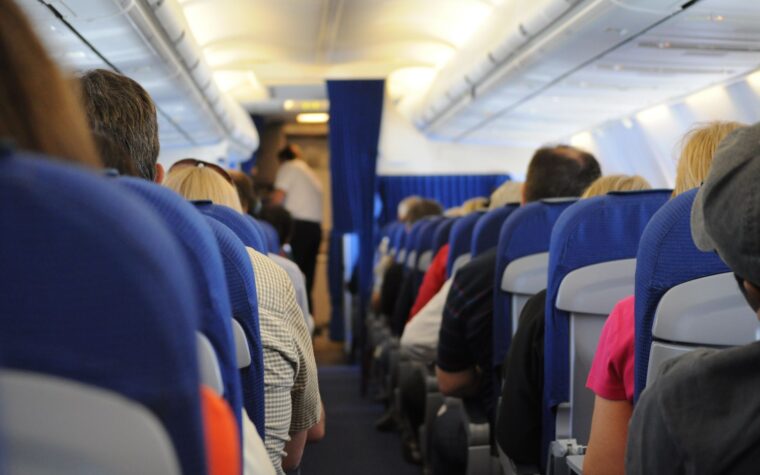
Partly, mostly through legroom. Standard economy pitch on most long-haul carriers sits around 31 inches, tight enough that getting up without disturbing your row becomes the real barrier to the hourly movement that matters for clot prevention. An extra-legroom seat closer to 35 inches changes that math on an overnight sector, since you can stand and do ankle pumps without a three-point negotiation with your neighbors.
The aircraft itself matters too. A true long-haul jet flying eight or more hours nonstop, such as the Boeing 787 Dreamliners that LATAM Airlines flies between US gateways like Miami and destinations across South America, is built for lower cabin pressurization and higher humidity than an older jet pressed into a route it was not designed for. Miami to Santiago is LATAM’s busiest 787 route, twice daily on both the 787-8 and 787-9. Checking aircraft type and seat pitch before booking, not just the fare, is the one piece of research that measurably changes how your legs and sleep feel twelve hours later. It does not replace water and movement. It just removes an obstacle to doing them.
Who should talk to a doctor before a long-haul flight instead of just wearing socks?
Compression socks, water, and hourly movement cover the general population. They do not cover you if any of the following apply, and self-managing with over-the-counter gear instead of a pre-flight check is the risky move here:
- A personal history of DVT, pulmonary embolism, or a clotting disorder.
- Active cancer, chemotherapy within the last six months, or major surgery within the last three months.
- Pregnancy, particularly the third trimester, where airlines often require a fit-to-fly letter anyway.
- Heart failure, severe leg edema, peripheral arterial disease, or diabetic neuropathy with reduced sensation. Compression on a leg with poor arterial blood flow is one of the few scenarios where these socks can cause harm rather than help.
- Any condition requiring supplemental oxygen or a medical device on board, which needs to be arranged with the airline weeks in advance, not at the gate.
The bottom line
Move every hour, drink water on a schedule instead of when you remember, skip the second drink, and time melatonin to your direction of travel instead of your local bedtime. Book the aisle seat, or the extra-legroom row, or a true long-haul aircraft like the 787s LATAM flies out of Miami if the fare difference is small, since it removes friction from doing the things above rather than replacing them. None of this is complicated. Most of it is just easy to skip on a flight where the seatbelt sign never really seems to matter until it does.
Frequently asked questions
Do I actually need compression socks for a 12-hour flight?
If you are healthy with no risk factors, they are optional comfort. If you have any risk factor for clots, the trial evidence supports 15 to 20 mmHg graduated compression, though it has only been shown to reduce symptomless clots, not death or pulmonary embolism specifically.
Should I take melatonin on the plane or after I land?
It depends on direction. Flying east, an evening dose at your destination’s bedtime helps advance your clock. Flying west, timing matters less and morning light exposure at your destination does more of the work.
Is one glass of wine on a long flight really a problem?
The 2024 Thorax study measured two standard drinks, roughly two glasses of wine or two beers, and found a measurable drop in blood oxygen and rise in heart rate during sleep at cabin altitude. One drink is a smaller dose than what was studied, but the direction of the effect is the same.
Can I bring my prescription medication in liquid form over 3.4 ounces?
Yes. Liquid medications are exempt from the standard carry-on liquid limit, but you must declare them separately at the TSA checkpoint before screening.
How often should I actually get up during a long flight?
At least once an hour, either walking the aisle or doing seated ankle pumps, according to CDC guidance. An aisle seat removes the main reason people skip this, which is not wanting to disturb their row.
Does a bigger, newer plane actually make a 12-hour flight safer?
Not in a clinical sense. It does not change your DVT risk factors or your hydration needs. What it changes is cabin pressurization, humidity, and seat pitch, which make it physically easier to do the things, movement and hydration, that do reduce risk.
Sources
- Centers for Disease Control and Prevention. Understanding your risk for blood clots with travel. cdc.gov
- World Health Organization. WRIGHT project, study results released on travel and blood clots, 2007. who.int
- Centers for Disease Control and Prevention, Yellow Book. Air travel, cabin environment. cdc.gov
- Trammer RA, et al. Effects of moderate alcohol consumption and hypobaric hypoxia: implications for passengers’ sleep, oxygen saturation and heart rate on long-haul flights. Thorax, 2024. pubmed.ncbi.nlm.nih.gov
- Transportation Security Administration. Medications (liquid) screening rules. tsa.gov
This article is for general information and is not medical advice. See our medical disclaimer.