
Last updated 18 June 2026. Educational content, not medical advice. Peptide therapy spans a wide range of compounds with very different safety profiles. Talk to a licensed clinician before starting any protocol.
Short answer: For FDA-approved peptides (semaglutide, sermorelin, tesamorelin) dispensed through a licensed pharmacy with clinical supervision, the safety record is well-established. For popular “therapy” peptides like BPC-157 and CJC-1295/Ipamorelin, the honest answer is that long-term human safety data is thin, regulatory status shifted dramatically in April 2026, and the route you use, licensed compounding pharmacy versus grey-market vial, changes the risk picture more than the molecule itself does.
Peptide safety varies enormously by compound. Before starting any protocol, see what your own baseline bloodwork shows. One at-home Superpower draw checks 100+ biomarkers, physician-reviewed.
Peptide therapy is not a single thing. It is a loose category that spans FDA-approved weight-loss drugs, compounded GH secretagogues, injury-repair peptides, and cosmetic skin serums, and the safety question has a different answer for each one. What follows is the breakdown that most “peptide therapy guide” articles skip.
Full-body lab membership: 100+ biomarkers, doctor-reviewed, tracked over time.
What exactly is peptide therapy, and how does it work?
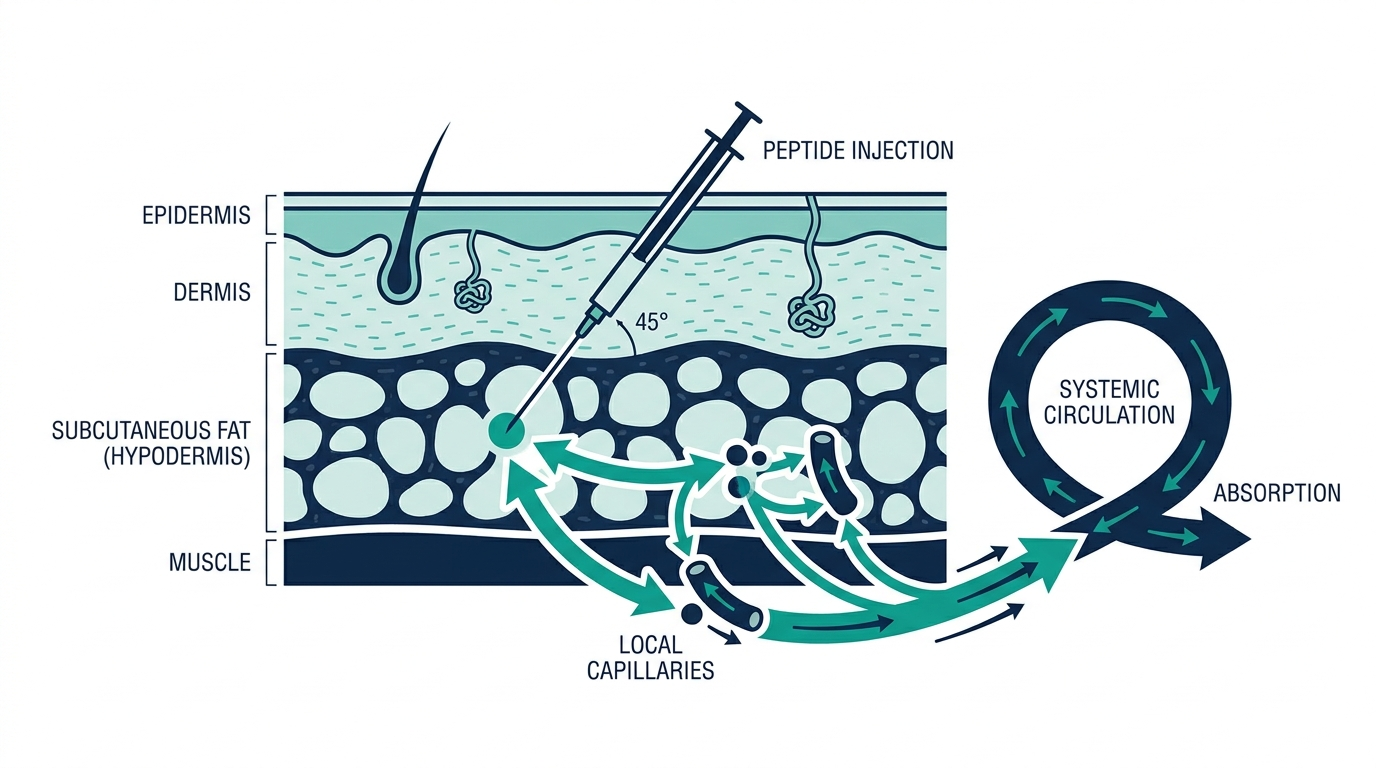
Peptide therapy is the medically supervised use of short amino acid chains (typically 2 to 50 amino acids) that act as signaling molecules in the body. Because peptides are naturally occurring in human tissue and already regulate metabolism, tissue repair, immune function, and hormone secretion, the theory behind therapeutic use is that targeted supplementation can amplify or restore those signals.
Most therapeutic peptides are administered subcutaneously because the digestive system breaks them down before they can act systemically. A few, like collagen peptides and GHK-Cu serums, work topically or as oral supplements and carry a substantially different safety profile from their injectable counterparts.
The word “peptide” on a label covers an enormous range of compounds, from a collagen protein drink to a prescription GLP-1 drug to an unregulated research vial. Treating them as one category is the root of most safety confusion in this space.
Is there actually good safety data on peptide therapy?
The simplest way to actually get this done
Superpower is a full-body lab membership that runs 100+ biomarkers, has each result reviewed by a doctor, and tracks your numbers year over year (about $199/year). It is what we point readers to when they would rather get one clean, complete draw than chase single tests one at a time. Here is superpower reviewed in full.
This is the most important question, and the honest answer is: it depends sharply on which peptide you are asking about.
Strong human safety data exists for the approved peptides. Semaglutide (Ozempic/Wegovy) has been through extensive Phase 3 trials, including the SUSTAIN and STEP programs, with tens of thousands of patients and years of post-market surveillance. Tirzepatide hit 22.5% mean body-weight loss in the SURMOUNT-1 trial with a well-characterized side-effect profile dominated by GI symptoms. Sermorelin, approved by the FDA in 1997 and used in pediatric GH deficiency, has a long clinical track record; a 2020 review in the Journal of Cachexia, Sarcopenia and Muscle described GH secretagogues as having a favorable safety profile compared to synthetic HGH because they preserve the body’s own pulsatile release pattern rather than flooding it with constant exogenous hormone.
Thin human data exists for the popular optimization peptides. This is where the safety picture gets genuinely complicated. BPC-157 has shown striking results in rodent studies, from accelerating tendon repair to protecting against GI injury, but as of mid-2026, published human clinical trial data remains limited. A 2025 PMC review of BPC-157 for musculoskeletal healing concluded the evidence was promising but insufficient for clinical recommendations, with only small pilot studies in humans. CJC-1295 and Ipamorelin have no completed large-scale human RCTs for the combination protocol widely sold online. The FDA flagged both as carrying immunogenicity risk, meaning the potential for an antibody response that could range from reduced drug efficacy to, in rare cases, life-threatening anaphylaxis.
Do not let enthusiast forums substitute for that missing data. The absence of widely reported adverse events in a community that self-selects for healthy, motivated adults is not the same as a clean clinical safety record.
What are the real risks of peptide therapy?
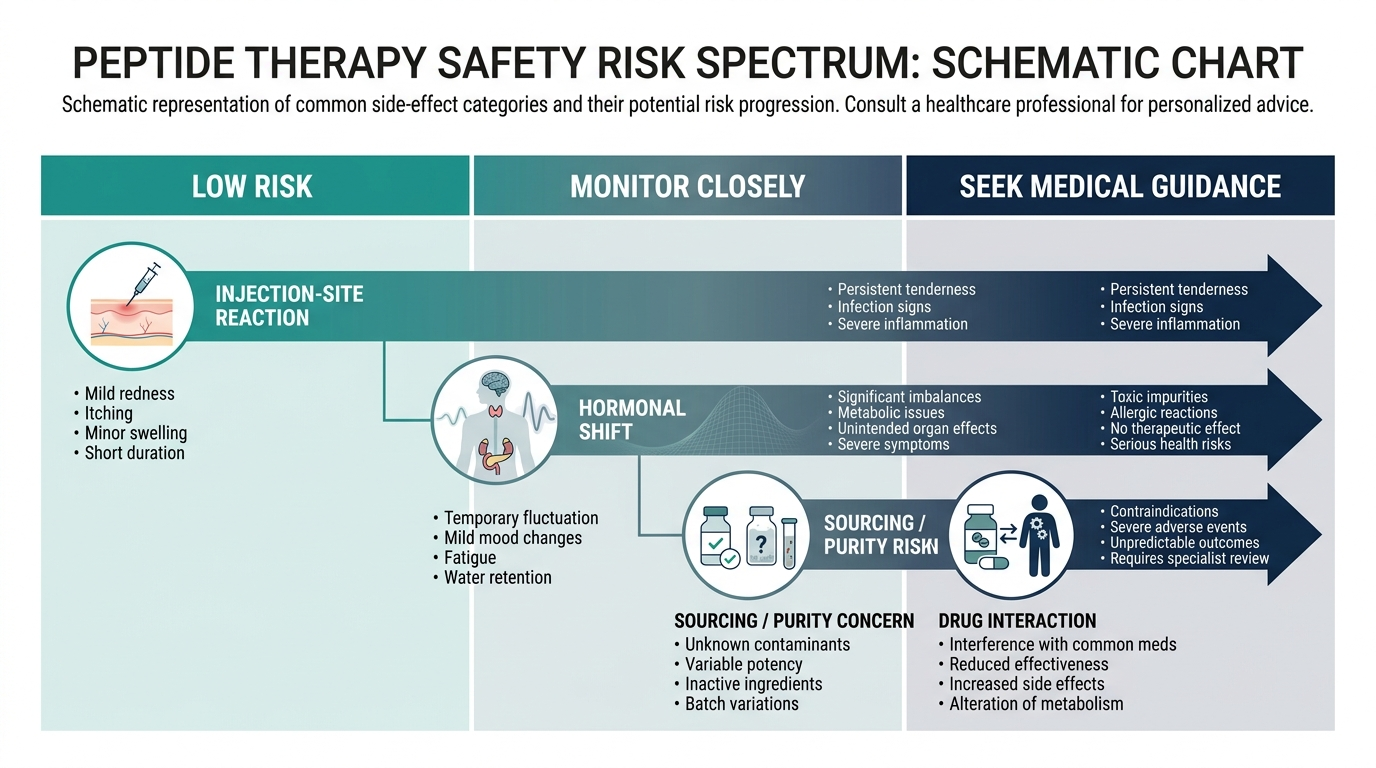
The risk profile for peptide therapy breaks into four categories, and most popular coverage focuses only on the first.
1. Known side effects of specific peptides. These are the expected, dose-dependent effects that a prescribing clinician manages. For GH secretagogues (sermorelin, CJC-1295/Ipamorelin): water retention, joint and muscle aches, transient increases in blood glucose, and tingling (paresthesia) at higher doses. For GLP-1 drugs: nausea, constipation, delayed gastric emptying, and the well-publicized rare risk of thyroid C-cell tumors (tracked since 2023 in post-market surveillance). For BPC-157 at research doses: injection site redness, mild nausea, occasional dizziness in the first few days of use.
2. The IGF-1 and cancer concern. This one deserves a straight answer because it gets vague treatment in most guides. GH secretagogues raise IGF-1. Higher circulating IGF-1 is associated, in observational epidemiology, with increased risk for colorectal, breast, and prostate cancers. The mechanism is biologically plausible: IGF-1 promotes cell proliferation and inhibits apoptosis, which is exactly what a tumor needs. No RCT has demonstrated that therapeutic GH secretagogue use causes cancer in healthy adults, but the preclinical signal is real enough that most responsible clinicians screen for existing malignancy and family history before prescribing, and monitor IGF-1 and IGFBP-3 levels throughout a protocol. Anyone with active cancer, or a strong genetic predisposition, should not use these peptides.
3. Immunogenicity. Every exogenous peptide carries some risk of triggering an immune response, especially with repeat administration. The 2025 Wiley review on immunogenicity in peptide therapeutics identified impurities, aggregation, and formulation quality as the three largest drivers of unwanted immune reactions. This is the specific reason the FDA cited when placing BPC-157, TB-500, and similar peptides on its Category 2 “significant safety risk” list in 2023: the agency was concerned about peptide-related impurities and the lack of standardized API characterization across compounders. A pharmacy-grade product from a licensed 503A or 503B facility is tested to USP standards and has documented batch-to-batch consistency. A grey-market vial has neither.
4. Supply chain and product quality risk. Independent testing by Finnrick across 8,000+ samples from 225+ vendors found widespread quality variance. When Finnrick tested Peptide Sciences’ retatrutide before the company’s March 2026 closure, it rated it “E” across 37 batches with purity reportedly dipping to 75%. Contamination, incorrect concentration, and mislabeled compounds are not edge cases in the unregulated supply chain; they are structural features of a market with no quality enforcement. A licensed pharmacy removes this variable entirely.
Which peptides are considered safest, and which carry the most risk?
| Peptide | FDA / Regulatory Status (June 2026) | Human Safety Evidence | Key Risk to Know |
|---|---|---|---|
| Semaglutide / Tirzepatide | FDA-approved prescription drugs | Extensive (STEP, SURMOUNT trials, post-market data) | GI effects; rare thyroid C-cell signal under surveillance |
| Sermorelin | FDA-approved (1997), telehealth-prescribed | Solid clinical record; short half-life (11-12 min) limits systemic exposure | IGF-1 elevation; screen for malignancy first |
| Tesamorelin | FDA-approved for HIV lipodystrophy | Approved indication with RCT data | Off-label use for longevity lacks the same evidence base |
| BPC-157 | Removed from FDA Category 2 (April 2026); PCAC review July 23-24, 2026 | Animal data strong; human trials limited | Immunogenicity from impure grey-market product; no established human dose |
| CJC-1295 + Ipamorelin | Not FDA-approved; Category 2 removal pending PCAC | No large-scale human RCTs for the combination | Joint pain, insulin resistance, immunogenicity; IGF-1 monitoring needed |
| TB-500 | Category 2 removal pending; PCAC review July 23-24, 2026 | Primarily animal studies | Angiogenesis concerns; theoretical tumor-vascularization risk |
| GHK-Cu (topical) | Cosmetic product; no drug approval needed | Strong safety record as topical | Injectable version is a different risk class entirely |
| Collagen peptides (oral) | Dietary supplement (GRAS) | Extensive consumer safety record | Minimal systemic risk; quality variance in supplement market |
The table makes a pattern clear: the safest peptide therapies are either fully FDA-approved or topical/oral supplements with decades of consumer data. The peptides people most want for optimization, BPC-157, CJC-1295, Ipamorelin, sit in a regulatory grey zone with limited human safety data, and the safety of obtaining them depends almost entirely on where and how you get them.
What changed in April 2026, and does it make peptide therapy safer?
On April 15, 2026, the FDA removed 12 peptide bulk drug substances from Category 2 of its Section 503A bulk drug substances list, the category reserved for compounds with “significant safety concerns.” This followed a February 27, 2026, announcement from HHS Secretary Robert F. Kennedy Jr. signaling that roughly 14 peptides, including BPC-157, TB-500, CJC-1295, Ipamorelin, and Sermorelin, were expected to return to Category 1 status, meaning they could again be legally compounded by licensed pharmacies.
The follow-up PCAC meeting on July 23 to 24, 2026, will formally evaluate seven of these compounds (BPC-157, KPV, TB-500, MOTs-C, Emideltide, Semax, and Epitalon) for addition to the 503A Bulk Drug Substances List. The PCAC’s recommendations are advisory; the FDA makes the final call.
Personally, I think this regulatory shift is significant, but not for the reason most wellness sites are celebrating. The mainstream coverage frames it as “peptides are safe now.” That is not what the FDA said. What changed is the regulatory pathway, not the evidence base. BPC-157 did not accumulate new human clinical trials between November 2023 (when it was restricted) and April 2026 (when the restriction was lifted). What changed is the policy environment under a new HHS secretary, and a ProPublica investigation from May 2026 raised exactly this concern: that commercial and political pressure is reopening market access faster than the clinical evidence is moving.
The April 2026 change does make licensed compounding of these peptides safer than the grey market, because it brings pharmacy-grade quality standards back into the picture. It does not make the underlying molecules more proven than they were.
Telehealth GLP-1 program with provider visits and pharmacy coordination.
How does the route you use change the safety picture?
This is the variable that most safety articles underweight. The pharmacology of a peptide is only one part of its risk profile; the other part is the supply chain and clinical context around it.
A peptide dispensed through a licensed 503A or 503B compounding pharmacy must meet USP standards for sterility, potency, identity, and impurity testing. A pharmacist verifies the prescription. A clinician sets the dose based on labs. If something goes wrong, there is a chain of accountability: a licensee, a pharmacy, a prescriber. Adverse events can be reported, tracked, and acted on.
A grey-market research vial has none of those layers. It is a lyophilized powder in a vial that you reconstitute yourself, dose yourself, and administer without anyone’s oversight. The vendor is not liable for what happens to you, because the label says “not for human use.” You are the lab. You are the pharmacist. If the batch is contaminated or mislabeled, no one with a license will find out, because no one with a license was involved.
The safety difference between a compounded BPC-157 from a licensed pharmacy and a grey-market BPC-157 from a research vendor is not a footnote. It is the entire safety story.
A legitimately operating peptide therapy clinic will require five things before your first dose: a licensed prescriber (physician, NP, or PA) actually evaluating you, not just rubber-stamping a form; baseline lab work that includes relevant markers for the peptide class; medication sourced from a named, verifiable 503A or 503B pharmacy; a structured monitoring schedule; and clear, written prescribing information including contraindications. If any of those five are absent, the “clinical” framing is theater.
What does a safe peptide therapy protocol actually look like?
A sensible entry point depends on your goals, but the structure is consistent regardless of which peptide you choose.
Step 1: Establish a baseline. Before any hormone-influencing peptide, you want to know your IGF-1, fasting insulin, fasting glucose, HbA1c, a comprehensive metabolic panel, and for GH secretagogues, PSA for men and a lipid panel. This is what makes a protocol auditable. Without a baseline, you cannot distinguish a therapy-related change from a background trend.
Step 2: Choose the lowest-risk entry point for your goal. For weight loss, the FDA-approved GLP-1 route (semaglutide or tirzepatide via telehealth) has the most robust evidence base. For general GH optimization, sermorelin is the most clinically established option with the clearest safety record. For injury or soft-tissue recovery, BPC-157 is the most-studied peptide in its category, but only via the licensed compounding route after the PCAC meeting solidifies its pathway.
Step 3: Use a licensed provider. Defy Medical, Marek Health, Hone Health, and similar platforms all require clinical intake and labs before prescribing. Pricing typically runs $175 to $225 per month for sermorelin, $200 to $450 per month for a CJC-1295/Ipamorelin protocol, and $199 to $399 per month for broader peptide therapy bundles. None of this is covered by insurance; these are elective and off-label for most optimization uses.
Step 4: Monitor actively. GH secretagogues should be run with 3-month IGF-1 checks. If IGF-1 runs above the upper reference range (generally above 300 ng/mL for adults), the dose should be titrated down, not held flat because “more is better.” A good provider adjusts based on labs; a bad one never checks them after intake.
Step 5: Know the absolute contraindications. Active malignancy or strong personal/family cancer history is a hard stop for IGF-1-raising peptides. Active autoimmune conditions are a flag for immunogenic peptides. Pregnancy and nursing are universal contraindications for all therapeutic peptides beyond cosmetic topicals.
The myth that the grey market is “safe because nobody gets hurt”
The most persistent misconception in peptide communities is that the research-use-only route has a good safety record because people post about it openly and no one talks about serious adverse events.
There are three reasons that argument collapses under scrutiny.
First, the community reporting is heavily biased toward positive outcomes. People who buy a vial that produces nothing, or produces side effects they dismiss as coincidental, do not write review threads. People who get a dramatic result do. The adverse event rate in an unmonitored, self-selected, self-reporting population is essentially unmeasurable.
Second, the harms from a contaminated or mislabeled vial may not present as dramatic, acute events. Chronic low-grade immune stimulation from a peptide with impurities, or years of supraphysiological IGF-1 from a misdosed GH secretagogue, would not show up as “something went wrong” in a forum thread. They would show up, years later, as a lab result nobody connects back to the vials.
Third, the quality variance in the grey market is well-documented and worsening. Finnrick’s database of 8,000+ independent tests consistently shows purity variance across vendors, including the industry’s former “gold standard” players. A vial you bought from a vendor with a good Finnrick score last year may come from a different batch with a different supplier this year, and there is no mechanism to know.
How much does safe peptide therapy actually cost?
Pricing in 2026 splits cleanly between routes.
Licensed telehealth route:
– Sermorelin: $175 to $225 per month (IvyRx), including prescription and pharmacy
– CJC-1295 / Ipamorelin stack: $200 to $450 per month (Meto)
– BPC-157 clinical program: $150 to $400 per month (PeakedLabs)
– Comprehensive peptide therapy bundle (multiple peptides, labs, monitoring): $199 to $399 per month (sermorelin.com)
Grey-market route (research vials, for context):
– BPC-157 5 mg vial: $30 to $70 each
– CJC-1295 or Ipamorelin vials: $40 to $90 each
– Bacteriostatic water, U-100 syringes, alcohol swabs: roughly $30 to $50 per protocol on top
The math looks favorable for grey-market on a spreadsheet until you add in the things not included: no prescriber, no pharmacy verification, no dose guidance, no adverse event accountability, and no baseline labs unless you pay for them separately. The telehealth price is not primarily paying for the molecule. It is paying for every layer of clinical structure that converts a research compound into a supervised therapy.
Turn what you just learned into action.
Superpower lets you test 100+ biomarkers from home, then re-check them over time so you can actually see progress, physician-reviewed at every step.
Frequently asked questions
Is peptide therapy FDA-approved?
Some peptides used in therapy are fully FDA-approved drugs: semaglutide, tirzepatide, sermorelin, and tesamorelin all have approved indications. Most popular optimization peptides (BPC-157, CJC-1295, Ipamorelin, TB-500) are not FDA-approved drugs; they are being evaluated for the FDA’s 503A compounding list at the July 23 to 24, 2026, PCAC meeting. Regulatory compounding approval is not the same as FDA drug approval.
What are the most common side effects of peptide therapy?
For GH secretagogues: water retention, joint aches, tingling, and temporary blood sugar elevation. For GLP-1 drugs: nausea, constipation, and reduced appetite. For BPC-157: injection site redness and mild nausea. Most side effects are dose-dependent and resolve with dose adjustment. Serious adverse events are rare in supervised clinical settings but are not tracked in the grey market.
Can peptide therapy cause cancer?
No study has demonstrated that therapeutic peptide use causes cancer in previously healthy adults. The concern is theoretical and relates to IGF-1-raising peptides: IGF-1 promotes cell growth and inhibits apoptosis, which could accelerate an existing or dormant malignancy. This is why active malignancy is an absolute contraindication, and why IGF-1 and IGFBP-3 monitoring is standard practice in a well-run peptide protocol.
How is peptide therapy different from steroids?
Peptides work by signaling the body’s own glands to produce or modulate hormones rather than replacing them with exogenous synthetic versions. GH secretagogues, for example, stimulate the pituitary to release more growth hormone in its natural pulsatile pattern, unlike synthetic HGH injections that create a constant elevated level. This is a key safety distinction: the body retains its own regulatory feedback mechanisms. Steroids suppress the HPG axis directly; most peptides do not.
Is BPC-157 safe for humans in 2026?
BPC-157 has an excellent animal safety record and limited but positive human pilot data. Its primary risks in practice come from product quality in the grey market (impurities, incorrect concentration) and from self-dosing without clinical monitoring. Following the FDA’s April 2026 removal of BPC-157 from Category 2, the July 2026 PCAC meeting may clear it for licensed compounding, which would meaningfully improve the safety picture for anyone pursuing clinical access.
Is peptide therapy safe for women?
Most of what is known about GH secretagogue safety comes from studies in men. Women have different baseline GH secretion patterns, and some peptides influence estrogen and progesterone pathways indirectly. A licensed clinician should review any peptide protocol against the specific hormonal baseline of a female patient, particularly peri and post-menopausal women already managing hormone levels. Pregnancy and nursing are absolute contraindications.
How do I find a legitimate peptide therapy provider?
Look for a platform where a licensed MD, NP, or PA reviews your case (not just an intake form); where medication ships from a named 503A or 503B pharmacy; where baseline labs are required before your first dose; and where follow-up lab monitoring is built into the program. Defy Medical, Marek Health, and Hone Health are among the most-reviewed platforms operating nationally in 2026. Avoid any service offering injectable peptides with same-day prescriptions and no lab requirement.
Author: Vital Signs Today Editorial Team, [credential]”]. Educational content, not medical advice. Sources linked inline.
Primary sources:
– FDA Pharmacy Compounding Advisory Committee Meeting July 23-24, 2026
– FDA Category 2 Removal and PCAC scheduling, Orrick legal analysis
– ProPublica: An FDA Reversal on Peptides Could Open the Market to Unsafe Drugs
– AJMC: FDA to Convene Expert Panel on Peptides
– PMC: BPC-157 Narrative Review for Musculoskeletal Healing (2025)
– Wiley: Immunogenicity Assessment in Peptide Therapeutics (2025)
– IvyRx: Sermorelin Cost 2026
– PeakedLabs: BPC-157 Cost Guide 2026
– Meto: CJC-1295, Ipamorelin and Tesamorelin Guide
– Finnrick Independent Peptide Testing Database
– FDA bulk drug substances under Section 503A
– Frier Levitt: FDA 503A peptide list update 2026
Want a real clinician to run the numbers, not a guess?
Joi + Blokes is a telehealth clinic that prescribes GLP-1 medication (Zepbound, compounded semaglutide and tirzepatide), hormone therapy (TRT, HRT), thyroid care, and peptides after a real lab panel and clinician review, with no membership or consult fee (prescriptions from about $59/month, lab panels from $149). If the scale will not budge, this is where you find out whether insulin, thyroid, or hormones are the real reason. Here is Joi + Blokes reviewed in full.
Related reading
Vital Signs Today may earn a commission if you buy through links on this page. It does not affect our editorial assessments.