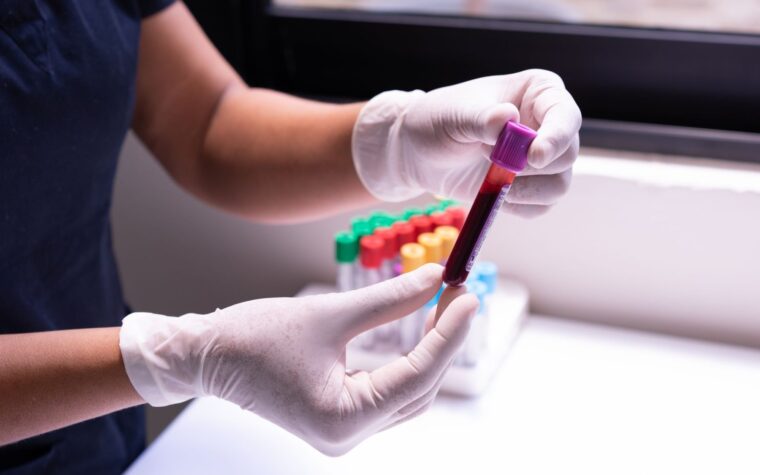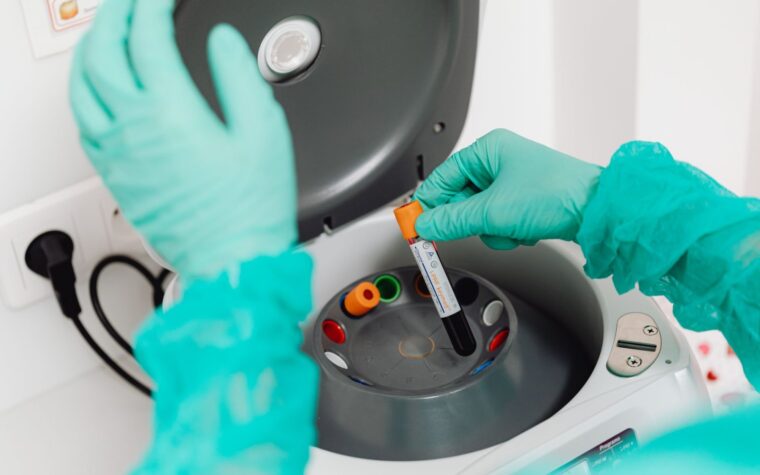
Quick answer: Function Health is not FDA-approved, and that is not a red flag. The FDA does not approve clinical laboratory services. Instead, labs that process your blood work are regulated under CLIA (Clinical Laboratory Improvement Amendments), a federal program administered by the Centers for Medicare and Medicaid Services. Function Health uses CLIA-certified partner labs, which means its testing meets the same federal oversight standard as Quest Diagnostics, Labcorp, or any hospital laboratory in the country.
Why the FDA Does Not Approve Lab Tests the Way You Might Think
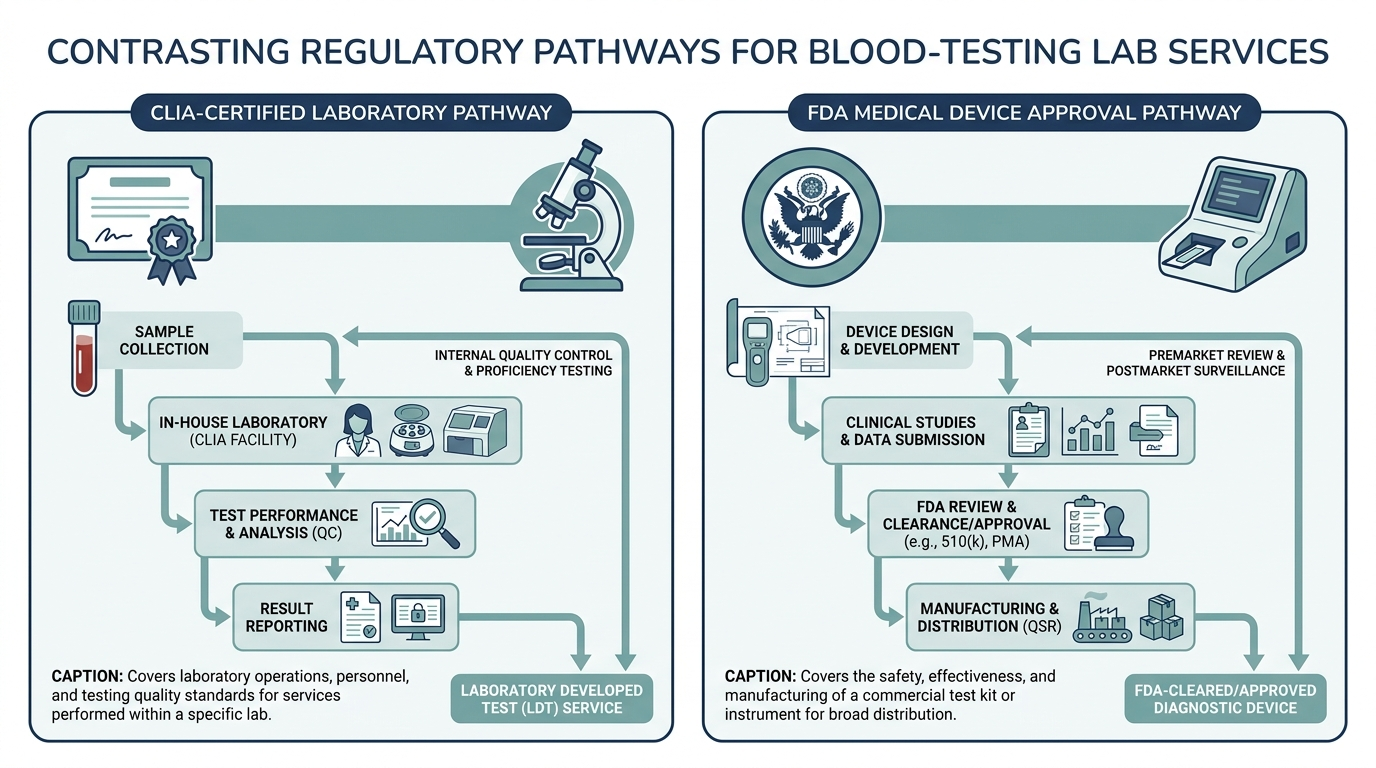
The FDA approves diagnostic devices and test kits, not the laboratory services that run your blood draw. When a lab wants to measure your TSH or testosterone, the instrument it uses, and the reagent kit in that instrument, may carry FDA clearance or approval. But the laboratory itself, and the company that orders tests on your behalf, operates under a completely separate federal framework called CLIA.
CLIA certification, not FDA approval, is what actually governs lab accuracy. See a panel that’s CLIA-certified and physician-reviewed. One at-home Superpower draw checks 100+ biomarkers, physician-reviewed.
This surprises a lot of people because they assume any health company touching medical data needs an FDA stamp. The reality is that US law carved out a distinct pathway. Congress passed CLIA in 1988 specifically to set quality standards for human specimen testing. The FDA handles devices; CLIA handles the labs. Both are federal, both have teeth, and both apply to the blood work you get through Function Health.
If you want to understand what Function actually measures and how it positions itself, the what is function health primer covers that foundation before you dig into the regulatory details here.
What CLIA Certification Actually Requires
The simplest way to actually get this done
Superpower is a full-body lab membership that runs 100+ biomarkers, has each result reviewed by a doctor, and tracks your numbers year over year (about $199/year). It is what we point readers to when they would rather get one clean, complete draw than chase single tests one at a time. Here is superpower reviewed in full.
A CLIA certificate is not a rubber stamp. A laboratory must apply to CMS, pay fees, and, for moderate- and high-complexity tests, pass unannounced inspections by state health departments or accreditation organizations like the College of American Pathologists (CAP) or the Joint Commission. High-complexity labs, which run panels like comprehensive metabolic panels, hormone assays, and advanced lipid tests, face the strictest requirements.
Here is what a CLIA-certified high-complexity lab must maintain:
- Documented quality control runs on each analytical day testing is performed
- Proficiency testing: the lab receives blind samples from an external program and must return results within defined accuracy limits, typically twice a year
- Personnel qualifications: lab directors must hold specific licensure; testing personnel must have defined education and training
- Instrument calibration and maintenance logs
- A written quality assurance program reviewed at least annually
CAP accreditation, which the major labs Function partners with carry, goes further than basic CLIA. CAP inspectors are themselves working laboratory scientists who review roughly 800 to 1,100 checklist items per inspection cycle. Failing an inspection can result in suspension of the CLIA certificate, which means the lab cannot legally process patient specimens.
Which Labs Actually Process Function Health Blood Work
Function Health does not own laboratory infrastructure. It operates as a direct-access testing company, meaning it uses the physician-ordering model (or works with telehealth physicians in states that require a provider order) and sends specimens to established reference labs. The primary processing partners include Quest Diagnostics and specialty reference labs for more exotic biomarkers like organic acids or advanced hormone panels.
Quest Diagnostics is CLIA-certified and CAP-accredited across its network. When your blood is drawn at a Quest Patient Service Center under a Function order, that specimen enters the same quality-controlled processing chain as a specimen ordered by your primary care doctor. The oversight does not change because the ordering channel is different.
This is an important insider detail: the legal entity that receives regulatory scrutiny is the laboratory, not the company that serves as the ordering portal. Function is regulated as a healthcare entity in terms of data privacy (HIPAA applies) and in terms of how orders are generated (state laws on direct-access testing apply), but the analytical quality of your results is governed at the laboratory level by CLIA and CAP.
For a deeper look at what the platform experience is actually like, our function health review covers the ordering flow, result interface, and physician consultation process.

Is Function Health Legal in All 50 States
Mostly, but not uniformly. Direct-access laboratory testing (ordering your own labs without going through a personal physician) is legal in most US states. A handful of states restrict or complicate it: New York, New Jersey, Maryland, and Rhode Island have traditionally required a licensed provider to order tests, although the specifics shift as legislation evolves.
Function handles this at the platform level. In states that require a physician order, Function works with telehealth physicians who review the order before it is placed. The member does not see this step as a barrier because Function’s operational model accounts for it. The practical result is that Function can service members in all 50 states, but the back-end mechanism differs by state law.
This is the same challenge any direct-access testing company, including Labcorp OnDemand and Everly Health, navigates. It is not a Function-specific compliance gap; it is an industry-wide regulatory reality.
Are the Specific Biomarkers Function Tests FDA-Cleared
This is where the FDA does enter the picture, just not in the way the question implies. Individual test methods and the reagent kits labs use to run them may carry FDA clearance (the 510(k) pathway) or approval (PMA pathway). Most standard clinical chemistry tests, think HbA1c, TSH, lipid panels, complete blood count, use FDA-cleared kits running on FDA-cleared analyzers.
Some highly specialized tests are run as Laboratory Developed Tests (LDTs). Under an LDT, the lab designs and validates the assay in-house rather than buying a cleared kit. LDTs have historically operated under CLIA oversight alone, without separate FDA clearance. The FDA announced a phased implementation framework for LDT oversight in 2024, adding a new layer, but most of the biomarkers in a comprehensive wellness panel (hormones, metabolic markers, inflammatory markers) are run on cleared platforms, not LDTs.
Function’s biomarker catalog skews heavily toward cleared test methodologies. Where it ventures into specialty biomarkers, the labs it uses are large reference labs with established validation programs.
How Function Health Compares to Getting Labs at Your Doctor’s Office
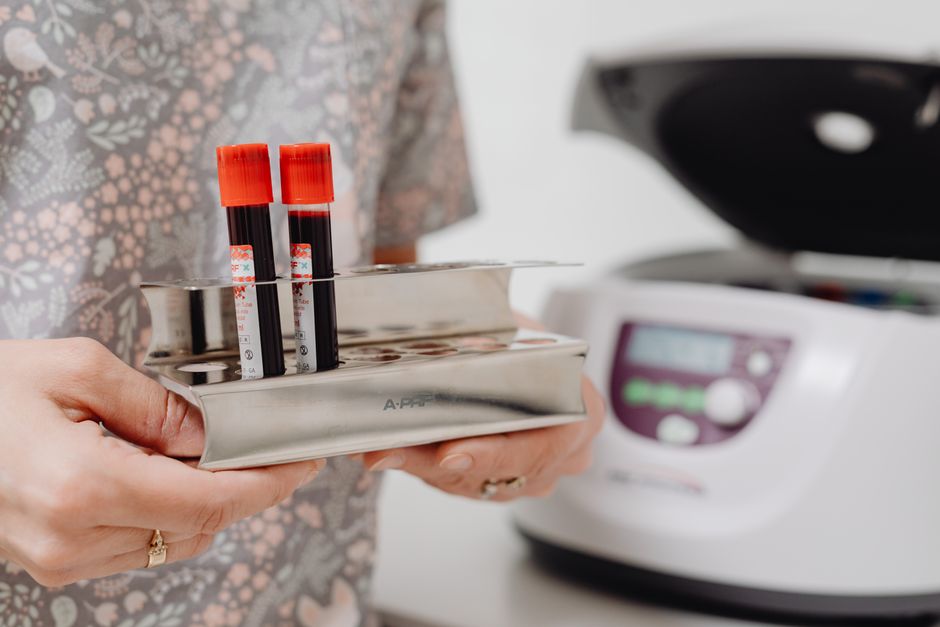
The laboratory quality is equivalent. A TSH run at Quest under a Function order uses the same CLIA-certified lab, the same analyzer, the same reagent lot, and the same quality control protocol as a TSH ordered by your internist through the same Quest location. Your doctor is not accessing a higher-quality analytical tier.
Where differences appear:
| Factor | Physician-ordered labs | Function Health |
|---|---|---|
| Laboratory oversight | CLIA/CAP (same labs) | CLIA/CAP (same labs) |
| Test ordering breadth | Clinically indicated tests | Comprehensive panel (100+ markers) |
| Physician review of results | Your PCP reviews and contacts you | Function provides result context; physician consult available |
| Insurance billing | Yes, if medically necessary | Generally no; subscription model |
| Out-of-pocket cost | Copay or deductible applies | Flat membership fee |
| Turnaround | 1 to 5 business days typical | Comparable (same labs) |
The more meaningful difference is context, not quality. A clinician ordering a single CBC for anemia workup is looking at one question. Function is building a longitudinal data baseline across dozens of systems simultaneously. That is a different use case, not a lower-quality one.
The simplest way to actually get this done
Superpower is a full-body lab membership that runs 100+ biomarkers, has each result reviewed by a doctor, and tracks your numbers year over year (about $199/year). It is what we point readers to when they would rather get one clean, complete draw than chase single tests one at a time. Here is superpower blood test reviewed in full.
What Oversight Gaps Actually Exist for Services Like Function
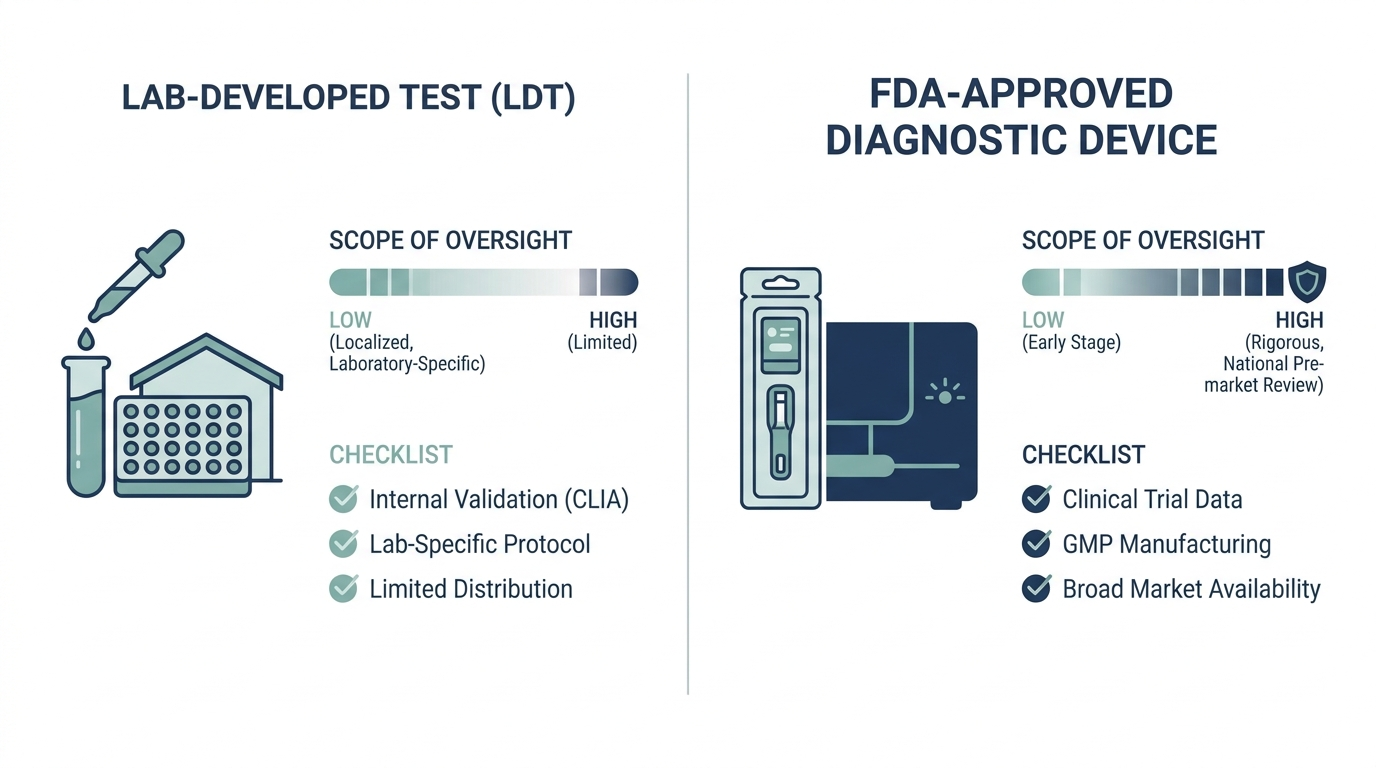
CLIA covers analytical quality. It does not cover everything. Three real gaps are worth knowing:
Result interpretation. CLIA certifies that your testosterone was measured accurately. It does not certify that the reference range displayed is clinically optimal for you, or that the interpretation nudge in the app is appropriate. Reference ranges are derived from population statistics (usually the middle 95% of a healthy population), not from individualized clinical judgment. Function provides context layers, but those are proprietary, not federally standardized.
Incidental findings. When a comprehensive panel turns up an unexpected abnormal, the pathway back to a physician can vary by platform. Function provides a physician consult feature, but the regulatory framework does not require any specific response time or escalation protocol. Your own doctor, who has your full medical history, is still the appropriate person to act on an abnormal result.
Data privacy beyond HIPAA basics. HIPAA requires baseline protections. Function’s specific data-sharing agreements, de-identification practices for research, and policies around third-party analytics are governed by their terms of service, not a federal quality standard. Read the privacy policy if that matters to you, because the regulatory framework does not prescribe it.
None of these gaps are unique to Function. They apply to any direct-access testing platform, and to some degree to traditional care models as well. They are worth naming because “CLIA-certified” does not mean “every aspect of this service is federally supervised.”
If analytical accuracy is a specific concern, the detailed breakdown in how accurate is function health covers coefficient of variation, reference range sourcing, and the labs involved.

Function Health vs. Superpower: Same Regulatory Framework
Both services operate under the same regulatory architecture: CLIA-certified lab partners, HIPAA-covered entity status, and state-specific direct-access rules managed at the platform level. Neither is FDA-approved, and neither needs to be to operate a legitimate lab testing service.
The practical differences between them are in membership model, biomarker count, result interface, and physician involvement structure, not in the underlying regulatory legitimacy. Our superpower blood test review details what Superpower’s annual draw actually covers and how the $199 price compares to a la carte ordering. If you are trying to decide between them, function health cost is the right starting point for the financial side of that comparison.
The 2024 LDT Rule Was Struck Down: Where FDA Oversight of Lab Tests Stands Now
The regulatory picture around Laboratory Developed Tests shifted significantly, and it is worth stating the current status clearly because a lot of older articles describe a framework that no longer applies. In May 2024, the FDA issued a final rule that would have brought LDTs under its medical device authority, phasing in oversight over several years. That rule did not survive.
In March 2025, the U.S. District Court for the Eastern District of Texas vacated the FDA’s LDT final rule, holding that the agency lacked statutory authority to regulate laboratory-developed tests as medical devices. The court reasoned that an LDT is a service performed inside a laboratory rather than a physical product sold in interstate commerce, which is a distinction with real legal weight. The FDA chose not to appeal and, in September 2025, issued a rule formally rescinding the 2024 regulation and restoring the prior definition of in vitro diagnostic products.
What this means in practice for a service like Function Health:
- Laboratories running LDTs are not required to obtain FDA clearance or approval for those tests. The 2024 compliance deadlines are void.
- CLIA remains the operative federal oversight framework for the analytical quality of your results, exactly as it was before 2024.
- The FDA continues to exercise what is called enforcement discretion over LDTs, meaning it retains a watching brief but is not actively gatekeeping these tests.
The takeaway is not that oversight vanished. It is that the oversight for the specialty markers Function might run as LDTs lives at the CLIA and CAP laboratory level, not at an FDA device-clearance level. The status quo that governed lab testing for decades is the status quo again.
How to Verify a Lab’s CLIA Certificate Yourself
You do not have to take any testing company’s word that its labs are certified. CLIA certificates are public, and you can check the standing of the reference lab that processes your specimen. This is one of the most useful and least-used consumer tools in this space.
- Find the performing lab, not the ordering company. Your result report names the laboratory that actually ran the test, often with an address and a CLIA number. That number, not the brand name on the app, is what you verify.
- Look for the 10-character CLIA identifier. Every certified lab has a unique CLIA number. It appears on the lab report footer and in CMS records.
- Check the certificate type. CLIA issues several certificate types. A Certificate of Compliance or a Certificate of Accreditation indicates a lab authorized for moderate- and high-complexity testing, which is the tier that runs comprehensive panels. A Certificate of Waiver covers only simple, low-risk tests and would not be appropriate for hormone or advanced metabolic assays.
- Confirm accreditation. Major reference labs also carry College of American Pathologists accreditation, which layers a stricter, peer-reviewed inspection on top of baseline CLIA. CAP maintains a public directory of accredited laboratories.
If you ever receive a result and cannot identify which certified laboratory produced it, that is a legitimate question to raise with the service. Reputable direct-access companies disclose their performing labs without hesitation.
How to Read the Regulatory Footer on Your Own Lab Report
A surprising amount of the regulatory reality is printed right at the bottom of the result PDF, and most people never read it. Learning to decode that footer tells you more about oversight than any marketing page.
- The performing laboratory and its director. High-complexity CLIA labs must name a qualified laboratory director. Seeing a named director and a physical lab address signals a properly staffed, certified facility.
- Test methodology notes. Reports frequently flag which assays are FDA-cleared and which are laboratory-developed. A line such as a statement that a test was developed and its performance characteristics determined by the laboratory is the standard LDT disclosure. It is normal and not a warning sign.
- Reference range and units. The range printed next to your value is population-derived, usually the central interval of a healthy reference population, and can differ between labs using different methods. That is why the same marker can look flagged at one lab and normal at another.
- Analyte-specific disclaimers. Some specialty markers carry a note that the test is for research or informational context. If a marker in your panel carries that language, weigh its clinical meaning more cautiously and discuss it with a clinician.
Reading these details turns an intimidating PDF into a document you can actually interrogate. It also explains why two comprehensive panels can disagree on a borderline value: different labs, different methods, different reference intervals, all fully compliant.
Curious what your own levels look like?
Baseline 100+ biomarkers today and retest as life changes, all in one membership with physician review.
Want a real clinician to run the numbers, not a guess?
Joi + Blokes is a telehealth clinic that prescribes GLP-1 medication (Zepbound, compounded semaglutide and tirzepatide), hormone therapy (TRT, HRT), thyroid care, and peptides after a real lab panel and clinician review, with no membership or consult fee (prescriptions from about $59/month, lab panels from $149). If the scale will not budge, this is where you find out whether insulin, thyroid, or hormones are the real reason. Here is Joi + Blokes reviewed in full.
FAQ
Is function health fda approved?
No, and the FDA does not approve clinical laboratory services. The correct regulatory body for labs is CMS under the CLIA program. Function Health uses CLIA-certified partner labs, which is the appropriate federal standard for clinical blood testing in the United States.
What does CLIA certification mean for my blood results?
CLIA certification means the laboratory processing your specimen meets federal standards for analytical quality, personnel qualifications, quality control, and proficiency testing. For high-complexity tests, it also means unannounced inspections and external blind-sample verification. Your results carry the same analytical quality guarantee as results from a hospital lab.
Are the labs Function Health uses the same ones my doctor uses?
Often yes. Quest Diagnostics is a primary partner for Function, and it is one of the two dominant reference lab networks used by physician practices across the US. A test ordered through Function and a test ordered by your primary care physician may literally be processed in the same facility on the same analyzer.
Is Function Health legal in New York?
New York has historically restricted direct-access testing, requiring a physician order. Function addresses this through a telehealth physician ordering model, which allows New York residents to use the service. The extra step is handled on Function’s end and does not require the member to find their own provider.
Do any FDA-approved tests exist in Function’s panel?
The individual test methods and reagent kits used by the labs may carry FDA clearance or approval under the 510(k) or PMA pathways. Standard clinical chemistry tests (HbA1c, lipid panels, thyroid, metabolic markers) routinely run on FDA-cleared platforms. Some specialty markers use Laboratory Developed Tests, which operate under CLIA validation standards rather than FDA clearance.
Does CLIA cover the quality of Function’s result interpretation, not just the lab measurement?
No. CLIA certifies analytical accuracy, meaning the measured value is correct within defined limits. It does not certify the clinical interpretation, the reference range selection, or the app-based context that surrounds your result. Those are proprietary platform decisions, not federally standardized. Talk to a clinician about any result that concerns you, especially an unexpected abnormal.
What happens if a Function Health lab fails a CLIA inspection?
A failed CLIA inspection can result in suspension or revocation of the lab’s certificate, which means it legally cannot process specimens. CMS publishes CLIA certificate status publicly. The large reference labs Function works with (Quest and similar) have well-established compliance programs and have not had certificate-level actions that would affect routine clinical testing. This is a theoretical concern more than a practical one with established partners.
How does Function Health compare to CVS MinuteClinic or urgent care for blood work?
CVS MinuteClinic typically orders a narrow set of clinically indicated tests and sends them to the same reference lab networks. The analytical quality is equivalent. The difference is scope: MinuteClinic orders tests relevant to a presenting complaint, while Function orders a comprehensive longitudinal baseline. Function’s approach is not more accurate, it is more comprehensive by design.
Can I use HSA or FSA funds for Function Health?
Generally yes. Laboratory testing for disease detection or medical diagnosis qualifies as a legitimate HSA/FSA expense under IRS guidelines. Function’s membership model may complicate this if the membership bundles non-medical features, but the lab testing component itself is typically an eligible expense. Check with your HSA/FSA administrator for your specific plan rules, since plan documents vary.
Is Function Health legitimate given recent lawsuit news?
The lawsuit between Function Health and a competitor (resolved in 2025) involved business claims, not regulatory compliance or analytical quality. CLIA certification status and laboratory partner relationships were not affected by that litigation. The core question of whether Function is a legitimate, legally operating testing service is answered by its CLIA lab partnerships, HIPAA compliance, and state-by-state ordering model, all of which remain intact. See our function health review for a current assessment of how the platform actually performs.
Vital Signs Today may earn a commission if you buy through links on this page. It does not affect our editorial assessments.