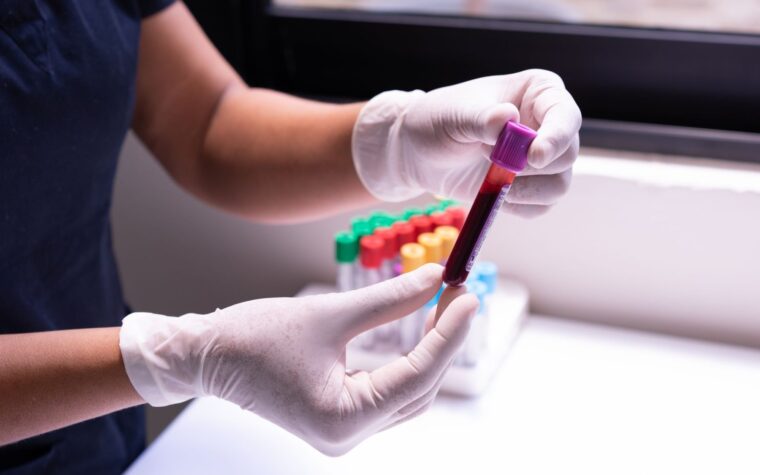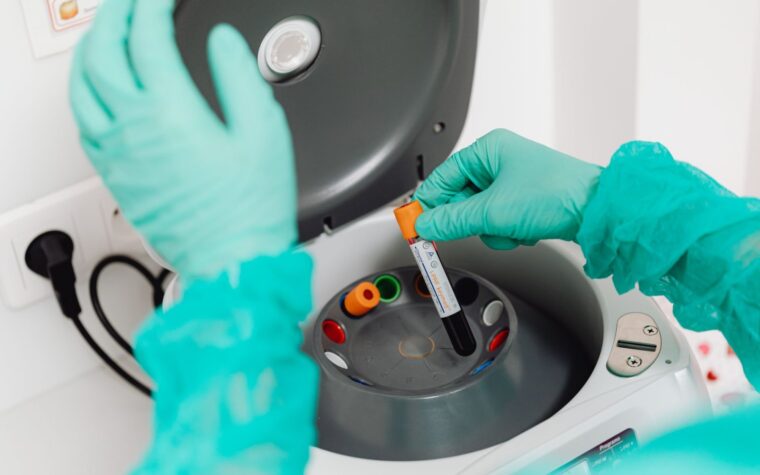
Quick answer: If you are wondering how accurate is Function Health, the short answer is: results are generally accurate for standard biomarkers because samples are processed at CLIA-certified reference labs, the same certification tier used by Quest Diagnostics and Labcorp. Accuracy is not the main variable to worry about. The real question is whether Function’s reference ranges and clinical context are calibrated well enough to tell you something actionable, and that is where the comparison with competitors like Superpower becomes meaningful.
What Does “Accurate” Actually Mean for a Blood Test?
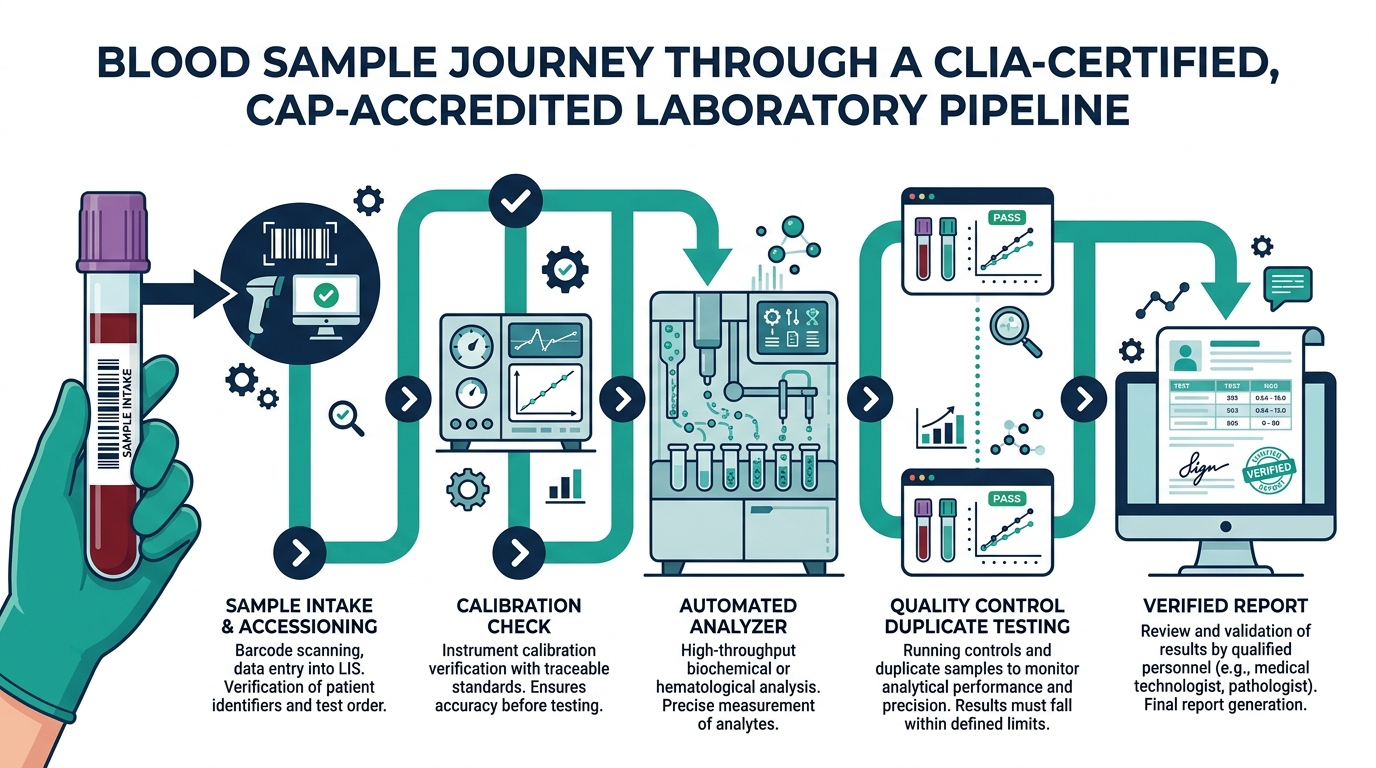
Accuracy in lab testing has a specific technical meaning: the degree to which a measured value matches the true concentration in the sample. Most CLIA-certified analyzers running common chemistry panels achieve coefficients of variation below 5%, meaning a cholesterol reading of 200 mg/dL could legitimately read anywhere from 190 to 210 mg/dL on a repeat draw the same day. That is not a flaw; it is the documented precision window for immunoassay and spectrophotometry methods. Understanding this matters when you see a borderline result, because a single value that lands one point above a reference range cutoff may not mean anything clinically.
Accuracy comes down to reference ranges and context, not just the lab. See a panel built with physician-reviewed context included. One at-home Superpower draw checks 100+ biomarkers, physician-reviewed.
Function Health does not run samples in-house. Like most direct-to-consumer lab services, it routes draws to third-party reference labs. This means the raw analytical accuracy of the machine reading your thyroid or lipid values is essentially the same as if your primary care doctor ordered the identical test through their clinic’s lab account. The differentiation between services is almost never at the machine level.
What Labs Does Function Health Use?
Function Health primarily routes samples through Quest Diagnostics and BioReference Laboratories, both of which hold CLIA certification and CAP (College of American Pathologists) accreditation. CAP accreditation is the higher bar: it requires on-site inspections every two years and proficiency testing that goes beyond the minimum CLIA floor. Quest alone processes roughly 150 million patient requisitions per year in the US, which gives you a sense of the scale and standardization involved.
Some specialty markers, particularly certain hormones and micronutrients, may be routed to specialized reference labs depending on geography and test type. Function does not publish a complete lab routing map in its consumer-facing materials, which is a legitimate transparency gap. If you have a specific concern about which facility is handling a particular analyte, the CLIA number printed on your lab report can be looked up in the CMS CLIA database to confirm certification status.
For more on how the service is structured end to end, see how does function health work.
Is Function Health CLIA Certified?
Function Health itself is not a laboratory, so it does not hold its own CLIA certificate. What matters is that every laboratory it contracts with holds active CLIA certification. CLIA (Clinical Laboratory Improvement Amendments) is the federal standard administered by CMS that governs any facility testing human specimens for health assessment. A lab without CLIA certification cannot legally report results intended for clinical use in the US.
The CLIA framework has three tiers: waived tests (simple point-of-care), moderate complexity, and high complexity. Most of the biomarkers in a comprehensive panel, including thyroid hormones, metabolic chemistry, and hormones, fall under high-complexity testing. High-complexity labs must meet the most rigorous personnel, quality control, and proficiency testing requirements. When Function routes your blood draw to Quest or BioReference, those labs are operating under high-complexity CLIA certificates.
The practical takeaway: the analytical machinery behind Function Health results is clinically credentialed. Function’s value-add (or gap) is in the interpretation layer, not the lab bench.

Where Accuracy Can Actually Break Down
Even with a perfectly calibrated analyzer, several pre-analytical and interpretive factors can make a result misleading:
- Draw timing and fasting status. Glucose, triglycerides, and certain hormones shift significantly depending on when you last ate or exercised. Function’s instructions tell you to fast for 12 hours, but if you had a large meal the night before or drew first thing after intense training, biomarkers like insulin and cortisol may not reflect your true baseline. This is not a lab accuracy problem; it is a protocol compliance problem.
- Sample handling and shipping. At-home finger-prick kits and blood collection cards introduce more variability than a venipuncture draw sent immediately to the lab. Function uses venipuncture at partner phlebotomy sites (Labcorp Patient Service Centers and independent draw sites), which reduces this risk considerably compared to services using dried blood spot cards.
- Reference range calibration. This is where Function Health gets more complicated. Reference ranges in standard lab reports are typically set at the 2.5th to 97.5th percentile of a population that often skews older, sicker, and more sedentary than the people using DTC lab services. A TSH range of 0.4 to 4.0 mIU/L, for example, was derived from a population that included people with undiagnosed thyroid disease. Functional medicine practitioners often use narrower ranges. Function leans toward conventional ranges for most markers, which is defensible from an evidence standpoint but means the “normal” flag on your result may not reflect optimal.
- Biotin interference. High-dose biotin supplements (common in hair/nail products) falsely suppress TSH and troponin on immunoassay platforms used by most major labs. Function’s intake forms ask about supplements, but if you are taking more than 5 mg/day of biotin, stop for 48 hours before any draw regardless of which service you use.
Function Health Lab Quality Versus Superpower: A Practical Comparison
Both Function Health and Superpower use CLIA-certified reference labs, so analytical accuracy at the machine level is comparable. The differentiation is in what happens after the result comes off the analyzer.
| Feature | Function Health | Superpower |
|---|---|---|
| Lab certification | CLIA-certified partners (Quest, BioReference) | CLIA-certified partners |
| Biomarker count | ~100 in standard tier | 100+ biomarkers |
| Doctor review of results | No physician review included | Every result reviewed by a physician |
| Year-over-year tracking | Yes, trend view in dashboard | Yes, with clinician commentary on changes |
| Reference range philosophy | Conventional lab ranges | Conventional plus flagging at functional thresholds |
| Annual membership price | ~$499/year at standard tier | ~$199/year |
| Draw method | Venipuncture at partner sites | Venipuncture at partner sites |
The gap that matters most in day-to-day use is the physician review. Getting 100 biomarkers back without any clinician commentary means you are interpreting borderline values yourself, and that is where people either over-react (panicking about a slightly low ferritin) or under-react (dismissing a TSH that is technically in range but trending upward over three years). The accuracy of the raw number is not the limiting factor; the accuracy of your interpretation is.
See the full superpower blood test review for a deeper breakdown of how it handles results.
The simplest way to actually get this done
Superpower is a full-body lab membership that runs 100+ biomarkers, has each result reviewed by a doctor, and tracks your numbers year over year (about $199/year). It is what we point readers to when they would rather get one clean, complete draw than chase single tests one at a time. Here is superpower reviewed in full.

How Function Health Handles Abnormal Results
This is a reliability question as much as an accuracy one. A result can be analytically accurate and still be handled poorly at the interpretation and follow-up layer. Function Health flags out-of-range values in its dashboard and, depending on the severity, may trigger an automated outreach from its medical team. Critical values (a potassium of 6.5 mEq/L, for example) should trigger direct contact under standard lab safety protocols, since the reference lab is required by CLIA to report critical values to the ordering provider.
The ordering provider in the DTC model is Function’s affiliated physician network, not your personal doctor. This creates a practical gap: if a moderately abnormal value comes back and does not cross the critical threshold, you may get a flag in the app but no direct physician guidance. You then decide whether to call your PCP, which many Function users do not have, or book an urgent care visit. This is not a knock specific to Function; it is a structural feature of DTC lab services generally. But it is worth knowing before you assume a flagged result will come with a care plan.
Read the function health review for a fuller picture of what the service does and does not handle.
Function Health Reliable for Which Tests, and Less So for Which?
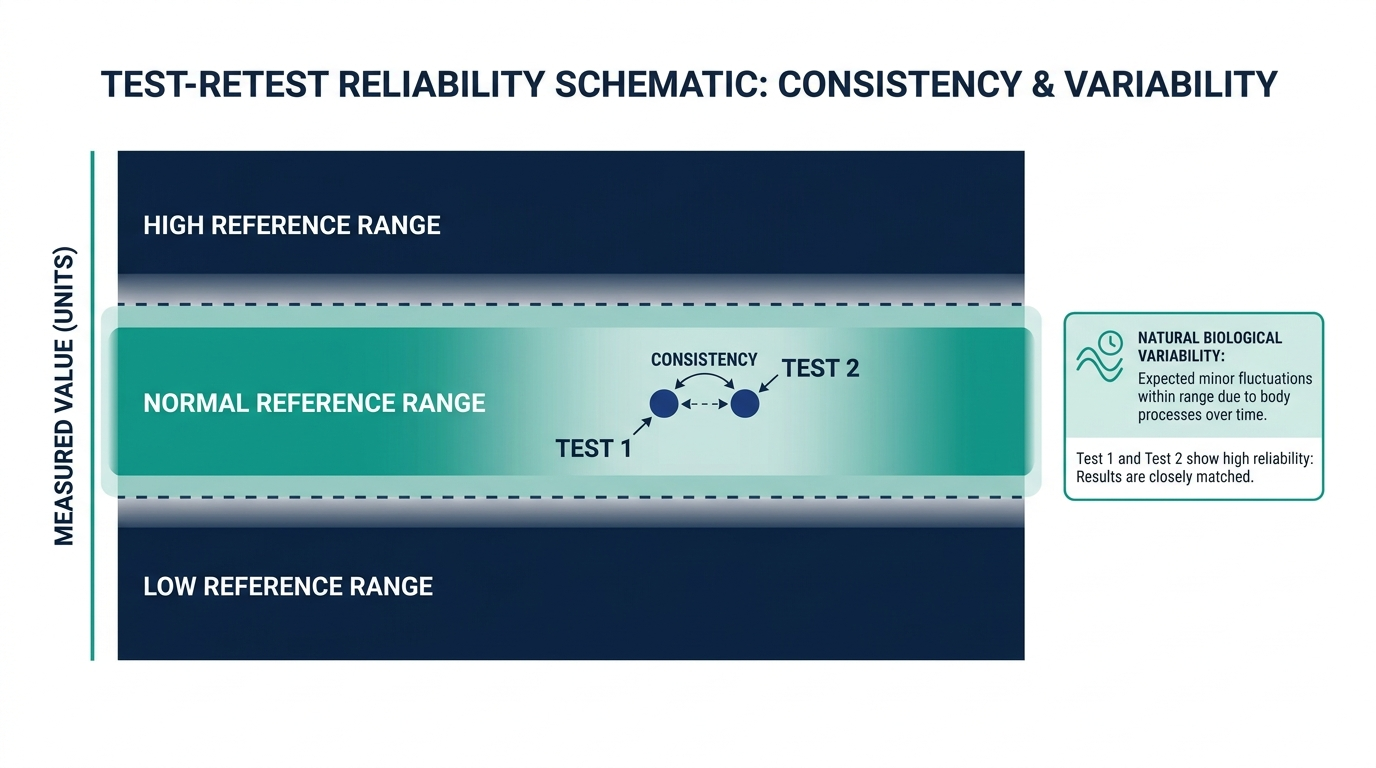
Reliability varies by analyte. Here is an honest breakdown:
- Highly reliable: Basic metabolic panel (BMP), complete metabolic panel (CMP), lipid panel, CBC, thyroid panel (TSH, free T3, free T4), HbA1c, fasting glucose, ferritin, vitamin D (25-OH). These are high-volume, well-standardized assays that Quest and similar labs run millions of times per year. Interlaboratory variability is low.
- Moderately reliable, context-dependent: Testosterone (total and free), estradiol, DHEA-S, cortisol. These hormones have significant diurnal variation. A morning draw at 8 a.m. versus a noon draw can shift cortisol by 30 to 50%. If you draw at an inconsistent time each year, your trend data is noisy regardless of lab accuracy. For meaningful tracking, draw at the same time of day, same fasting status, same cycle phase if applicable.
- Use cautiously without clinical context: ANA titer, Lyme antibody, food sensitivity IgG panels. ANA positive titers appear in roughly 13% of healthy adults and have poor specificity without symptoms. Lyme antibody tests have documented false-positive rates in certain geographic regions. IgG food sensitivity panels are not validated for diagnosing food intolerance in evidence-based guidelines. These results can generate anxiety and unnecessary dietary restriction without adding clinical clarity.
If you want help parsing what your numbers mean, the guide to function health how to read results walks through the dashboard interpretation process step by step.

What People Get Wrong About Lab Accuracy
The most common misconception is that a normal range equals a healthy result. Reference ranges are statistical constructs, not physiological targets. If every lab result you receive lands at the low end of normal, that pattern may be worth discussing with a clinician even though no individual value is flagged. Function Health’s dashboard does show trend lines over time, which is more useful than a single snapshot, but the platform does not currently annotate what a consistent downward trend in, say, free testosterone means for a 38-year-old man who is training hard and sleeping poorly.
The second misconception is that running more biomarkers automatically means more insight. Ordering 100 tests on a healthy person creates a statistical near-certainty of at least a few values outside the reference range by chance alone. A 95% reference range by definition means 5% of healthy people will fall outside it on any given draw. With 100 markers, you expect roughly five “abnormal” results in a perfectly healthy person. Knowing which ones to follow up on requires clinical judgment, not just a dashboard flag.
For context on what the service costs relative to what you get, see function health cost and how much does superpower cost side by side.
Analytical Accuracy Versus Biological Variation: The Two Numbers That Move
When people ask whether a result is accurate, they usually mean one thing but should worry about two. Analytical variation is how much the lab machine wobbles when it reads the same tube twice. Biological variation is how much the true value in your body swings from day to day even with a perfect machine. For many markers, biological variation dwarfs analytical variation, and confusing the two leads to bad decisions.
Consider fasting glucose. The analyzer might vary by 2 to 3 percent, but your own glucose can swing several points based on sleep, stress, a late dinner, or a hard workout the day before. So a jump from 92 to 99 mg/dL between two draws is almost certainly your biology moving inside a normal band, not the lab being wrong. Contrast that with HbA1c, which reflects a three-month average and barely moves day to day, making it far more stable for tracking. The practical rule: markers with high biological variation (glucose, cortisol, testosterone, iron) need consistent conditions and sometimes repeat draws before you trust a change, while stable markers (HbA1c, creatinine, most lipids in a fasted state) can be trusted from a single well-collected sample.
- Low day-to-day variation, trust one draw: HbA1c, creatinine, total cholesterol, ferritin (absent inflammation).
- Moderate variation, standardize conditions: fasting glucose, LDL, triglycerides, vitamin D.
- High variation, repeat before acting: cortisol, testosterone, estradiol, fasting insulin, hsCRP.
This is why a single flagged value is a prompt to look closer, not a verdict. A genuinely elevated marker tends to stay elevated across two properly collected draws. A one-off outlier usually normalizes.
How CLIA and CAP Actually Keep Labs Honest
It is easy to say a lab is CLIA-certified without understanding what that certification forces the lab to do every day. The certification is not a one-time stamp; it is an ongoing quality regime, and knowing how it works tells you why the raw numbers from a big reference lab are trustworthy.
- Daily quality control. Before patient samples run, the lab tests control materials with known concentrations. If the controls fall outside their expected range, the run is halted and the instrument recalibrated. Your result only reports if that day’s controls passed.
- Proficiency testing. Several times a year, an external body sends the lab blind samples. The lab reports results without knowing the true value, and a regulator grades them against peer labs using the same method. Repeated failure can suspend a lab’s certification for that analyte.
- Calibration and maintenance logs. High-complexity labs document instrument calibration, reagent lot changes, and maintenance. CAP inspectors review these records during on-site visits, which for CAP-accredited labs happen on a two-year cycle.
- Personnel standards. High-complexity testing requires qualified technologists and a laboratory director, not just a technician following a script.
When Function or any competitor routes your draw to Quest, Labcorp, or BioReference, your sample enters this regime. That is the real reason machine-level accuracy is rarely the thing separating one consumer service from another. They are drinking from the same regulated well.
A Simple Protocol to Make Your Results Actually Comparable Over Time
Most of the noise people see in their year-over-year data is self-inflicted. If you draw under different conditions each time, you are comparing apples to a different fruit and blaming the lab. Standardizing the collection is free and does more for the usefulness of your data than any premium panel. Use the same routine every draw:
- Same time of day. Book a morning appointment, ideally between 7 and 10 a.m., especially for testosterone and cortisol, which are highest and most stable early.
- Same fasting window. Fast 10 to 12 hours with water only for glucose, insulin, and lipids. Do not fast so long that you are dehydrated, which concentrates some markers.
- Same relationship to exercise. Avoid intense exercise for 24 to 48 hours before, since it transiently raises liver enzymes, creatine kinase, and hsCRP.
- Same supplement status. Pause high-dose biotin for at least 48 hours. Note any new supplements or medications, since some (including certain hormones and steroids) directly change the markers you are tracking.
- Same cycle phase, if applicable. For menstruating people, sex hormones swing dramatically across the cycle. Draw on a consistent cycle day to compare like with like.
- Same hydration and posture. Being well hydrated and seated calmly for a few minutes before the draw reduces artificial shifts in concentration.
Hold those variables steady and any change you see in your numbers is far more likely to be real signal. Then a trend, three annual draws showing free testosterone drifting down, or hsCRP creeping up, becomes something worth acting on rather than an artifact of an inconsistent draw.
Curious what your own levels look like?
Baseline 100+ biomarkers today and retest as life changes, all in one membership with physician review.
FAQ
Is function health accurate?
Yes, for standard biomarkers processed at its CLIA-certified partner labs. The analytical accuracy is equivalent to tests ordered by a physician through a traditional clinical lab. The variability that matters more in practice comes from pre-analytical factors like fasting compliance, draw timing, and supplement interference, not from the analyzer itself.
What labs does function health use?
Function Health routes most samples through Quest Diagnostics and BioReference Laboratories. Both hold CLIA certification and CAP accreditation. Some specialty analytes may go to other reference labs. The CLIA number on each report can be verified in the CMS public database if you want to confirm a specific facility.
Is function health CLIA certified?
Function Health is not a laboratory and does not hold its own CLIA certificate. The labs it contracts with hold active CLIA certification, which is what governs the analytical work. This is the standard model for DTC lab services in the US, including competitors like Superpower, Everlywell, and SelfDecode.
How does function health’s reliability compare to a standard doctor’s lab order?
The raw analytical reliability is essentially identical because both use the same reference lab infrastructure. The difference is in the clinical follow-up layer: a physician-ordered test comes with a clinician who reviewed the result and can order confirmatory tests or interpret borderline values in the context of your history. Function Health’s standard tier does not include that physician review, so you carry more of the interpretive burden yourself.
Can function health results be wrong?
Any lab result can be wrong due to pre-analytical error, sample degradation, or interference from supplements or medications. A result that seems inconsistent with how you feel is worth a repeat draw before acting on it. Most reference labs will re-run a sample at no charge if there is evidence of a handling issue. Talk to a clinician if a critical value comes back that does not match your clinical picture.
Does function health use the same reference ranges as my doctor?
Mostly yes. Function uses conventional lab reference ranges derived from population statistics, the same ranges your PCP would see on a Quest report. Some functional medicine practitioners use narrower ranges for markers like TSH, vitamin D, and fasting insulin that they consider more representative of optimal health. Function’s dashboard does not currently apply those tighter functional thresholds by default.
How accurate are function health hormone tests?
The immunoassay methods used for testosterone, estradiol, and cortisol are accurate at the machine level but are sensitive to draw timing. Testosterone should ideally be drawn between 7 and 10 a.m. when levels are highest and most stable. Cortisol follows a steep diurnal curve. Drawing at the same time each year is more important for meaningful year-over-year comparison than the lab method itself.
Does biotin affect function health test results?
Yes. High-dose biotin (more than 5 mg per day, common in hair and nail supplements) interferes with immunoassay platforms used by major reference labs and can produce falsely low TSH, falsely elevated free T4 and T3, and falsely low troponin. Stop biotin supplementation at least 48 hours before any blood draw, regardless of which lab service you use.
How does function health results accuracy compare to superpower?
Both services use CLIA-certified reference labs, so the analytical accuracy of the raw values is comparable. Superpower adds a physician review of every result set, which improves the accuracy of interpretation rather than the accuracy of the measurement. For people who want a clinician to contextualize borderline findings, that review layer is a meaningful differentiator.