
Blood urea nitrogen (BUN) is one of the most common numbers on a routine metabolic panel, and a mildly high reading worries a lot of people unnecessarily. The good news is that the most frequent reasons for an elevated BUN, dehydration and a very high protein intake, are reversible without medication. This guide explains what high actually means, the evidence-based steps that bring the number down, and the signs that mean you should call a clinician instead of adjusting your diet.
- A normal adult BUN is roughly 7 to 20 mg/dL, and the single fastest way to lower a mildly high result is to correct dehydration by drinking more water, since concentrated blood raises BUN even when the kidneys are healthy.
- Cutting an excessive protein intake toward 0.6 to 0.8 g per kg of body weight per day reduces the nitrogen waste your liver converts into urea, lowering BUN in people with chronic kidney disease (KDOQI 2020).
- A BUN above 20 mg/dL with a BUN-to-creatinine ratio over 20:1 usually points to dehydration or reduced kidney blood flow, not kidney damage, but persistent elevation needs a clinician to interpret it alongside creatinine and eGFR.
Part of our Comprehensive Metabolic Panel guide.
A high BUN reading often has a harmless explanation, so do you know what’s actually behind yours? One at-home Superpower draw checks 100+ biomarkers, physician-reviewed.
What counts as high BUN?
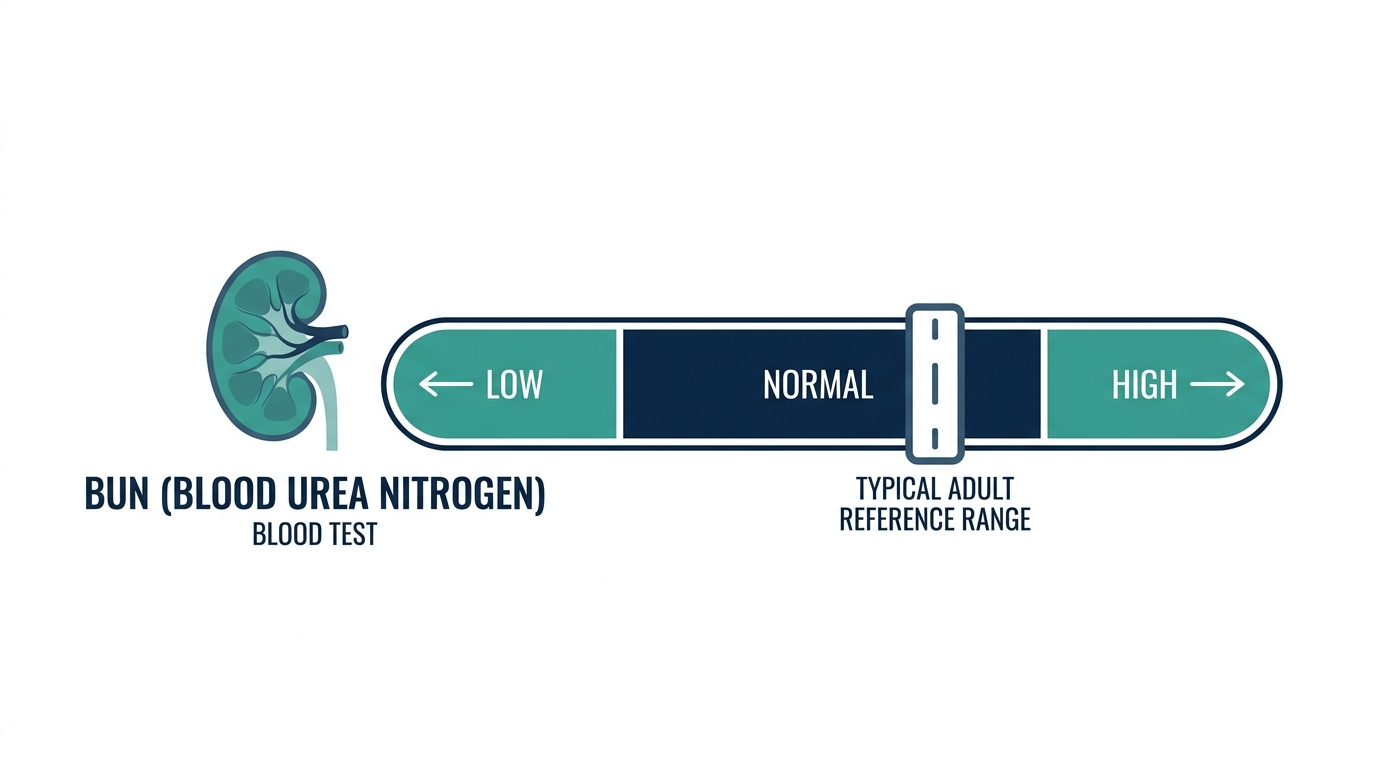
For most adults, a normal BUN is about 7 to 20 mg/dL, so a value above that range is considered high (MedlinePlus). The exact cutoff varies by laboratory, age, and sex, and older adults often sit at the upper end normally. BUN alone rarely tells the full story. Clinicians read it next to creatinine and the calculated BUN-to-creatinine ratio. A normal ratio runs about 10:1 to 20:1, and a ratio above 20:1 typically signals a prerenal cause such as dehydration or reduced blood flow rather than kidney damage itself (StatPearls, NCBI). A very high protein diet, above roughly 180 to 200 g per day, can push BUN into the mid-20s even with perfectly healthy kidneys, which is why context matters before anyone panics about one number.
Optimal versus standard ranges, and what the ratio adds
The 7 to 20 mg/dL range is a population band, not a personal target, and BUN wanders inside it for reasons that have nothing to do with kidney health. Older adults tend to sit higher, people on very low-protein diets sit lower, and the same person can read 12 one week and 19 the next depending on how much they drank and ate. That normal variability is why a single figure near the top of the range is weak evidence of anything on its own.
The number that turns BUN into a useful test is the BUN-to-creatinine ratio. Creatinine comes from muscle and is filtered by the kidney without much reabsorption, so it barely responds to diet or fluids. BUN, by contrast, is reabsorbed along with water when the body is trying to hold onto fluid. So when the ratio climbs above 20:1, the pattern points to a prerenal cause, meaning dehydration, blood loss, or reduced blood flow to the kidney, rather than kidney damage itself. A ratio in the normal 10:1 to 15:1 band with a high BUN points more toward the kidney tissue. A low ratio can appear with a low-protein diet or with liver disease, since a struggling liver makes less urea. Reading BUN and creatinine as a pair, not one at a time, is the whole skill here.
Why lower it?
The simplest way to actually get this done
Superpower is a full-body lab membership that runs 100+ biomarkers, has each result reviewed by a doctor, and tracks your numbers year over year (about $199/year). It is what we point readers to when they would rather get one clean, complete draw than chase single tests one at a time. Here is superpower reviewed in full.
You lower BUN mainly to fix the underlying cause, not to chase the number itself, because BUN is a marker rather than a disease. A persistently elevated BUN above 20 mg/dL can reflect dehydration, a high protein load, gastrointestinal bleeding, heart failure, or reduced kidney function, and each has a different fix (Cleveland Clinic). When urea builds up to very high levels in advanced kidney disease, it contributes to uremia, which causes fatigue, nausea, poor appetite, and confusion. A low-protein diet of 0.6 to 0.8 g per kg per day partly suppresses the nitrogen metabolites that drive these uremic symptoms (KDOQI 2020). The practical reason to act is simple. A high BUN is often an early, easily reversible signal that your body needs more fluid or less dietary protein, and catching it early prevents a small problem from being mistaken for a serious one.
What actually raises BUN?
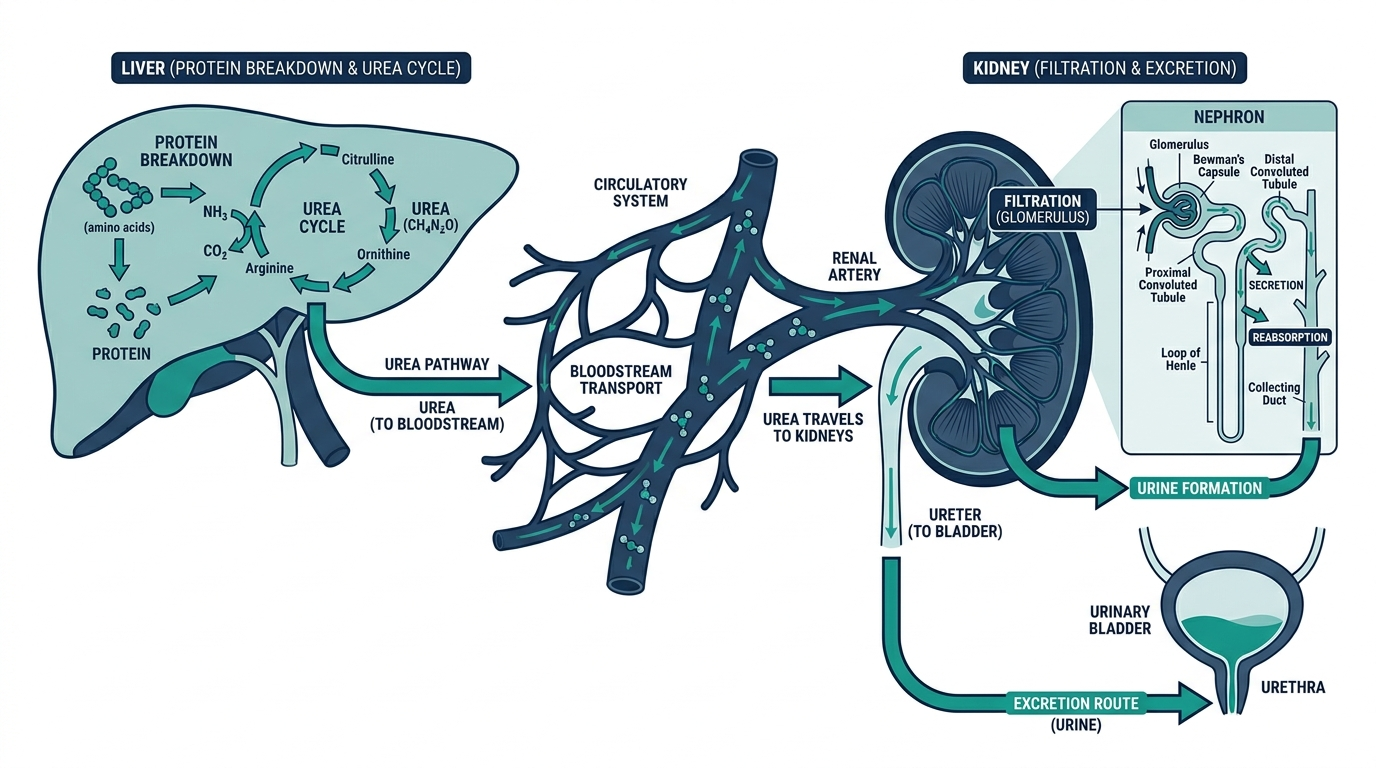
BUN is a snapshot of how much urea is in your blood at one moment, and urea reflects three things at once: how much protein your body is breaking down, how well your liver turns that waste into urea, and how well your kidneys clear it. That is why BUN moves for so many reasons, most of which are not kidney disease. Doctors sort the causes into three buckets.
Before the kidney (prerenal)
This is the most common group and the most reversible. Dehydration concentrates the blood and makes the kidney reabsorb more urea, pushing BUN up while creatinine barely moves. Anything that lowers blood flow to the kidney does the same, including heart failure and significant blood loss. A large protein load, whether from a 200 gram-a-day diet or from digested blood after gastrointestinal bleeding, feeds the liver more raw material for urea. Corticosteroids and a catabolic state, such as serious illness or starvation, break down body protein and lift BUN too.
Inside the kidney (intrinsic) and after it (postrenal)
When the kidney tissue itself is damaged, from chronic kidney disease, an acute injury, or certain medications, urea clearance falls and BUN rises, usually with creatinine climbing alongside it so the ratio stays closer to normal. Postrenal causes are blockages downstream, such as an enlarged prostate, kidney stones, or a tumor that backs urine up and impairs filtration. These are less common but important, because the fix is to relieve the obstruction, not to change the diet.
Why BUN is read next to creatinine
On its own BUN is sensitive but not specific, meaning it flags trouble early but rarely names the cause. Creatinine is the specificity partner. Because creatinine is steady and diet-independent, a high BUN with a normal creatinine usually means fluids or protein, while a high BUN with a high creatinine and a reduced eGFR points at the kidney. This is exactly why lowering a high BUN starts with reading the whole kidney panel rather than reaching for a water bottle and hoping.
Evidence-based ways to lower BUN
The most effective ways to lower BUN are rehydrating, moderating protein, and treating the medical cause, with diet and fluids resolving most mild cases. Because dehydration concentrates blood and increases urea reabsorption, correcting fluid status often drops BUN within a day or two, while protein changes act over weeks (StatPearls, NCBI).
Diet and fluids
- Rehydrate first: When you are dehydrated, your kidneys conserve water and reabsorb more urea, raising BUN while creatinine stays steady. Restoring normal fluid intake reverses this prerenal pattern, and a BUN-to-creatinine ratio over 20:1 is the classic fingerprint that points to fluid as the culprit (StatPearls, NCBI).
- Right-size protein: For people with chronic kidney disease, KDOQI 2020 supports 0.55 to 0.60 g protein per kg per day, or 0.6 to 0.8 g per kg per day for those with diabetes, to cut the nitrogen waste that becomes urea. Healthy adults with normal kidneys do not need this restriction, but trimming an extreme intake from 180 g back toward normal lowers BUN.
- Limit dehydrating habits: Heavy alcohol and very high caffeine intake can worsen fluid loss, so moderating them supports rehydration.
Lifestyle
- Recheck timing of testing: Drawing blood after a hard workout, a high-protein meal, or a fasting period without water can transiently raise BUN. A repeat test under normal conditions often reads lower without any other change.
- Manage blood pressure and blood sugar: High blood pressure and diabetes are the two leading causes of chronic kidney disease in the United States, and controlling both protects the kidney function that keeps urea clearance normal (NIH).
- Review supplements: High-dose protein powders and creatine can nudge BUN up. Pausing them before a recheck clarifies whether they are the cause.
Medical options
- Stop or adjust offending medications: Diuretics, NSAIDs, and some blood pressure drugs can raise BUN by reducing kidney blood flow or causing fluid loss. Only a clinician should change these, but adjustment frequently normalizes the number.
- Treat the source: Gastrointestinal bleeding raises BUN because digested blood is a protein load, and heart failure lowers kidney perfusion. Treating these conditions lowers BUN as a side effect (Cleveland Clinic).
- Address advanced kidney disease: When BUN is very high from reduced kidney function, management may include intravenous fluids, protein guidance from a renal dietitian, and in end-stage disease, dialysis, which physically removes urea from the blood.
What a realistic plan looks like
Consider a 55-year-old who trains hard, eats a high-protein diet with a couple of scoops of protein powder daily, and shows up to a fasting morning draw after a hot workout with a BUN of 26 and a normal creatinine. The ratio is high, the creatinine is clean, and there are no symptoms. This is a classic prerenal, diet-driven picture, not kidney disease. The plan is simple: drink water normally in the days before the next test, hold the extra protein powder for a week, avoid a hard workout the night before, and retest. The number usually settles back toward the range on its own. Contrast that with someone whose BUN and creatinine are both high and whose eGFR is low. That person does not need diet tinkering, they need a clinician to assess kidney function. Same high BUN, two entirely different responses.
How fast can it change?
A BUN driven by dehydration can fall within 24 to 48 hours of restoring fluids, because rehydration quickly reverses the urea reabsorption that caused the spike (StatPearls, NCBI). Protein-related changes are slower and show up over one to several weeks, since the effect depends on the steady daily load of nitrogen your body processes into urea. By contrast, a BUN elevated by chronic kidney disease changes only as fast as the underlying kidney function and treatment allow, which is why a single high reading is usually rechecked rather than acted on dramatically. The key takeaway is that fluids work fast, diet works gradually, and disease-driven BUN tracks the disease. If your number does not improve after correcting hydration and protein, that pattern itself is useful information for your clinician.
What can throw off a BUN result
Because BUN responds to diet and fluids, several ordinary things can move it on the day of the draw. A high-protein meal or protein supplement the day before can raise it. A hard workout and mild dehydration can push it up. Corticosteroid medications and, less obviously, digested blood from a nosebleed or gastrointestinal bleed act as a protein load and lift BUN. On the other side, a low-protein diet, overhydration, and advanced liver disease can push it artificially low. Fasting for a panel without drinking water can also nudge it up. For all these reasons, one isolated BUN is best repeated under normal eating, drinking, and rest conditions before anyone reads too much into it.
When do you need medication or a doctor?
See a clinician if your BUN stays above 20 mg/dL on a repeat test, if creatinine is also high, or if your eGFR is reduced, because these together suggest the issue is kidney function rather than diet or fluids (Cleveland Clinic). BUN is most meaningful when read alongside creatinine, eGFR, and the BUN-to-creatinine ratio, so self-treating from one number is risky. Seek prompt care if a high BUN comes with warning signs of uremia or serious illness, including persistent nausea or vomiting, swelling in the legs or face, very little urine output, confusion, or signs of gastrointestinal bleeding such as black stools. Do not start or stop any prescription medication, including diuretics or NSAIDs, on your own to lower BUN. Adjusting these drugs requires a clinician who can weigh your full picture, including blood pressure, heart, and kidney status.
Turn what you just learned into action.
Superpower lets you test 100+ biomarkers from home, then re-check them over time so you can actually see progress, physician-reviewed at every step.
Frequently asked questions
Does drinking water lower BUN?
Yes, when the high BUN is caused by dehydration. Rehydrating reverses the urea reabsorption that concentrated blood causes, and BUN can drop within 24 to 48 hours (StatPearls, NCBI). Water will not lower a BUN that is high from kidney disease or a heavy protein load.
What is a dangerously high BUN level?
There is no single danger threshold, but very high BUN often appears in advanced kidney failure and may cause uremic symptoms like nausea and confusion. The value matters most alongside creatinine and eGFR, so a clinician should interpret any markedly elevated result.
Can a high protein diet raise BUN?
Yes. More protein means more amino acid breakdown and more urea. A very high intake above roughly 180 to 200 g per day can raise BUN into the mid-20s even with normal kidneys and good hydration. Trimming protein lowers it over a few weeks.
How long does it take to lower BUN?
It depends on the cause. Dehydration-driven BUN can fall within 24 to 48 hours of rehydrating. Protein-related changes take one to several weeks. BUN from chronic kidney disease changes only as the underlying condition is treated.
Is a BUN of 25 something to worry about?
A BUN of 25 mg/dL is mildly above the typical 7 to 20 range and is often explained by dehydration, a high-protein meal, or recent exercise. Recheck under normal conditions and review it with creatinine and eGFR. Persistent elevation deserves a clinician’s review.
What is the difference between BUN and creatinine?
Both are waste products the kidneys clear, but they behave differently. BUN comes from protein breakdown, is made in the liver, and is partly reabsorbed with water, so it swings with diet and hydration. Creatinine comes from muscle, is filtered steadily, and barely responds to what you eat or drink. That is why creatinine is the better standalone measure of kidney function, while BUN adds context, especially through the BUN-to-creatinine ratio.
Does a high BUN mean I have kidney disease?
Not by itself. The most common reasons for a mildly high BUN are dehydration and a high-protein diet, neither of which is kidney disease. It becomes more concerning when creatinine is also high and eGFR is reduced, which together suggest the kidney tissue is involved. A single high BUN with normal creatinine is usually reassuring, but persistent elevation should be reviewed by a clinician.
Should I fast before a BUN test?
BUN itself does not require fasting, but it is usually part of a metabolic panel that may need it, so follow your lab’s instructions. If you do fast, still sip water unless told otherwise, because arriving dehydrated can raise BUN and make the result look worse than your kidneys actually are.
Sources
- MedlinePlus, BUN (Blood Urea Nitrogen) Medical Test
- Cleveland Clinic, Blood Urea Nitrogen (BUN) Test
- NCBI Bookshelf, BUN and Creatinine, Clinical Methods
- StatPearls, Prerenal Kidney Failure, NCBI Bookshelf
- American Journal of Kidney Diseases, KDOQI Clinical Practice Guideline for Nutrition in CKD 2020 Update
- NIH NIDDK, Causes of Chronic Kidney Disease
This article is for general educational purposes and is not medical advice. It cannot diagnose or treat you and does not replace your clinician. Always discuss your lab results and any health decisions with a qualified healthcare professional.
Related: compare GLP-1 telehealth options.
Vital Signs Today may earn a commission if you buy through links on this page. It does not affect our editorial assessments.