
- For most healthy adults, normal total bilirubin runs up to about 1.2 mg/dL, and the most effective way to lower a mildly raised level is to fix the trigger, meaning rehydrate, eat regularly instead of fasting, cut back alcohol, and treat any underlying liver or blood condition.
- Bilirubin that rises only because of dehydration, fasting, illness, or hard exercise (the classic pattern in Gilbert syndrome, which affects roughly 3 to 7 percent of people) usually returns toward normal within a few days once the trigger is removed, so no drug is needed.
- You need a doctor, not a home fix, when bilirubin climbs above 2.5 to 3 mg/dL with visible yellowing of the eyes or skin, or comes with dark urine, pale stools, or belly pain, because that points to liver disease or a blocked bile duct that needs medical treatment.
High bilirubin is a symptom, not a disease, so “lowering” it means finding and fixing whatever is pushing it up. For a mild, harmless rise the fix is usually about hydration, food, and alcohol. For a high or rising level it is about diagnosing the liver, bile ducts, or red blood cells. This guide separates the two so you know which one you are dealing with.
Part of our Liver Function Tests guide.
A mildly raised bilirubin usually has a simple trigger, so what’s actually behind yours? One at-home Superpower draw checks 100+ biomarkers, physician-reviewed.
What counts as high bilirubin?
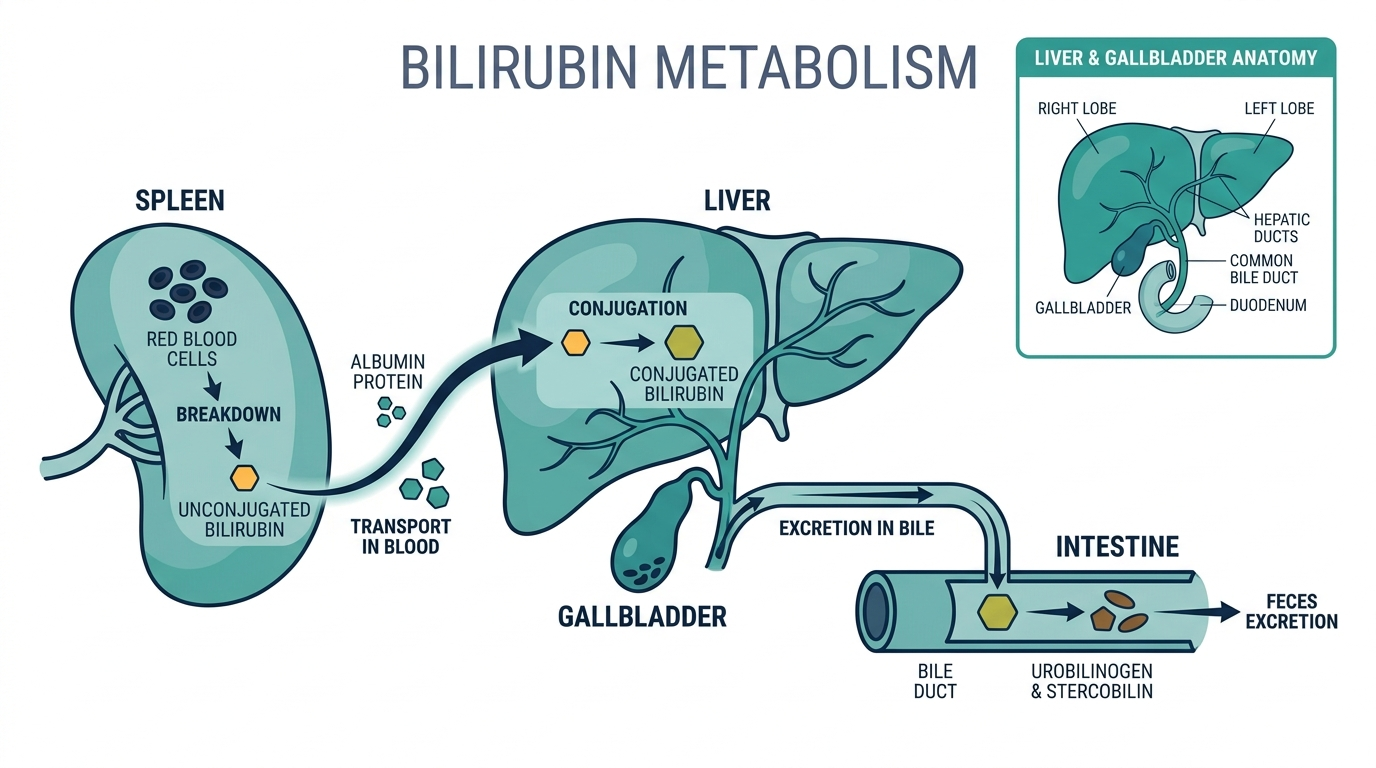
In adults, total bilirubin is generally considered high above about 1.2 mg/dL, the usual upper limit of normal cited by the Cleveland Clinic, with normal total bilirubin spanning roughly 0.2 to 1.2 mg/dL. Direct (conjugated) bilirubin is normally under 0.3 mg/dL. Reference ranges vary slightly by lab, so always read the range printed next to your own result.
Numbers alone do not tell the whole story. A reading of 1.4 mg/dL in an otherwise well person often means very little, while the same number with symptoms can matter. Two thresholds are worth memorizing:
- 2 to 2.5 mg/dL: jaundice may first become visible in the whites of the eyes (scleral icterus), often the earliest sign, per the Merck Manual.
- 2.5 to 3 mg/dL: yellowing of the skin usually becomes obvious, which is why hyperbilirubinemia is often defined around this range.
Doctors also care whether the rise is indirect (unconjugated) bilirubin, which points toward red blood cell breakdown or Gilbert syndrome, or direct (conjugated) bilirubin, which points toward liver cell damage or a bile duct problem.
Reading the split: what direct and indirect actually tell you
When a total bilirubin comes back high, the next question a good clinician asks is which half is raised, because the two fractions point in opposite directions. Most labs report total bilirubin and direct (conjugated) bilirubin, and the indirect (unconjugated) portion is simply the total minus the direct. That subtraction is where the clue lives.
If the rise is mostly indirect, the liver is doing its job but is either handed too much pigment to process or is slightly slow at the final conjugation step. That pattern fits Gilbert syndrome and the various forms of red blood cell breakdown. If the rise is mostly direct, the liver has already processed the bilirubin but cannot get it out, which points at liver cell injury or a bile duct that is backed up. As a rough rule of thumb, a direct fraction under about 20 percent of the total leans unconjugated, while a direct fraction above roughly half leans conjugated. Your lab will not always calculate this for you, so it is worth doing the arithmetic yourself and asking your clinician to interpret it.
- Mostly indirect, feels well: often Gilbert syndrome or a mild, self-limited trigger.
- Mostly indirect, with anemia or fatigue: ask about hemolysis, where red cells break down too fast.
- Mostly direct: the liver or bile ducts need looking at, and this is the pattern that most often needs imaging and follow-up bloods.
Why lower it?
The simplest way to actually get this done
Superpower is a full-body lab membership that runs 100+ biomarkers, has each result reviewed by a doctor, and tracks your numbers year over year (about $199/year). It is what we point readers to when they would rather get one clean, complete draw than chase single tests one at a time. Here is superpower reviewed in full.
In adults, a mildly raised bilirubin is usually harmless on its own, but it can be a warning flag for a problem worth catching early, so the real goal is to address the cause rather than the number. Bilirubin is the yellow pigment left over when old red blood cells are recycled, and the liver normally clears it. A persistent rise can signal liver inflammation, a blocked bile duct, or excessive red cell destruction.
The danger level depends on who you are. In healthy adults with Gilbert syndrome, levels stay mild, typically under 5 mg/dL, and cause no harm, according to StatPearls. In newborns the calculus is different, because very high bilirubin can cross into the brain and cause kernicterus, which is why infant jaundice is monitored so closely. This article focuses on adults. Treat your number as a prompt to ask why, not as something to chase down with supplements.
What is actually pushing your bilirubin up?
Because bilirubin travels a set path, from old red cells, through the liver, into bile, and out through the gut, the causes of a high level sort neatly into three stations along that path. Knowing which station is involved tells you whether you are dealing with a harmless trigger or something that needs a scan.
Too much being made (pre-hepatic)
Here the liver is healthy but overwhelmed. Anything that speeds up red blood cell destruction floods the system with unconjugated bilirubin faster than the liver can conjugate it. Causes include inherited conditions such as sickle cell disease and hereditary spherocytosis, autoimmune hemolysis, large bruises or internal bleeds that the body is reabsorbing, and reactions to certain drugs. The tell is that the extra bilirubin is almost entirely indirect, and it often travels with a low hemoglobin, a raised reticulocyte count, and a low haptoglobin on related blood tests.
The liver cannot process it (hepatic)
This is the middle station, where liver cells themselves are the bottleneck. Gilbert syndrome sits at the mild end, a common and benign shortfall of the conjugating enzyme that shows up only when you fast, get sick, or get dehydrated. At the more serious end sit viral hepatitis, alcohol-related and fatty liver disease, and drug-induced liver injury, all of which damage the cells that move bilirubin through. When liver cells are inflamed, both direct and indirect can rise, and the enzymes ALT and AST usually climb alongside.
Bile cannot get out (post-hepatic)
The final station is plumbing. Once bilirubin is conjugated it has to drain through the bile ducts into the intestine, and if that route is blocked the processed pigment backs up into the blood. Gallstones lodged in a duct are the classic cause, along with strictures, inflammation, and tumors of the pancreas or bile ducts. This pattern raises direct bilirubin, often pushes up the enzymes ALP and GGT, and produces the telltale combination of dark urine and pale stools because bile is not reaching the gut. Obstruction is the category you least want to sit on, so a direct-predominant rise generally earns prompt imaging.
Evidence-based ways to lower bilirubin
The single most effective lever for a mild, non-disease rise is removing the trigger, because in Gilbert syndrome and similar patterns, fasting, dehydration, alcohol, stress, exertion, and infection are documented triggers that push unconjugated bilirubin up, per StatPearls. There is no proven food or pill that “detoxes” bilirubin directly. What works is supporting the liver and removing the load.
Diet and hydration
Eating regularly and staying well hydrated is the most reliable diet step, because skipping meals is one of the best-documented triggers of bilirubin spikes in Gilbert syndrome, where a fasting study can raise levels measurably within 24 to 48 hours. Practical steps:
- Do not fast or crash diet: eat at regular intervals rather than going long stretches without food.
- Drink enough fluid: dehydration concentrates bilirubin and is a known trigger.
- Limit alcohol: alcohol both triggers spikes and, over time, damages liver cells.
- Eat a balanced, liver-friendly pattern: plenty of vegetables, fruit, whole grains, and adequate protein, which supports general liver health even though no single food lowers bilirubin by itself.
Lifestyle
The highest-value lifestyle change is cutting alcohol and avoiding crash dieting, because both are direct, repeatable triggers, and reducing alcohol also lowers long-term risk of liver disease that raises conjugated bilirubin. Beyond that, keep exercise moderate rather than extreme, since very intense exertion is a listed trigger, and manage illness early because infections can drive levels up. Review your medication list with a pharmacist or doctor, since some drugs are cleared through the same liver pathway (glucuronidation) that handles bilirubin and can worsen a rise.
Medicines and supplements that can mislead
Some substances raise bilirubin without any liver disease at all, and knowing them prevents a needless scare. Certain drugs compete for the same liver pathways, for example some HIV medicines such as atazanavir and the antibiotic rifampin can nudge unconjugated bilirubin up on their own. Anabolic steroids and very high-dose vitamin A can stress the liver over time. On the supplement side, so-called liver detox and cleanse products are not regulated the way medicines are, and some herbal products have been linked to genuine liver injury, which is the opposite of what a worried person is hoping for. The safe move is to bring your full list, prescription, over the counter, and supplement, to your clinician or pharmacist before adding anything new to chase a number down.
Medical options
Medical treatment targets the underlying cause, not the bilirubin number, so the right option depends entirely on the diagnosis. Examples your clinician may pursue:
- Bile duct obstruction: a blocked duct (from gallstones or other causes) may need a procedure such as ERCP or surgery to restore bile flow.
- Liver disease: hepatitis or other liver conditions are treated directly, for example antiviral therapy for viral hepatitis.
- Hemolysis: if red blood cells are breaking down too fast, the cause of that is treated.
- Gilbert syndrome: generally needs no treatment because it is benign, though in rare severe jaundice an enzyme inducer such as phenobarbital can be used, per StatPearls.
How does bilirubin fit with your other liver numbers?
Bilirubin is rarely read alone. It sits inside the liver panel next to ALT, AST, ALP, GGT, and albumin, and the shape of the whole panel is far more informative than any single value. This is why your clinician looks at the pattern rather than reacting to one raised line.
- Bilirubin up, ALT and AST up: points toward liver cell injury such as hepatitis or fatty liver, because those enzymes leak from damaged liver cells.
- Bilirubin up, ALP and GGT up: points toward a bile flow or duct problem, the cholestatic pattern, since those two rise when drainage is blocked.
- Bilirubin up, everything else normal: the reassuring pattern that fits Gilbert syndrome, especially when only the indirect fraction is raised and you feel well.
- Bilirubin up, albumin low or clotting slow: a sign the liver’s manufacturing work is affected, which is more concerning and warrants prompt review.
The practical takeaway is simple. Before you assume a raised bilirubin means something dire, look at what its neighbors are doing. An isolated, indirect rise in a well person is a very different animal from a bilirubin that climbs while ALP, GGT, and the clotting time all drift the wrong way.
How fast can it change?
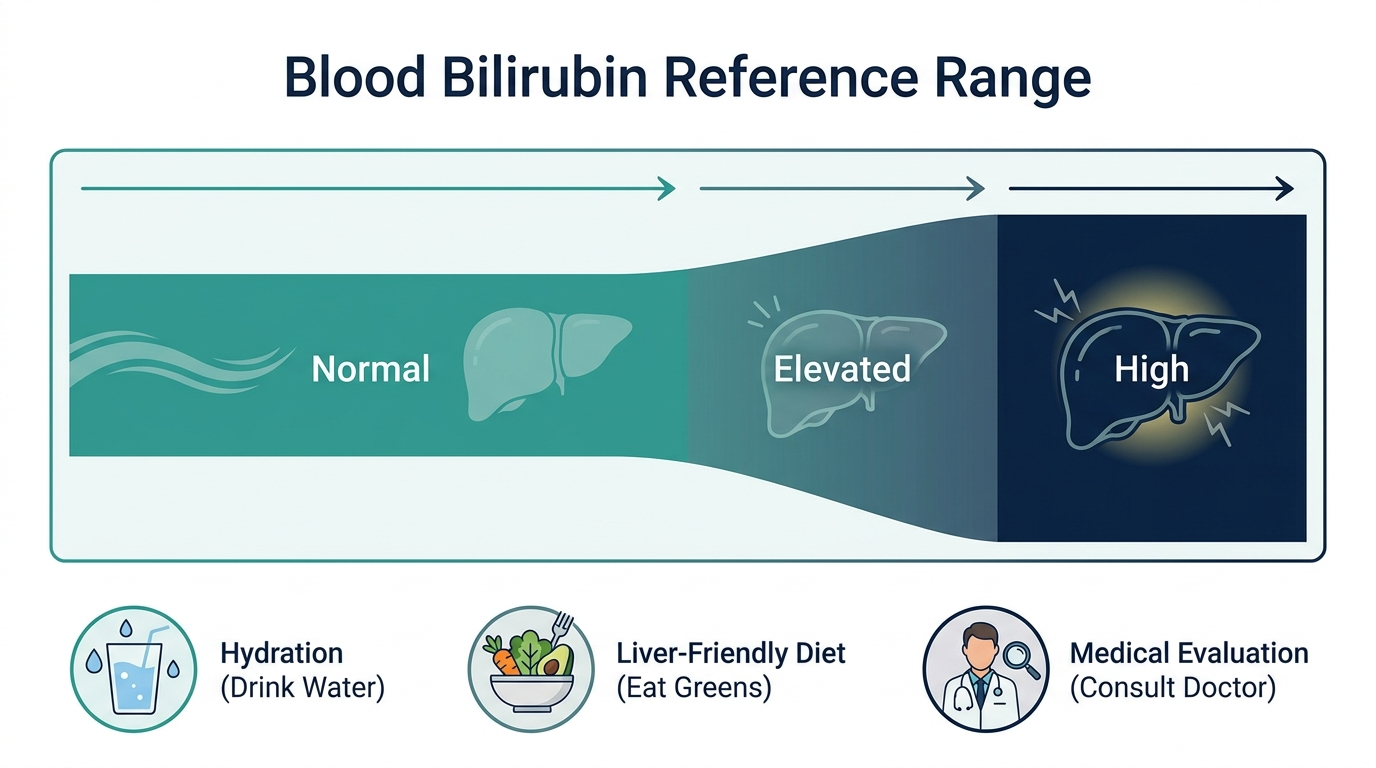
A bilirubin rise driven by a temporary trigger can fall back toward normal within a few days, because once you rehydrate and resume eating, the fasting and dehydration effects reverse quickly, often inside 24 to 48 hours in Gilbert syndrome. That is the encouraging case.
A rise driven by disease changes on the timeline of the disease, not your habits. After a bile duct is unblocked, levels can fall over days to a couple of weeks. With liver inflammation, bilirubin tracks recovery of the liver, which can take weeks to months. So the honest answer is: if removing triggers does not improve your number within roughly a week, or if it keeps climbing, that itself is information, and it means the cause is not a lifestyle trigger.
A realistic example
Picture a healthy 29-year-old who gives blood before a minor procedure after skipping breakfast and lunch, having fought a cold all week. Total bilirubin comes back at 1.9 mg/dL, almost all of it indirect, and every other liver number is normal. He feels fine and has no yellowing, dark urine, or pale stools. This is the textbook Gilbert syndrome picture, unmasked by fasting and a viral illness. The right move is not a liver cleanse. It is to eat and drink normally, retest in a couple of weeks when he is well and fed, and expect the number to settle. If it does, the story is complete.
Now change one detail. The same result, but the direct fraction is more than half the total, his urine has turned dark, and his upper right abdomen aches. That is a different story entirely. The direct-predominant pattern plus dark urine points at a bile flow problem, and this person needs to be seen quickly for imaging rather than reassured. Same headline number, opposite meaning, which is exactly why the fractions and the symptoms matter more than the total.
When do you need medication or a doctor?
See a doctor when bilirubin is high enough to cause visible jaundice, roughly above 2.5 to 3 mg/dL, or when any raised level comes with warning symptoms, because those patterns point to liver or bile duct disease that needs medical evaluation rather than home measures. Seek care promptly if you have:
- Yellowing of the eyes or skin (scleral icterus often shows first).
- Dark urine or pale, clay-colored stools, which suggest a bile flow problem.
- Belly pain, especially upper right, fever, nausea, or vomiting.
- Unexplained fatigue, easy bruising, or confusion, which can signal serious liver impairment.
Do not start supplements, “liver cleanses,” or medications to push the number down on your own. Bilirubin is a clue your clinician uses to find the cause, and treating the cause is what actually lowers it safely.
Turn what you just learned into action.
Superpower lets you test 100+ biomarkers from home, then re-check them over time so you can actually see progress, physician-reviewed at every step.
Frequently asked questions
Can drinking water lower bilirubin?
Indirectly, yes, when the rise is partly from dehydration. Dehydration is a documented trigger for bilirubin spikes, especially in Gilbert syndrome, so staying well hydrated can help a mild reading drift back toward normal. Water will not fix bilirubin caused by liver disease or a blocked bile duct.
Which foods help lower bilirubin?
No single food lowers bilirubin directly. The most useful step is eating regularly instead of fasting, since skipping meals is a known trigger. A balanced diet rich in vegetables, fruit, whole grains, and adequate protein supports overall liver health, while limiting alcohol removes a repeat trigger.
Is high bilirubin always serious?
No. A mild rise, especially of indirect bilirubin in someone who feels well, is often harmless and can reflect Gilbert syndrome, which affects roughly 3 to 7 percent of people. It becomes concerning when it is high enough to cause jaundice or comes with dark urine, pale stools, or pain.
How long does it take for bilirubin to return to normal?
It depends on the cause. A trigger-driven rise often falls within a few days once you rehydrate and eat normally. A rise from liver inflammation or a blocked duct follows the disease, taking days to weeks after treatment. If it does not improve within about a week, see a doctor.
Can exercise lower bilirubin?
Moderate activity is fine and supports liver health, but very intense exertion is actually a listed trigger that can raise unconjugated bilirubin temporarily, per StatPearls. Keep exercise moderate, stay hydrated, and do not combine hard training with fasting if your bilirubin runs high.
Does Gilbert syndrome need any treatment?
No. Gilbert syndrome is benign and needs no treatment in the vast majority of people, according to StatPearls. It is worth knowing you have it, mainly so a mild, trigger-driven bilirubin rise does not get mistaken for liver disease later, and so you and your clinician can factor it in when reading future panels. The one practical habit that helps is not fasting hard, since skipping meals is the most reliable way to nudge the number up.
Can a bilirubin of 1.5 be ignored?
Often, but not blindly. A total bilirubin of 1.5 mg/dL in someone who feels well, has no jaundice, and has normal ALT, AST, ALP, and GGT is usually a minor, indirect rise with no clinical weight. What changes the answer is context: if the direct fraction is high, if other liver numbers are off, or if you have symptoms, then even a modest number deserves follow-up. The value is a starting point for a conversation, not a verdict on its own.
Do I need to fast before a bilirubin test?
Usually the bilirubin measurement itself does not require fasting, but it is often drawn as part of a wider panel that does, such as a metabolic or lipid panel. Here is the twist worth knowing: prolonged fasting can actually raise unconjugated bilirubin, especially in Gilbert syndrome, so an unusually long overnight fast before the draw may push your reading slightly higher than your everyday baseline. Follow your lab’s fasting instructions, but if a fasting draw returns a mildly high bilirubin and you feel well, that is worth mentioning to your clinician.
Sources
- Cleveland Clinic, Bilirubin Test
- StatPearls (NCBI Bookshelf), Gilbert Syndrome
- StatPearls (NCBI Bookshelf), Hyperbilirubinemia
- Merck Manual Professional Edition, Jaundice
- Mayo Clinic, Bilirubin blood test
- MedlinePlus Genetics, Gilbert syndrome
This article is for general educational purposes and is not medical advice. It cannot diagnose or treat you and does not replace your clinician. Always discuss your lab results and any health decisions with a qualified healthcare professional.
Related: which GLP-1 telehealth service fits you.
Vital Signs Today may earn a commission if you buy through links on this page. It does not affect our editorial assessments.