Quick answer: How long does a drug test take depends on whether it is an instant test or a lab test. An instant (point-of-care) urine cup reads negative results in about 5 to 10 minutes on the spot. A lab-based test usually returns a clean (negative) result in 1 to 2 business days, but a non-negative sample gets sent for confirmation, which pushes the final result to roughly 3 to 5 business days. Hair tests run longer, often 4 to 7 business days, because the lab has to wash and process the sample.
That two-track system is the single thing most people miss. The same urine sample can give you an answer in ten minutes or in five days, and which one you get is decided the moment a line does or does not appear on the screening device. Below is exactly what happens at each stage, why a clean test clears so much faster than a flagged one, what GC-MS confirmation actually does, how an MRO review can add a day, and how to get your result once it is done.
How long does a drug test take, step by step?
The honest answer to how long does a drug test take is: minutes for a clear negative, days for anything that needs a second look. Here is the full timeline by method, assuming nothing gets flagged.
| Test type | Negative result | If it needs confirmation |
|---|---|---|
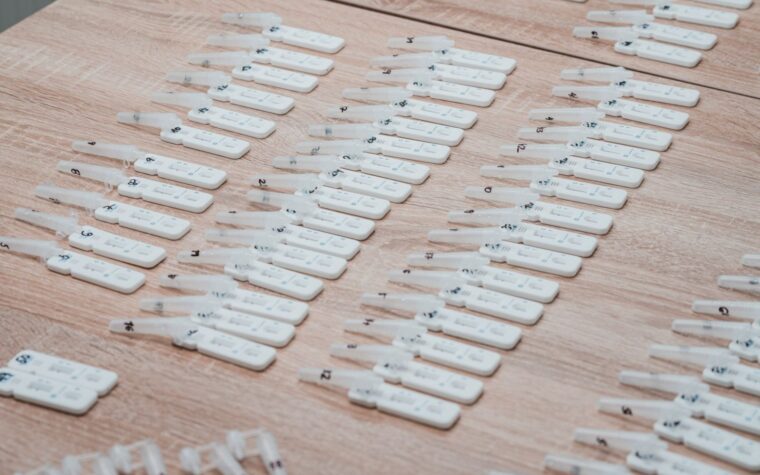
| Instant urine cup (point-of-care) | 5 to 10 minutes on site | Sent to lab, 2 to 4 business days |
| Lab urine (no instant screen) | 1 to 2 business days | 3 to 5 business days |
| Oral fluid (saliva) | Minutes (instant) or 1 to 2 days (lab) | 2 to 4 business days |
| Hair follicle | 4 to 7 business days | Add 1 to 3 business days |
| Breath alcohol | Seconds to a couple of minutes | Not typically reflexed |
| Blood (rare, clinical or legal) | 1 to 3 business days | 3 to 7 business days |
One detail labs do not advertise: the clock usually starts when the sample arrives at the lab, not when you pee in the cup. If you test on a Friday afternoon, your sample may not log in until Monday, so a “2 day” turnaround can feel like four. Holidays stretch it further. When someone tells you results are “pending” three days in, the sample is almost always sitting in a confirmation queue, not lost. So when you ask how long does a drug test take, you are really asking how many steps your particular sample triggers: a clean sample collected before the courier cutoff on a Tuesday can be reported Wednesday, while the same sample collected Friday at 4 pm, flagged for confirmation over a holiday weekend, can take a full week.
What actually adds days to your turnaround
Turnaround is a base time plus a stack of possible delays. Knowing which apply to you lets you predict the real wait instead of trusting the optimistic figure a clinic quotes.
| Factor | Effect on turnaround |
|---|---|
| Clean instant screen | Minutes, no lab time |
| Sample sent to lab (clean) | 1 to 2 business days |
| Non-negative needs GC-MS | Add 1 to 3 days |
| MRO review (regulated) | Add 1 to 2 days, more if you miss the call |
| Weekend or holiday | Add 1 to 3 calendar days |
| Diluted or invalid sample | Recollection restarts the clock |
| Hair instead of urine | Add 2 to 4 days for prep |
Stack the bad cases and a nominal “two day” test becomes a week. A non-negative hair test collected on a Friday before a holiday, on a regulated program with MRO review, can realistically take 8 to 10 business days. None of that is a malfunction. It is the sum of normal steps.
Why do some results come back in minutes and others take days?
The simplest way to actually get this done
Superpower is a full-body lab membership that runs 100+ biomarkers, has each result reviewed by a doctor, and tracks your numbers year over year (about $199/year). It is what we point readers to when they would rather get one clean, complete draw than chase single tests one at a time. Here is superpower reviewed in full.
Because there are two completely different chemistries involved. The fast step is an immunoassay screen, and the slow step is confirmation by mass spectrometry. Understanding this split explains nearly every drug test delay you will ever encounter.
The instant cup and the first pass at the lab both use immunoassay. It is fast and cheap, but it is a screening tool, not a verdict. It tells you whether a class of substance is likely present above a cutoff. The problem is that immunoassays cross-react. Poppy seeds, some cold medicines, certain antidepressants, and even high-dose ibuprofen can nudge a screen toward non-negative. So a positive screen is treated as “presumptive,” never final.
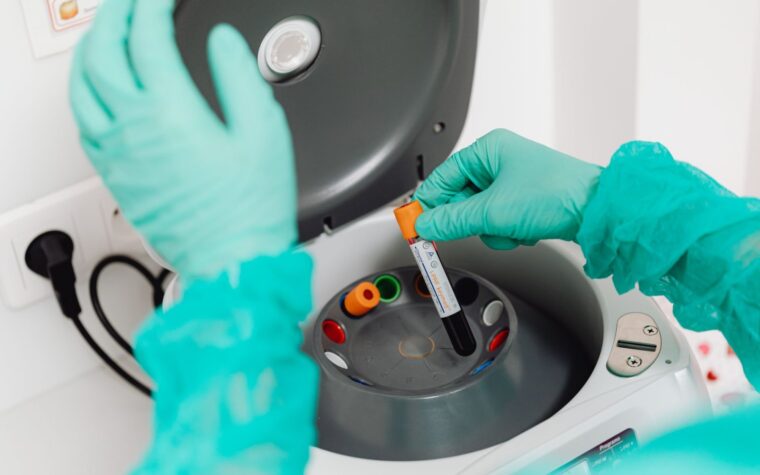
When a screen comes back non-negative, the lab reflexes the same sample to a confirmation test, almost always GC-MS or LC-MS/MS (gas or liquid chromatography paired with mass spectrometry). That step identifies the exact molecule and its quantity, which is what clears out false positives. It is also slower and more expensive, which is why your bill and your wait both jump only when something gets flagged. A clean sample never touches that machine, so it clears in a day or two.
Screening versus confirmation, side by side
The two stages do different jobs, and confusing them is where most misunderstandings start. Here is how they compare.
| Feature | Immunoassay screen | GC-MS / LC-MS/MS confirmation |
|---|---|---|
| Speed | Minutes to same day | Hours of processing, 1 to 3 days reported |
| What it answers | Is a drug class likely present? | Exactly which molecule, and how much? |
| False positives | Possible (cross-reactivity) | Essentially ruled out |
| Cost | Low | Higher |
| Legal standing | Presumptive only | Definitive, court-defensible |
What triggers a confirmation test?
- Any analyte reading at or above the screening cutoff.
- A diluted or out-of-range sample (low creatinine, off temperature, abnormal pH).
- Signs of tampering or an adulterant.
- A regulated test (DOT, federal) where confirmation is mandatory for every non-negative.
This is also why prep myths matter less than people think. If you want the real picture on what does and does not move the needle, read Drug Test Prep: What Actually Affects Results (and Myths) before you waste money on detox drinks.
What GC-MS actually does to your sample
People hear “confirmation” and picture someone simply running the cup test again. That is not what happens. In mass spectrometry, the sample is vaporized and its molecules are separated by chromatography, then each one is broken into charged fragments and weighed by mass. Every drug produces a unique fragmentation fingerprint, so the machine is not guessing at a class anymore, it is reading a specific molecular signature. That is why a confirmed positive holds up in court and a screen does not. It is also why confirmation cannot be rushed: the instrument run, the calibration, and the analyst review all take real time, and labs batch these runs rather than firing the machine for a single tube.
A non-negative screen is not bad news on its own, and confirmation often works in your favor. Because GC-MS reads the exact molecule, it can show that what tripped the screen was a harmless cross-reactant, like opiates flagged after a poppy-seed bagel, rather than a drug of abuse. A legitimate prescription that cross-reacts gets identified precisely at confirmation and verified by the MRO, which is how many “non-negative” results end up reported as negatives. The slow track is not a punishment. It is the safeguard that keeps an honest person from being labeled positive over a sandwich.
Does occupational health do instant drug tests?
Yes. Most occupational health clinics, urgent care centers, and large pharmacy clinics offer instant (rapid) urine and saliva screens, and they are common for pre-employment and non-regulated workplace testing. You can often walk out with a negative read in well under 30 minutes including check-in.
The catch is what “instant” actually covers. An instant negative is a real, usable result for most non-DOT employers. An instant non-negative is not. The clinic cannot call it a positive on the spot, because regulations and basic fairness require lab confirmation. So if anything flags on the rapid device, your sample goes to the lab and you are back to that 3 to 5 day window. Regulated transportation (DOT) testing is a separate lane: it generally cannot use instant results at all and must go through a certified lab and a Medical Review Officer, which is why those always take longer. If you are deciding where to even get tested, this breakdown of employer, court, and personal testing options covers which settings offer same-day reads.
Worked example: two job applicants, same morning
Picture two people who test at the same urgent care at 9 am Monday for non-DOT pre-employment screens. Applicant A gives a clean sample, the rapid device reads negative in eight minutes, and a job offer is confirmed by Tuesday. Applicant B takes a prescription that cross-reacts, so the device flags non-negative and the sample ships to the lab. GC-MS confirms the prescription compound, an MRO calls Wednesday to verify it, and the report clears as a negative on Thursday. Same clinic, same morning, same eventual outcome, but one waited eight minutes and the other waited three days. Nothing went wrong in the slow case. That is the system working as designed.
Worked example: a DOT driver versus a retail hire
Now compare a DOT commercial driver and a retail cashier tested the same day. The cashier’s non-regulated screen can use an instant device, so a clean read clears in minutes. The driver’s regulated test cannot use instant results at all: it must go to a certified lab, run the federal panel, and pass through a Medical Review Officer even on a clean negative in many programs, so plan for 2 to 4 business days minimum and longer if anything reflexes to confirmation. The lesson: the type of job, not just the type of drug, sets your timeline.
Worked example: the Friday-before-a-holiday trap
You give a clean lab urine sample at 4 pm on the Friday before a Monday holiday. The courier has already made its afternoon run, so your sealed sample sits at the clinic over the weekend. The lab does not accession it until Tuesday and releases the negative Wednesday: a clean result with nothing flagged that still took five calendar days. The same clean sample given Tuesday morning would have reported Wednesday. If timing matters for a start date, test early in the week and early in the day.
How does the Medical Review Officer review add time?
The MRO step is the hidden delay most people never see coming. A Medical Review Officer is a licensed physician who reviews non-negative lab results before they are reported to an employer. Their job is to make sure a positive is not actually a legitimate prescription or a lab error. On regulated tests, every non-negative passes through an MRO, and the MRO will try to reach you by phone to ask whether you have a valid prescription that explains the result.
That outreach is where the calendar stretches. If the MRO cannot reach you, they keep trying, and the report sits unverified until they do. People miss the calls because they come from unfamiliar numbers, then wonder why their “3 day” test is on day six. The physician is checking whether a legitimate prescription or lab error explains the flag, so if you can document a valid prescription for the compound that tripped the screen, the MRO can downgrade a lab positive to a reported negative. None of that happens until you pick up. Going into a regulated test, keep a short list of your medications and pharmacy details on your phone so the call takes two minutes instead of two days of back-and-forth.
Negative versus non-negative: the words that decide your wait
Labs deliberately avoid the word “positive” until confirmation is done, and the vocabulary tells you exactly where your sample is. “Negative” means the screen found nothing above cutoff and you are cleared, usually fast. “Non-negative” means the screen flagged something and the sample is now in confirmation, so expect days, not minutes. “Positive” is only used after GC-MS confirms and, on regulated tests, after the MRO verifies there is no legitimate explanation. “Negative-dilute” or “invalid” means the sample chemistry was off and you may be asked to recollect, which restarts the clock. If your status reads anything other than a flat “negative,” you are on the slow track.
How to check drug test results from US HealthWorks (and similar clinics)
For US HealthWorks (now part of Concentra) and most occupational health providers, you usually do not get the result directly. The clinic releases it to whoever ordered the test. Here is how it actually flows:
- Employer-ordered tests: the result goes to your employer or their third-party administrator first. For non-negatives, a Medical Review Officer (MRO) calls you before anything is reported, to ask about legitimate prescriptions. Your fastest path to the answer is often the MRO call or your hiring contact, not the clinic front desk.
- Personal or self-pay tests: you are the recipient, so ask the clinic for their patient portal or a direct copy. Many use an online portal where you log in with the email used at registration.
- Court or probation tests: results route to the ordering authority, and you typically request a copy through them.
If you are getting blood drawn for a job or a clinic visit anyway, it is often smarter to capture a full baseline at the same time instead of paying for one isolated test now and another later. Here is how a full-body panel compares.
Knowing who receives the result tells you who to ask, which is the fastest way to stop refreshing a portal that will never show your answer. The practical move: at collection, ask who the result is released to and through which portal, register on the spot with the same email and phone the clinic has on file, and on a regulated test treat the MRO call as urgent. Many people lose two or three days because the result was sitting verified while they refreshed the wrong portal.
Common mistakes people make about drug test timing
Most of the frustration around drug test turnaround comes from a handful of avoidable misunderstandings. Here are the ones that trip people up most often.
- Assuming “instant” means instant for everyone. Instant devices give a fast negative, but a flagged sample always reverts to the multi-day lab path. “Instant” describes the negative case only.
- Counting calendar days instead of business days. Labs run on business days. A Friday test routinely behaves like a test you took the following Monday.
- Reading “pending” as “failed.” Pending almost always means confirmation or a recollection is in progress, not that you tested positive. The two are easy to confuse and emotionally very different.
- Ignoring MRO phone calls. On regulated tests, an unanswered MRO call freezes your result. People sit waiting for a portal update that will not come until they pick up the phone.
- Confusing turnaround with detection window. How fast the lab reports has nothing to do with how long a substance stays in your body. These are two separate questions people constantly merge into one.
- Trying to rush a confirmed sample. Once GC-MS is running, the timeline is set by lab batching and analyst review. No amount of calling the front desk speeds up a mass spectrometer.
- Drinking gallons of water to “flush.” Overhydrating often produces a diluted sample that gets flagged as invalid and triggers a recollection, which restarts the clock instead of speeding it up.
Edge cases: uninsured, minors, Medicare, and employer-required tests
The standard timeline assumes a typical adult taking a routine employment or clinical test. Several situations change the math, and they are worth knowing before you book.
Uninsured and self-pay
If you are paying cash, turnaround itself does not change, but how you receive the result does. You are the recipient, so you can usually get the report directly through the clinic portal rather than waiting on an employer. Cash-pay rapid screens at urgent care often hand you a printed negative the same visit. Just confirm before you pay whether the price includes confirmation if the screen flags, because that second test is sometimes billed separately. As a rough guide, a cash-pay rapid urine screen often runs about $35 to $80, while a lab-based panel with possible confirmation can land anywhere from $50 to $150 or more depending on the lab and the panel size.
Minors
For anyone under 18, a parent or guardian generally orders and receives the result, and consent rules vary by state. The lab processing time is identical, but the result delivery routes through the guardian, which can add a step if the teen expected to see it first.
Medicare and clinically ordered tests
When a drug test is ordered as part of medical care, such as monitoring a pain-management prescription, it is a clinical test billed to your plan and lives in your medical record. Turnaround follows the same screen-then-confirm logic, but the result is protected health information and reaches you through your doctor or patient portal rather than an employer. Medicare and most plans cover medically necessary testing, though coverage for the confirmation step can depend on documented medical need.
Employer-required and safety-sensitive roles
Safety-sensitive and federally regulated roles (transportation, aviation, some healthcare and government jobs) almost always require certified-lab testing with MRO review, so plan for the longer end of every range. These programs also tend to use the full federal panel and stricter chain-of-custody, both of which favor accuracy over speed. Random-pool and return-to-duty tests sit firmly on this slower track regardless of how clean the sample is, so keep your prescription documentation current and assume the long end of every range.
Are drug test results protected health information?
Sometimes, and the difference is who ordered the test. This is one of the most misunderstood points in the whole topic.
When a drug test is part of clinical care (your doctor orders it, your health plan pays, it lives in your medical record), the result is protected health information under HIPAA. But a standard employment drug test usually sits outside HIPAA. A pre-employment screen ordered by an employer through a clinic or a third-party administrator is generally treated as employment information, not HIPAA-protected health information, because the lab is acting on the employer’s behalf rather than treating you as a patient. The employer can lawfully receive the result.
That does not mean it is a free-for-all. Other rules apply, including the Americans with Disabilities Act limits on when testing and medical inquiries are allowed, plus state privacy and employment laws that vary widely. Lab and clinic records are still confidential within the lab. The simplest way to think about it: clinical test equals HIPAA, employment test equals employment record. If a result ever affects your health, talk to a clinician about what it means rather than relying on an employer’s paperwork.
Which test should you expect, and how fast will it be?
If you get to choose a setting, or you just want to set your expectations correctly, match your situation to the method most likely to be used.
- Non-regulated pre-employment: usually an instant urine or saliva screen. Expect a same-visit negative, or 3 to 5 business days if anything flags.
- DOT or federally regulated: certified lab plus MRO, no instant option. Plan for 2 to 4 business days minimum, more if confirmation is needed.
- Court, probation, or custody: lab-based with strict chain of custody, often hair or lab urine. Expect several business days, and results route to the ordering authority.
- Clinical or pain-management monitoring: lab urine ordered by your physician, reported through your medical record. Same screen-then-confirm timeline.
- Personal peace of mind: a self-pay instant screen gives the fastest answer you control directly.
The single biggest driver of your wait is not the substance, it is whether your screen comes back clean. A clean sample is fast on almost every method. Anything flagged inherits the multi-day confirmation path no matter how it started.
FAQ
How long does a drug test take if I am applying for a job?
For most non-regulated jobs, a clean instant screen can clear in under an hour at the clinic, and a lab-only test usually clears in 1 to 2 business days. Plan for 3 to 5 business days if anything needs confirmation or if it is a regulated DOT position.
Why is my drug test result still pending after several days?
Almost always because the screen came back non-negative and the sample is in the confirmation queue, or because the sample was diluted or out of range and needs a recollection. Weekends and holidays also pause the lab clock. A long delay is not a verdict by itself.
How long does weed stay detectable compared to test turnaround?
Turnaround time (how fast the lab reports) is different from detection window (how long a substance shows up). Cannabis can stay detectable in urine for days to weeks depending on use, long after a single test would have reported. See how long weed stays in your system for a drug test for the full detection windows.
Can I speed up my drug test result?
Not really, and trying usually backfires. The turnaround is driven by lab logistics and whether confirmation is needed, neither of which you control once the sample is collected. The one thing in your hands is giving a clean, properly collected sample so it never gets flagged for the slow confirmation step. If you are on a regulated test, answering the MRO’s call promptly is the only real way to avoid an extra day or two of delay.
What is the difference between a negative and a non-negative result?
A negative result means the screen found nothing above the cutoff and you are cleared, usually within a business day or two. A non-negative result means the screen flagged something and the sample is being confirmed by GC-MS, so it is not a failure, it is a sample still in process. Only after confirmation, and MRO review on regulated tests, does a result become an official positive.
Does a hair test really take a week?
Often, yes. Hair tests require the lab to wash, dissolve, and process the sample before screening, which is more involved than running a urine cup. A clean hair test commonly reports in 4 to 7 business days, and a flagged one can add several more days for confirmation. Hair also reflects a longer detection window, which is part of why it is chosen for some court and safety-sensitive cases.
Can my employer get my result before I do?
For employer-ordered tests, yes, that is the norm. The result goes to the employer or their third-party administrator, and on a flagged sample the MRO contacts you before the final report is released. For self-pay tests you are the recipient, so you see it first through the clinic. Who ordered the test decides who gets the answer first.
Do at-home drug tests give instant results?
At-home urine and saliva kits work like the instant devices clinics use, so a negative reads in minutes. The same caveat applies though: a non-negative at-home result is only presumptive and should be confirmed by a lab before anyone treats it as definitive. At-home kits are useful for personal peace of mind, but they are not a substitute for a certified, court-defensible lab result.