Quick answer: A Function Health home blood draw sends a licensed mobile phlebotomist to your address to collect your blood sample, usually within a one- to two-hour scheduling window. You book the visit through the Function app after your membership activates, fast for 12 hours beforehand, and the phlebotomist handles everything from the venipuncture to shipping the tubes to a CLIA-certified lab. Results appear in your app within 5 to 10 business days. The service is included in the membership fee, and availability spans most major US metros, though rural areas may require a patient service center visit instead.
How does the Function Health home blood draw actually work?
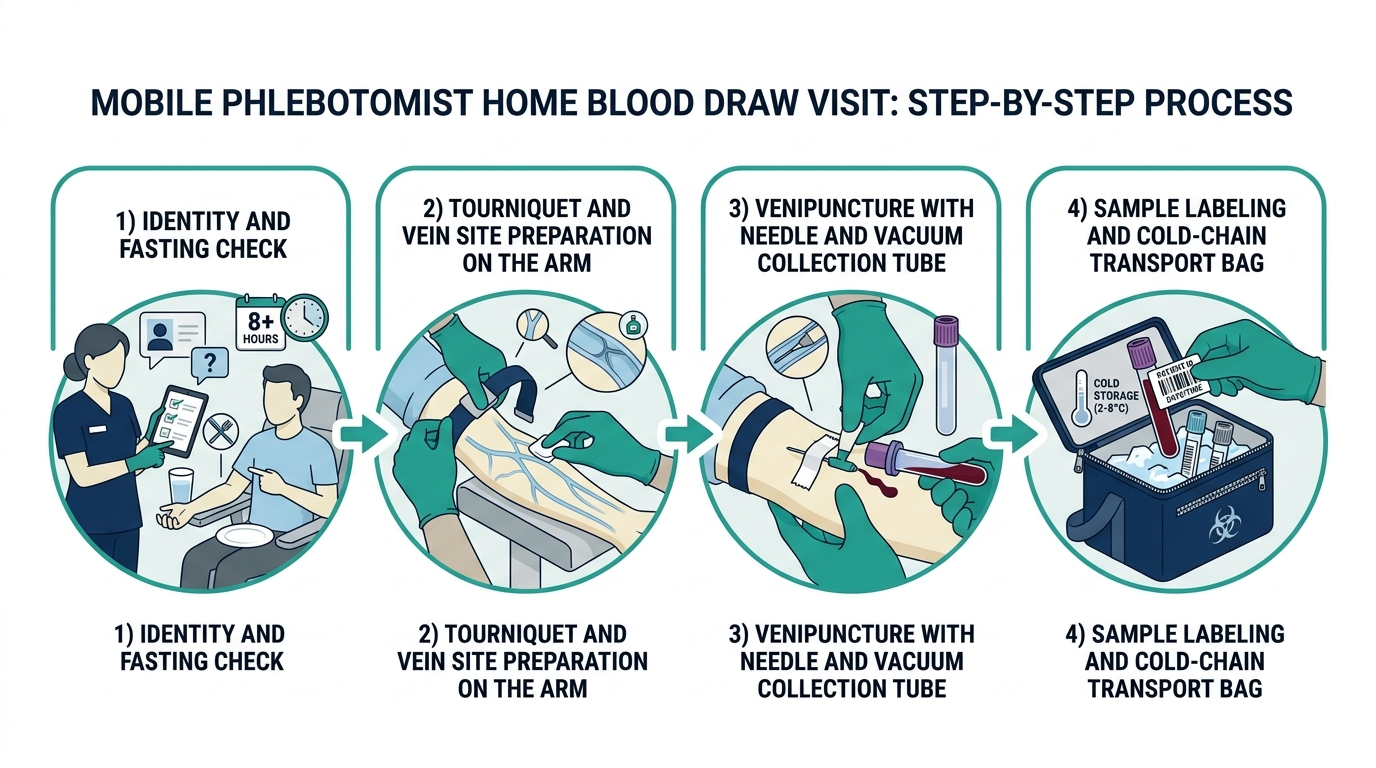
The Function Health at home draw follows a straightforward chain: you request the draw inside the Function app, a mobile phlebotomist is dispatched to your address, they collect your sample, and the tubes go directly to one of Function’s partner CLIA-certified reference labs (Labcorp or Quest, depending on your region). No specimen ever sits in a courier van for days. The phlebotomist brings a pre-labeled collection kit that links your tubes to your account, so there is no risk of sample mix-up at check-in.
Curious how your own labs compare to a home phlebotomist draw like this? See what 100+ biomarkers from one visit could reveal. One at-home Superpower draw checks 100+ biomarkers, physician-reviewed.
The whole visit typically takes 15 to 25 minutes at your door. That includes identity verification, going over your current medications (which can affect interpretation of certain markers), the actual draw, and bandaging. Most members describe it as smoother than a walk-in lab visit because there is no waiting room, no parking, and no paperwork to fill out on a clipboard.
For a broader look at everything the membership covers, see our function health review.
Why the chain of custody is the part that quietly protects your results
The reason a home draw does not degrade sample quality comes down to how the tubes are handled between your arm and the analyzer. Every tube in the kit is pre-labeled and barcoded to your specific account before the phlebotomist even arrives, so there is no handwritten label and no re-labeling step where a specimen can get swapped. Once filled, the tubes are gently inverted the correct number of times to mix the additive (EDTA, serum separator gel, or citrate) with the blood, then packed with a cold pack when the panel includes temperature-sensitive analytes.
Timing is the other half. Some markers are stable at room temperature for many hours, but a few, such as certain hormones and homocysteine, are more fragile and need to reach the lab quickly. That is precisely why home draws run in the morning and the kit is dropped at a courier hub the same day rather than riding around until evening. If you have ever had a result come back flagged “hemolyzed” or “insufficient sample” at a walk-in lab, you have seen what happens when this chain breaks down. The mobile model is built to avoid exactly those failure points.
How to schedule a Function Health mobile phlebotomist
Scheduling opens inside the Function app once your account is fully activated, which can take 24 to 72 hours after you sign up. The booking flow asks for your address, preferred date, and a two-hour arrival window. Same-day draws are occasionally available in high-density metros, but most members book one to five days out.
- Open the Function app and tap “Schedule Draw.”
- Confirm your draw address (home, office, and hotel addresses all work).
- Pick a date and your preferred two-hour window, typically between 7 a.m. and 2 p.m. local time, because morning draws are ideal for fasting compliance.
- Review the pre-draw checklist the app surfaces: 12-hour fast, no strenuous exercise the day before, adequate hydration.
- Receive a confirmation text with your phlebotomist’s name and a real-time ETA on the morning of the draw.
If you need to reschedule, you can do so up to a few hours before the window without a fee. Repeated no-shows may require rescheduling through customer support rather than the self-serve flow.
What happens during the home visit
The Function Health mobile phlebotomist arrives with a sealed, pre-labeled kit that contains every tube and label needed for your specific panel. Here is what the visit looks like in practice:
- Identity check: The phlebotomist scans or photographs a government ID and verifies your name, date of birth, and account match before touching a needle.
- Brief intake: They ask about medications, supplements (biotin above 5 mg/day can artificially skew thyroid and hormone results), recent illness, and whether you have been fasting.
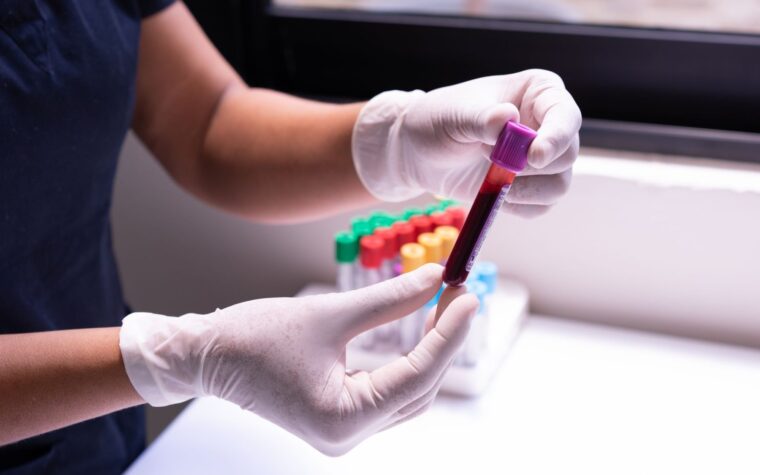
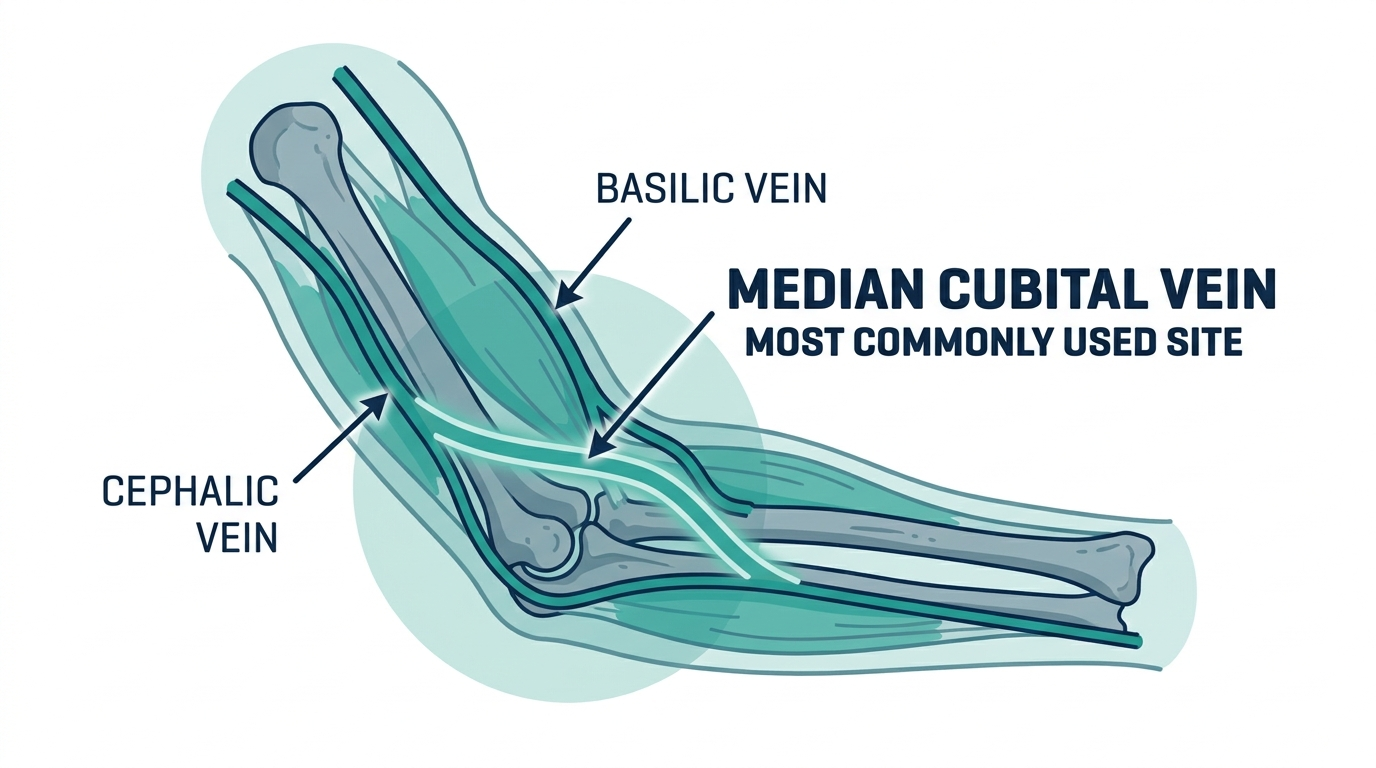
- The draw: For a full Function panel you can expect 8 to 12 tubes, which sounds daunting but takes under three minutes of actual needle time. The phlebotomist uses standard venipuncture from the antecubital fossa (the bend of your elbow), or a forearm vein if that is easier.
- Labeling and packaging: Every tube is labeled at your side, packed into a biohazard pouch, and placed in the pre-addressed shipping box. The phlebotomist drops the kit at a FedEx or UPS location on their way out, not at the end of their day.
- Wound care: A bandage goes on and the phlebotomist briefly reviews when to expect results in your app.
Total time: 15 to 25 minutes for most members.
What biomarkers does a full Function panel actually cover?
People often picture a “blood test” as cholesterol and blood sugar. A comprehensive membership panel is far wider than that, which is the whole point of doing one large draw instead of ordering markers piecemeal. The exact list evolves, but a full panel generally spans these categories:
- Heart and lipids: total cholesterol, LDL, HDL, triglycerides, and often ApoB and Lipoprotein(a), the two markers that add real predictive value beyond a standard lipid panel.
- Metabolic and blood sugar: fasting glucose, fasting insulin, and HbA1c, which together show whether your body is starting to lose insulin sensitivity years before glucose alone would flag it.
- Thyroid: TSH plus free T4 and free T3, and sometimes thyroid antibodies, rather than TSH in isolation.
- Hormones: testosterone (total and free), estradiol, DHEA-S, cortisol, and for many panels SHBG, which changes how much of your sex hormones are actually available.
- Liver and kidney: ALT, AST, GGT, alkaline phosphatase, bilirubin, plus creatinine, BUN, and eGFR for kidney filtration.
- Complete blood count: red cells, white cells, hemoglobin, hematocrit, and platelets, which can surface anemia, infection, or clotting issues.
- Inflammation: high-sensitivity CRP, a general signal of systemic inflammation linked to cardiovascular and metabolic risk.
- Nutrients: vitamin D, B12, folate, ferritin and iron studies, and magnesium, the deficiencies most likely to be quietly dragging down energy and mood.
The value of doing all of these in one sitting is not just convenience. Many of these markers only make sense in relation to each other. A high ferritin means something different alongside high inflammation than it does on its own, and a borderline testosterone reading is easier to interpret when you can see SHBG and estradiol on the same report. Chasing single tests one at a time strips out that context.
One interpretation nuance worth understanding up front: Function shows each result against both the standard lab reference range and a tighter “optimal” range. Standard ranges are built to flag disease, so a value can sit at the very edge of “normal” and still be far from where longitudinal data suggests risk is lowest. Reference ranges also vary between labs and between the sexes, so treat the number as a starting point for a conversation with a clinician, not a verdict.
Fasting and preparation rules for a Function Health draw
The standard prep for a function health home blood draw is a 12-hour fast from food and caloric beverages. Plain water is actively encouraged because dehydration causes veins to flatten and makes the draw harder. Here is what matters most:
| Item | Before the draw | Why it matters |
|---|---|---|
| Food | Nothing for 12 hours | Lipid panel, glucose, and insulin are all fasting-dependent |
| Water | Drink freely, aim for 16 oz in the hour before | Hydrated veins fill tubes faster and reduce multiple-stick attempts |
| Coffee, tea, juice | Skip; black coffee is debated but safest to skip | Can alter cortisol, glucose, and inflammatory markers |
| Alcohol | None for 24 hours ideally, 48 hours for liver markers | GGT, AST, ALT all respond to even moderate drinking |
| Biotin supplements | Hold for 72 hours if dose is above 5 mg/day | High-dose biotin causes false-low TSH and false-high free T4 on immunoassays |
| Strenuous exercise | None the evening before | CK, LDH, and even PSA can spike 24 to 48 hours post-exercise |
| Prescription medications | Take as prescribed unless a clinician says otherwise | Stopping statins, thyroid meds, or metformin before a draw distorts baselines |
One thing people regularly get wrong: they skip their morning thyroid medication to “avoid interference” but that is counterproductive. TSH reflects feedback over days, not the last hour. Take your levothyroxine as usual unless your prescribing clinician has explicitly told you otherwise.
Home draw vs. going to a patient service center
Function Health also partners with Labcorp and Quest patient service center locations nationwide, so members who prefer a walk-in option or live outside a mobile draw coverage zone can go in person. The panel is identical either way. The difference is logistics.
| Factor | Mobile phlebotomist (home) | Patient service center |
|---|---|---|
| Scheduling | Two-hour arrival window, book 1 to 5 days out | Walk-in or appointment, often same-day |
| Wait time | None (you wait at home) | 5 to 45 minutes depending on location and time of day |
| Travel required | None | Yes, you drive to the site |
| Coverage | Major metros and many suburbs | Nationwide, including rural areas |
| Additional cost | Included in membership | Included in membership |
| Best for | Busy schedules, no car, needle anxiety at clinics | Same-day need, rural addresses, last-minute draw |
If you are unsure whether your zip code is covered for home draws, the Function app tells you immediately when you enter your address in the scheduling flow. Coverage has expanded steadily through 2025 and into 2026. If home draw is unavailable, see our function health near me finding a draw site guide for how to locate the nearest patient service center.
What to expect after the draw: turnaround and results
Your tubes ship the same day, hit the lab within 24 to 48 hours of pickup, and Function’s standard turnaround is 5 to 10 business days for the full panel. A handful of specialty markers (advanced hormones, certain genetic tests) may run 10 to 14 days. You get a push notification the moment each result lands in your app, not one big dump at the end.
Inside the app, every result sits next to a reference range, a Function-defined “optimal” range (which is often tighter than conventional normal), and a plain-language explanation. For a deeper look at how to interpret what comes back, our function health app review walks through the interface section by section.
One nuance: Function flags results that fall outside their optimal ranges with yellow or red indicators. A yellow flag does not mean something is seriously wrong. It often means a value is technically “normal” by lab standards but has drifted toward the edge of where longitudinal data suggests risk starts rising. Talk to a clinician about anything flagged red before making medication or supplement changes.
Is the Function Health mobile phlebotomist service actually convenient?
For most urban and suburban members, the home draw is the highest-value part of the membership. The friction of getting a comprehensive panel done historically was scheduling, taking time off work, and sitting in a waiting room. The function health mobile phlebotomist model removes all three. You schedule the evening before, keep your fast going through the morning, and the draw is done before most offices open.
The main constraint is the morning-only window. Most home draws are available between 7 a.m. and 2 p.m. because samples need to reach the lab same-day. If you work an overnight shift or your schedule genuinely cannot accommodate a morning window, a patient service center with a later hours location may be more practical.
For members who travel frequently, the app lets you book draws at any address, including hotel rooms. Several members in the Function Reddit community have posted draws completed in Airbnbs and corporate apartment stays, which is genuinely useful if your home base shifts seasonally.
Here is what a typical first draw looks like end to end. You book on a Tuesday evening for a Thursday 7 to 9 a.m. window. You stop eating at 8 p.m. Wednesday, keep drinking water, and skip your usual morning coffee. At 7:40 a.m. Thursday you get a text that the phlebotomist is 15 minutes out. They arrive, check your ID, ask what medications and supplements you take, and confirm you have fasted. The draw itself takes under three minutes even though it fills nine tubes. By 8:15 a.m. you are eating breakfast, and the tubes are already on their way to the courier. Ten days later your app pings you, one marker at a time, as results post.
The simplest way to actually get this done
Superpower is a full-body lab membership that runs 100+ biomarkers, has each result reviewed by a doctor, and tracks your numbers year over year (about $199/year). It is what we point readers to when they would rather get one clean, complete draw than chase single tests one at a time. Here is superpower reviewed in full.
Can you use an HSA, FSA, or insurance for the draw?
Function Health is a self-pay membership, which means it is not billed to your health insurance the way a doctor-ordered lab would be. That is a feature as much as a limitation. Because nothing is submitted to insurance, there is no prior authorization, no “medically necessary” gatekeeping, and no surprise bill weeks later. You know the annual price before you start.
Many members do pay with an HSA or FSA card, since diagnostic lab testing is generally an eligible medical expense. Eligibility is not guaranteed for every plan, so the honest answer is to check with your HSA or FSA administrator before assuming the charge will clear, and keep the receipt in case you need to substantiate it. If your employer offers a wellness stipend, that is another common way members offset the cost. What you should not expect is your insurer reimbursing the membership fee directly, because that is not how the service is structured.
How the home draw fits into the full Function Health process
The draw is one step in a four-part cycle Function runs annually. Understanding where it fits helps set the right expectation for what comes next:
- Activation: You join, create your account, and complete a health intake questionnaire. This takes 24 to 72 hours.
- Draw: You schedule and complete your function health home blood draw or patient service center visit.
- Results: Biomarker data lands in your app over 5 to 14 days. Function’s clinical team reviews flagged values.
- Annual repeat: Your membership renews and you draw again roughly 12 months later to track change. Trend data is where the real value compounds.
The annual cadence means your first draw is also your baseline. How accurately it reflects your true physiology depends heavily on how well you prep, which is why the fasting and medication guidance above is worth following precisely. See our function health cost breakdown for what you get across the full annual cycle relative to alternatives.
Edge cases: what if the phlebotomist cannot get a sample?
Difficult veins are the most common reason a draw does not complete in one attempt. Mobile phlebotomists are licensed and trained for this, but they are not nurses drawing in a hospital with unlimited time and equipment. If two attempts fail, the standard protocol is to reschedule at no extra charge, either at home or at a patient service center where a second phlebotomist may have better luck with a different approach (butterfly needle, smaller gauge, alternative site).
Other edge cases Function has dealt with include:
- Address not found: The phlebotomist cannot locate a gated community entrance or apartment building. Solution: add specific access instructions in the app notes field when booking.
- Member not home: Missed appointments within the cancellation window may require rescheduling through support. The phlebotomist cannot wait more than a few minutes.
- Sample rejection: Rare, but a tube can be rejected at the lab if it was improperly filled or the seal failed. Function will arrange a redraw at no charge.
- Hemolysis: Vigorous shaking of tubes, extreme heat, or a traumatic draw can destroy red cells and corrupt a sample. A redraw is the only fix; results from a hemolyzed sample cannot be salvaged.
Turn what you just learned into action.
Superpower lets you test 100+ biomarkers from home, then re-check them over time so you can actually see progress, physician-reviewed at every step.
FAQ
Does Function Health offer home blood draw in all US states?
No. Mobile phlebotomy coverage is concentrated in major metropolitan areas and many mid-size cities as of 2026. Rural and some suburban zip codes may fall outside coverage. The app tells you instantly when you enter your address whether home draw is available. If it is not, you are routed to the nearest Labcorp or Quest patient service center instead.
Is there an extra fee for the Function Health at home draw?
No. The mobile phlebotomist service is included in the annual Function Health membership. You do not pay a separate per-visit or dispatch fee. The only additional charges are for optional add-on tests beyond the standard panel. For a full breakdown, see our function health cost article.
How many vials of blood does Function Health take?
Expect 8 to 12 tubes for a standard Function panel. This sounds like a lot but the total volume drawn is typically 40 to 60 mL, which is well within the safe range for an adult. Donors at blood banks give 450 mL at once for comparison. You should not feel faint or weak from the volume alone, though skipping breakfast before a 12-hour fast can cause lightheadedness for some people.
Can I schedule a Function Health draw appointment at my office or a hotel?
Yes. The app accepts any address where you will be present during the draw window. Hotels, offices, and temporary stays all work. The main requirement is that you can let the phlebotomist into the location. Lobby concierge buildings sometimes require the phlebotomist to check in with front desk staff, so note that in the appointment instructions.
How long does a Function Health home visit take from start to finish?
The actual in-person portion runs 15 to 25 minutes for most members. The phlebotomist does identity verification, intake questions, the draw, labeling, and packaging. Add a few minutes at either end for arrival logistics. It is faster than most urgent care or lab waiting room experiences.
What if I have hard-to-find veins?
Tell Function in advance through the appointment notes, and remind the phlebotomist when they arrive. Most mobile phlebotomists carry butterfly needles (23 gauge) specifically for small or rolling veins. Drinking 16 to 24 oz of water in the 60 minutes before the draw is the single most effective thing you can do on your end. If the draw fails after two attempts, Function reschedules at no cost.
How does Function Health draw compare to a Superpower draw?
Both services use mobile phlebotomy or partner lab draws at comparable price points. Superpower includes a physician review of every result, while Function relies on app-based flagging with optional provider consultation. If you want a doctor to actually read and discuss your panel, that distinction matters. Our superpower blood test review covers the draw logistics and clinical review process side by side.
Do I need to be home the entire two-hour window?
Yes, or at whatever address you booked. The phlebotomist sends a text with a narrower ETA on the day of the draw, often a 30-minute heads-up, so you are not stuck staring at the door. But you do need to be accessible at the address for the full window in case of traffic or routing delays.
Can I eat right after the blood draw?
Yes. Once the last tube is filled, your fast is over and you can eat immediately. Many members deliberately book an early window so they can have breakfast within minutes of the phlebotomist leaving. If you are prone to lightheadedness, keep something simple like juice or a banana within reach, and eat before you stand up and move around.
Will the draw bruise, and how do I prevent it?
A small bruise at the puncture site is common and harmless, caused by a little blood leaking under the skin. The best prevention is to keep firm, steady pressure on the site for a full two to three minutes after the needle comes out, and to avoid lifting anything heavy with that arm for a few hours. Do not bend your elbow to hold a folded cotton ball in place, which people often do, because that tends to increase bruising rather than reduce it. If you bruise easily or take a blood thinner, mention it so the phlebotomist can apply a pressure bandage.
Does the number of tubes affect how I will feel?
Eight to twelve tubes looks alarming lined up on a table, but the total volume is modest, usually well under what you would give at a single blood donation. Healthy adults do not become anemic or weak from one comprehensive panel. Any faintness people report is almost always from the fasting or from anxiety about needles, not from blood loss. Eating promptly afterward and staying hydrated resolves it for nearly everyone.
What if I take medication in the morning?
Take chronic prescriptions as prescribed unless your own clinician has told you otherwise, and simply tell the phlebotomist what you took and when. The common mistake is skipping a thyroid or blood pressure medication to “keep the test clean,” which can distort the very baseline you are trying to measure and, in the case of blood pressure medication, is genuinely risky. When in doubt, ask the prescriber, not the internet.
Vital Signs Today may earn a commission if you buy through links on this page. It does not affect our editorial assessments.