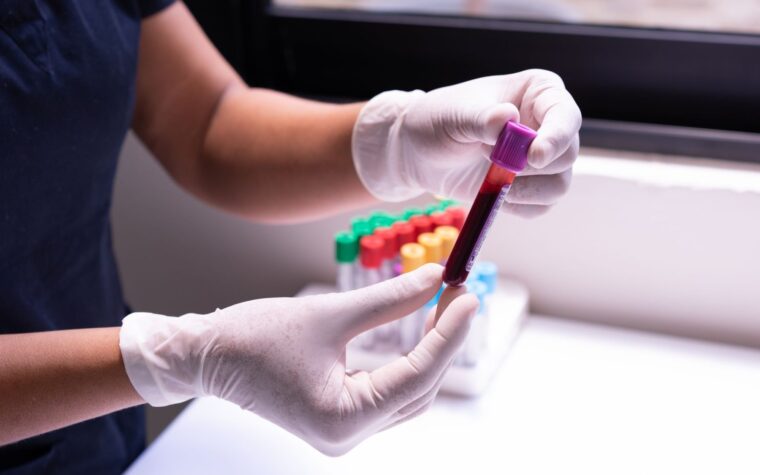
Quick answer: A functional medicine lab panel typically costs between $300 and $3,000 or more out of pocket, depending on the clinic, the number of specialty tests ordered, and whether you use insurance. A single functional medicine visit plus a mid-range panel of 40 to 80 biomarkers will realistically run most patients $600 to $1,500 in year one. That figure drops sharply if you self-order a flat-rate comprehensive panel directly, skipping the per-test markup entirely.
What Drives the Functional Medicine Lab Panel Cost?
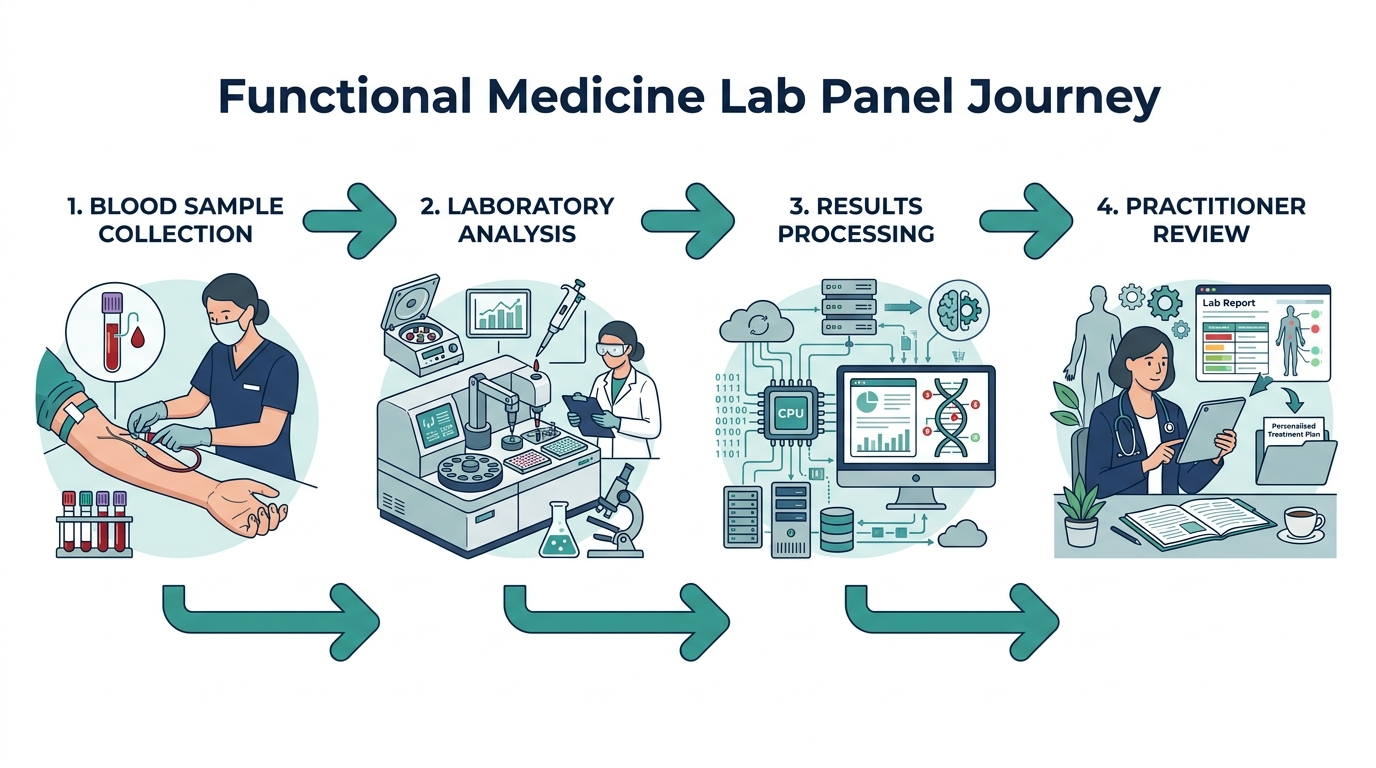
Functional medicine lab panel cost is not a single line item. You are paying for at least three separate things, and most people only budget for one. The first is the consultation fee, which at a functional medicine clinic runs $200 to $600 for an initial intake and $100 to $300 for follow-up visits to review results. The second is the lab draw itself, and the third is the testing markup the clinic applies before billing you or your insurer.
Functional panels can run $600 to $1,500 a visit. See how a flat $199/year membership with 100+ biomarkers compares. One at-home Superpower draw checks 100+ biomarkers, physician-reviewed.
Functional medicine practitioners tend to order far more tests than a standard annual physical. Where a primary care physician might order a basic metabolic panel and a CBC, a functional medicine intake commonly includes thyroid antibodies, fasting insulin, homocysteine, advanced lipid fractionation (NMR), DHEA-S, ferritin, vitamin D 25-OH, omega-3 index, heavy metals, organic acids, and gut microbiome panels. Each of those is a separate CPT code, and specialty tests like organic acids or heavy metal profiles cost $150 to $450 each when run through a clinic.
The markup layer is something patients rarely see. Functional clinics typically bill labs at retail or marked-up rates, then absorb a portion if insurance denies the claim or pass the full cost to you. Quest Diagnostics and Labcorp direct cash prices are often 40 to 70 percent lower than what flows through a clinic billing system. That spread is one reason self-order panels have grown popular. If you want to understand what drives the decision to use a functional practitioner versus self-ordering, do you need a functional medicine doctor covers the clinical tradeoffs in detail.
Typical Cost Breakdown: Clinic Route vs. Self-Order Route
Running the numbers side by side makes the difference concrete. Here is what a realistic year-one cost looks like for each path.
| Cost Component | Functional Clinic (Cash) | Self-Order Panel |
|---|---|---|
| Initial consultation | $250 to $600 | $0 (no intake required) |
| Lab panel (40 to 80 markers) | $400 to $1,800 | $99 to $250 |
| Result review visit | $100 to $300 | Included in some memberships |
| Specialty add-ons (e.g., organic acids, stool) | $150 to $450 each | $89 to $250 each, a la carte |
| Year-one realistic total | $750 to $2,500+ | $150 to $500 |
The clinic route is not a rip-off. You are buying clinical judgment, interpretation, and a protocol. The self-order route gets you data faster and cheaper but places the interpretive burden on you or a separate clinician. Neither is wrong. They serve different goals.
What Does a Functional Medicine Consultation Cost on Its Own?
Functional medicine consultation cost runs $200 to $600 for a new patient intake, and that visit is almost never covered by insurance at a functional practice unless the clinician is billing conventional CPT codes. Many functional medicine doctors operate entirely outside insurance networks because insurance reimburses for disease management, not root-cause investigation. A 60 to 90 minute intake that reviews your history, symptoms, sleep, gut function, and goals cannot be billed as a standard office visit at a meaningful rate.
Some practices offer tiered packages: a $1,200 to $2,500 program fee covering three to four visits and a full panel. Others bill purely a la carte. Concierge functional medicine, where you pay a monthly retainer of $150 to $400, includes unlimited consults but you still pay separately for labs. Telehealth-only functional practices run slightly cheaper, $150 to $350 per session, because their overhead is lower. If you are researching practitioners, how to find a functional medicine doctor walks through what to look for and what questions to ask before you hand over a credit card.
Are Functional Medicine Tests Covered by Insurance?
Conventional tests ordered by a functional medicine doctor are sometimes covered, but most specialty functional tests are not. The key word is “medically necessary” as defined by your insurer. A CBC, comprehensive metabolic panel, TSH, and HbA1c have legitimate ICD-10 codes for diabetes screening, anemia, or thyroid disease, and Blue Cross will often pay for those regardless of who orders them. The problem is that functional medicine panels include dozens of markers that insurers classify as experimental, investigational, or not medically necessary: organic acids, comprehensive stool analysis with PCR, micronutrient panels, advanced cardiovascular panels like LDL-P and apoB, and hormone panels beyond basic TSH and estradiol.
Out-of-network billing adds another layer. If your functional medicine doctor is not in your plan’s network (and most are not), your plan’s out-of-network deductible applies, often $1,500 to $4,000 before benefits kick in. You may end up with a $1,800 lab bill and a $200 insurance reimbursement. HSA and FSA dollars do cover qualified medical expenses, including lab tests ordered by a licensed clinician, so if you have a high-deductible health plan with an HSA, that is a real offset worth using.
Medicare patients face the same problem at higher stakes. Medicare covers routine diagnostic labs under Part B when ordered by a Medicare-participating provider for a covered condition, but functional medicine clinics that do not accept Medicare assignment leave beneficiaries paying entirely out of pocket. There is no Medicare Advantage plan that broadly covers integrative or functional testing beyond conventional diagnostics.
The Most Common Tests in a Functional Panel and What They Cost
The cost of functional medicine blood work escalates quickly once you move past the standard annual labs. Here is what individual tests actually cost when ordered through a functional clinic versus direct cash pricing at a commercial lab.
| Test | Clinic Billed Rate | Direct Cash (Quest/Labcorp) |
|---|---|---|
| Comprehensive metabolic panel | $30 to $80 | $14 to $35 |
| Thyroid panel (TSH, free T3, free T4, antibodies) | $80 to $200 | $40 to $90 |
| Advanced lipids (NMR, apoB, Lp(a)) | $120 to $350 | $60 to $180 |
| Fasting insulin | $40 to $120 | $18 to $45 |
| Vitamin D (25-OH) | $40 to $100 | $15 to $50 |
| Homocysteine | $40 to $90 | $20 to $50 |
| Organic acids (functional nutrition marker) | $200 to $450 | $150 to $300 (specialty labs only) |
| Comprehensive stool analysis (GI-MAP) | $300 to $600 | $180 to $350 (Genova, Doctor’s Data) |
| Heavy metals urine panel | $150 to $400 | $80 to $200 |
A mid-range functional panel covering about 60 biomarkers without specialty tests like stool or organic acids will typically total $400 to $900 at a clinic. Add GI-MAP and organic acids and you are at $900 to $1,700 before the consultation fee. That is not an inflated estimate. It is a realistic number pulled from clinic fee schedules in 2025 and 2026.
What Gets People Wrong About Functional Medicine Price
The biggest misconception is that the consultation fee is the main cost. It is not. The labs are usually twice the consultation fee, and the follow-up visits to actually interpret the results add another $100 to $300 per session. A patient who walks in expecting to spend $400 on a visit and some blood work often gets a $1,200 to $1,800 bill across three months.
The second misconception is that specialty labs are unique to functional clinics. Many of the tests functional practitioners order, including advanced lipid panels, hormone panels, and micronutrient testing, are available directly through services like Ulta Lab Tests, Walk-In Lab, or Any Lab Test Now at a fraction of clinic pricing. The draw happens at a Quest or Labcorp patient service center using the same instruments. You get the same data. What you do not get is a clinician telling you what it means in the context of your sleep, diet, and symptom history. If you want to explore what at-home and self-order testing actually looks like, functional medicine testing at home covers the options and limitations.
The third mistake: assuming that ordering more tests produces more insight. Functional practitioners vary widely in clinical discipline. Some order a targeted 30 to 40 marker panel based on your chief complaint. Others order every specialty panel they stock, generating a 200-marker report that takes four visits to work through and costs $2,500 before you have made a single protocol change. Volume is not depth.
The simplest way to actually get this done
Superpower is a full-body lab membership that runs 100+ biomarkers, has each result reviewed by a doctor, and tracks your numbers year over year (about $199/year). It is what we point readers to when they would rather get one clean, complete draw than chase single tests one at a time. Here is superpower blood test reviewed in full.
How Flat-Rate Lab Memberships Change the Math
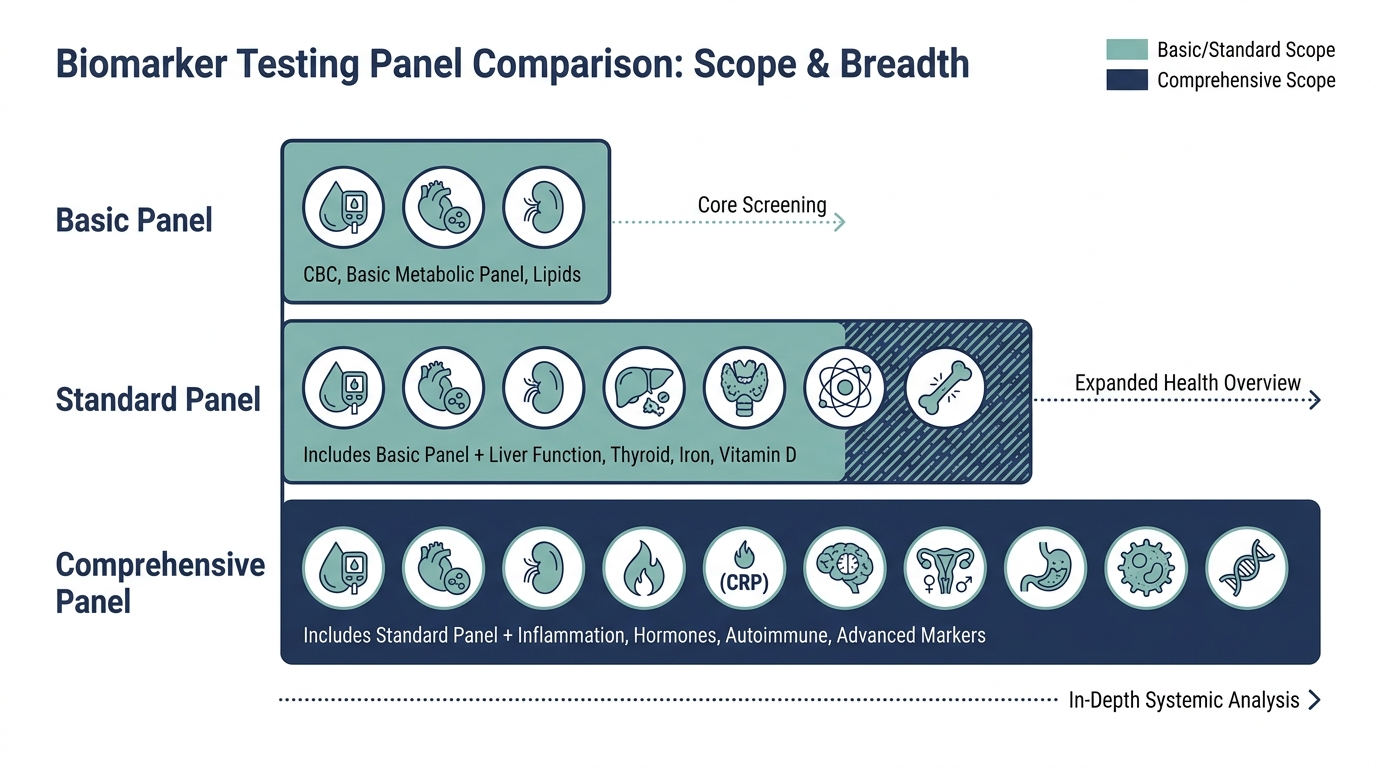
A new category of direct-to-consumer lab service, flat-rate membership panels, has made the cost comparison starker. Services like Superpower and Function Health bundle 100 or more biomarkers into an annual membership priced at $200 to $600 per year. That puts a 100-biomarker panel at roughly $2 per marker annually, compared to $8 to $20 per marker when tests are ordered a la carte through a functional clinic.
The draw still happens at a Quest or Labcorp location. Results arrive in a proprietary app with reference ranges and trend lines. Some services include physician review of every result. What you trade away is the relational medicine component: a practitioner who knows your history, asks about your stress and sleep, and can adjust a protocol over multiple visits. For healthy adults building a baseline, the flat-rate model delivers enormous value. For someone with a complex multisystem presentation, the clinic relationship still has a role. Read our function health review for a detailed look at how one of the leading membership services structures its 100-biomarker panel and what the results experience actually looks like.
Does Insurance Ever Pay for Functional Lab Testing?
Insurance pays for the tests it would have covered regardless of who ordered them. If your functional medicine doctor orders a TSH, a CBC, a fasting glucose, and a lipid panel for a patient with documented hypothyroid symptoms or metabolic risk, those often clear a standard health insurance plan at in-network rates if the practitioner has an in-network provider contract. The specialty functional tests, organic acids, comprehensive stool, micronutrient panels, advanced cardiovascular markers, and adrenal salivary cortisol, are a different story. Most commercial insurers and all Medicare plans specifically exclude them.
There are exceptions. Some Blue Shield and Cigna plans have expanded coverage for integrative medicine visits in certain states. A handful of employer self-funded plans (common at large tech companies) include functional medicine benefits as part of wellness carve-outs. If your employer uses a platform like Parsley Health, Lifeforce, or Forward, the membership fee may be FSA-eligible even if the tests are not individually reimbursed. Worth calling your benefits administrator before your first appointment.
The practical move for most uninsured or out-of-network patients: ask the clinic for the exact CPT codes before your draw, check your insurer’s coverage list, and decide which tests to run through the clinic billing system versus ordering directly yourself. A good functional practitioner will not be offended by this question.
How to Compare Functional Medicine Price Across Clinics
Functional medicine price is not standardized, and most clinics do not publish lab fees on their websites. Before committing, ask three specific questions. First: do you use Quest or Labcorp, or proprietary specialty labs like Genova, Doctor’s Data, or Cyrex? Proprietary lab pricing runs 30 to 80 percent higher than Quest/Labcorp for comparable tests. Second: are your lab fees billed separately, or included in the program fee? Some clinic packages look expensive upfront but include labs that would cost more if billed a la carte. Third: can I see the panel you recommend before we draw, with the cost per test?
Clinics that refuse to give you a cost breakdown before a draw are a yellow flag. Functional medicine is cash-pay medicine, which means pricing transparency is achievable even if it is not universal. A well-run clinic will hand you a sheet showing exactly what is ordered and what it costs. If they cannot, that is useful information about how they operate.
Telehealth-only functional medicine platforms generally run leaner. Direct Specialty Labs, LifeExtension, Cleveland HeartLab, and similar services let ordering clinicians mark up tests less aggressively because their overhead is lower. Midsize cities tend to have cheaper functional medicine pricing than coastal metros: an initial intake that runs $450 in San Francisco or Manhattan might be $250 in Nashville or Denver.
Uninsured, Minors, and Medicare: Edge Cases on Cost
Uninsured patients have more options than they realize. Self-pay at Quest or Labcorp with a printed requisition from any licensed US clinician, including a telehealth doctor on a platform like Hims, Sesame, or SteadyMD, costs 50 to 80 percent less than clinic-billed rates. A 40-marker comprehensive panel at a cash-pay Quest location runs $80 to $200 depending on which tests are included. That is not a functional medicine panel, but it covers all the conventional metabolic, thyroid, lipid, and inflammatory markers.
For minors, any lab draw requires parental consent in all 50 states. Minors cannot self-order through direct-to-consumer services without a guardian. Functional clinics can draw minors with a signed consent form, but most direct-to-consumer membership services require the patient to be 18 or older. CVS MinuteClinic and urgent care labs can run basic panels for minors with parental presence.
Medicare beneficiaries who want functional-style comprehensive testing should look at Medicare Advantage plans from carriers like Humana and UnitedHealthcare that have added supplemental wellness benefits. Some 2026 MA plans cover one annual comprehensive lab panel at no cost. The marker list is not as deep as a true functional panel, but it often includes vitamin D, HbA1c, and a lipid fractionation that conventional Medicare Part B would only cover under specific diagnoses.
Is the Cost Worth It?
The honest answer depends on what you are trying to solve. For a healthy 35-year-old who wants a comprehensive baseline and trend tracking, a $199-per-year direct-to-consumer panel is almost certainly the better spend than a $1,200 clinic intake. For someone with unexplained fatigue, gut dysfunction, and three failed conventional workups, the clinical relationship and interpretive depth of a good functional medicine practitioner may be worth $1,500 or more in year one because the path to answers is genuinely shorter.
What is almost never worth it is paying clinic prices for tests you could have ordered directly, getting a 200-marker result printout with no actionable interpretation, and then scheduling a fourth $250 visit to discuss why your adrenal cortisol rhythm is disrupted. The data without the clinical judgment does not compound. Talk to a clinician about your results before making protocol changes. If you are still deciding whether the functional medicine route makes sense for your situation, do you need a functional medicine doctor lays out the honest indicators for each path.
Turn what you just learned into action.
Superpower lets you test 100+ biomarkers from home, then re-check them over time so you can actually see progress, physician-reviewed at every step.
FAQ
What is the average cost of a functional medicine lab panel?
Most patients spend $400 to $900 on the lab panel alone at a functional medicine clinic, separate from the consultation fee. A comprehensive panel with specialty tests like GI mapping or organic acids can reach $1,500 to $2,500 for labs alone. Direct self-order services running 100-plus markers cost $150 to $250 as a flat fee, making them significantly cheaper for the data-collection step.
How much does functional medicine cost per month?
Monthly costs vary by model. A concierge functional medicine retainer runs $150 to $400 per month and includes unlimited consultations but not lab costs. Telehealth functional platforms like Parsley Health cost $150 to $250 per month with labs extra. A direct-to-consumer lab membership like Superpower works out to roughly $17 per month annually and includes one full comprehensive draw per year with physician review.
Can I use my HSA or FSA for functional medicine tests?
Yes, for lab tests ordered by a licensed US clinician. HSA and FSA dollars cover qualified medical expenses, which include diagnostic blood work ordered by an MD, DO, NP, or PA. Self-order direct-to-consumer draws are a gray area: some services provide a letter of medical necessity that makes them FSA-eligible, but check your plan administrator’s rules. Clinic consultation fees are generally HSA/FSA eligible if the provider is a licensed clinician.
Are functional medicine tests covered by insurance?
Conventional tests ordered for recognized diagnoses are sometimes covered even at a functional medicine clinic. Specialty functional tests (organic acids, comprehensive stool analysis, micronutrient panels, advanced lipid fractionation) are almost universally excluded by commercial insurance and Medicare. Patients with high-deductible plans can offset costs with HSA funds. Some large employer self-funded plans include functional medicine benefits through wellness carve-outs worth asking HR about.
What is included in a typical functional medicine blood panel?
A mid-range functional panel typically includes a comprehensive metabolic panel, CBC with differential, full thyroid panel (TSH plus free T3, free T4, and antibodies), advanced lipids (apoB, Lp(a), NMR LDL-P), fasting insulin, HbA1c, inflammatory markers (CRP-hs, homocysteine, ferritin), vitamin D, B12, magnesium, DHEA-S, and a sex hormone panel. Some practitioners add cortisol, omega-3 index, heavy metals, and micronutrients depending on symptoms. That scope covers 40 to 80 markers.
How does functional medicine testing compare to a standard annual physical?
A standard annual physical covered by insurance typically includes 10 to 15 conventional markers: basic metabolic panel, CBC, TSH, fasting glucose, and a standard lipid panel. A functional panel covers 40 to 100-plus markers, including early metabolic dysfunction indicators like fasting insulin and HOMA-IR, cardiovascular risk markers beyond LDL cholesterol, nutrient sufficiency levels, and thyroid function beyond a single TSH. The gap in data depth is substantial, which is why many people pursue functional testing even when they have annual physicals.
Are there cheaper alternatives to functional medicine clinics for comprehensive lab work?
Yes. Direct-to-consumer lab services like Ulta Lab Tests, Any Lab Test Now, and Walk-In Lab offer many functional markers at Quest or Labcorp direct cash prices, which run 40 to 70 percent below clinic-billed rates. Membership panel services like Superpower bundle 100-plus markers at $199 per year with physician review. The gap is clinical interpretation: a cheaper draw gets you the data, but a functional practitioner adds the clinical context. For a fuller comparison of membership panel options, the superpower blood test review walks through what physician-reviewed direct testing actually looks like in practice.
What are functional medicine tests that insurance will never cover?
Tests consistently excluded by commercial insurance and Medicare include comprehensive stool analysis (GI-MAP, Doctor’s Data, Genova GI Effects), organic acids panels, comprehensive micronutrient panels (SpectraCell, NutrEval), salivary cortisol and hormone panels, environmental toxin screens, food sensitivity IgG panels, advanced cardiovascular markers like Lp-PLA2 and TMAO, and genetic SNP interpretation beyond BRCA and a few pharmacogenomic tests. These tests exist in a regulatory gray zone: they are CLIA-certified, real laboratory results, but they lack sufficient randomized controlled evidence for insurers to classify them as standard of care.
Vital Signs Today may earn a commission if you buy through links on this page. It does not affect our editorial assessments.