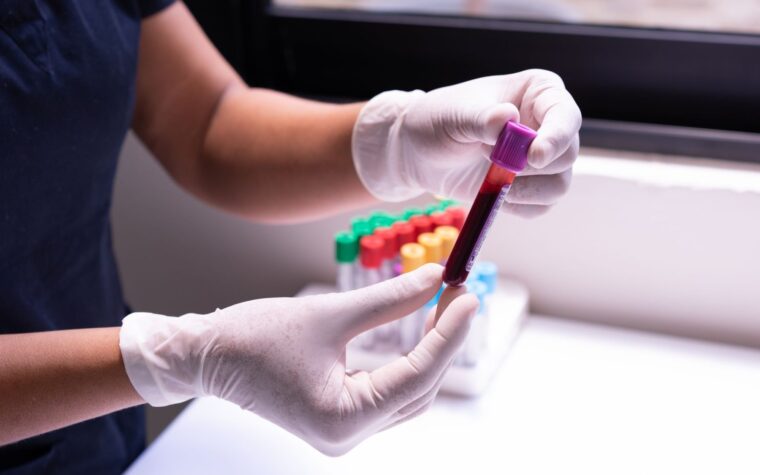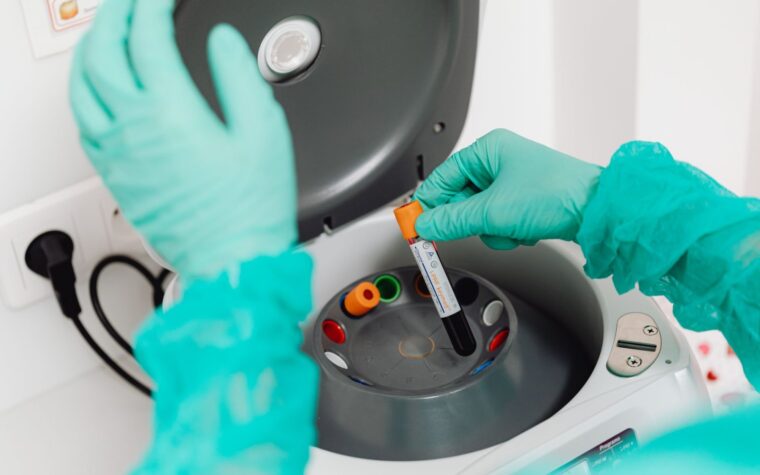
Quick answer: Direct to consumer blood testing lets you order a real clinical lab test without a physician’s order or insurance involvement. You pay online, visit a nearby Quest or Labcorp draw site (or get a fingerstick kit mailed to you), and receive CLIA-certified results in your online account, typically within one to three business days. It is fully legal in 46 states, and prices range from about $9 for a single glucose check to $400 or more for a comprehensive panel. The catch: interpreting what those numbers mean, and deciding what to do about them, still requires some literacy on your part.
What Is Direct-to-Consumer Blood Testing?
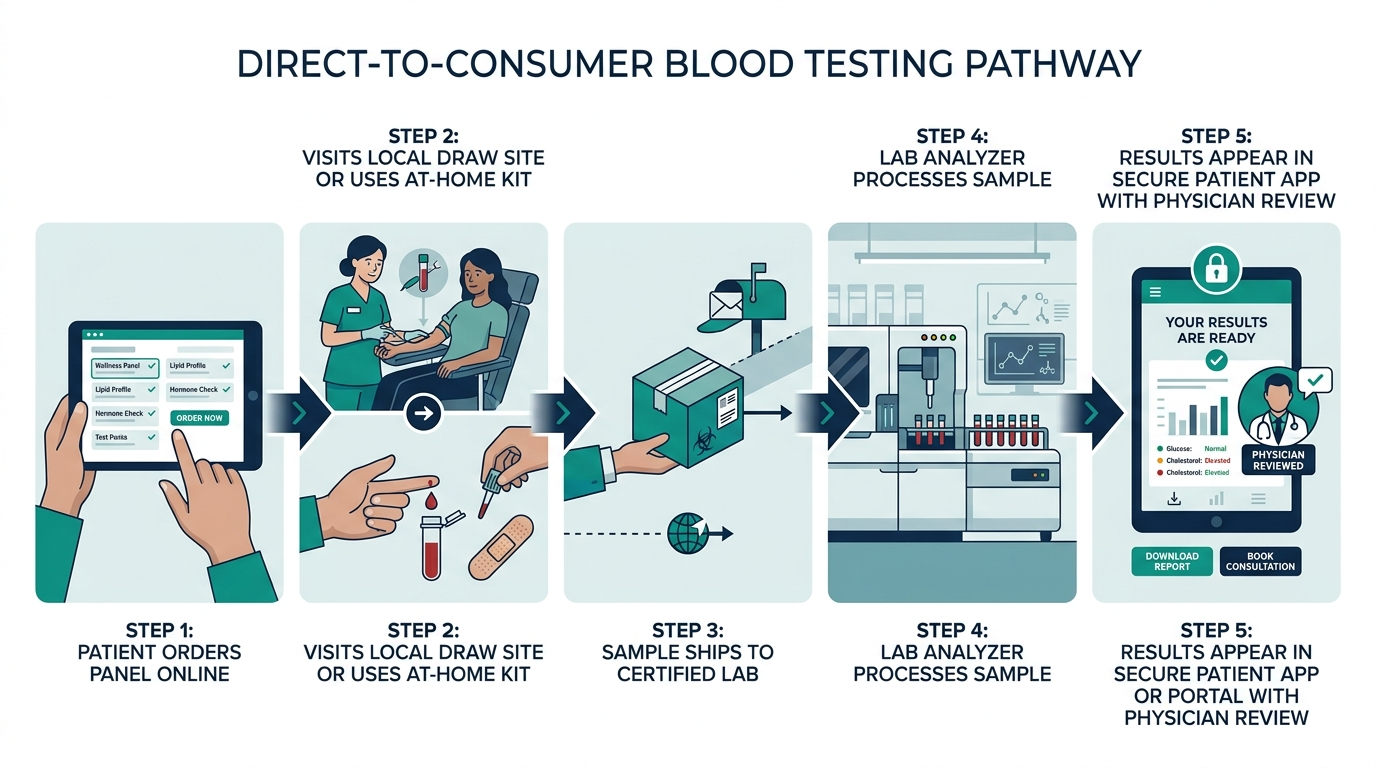
Direct to consumer blood testing is exactly what it sounds like: a model where the patient, not a clinician, initiates the lab order. You pick the test on a website, pay cash or use your HSA/FSA card, receive a lab requisition, and take that slip to a draw center. The specimen goes to the same accredited laboratories that process physician-ordered tests. The result comes back to your account, not to a doctor’s office.
Skipping the doctor’s referral for lab work? See what a direct-to-consumer panel covering 100+ biomarkers can add to a single draw. One at-home Superpower draw checks 100+ biomarkers, physician-reviewed.
The DTC lab model emerged in the late 2000s when companies realized that CLIA-certified labs could accept test orders from patients rather than only from licensed providers in states that permit it. Today the major DTC testing companies including Ulta Lab Tests, Any Lab Test Now, Walk-In Lab, and consumer-facing portals like Everlywell (read our Everlywell review for what that kit experience looks like) either own their own labs or contract with Quest Diagnostics and Labcorp nationally.
The core value proposition is speed and autonomy. You skip the physician visit, the referral process, and the insurance negotiation. You get numbers in 48 hours. For people who want to monitor their own health proactively, that is genuinely useful. For people who are symptomatic and need clinical diagnosis, DTC testing is not a substitute for seeing a clinician.
Is Direct-to-Consumer Blood Testing Legal?
Yes, DTC lab testing is legal in most of the United States. As of 2026, 46 states permit patients to order blood tests directly without a physician’s order. New York, New Jersey, Maryland, and Rhode Island have historically required a licensed provider to sign the requisition, though New York in particular has been gradually loosening restrictions at licensed facilities.
The legal framework rests on two pillars. First, CLIA (the Clinical Laboratory Improvement Amendments of 1988) regulates laboratory quality regardless of who ordered the test. A DTC lab that processes your cholesterol panel is subject to identical proficiency testing and quality control requirements as a hospital lab. Second, individual state statutes govern whether a patient can order tests without a physician intermediary. The DTC companies handle this by either maintaining physician networks that co-sign orders in restricted states or simply not offering services there.
One nuance worth knowing: some states require a licensed physician to review results before they are released to the patient. This adds a day to turnaround time and sometimes generates an additional line item on your receipt, but it is still faster than scheduling a primary care appointment.
How the Ordering and Draw Process Works
The end-to-end process for venipuncture-based DTC testing runs like this:
- Select and pay online. You choose tests on the company’s website, add them to a cart, and pay. Most platforms accept credit cards and HSA/FSA cards. Some require you to create an account; others let you check out as a guest.
- Receive a lab requisition. Within minutes you get a PDF or digital requisition (also called a test order or lab slip) in your email or account dashboard. This document authorizes the draw site to collect your specimen for the specific tests you ordered.
- Visit a draw site. You walk into a Quest Patient Service Center, Labcorp draw site, or a network-specific location. No appointment is usually required, though many sites now let you schedule one online to avoid a wait. The phlebotomist scans your requisition, draws the blood, and the sample ships to the processing lab.
- Results in your account. Most standard panels (CBC, metabolic panel, lipids, thyroid) complete within one to three business days. Specialty panels (hormones, genetic markers, advanced lipid fractionation) sometimes take five to seven days.
- Review and decide next steps. You log in, read your results, and act on them. Most platforms flag out-of-range values. Some include brief explanations; higher-end services include physician review.
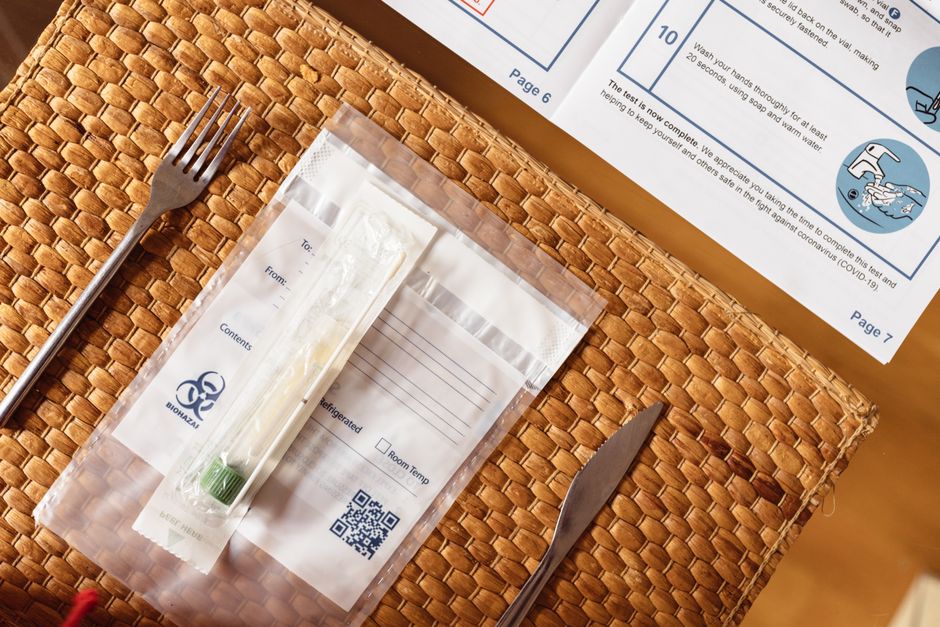
The at-home fingerstick model follows a different path. You receive a collection kit by mail, prick your finger, fill a small card or tube, and mail it back. These work well for lipids and a handful of single-analyte tests but cannot replace a full venipuncture draw for more than a dozen markers. If you want a complete metabolic profile, testosterone, thyroid antibodies, and a CBC in one session, you need a draw site.

What Does DTC Lab Testing Actually Cost?
Prices vary enormously by test and platform, but here is a realistic range for 2026 cash pricing:
| Test | Typical DTC Cash Price | Hospital List Price (uninsured) |
|---|---|---|
| Glucose (fasting) | $9 to $18 | $40 to $120 |
| Comprehensive Metabolic Panel (CMP) | $22 to $45 | $150 to $400 |
| Lipid Panel | $18 to $38 | $100 to $250 |
| Complete Blood Count (CBC) | $15 to $35 | $80 to $200 |
| TSH (thyroid) | $25 to $55 | $100 to $300 |
| Testosterone (total) | $35 to $75 | $120 to $350 |
| HbA1c | $28 to $55 | $80 to $200 |
| Comprehensive baseline panel (50+ markers) | $149 to $299 | $800 to $2,500+ |
The savings are real. A CMP plus lipid panel plus CBC plus TSH ordered individually on a DTC platform runs roughly $80 to $130. Through an uninsured hospital visit, that same battery often generates a bill of $600 to $1,200 before any negotiated discount. The DTC price is essentially the negotiated wholesale rate that large labs offer to volume buyers, passed through to you directly.
If you are testing more than two or three times a year, the math starts to favor a membership model. See our breakdown of how much does Superpower cost for one specific example of how annual panel pricing compares to a la carte testing.
One-Off Tests vs. Membership Panels: Which Makes More Sense?
For a quick acute check (you want to know your cholesterol before a doctor visit, you are monitoring a supplement’s effect on liver enzymes), a la carte DTC tests are the right tool. You pay once, get the number, move on.
The model breaks down when you want to track trends. Trend data requires consistent methodology: same lab, same assay, same reference ranges, year over year. If you order a testosterone panel from three different DTC platforms over three years, the values may differ not because your testosterone changed but because the assays differ. Quest’s total testosterone assay uses a different calibration than Labcorp’s. That 40-point swing in your result might be methodological noise, not a real change in your physiology.
Membership-style services address this by standardizing everything. You get the same panel run at the same lab on the same annual schedule. Your prior values travel with you. A physician reviews each result in context of your history, not just against a static reference range. That longitudinal layer is what turns a data point into a trend, and a trend into something actually useful for health decisions.
For a broader look at where DTC testing fits in a longer-term health strategy, the longevity blood testing guide covers which markers to monitor annually vs. quarterly and why.
The simplest way to actually get this done
Superpower is a full-body lab membership that runs 100+ biomarkers, has each result reviewed by a doctor, and tracks your numbers year over year (about $199/year). It is what we point readers to when they would rather get one clean, complete draw than chase single tests one at a time. Here is Superpower reviewed in full.

What Tests Can You Actually Order Without a Doctor?
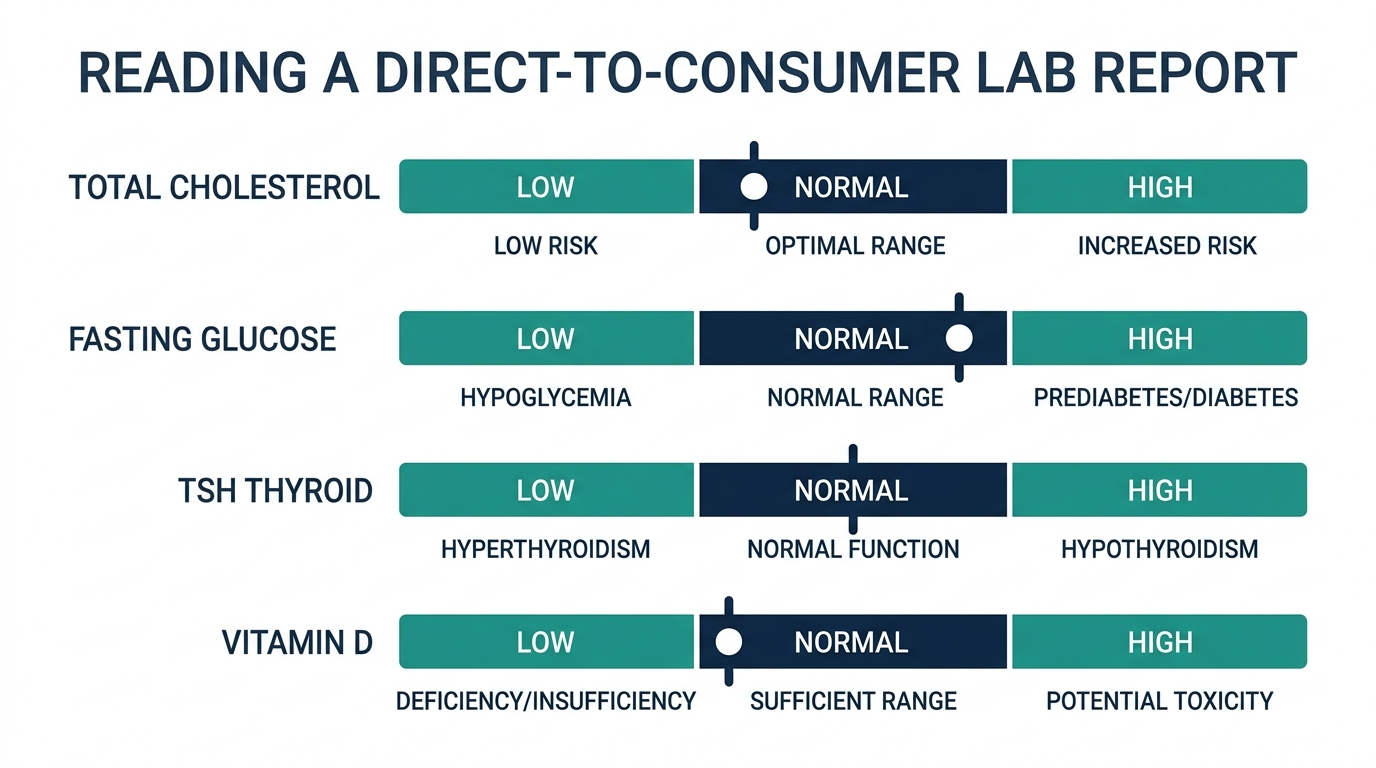
The range is broader than most people realize. Common tests available on major DTC platforms include:
- Metabolic and kidney: CMP, BMP, BUN, creatinine, eGFR, uric acid
- Lipids and cardiovascular: standard lipid panel, LDL-P, ApoB, Lp(a), hs-CRP, homocysteine
- Blood counts: CBC with differential, reticulocyte count, iron studies (ferritin, TIBC, serum iron)
- Hormones: total and free testosterone, estradiol, progesterone, DHEA-S, cortisol, SHBG
- Thyroid: TSH, free T3, free T4, thyroid peroxidase antibodies (TPO Ab)
- Diabetes and metabolic: fasting insulin, HbA1c, fasting glucose
- Vitamins and minerals: 25-OH vitamin D, B12, folate, magnesium RBC, zinc
- Liver: ALT, AST, GGT, total bilirubin, albumin
- Inflammation: ESR, hs-CRP, ferritin
What is generally NOT available without a physician order, even on DTC platforms: controlled substance levels, full genetic panels (beyond BRCA1/2 consumer offerings), most specialized autoimmune antibody panels (ANA, anti-dsDNA), and certain cancer biomarkers that require clinical context before a lab will process them.
For a comprehensive look at ordering a complete baseline, the full blood panel online guide covers which specific tests to combine for a meaningful health snapshot and how to sequence them if cost is a constraint.
What People Get Wrong About DTC Lab Testing
The biggest mistake is treating a result as a diagnosis. A DTC lab report shows you a number and whether it falls inside a reference range. The reference range is a statistical construct: it represents the middle 95 percent of a healthy reference population. By definition, one in 20 normal, healthy people will have a value that flags as abnormal on any given test. Run a 40-marker panel and you should expect roughly two out-of-range values from random statistical variance alone, even if you are in excellent health.
The second mistake is over-ordering. Some people use DTC testing to build hundred-test panels every quarter because they can. The problem is that more data is not always better data. Unvalidated associations between rare-ordered biomarkers and clinical outcomes lead people down rabbit holes. Asymptomatically ordering, say, antinuclear antibodies without clinical context commonly generates false positives that trigger expensive, anxiety-producing workups for conditions you do not have.
The third is skipping the fasting requirement. Many lipid panels and glucose tests require an 8 to 12 hour fast. Eating a meal beforehand can inflate your triglycerides by 200 mg/dL and your glucose by 30 to 50 mg/dL, making normal results look alarming. Most DTC platforms note this in the test description, but plenty of patients miss it.
Talk to a clinician about any result that concerns you, particularly before changing medications or starting aggressive supplementation based on a single data point.
How DTC Testing Compares to Insurance-Based Testing
Insurance does not always win. When you have good insurance and a compliant primary care physician, covered lab work through in-network providers is often the cheapest route. But that scenario has several friction points: scheduling a visit, getting the physician to agree to the specific tests you want, waiting for the requisition, navigating lab choice, and waiting for the bill to arrive weeks later often containing surprise charges.
DTC testing is faster, more transparent on cost, and gives you autonomy over what you order. The tradeoff is that results do not flow automatically into a care team’s electronic health record (though most DTC platforms let you download a PDF to share). If you have an ongoing condition managed by a physician, pure DTC testing creates a parallel record that your doctor may not see.
One practical hybrid approach: order a DTC panel 2 to 3 weeks before a scheduled physical. Walk in with your own data. Your physician can then focus the visit on interpreting numbers you have already contextualized rather than waiting weeks for results to come back after the appointment.
For a broader comparison of what the consumer testing market looks like, including where direct ordering and kit-based models diverge, can you buy blood tests online covers the current landscape of platforms and price tiers.
How to Choose a DTC Lab Testing Platform
Not all platforms are equal. Key questions to ask before ordering:
- Which lab processes the sample? Quest and Labcorp are the largest national clinical labs with the most extensive quality controls. Platforms that use them are generally more reliable than those running samples through smaller regional or proprietary labs, especially for reference range consistency.
- Does the platform include physician review? Some platforms charge extra for a clinician to review your results. For routine panels you know well, this may be unnecessary. For a comprehensive panel with dozens of markers, physician review adds interpretive value that raw numbers alone do not provide.
- What is the draw site network like near you? A platform partnering with Quest has over 2,000 Patient Service Centers nationally. A smaller network may require driving 40 minutes for a draw, which reduces convenience significantly.
- How are results delivered? PDF via email is the minimum. A dashboard with historical trending, reference range context, and shareable reports is meaningfully better, especially if you plan to track your numbers over time.
- Can you use HSA/FSA? Most major DTC platforms accept FSA/HSA cards. Some require a Letter of Medical Necessity for reimbursement; others are automatically eligible under CARES Act provisions from 2020 that broadened eligible medical expenses.
Turn what you just learned into action.
Superpower lets you test 100+ biomarkers from home, then re-check them over time so you can actually see progress, physician-reviewed at every step.
FAQ
Can I order a blood test online without seeing a doctor?
Yes, in 46 states you can order blood tests online and pay cash without ever speaking to a physician first. The major DTC platforms handle the requisition and route your sample to an accredited lab. In New York, New Jersey, Maryland, and Rhode Island, a physician must authorize the order, though some DTC services maintain licensed physicians on staff to comply with this requirement.
How accurate are direct-to-consumer blood tests?
Venipuncture-based DTC tests processed at Quest or Labcorp are CLIA-certified and meet the same accuracy standards as physician-ordered tests run at the same facility. The analysis happening in the lab is identical. Accuracy issues can arise from the pre-analytical phase: incorrect fasting, delayed sample transport, or mislabeled specimens. Fingerstick kit-based tests have wider coefficient of variation than venipuncture and are less reliable for quantitative biomarkers like LDL-C or testosterone.
What is the difference between DTC blood testing and at-home blood testing?
DTC blood testing is the broad category: you order and receive results without going through a traditional physician referral. At-home blood testing is a specific collection method where a kit is mailed to you and you self-collect via fingerstick or lancet. Most DTC platforms actually use phlebotomy draw sites, not home collection. The two terms are often conflated in marketing but describe different logistics.
Can I use my insurance for direct-to-consumer blood tests?
Generally, no. DTC tests are cash-pay by design. You pay the DTC platform directly, and the transaction does not flow through your insurance carrier. You can use HSA or FSA funds, which effectively gives you a tax-advantaged discount of 22 to 37 percent depending on your bracket. If you want insurance coverage, your physician needs to order the test through in-network channels.
What blood tests are not available without a doctor?
Some tests require physician authorization even on DTC platforms. These include most controlled substance therapeutic drug monitoring, specialized autoimmune antibody panels (full ANA with reflex), cancer screening panels that require clinical risk assessment, and newborn screening. Anything that requires a licensed interpreter before the lab will process or release results typically sits outside the DTC model.
How long does a DTC blood test take to get results?
Standard panels (CBC, CMP, lipids, TSH, glucose, HbA1c) come back in 24 to 48 business hours after the lab receives the sample. Specialty panels including advanced hormone assays, Lp(a), ApoB, certain vitamin levels, and thyroid antibodies often run on batch schedules and take three to seven business days. Same-day or next-day STAT draws are not typically available through DTC channels.
Is direct-to-consumer lab testing safe?
The testing itself is safe. The risk is downstream: acting on results without clinical context, over-interpreting borderline values, or falsely reassuring yourself that a normal result means no pathology is present. Direct-to-consumer blood testing is best used as a monitoring tool by health-literate adults, not as a diagnostic gateway to self-treatment. Any unexpected, dramatically abnormal, or clinically meaningful result should prompt a conversation with a licensed clinician.
Do DTC blood test companies store my health data?
Yes, and this deserves scrutiny. Most DTC lab platforms store your test results in their own databases and are subject to HIPAA, but HIPAA for DTC wellness companies can be interpreted more loosely than for covered healthcare entities. Before ordering, review the platform’s privacy policy to understand whether your data can be shared with third parties, used for research, or included in de-identified data sales. The major established platforms (Quest-backed and Labcorp-backed) have more mature data governance than newer direct-to-consumer wellness startups.
Can I buy blood tests online for a specific condition I suspect?
You can order tests associated with almost any condition: thyroid antibodies if you suspect Hashimoto’s, fasting insulin if you are worried about insulin resistance, ferritin if you have fatigue that might point to iron deficiency. What you cannot get from DTC testing alone is a differential diagnosis. A ferritin of 8 ng/mL tells you iron stores are low; it does not tell you why, or whether the correct treatment is diet, oral supplementation, infusion, or investigation for a bleeding source. Use DTC results as a starting point, not an endpoint.
What is the cheapest way to get a comprehensive blood panel?
The cheapest route depends on how many markers you want. For a basic health screen (CBC, CMP, lipids, TSH), ordering individually through a discount DTC platform like Ulta Lab Tests or Walk-In Lab typically runs $60 to $110. For 50 to 100 markers with physician review and trend tracking, annual membership models provide meaningfully more value than piecemeal ordering once you account for the per-draw fees, shipping for kit tests, and the cost of physician consults you would otherwise need to interpret results. Our superpower blood test review details exactly what 100+ markers at $199/year looks like in practice.
Vital Signs Today may earn a commission if you buy through links on this page. It does not affect our editorial assessments.