Quick answer: Function Health and SiPhox Health sit at opposite ends of the at-home lab spectrum. Function is a venous-draw membership (phlebotomist comes to you or you go to a partner lab) that tests 100-plus biomarkers including complex panels like thyroid antibodies, IGF-1, and heavy metals. SiPhox Health is a true finger-prick kit mailed to your door, testing roughly 12 to 20 biomarkers from a few drops of dried blood on a card. Function wins on depth; SiPhox wins on friction-free convenience. For most people who want a real clinical baseline, the deeper draw is worth the extra step.
What each service actually is
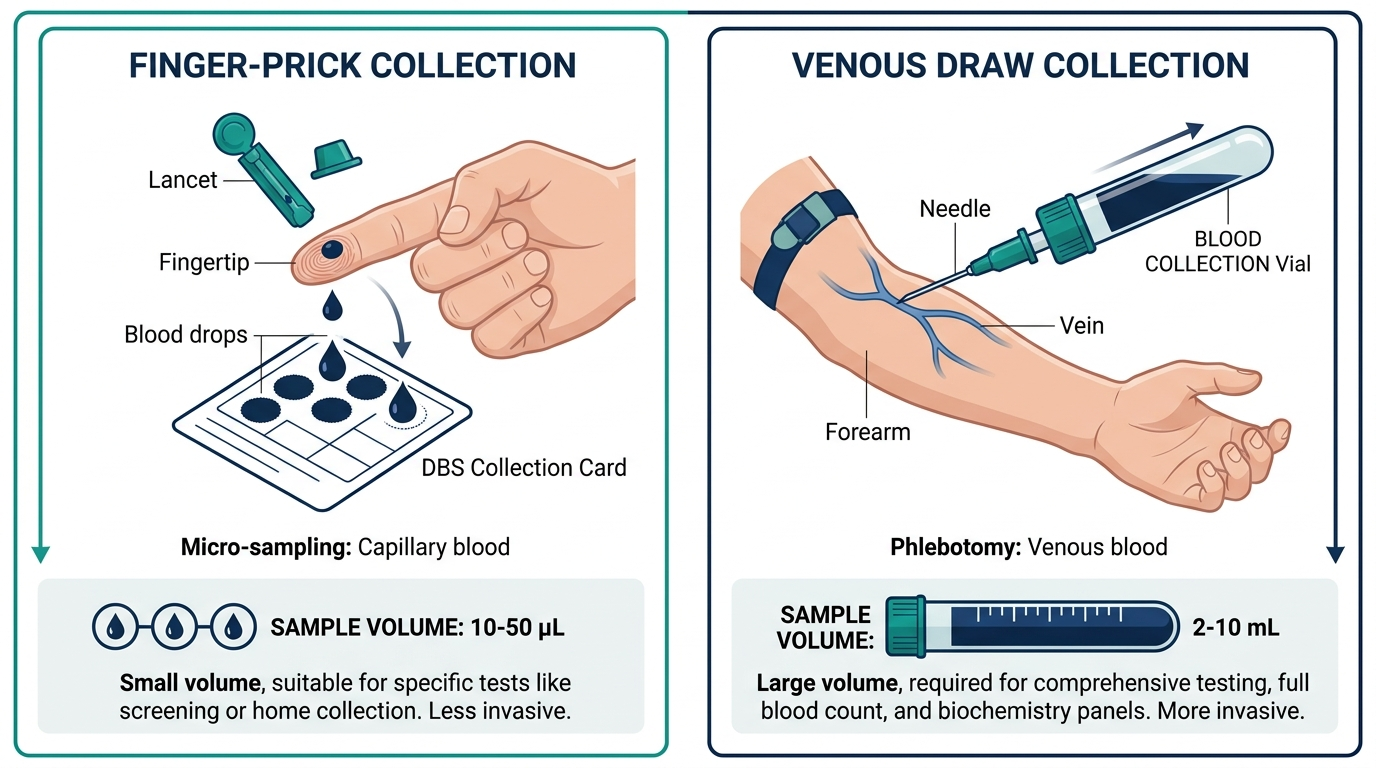
Function Health is a membership lab service, not a DIY kit. You pay an annual fee (around $499 per year as of 2026), and in return you get two comprehensive blood draws per year processed through CLIA-certified labs like Quest. The results land in a dashboard with clinician-reviewed interpretations. No doctor visit required, but an actual licensed physician oversees the orders. The panel covers metabolic health, hormones, thyroid, lipids, inflammatory markers, vitamins, and more, typically 100 to 110 biomarkers per draw. See our full function health review for the complete biomarker list and membership details.
A finger-prick kit tests a dozen markers. See what a venous-draw membership finds when it checks 100 or more. One at-home Superpower draw checks 100+ biomarkers, physician-reviewed.
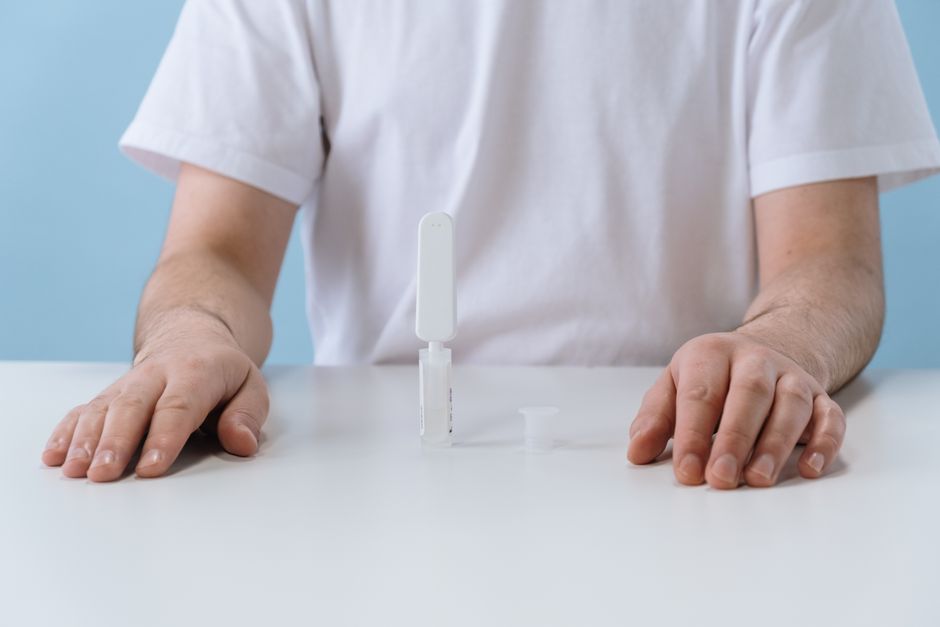
SiPhox Health operates on a different model entirely. You order a kit online, prick your finger at home, deposit blood spots onto a dried blood spot (DBS) card, and mail it back in a prepaid envelope. No phlebotomist, no lab visit, no appointment. SiPhox processes the card at its CLIA-certified partner lab and returns digital results within a few days. The standard panel covers around 12 to 20 markers depending on the plan, focusing on core metabolic and cardiovascular indicators.
The comparison of function health vs siphox health is really a comparison of two philosophies: clinical depth versus zero-friction access.
SiPhox Health biomarkers tested vs Function Health biomarkers
This is the most important difference and the one most buyers underestimate. Here is a representative comparison of what each platform covers.
| Category | SiPhox Health (standard kit) | Function Health (full draw) |
|---|---|---|
| Lipids | Total cholesterol, HDL, LDL, triglycerides | Full lipid panel plus ApoB, Lp(a), oxidized LDL |
| Blood sugar | Fasting glucose, HbA1c | Glucose, HbA1c, fasting insulin, C-peptide |
| Thyroid | TSH only (some tiers add T3/T4) | TSH, free T3, free T4, reverse T3, TPO antibodies, thyroglobulin antibodies |
| Hormones | Testosterone (total), DHEA-S, cortisol | Total and free testosterone, estradiol, progesterone, LH, FSH, SHBG, IGF-1, DHEA-S, cortisol |
| Inflammation | CRP (high-sensitivity) | hsCRP, homocysteine, fibrinogen, ESR, ferritin |
| Micronutrients | Vitamin D (some tiers) | Vitamin D, B12, folate, magnesium, zinc, selenium, iron panel |
| Organ function | Basic metabolic panel (limited) | Complete metabolic panel, GFR, uric acid, full CBC with differential |
| Advanced cardiometabolic | Not available | ApoB, Lp(a), omega-3 index |
| Heavy metals / toxins | Not available | Lead, mercury, arsenic (select tiers) |
The gap is significant. If you are trying to understand cardiovascular risk with precision, TSH alone tells you very little. Lp(a) is hereditary and unmodifiable through lifestyle, but knowing it changes your cardiologist conversation permanently. ApoB is now considered a better predictor of atherosclerotic risk than LDL-C by most lipidologists. SiPhox does not test either.
Finger-prick vs venous blood test accuracy: what the evidence actually says
Dried blood spot technology is legitimate, but accuracy depends heavily on the specific analyte. This is the nuance most comparison articles skip. For some markers, DBS is nearly equivalent to venous plasma. For others, the difference is clinically meaningful.
Analytes that perform well on DBS include hemoglobin A1c, TSH, total cholesterol, and most lipid fractions. The College of American Pathologists and multiple peer-reviewed studies have validated DBS for these markers within acceptable clinical ranges. SiPhox uses this chemistry, and for the markers it tests, the results are generally reliable.
Analytes where DBS underperforms venous draw include free testosterone (hematocrit affects extraction), free T3 and T4 (protein binding alters DBS concentrations), most micronutrients (zinc and magnesium in particular), and complete blood count parameters. These require centrifuged serum or plasma from a venous draw to be clinically actionable. This is not a knock on SiPhox’s execution; it is a fundamental chemistry limitation of the collection method.
The practical implication: if a SiPhox result flags something, your doctor will likely order a conventional draw to confirm before acting. With Function’s venous draw, the result is already in the format clinicians use, so there is no intermediate step.

SiPhox Health cost vs Function Health cost
Pricing in 2026 looks roughly like this:
| Service | Annual cost | Draws per year | Biomarkers per draw | Per-biomarker cost |
|---|---|---|---|---|
| SiPhox Health (base kit) | $50 to $150 per kit (no subscription required) | As many as you buy | 12 to 20 | $3 to $10 per marker |
| SiPhox Health (subscription) | $200 to $400 per year for quarterly kits | 4 | 12 to 20 | $3 to $8 per marker |
| Function Health (annual) | Around $499 per year | 2 | 100 to 110 | $2 to $3 per marker |
| Superpower (annual) | About $199 per year | 2 | 100 plus | Under $1 per marker |
On a per-marker basis, Function Health is actually cheaper than SiPhox for the markers they share. SiPhox’s value proposition is not cost; it is the elimination of a lab visit. If you have no Quest or Labcorp nearby, or if needles are a genuine barrier, SiPhox gives you something. If you have a lab within reasonable distance, the per-marker math favors venous-draw services. Read our breakdown of function health cost for a full year-over-year analysis of what you actually pay per test.
Is SiPhox Health legit?
Yes, SiPhox Health is a legitimate CLIA-certified testing service. The company is not selling wellness theater. Its lab processing meets federal regulatory standards, and the DBS method it uses is the same collection approach used in newborn screening programs nationwide, which gives you a sense of its regulatory pedigree. Results are reviewed before release, and the platform presents them with reference ranges.
What SiPhox is not: a replacement for a comprehensive diagnostic workup. The company is honest about this, and that honesty counts in its favor. Calling it a “screening snapshot” is accurate. The concern is not that SiPhox is fraudulent; it is that people use a clean SiPhox panel to conclude they have no metabolic problems, when markers like Lp(a), fasting insulin, free testosterone, or ApoB that SiPhox does not test could tell a very different story.
Legitimacy is the wrong question. The right question is whether the markers SiPhox tests are the ones you actually need to understand your health.
Who should choose SiPhox Health
SiPhox makes sense for a narrow but real set of situations. If you live in a rural area with no phlebotomy service within 60 miles, a finger-prick kit is genuinely your best available option for basic annual metabolic screening. If you have severe needle phobia that prevents any venous draw, DBS gives you data you would not otherwise have. If you are a caregiver helping an elderly parent track cholesterol and glucose every quarter, the low-friction model removes a real barrier. And if you have already done a comprehensive venous panel and just want to monitor a few specific markers between annual draws, a targeted SiPhox kit can serve that role.
SiPhox is also useful as a first step for people who have never done any lab work and need a gentle on-ramp before committing to a full-panel service. The results can motivate action without overwhelming someone who has never seen a lab report.
Who should choose Function Health or a venous-draw alternative
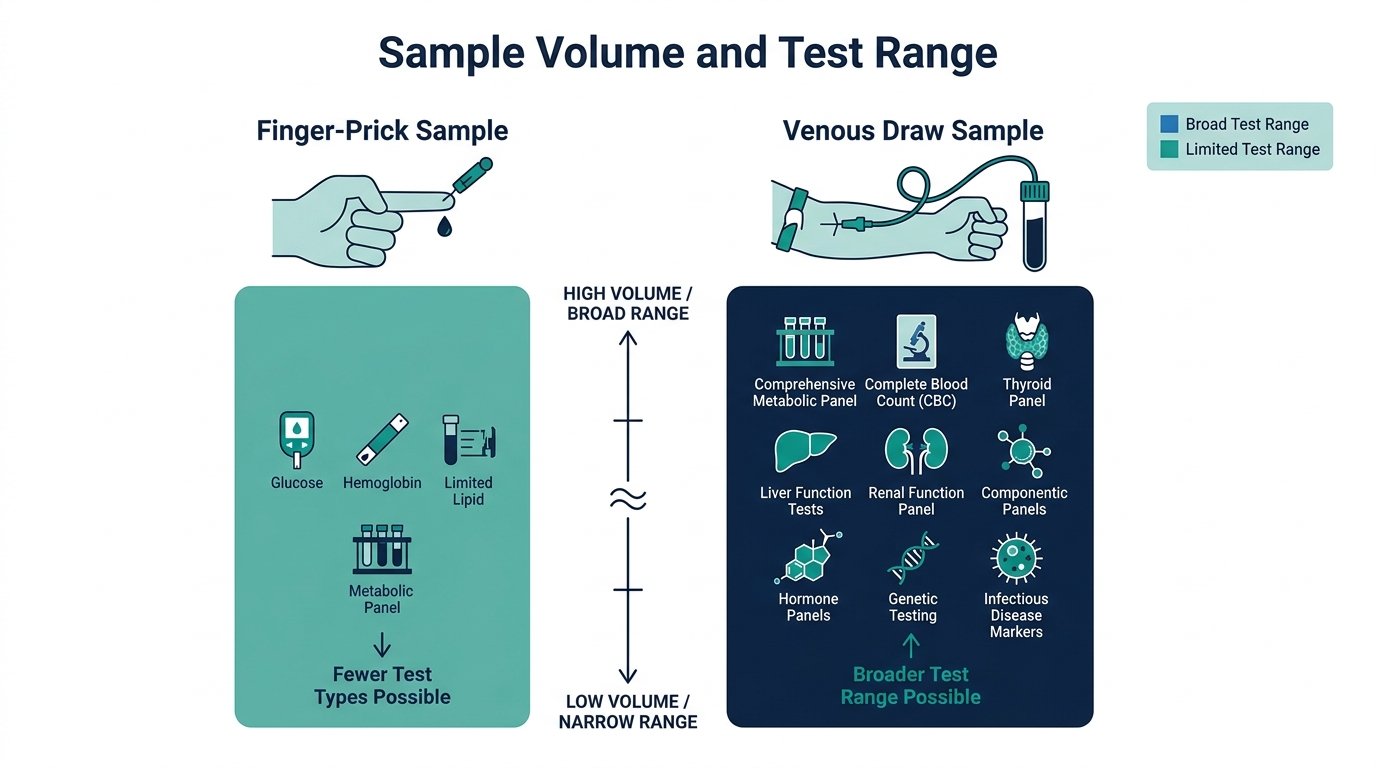
Anyone who wants a true clinical baseline should use a venous-draw service. This means anyone over 35 who has never measured Lp(a) (about 20 percent of the population has elevated levels and most do not know it), anyone with a family history of cardiovascular disease, anyone managing thyroid conditions (TSH alone is insufficient; you need free T3, free T4, and antibodies to understand thyroid physiology), anyone troubleshooting fatigue, hormonal symptoms, or unexplained weight changes, and anyone using a panel to make decisions about supplements, medications, or lifestyle interventions. Guiding those decisions from 12 markers is like navigating with half a map.
Function Health covers this ground well. For a comparison of how it stacks up against other comprehensive services, our function health vs empirical health breakdown covers the premium end of the market, and our function health vs 10x health comparison covers the high-cost concierge tier.
The simplest way to actually get this done
Superpower is a full-body lab membership that runs 100+ biomarkers, has each result reviewed by a doctor, and tracks your numbers year over year (about $199/year). It is what we point readers to when they would rather get one clean, complete draw than chase single tests one at a time. Here is superpower blood test reviewed in full.
At-home blood test vs lab draw: the practical logistics
The convenience gap between a finger-prick kit and a lab draw is smaller than most people assume. Quest Diagnostics alone has over 2,200 patient service centers in the US, and most are walk-in with online scheduling. CVS MinuteClinic and many urgent care centers also offer phlebotomy. The average wait time for a scheduled Quest draw is 10 to 20 minutes. You can pay with HSA or FSA dollars at most of these locations, and some venous-draw services (including Superpower) send a mobile phlebotomist to your home.
For SiPhox, you receive the kit by mail, perform the collection yourself (usually first thing in the morning, fasted, warming the finger first), and mail it back. Results arrive in two to five business days after the lab receives the card. The hands-on time is comparable; the difference is there is no scheduling, no drive, and no phlebotomist in your home.
Where SiPhox genuinely wins on logistics: it works for people with no local lab access, people who travel constantly and cannot commit to a draw appointment, and people who want to test more than twice a year without paying per-draw fees. Quarterly monitoring of cholesterol or HbA1c through DBS kits is reasonable and well within the method’s accuracy range for those analytes.
What people get wrong about this comparison
The most common mistake is treating this as an either-or choice where SiPhox is the “easy” version and Function is the “serious” version of the same thing. They are not testing the same things, which means they are not answering the same questions. A clean SiPhox result does not tell you your Lp(a) is fine; it tells you SiPhox did not test Lp(a). Those are very different statements.
The second mistake is assuming DBS and venous blood are interchangeable for all markers. Labs are careful to validate which analytes work reliably on each matrix. SiPhox limits its panel partly because it has to; not because it has not expanded yet. Some markers are simply not clinically reliable from a dried blood spot with current technology.
The third mistake is using price as the primary filter. At $50 to $100 per kit, SiPhox feels like the affordable option. But at $199 per year for 200-plus biomarkers annually (two draws of 100-plus each), a service like Superpower delivers far more data per dollar. Price sensitivity is understandable, but cost-per-insight is the better metric than sticker price.
If you are comparing at the Function Health price point specifically, our how much does superpower cost breakdown shows why the pricing gap between the two services is worth understanding before you commit to the $499 tier.
How to Collect a Finger-Prick Sample Without Ruining It
The accuracy advantage of a venous draw is partly about chemistry and partly about collection discipline. A phlebotomist standardizes the venous draw for you. With a mail-in dried blood spot kit, you are the phlebotomist, and small errors degrade the sample before it ever reaches the lab. Knowing the failure modes protects your result.
- Warm the hand first. Cold fingers produce slow, stingy bleeding, which tempts people to squeeze. Run warm water over the hand or swing the arm below the heart for 30 seconds to boost blood flow before the lance.
- Do not milk the finger. Squeezing the fingertip to force out blood mixes in tissue fluid, which dilutes the sample and can skew results. Let gravity and a gentle massage from the base of the finger do the work.
- Fill the circles completely and let the drop fall. Each collection circle on the card needs to be saturated through to the back. Hover the finger and let a hanging drop fall onto the card rather than smearing the finger across it, which layers the spot unevenly.
- Let it dry fully before packing. Sealing a damp card promotes clotting artifacts and mold. Most kits specify a drying window; follow it before placing the card in the return envelope.
- Mind the timing and fasting rules. If the panel includes fasting glucose or a lipid panel, collect first thing in the morning before eating. Ship promptly so the sample does not sit in a hot mailbox over a weekend, which can degrade some analytes.
A rejected or hemolyzed card means reordering, re-sticking your finger, and waiting again. The five minutes it takes to collect carefully is the cheapest insurance you can buy on the result.
Interpreting a Limited Panel Without Overreaching
The greatest risk with a small marker set is not a wrong number; it is a right number that gets over-interpreted. When a panel returns 15 values and they all sit in range, the natural conclusion is reassurance. That conclusion is only valid for the markers actually tested. A normal HbA1c does not rule out early insulin resistance if fasting insulin was not measured. A normal total cholesterol says nothing about ApoB particle count or Lp(a), the two markers that carry much of the hereditary cardiovascular risk. A normal TSH does not clear the thyroid if antibodies and free hormone fractions were not run.
Read a limited panel as a partial answer to a specific question, not a clean bill of health. If the markers tested are the ones relevant to your concern, a normal result is meaningful. If your concern is broader than the panel, treat the result as one data point and plan a fuller workup. The correct mental frame is: this tells me about these specific systems, and it is silent on everything else.
Matching the Test to Your Actual Health Question
Rather than starting from a brand, start from the question you are trying to answer, then pick the collection method that answers it.
- Question: am I on track metabolically, and I have no symptoms? A finger-prick panel covering glucose, HbA1c, lipids, and hsCRP can serve as a low-friction annual check. If anything flags, escalate to a full draw.
- Question: I have fatigue, brain fog, or unexplained weight change. This needs the full picture: thyroid antibodies, free T3 and T4, iron studies, B12, ferritin, and metabolic markers. A venous draw is the right tool, because most of these are unreliable or absent on a limited kit.
- Question: what is my inherited cardiovascular risk? You need Lp(a) at least once and ApoB for ongoing tracking. Neither is available on a basic finger-prick panel, so a comprehensive draw is required.
- Question: I am tracking a change I already made, like a new medication or diet. If the specific markers you are monitoring are DBS-reliable, quarterly finger-prick kits are a reasonable and affordable way to watch the trend between fuller annual draws.
Choosing the method after defining the question avoids the most expensive mistake in at-home testing, which is buying convenience and discovering it did not measure the thing you actually needed to know.
Don’t just read about your health, track it.
A single result is a snapshot. Superpower re-tests 100+ markers over time so you can watch them move as you change sleep, food, and training.
FAQ
Is SiPhox Health accurate?
SiPhox Health uses dried blood spot technology, which is clinically validated for specific analytes including HbA1c, lipids, TSH, and hsCRP. For those markers, accuracy is comparable to venous draw within standard clinical tolerance ranges. For markers that require serum or plasma chemistry, DBS is not used, which is why SiPhox’s panel is limited. Within its scope, SiPhox results are reliable. Talk to a clinician about your results if any values fall outside the reference range.
How many biomarkers does SiPhox Health test?
SiPhox Health’s standard kit tests roughly 12 to 20 biomarkers depending on the plan tier. Core coverage includes lipid panel, HbA1c, fasting glucose, TSH, hsCRP, and select hormones. Higher tiers add vitamin D and a few additional markers. The full list is published on their website and updated periodically, so check the current offering before ordering.
Can SiPhox replace a full blood panel?
No. SiPhox provides a useful metabolic snapshot but does not replace a comprehensive venous-draw panel. Markers like Lp(a), ApoB, fasting insulin, free testosterone, full thyroid antibody testing, micronutrients, organ function panels, and complete blood count require a conventional lab draw. If you are trying to establish a true health baseline, SiPhox is a starting point, not a finish line.
Does Function Health require a doctor’s order?
No. Function Health is a direct-to-consumer lab service. A physician affiliated with Function Health reviews and authorizes orders on your behalf, which satisfies state lab-ordering requirements without requiring you to have an independent doctor’s visit. Results are returned to you directly through the Function dashboard.
Is Function Health HSA and FSA eligible?
Function Health has indicated that its membership may be eligible for HSA and FSA spending, but eligibility depends on how your specific plan administrator classifies lab testing services. SiPhox kits similarly may qualify as a medical expense under HSA rules. Confirm with your plan administrator before assuming reimbursement. Both services should be able to provide an itemized receipt for submission.
Which is better for tracking hormones over time?
Function Health is significantly better for hormone tracking. It tests total testosterone, free testosterone, estradiol, progesterone, LH, FSH, SHBG, IGF-1, DHEA-S, and cortisol, giving a complete hormonal picture. SiPhox covers a small subset of those, and free hormone fractions are not reliably tested via DBS. If hormones are a priority, venous draw is the appropriate method, full stop.
How does SiPhox compare to just ordering labs through Labcorp or Quest directly?
Direct cash-pay ordering through services like Labcorp OnDemand or Walk-In Lab often lets you build a custom panel at prices comparable to or below SiPhox. The tradeoff is that you do not get the curated dashboard experience or the guided interpretation SiPhox provides. If you are comfortable reading raw lab results, ordering a-la-carte from a CLIA lab can deliver similar data at lower cost. If you want a guided experience with trend tracking, SiPhox adds value for its target audience.
Is there a service that offers both convenience and depth?
Mobile phlebotomy services connected to comprehensive panels come closest. Superpower, for example, sends a phlebotomist to your home and tests 100-plus biomarkers, combining the convenience of not leaving your house with the clinical depth of a full venous draw. The full picture in our superpower blood test review shows how that stacks up in practice. For most people who want real data without a lab trip, this is the better hybrid than a finger-prick kit with a limited marker set.