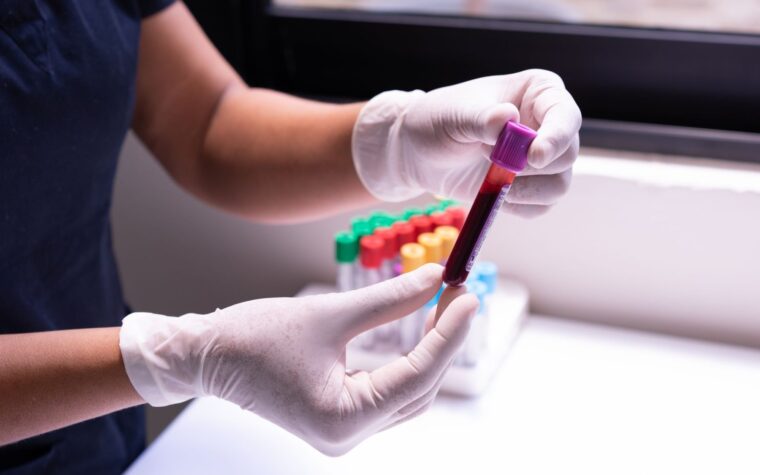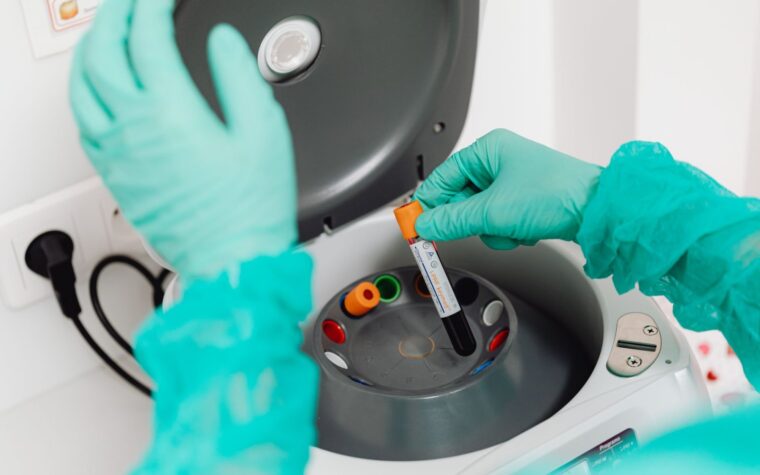
Quick answer: A full blood check ordered online typically measures 50 to 100 or more biomarkers, including a complete blood count, a comprehensive metabolic panel, lipid panel, thyroid hormones, sex hormones, vitamin levels, inflammation markers, and metabolic risk factors. Cash prices range from about $29 for a narrow panel at a discount lab to $199 per year for a physician-reviewed 100-plus-marker membership. You order online, get drawn at a Quest or Labcorp patient service center, and receive results through a digital portal, no doctor visit required in most states.
What Does a Full Blood Check Actually Include?
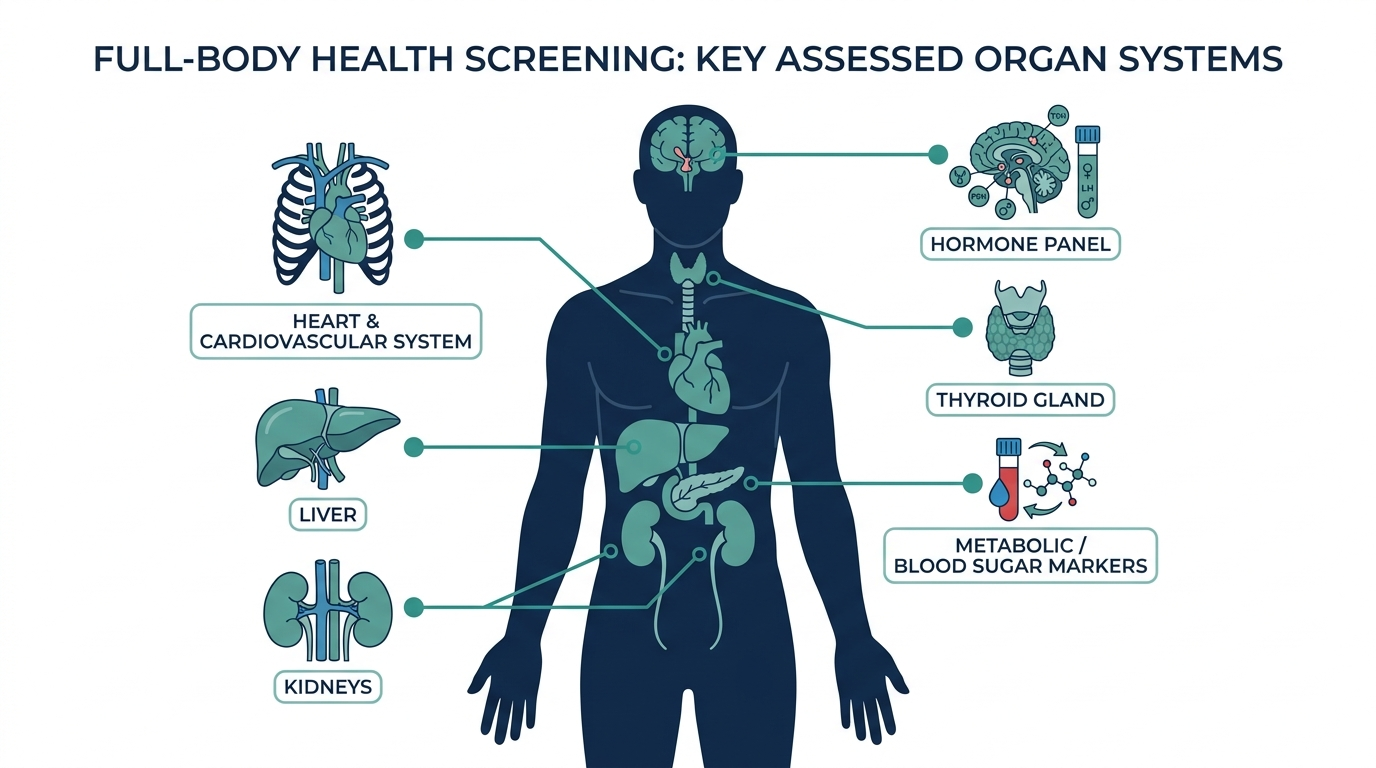
A full blood check is not a single standardized test. The term is used loosely across the industry, and what you actually receive depends entirely on which panel or service you purchase. At a minimum, a panel calling itself “comprehensive” should cover four core areas: hematology (CBC with differential), organ function (CMP covering liver, kidneys, electrolytes, and glucose), cardiovascular risk (full lipid panel with LDL, HDL, triglycerides, and ideally ApoB), and endocrine function (TSH at minimum, free T3 and T4 in better panels). Everything beyond that separates a cheap commodity panel from a genuinely informative full blood workup.
A full online health screening can run 50 to 100+ biomarkers, so how does a $199 physician-reviewed panel compare? One at-home Superpower draw checks 100+ biomarkers, physician-reviewed.
A CBC tells you how many red cells, white cells, and platelets you have and whether the sizes and shapes look normal. The CMP adds fourteen chemistry values that flag early kidney disease, liver stress, blood sugar, and electrolyte imbalances. The lipid panel quantifies cardiovascular risk. TSH alone screens for thyroid dysfunction but misses the full picture; a complete thyroid panel adds free T4, free T3, and sometimes reverse T3 and thyroid antibodies. If a service only orders TSH and calls it a “full thyroid check,” that is a half-measure. See our full blood panel online guide for a breakdown of what each category actually measures and why it matters.

How Full-Body Health Screening Online Works in 2026
The mechanics are straightforward: you pay online, receive a lab requisition by email (or through an app), walk into any participating Quest Diagnostics or Labcorp patient service center without an appointment at most locations, get your blood drawn, and see results in your portal within 24 to 72 hours. No primary care referral is required in 47 states. California, New York, and New Jersey still require a licensed clinician to authorize lab orders, so services operating there either work through a telehealth physician at no added cost or partner with a local lab network that handles the authorization.
What separates a $45 panel from a $199 membership is not just the number of markers. It is the clinical layer on top. Most discount services return raw lab values with a reference range and nothing else. A number flagged slightly outside range might be meaningless variation or it might signal something actionable, and a PDF from Labcorp does not tell you which. Premium services assign a physician or nurse practitioner to actually review your results and either message you with context or offer a follow-up call. For a genuine full body health screening, that review layer matters more than adding two more vitamin markers to the list.
Full Body Health Screening Cost: What Each Tier Delivers
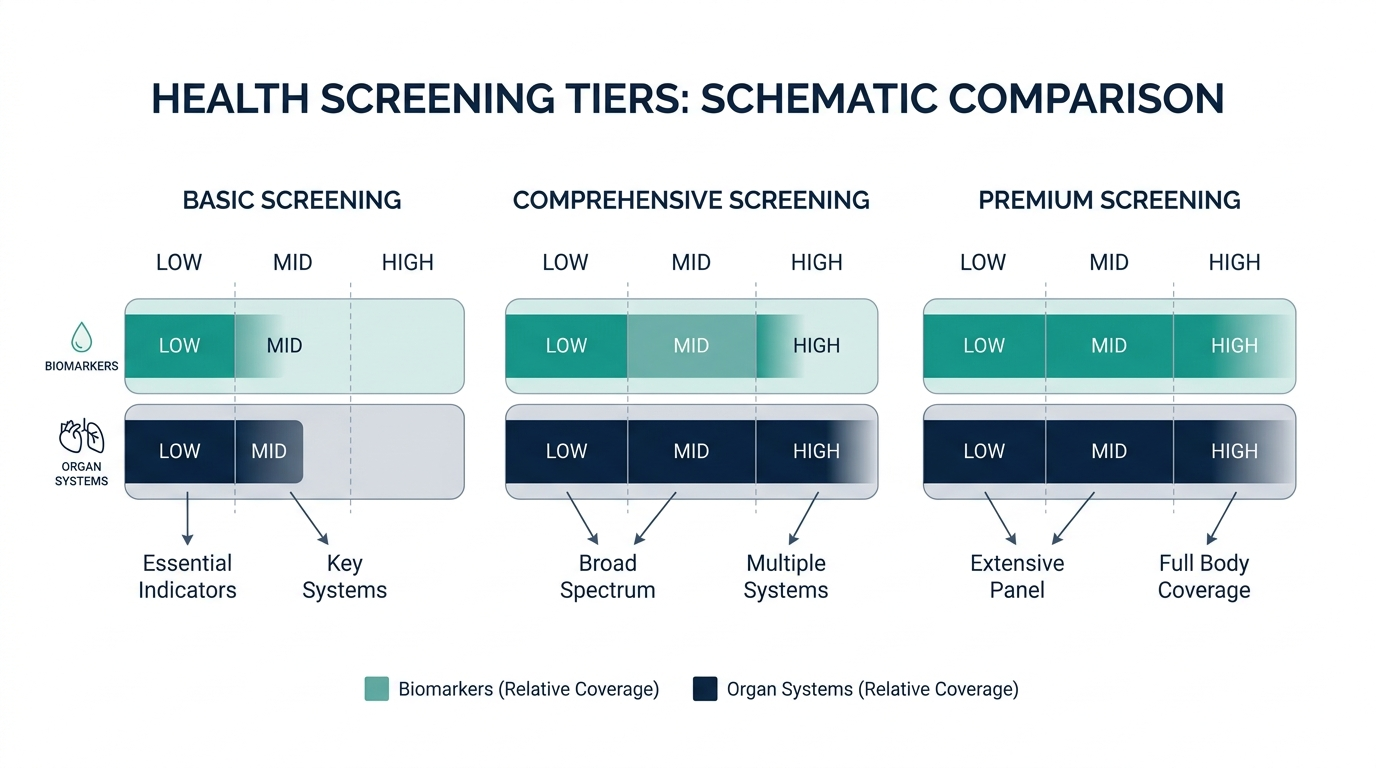
Pricing clusters into three tiers, and the gap between what you pay and what you get is not linear.
| Tier | Typical price | Markers covered | Physician review | Examples |
|---|---|---|---|---|
| Basic | $29 to $89 one-time | 12 to 40 | No | Ulta Lab Tests, Walk-In Lab, LabFinder |
| Mid-range | $99 to $249 one-time | 40 to 80 | Sometimes (AI-flagged) | Everlywell Total Health, LabCorp OnDemand Wellness panels |
| Premium membership | $149 to $399 per year | 80 to 150+ | Yes, by a licensed clinician | Superpower, Function Health |
The basic tier is useful if you have a specific concern and your insurance will not cover a test your doctor will not order. Ordering a single comprehensive metabolic panel or a testosterone level for $29 to $45 cash is genuinely cost-effective. Where the basic tier falls short is as a full body health screening: you get back a spreadsheet of numbers with no clinical context, no year-over-year tracking, and no guidance on what to do if something comes back at the edge of normal. For the full picture, see how buying blood tests online actually works before you commit to a plan.
The mid-range one-time panel is the most popular choice, and often the most disappointing one. For $150 to $249, services like Everlywell’s Total Health Test cover around 50 to 60 markers and use an algorithm to flag values outside typical ranges. That is better than a raw printout, but the physician involvement is usually limited. Read the fine print on what “reviewed by a clinician” means before purchasing. Our everlywell review walks through exactly what you get and what you do not.
The simplest way to actually get this done
Superpower is a full-body lab membership that runs 100+ biomarkers, has each result reviewed by a doctor, and tracks your numbers year over year (about $199/year). It is what we point readers to when they would rather get one clean, complete draw than chase single tests one at a time. Here is superpower blood test review.

What a Genuinely Comprehensive Full Blood Workup Should Cover
If you are evaluating whether a panel earns the label “full blood workup,” measure it against this checklist. A rigorous full blood panel workup runs at minimum 60 to 80 markers and should include everything below.
Core labs no serious panel omits
- CBC with differential: red cells, white cells (with the five-part differential), hemoglobin, hematocrit, platelets, MCV, MCH, MCHC, RDW.
- Comprehensive metabolic panel (CMP): glucose, BUN, creatinine, GFR estimate, sodium, potassium, chloride, CO2, calcium, total protein, albumin, total bilirubin, ALT, AST, ALP.
- Full lipid panel: total cholesterol, LDL, HDL, triglycerides, VLDL. Better panels add ApoB and Lp(a), which predict cardiovascular risk independently of standard LDL.
- Complete thyroid panel: TSH, free T4, free T3. Antibody testing (TPO, thyroglobulin Ab) if autoimmune thyroid disease is a concern.
- Iron studies: serum iron, TIBC, ferritin, transferrin saturation. Ferritin alone misses iron deficiency in someone with inflammation.
Markers that separate good panels from great ones
- HbA1c plus fasting insulin: HbA1c alone misses early insulin resistance. Fasting insulin with a HOMA-IR calculation is the earliest signal of metabolic dysfunction, often years before glucose climbs.
- hsCRP: high-sensitivity C-reactive protein quantifies systemic inflammation, a driver of cardiovascular disease, cognitive decline, and metabolic syndrome.
- Homocysteine: an independent cardiovascular and neurological risk marker not on any standard panel; elevated in B12/folate deficiency and MTHFR variants.
- Vitamin D (25-OH): deficiency is extremely common in the US. Below 30 ng/mL affects immune function, bone density, and mood.
- Vitamin B12 and folate: especially relevant if you are on metformin, a proton pump inhibitor, or follow a plant-heavy diet.
- Sex hormones: total and free testosterone, estradiol, SHBG, DHEA-S, LH, FSH. These affect energy, mood, body composition, and libido. Most routine physicals skip them entirely.
- Cortisol (morning): screens for adrenal insufficiency and chronic HPA-axis dysregulation.
- Uric acid: gout risk, kidney stone risk, and an emerging cardiometabolic marker.
Any service marketing a full blood panel workup that omits fasting insulin, ApoB, and at least a basic hormone panel is selling you a 1990s-era annual physical, not a modern comprehensive screen.
What People Get Wrong About Ordering a Full Blood Check Online
The most common mistake is treating a one-time panel as a complete picture. A single number in isolation tells you almost nothing. What matters is your trend over time and how your markers relate to each other. A testosterone level of 420 ng/dL is fine if your previous value was 410. It is worth investigating if your previous value was 680 and you have gained 20 pounds in two years. Online panels that do not store your history and display year-over-year trends are missing the entire point of longitudinal health monitoring.
The second mistake is ordering the wrong panel for your actual concern. Someone worried about fatigue should not order a generic wellness panel without specifically checking thyroid (full panel, not just TSH), iron studies with ferritin, B12, vitamin D, and cortisol. A generic panel might return all values as “normal” while your ferritin sits at 11 ng/mL (above the lab’s low reference of 10 but nowhere near the 50-plus range most functional medicine clinicians consider optimal for energy).
Third: reference ranges are population averages, not optimal targets. A lab might print “normal” next to a total testosterone of 280 ng/dL in a 35-year-old male because the reference range bottoms out at 264. That is not a normal result in any clinically meaningful sense. A physician who actually reviews your result with your age, symptoms, and trend in mind will flag that. A PDF from a discount portal will not. This is why the physician review layer is not a luxury feature.
Full Body Health Screening Cost by Channel
Where you order changes the price meaningfully. Here is how the main channels compare for a roughly comparable comprehensive panel in 2026.
| Channel | Cash price range | Insurance accepted | Draw location |
|---|---|---|---|
| Direct-to-consumer lab (Ulta, Walk-In Lab) | $29 to $150 | No | Quest or Labcorp PSC |
| DTC wellness service (Everlywell, LetsGetChecked) | $99 to $399 one-time | Sometimes (FSA/HSA eligible) | At-home kit or PSC |
| Membership service (Superpower) | ~$199 per year | No (but HSA/FSA eligible) | Quest PSC, 2,100+ locations |
| Primary care with insurance | $0 to copay, but ordered markers vary | Yes | Hospital or affiliated lab |
| CVS MinuteClinic or urgent care | $50 to $200 | Sometimes | On-site or sent to reference lab |
HSA and FSA funds cover most lab services, including DTC panels, because blood work is a qualified medical expense. If you have a high-deductible health plan with an HSA, paying for a comprehensive panel out-of-pocket via HSA dollars is often smarter than burning a specialist copay on a referral that takes three weeks to schedule. For a detailed look at membership pricing, see our breakdown of how much does superpower cost.
How to Prepare for a Full Blood Workup
Preparation errors are the single biggest source of misleading results in consumer lab work. Most comprehensive panels require a 10 to 12 hour fast before the draw, covering glucose, insulin, a valid lipid panel, and iron studies. Walking in after a large breakfast inflates your triglycerides, raises your glucose, and produces an LDL calculated value that is essentially useless.
Practical prep checklist:
- Fast for 10 to 12 hours. Water is fine. Black coffee without milk or sugar is acceptable for most panels but can slightly raise cortisol; skip it if cortisol is included.
- Draw in the morning between 7 and 10 a.m. if cortisol, testosterone, or LH/FSH are included. These hormones follow a diurnal rhythm; an afternoon draw gives you values that reflect a different part of the cycle than most reference ranges assume.
- Avoid intense exercise for 24 hours before drawing. Heavy lifting spikes CK, AST, and ALT, which will show as liver or muscle damage on your results.
- Hydrate well the evening before. Dehydration concentrates your blood, raising hematocrit, total protein, and creatinine artificially.
- Do not take biotin (B7) supplements for 48 hours before the draw. Biotin at high doses interferes with several immunoassay tests, including thyroid markers and troponin assays.
Comprehensive Blood Tests: What Shows Up as Abnormal Most Often
In a broad population of adults who have never had a comprehensive blood check, the most commonly flagged abnormalities in 2026 data from consumer lab services include: vitamin D deficiency (around 40 percent of US adults below 30 ng/mL), borderline or elevated fasting glucose or HbA1c (consistent with the CDC estimate that one in three US adults has prediabetes), suboptimal ferritin (particularly in women under 50 and vegetarians), elevated hsCRP suggesting low-grade inflammation, and testosterone below mid-range in men over 35. None of these conditions typically produce obvious symptoms in their early stages. That is exactly why a full blood check matters before you feel something is wrong.
Thyroid findings come up more often than most people expect. TSH alone misses subclinical hypothyroidism in patients with normal TSH but low free T4, and it misses Hashimoto’s thyroiditis entirely until antibodies are checked. If your doctor only orders TSH at your annual physical, you are getting a screen, not a complete thyroid evaluation. Our best comprehensive health test 2026 review covers which services order full thyroid panels and which cut corners.
Who Should Get a Full-Body Health Screening and How Often
A full body health screening is most valuable for adults in four situations: you are 30 or older and have never had baseline labs drawn outside a routine physical; you have a family history of heart disease, type 2 diabetes, thyroid disorders, or early cancer; you are experiencing unexplained fatigue, weight changes, brain fog, or mood shifts; or you are proactively managing your health and want data to optimize from, not just disease screening to check a box.
Frequency depends on your baseline results and risk profile. For a healthy adult with all values in optimal range, annually is reasonable. If any markers are borderline or you are actively managing a condition, every six months lets you see whether lifestyle or supplement changes are actually moving your numbers. Talk to a clinician about which markers warrant closer follow-up given your specific results.
Medicare covers a “Welcome to Medicare” preventive visit that includes some basic labs, and annual wellness visits thereafter include limited labs. What Medicare covers is still narrower than a private full blood panel workup, particularly for sex hormones, advanced lipid markers, and inflammation markers. Supplemental coverage (Medigap or Medicare Advantage) varies by plan.
Curious what your own levels look like?
Baseline 100+ biomarkers today and retest as life changes, all in one membership with physician review.
FAQ
What is included in a full blood check?
A full blood check covers at minimum a CBC (complete blood count), comprehensive metabolic panel, and lipid panel. Better panels add thyroid hormones, iron studies, vitamin D, B12, sex hormones, HbA1c, fasting insulin, hsCRP, homocysteine, and uric acid. What is labeled “full” varies widely by provider, so always review the exact marker list before ordering.
How much does a full body health screening cost online?
Prices range from about $29 for a narrow discount panel to $199 per year for a physician-reviewed 100-plus-marker membership. A mid-range one-time comprehensive panel at a DTC service typically runs $99 to $249. Most panels are HSA and FSA eligible, so your out-of-pocket cost may be lower if you use pre-tax health account dollars.
Do I need a doctor to order a full blood workup online?
In most US states, no. Direct-to-consumer lab services let you order without a physician referral. California, New York, and New Jersey are exceptions; services operating there work through a telehealth physician to authorize orders, usually at no added cost to you. The lab draw itself happens at a Quest or Labcorp patient service center.
How is a full blood panel workup different from what my doctor orders at an annual physical?
A standard annual physical typically includes a CBC, basic metabolic panel, and lipid panel, covering around 20 to 25 markers. A full blood panel workup ordered through a premium DTC service covers 80 to 150 markers, including sex hormones, detailed thyroid function, inflammation markers, insulin resistance indicators, and nutrient levels that are rarely ordered in routine care. The information gap is substantial.
Can comprehensive blood tests detect cancer?
Standard comprehensive blood panels do not screen for most cancers. A CBC can flag abnormal white cell counts that prompt further investigation, and liver markers can suggest liver pathology, but a full blood workup is not a cancer screen. Specific cancer markers such as PSA (prostate), CA-125, or CEA are add-on tests, not standard inclusions. Multi-cancer early detection tests (like Grail Galleri) are a separate category entirely.
How long does it take to get results from an online full blood check?
Most Quest and Labcorp draws are processed within 24 to 72 hours for standard chemistry panels. More specialized markers like sex hormone binding globulin, Lp(a), or homocysteine may take 3 to 5 business days. Services with physician review add a layer; expect results plus a clinical note within 3 to 7 days for most premium memberships.
Are at-home finger-prick blood tests as accurate as a venous draw?
For some markers, yes. At-home dried blood spot kits from services like Everlywell have been validated for testosterone, vitamin D, thyroid hormones, and a handful of other analytes. For others, particularly CBC, a full metabolic panel, and highly sensitive inflammation markers like hsCRP, capillary blood from a finger prick is less reliable than a venous draw. If accuracy matters, a patient service center draw is the standard.
Is a full blood check covered by insurance?
DTC lab services generally do not bill insurance directly. If your physician orders the same tests through a hospital-affiliated lab, insurance often covers them, subject to your deductible and copay. Many DTC panels qualify as HSA/FSA eligible expenses, which gives you a 22 to 37 percent effective discount through pre-tax savings depending on your bracket. Check your HSA administrator before assuming eligibility.
What should I do if something comes back abnormal on my full blood workup?
Do not self-treat based on a single out-of-range value. Context matters: was it barely outside range, or flagged significantly? Is this the first draw or is it trending? A service with physician review should give you guidance. If yours does not, take the result to your primary care physician or a relevant specialist. Repeat testing to confirm an abnormal value before acting on it.
How is Superpower different from ordering an individual comprehensive panel?
Superpower runs 100-plus markers annually, has a physician review every set of results, stores your longitudinal trend data, and charges a flat $199 per year, which typically covers the full panel cost that would exceed $500 if ordered piecemeal. Individual panels from discount sites give you raw values with no clinical layer and no year-over-year tracking. The membership model is more cost-effective once you move past a single curiosity draw. Read the full superpower blood test review for a marker-by-marker comparison.