
Last updated June 2026. Educational content, not medical advice. BPC-157 is not FDA-approved for human use. Talk to a licensed clinician before starting any peptide protocol.
Short answer: The most defensible route to BPC-157 right now is a licensed telehealth clinic, where clinicians like those at Defy Medical and Marek Health have been prescribing it through compounding pharmacies at $200 to $500 per month. The grey-market research-chemical route still exists, with 5 mg vials starting around $38, but the legal and quality landscape shifted significantly in April 2026 when the FDA removed BPC-157 from its restricted Category 2 list and placed it on the docket for a formal compounding vote on July 23 to 24, 2026.
Before spending $200 to $500 a month on BPC-157 through telehealth, see what your own inflammation markers show. One at-home Superpower draw checks 100+ biomarkers, physician-reviewed.
BPC-157 is the single most-requested research peptide at clinics like Marek Health, and for good reason. The animal literature is unusually consistent for a compound this far from FDA approval: rat and rodent models show accelerated tendon repair, gut-lining restoration, and anti-inflammatory effects across hundreds of preclinical studies. The problem is not the science. It is the supply chain.
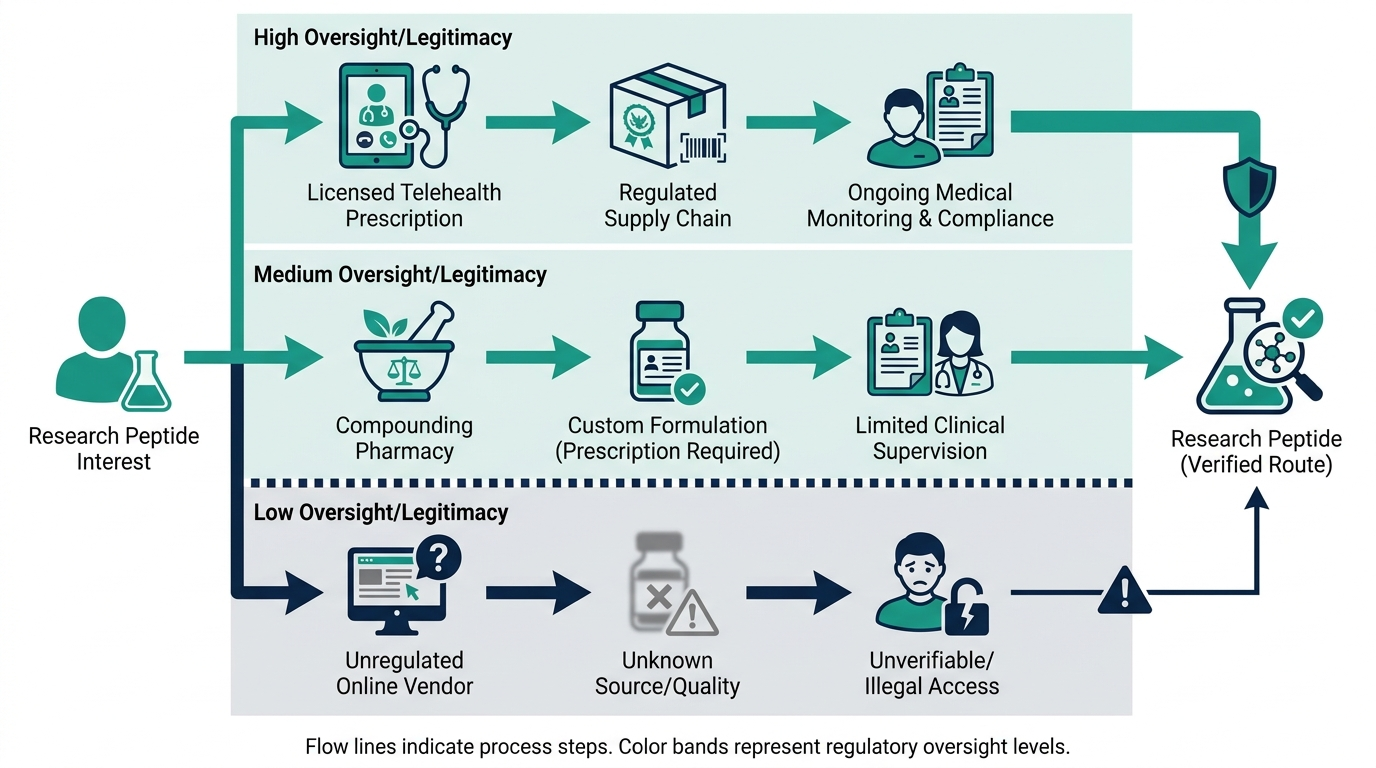
The question “where to get BPC-157” hides at least three very different shopping trips depending on your situation, your goals, and your tolerance for regulatory uncertainty. This article maps all three routes, tells you what each actually costs, and gives you the five questions that separate a usable answer from a lawsuit in a vial.
Full-body lab membership: 100+ biomarkers, doctor-reviewed, tracked over time.
What exactly is BPC-157 and why do people want it?
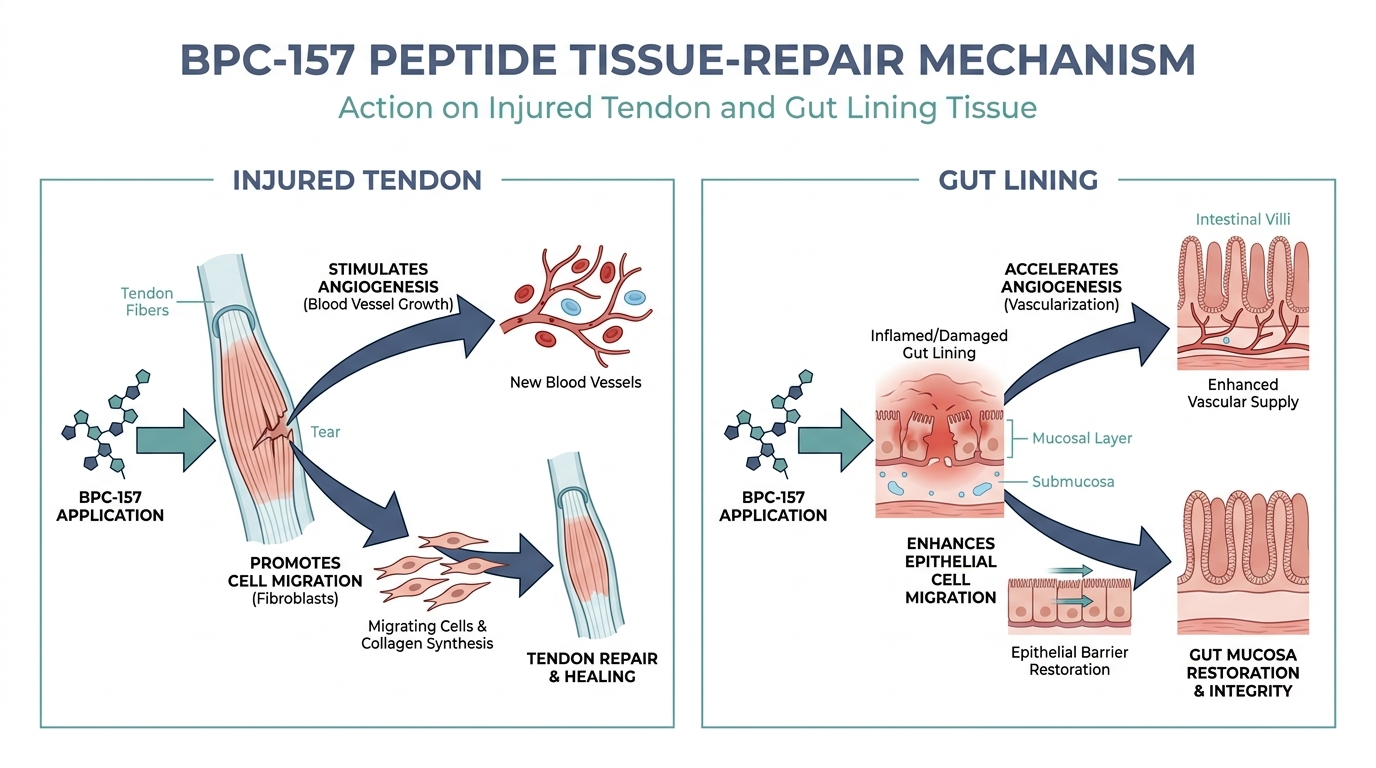
BPC-157 stands for Body Protection Compound-157. It is a synthetic pentadecapeptide, meaning it is a chain of exactly 15 amino acids, originally isolated from a protective protein found in human gastric juice. The “157” refers to its sequence position in that parent protein.
The compound has been in animal research for decades, and the breadth of effects documented preclinically is what drives the demand. Depending on the study, BPC-157 has shown capacity to accelerate the outgrowth of tendon explants, modulate the nitric oxide (NO) pathway through activation of the Akt-eNOS signaling axis, reduce intestinal inflammation in IBD models, protect the gastric lining from NSAID damage, and support nerve regeneration in peripheral nerve injury models. A 2026 review published in Regeneration or Risk? A Narrative Review of BPC-157 for Musculoskeletal Healing (PMC12446177) captured the current state: strong preclinical signal, extremely limited human data, and a need for properly powered clinical trials before clinical recommendations can be made.
The human data as of mid-2026 is thin but not nonexistent. Three small pilot studies exist. The most recent, conducted by Lee and Burgess in 2025, gave intravenous BPC-157 to two healthy adults at doses up to 20 mg and reported no major adverse effects. At the American College of Gastroenterology annual meeting in 2025, a preliminary report (abstract S808) described oral BPC-157 as an “emerging adjunct” in gastrointestinal applications. Neither study is a Phase II trial. Neither study justifies pulling up a research-chem website and ordering without clinician involvement.
Personally, I think the consistent cross-species replication in animals gives BPC-157 more credibility than the average nootropic forum darling. But that is exactly why the human-data gap is frustrating, not reassuring. A compound that reliably does something in animals but has minimal human study is not proved safe. It is under-studied.
What changed with BPC-157’s legal status in 2026?
Understanding where to get BPC-157 legally requires understanding why it became so hard to get legally in the first place, because the rules changed sharply twice in 30 months.
In November 2023, the FDA added BPC-157 to its 503A Category 2 list: “bulk drug substances that may present significant safety risks.” That designation effectively made it illegal for licensed 503A compounding pharmacies to compound BPC-157 for patients. Clinics that had been legitimately prescribing it were cut off overnight, and a large fraction of the patient population that had been using it through legal channels shifted to the grey market.
Then the regulatory tide reversed. On February 27, 2026, the Department of Health and Human Services (HHS) signaled that roughly 14 peptides, including BPC-157, TB-500, KPV, Epitalon, Semax, MOTS-c, and DSIP, were expected to move back toward Category 1 (permitted for compounding). On April 15 or 22, 2026 (different sources cite slightly different dates within that window), the FDA formally removed BPC-157 from Category 2. BPC-157 is now scheduled as one of the seven peptides under formal PCAC (Pharmacy Compounding Advisory Committee) review at the FDA White Oak Campus in Silver Spring, Maryland on July 23 to 24, 2026 (FDA advisory committee calendar).
Critical nuance that most news coverage blurs: removal from Category 2 does NOT add BPC-157 to the 503A positive bulks list. It removes the explicit prohibition but does not yet authorize compounding. The PCAC vote on July 23 is a recommendation to the FDA, not a legalization event. Formal FDA rulemaking to add a substance to the 503A list occurs after the PCAC vote, and that process typically takes months. The July 23 meeting is a necessary step, not the finish line.
The practical implication for buyers: if a clinic is prescribing BPC-157 through a compounding pharmacy right now (before the July 23 PCAC decision), they are either operating under a regulatory interpretation that the Category 2 removal created a permissible grey zone, or they are cutting corners. Either way, you want to know which pharmacy they use and whether that pharmacy is a licensed 503A or 503B facility. A legitimate compounding pharmacy will provide that information without hesitation.
The three routes to getting BPC-157 and what each actually involves
Route 1: Licensed telehealth clinic with compounding pharmacy prescription
This is the route I would choose, and not primarily for legal reasons, though legality matters. The real reason is accountability. With a telehealth clinic, there is a licensed clinician who reviewed your labs before the prescription was written, a named compounding pharmacy that is inspected and accountable, and a dose that was calculated by someone with a credential on the line.
Clinics that have been prescribing BPC-157 through the compounding route include Defy Medical (Tampa, FL, plus national telemedicine), Marek Health (national telemedicine), and newer entrants like OneTwenty. Pricing across these platforms, including the initial consultation, the peptide, and follow-up, generally runs $200 to $500 per month (PeakedLabs). Marek Health specifically prices BPC-157 at approximately $350 for a 15 mg vial and notes it as their most-requested peptide. Defy Medical’s initial consultation starts at $250 with follow-ups at $150.
There is an important thing to know about what clinics can and cannot prescribe right now given the regulatory window. If a telehealth platform is advertising injectable BPC-157 as casually as a vitamin, ask which pharmacy is dispensing it and request the pharmacy’s 503A licensure number. A compliant pharmacy will be able to provide that. The gray zone created by the Category 2 removal has made some platforms sloppy about documentation, and “we prescribe BPC-157” from a clinic does not automatically mean “from a legitimate licensed compounding facility.”
For athletes: BPC-157 is prohibited under the WADA S0 (Unapproved Substances) category and is listed as prohibited at all times. A 19-year-old American speed skater received a one-year ban in 2024 after testing positive for it (USADA). No Therapeutic Use Exemption (TUE) pathway exists because BPC-157 has no approved medical use. If you compete under any anti-doping authority, the clinic route does not make BPC-157 permissible for you.
Telehealth GLP-1 program with provider visits and pharmacy coordination.
Route 2: Research-chemical vendor (grey market)
The grey-market route is well-documented, widely used, and carries risks that most vendor pages are not going to explain plainly. Here is a frank map of what the route involves.
Research-chemical vendors sell BPC-157 labelled “for laboratory research use only, not for human consumption.” That label is not protective language you can ignore. It is the legal premise on which the entire sale is allowed. The day the compound goes in your body, you have left every protection the label nominally offered.
Pricing from research-chemical vendors in 2026 runs approximately $38 to $95 for a 5 mg vial, depending on the vendor, the purity claim, and the batch verification. Some vendors list prices as low as $29, which is a red flag, not a bargain. Lower-cost vials almost always cut corners on either synthesis quality or third-party testing.
The only meaningful quality check on the research-chem route is a Certificate of Analysis (COA) from a genuinely independent third-party lab. As of mid-2026, Finnrick Analytics has tested 606 samples of BPC-157 from 86 different vendors (Finnrick BPC-157 page). Purity in verified samples typically ranges from 96.49% to 99.95% at the 5th to 95th percentile. That range is the honest picture. Not every vial is bad. But quantity diverges by up to plus or minus 70% versus advertised value at the 95th percentile. A vial that claims 5 mg might contain 3 mg or 8.5 mg, and you would have no way to know without testing it.
Do not believe any claim that a COA from an “in-house lab” means anything. An in-house COA has never been independently confirmed. The labs that the research-peptide community actually uses for verification are Janoshik Analytical, MZ Biolabs, and Colmaric Analyticals. Janoshik reports carry a unique alphanumeric key you can enter directly on Janoshik’s own site to confirm the report has not been altered. That confirmation step separates a real test from a Photoshopped document.
One specific finding worth flagging: a Drug Testing and Analysis study found that 30% of online peptides contained incorrect amino acid sequences, and 65% had endotoxin levels above safety thresholds. You can buy BPC-157 that is 99% pure on HPLC and still be injecting the wrong peptide if the Mass Spectrometry identity test was not run.
Route 3: Oral capsule supplements
A third route exists that almost never gets a serious discussion: BPC-157 in oral capsule form, sold as a supplement. Some wellness clinics and supplement companies sell these openly, often under “research supplement” framing.
The honest picture on oral BPC-157 is this: the bioavailability relative to injectable delivery is likely 10 to 30% based on animal data, meaning you would need roughly three to ten times the dose to produce equivalent systemic effects. For GI-specific goals (gut lining, IBD-type symptoms, NSAID protection), oral delivery has genuine preclinical support because the compound acts locally before it needs to enter systemic circulation. For tendon, muscle, or musculoskeletal goals, nearly all the positive animal data was generated with subcutaneous or intraperitoneal injection. Oral BPC-157 for a knee tendon injury is a different proposition than oral BPC-157 for gut inflammation.
The FDA placed BPC-157 on import alert, making it legally ineligible as a dietary supplement ingredient in the US. Oral capsule products on the market are technically research chemicals in a different form factor. Quality variance is, if anything, worse than injectable vials because the capsule market has attracted more low-barrier entrants. Pharmaceutical-grade single-ingredient oral BPC-157 products run $90 to $140 per bottle.
How to read a BPC-157 COA before you trust a vial
If you are going to buy from a research vendor, the COA is the only thing standing between you and an unknown compound. Most buyers open it, see a number above 98%, and close the tab. That is not reading a COA. Here is what to actually look for:
| COA Element | What to look for | Red flag |
|---|---|---|
| Test method | HPLC for purity AND Mass Spec for identity | HPLC only (no identity confirmation) |
| Purity threshold | 96% minimum; 99%+ is excellent | Below 96%, or purity number without units |
| Batch matching | Batch number on COA = batch number on vial | Generic PDF reused across all products |
| Lab identity | Janoshik, MZ Biolabs, or Colmaric | Vendor’s “in-house” lab or unnamed lab |
| Verification | Unique key checked on lab’s own website | PDF only, no verification mechanism |
| Date | Test within last 12 months | Undated or more than 18 months old |
A COA that fails any one of these rows is not evidence of quality. It is evidence of either corner-cutting or fraud. The community shorthand on Reddit’s r/peptides is a useful calibration: discussions there are not about whose website looks most professional. They are about whose Janoshik key verified, whose batch just got an E rating on Finnrick, and whose purity slipped below 96% this quarter. That is a more honest quality signal than any vendor’s testimonial page.
What about TB-500 stacked with BPC-157?
BPC-157 and TB-500 are frequently discussed together, and the PCAC July 2026 meeting is reviewing both compounds. The “BPC/TB blend” is probably the most popular research peptide combination in the market. TB-500 (a synthetic fragment of Thymosin Beta-4) is also in the grey zone: removed from Category 2 alongside BPC-157, and under the same July 23 to 24 PCAC review.
The rationale for stacking is that BPC-157’s primary mechanism operates through the Akt-eNOS nitric oxide pathway and direct collagen synthesis upregulation, while TB-500’s primary mechanism involves actin-binding peptide activity that promotes cell migration and differentiation. In theory, they address different aspects of the healing cascade. In practice, the combination is supported by preclinical animal models and a substantial amount of anecdotal community data, but not by human controlled trials. Clinics like Defy Medical do prescribe the combination; the research-vial market sells it as a blend. Cost for a quality blend vial runs $52.50 to $90 depending on the vendor and ratio.
If you are a competitive athlete reading this: both BPC-157 and TB-500 are prohibited under WADA S0. There is no exception for either compound.
Is it worth getting BPC-157 before the July 2026 PCAC decision?
This is the real decision most people are sitting with as of summer 2026, and I will give you the honest version.
The PCAC vote on July 23 to 24 is not the end of the road even if it goes favorably. A positive committee vote triggers formal FDA rulemaking to add BPC-157 to the 503A bulks list, which is a process that typically takes additional months. A favorable PCAC vote does not mean your compounding pharmacy can suddenly start dispensing BPC-157 on July 25.
What the Category 2 removal in April 2026 already accomplished is: it eliminated the explicit prohibition. Clinics operating under careful legal interpretation have used that window to resume prescribing through pharmacies they believe are operating compliantly. The risk is that a pharmacy could be cited if the FDA later decides the Category 2 removal did not actually create a permissible window before formal 503A listing. That risk sits on the clinic and pharmacy, not on the patient, but it is worth knowing.
The grey-market route is unchanged by any of these regulatory events. “Research use only” was always the legal fig leaf. The enforcement risk has historically been targeted at vendors, not individual buyers. But the quality risk is unchanged too: Finnrick’s 606 tests across 86 vendors show that the range of what you might receive is genuinely wide, and the consequences of injecting a contaminated or mislabeled peptide are yours alone.
Who should and should not consider BPC-157?
Should consider (and talk to a clinician about):
People with documented, persistent soft-tissue injuries (tendon, ligament) who have not responded adequately to standard physical therapy and conservative care. People with documented inflammatory gut conditions exploring adjunct options alongside a GI physician. People who have a clinician willing to order labs, monitor for effects, and adjust a protocol based on data.
Should not pursue this route without significant caution:
Competitive athletes in any WADA-governed sport, full stop. People with a personal or family history of rapid-proliferating tumors (the theoretical concern about BPC-157’s angiogenic and proliferative mechanisms has not been resolved in human data). Anyone self-sourcing from an unverified vendor without a baseline COA check. And, practically, anyone expecting the compound to replace physical rehabilitation rather than potentially accelerate it.
The myth that BPC-157 is a “safe healing peptide with no risks” because it comes from gastric juice proteins needs to go. Aspirin comes from willow bark, and it still causes GI bleeds when used carelessly. The origin of a compound has nothing to do with its safety profile at therapeutic concentrations. BPC-157’s human safety data is simply too thin to be confident either way, and that uncertainty should inform the decision-making.
What does BPC-157 actually cost across all routes?
| Route | Cost range | What is included | Quality guarantee |
|---|---|---|---|
| Telehealth clinic (monthly program) | $200 to $500/month | Clinician intake, prescription, compounding pharmacy, follow-up | Pharmacy licensed, clinician accountable |
| Compounding pharmacy (prescription only) | $200 to $600/month | Compound plus provider fees | 503A pharmacy inspection standards |
| Research vial (grey market, verified vendor) | $38 to $95 per 5 mg vial | Lyophilized powder only | Third-party COA if you demand and verify it |
| Oral capsule supplement | $90 to $140 per bottle | Pre-measured dose | No regulatory oversight; quality varies widely |
One number none of those rows captures: the cost of the bacterial water, syringes, and alcohol swabs required to reconstitute a research vial is approximately $15 to $30 additional per cycle. More meaningfully, the cost of getting the reconstitution math wrong, that is not priced anywhere in the table. A vial containing 5 mg reconstituted with 1 mL of bacteriostatic water produces a concentration of 5,000 mcg per mL. On a U-100 insulin syringe, every 10 units equals 50 mcg. Misplace a decimal, and you are not slightly off; you are off by an order of magnitude.
This is what the telehealth price actually buys: someone else holds the math, the pharmacy, and the accountability chain. The grey-market vial is only the molecule. Everything that makes a molecule safe to use in a human body is missing from the price and missing from the package.
Turn what you just learned into action.
Superpower lets you test 100+ biomarkers from home, then re-check them over time so you can actually see progress, physician-reviewed at every step.
Frequently asked questions
Is BPC-157 legal to buy in 2026?
Buying BPC-157 labeled “for research use only” is not illegal for an individual in the US. It is not a controlled substance. However, it is not FDA-approved for human use, it cannot be sold as a dietary supplement, and it cannot be legally dispensed by a compounding pharmacy without 503A authorization. As of June 2026, the FDA removed it from Category 2 restriction and is reviewing it for compounding authorization at the July 23 to 24 PCAC meeting. Formal authorization will require additional rulemaking after that vote.
Where do most people actually get BPC-157?
The research-chemical market remains the largest volume channel, with vials from multiple vendors priced at $38 to $95 for 5 mg. Telehealth clinics and compounding pharmacies are the legitimate route, operating at $200 to $500 per month. The fraction of buyers using the clinical route has grown since 2024 as awareness of quality risks in the research-chem market has increased.
Can I get BPC-157 without a prescription?
You can buy it labeled “research use only” without a prescription. You cannot get it from a licensed pharmacy without a prescription. The distinction matters because a prescription-dispensed compound comes from an inspected facility with documented purity and sterility testing. A research vial comes with whatever the vendor’s COA says, which may or may not be accurate.
What is the PCAC July 2026 meeting and does it legalize BPC-157?
The Pharmacy Compounding Advisory Committee meeting on July 23 to 24, 2026 at the FDA White Oak Campus will review BPC-157 alongside six other peptides (TB-500, KPV, MOTS-c, DSIP, Epitalon, Semax) and issue a recommendation on whether each should be added to the 503A bulks list. A favorable vote does not legalize compounding immediately. It triggers formal FDA rulemaking that takes additional time.
Is BPC-157 the same as a steroid or HGH?
No. BPC-157 is a peptide, not an anabolic steroid and not human growth hormone. It does not bind androgen receptors, does not raise testosterone, and does not trigger pituitary GH release. Its mechanism involves nitric oxide modulation, growth factor upregulation at injury sites, and direct collagen synthesis support. That said, it is banned under WADA’s S0 category alongside steroids and unapproved substances, not because of steroid-like effects but because it lacks FDA approval and human safety data.
How do I verify a vendor’s Certificate of Analysis?
Confirm the test was run by Janoshik Analytical, MZ Biolabs, or Colmaric Analyticals. For Janoshik specifically, the COA includes a unique key you enter at the Janoshik website to confirm the report is authentic and unmodified. Confirm that HPLC purity is at least 96% and that a separate Mass Spectrometry identity test was run (purity without identity tells you the vial is clean but not that it contains the right compound). Match the batch number on the COA to the batch number on your actual vial.
What is the oral BPC-157 option and does it work?
Oral BPC-157 capsules are sold by supplement companies and some wellness clinics. The preclinical evidence supports oral delivery for gut-related applications (gastric ulcers, IBD models, NSAID protection) because the compound acts locally along the GI tract. For musculoskeletal goals, virtually all positive animal research used injectable delivery. Oral bioavailability is estimated at 10 to 30% relative to injection, requiring substantially higher doses for equivalent systemic effect. Quality control is no better and arguably worse than injectable vials from research-chem vendors.
Author: Vital Signs Today Editorial Team, [credential]”]. Educational content, not medical advice. Sources linked inline.
Primary sources:
- FDA Advisory Committee Calendar: PCAC July 23-24, 2026
- FDA Bulk Drug Substances Category 2 List
- Finnrick Independent Peptide Testing: BPC-157 Results
- PMC12446177: Regeneration or Risk? Narrative Review of BPC-157 for Musculoskeletal Healing
- PMC13026520: From Regeneration to Analgesia, The Role of BPC-157 in Tissue Repair and Pain Management
- ACG 2025 Annual Meeting Abstract S808: Oral BPC-157 as Emerging Adjunct in Gastroenterology
- USADA: BPC-157 Experimental Peptide Creates Risk for Athletes
- Loti Labs: BPC-157 Legal Status 2026, FDA Category 2 Removal and PCAC Review
- AgeMD: RFK BPC-157 FDA Peptide Reclassification 2026
- PeakedLabs: BPC-157 Cost Guide 2026
- HealingMaps: FDA to Review 7 Peptides for Compounding List in July 2026
- Lengea Law: FDA Puts BPC-157 and TB-500 Under the Microscope, 503A Review
- Journal of Applied Physiology: The Promoting Effect of BPC 157 on Tendon Healing
- OPSS: BPC-157, A Prohibited Peptide and Unapproved Drug Found in Health and Wellness Products
Related reading
Vital Signs Today may earn a commission if you buy through links on this page. It does not affect our editorial assessments.