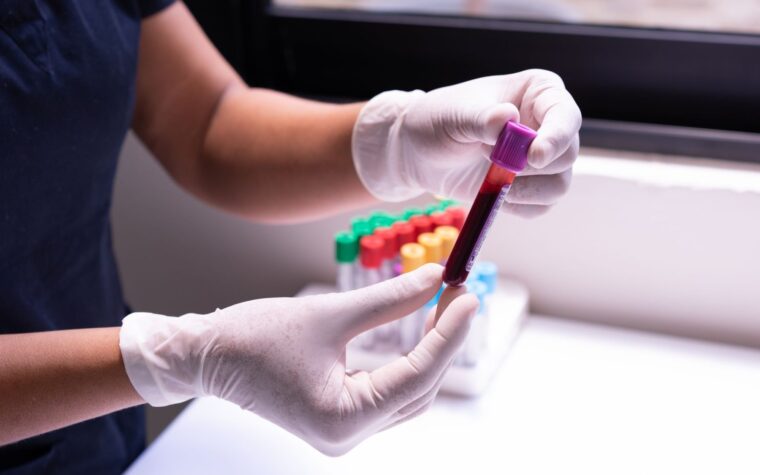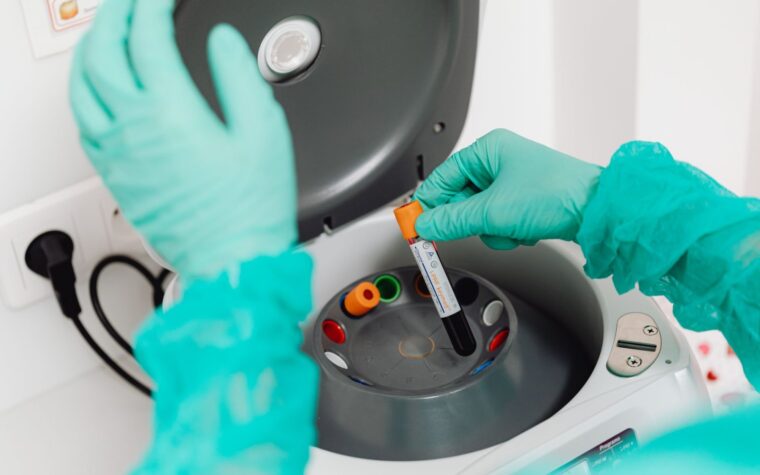
A routine physical only covers three panels. See what 100+ biomarkers can show that a checkup misses. One at-home Superpower draw checks 100+ biomarkers, physician-reviewed.
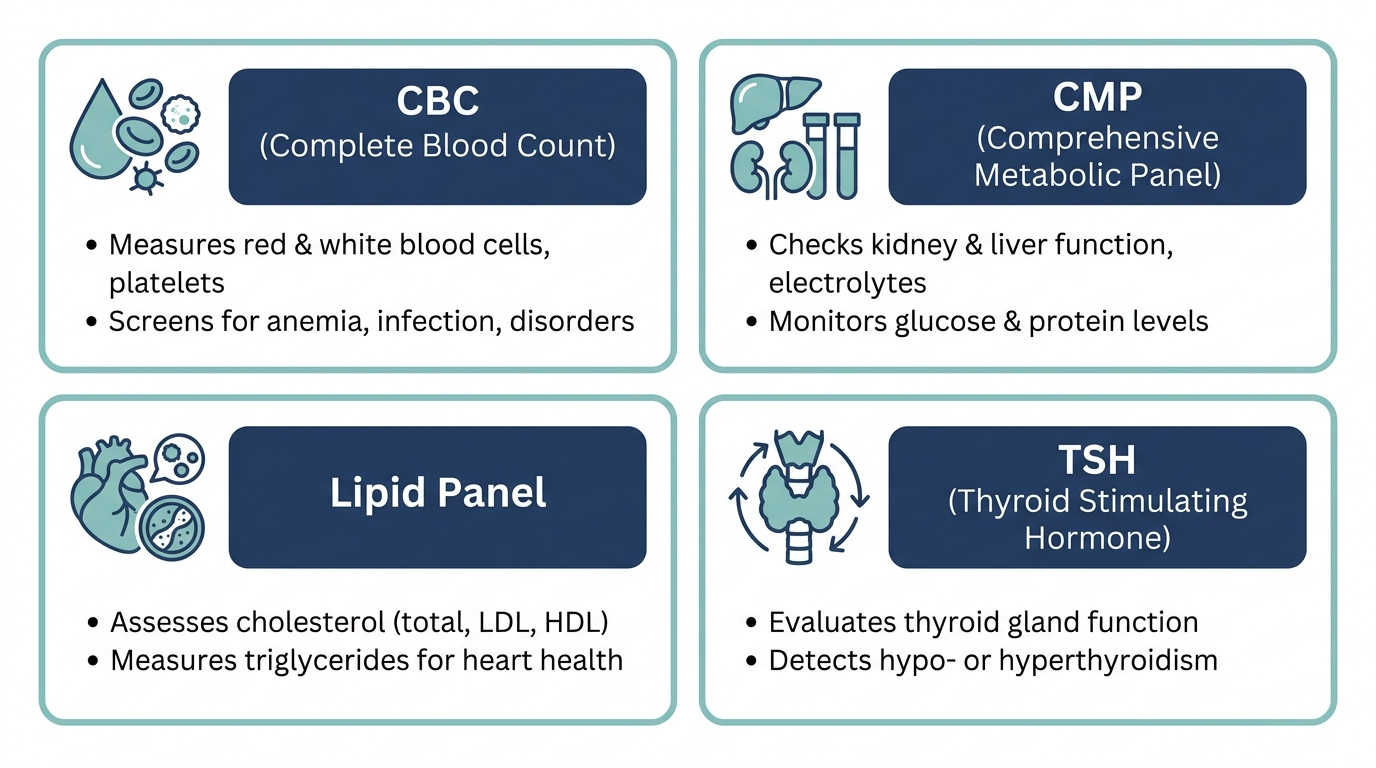
- A routine physical usually includes three core blood tests: a complete blood count (CBC), a comprehensive or basic metabolic panel (CMP/BMP), and a lipid panel that measures cholesterol.
- Many clinicians add a blood glucose or hemoglobin A1C test to screen for diabetes, with an A1C below 5.7 percent considered normal and 5.7 to 6.4 percent indicating prediabetes (NIDDK).
- Exactly which blood tests appear in your routine physical depends on your age, sex, family history, and risk factors, so the panel ordered for a healthy 25 year old differs from one for a 55 year old.
What blood tests are part of a standard routine physical?
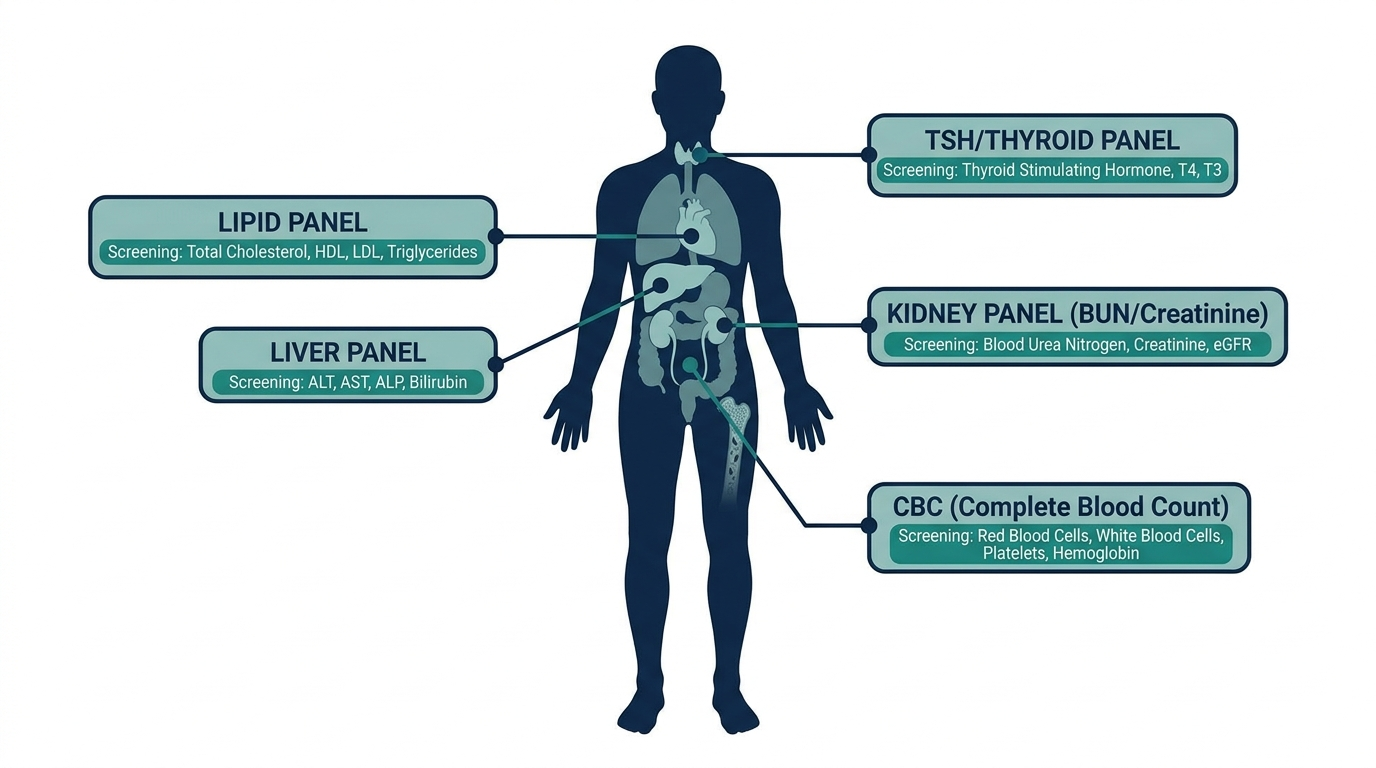
The standard routine physical typically includes three blood tests: a complete blood count (CBC), a metabolic panel (comprehensive or basic), and a lipid panel. A comprehensive metabolic panel alone measures 14 different substances in your blood (MedlinePlus). Together these three panels give your clinician a wide snapshot of your blood cells, organ function, electrolytes, and cholesterol from a single blood draw.
These are screening tests, meaning they look for early signs of common conditions before you have symptoms. A CMP “can provide information about your overall health and help find certain conditions before you have symptoms” (Cleveland Clinic). Your clinician decides which tests to order based on your age and health history, so not every physical includes every panel. Many adults also receive a blood sugar screen, and women, older adults, or people with specific risk factors may get additional tests added on.

What does a complete blood count (CBC) measure?
A complete blood count measures the number of red blood cells, white blood cells, and platelets in your blood (Cleveland Clinic). It is one of the most common blood tests and helps screen for anemia, infection, and clotting problems. For hemoglobin, the iron rich protein that carries oxygen, normal references are roughly 13 to 18 g/dL in adult men and 12 to 16 g/dL in adult women who are not pregnant (MedlinePlus, citing WHO).
A CBC reports several values your clinician reviews together:
- Red blood cells (RBC): carry oxygen from your lungs to the rest of your body. Low counts can signal anemia.
- White blood cells (WBC): part of your immune system. High counts may point to infection or inflammation.
- Hemoglobin and hematocrit: measure how much oxygen your blood can carry.
- Platelets: help your blood clot and stop bleeding.
Ranges vary slightly between laboratories, so always read your result against the reference range printed on your own report.
What does a metabolic panel check?
A metabolic panel checks your blood sugar, electrolytes, kidney function, and, in the comprehensive version, your liver. A comprehensive metabolic panel (CMP) measures 14 substances, while a basic metabolic panel (BMP) measures 8 (MedlinePlus). The CMP adds liver enzymes and proteins that the BMP leaves out, which is why “comprehensive” is the version most often used in a full routine physical.
Key items a CMP reports include:
- Glucose: blood sugar, used to screen for diabetes and prediabetes.
- Electrolytes: sodium, potassium, calcium, chloride, and bicarbonate, which keep nerves, muscles, and fluid balance working.
- Kidney markers: blood urea nitrogen (BUN) and creatinine.
- Liver markers: ALT, AST, albumin, total protein, and bilirubin.
Because the CMP touches so many organs at once, an out of range value here often prompts a follow up test rather than an immediate diagnosis.
What blood tests check cholesterol and heart health?
A lipid panel is the blood test that checks cholesterol and is the main heart health screen in a routine physical. It measures total cholesterol, LDL (“bad”) cholesterol, HDL (“good”) cholesterol, and triglycerides (Cleveland Clinic). A desirable total cholesterol is less than 200 mg/dL, and an optimal LDL is less than 100 mg/dL (American Heart Association guidance).
Here is how the common targets break down for healthy adults:
- Total cholesterol: desirable is below 200 mg/dL.
- LDL cholesterol: optimal is below 100 mg/dL, and stricter for people with diabetes or other heart risks.
- HDL cholesterol: an HDL below 40 mg/dL in men or below 50 mg/dL in women is a cardiovascular risk factor.
Your clinician reads these numbers alongside your blood pressure, age, and smoking status, not in isolation. Some lipid panels require fasting, so confirm the instructions when you book your appointment.

How is blood sugar tested in a physical?
Blood sugar is tested in a physical with a fasting glucose reading, an A1C test, or both. A normal fasting plasma glucose is between 60 and 99 mg/dL, and 100 to 125 mg/dL indicates prediabetes (ADA). The A1C test reflects your average blood sugar over about three months, so it does not require fasting.
The A1C cutoffs are well defined:
- Normal: below 5.7 percent (NIDDK).
- Prediabetes: 5.7 to 6.4 percent (NIDDK).
- Diabetes: 6.5 percent or above (NIDDK).
A single high reading is usually confirmed with a second test before any diabetes diagnosis is made, unless you have clear symptoms. Glucose also appears on the metabolic panel, so blood sugar may be checked even if A1C is not ordered separately.
What blood tests might be added based on your risk?
Beyond the core panels, your clinician may add blood tests based on your age, sex, symptoms, or family history. These are not part of every physical and are ordered selectively, because screening tests work best when matched to genuine risk rather than run on everyone by default.
Common additions include:
- Thyroid panel (TSH): if you have fatigue, weight changes, or a family history of thyroid disease.
- Vitamin D or vitamin B12: when deficiency is suspected.
- Iron studies: to investigate anemia found on a CBC.
- Hemoglobin A1C: for adults with overweight, high blood pressure, or a family history of diabetes.
- PSA or hormone tests: based on sex, age, and individual risk.
Talk with your clinician about which add on tests make sense for you. More tests are not automatically better, and unnecessary testing can lead to false alarms and follow up procedures you did not need.
The comprehensive metabolic panel, component by component
The CMP is the workhorse of a routine physical, and knowing what each of its parts reflects makes your results far easier to read. Here is the whole panel with what each item tells your clinician.
| Component | What it reflects |
|---|---|
| Glucose | Blood sugar, a screen for diabetes and prediabetes |
| Sodium | Fluid balance and nerve and muscle function |
| Potassium | Heart rhythm and muscle function |
| Chloride | Fluid balance and acid-base status |
| Bicarbonate (CO2) | Acid-base balance in the blood |
| BUN | Kidney function and hydration |
| Creatinine | Kidney filtering ability, the basis of eGFR |
| Calcium | Bone, nerve, and muscle health |
| Total protein | Overall protein status |
| Albumin | A liver protein and a marker of nutrition |
| Bilirubin | Liver processing and red cell breakdown |
| ALP (alkaline phosphatase) | Liver and bone activity |
| ALT | A liver enzyme that rises with liver cell stress |
| AST | A liver and muscle enzyme, read alongside ALT |
The basic metabolic panel is essentially this list minus the liver components (total protein, albumin, bilirubin, ALP, ALT, AST). That is the practical difference between a CMP and a BMP: the CMP adds a liver check.
How to prepare so your results are accurate
A routine draw is quick, but a few preparation steps keep the numbers clean and comparable over time.
- Follow fasting instructions. Lipid panels and fasting glucose often need 8 to 12 hours without food or drinks other than water. A CBC and A1C usually do not. Confirm what your specific order requires when you book.
- Stay hydrated. Being well hydrated makes the draw easier and can steady concentration-dependent values like BUN.
- Time it consistently. Testing at a similar time of day across years makes your trend more meaningful, since some values shift with the daily rhythm.
- Mention recent changes. Intense exercise the day before can transiently raise muscle-related enzymes, and a very heavy or unusual meal can shift glucose and triglycerides. Note anything out of the ordinary.
- List medications and supplements. Some can shift specific results, and high-dose biotin can interfere with certain assays. Your clinician interprets the panel better with that list.
What an out-of-range value really means
A flagged result on a routine panel is common and usually not alarming. Reference ranges are built so that a small share of perfectly healthy people fall just outside them, which means a panel with 20-plus values will often show at least one flag. The skill is knowing how clinicians handle it.
- Slightly out, no symptoms. A value barely outside the range with nothing else amiss is frequently rechecked rather than acted on, because normal biological variation and lab-to-lab differences can explain it.
- A pattern rather than a dot. Two related values pointing the same way, such as both liver enzymes elevated together, carries more weight than one isolated flag.
- A trend over time. A number drifting steadily across annual physicals is more meaningful than a single reading, which is why keeping your past results matters.
- Confirm before diagnosing. Many conditions, from diabetes to kidney concerns, are confirmed with a repeat or a second type of test before any label is applied.
The takeaway: one flagged value is a prompt to look closer, not a diagnosis. Bring the full report to your clinician so the result is read in context.
How the panel changes with age, sex, and life stage
There is no single universal panel, because the right screening tests shift with who you are. A few patterns:
- Young, healthy adults. Often a lighter panel focused on a CBC, a metabolic panel, and sometimes a lipid and glucose check, with add-ons only if there is a specific reason.
- Midlife adults. Cholesterol and blood sugar screening become more central as cardiovascular and metabolic risk rises, and A1C is added more readily.
- Older adults. Kidney function, along with markers relevant to medications and chronic conditions, gets closer attention, and vitamin levels like B12 are checked more often given absorption changes with age.
- By sex and life stage. Pregnancy, menopause, and sex-specific concerns such as prostate health can add targeted tests. Iron studies may be more relevant for people with heavy menstrual bleeding.
This is why two people the same age can leave a physical with different panels. The tests are matched to individual risk, not run identically on everyone.
What a routine physical panel does not cover
Understanding the gaps prevents false reassurance from a clean report. Standard panels are broad but shallow, and several important things are simply not in them by default:
- Most cancers. Routine panels are not cancer screens. A normal CBC and CMP do not rule out solid tumors, and dedicated screenings like mammography and colonoscopy are separate.
- Thyroid function. TSH is an add-on, not a default, so a routine panel does not automatically check your thyroid.
- Many vitamins and hormones. Vitamin D, B12, iron studies, and sex hormones are usually ordered only when there is a reason.
- Advanced cardiovascular markers. A standard lipid panel does not include apolipoprotein B, lipoprotein(a), or high-sensitivity CRP unless specifically requested.
- Infections beyond broad clues. A high white cell count can hint at infection, but routine panels do not test for specific infections like hepatitis or sexually transmitted infections without a separate order.
If any of these matter for your history or concerns, they are worth raising with your clinician so the right tests get added intentionally.
Reading the CBC beyond the headline counts
The complete blood count reports more than the three headline cell types, and the extra values often carry the real clues. A few worth knowing:
- MCV (mean corpuscular volume). The average size of your red cells. Large cells can point toward B12 or folate issues, while small cells suggest iron deficiency, so MCV helps sort out the cause of anemia rather than just flagging it.
- RDW (red cell distribution width). How much your red cell sizes vary. A high RDW can be an early hint of a developing anemia before other numbers move.
- White cell differential. The breakdown of white cell types. A rise in one specific type points in different directions, for example toward bacterial infection versus a viral or allergic process.
- Platelet count. Beyond clotting, unusually high or low platelets can be a clue that prompts follow-up.
This is why a clinician reads the CBC as a whole rather than glancing at three numbers. The supporting values turn a vague flag into a direction for the next step.
Why routine panels are about trends, not one snapshot
The quiet superpower of routine blood work is not any single result. It is the trend built over years. A cholesterol or glucose value creeping upward across annual physicals can reveal a developing problem long before it crosses into a diagnosis, giving you the earliest and easiest window to act. A single panel, by contrast, is one dot on a graph with no line yet drawn.
This is the practical case for consistent testing and for keeping your results in one place. When your clinician can see that your fasting glucose has drifted from the low 90s toward the prediabetes range over three years, that trajectory is far more actionable than a lone borderline number. It also works in your favor: a stable value near a range edge, seen across your own history, is genuinely reassuring in a way one snapshot cannot be. Treat each physical as another data point in a longer story rather than a pass-fail exam, and keep copies of your reports so the line stays visible even if you change clinics.
How to read your own report
When your results arrive, a simple approach keeps you from over-reacting:
- Find the reference range. Every value is printed next to the lab’s own range. Judge your number against that, not an internet figure, since ranges differ by lab.
- Note which flags are borderline versus clearly off. A value a hair outside the range is very different from one far outside it.
- Look for related values together. Group the liver enzymes, the kidney markers, and the electrolytes rather than reading each line in isolation.
- Compare to last time if you can. A stable value inside your own history is reassuring even if it sits near a range edge.
- Bring questions to your clinician. The report is a conversation starter. Anything flagged, unexpected, or trending deserves a real discussion rather than a self-diagnosis.
How often to repeat the blood tests in a routine physical
One of the most common questions after a physical is how soon the panel should be redone. For a healthy adult with normal results and no risk factors, most primary care guidance points to repeating the core blood work every one to three years rather than annually, because a single normal set of numbers rarely changes fast in someone who feels well. The physical exam and blood pressure check may happen more often than the blood draw itself.
The picture changes once a result sits at the edge of normal or a risk factor is present. A cholesterol panel that shows borderline LDL, a fasting glucose creeping toward the prediabetes range, or a mild change in kidney or liver markers usually earns a recheck in a few months rather than years, so the direction of travel becomes clear. People on medication for blood pressure, cholesterol, diabetes, or thyroid problems are typically monitored on a tighter schedule set by the treatment, sometimes every three to six months. Age also compresses the interval: markers that were checked every few years in your thirties are often followed more closely from midlife onward, when the odds of a real shift climb. The guiding principle is simple, which is that stable and clearly normal results can wait, while anything borderline, changing, or being actively treated should be rechecked sooner.
Questions worth asking at your results appointment
A results appointment is far more useful when you arrive with a short list of questions rather than nodding along to a summary. The first question is which numbers, if any, fell outside the reference range, and by how much, since a value a hair above the cutoff is a very different conversation from one well outside it. Ask specifically whether any out-of-range result needs action now or simply a repeat test later.
It is also worth asking how your current numbers compare with your previous ones, because a value drifting within the normal range can still tell a story that a single reading hides. Ask which results connect to your personal risks, for example family history of diabetes or heart disease, so the panel is interpreted in your context rather than in the abstract. If a marker is off, ask what could have caused it, including recent illness, medication, or how you prepared for the draw, before assuming the worst. Finally, ask what you can actually do about any borderline finding and when the next check should happen, so you leave with a plan instead of a vague reassurance. Writing the answers down, or asking for them in your patient portal, turns a rushed appointment into something you can act on later.
Curious what your own levels look like?
Baseline 100+ biomarkers today and retest as life changes, all in one membership with physician review.
Frequently asked questions
Do I need to fast before routine physical blood tests?
Often yes for the lipid panel and fasting glucose, which may require 8 to 12 hours without food. A CBC and A1C usually do not require fasting. Always follow the specific instructions your clinic gives when you book, since requirements vary by which tests are ordered.
How many blood tests are in a routine physical?
Most routine physicals include three core blood panels: a CBC, a metabolic panel, and a lipid panel. A comprehensive metabolic panel alone reports 14 results (MedlinePlus). With added screens like A1C or thyroid, a physical can produce 20 or more individual values from one draw.
What is the difference between a CMP and a BMP?
A basic metabolic panel (BMP) measures 8 substances, while a comprehensive metabolic panel (CMP) measures 14 (MedlinePlus). The CMP adds liver enzymes and proteins. The CMP is more common in a full physical, while a BMP may be used for quicker or more targeted checks.
How often should I get routine blood work?
Many healthy adults get routine blood work every one to three years, with more frequent testing if you have ongoing conditions or risk factors. There is no single rule for everyone. Your clinician sets the interval based on your age, health history, and any results that need monitoring.
Can a routine physical blood test detect cancer?
Routine panels are not designed to diagnose cancer, but abnormal results can prompt further testing. For example, an unusual CBC may lead to additional workup. Dedicated cancer screenings, such as colonoscopy or mammography, are separate from standard blood panels and are scheduled based on age and risk.
Sources
- MedlinePlus, Comprehensive Metabolic Panel (CMP)
- Cleveland Clinic, Comprehensive Metabolic Panel (CMP)
- Cleveland Clinic, Complete Blood Count (CBC)
- MedlinePlus, Complete Blood Count (CBC)
- MedlinePlus, Basic Metabolic Panel (BMP)
- NIDDK, The A1C Test and Diabetes
- American Diabetes Association, Diabetes Diagnosis and Tests
This article is for general educational purposes and is not medical advice. It cannot diagnose or treat you and does not replace your clinician. Always discuss your lab results and any health decisions with a qualified healthcare professional.
Related reading
Related: see our ranking of the best at-home blood tests.
Vital Signs Today may earn a commission if you buy through links on this page. It does not affect our editorial assessments.