Ever wonder what all those tubes are actually testing for? See the 100+ markers behind your own draw. One at-home Superpower draw checks 100+ biomarkers, physician-reviewed.
- Blood test tube colors are a standardized code for the additive inside each tube, and the additive determines which tests the sample can run, so a lavender tube measures blood counts while a light blue tube measures clotting.
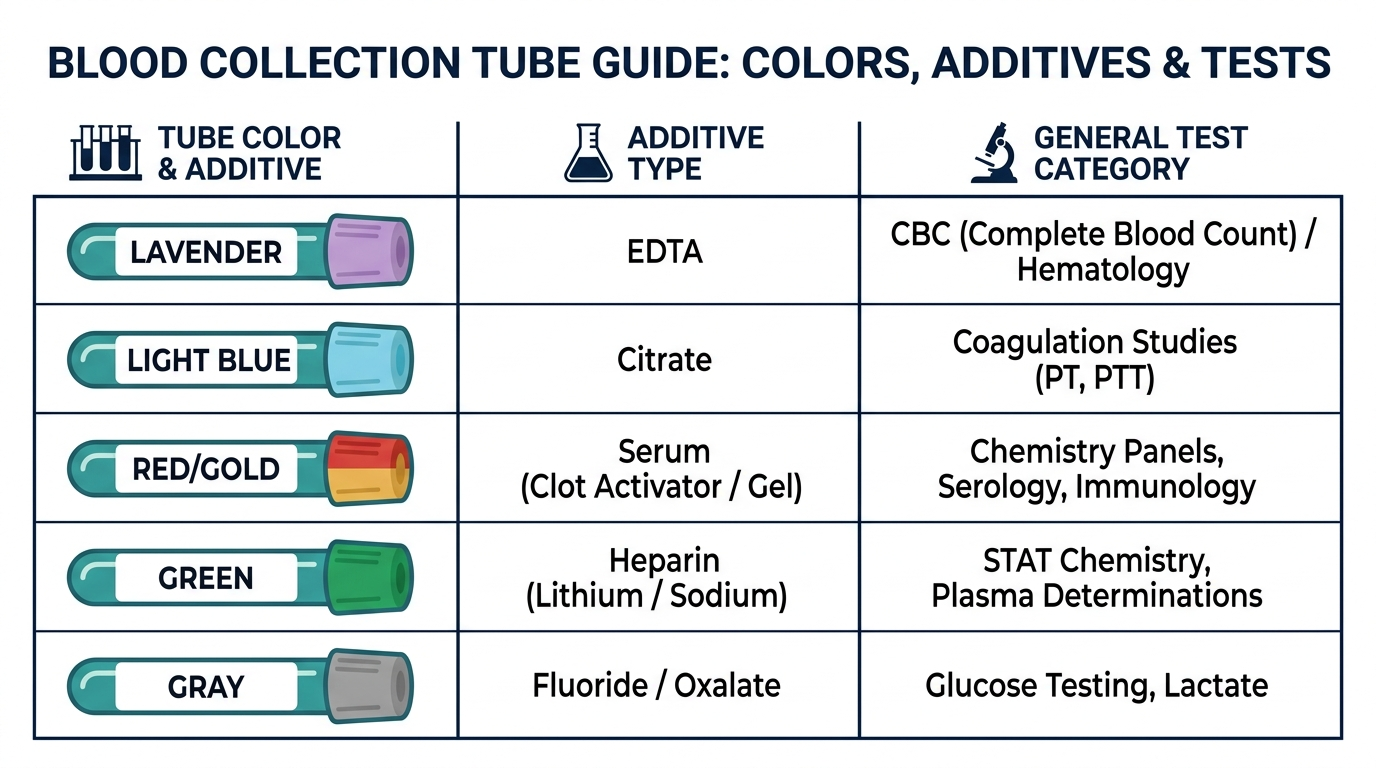
- The most common tubes are light blue (sodium citrate for coagulation), red or gold (serum for chemistry), green (heparin for plasma chemistry), lavender (EDTA for complete blood count), and gray (sodium fluoride for glucose).
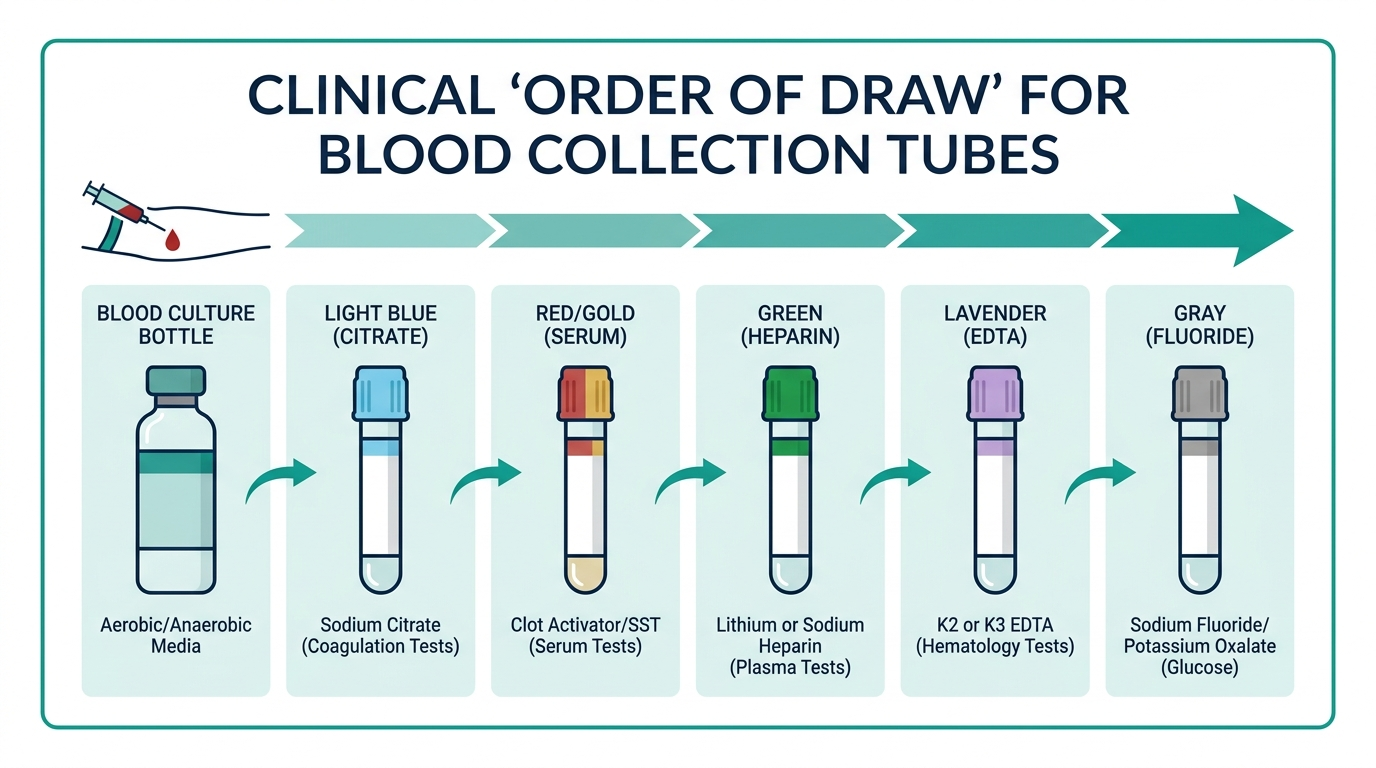
- Phlebotomists draw tubes in a fixed sequence called the order of draw, blood culture then light blue then serum then green then lavender then gray, to stop one tube’s additive from contaminating the next.
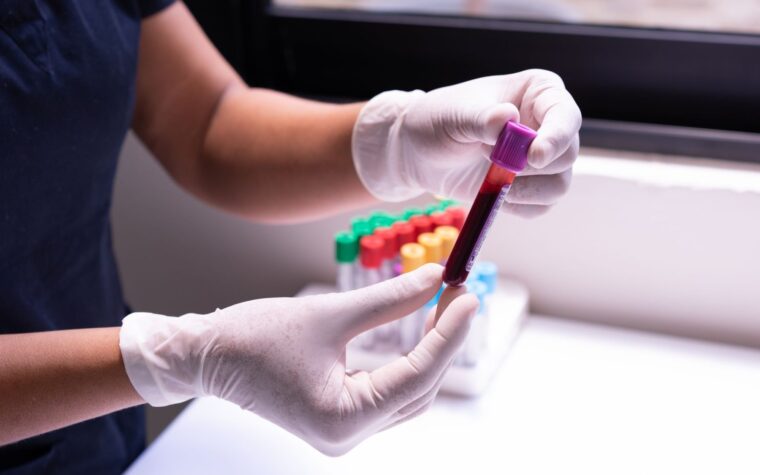
If you have ever watched a phlebotomist line up three or four differently colored tubes before a blood draw, you have seen one of the most quietly important systems in medicine. The colors are not decoration. Each cap color signals exactly what chemical sits inside the tube, and that chemical decides whether your sample can produce a valid white blood cell count, a cholesterol panel, or a clotting time. Get the color wrong, and the test is often unusable.
What do blood test tube colors actually mean?
Blood test tube colors identify the additive sealed inside each tube, and that additive controls what happens to your blood after collection. According to StatPearls (NCBI), the cap color is an internationally recognized shorthand: a light blue cap means sodium citrate, a lavender cap means EDTA, a green cap means heparin, a gray cap means sodium fluoride, and a red or gold cap means the tube produces serum. Some additives stop the blood from clotting so the lab can study live cells or plasma. Others speed clotting on purpose so the lab can study serum. Because each test needs blood in a specific state, the color is really a promise about chemistry, not aesthetics.

What is the lavender or purple tube used for?
The lavender (purple) tube is used for whole blood tests, most commonly the complete blood count (CBC). It contains EDTA, an anticoagulant that binds calcium and keeps blood cells intact and unclotted. The International Council for Standardization in Haematology recommends dipotassium EDTA (K2EDTA) for cell counts because it preserves cell shape and size.
This is the tube your provider orders for a CBC, hemoglobin A1C, blood typing, and many blood bank tests. EDTA preserves the cellular detail the lab needs to count red cells, white cells, and platelets and to flag abnormalities. A closely related pink-cap tube uses the same EDTA chemistry and is reserved for blood bank work such as crossmatching. After collection, lavender tubes must be inverted gently several times so the EDTA mixes fully, otherwise tiny clots can form and ruin the platelet count.
What is the light blue tube used for?
The light blue tube is used for coagulation tests that measure how well your blood clots, such as PT, INR, PTT, fibrinogen, and D-dimer. It contains 3.2% sodium citrate, and it must be filled to a precise 9 to 1 ratio of blood to citrate, per StatPearls (NCBI) and Labcorp.
Sodium citrate works by gently and reversibly binding the calcium in your blood, which pauses the clotting cascade. In the lab, technologists add calcium back and measure exactly how long clotting takes. This reversibility is why citrate, not EDTA, is the standard for clotting tests. The fill ratio matters more here than for any other tube. An underfilled light blue tube has too much citrate relative to blood, which artificially prolongs clotting times and can make a healthy person look like a bleeding risk. Most labs reject a light blue tube filled below about 90% of its target volume.
What are the red and gold (serum) tubes used for?
Red and gold tubes are used for chemistry, serology, and many hormone and drug tests that require serum, the liquid left after blood clots. Plain red tubes have no anticoagulant, while gold or tiger-top serum separator tubes (SST) add a silica clot activator plus a gel that separates serum from cells during spinning, according to Labcorp.
These tubes deliberately let blood clot. After centrifugation, the clear serum on top is what the analyzer reads. Common uses include lipid panels, liver and kidney function, thyroid tests, vitamin levels, and infectious disease antibody testing. Gold SST tubes are popular because the gel barrier holds the cells away from the serum, keeping the sample stable for transport. Because they rely on full clotting, serum tubes usually need about 30 minutes to clot before the lab spins them, which is why serum results sometimes take a little longer than plasma results.
What are the green and gray tubes used for?
The green tube is used for plasma chemistry tests that cannot wait for clotting, and the gray tube is used mainly for glucose and lactate. Green tubes contain heparin, which inhibits thrombin and clot formation, while gray tubes contain sodium fluoride to stop cells from consuming glucose, as described by StatPearls (NCBI).
Green-cap heparin tubes come in lithium, sodium, or ammonium forms, with lithium heparin being the everyday choice for electrolytes, ammonia, and stat chemistry panels because plasma can be tested immediately without waiting for a clot. Gray tubes pair sodium fluoride, an antiglycolytic agent, with an oxalate anticoagulant. The fluoride is the key feature. Without it, blood cells keep burning glucose in the tube and can drop a glucose reading by several mg/dL per hour, falsely lowering the result. That is why fasting glucose, glucose tolerance tests, and lactic acid go into gray.

Why does the order of draw matter?
The order of draw matters because additive from one tube can cling to the needle and contaminate the next tube, distorting results. The Clinical and Laboratory Standards Institute (CLSI) sets a fixed sequence, summarized by StatPearls (NCBI): blood culture first, then light blue (citrate), then serum (red or gold), then green (heparin), then lavender (EDTA), then gray (fluoride or oxalate).
The logic is to protect the most sensitive tests from the most disruptive additives. EDTA is a notorious offender. Even a trace carried over into a chemistry tube can falsely lower calcium and falsely raise potassium, sometimes dramatically. Drawing the citrate clotting tube early protects it from any clot activator carryover. Following the sequence is one of the simplest, cheapest ways to prevent repeat draws and misleading results, which is why it is drilled into every phlebotomist.
What does each blood tube color mean at a glance?
Here is a quick reference matching the standard caps to their additive and main use, consistent with Labcorp and StatPearls.
- Light blue: Sodium citrate (3.2%) for coagulation tests like PT, INR, and PTT.
- Red (plain): No additive, produces serum for chemistry and serology.
- Gold or tiger top (SST): Clot activator plus gel for chemistry, hormones, and antibody tests.
- Green: Heparin for plasma chemistry and stat electrolytes.
- Lavender or purple: EDTA for complete blood count, A1C, and blood typing.
- Pink: EDTA reserved for blood bank crossmatching.
- Gray: Sodium fluoride and oxalate for glucose and lactate.
Color schemes can vary slightly by manufacturer and country, so your lab’s own chart is the final word. If you ever see a tube color that does not match this list, it is usually a specialty additive for a niche test.

The specialty tube colors you see less often
Beyond the everyday caps, a handful of specialty tubes exist for tests where an ordinary additive would spoil the result. You may encounter one of these if your provider orders a specific mineral, toxicology, or genetic test.
- Royal blue: Reserved for trace element and toxicology testing, such as zinc, copper, or heavy metals. These tubes are manufactured to be metal-free so that trace amounts of contaminating metal in ordinary glass or rubber do not skew a measurement that is itself in trace quantities.
- Tan: Used specifically for lead testing. Like the royal blue tube, it is made to minimize background lead contamination, which matters enormously when the whole point is to measure a low level of lead in blood.
- Yellow (ACD): Contains acid citrate dextrose, an additive that preserves cell viability for a long time. It is used for tests like HLA tissue typing, DNA studies, and paternity testing, where living, intact cells must survive transport to a specialized lab.
- Light green (PST): A plasma separator tube with lithium heparin and a gel barrier, used for rapid plasma chemistry when a clot cannot be waited on.
If you are handed one of these less familiar colors, it usually signals that your test is going to a reference lab or is measuring something at very low concentration. The unusual tube is not a mistake; it is protection for a fragile measurement.
Why samples get rejected, and how to avoid a repeat stick
The colored cap only does its job if the sample inside stays intact. Labs reject a meaningful share of tubes every day, and almost every reason traces back to how the blood was collected and handled rather than to anything about your body. The most common problems:
- Hemolysis. When red cells rupture, they spill their contents into the sample. This is the single most frequent cause of rejection. Hemolysis falsely raises potassium and several other analytes, so a hemolyzed tube for a potassium test is unusable. It often comes from a difficult draw, too small a needle, or excessive shaking.
- Clotting in an anticoagulant tube. If a lavender EDTA tube is not inverted enough right after collection, tiny clots form and destroy the platelet count. Gentle inversion several times is what prevents this.
- Underfilling, especially the light blue tube. As covered earlier, the citrate tube depends on a precise blood-to-additive ratio, and an underfilled tube falsely prolongs clotting times.
- Wrong tube for the test. Blood collected in the wrong color simply cannot run the ordered test, because the chemistry is incompatible.
- Mislabeling. A tube that is not labeled correctly at the bedside is rejected on principle, because patient safety depends on certainty about whose blood it is.
As a patient, you cannot control most of this, but a few things help. Stay hydrated before a draw so veins fill well, tell the phlebotomist if you have a history of difficult draws or tend to feel faint, and hold still during collection so the needle stays properly seated. A smooth draw is the best defense against a hemolyzed or clotted sample and the repeat stick that follows.
How tube colors map to a routine checkup
When you go in for an annual physical, the small rack of tubes the phlebotomist fills corresponds directly to the panels your clinician ordered. Seeing how they line up demystifies why so many tubes come out of one arm.
| Cap color | Typical checkup tests it enables |
|---|---|
| Lavender (EDTA) | Complete blood count and hemoglobin A1C, which screen for anemia, infection, and blood sugar control. |
| Gold or red (serum) | Lipid panel, liver and kidney function, thyroid tests, and vitamin levels, the backbone of a metabolic workup. |
| Green (heparin) | Rapid electrolyte and chemistry panels when a fast plasma result is needed. |
| Gray (fluoride) | Fasting glucose and glucose tolerance testing, protected from cells consuming sugar in the tube. |
| Light blue (citrate) | Clotting studies, ordered before surgery or if a bleeding or clotting problem is suspected. |
A standard checkup often needs only two or three of these, most commonly a lavender and a gold. If you fasted for the visit, a gray tube for glucose may join them. The number of tubes is a reflection of how many different chemical states your ordered tests require, not of how much blood is truly needed, since each tube holds only a small volume.
Common myths about blood tube colors
Because the colors are visible and a little mysterious, they attract some persistent misunderstandings.
- “The color tells the lab which disease to look for.” It does not. The color indicates the additive and the chemical state of the blood, not a diagnosis. The same lavender tube serves a routine blood count and a blood type.
- “More tubes means something is seriously wrong.” Not at all. Multiple tubes simply mean multiple categories of test were ordered, each needing a different additive. A thorough wellness panel can require several tubes for a perfectly healthy person.
- “Any tube can be swapped if one runs out.” No. Pouring blood from one tube into another, or using the wrong color, ruins the sample because the additives are incompatible and often already mixed in.
- “The colors are the same everywhere in the world.” Mostly, but not entirely. The core scheme is internationally standardized, yet some shades and specialty caps vary by manufacturer and country, which is why each lab keeps its own reference chart.
- “A full tube is always better.” For most tubes, filling to the mark is ideal, but the citrate tube in particular must not be overfilled or underfilled, because its ratio of blood to additive is fixed by design.
Understanding the real logic behind the caps turns a confusing rack of tubes into a readable system: each color is a promise about the chemistry inside, chosen so your specific test can produce a result you and your clinician can trust.
Serum versus plasma: the split behind the colors
Underneath all the cap colors sits one fundamental fork in the road: whether the lab wants serum or plasma. Grasping this distinction explains why the tubes exist in the first place.
Both serum and plasma are the liquid portion of blood once the cells are spun down, but they differ in one crucial way. Plasma is the liquid from blood that was prevented from clotting, so it still contains clotting proteins like fibrinogen. Serum is the liquid left after blood has been allowed to clot, so the clotting proteins have been used up and are absent. That single difference decides which tube your blood belongs in.
- Serum tubes (red and gold) deliberately let clotting finish, then the lab spins off the clear serum. This is preferred for many chemistry, hormone, and antibody tests, and it is why serum results can take a little longer, since the clot has to form first.
- Plasma tubes (green and light green) use an anticoagulant so no clot forms, letting the lab spin and test almost immediately. This speed is why plasma is favored for urgent electrolyte and chemistry panels.
- Whole blood tubes (lavender) keep everything together, cells included, because tests like the complete blood count are counting the cells themselves.
So the rack of colors is really answering three questions at once for each test: does the lab need cells, plasma, or serum, and which additive delivers that state without distorting the specific thing being measured. Seen that way, the color code stops being arbitrary and becomes an elegant, compact set of instructions written in cap colors.
What happens to your tube after it leaves your arm?
The cap color sets the chemistry, but a tube still has a short journey ahead of it before any analyzer reads a result, and each step is chosen to preserve the sample the additive was designed to protect. Knowing the sequence explains why some results come back faster than others and why timing and temperature are handled so carefully.
- Mixing. Immediately after collection, tubes with an additive are inverted gently several times so the anticoagulant or clot activator distributes evenly. Skipping this is a leading cause of tiny clots in an EDTA tube.
- Clotting time for serum. Red and gold serum tubes are left to stand, usually around 30 minutes, so the clot can form fully before spinning. This built-in wait is why serum chemistry sometimes trails plasma results.
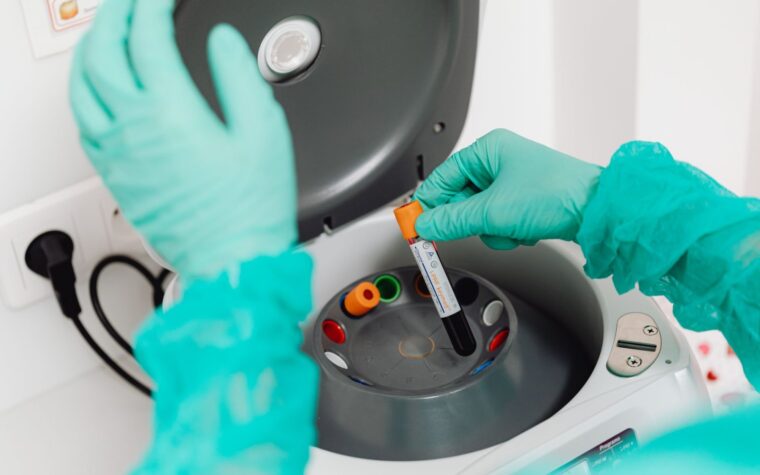
- Centrifugation. The tube is spun at high speed, which drives cells to the bottom and leaves serum or plasma on top. In gel tubes, the barrier migrates to sit between the two layers and hold them apart.
- Storage and transport. Depending on the test, the separated sample is analyzed promptly, refrigerated, or frozen, because some analytes degrade at room temperature. This is why labs care about how quickly a tube reaches them.
Each of these steps can quietly affect a result if it is rushed or skipped, which is part of why a smooth, correctly handled draw matters as much as the right cap color in the first place.
How tube colors apply to at-home and self-collection kits
The same color logic follows you home when you use a mail-in or self-collection kit, even though the format can look different from a clinic rack. A finger-prick kit that collects a few drops onto a card or into a microtube is still governed by the same principle: the collection device is matched to the specific tests being run, and the additive or card chemistry is chosen to keep those analytes stable during shipping.
For at-home kits that use a small tube rather than a card, you may still see familiar cap colors, and the instructions almost always tell you to invert the tube a set number of times right after collecting. That step is the home version of the mixing a phlebotomist does at the bedside, and it exists for the same reason: to blend the sample with its additive before any clot or clump can form. Kits that measure glucose or another time-sensitive analyte often include a stabilizing additive so the value does not drift during transit, mirroring the job of the gray fluoride tube in a lab.
The practical takeaway for anyone testing at home is to follow the kit’s fill lines and inversion count exactly, and to return the sample within the window the instructions give. Those steps are not busywork. They are how a self-collected sample is kept as trustworthy as one drawn in a clinic, which is what allows a physician to interpret it with confidence.
Curious what your own levels look like?
Baseline 100+ biomarkers today and retest as life changes, all in one membership with physician review.
Frequently asked questions
Why do they take multiple tubes of blood for one visit?
Different tests need blood in different chemical states. A clotting test needs citrate, a blood count needs EDTA, and a chemistry panel needs serum. Since these additives are incompatible, the lab needs a separate tube for each category even when blood is drawn in one sitting.
What is the most commonly used blood tube color?
The lavender (EDTA) tube and the gold or red serum tube are the most frequently used, because the complete blood count and routine chemistry panels are the most ordered blood tests. Many standard checkups use both at once.
What happens if a blood tube is not filled enough?
Underfilling is most serious for the light blue citrate tube, where the wrong blood to citrate ratio can falsely prolong clotting times. Many labs reject tubes filled below about 90% of target. Other tubes are more forgiving but can still give inaccurate results if very underfilled.
Is the gold tube the same as the red tube?
Both produce serum, but they are not identical. A plain red tube has no additive and relies on natural clotting. A gold or tiger-top SST tube adds a clot activator and a gel separator that keeps serum away from cells, making it more convenient for transport and storage.
Does the order tubes are drawn really affect my results?
Yes. Additive carried over on the needle can skew the next tube, especially EDTA contaminating a chemistry sample, which can falsely raise potassium and lower calcium. Following the CLSI order of draw is a proven way to prevent these errors and avoid repeat blood draws.
Sources
- NCBI StatPearls, Laboratory Tube Collection
- Labcorp, Blood Specimens: Chemistry and Hematology
- Labcorp, Blood Specimens: Coagulation
- UNC McLendon Clinical Laboratories, Evacuated Blood Collection Tube Guide
This article is for general educational purposes and is not medical advice. It cannot diagnose or treat you and does not replace your clinician. Always discuss your lab results and any health decisions with a qualified healthcare professional.
Related reading
Related: best at-home biomarker tests of 2026.
Vital Signs Today may earn a commission if you buy through links on this page. It does not affect our editorial assessments.