Your blood work came back and one line is flagged: ESR, with a number sitting well above the reference range and maybe an “H” next to it. The test has a forgettable name, erythrocyte sedimentation rate, and your search history probably already has a few panicked tabs open. Take a breath. A high ESR is not a diagnosis. It is a smoke alarm. It tells you something is burning somewhere in your body, but it does not tell you what or where.
That distinction is the whole game, and it is the part most people miss when they see the number and assume the worst. Let me walk you through what a high ESR actually means, what realistically causes it, and the point at which the number stops being a curiosity and starts being urgent.
A high ESR flag means inflammation somewhere, but the report won’t say where. See the full picture with 100+ biomarkers. One at-home Superpower draw checks 100+ biomarkers, physician-reviewed.
Part of our Inflammation Blood Tests guide.
What does a high ESR blood test mean?
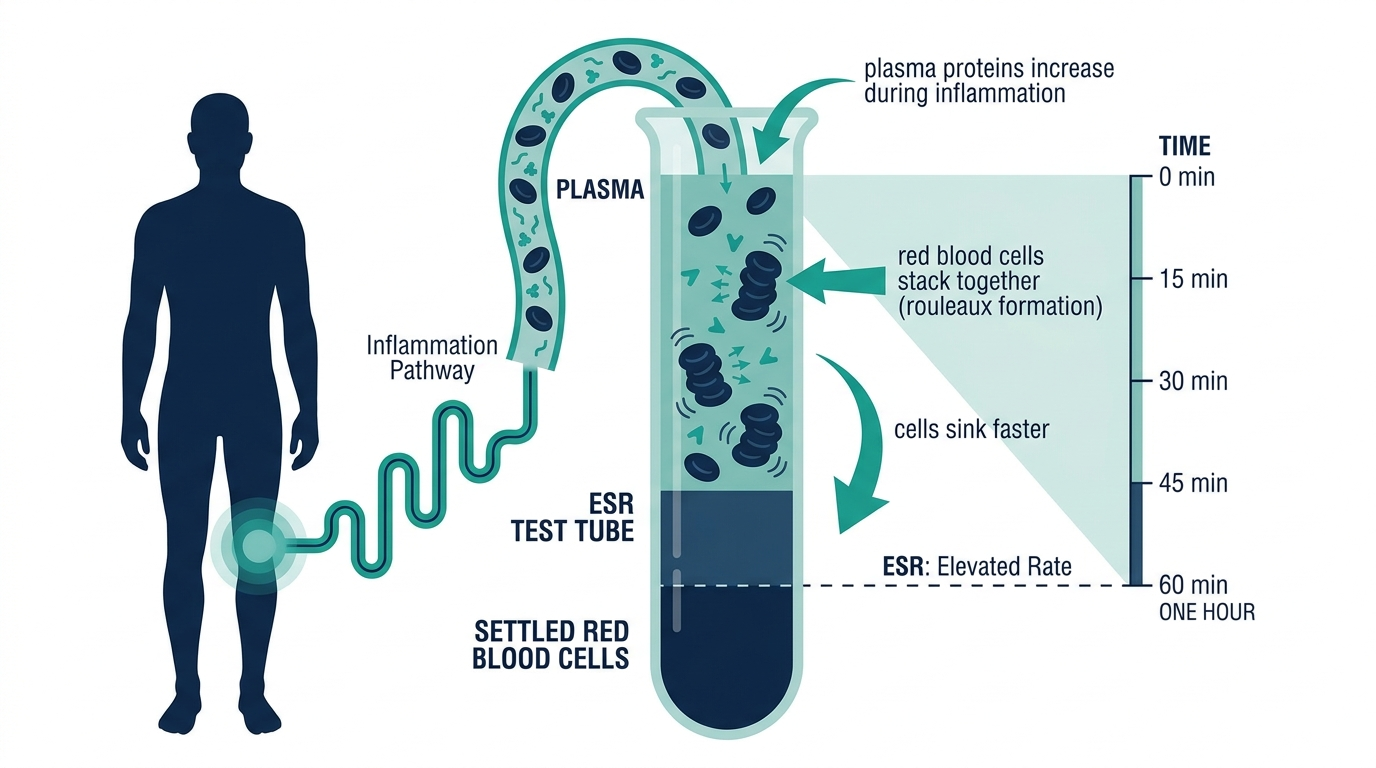
Here is the direct answer. A high ESR blood test means your red blood cells settled to the bottom of a test tube faster than expected, and that faster fall is a sign of inflammation somewhere in your body (MedlinePlus). When you are inflamed, your liver pumps out proteins like fibrinogen that make your red cells clump together into stacks. Heavier stacks sink faster. The lab simply measures how far they fall in one hour, reported in millimeters per hour (mm/hr).
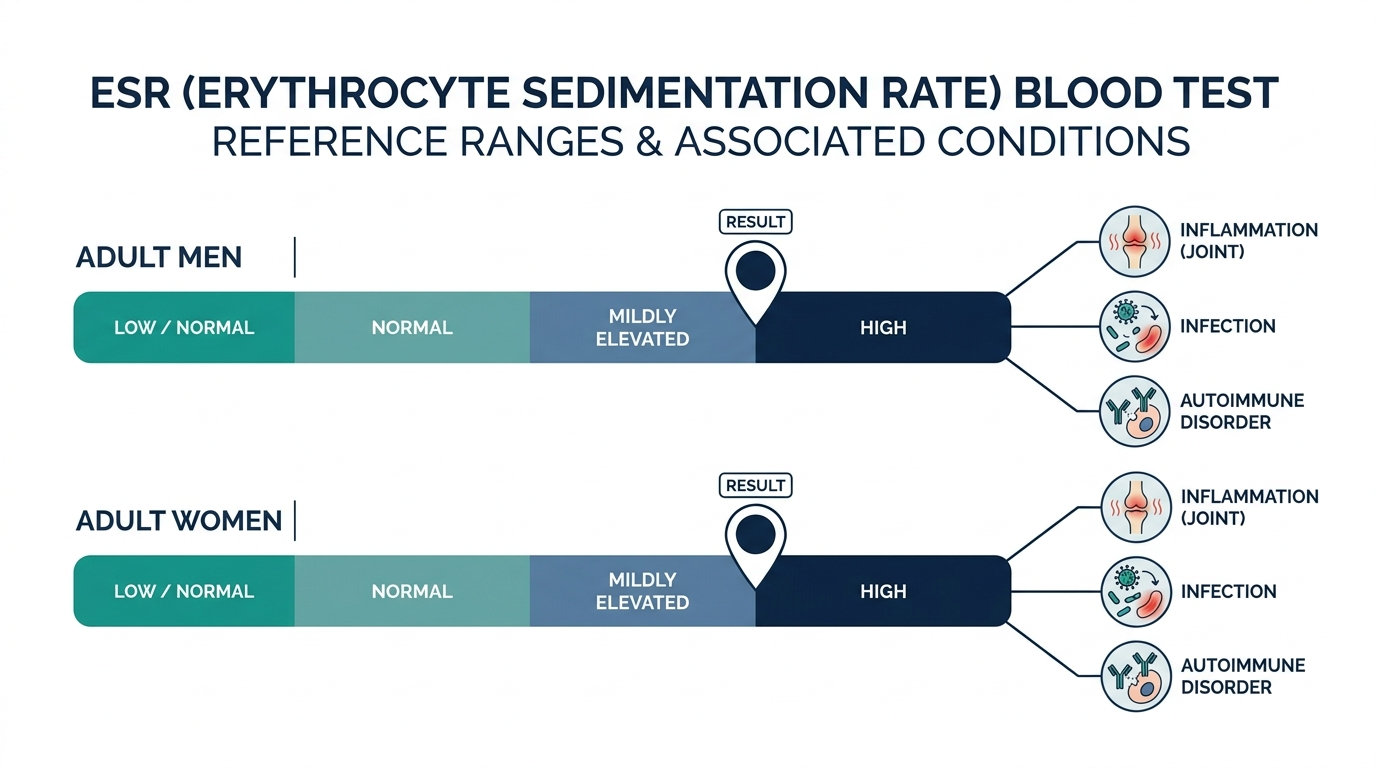
What counts as high depends on who you are, because the normal ceiling rises with age and is higher in women. Cleveland Clinic lists typical upper limits as under 15 mm/hr for men under 50, under 20 mm/hr for men over 50, under 20 mm/hr for women under 50, and under 30 mm/hr for women over 50 (Cleveland Clinic). Anything above your age-and-sex line is “high,” but a result of 30 in a 70-year-old woman is a shrug, while the same 30 in a 25-year-old man is worth a second look. Always read your number against the reference range printed on your own report, not a generic cutoff.
The single most important thing to understand: ESR is nonspecific. A raised value confirms inflammation exists. It says nothing about the cause. This is why no competent clinician treats an ESR result in isolation.

What causes a high ESR?
The list of things that raise ESR is long, but in real clinical practice the causes cluster into a handful of buckets, roughly in order of how often they show up:
- Infections. Everything from a lingering chest or bone infection to a hidden abscess. Infection is the most common driver of a markedly elevated ESR (StatPearls, NCBI).
- Autoimmune and inflammatory disease. Rheumatoid arthritis, lupus, systemic vasculitis, polymyalgia rheumatica, and giant cell arteritis all push ESR up. ESR is one of the classic markers doctors track to gauge how active these conditions are (MedlinePlus).
- Inflammatory bowel disease. Crohn’s disease and ulcerative colitis flare with rising inflammation that the ESR reflects.
- Certain cancers. Notably multiple myeloma, lymphoma, and other blood cancers, where abnormal proteins flood the bloodstream and make cells clump (StatPearls, NCBI).
- Kidney disease and heart disease, both of which carry a chronic inflammatory load (MedlinePlus).
- Ordinary, harmless reasons. Pregnancy, menstruation, older age, obesity, and even anemia can lift ESR without any disease behind it (Cleveland Clinic).
That last bullet matters more than people expect. A modestly high ESR in an older or pregnant person, or in someone carrying extra weight, frequently has a benign explanation. The number alone cannot sort the dangerous from the trivial. The story around it, your symptoms, your age, your other labs, does that.
What are the symptoms of a high ESR?
Here is the part that surprises people. A high ESR has no symptoms of its own. You cannot feel your red cells sedimenting. The number is just a readout. What you feel are the symptoms of whatever is causing the inflammation, and those are wildly variable depending on the source.
In fact, ESR is often ordered precisely because a patient already has unexplained symptoms that point to hidden inflammation. The classic triggers for ordering the test, and therefore the symptoms that tend to travel with a high result, include unexplained fever, unexplained weight loss, joint stiffness, neck or shoulder pain, headaches, loss of appetite, and anemia (MedlinePlus). If your ESR is high and you feel completely well, that is genuinely common and usually less worrying than a high ESR paired with feeling sick. Symptoms are the context that gives the number its weight.

When is a high ESR dangerous or a medical emergency?
Most high ESRs are mild and chronic, not emergencies. But there are two scenarios where the number demands fast attention.
The very high ESR, over 100 mm/hr. This is a different animal from a mildly raised result. An ESR above 100 mm/hr is rarely a false alarm. The evidence shows that at this level the false-positive rate for a serious underlying condition is low, and the differential narrows sharply to three things: serious infection, malignancy (especially multiple myeloma), and collagen vascular disease, with infection being the single most common cause (StatPearls, NCBI). A triple-digit ESR is a flag that warrants a prompt and thorough workup, not a wait-and-see.
Suspected giant cell arteritis. This is the true emergency hiding behind ESR. Giant cell arteritis (also called temporal arteritis) inflames the arteries supplying the head and can cause permanent blindness within days if untreated. The classic picture is a new headache, scalp tenderness, jaw pain when chewing, or sudden vision changes in someone over 50, paired with a markedly raised ESR. In temporal arteritis the average ESR has been reported to exceed 90 mm/hr, and values above 30 mm/hr are seen in roughly 99 percent of cases (StatPearls, NCBI). If you have those symptoms, this is an emergency-room conversation today, not a wait-for-the-portal-message situation.
What should you do about a high ESR?
You do not treat a high ESR. You find and treat whatever is raising it. That means the next steps are about narrowing the cause, not about the ESR number itself.
- Pair it with a CRP. C-reactive protein is the other main inflammation marker. It rises and falls faster than ESR, so the two together give a clearer read on whether inflammation is acute or smoldering. Clinicians almost always interpret them side by side.
- Look at the rest of your blood count. ESR is meaningless in a vacuum. Your white cell count, hemoglobin, and basic chemistry start to sketch a direction. A high ESR with anemia and bone pain, for example, prompts very different thinking than a high ESR with an obvious sinus infection.
- Match it to your symptoms. Fever points toward infection. Morning joint stiffness points toward inflammatory arthritis. New headache over 50 points toward giant cell arteritis. The symptoms steer the workup.
- Sometimes the right move is to repeat it. If the value is borderline and you feel fine, your clinician may simply recheck it in a few weeks. A single number is a snapshot, not a trend.
Lifestyle steps that lower chronic inflammation, decent sleep, not smoking, treating obesity, managing conditions like diabetes, can nudge a chronically mild ESR down over time. But if the ESR is high because of an active disease, lifestyle is not the fix. Treating the disease is, and the ESR usually falls as the disease comes under control. That is actually one of ESR’s best uses: tracking whether a known inflammatory condition is responding to treatment.
When should you see a doctor?
If a clinician ordered the ESR, they will interpret it for you, so book the follow-up rather than self-diagnosing from the portal. Beyond that, see a doctor promptly if your high ESR comes with any of the warning signs that prompt the test in the first place: unexplained fever, unexplained weight loss, persistent joint pain or stiffness, drenching night sweats, or fatigue that is getting worse (MedlinePlus).
Go to urgent or emergency care, the same day, if you are over 50 and develop a new or unusual headache, scalp or temple tenderness, jaw pain on chewing, or any change in your vision. Those are the red flags of giant cell arteritis, and waiting can cost you your eyesight.
The insider part: a high ESR can lie, and so can a normal one
Here is the nuance that even some clinicians underweight. ESR is an old, mechanical test, and it is surprisingly easy to fool in both directions.
It can read falsely high from nothing more than lab handling. A warm room thins the blood and speeds sedimentation. A tube tilted just 3 degrees off vertical can inflate the result by up to 30 percent. Vibration, direct sunlight, air bubbles from underfilling the tube, and a hemolyzed sample can all push the number up artificially (StatPearls, NCBI). So a mildly high ESR that does not fit the clinical picture is sometimes worth simply repeating before anyone chases it.
More dangerous is the falsely normal ESR, because it can give false reassurance. Conditions that change red cell shape or number can mask real inflammation. Polycythemia (too many red cells), sickle cell disease, and spherocytosis all slow sedimentation and can keep ESR deceptively low even when the body is genuinely inflamed. Delayed processing of the sample beyond two hours does the same, and some common drugs including statins and NSAIDs can blunt the value (StatPearls, NCBI). The hard rule that follows: a normal ESR should never be used by itself to rule out something serious like giant cell arteritis (StatPearls, NCBI). If the clinical suspicion is high, the symptoms outrank the number.
That is the real lesson of ESR. It is a cheap, century-old test that is genuinely useful as a tripwire and as a way to follow a known disease, but it is blunt. It tells you to look closer. It never tells you what you will find.

How the ESR number is actually produced in the lab
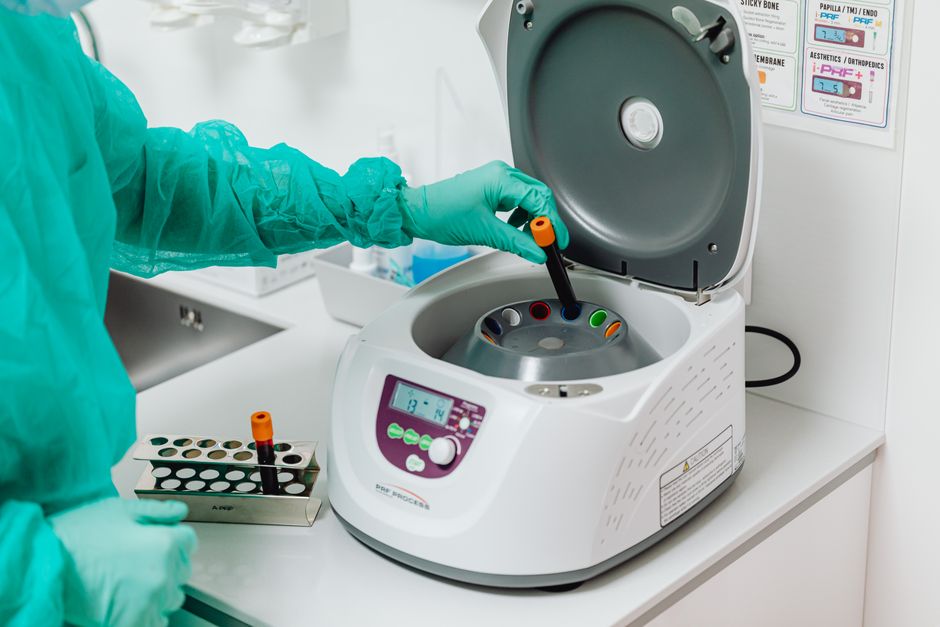
To read a high ESR sensibly, it helps to know how the value is generated, because the method itself explains most of the quirks. The reference technique is the Westergren method, which the World Health Organization treats as the international standard. A sample of your blood is mixed with an anticoagulant (usually sodium citrate) and drawn up into a thin, vertical glass or plastic tube exactly 200 mm long. The tube sits undisturbed for 60 minutes. Gravity pulls the red cells down, plasma stays on top, and the lab reads how many millimeters of clear plasma have appeared at the top of the column. That distance, in millimeters, is your ESR (StatPearls, NCBI).
Because the result is literally a measurement of falling cells over one hour, everything that changes how fast cells fall changes the number. That is why the physical conditions of the test matter so much, and why a high ESR is far easier to distort than most people assume. Many labs now run automated analyzers that shorten the read time, but they are calibrated back to the Westergren standard, so the same biology applies.
The Miller age adjustment your report may not show
The single most useful trick for interpreting a borderline high ESR in an older adult is the age adjustment described by Miller and colleagues, a formula rheumatologists still use at the bedside. The upper limit of normal is calculated as follows:
- Men: age divided by 2.
- Women: age plus 10, divided by 2.
So a 60-year-old man has an age-adjusted ceiling of about 30 mm/hr, and a 60-year-old woman about 35 mm/hr. A 70-year-old man sits around 35 mm/hr. Under this formula, a woman’s normal runs roughly 5 mm/hr higher than a man of the same age, which reflects the real physiology behind the sex difference. The practical upshot: an ESR of 32 in a 70-year-old man is inside his adjusted range and usually means nothing on its own, while the same 32 in a healthy 22-year-old is genuinely outside the expected range and deserves a closer look. If your lab report only prints a single generic cutoff, this formula is worth doing in your head before you panic.
ESR versus CRP: why doctors order both
ESR rarely travels alone. Its constant companion is C-reactive protein (CRP), and understanding how they differ is the fastest way to make sense of an inflammation workup. Both rise with inflammation, but they move on different clocks.
| Feature | ESR | CRP |
|---|---|---|
| What it measures | How fast red cells settle, driven mostly by fibrinogen and other proteins | A specific protein made by the liver during inflammation |
| Speed of change | Slow. Rises over days, falls over weeks | Fast. Rises within hours, falls within days |
| Best use | Following a known chronic condition over time | Catching new or acute inflammation early |
| Easily distorted by | Anemia, age, pregnancy, lab handling | Far less affected by those factors |
Because CRP reacts quickly and ESR lags, a common and informative pattern is a high CRP with a still-normal ESR early in an acute infection, then a rising ESR a few days later as the CRP is already falling. Reading them together tells your clinician not just whether you are inflamed, but roughly how long you have been inflamed. When both are high and stay high, that points more toward an ongoing or chronic process than a passing one.
Specific conditions that lift ESR, and how doctors sort them
A high ESR becomes far less frightening once you see how a clinician actually narrows it down. The number by itself is a doorway. The clues that follow it are what matter.
Polymyalgia rheumatica and giant cell arteritis
In an adult over 50 with new aching and stiffness across the shoulders and hips, especially in the morning, a high ESR strongly supports polymyalgia rheumatica. Its dangerous cousin, giant cell arteritis, shares the raised ESR but adds headache, scalp tenderness, or jaw pain, and it can threaten vision. These two conditions are the classic reason a high ESR in an older patient is taken seriously rather than dismissed.
Rheumatoid arthritis and lupus
In autoimmune joint disease, ESR is used less for diagnosis and more as a dial to watch disease activity. A patient with known rheumatoid arthritis whose ESR climbs is often flaring, and one whose ESR falls on treatment is usually improving. This tracking role is one of the few situations where the ESR number, followed over time, genuinely guides decisions.
Infection and hidden abscess
A markedly high ESR that keeps climbing, paired with fever, raises concern for a deep-seated infection such as bone infection (osteomyelitis), a heart valve infection (endocarditis), or a walled-off abscess that ordinary tests miss. In these cases the ESR is a prompt for imaging and cultures, not the answer itself.
Multiple myeloma and blood cancers
A very high ESR, particularly one in the triple digits with anemia, bone pain, or kidney trouble, moves multiple myeloma up the list. Abnormal proteins made by the cancer coat red cells and make them stack and fall quickly. This is exactly why a triple-digit ESR earns a thorough, unhurried workup rather than reassurance (StatPearls, NCBI).
How to prepare for the test and what can skew your result
ESR needs no fasting and no special preparation, which is part of why it is such a convenient screening tool. You can eat and drink normally beforehand. That said, several everyday factors can nudge the value in ways worth knowing before you read too much into a single result:
- Anemia tends to raise ESR mechanically, independent of any inflammation, because fewer red cells fall through plasma with less resistance.
- Pregnancy and menstruation commonly lift ESR without any disease behind it.
- Older age and higher body weight both shift the expected range upward.
- Some medications can blunt the number, including NSAIDs and statins, which can mask real inflammation (StatPearls, NCBI).
- Lab handling matters more than for most tests. A tilted tube, a warm room, vibration, an air bubble, or a delay in running the sample beyond two hours can all move the result.
The takeaway is not that ESR is unreliable, but that it is context-dependent. A single borderline value that does not match how you feel is often worth simply repeating, ideally at the same lab, before anyone builds a diagnosis around it.
A worked example of interpreting a high ESR
Numbers make more sense inside a story. Consider three people who each get back an ESR of 45 mm/hr.
- A 25-year-old man with fever and a cough. That value is well above his expected ceiling and fits an active infection. The ESR simply confirms the inflammation his symptoms already suggested, and the workup focuses on the chest.
- A 68-year-old woman with new shoulder and hip stiffness and a headache. Here the same 45 is a warning shot. It fits polymyalgia rheumatica, and the headache raises the specter of giant cell arteritis, which is an urgent same-day concern.
- A 74-year-old woman who feels completely well. Her age-adjusted ceiling is already around 42, so 45 is barely outside normal. With no symptoms, the most likely plan is a repeat test in a few weeks, not an aggressive hunt.
Same number, three completely different meanings. That is the entire point of ESR: it is a value that only becomes information when you place it next to a person.
Curious what your own levels look like?
Baseline 100+ biomarkers today and retest as life changes, all in one membership with physician review.
Frequently asked questions
What does a high ESR mean in a blood test?
A high ESR means your red blood cells settled faster than normal, which is a sign of inflammation somewhere in the body (MedlinePlus). It does not identify the cause. It only tells your clinician that inflammation is present and worth investigating alongside your symptoms and other tests.
What is considered a high ESR level?
The cutoff depends on age and sex. Cleveland Clinic lists upper limits of under 15 mm/hr for men under 50, under 20 mm/hr for men over 50 and women under 50, and under 30 mm/hr for women over 50 (Cleveland Clinic). Always compare to the reference range on your own report.
Is a high ESR a sign of cancer?
Usually not, but it can be. Most high ESRs come from infection or inflammation, not cancer. However, very high values over 100 mm/hr narrow the likely causes to serious infection, malignancy such as multiple myeloma, and collagen vascular disease, which is why a triple-digit ESR gets a thorough workup (StatPearls, NCBI).
Can a high ESR be nothing to worry about?
Yes. A mildly raised ESR can come from harmless factors like older age, pregnancy, menstruation, obesity, or anemia, with no disease behind it (Cleveland Clinic). The number alone cannot tell benign from serious, so it is interpreted with your symptoms and other labs.
What if my ESR is high in a blood test but I feel fine?
A high ESR with no symptoms is common and often less concerning than a high ESR with feeling unwell. Your clinician may pair it with a CRP, review the rest of your blood count, or simply recheck it in a few weeks, since a single value can also be falsely elevated by lab handling (StatPearls, NCBI).
This article is for general educational purposes and is not medical advice. It cannot diagnose or treat you and does not replace your clinician. Always discuss your lab results and any health decisions with a qualified healthcare professional.
Vital Signs Today may earn a commission if you buy through links on this page. It does not affect our editorial assessments.