Medically reviewed by the VST Editorial Board. Last updated August 24, 2026. This article contains affiliate links.
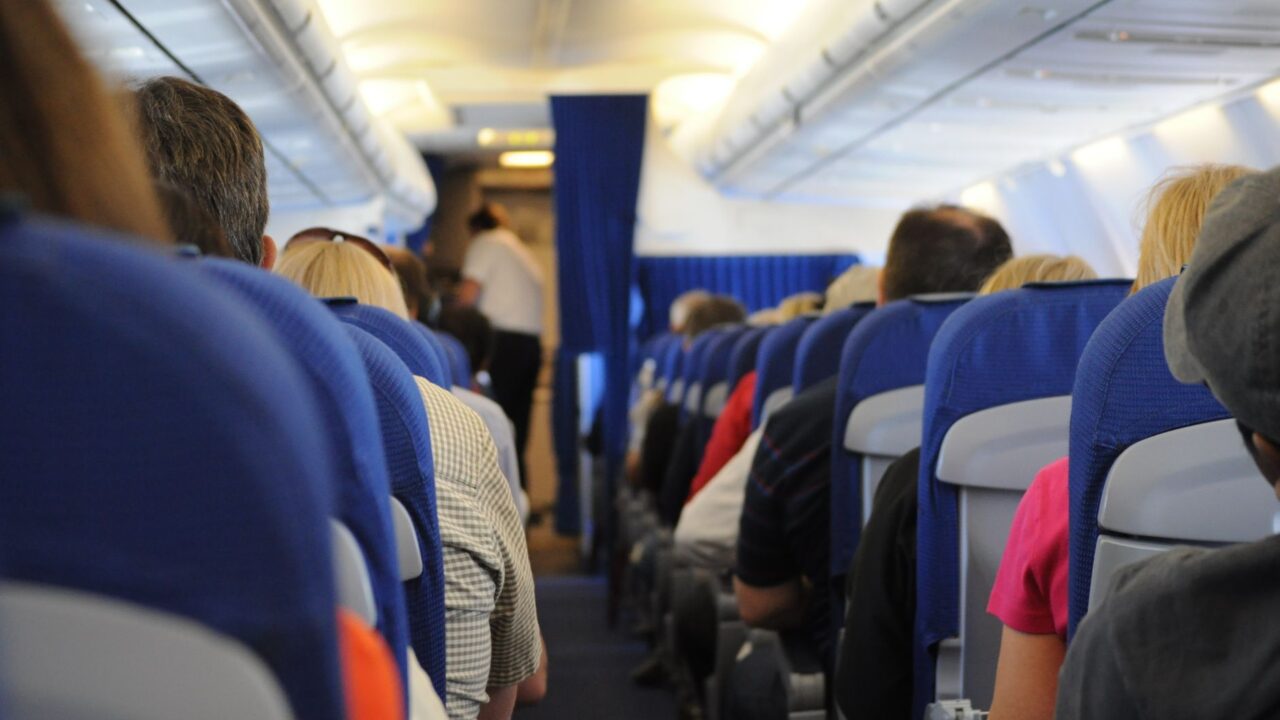
A cruising cabin sits between roughly 78 and 89 decibels depending on the aircraft and where you are sitting. The recommended maximum for a sleeping environment is 55.
You can sleep on a plane, but only by treating it as an engineering problem with four variables: noise, light, head support and temperature, in that order of impact. Everything else people obsess over, the pillow shape, the supplement, the seat recline, sits downstream of those four. Below is what the cabin environment actually does to your body, what to fix first, and the one intervention most travelers reach for that reliably makes their sleep worse.
Key takeaways
- Economy cruise noise runs about 78 to 82 dB(A) on newer aircraft such as the 787 and A350, and 85 to 89 dB(A) on older 767 and A330 types.
- Cabin pressure is maintained at the equivalent of 6,000 to 8,000 feet of altitude, and humidity typically sits at 10 to 20% (UK Civil Aviation Authority).
- Alcohol shortens sleep latency and then fragments the second half of the night. It is the most common self-inflicted wound on a red-eye.
Why is sleeping on a plane so hard?
Four things are working against you and only one of them is the seat.
Noise. Sustained broadband noise at 80 dB is roughly the level of a garbage disposal running next to your head. Research on aircraft cabins puts economy cruise levels at 78 to 82 dB(A) on the newest widebodies and 85 to 89 dB(A) on older ones, while the accepted ceiling for a sleeping environment is 55 dB(A). You are trying to sleep about 25 decibels over the limit.
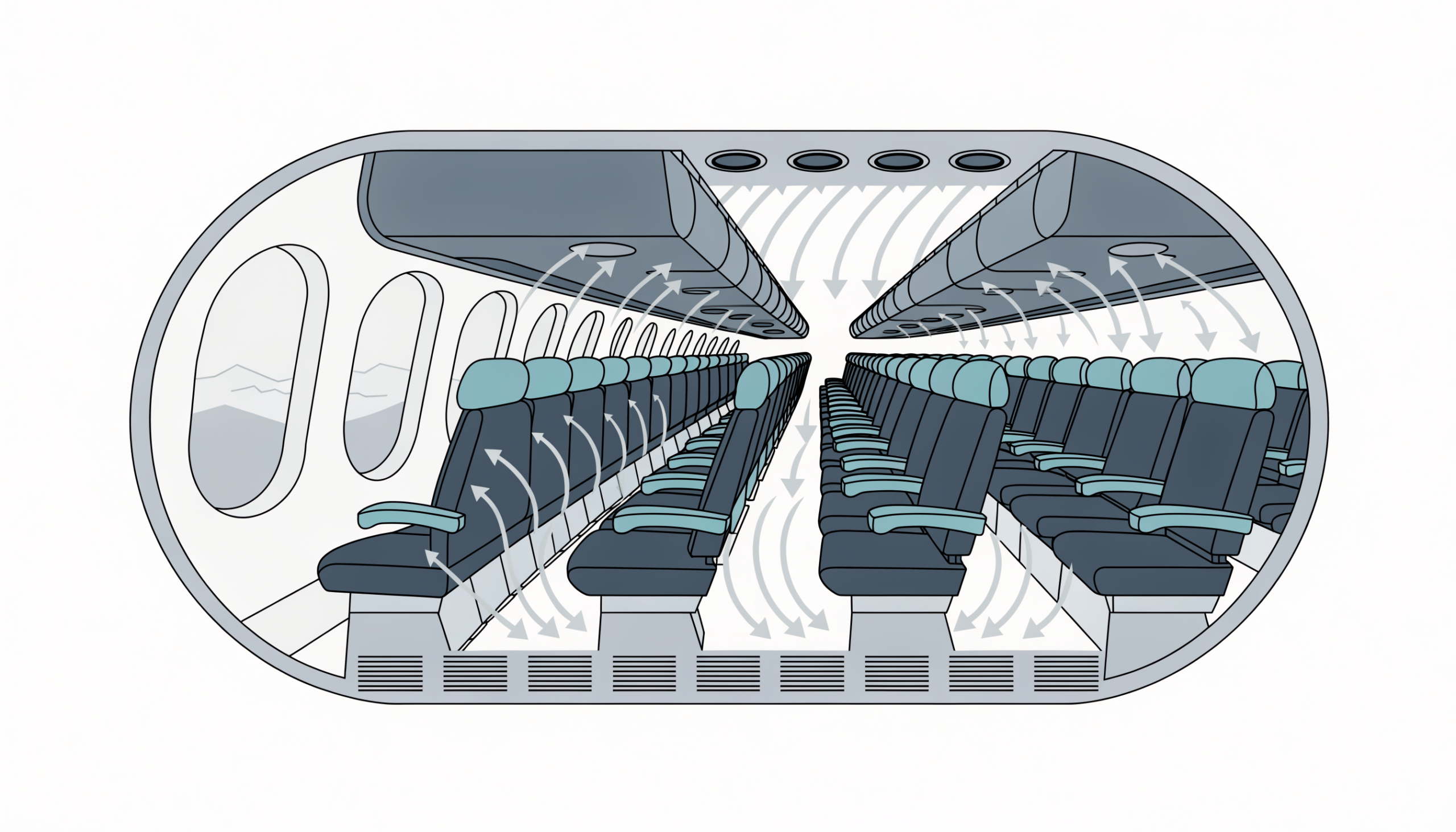
Altitude. Cabins are pressurized to the equivalent of 6,000 to 8,000 feet. Blood oxygen saturation drops modestly in healthy people, which is harmless and also not exactly sleep-promoting. If you have significant lung or heart disease this is a conversation to have with your doctor before flying, not a comfort issue.
Posture. Upright sleeping means your head has no lateral support, so every micro-slump wakes you. This is the variable a good neck pillow genuinely fixes.
Dryness, which matters less than you have been told. Humidity of 10 to 20% dries your nose and throat and makes everything feel worse. But the UK Civil Aviation Authority notes that the additional insensible fluid loss amounts to roughly 150 mL over an eight-hour flight, with no evidence of a change in plasma osmolality. In other words, the cabin does not meaningfully dehydrate you. Drink water for comfort. Do not chug two liters and then spend the night climbing over a stranger.
What should you fix first?
In priority order, because the returns are wildly unequal.
1. Noise, twice over. Foam earplugs with a high noise reduction rating handle the high frequencies, and over-ear noise-cancelling headphones handle the low-frequency engine rumble that earplugs pass through. Using both together is the single highest-yield thing on this list and almost nobody does it.
2. Light. A properly fitted eye mask, contoured so it does not press on your eyelids. Cabin lights come up for service at times that have nothing to do with your sleep, and your circadian system reads that light as information. This matters even more if you are trying to shift time zones, which is covered in our guide to how long jet lag lasts.
3. Head support. The problem is lateral, not posterior. A pillow that stops your head falling sideways beats a plush one that pads the back of your neck. Wrap-style or J-shaped supports outperform the classic horseshoe for most people.
4. Temperature. Core temperature must fall for sleep to begin. Cabins swing, so layer: a breathable base layer you can sleep in, plus something you can shed. This is why the seasoned long-haul crowd changes into soft clothes rather than sleeping in jeans.
What you change into is part of the setup
Cariloha’s bamboo sleepwear and travel layers are built around breathability and moisture wicking, which is exactly the property you want in a cabin that swings between chilly and stuffy on the same flight.
Affiliate link. We may earn a commission at no cost to you.
Which seat actually sleeps better?
| Seat | Sleep advantage | Cost |
|---|---|---|
| Window | Wall to lean on, no aisle traffic, control of the shade | You have to climb over people to move |
| Aisle | Free movement, better for circulation | Cart strikes, elbows, aisle light |
| Bulkhead | Legroom, no seat reclining into you | Bassinet zone means infants, and fixed armrests |
| Behind the wing, mid-cabin | Generally quieter than aft of the engines | Fills up early |
| Last row | Rarely a sleep choice | Galley noise, lavatory traffic, limited recline |
If sleep is the priority, take the window. If you have any clot risk factor, take the aisle and get up hourly, because immobility is the variable that matters more than sleep quality. Our guide to compression socks for flying covers who falls into that group.
What about alcohol and sleeping pills?
Alcohol is the classic trap. It shortens the time it takes to fall asleep, which is why it feels like it works, then suppresses REM early and fragments the back half of the flight. You wake at hour five feeling worse than if you had stayed awake reading. Combined with a dry cabin and a dehydrating diuretic effect, it also makes arrival day harder.
Prescription sleep medication on a flight is a decision to make with your own prescriber, not with a forum. Two specific cautions: sedation plus immobility for eight hours is not an ideal combination for venous return, and residual next-morning impairment is a real phenomenon that shows up exactly when you are navigating an unfamiliar airport.
Melatonin on the plane is only useful if the flight overlaps night at your destination. Taking it because the lights dimmed pushes your clock in a random direction. The timing rules are in our guide to melatonin for jet lag.
(Aside: the most useful thing I ever changed about long-haul flying was refusing the first drinks service and eating before boarding. Skipping the meal service means no one wakes you at hour two, and the airline food is not worth the interruption.)
A workable long-haul routine
- Set your watch and phone to destination time at the gate. Decide before boarding whether this flight is a night or a day.
- Eat before you board if the flight is a night. Tell the crew you do not want to be woken for meals.
- Change into soft layers in the terminal, not in the lavatory at hour three.
- Earplugs in, headphones over, mask on, before the safety demonstration ends.
- Buckle the seatbelt over your blanket so turbulence checks do not wake you.
- Hourly ankle pumps whenever you surface, twenty per side. Sleep matters less than circulation.
- Land, get outdoor light at the right end of the day, and hold local bedtime.
On the very long routes, the aircraft type is part of the sleep plan
The 787 and A350 run measurably quieter cabins and lower cabin altitude than older widebodies. If you are pricing US to South America, where sectors regularly run nine to twelve hours, LATAM Airlines lists its route fares and equipment directly.
Affiliate link. We may earn a commission at no cost to you.
When should you check with a doctor before flying?
The reduced cabin pressure is not a comfort question for everyone. Speak to a clinician before a long flight if you have:
- Chronic obstructive pulmonary disease, pulmonary fibrosis, or you use home oxygen
- Recent heart attack, unstable angina, or uncontrolled heart failure
- Sickle cell disease
- Recent surgery, particularly abdominal, eye or neurosurgery
- A recent pneumothorax
- Untreated obstructive sleep apnea, where sedation on a flight is a genuine concern
Get emergency help in flight or on landing if you develop chest pain, breathlessness at rest, fainting, confusion, or a one-sided weakness or facial droop. Cabin crew are trained for this and aircraft carry medical kits. Ask early rather than waiting to see if it passes.
Frequently asked questions
Is sleeping upright bad for you?
Not harmful for a night, but it produces poorer, more fragmented sleep and stiffness. The bigger issue on long flights is immobility, not posture.
Do neck pillows really help?
Yes, if they prevent lateral head drop. Shape matters more than plushness.
Should I take a sleeping pill for a red-eye?
Only if your own prescriber has approved it for that purpose, and never with alcohol.
How much water should I drink on a flight?
Enough to stay comfortable. The measured extra loss is around 150 mL over eight hours, so aggressive hydration mostly buys you lavatory trips.
Why do my ears hurt on descent?
Pressure change across the eardrum. Swallow, yawn, or use the Valsalva maneuver gently. Avoid flying with a severe blocked nose or ear infection if you can, and ask a clinician if you must.
The bottom line
Wear earplugs under noise-cancelling headphones, use a contoured mask, buy a pillow that stops lateral head drop, layer for temperature, and skip the alcohol. Decide at the gate whether this flight is night or day and commit to it. The seat you were assigned matters far less than those five decisions, and all five are yours.
Sources
- UK Civil Aviation Authority. Physiology of flight, guidance for health professionals. caa.co.uk
- National Research Council. The Airliner Cabin Environment and the Health of Passengers and Crew. National Academies Press. nationalacademies.org
- Netherlands Aerospace Centre (NLR). Sleep quality in noisy aircraft cabins. reports.nlr.nl
- Centers for Disease Control and Prevention. CDC Yellow Book, air travel. cdc.gov
This article is for general information and is not medical advice. See our medical disclaimer.