
Last updated June 2026. Educational content, not medical advice. Talk to a licensed clinician before starting any hormone therapy or medication.
Short answer: Glucagon-like peptide-1 (GLP-1) is a 30-amino acid hormone released from specialized gut cells within 5 to 30 minutes of eating. It tells the pancreas to release insulin, tells the brain to stop eating, and slows how fast food leaves your stomach. Your body makes it every single day, but it disappears in under two minutes. The billion-dollar drugs like Ozempic and Wegovy work by mimicking this exact molecule and making the signal last for a week instead of two minutes.
GLP-1 controls appetite and blood sugar naturally, so where do your own glucose and metabolic markers stand today? One at-home Superpower draw checks 100+ biomarkers, physician-reviewed.
What exactly is GLP-1 and where does it come from?
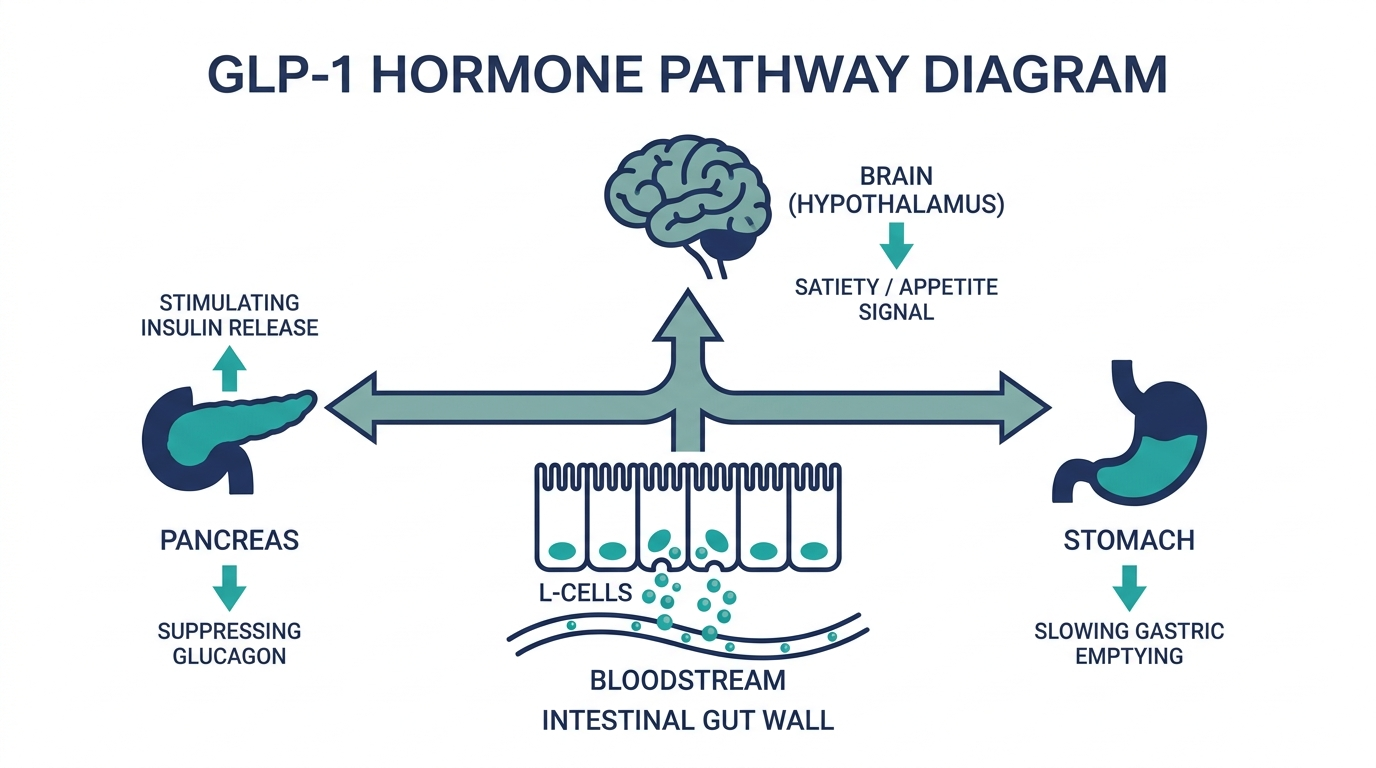
GLP-1 is an incretin hormone, meaning it is produced in the intestine and amplifies the insulin response to a meal before blood sugar has even risen measurably. It is secreted by enteroendocrine L-cells concentrated in the ileum and colon, though some L-cells exist as far up as the jejunum. The moment carbohydrates and fats touch these cells, they release GLP-1 into the portal circulation.
The central challenge with natural GLP-1 is its lifespan. The enzyme dipeptidyl peptidase-4 (DPP-4) clips two amino acids from the hormone’s active end, rendering it biologically inert in roughly 1 to 2 minutes. By the time GLP-1 travels from the gut to the pancreas, only 10 to 15 percent of what was released still carries a signal. Your liver destroys most of the rest before it reaches systemic circulation. That near-instant degradation is why “naturally boosting GLP-1” through diet has modest effects: you are working with a hormone that is designed to vanish.
GLP-1 is derived from a larger precursor protein called proglucagon. The same gene, processed differently in the gut versus the pancreas, produces either GLP-1 in the gut or glucagon in the pancreatic alpha-cell. That dual origin explains a lot about why blocking glucagon while boosting GLP-1 is such a powerful metabolic lever.
What does GLP-1 actually do in the body?
GLP-1 operates across at least four distinct systems simultaneously, which is why researchers keep finding new reasons to care about it.
Pancreas. GLP-1 binds to receptors on pancreatic beta-cells and triggers insulin secretion in a glucose-dependent manner. This glucose-dependence is critical: GLP-1 only drives insulin release when blood glucose is elevated. At normal fasting glucose, stimulating GLP-1 receptors produces almost no insulin response, which is why GLP-1-based drugs carry a low hypoglycemia risk compared to older diabetes medications like sulfonylureas. Simultaneously, GLP-1 suppresses glucagon from alpha-cells, cutting the liver’s output of new glucose.
Stomach. GLP-1 slows gastric emptying, the rate at which food moves from the stomach into the small intestine. A slower transit means nutrients appear in the bloodstream more gradually, flattening the post-meal glucose spike. It also means you feel physically full longer from the same meal. This is the mechanism behind the nausea some people experience when starting a GLP-1 medication: the stomach is, bluntly, not emptying as fast as it used to.
Brain. GLP-1 receptors are expressed in the hypothalamus (specifically on POMC neurons that signal satiety), the brainstem nucleus tractus solitarius, and the area postrema, a region sometimes called the brain’s “vomiting center” and a key relay for gut-derived satiety signals. Research published in 2025 on the gut-brain axis confirmed that GLP-1 works through two distinct routes: peripheral signals from the gut traveling via the vagus nerve, and, for some receptor agonist drugs, direct central action in the brain after crossing the blood-brain barrier. These circuits reduce both homeostatic hunger (the biological drive to eat) and hedonic food motivation (wanting food for reward, not just fuel).
Heart and blood vessels. GLP-1 receptors are found on cardiac tissue, and multiple large trials have now shown cardiovascular benefits that go beyond weight loss. The SELECT trial enrolled 17,604 people with obesity but without diabetes and demonstrated a 20% reduction in major adverse cardiovascular events (MACE) with once-weekly semaglutide versus placebo. A post-hoc analysis confirmed that roughly one-third of the cardiovascular benefit tracked with weight reduction, but the remaining two-thirds appeared to operate through direct GLP-1 receptor signaling on the heart and vasculature, independent of body weight.
Full-body lab membership: 100+ biomarkers, doctor-reviewed, tracked over time.
How did a gut peptide become a weight-loss blockbuster?
The path from basic science to Ozempic is one of the stranger success stories in modern pharmacology, because it ran through a Gila monster.
Exendin-4, a compound found in the saliva of the Gila monster lizard, turned out to be a natural GLP-1 receptor agonist with a half-life orders of magnitude longer than endogenous GLP-1. That discovery in the early 1990s confirmed the receptor was druggable. The first approved GLP-1 receptor agonist, exenatide (Byetta), reached the US market in 2005 for type 2 diabetes. It required twice-daily injections and produced modest weight loss as a side effect.
The pivotal insight came when researchers noticed patients in diabetes trials losing far more weight than expected for a glucose-lowering drug. When Novo Nordisk ran semaglutide at higher doses specifically for obesity, the STEP 1 trial reported 14.9% mean body weight reduction over 68 weeks, with 50.5% of participants achieving at least 15% weight loss. Those numbers had not been seen in a pharmacological obesity trial before. The FDA approved Wegovy (high-dose semaglutide 2.4 mg) for chronic weight management in 2021.
It is worth pausing on what those numbers mean at a population level: roughly half the participants in a randomized controlled trial lost the equivalent of what bariatric surgery patients lost in older observational data.
Tirzepatide, Eli Lilly’s dual GIP/GLP-1 receptor agonist, pushed further. In the head-to-head SURMOUNT-5 trial, tirzepatide produced approximately 20.2% mean body weight reduction versus 13.7% for semaglutide, the current clinical benchmark for comparing these two drug classes.
What happens when you stop taking a GLP-1 drug?
This is the question most of the marketing skips, and it is the single most important thing to understand before starting. GLP-1 receptor agonists treat obesity the way blood pressure medication treats hypertension: they work while you take them, and the underlying biology reasserts itself when you stop. In the STEP 1 trial extension, participants who came off semaglutide regained a large share of the weight they had lost, on the order of two-thirds, within about a year of stopping, and their cardiometabolic improvements drifted back toward baseline alongside the weight.
The reason is mechanistic, not a failure of willpower. The drug suppresses appetite and slows gastric emptying only while it occupies the receptor. Remove it, and hunger signaling returns to its prior set point, often against a body that now defends its higher weight. That is why clinicians increasingly frame these medications as long-term therapy rather than a short course, and why the exit plan matters as much as the starting dose. If cost, side effects, or supply force a stop, tapering while doubling down on protein, resistance training, sleep, and fiber gives the best odds of holding some of the loss.
Protecting muscle while you lose weight
Any rapid weight loss, whether from surgery, aggressive dieting, or GLP-1 drugs, strips away lean muscle along with fat. Analyses of GLP-1 trials suggest that roughly a quarter to 40 percent of the total weight lost can come from lean mass if nothing is done to counter it. For an older adult, that is a real problem, because muscle drives metabolism, glucose disposal, and the ability to stay independent later in life.
The countermeasures are unglamorous and effective. Resistance training two to three times a week signals the body to keep the muscle it would otherwise shed. Adequate protein, generally in the range of 1.2 to 1.6 grams per kilogram of body weight for someone actively losing weight, gives that muscle the raw material to rebuild. This is also where the slowed gastric emptying works against you: appetite is suppressed, so people on these drugs often undereat protein specifically. Front-loading protein at each meal, before the fullness sets in, is a practical fix that clinicians now emphasize routinely.
What realistic expectations look like
Dosing is deliberately slow. These drugs are titrated upward over weeks or months precisely to let the gut adjust and to blunt the nausea that comes from a stomach that suddenly empties more slowly. Starting at a low dose and stepping up is not caution for its own sake, it is how the side-effect curve is managed. Expect the first month or two to involve the most gastrointestinal complaints, which usually ease as the body adapts.
Weight loss is not linear either. It tends to come in steps with plateaus, and individual response varies widely. Some people are strong responders who lose well past the trial averages, others lose little despite good adherence, which points back to the reality that obesity is biologically heterogeneous. None of this is visible from the outside, which is why measuring your own metabolic markers before and during treatment turns a guessing game into something you can actually manage.
The simplest way to actually get this done
Superpower is a full-body lab membership that runs 100+ biomarkers, has each result reviewed by a doctor, and tracks your numbers year over year (about $199/year). It is what we point readers to when they would rather get one clean, complete draw than chase single tests one at a time. Here is superpower reviewed in full.
How is GLP-1 different from the drugs named after it?
This is the most common point of confusion, and it matters.
| Feature | Natural GLP-1 | GLP-1 Receptor Agonist Drugs |
|---|---|---|
| Source | Gut L-cells | Pharmaceutical synthesis |
| Half-life | 1 to 2 minutes | 12 hours (liraglutide) to 7 days (semaglutide) |
| Route | Endogenous hormone | Injection or oral tablet |
| Brain penetration | Limited (mostly vagal) | Varies; higher for some molecules |
| DPP-4 resistance | None | Engineered into the molecule |
| Approved uses | N/A (it’s your own hormone) | T2D, obesity, cardiovascular risk reduction |
| Cost | Free (your body makes it) | $800 to $1,400/month without insurance |
GLP-1 receptor agonists are not GLP-1. They are molecules engineered to bind the same receptor but resist the DPP-4 enzyme that destroys natural GLP-1 in under two minutes. Semaglutide, for example, is modified with a fatty acid chain that binds albumin in the blood, dramatically extending its half-life to roughly 7 days. That engineering is what makes a once-weekly injection possible.
The newest class goes further still. In April 2026, the FDA approved orforglipron (brand name Foundayo), Eli Lilly’s small-molecule oral GLP-1 receptor agonist, the first non-peptide GLP-1 drug in the world. Because it is not a peptide, it survives digestion as a once-daily oral pill rather than requiring injection. In the ATTAIN-1 trial at the highest dose tested, orforglipron produced 11.2% mean body weight reduction versus 2.1% for placebo over 72 weeks. Modest versus injectable semaglutide, but taken by mouth, which changes access substantially.
Full-body lab membership: 100+ biomarkers, doctor-reviewed, tracked over time.
Can you raise GLP-1 naturally without a drug?
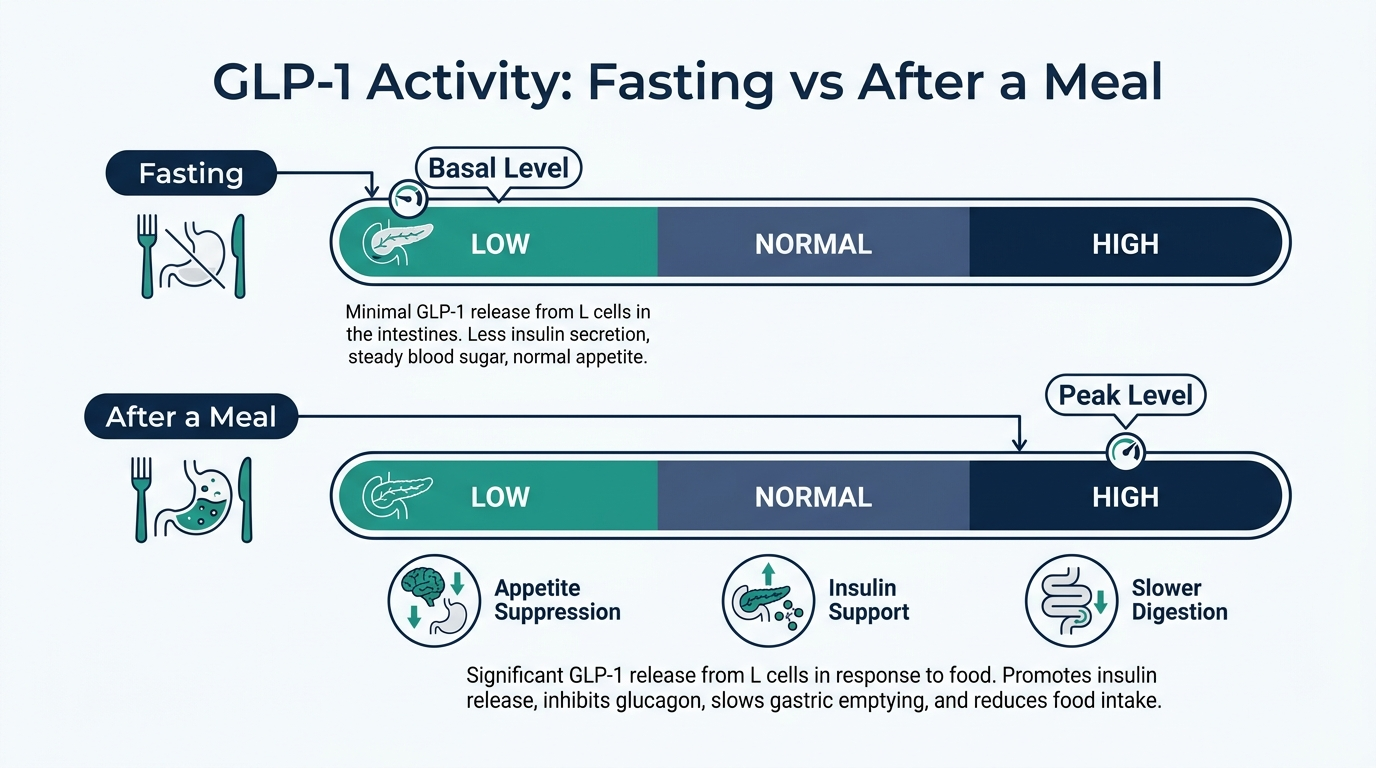
Yes, but the ceiling is lower than popular wellness content implies. Natural GLP-1 is gone in two minutes regardless of how much you stimulate its secretion. What diet and lifestyle changes actually do is influence the amount and timing of that secretion, and some of these effects are well-documented.
Fermentable fiber is the most reliable lever. Oligofructose (a prebiotic fiber in onions, artichokes, and asparagus) fermented by gut bacteria produces short-chain fatty acids that stimulate L-cell GLP-1 release. One controlled study showed 20 grams per day of oligofructose significantly elevated post-meal GLP-1 levels compared to a cellulose control.
Meal sequencing matters more than meal composition alone. Eating protein or fat before carbohydrate at a meal enhances GLP-1 secretion relative to eating carbohydrate first, because the physical structure of protein and fat in the gut requires more L-cell contact before reaching the colon. A 2015 study in Diabetes Care showed this sequencing lowered post-meal glucose spikes and raised GLP-1 levels compared to the reverse order.
Exercise, particularly moderate to high intensity aerobic work, increases GLP-1 output following meals. The effect is not large in absolute terms, but it compounds with other strategies.
Gut microbiome diversity. Certain Lactobacillus and Bifidobacterium strains produce metabolites that directly stimulate enteroendocrine L-cells. This is one of the reasons Mediterranean diet patterns, which feed a diverse microbiome, are associated with better metabolic outcomes.
Do not believe the supplement industry’s version of this story. Most “natural GLP-1 booster” supplements rely on berberine, which may have modest DPP-4 inhibitory effects at high doses, but the evidence base is far weaker than the marketing copy suggests. You are not replicating Ozempic with a capsule.
What diseases and conditions involve GLP-1?
Type 2 diabetes and obesity are the established lanes, but the GLP-1 receptor’s distribution throughout the body keeps generating new therapeutic hypotheses.
Cardiovascular disease. The SELECT trial result (20% MACE reduction in non-diabetic obesity) earned semaglutide a labeled cardiovascular risk-reduction indication in 2023. The LEADER trial (liraglutide) and SUSTAIN-6 (semaglutide) earlier confirmed this in diabetic populations. Pooled meta-analyses now show GLP-1 receptor agonists reduce heart failure hospitalization by approximately 18% across 16 trials, with cardioprotective mechanisms including direct receptor action on cardiac tissue, reduced inflammation, and blood pressure lowering.
Neurodegenerative disease. This is the frontier that has generated the most excitement in 2025 to 2026. GLP-1 receptors are expressed in the hippocampus, frontal cortex, and substantia nigra. In Parkinson’s disease, a double-blind trial of exenatide presented at the 2025 MDS Congress showed statistically significant effects on motor expression over 9 months. UCSF researchers published analysis in May 2026 examining whether GLP-1 drugs might protect brain health, citing the molecule’s anti-inflammatory and neuroprotective properties. Large randomized trials for Alzheimer’s disease are ongoing.
Alcohol and addiction. A 2025 trial emulation study found GLP-1 receptor agonists were associated with significantly fewer alcohol-related medical events, consistent with preclinical evidence that GLP-1 receptor activation reduces dopamine signaling in reward circuits, the same pathway that makes food less compulsive.
The working hypothesis across all these conditions is that chronic low-grade inflammation and dysregulated energy sensing are a shared root, and GLP-1 receptors are positioned at exactly that intersection.
What does low GLP-1 feel like, and can you test it?
You cannot easily order a clinical GLP-1 level the way you order a fasting glucose. Direct GLP-1 assays exist in research settings but require immediate sample processing on ice and are rarely run in standard panels. What you can test are the downstream signatures of impaired GLP-1 signaling: fasting insulin, HOMA-IR (a calculated insulin resistance score), fasting glucose, HbA1c, and post-meal glucose variability tracked with a continuous glucose monitor.
Personally, the most actionable starting point is not chasing a direct GLP-1 number but understanding your insulin sensitivity landscape. Elevated fasting insulin with normal fasting glucose, a pattern called compensated insulin resistance, is exactly the scenario where improving GLP-1 signaling through diet, exercise, or medication would have the most leverage. You cannot see that pattern from a glucose number alone.
The biomarkers that suggest your GLP-1 axis may be underperforming include fasting insulin above 10 uIU/mL, HOMA-IR above 2.0, elevated triglycerides with low HDL, and post-meal glucose spikes above 140 mg/dL on a CGM despite a moderate meal. None of these require a GLP-1 test. All of them point to the same underlying system.
Full-body lab membership: 100+ biomarkers, doctor-reviewed, tracked over time.
Curious what your own levels look like?
Baseline 100+ biomarkers today and retest as life changes, all in one membership with physician review.
Want a real clinician to run the numbers, not a guess?
Joi + Blokes is a telehealth clinic that prescribes GLP-1 medication (Zepbound, compounded semaglutide and tirzepatide), hormone therapy (TRT, HRT), thyroid care, and peptides after a real lab panel and clinician review, with no membership or consult fee (prescriptions from about $59/month, lab panels from $149). If the scale will not budge, this is where you find out whether insulin, thyroid, or hormones are the real reason. Here is Joi + Blokes reviewed in full.
Frequently asked questions
What is glucagon-like peptide-1 in simple terms?
GLP-1 is a hormone your gut releases when you eat. It triggers insulin release from the pancreas, suppresses glucagon (which would otherwise raise blood sugar), slows how fast food leaves your stomach, and signals your brain to stop eating. It does all of this within about five to thirty minutes of a meal, then disappears in under two minutes.
Is GLP-1 the same as semaglutide or Ozempic?
No. GLP-1 is your body’s own hormone. Semaglutide (Ozempic for diabetes, Wegovy for weight loss) is a pharmaceutical molecule engineered to mimic GLP-1 but resist the enzyme that degrades it, giving it a half-life of about seven days versus two minutes for your natural hormone. Ozempic activates the same receptor but is not the same molecule.
What causes low GLP-1?
Reduced GLP-1 secretion is associated with type 2 diabetes (where L-cell GLP-1 output is impaired), poor dietary fiber intake (L-cells need fermentable substrates to fire robustly), sedentary lifestyle, and gut microbiome dysbiosis. Rapid gastric emptying, sometimes seen in early metabolic dysfunction, also reduces the L-cell contact time needed to stimulate GLP-1 release.
Can you increase GLP-1 naturally?
Yes, with real but modest effects. Consuming 20 grams per day of fermentable fiber (oligofructose, inulin), eating protein and fat before carbohydrate at meals, performing moderate to high intensity exercise, and maintaining a diverse gut microbiome all increase GLP-1 output. These strategies complement rather than replace clinical intervention when GLP-1 signaling is significantly impaired.
What are the side effects of GLP-1 receptor agonist drugs?
Nausea, vomiting, and diarrhea are the most common, occurring in 30 to 44% of patients starting injectable semaglutide. These effects typically improve after the first 4 to 12 weeks as the body adjusts. More serious but rare concerns include pancreatitis, gallstone formation, and potential thyroid C-cell effects (noted in animal studies; thyroid cancer risk in humans remains under monitoring). Muscle mass loss (approximately 25 to 40% of total weight lost) has emerged as a meaningful concern in long-term use, prompting interest in combining GLP-1 therapy with resistance training.
How is GLP-1 related to glucagon?
They share a common origin. Both GLP-1 and glucagon are derived from the same proglucagon gene, but processed differently: the gut cleaves proglucagon to produce GLP-1, while the pancreatic alpha-cell cleaves the same precursor to produce glucagon. GLP-1 and glucagon have nearly opposite effects: glucagon raises blood sugar by stimulating the liver to release glucose, while GLP-1 lowers blood sugar by triggering insulin and suppressing glucagon. Some newer drugs target both receptors simultaneously.
Is GLP-1 a peptide?
Yes. GLP-1 is a 30-amino acid peptide hormone. The word “peptide” just means a short chain of amino acids, shorter than a full protein. This is also why the category of drugs based on it is called “GLP-1 receptor agonists” and why they have historically required injection: peptide molecules are digested in the gut when taken orally, which is the same engineering challenge the new oral drugs like orforglipron (approved April 2026) solved by making a small-molecule, non-peptide mimic of the same receptor.
Author: Vital Signs Today Editorial Team, [credential]”]. Educational content, not medical advice. Sources linked inline.
Primary sources:
– Glucagon-like peptide-1, Wikipedia overview
– The Physiology of GLP-1, Physiological Reviews (2007)
– GLP-1 physiology and pharmacology along the gut-brain axis, JCI / PMC 2025
– SELECT trial: semaglutide and cardiovascular outcomes in obesity without diabetes, ACC summary
– GLP-1 Agonists in Cardiovascular Diseases, PMC 2025
– Semaglutide and tirzepatide clinical trials 2026, Sterling Medical Center
– Orforglipron (Foundayo) FDA approval analysis, Mewburn 2026
– GLP-1 Pipeline Update February 2026, Prime Therapeutics
– Natural ways to boost GLP-1, GoodRx
– GLP-1 and brain health, UCSF May 2026
– GLP-1 receptor agonists in Alzheimer’s and Parkinson’s, Frontiers in Endocrinology 2025
– Superpower insulin biomarker test
Related reading
Vital Signs Today may earn a commission if you buy through links on this page. It does not affect our editorial assessments.