Last updated June 2026. Educational content, not medical advice. GHK-Cu is not FDA-approved for any therapeutic indication. Talk to a licensed clinician before starting any peptide protocol.
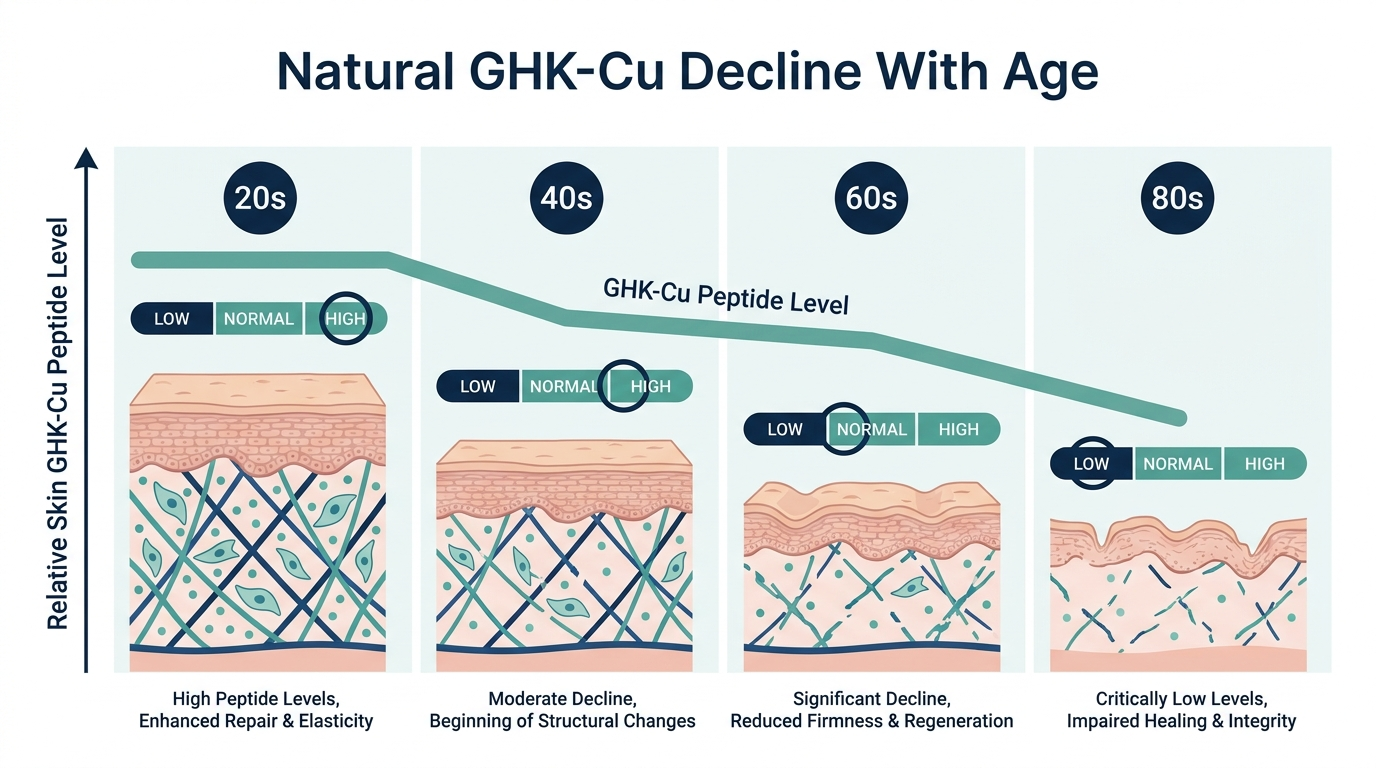
Short answer: GHK-Cu (glycyl-L-histidyl-L-lysine copper) is a three-amino-acid peptide your body produces naturally, found in plasma at roughly 200 ng/mL at age 20 and only about 80 ng/mL by age 60, a 60% drop that correlates with measurable declines in wound healing speed, skin thickness, and collagen turnover rate. In topical skincare, it is sold legally as “Copper Tripeptide-1” in serums starting around $17. The injectable form sits in a regulatory grey zone as of June 2026, with formal FDA review scheduled before early 2027.
Your skin’s copper peptide drops 60% by age 60, so what other markers are quietly declining with it? One at-home Superpower draw checks 100+ biomarkers, physician-reviewed.
So what exactly is GHK-Cu and where does it come from?
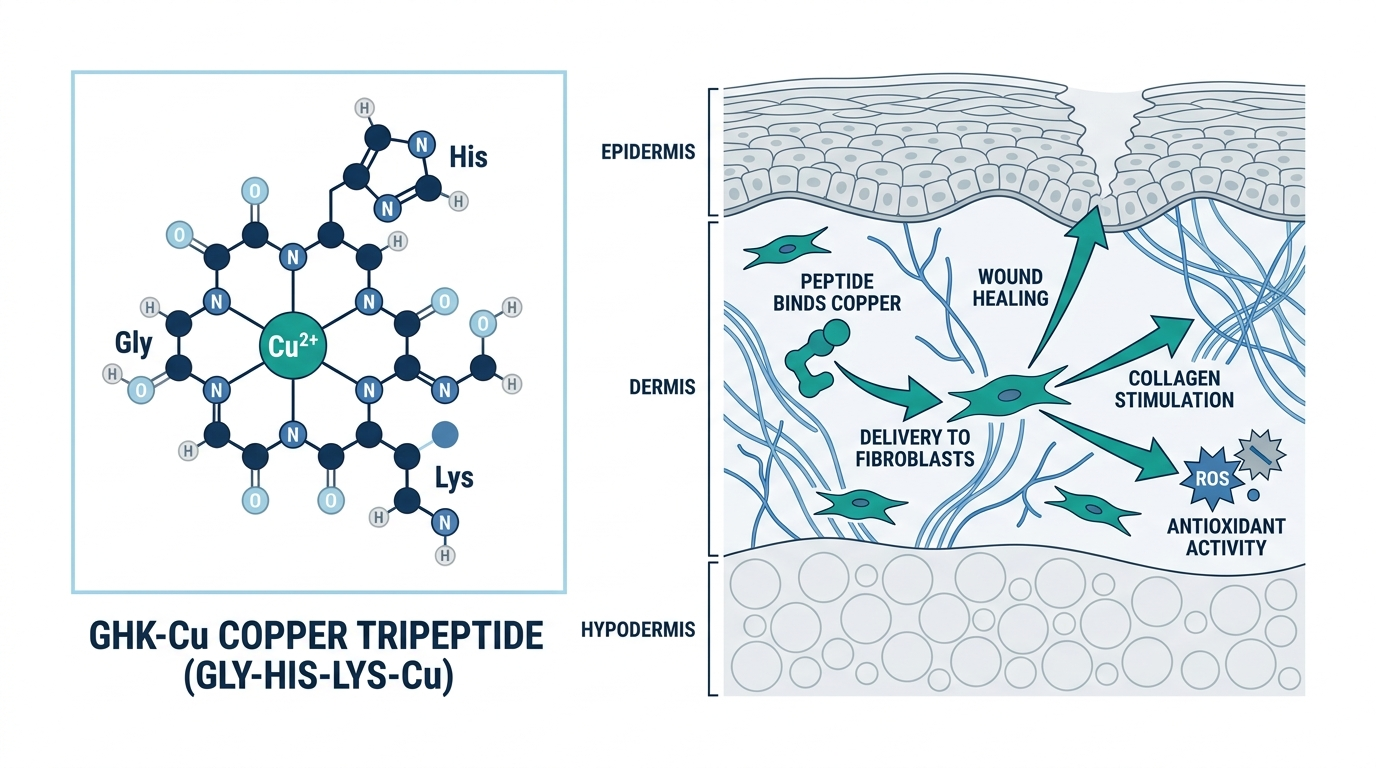
GHK-Cu is a tripeptide, meaning a chain of exactly three amino acids: glycine, histidine, and lysine, bound to a copper ion. Your liver, skin, and saliva all produce it. The “Cu” stands for the Latin cuprum, copper, the mineral that gives the molecule most of its biological activity.
Dr. Loren Pickart first isolated it from human plasma in 1973 while trying to understand why aged liver tissue, when bathed in blood from young adults, suddenly started behaving like younger tissue again. The regenerative signal turned out to be GHK, and the copper binding form, GHK-Cu, turned out to be the active version. That foundational discovery still drives most of the research today.
Pickart spent the next four decades trying to get mainstream dermatology to pay attention. It largely did not, until The Ordinary put Copper Tripeptide-1 in a $17 serum and suddenly everyone had an opinion.
Why does GHK-Cu level matter as you age?
The drop from 200 ng/mL to 80 ng/mL is not just a number on a lab report. It tracks closely with real changes in tissue behavior. At 200 ng/mL, fibroblasts, the cells that build your skin’s scaffolding, receive a continuous low-level signal to produce collagen, elastin, and glycosaminoglycans. As GHK-Cu falls, that baseline signal fades.
The mechanism is not a single pathway. GHK-Cu acts as a copper chaperone, meaning it physically transports copper to enzymes that cannot function without it. Superoxide dismutase (SOD), one of your skin’s primary antioxidant defenses, requires copper to neutralize free radicals. Without adequate copper delivery, SOD activity drops, oxidative damage accumulates faster, and the extracellular matrix degrades ahead of schedule.
What makes GHK-Cu unusual is the scale of its downstream effect. A 2018 analysis by Pickart, Vasquez-Soltero, and Margolina using the Broad Institute’s Connectivity Map found that GHK-Cu altered the expression of 31.2% of all human genes at a threshold of 50% or greater change, with 59% of those genes upregulated and 41% suppressed. In raw numbers: 1,569 genes stimulated at 50 to 99% change, 646 more at 100 to 199% change, and 227 more at 200 to 299% change. That is a system-level signal, not a targeted tweak.
Full-body lab membership: 100+ biomarkers, doctor-reviewed, tracked over time.
What does the actual clinical evidence show?
Here is where I have to give you an honest split, because the evidence for topical GHK-Cu and injectable GHK-Cu are not the same story.
For topical use, the evidence is genuinely good. Three placebo-controlled facial trials showed measurable improvements in skin firmness, laxity, fine-line depth, and density measured by ultrasound after 12 weeks of consistent use. One of those trials, 71 women with mild-to-advanced photoaging using a daily facial cream, found increased subdermal echogenic density, a validated proxy for collagen and elastin content, across the group. A biopsy-level study by Abdulghani et al. found collagen production increased in 70% of GHK-Cu-treated women, compared to 50% with vitamin C cream and 40% with retinoic acid. A 40-woman double-blind trial found a 55.8% reduction in wrinkle volume and a 32.8% reduction in wrinkle depth after 12 weeks of 2% GHK-Cu application.
The mechanistic data supporting those results is solid too. Maquart et al. (1988) showed GHK-Cu stimulated collagen synthesis in cultured fibroblasts at concentrations as low as 10^-12 M, with peak effect at 10^-9 M. A rat wound-chamber study from the same group documented concentration-dependent increases in both collagen type I and type III mRNA, with collagen synthesis twice that of saline controls.
Do not believe anyone who tells you GHK-Cu and retinol are head-to-head competitors for the same biological pathway. They are not. Retinol drives cell turnover and directly activates procollagen genes. GHK-Cu provides the broader copper-mediated repair signal, supports collagen cross-linking, and shores up the extracellular matrix that retinol turnover can temporarily disrupt. Retinol has 50 years of randomized controlled trials behind it; GHK-Cu has compelling mechanisms and smaller trials. Neither replaces the other.
For injectable GHK-Cu, the evidence base is thinner and the regulatory picture is complicated. Most compelling studies are in animal models or small human series. A rodent wound trial showed 64.5% wound area reduction at day 13 with 2% GHK-Cu gel versus 45.6% for vehicle and 28.2% for untreated controls. A 2021 Phase II trial in 45 men with androgenetic alopecia using 0.5% GHK-Cu lotion found 72% reported greater than 20% hair density increase after six months. Those are real numbers, but neither constitutes a large, independently replicated RCT.
How does it actually work inside the skin?
GHK-Cu operates through at least four distinct mechanisms, and understanding them helps you know what to expect from a serum versus what you are reading on a forum post.
Copper delivery. The glycyl-histidyl-lysine sequence binds copper tightly enough to carry it through biological membranes but loosely enough to release it where cells need it. Free copper is toxic at high concentrations, driving oxidative damage through Fenton reactions. Bound in GHK-Cu, it is delivered safely to copper-dependent enzymes including SOD, cytochrome c oxidase, and lysyl oxidase, the enzyme that physically cross-links collagen fibers for tensile strength.
Matrix metalloproteinase modulation. GHK-Cu upregulates MMP-1 and MMP-2 at low concentrations. This surprises people, because MMPs are the enzymes that break down collagen, and that sounds counterproductive. The mechanism makes sense, though: old, cross-linked, denatured collagen has to be cleared before new collagen can occupy its place. GHK-Cu acts as a remodeling signal, not just a building signal. At very high concentrations the balance shifts and net degradation can dominate, which is the likely origin of the anecdotal “copper uglies” phenomenon you read about in skincare forums.
Anti-inflammatory signaling. GHK-Cu downregulates pro-inflammatory cytokines including TNF-alpha and IL-6. In practical terms, this means skin treated with GHK-Cu enters and exits the inflammatory phase of wound healing faster, which reduces post-procedure redness, swelling, and scarring.
Gene-level repair signaling. Beyond its direct enzymatic effects, GHK-Cu appears to act as a gene expression modulator. The Connectivity Map data includes reversal of emphysema-associated gene expression patterns in a Campbell et al. 2012 Genome Medicine study, including reactivation of the TGF-beta pathway involved in tissue repair. Whether this systemic effect is relevant for topical application at typical cosmetic concentrations remains an open question.
Topical GHK-Cu versus injectable: a practical comparison
| Feature | Topical (cosmetic/OTC) | Injectable (compounded) |
|---|---|---|
| FDA status (June 2026) | Category 1 bulk substance, legally compoundable; sold OTC as cosmetic | Removed from Category 2 in April 2026; formal reclassification pending PCAC review before Feb 2027 |
| Typical concentration | 0.5% to 2% (cosmetic serums); 1% commonly cited in studies | 1 to 5 mg per vial, clinic-specific |
| Cost | $17 to $160 per bottle (OTC) | $225+ per protocol month (prescription/telehealth) |
| Evidence base | 3 placebo-controlled human trials, mechanistic studies | Primarily animal models and small human series |
| Requires prescription | No | Yes, through licensed telehealth or clinic |
| Onset | Measurable improvement at 8 to 12 weeks | Insufficient large-scale data |
| Primary use case | Photoaging, fine lines, post-procedure skin support | Wound healing, hair follicle support (investigational) |
| Key risk | “Copper uglies” from overuse at high concentrations | Research chemical risks if not sourced via licensed pharmacy |
Hydrolyzed type I & III collagen peptides, third-party tested, unflavored.
Which topical products actually contain meaningful GHK-Cu?
The INCI (cosmetic ingredient list) name is “Copper Tripeptide-1.” If you do not see those words somewhere on the label or product page, the product likely contains no GHK-Cu at all, regardless of what the marketing copy says.
Concentration matters considerably. Products with less than 0.1% Copper Tripeptide-1 are using it as a label ingredient rather than an active one. The clinical trials showing measurable improvements used concentrations of 0.5% to 2%. Four products that consistently surface in independent skincare analysis:
The Ordinary Multi-Peptide + Copper Peptides 1% ($32 for 30 mL, or roughly $1.07/mL): listed as 1% GHK-Cu combined with four other peptide technologies (SYN-AKE, Matrixyl synthe’6, Matrixyl 3000, ARGIRELOX) and multiple hyaluronic acids. This is the broadest entry point and the format most consumers start with.
NIOD Copper Amino Isolate Serum 3 1:1 (CAIS3): made almost entirely of GHK-Cu at a higher concentration; from the same parent company (DECIEM) as The Ordinary but priced considerably higher and positioned for people who want a standalone copper peptide rather than a multi-ingredient formula.
Dr. Brenner Copper Peptide Serum: formulated with 1% Copper Tripeptide-1 plus a multi-peptide complex. The 1% concentration sits at the lower end of what the clinical trials used, but the formulation is well-regarded in dermatology circles.
Asterwood 1% Copper Peptides with Hyaluronic Acid: fragrance-free, made in the USA, functional concentration, available at a mid-range price point. A consistent recommendation for sensitive skin because the inactive ingredient list is minimal.
A useful signal for any copper peptide product: the serum should be pale blue-green. GHK-Cu bound to copper has a characteristic color. A product marketed as containing meaningful GHK-Cu that is clear or white is worth questioning.
What about GHK-Cu for hair growth?
Hair follicle applications are one of the more legitimate secondary use cases, though the clinical evidence is still thinner than the skin data. Mechanistically, GHK-Cu stimulates dermal papilla cell proliferation, upregulates VEGF to improve scalp vascularization, and may extend the anagen (active growth) phase by inhibiting the TGF-beta signal that shrinks follicles.
A 1993 study by Uno and Kurata in the Journal of Investigative Dermatology found topical copper peptide PC1031 produced follicular enlargement comparable to topical minoxidil in stumptail macaques and fuzzy rats over two years. A 2025 open-label study (n=30) found GHK-Cu combined with minoxidil produced 35% terminal hair growth versus 18% with minoxidil alone.
Personally, I find the combination-with-minoxidil evidence more compelling than GHK-Cu alone for androgenetic alopecia, because the minoxidil baseline gives you a real comparator. The standalone GHK-Cu hair data is encouraging but not yet replicated at scale.
What are the real risks and who should not use it?
GHK-Cu has a strong safety record in topical cosmetic use. A 2018 review called it “safe, inexpensive, extensively studied.” The serious risks are concentrated in a few specific situations:
The copper toxicity window. Free copper in excess is neurotoxic. GHK-Cu as a chelated complex avoids this, but at very high topical concentrations the MMP-upregulation effect can net out to collagen degradation rather than remodeling. The forum term “copper uglies” describes this: temporary, paradoxical skin-texture changes from overuse. It is not a structural injury, and it resolves, but it is real. Starting with lower concentrations (0.5% before moving to 2%) and doing a patch test prevents it in almost every case.
Wilson’s disease and Menkes disease are contraindications in all forms. Both are copper metabolism disorders and adding exogenous copper to either is dangerous.
Active malignancy is a relative contraindication, particularly for injectable use, because GHK-Cu is pro-angiogenic. New blood vessel formation accelerates wound healing in healthy tissue; whether it could accelerate tumor growth in a person with active cancer has not been studied.
Pregnancy and breastfeeding: insufficient data, standard avoidance recommendation.
Vitamin C compatibility caveat: L-ascorbic acid (pure vitamin C) in low-pH serums can strip copper from the GHK-Cu complex, reducing both molecules’ activity. Do not apply them in the same step. Apply vitamin C in the morning and your copper peptide serum in the evening.
How long before you actually see a difference?
The three placebo-controlled facial trials that showed measurable results all ran for 12 weeks. That is the honest number. Marketing copy that says “visible results in two weeks” is referencing skin hydration, which genuinely does improve faster because GHK-Cu stimulates glycosaminoglycan production, pulling water into the dermis. Structural collagen changes take longer because collagen synthesis and turnover operate on a months-long timescale.
At eight weeks you may notice changes in skin smoothness and tone. At 12 weeks, studies using ultrasound densitometry found measurable changes in subdermal echogenicity. At six months, the patients in the laser-resurfacing studies and hair density trials showed their most significant outcomes.
Consistency matters more than dose. Using a 1% serum every evening for 12 weeks produces better outcomes than occasional high-dose application.
Turn what you just learned into action.
Superpower lets you test 100+ biomarkers from home, then re-check them over time so you can actually see progress, physician-reviewed at every step.
Frequently asked questions
Is GHK-Cu the same as copper peptide?
Yes. In cosmetic labeling the INCI name is “Copper Tripeptide-1,” and many brands simply say “copper peptide.” GHK-Cu is the scientific name for the same molecule: glycyl-L-histidyl-L-lysine complexed with copper (II) ions. Some older products use related but different copper peptides (AHK-Cu, GHK-Cu derivatives), so checking the INCI name is the precise way to confirm what you are actually buying.
Can I use GHK-Cu with retinol?
Yes, and the combination is arguably better than either alone. They work through different mechanisms: retinol drives cell turnover and directly activates procollagen transcription; GHK-Cu supports the copper-mediated repair signal and counteracts some of retinol’s barrier disruption. Common protocol: vitamin C serum in the morning, copper peptide serum in the evening, with retinol alternating evenings with the copper peptide until your skin adapts to both.
Is GHK-Cu FDA approved?
No. As of June 2026, topical cosmetic GHK-Cu is regulated as a cosmetic ingredient under Category 1 of the FDA’s 503A bulk substances list (legally compoundable with a prescription) and is sold freely as an OTC cosmetic. Injectable GHK-Cu was removed from the Category 2 restricted list on April 15, 2026, but formal reclassification to Category 1 still requires a Pharmacy Compounding Advisory Committee review scheduled before February 2027. No finished drug form is approved.
How much GHK-Cu should a good serum contain?
The clinical trials that demonstrated measurable collagen improvements used concentrations of 0.5% to 2%. Products below 0.1% are likely using GHK-Cu as a label ingredient rather than an active. Look for the INCI “Copper Tripeptide-1” and a concentration of at least 0.5%, confirmed on the product page or ingredient documentation.
Does GHK-Cu work for hair loss?
For androgenetic alopecia, the evidence supports it as a useful adjunct to established treatments like minoxidil, not a standalone replacement. A 2025 open-label study found GHK-Cu combined with minoxidil produced 35% terminal hair regrowth versus 18% with minoxidil alone. The mechanistic rationale (VEGF upregulation, dermal papilla proliferation, anagen-phase extension) is plausible and supported by animal studies. Larger RCTs have not yet been published.
Can GHK-Cu cause any skin damage?
At standard cosmetic concentrations (0.5% to 2%), the safety record over decades of use is excellent. The main risk is “copper uglies,” an anecdotal term for temporary skin texture changes from overuse at high concentrations, driven by net MMP-mediated collagen breakdown when GHK-Cu concentration exceeds the remodeling sweet spot. Patch testing and gradual introduction prevent it in almost all cases.
How is injectable GHK-Cu different from the serum?
Topical serums deliver GHK-Cu to the dermis through passive diffusion and, for some formulations, through a micro-channel delivery system. The molecule is small enough to penetrate reasonably well. Injectable forms bypass the skin barrier entirely, achieve higher tissue concentrations faster, and are used for systemic or targeted applications (wound healing, tendon repair, hair follicle stimulation) that go beyond what a serum can achieve. The injectable route requires a prescription, carries more regulatory complexity, and rests on a thinner evidence base in humans than the topical route.
Hydrolyzed type I & III collagen peptides, third-party tested, unflavored.
Author: Vital Signs Today Editorial Team, [credential]”]. Educational content, not medical advice. Sources linked inline.
Primary sources:
– Pickart, Vasquez-Soltero, Margolina (2018) PMC6073405: Regenerative and Protective Actions of the GHK-Cu Peptide
– Pickart, Margolina (2018) PMC3359723: GHK-Cu in Prevention of Oxidative Stress and Degenerative Conditions of Aging
– Superpower.com GHK-Cu Copper Peptide Guide (2026)
– The Ordinary Multi-Peptide + Copper Peptides 1% product page
– Miller et al. (2006) Archives of Facial Plastic Surgery: Effects of Topical Copper Tripeptide Complex on CO2 Laser-Resurfaced Skin
– FDA 503A Bulk Drug Substances, Category 1 and Category 2 lists (2026)
– Innerbody GHK-Cu Peptide Review (2026)
– Innerbody Best Copper Peptide Serum (2026)
– PeptideLaws.com: FDA’s Evolving Stance on GHK-Cu and Cosmetic Peptide Ingredients
– Hairgenetix: Best Copper Peptide Hair Growth Serums Summer 2026
Related reading
Vital Signs Today may earn a commission if you buy through links on this page. It does not affect our editorial assessments.