Quick answer: A PSA test measures prostate-specific antigen, a protein produced almost exclusively by prostate tissue, in a simple blood draw. Most labs flag values above 4.0 ng/mL as elevated, but that cutoff is blunt: a 45-year-old with a PSA of 3.8 ng/mL warrants more attention than a 75-year-old with the same number. The test costs $29 to $90 at direct-pay labs and is fully covered under Medicare for men 50 and older. The free-to-total PSA ratio, not the total number alone, is what most urologists actually use to decide whether a biopsy is warranted.
What does PSA measure, exactly?
PSA (prostate-specific antigen) is a serine protease enzyme secreted by both normal and malignant prostate cells to liquefy semen. It circulates in blood in two forms: bound to carrier proteins (complexed PSA) and floating freely (free PSA). A standard PSA test captures total PSA, which is the sum of both fractions. What most clinicians do not explain to patients is that PSA is organ-specific, not cancer-specific. The prostate pumps out PSA continuously, and anything that irritates, enlarges, or inflames the gland will drive the number up, regardless of whether cancer is present.
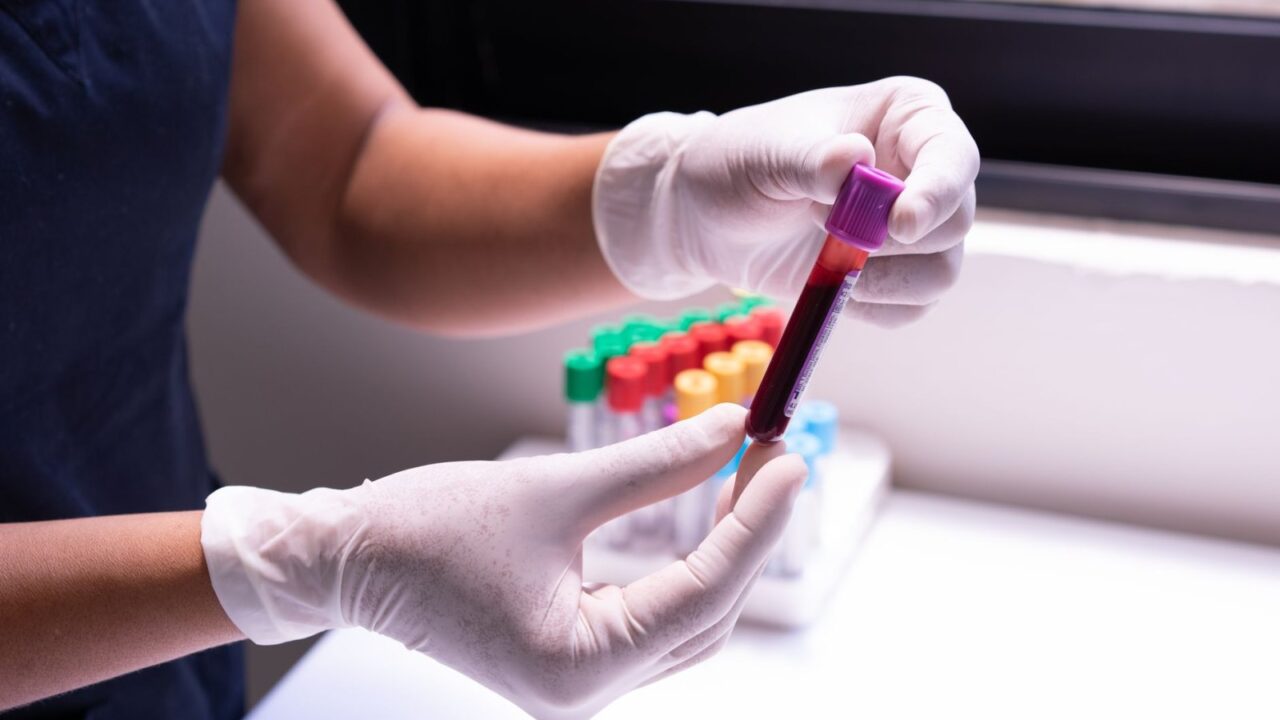
The assay itself is a simple immunoassay run on serum drawn from a standard venipuncture. Quest Diagnostics and Labcorp each process millions of PSA specimens per year, and both report in ng/mL with a turnaround of 24 to 48 hours on standard orders. Point-of-care PSA tests exist at some urology offices but are less common than lab-based panels.
PSA normal range by age: the numbers clinicians actually use
The simplest way to actually get this done
Superpower is a full-body lab membership that runs 100+ biomarkers, has each result reviewed by a doctor, and tracks your numbers year over year (about $199/year). It is what we point readers to when they would rather get one clean, complete draw than chase single tests one at a time. Here is superpower reviewed in full.
The single cutoff of 4.0 ng/mL, popularized in the early 1990s, is outdated. Prostate volume increases with age, so PSA naturally rises even in men with completely benign glands. Age-adjusted reference intervals give a far more accurate picture of what is expected.
| Age range | Commonly used upper limit (ng/mL) | Clinical note |
|---|---|---|
| 40 to 49 | 2.5 | Any value above 2.5 in this group warrants follow-up |
| 50 to 59 | 3.5 | Most guidelines start routine screening here |
| 60 to 69 | 4.5 | Borderline 4 to 10 zone is most common in this decade |
| 70 and older | 6.5 | Elevated values are more likely benign BPH in this group |
These ranges come from population studies and are endorsed by guidance from the American Urological Association, though different lab systems may print slightly different reference values on the actual report. The critical takeaway: a PSA of 2.8 ng/mL is normal for a 68-year-old but worth a urology referral for a 44-year-old. Context is everything.
PSA density adds another layer: dividing PSA by prostate volume (measured on ultrasound or MRI) normalizes the reading for gland size. A density above 0.15 ng/mL per cubic centimeter is considered suspicious even when the total PSA sits within age-adjusted norms.
High PSA causes: cancer is not the first explanation
Prostate cancer accounts for fewer than 25% of elevated PSA results in the 4 to 10 ng/mL range. Before anyone schedules a biopsy, the following benign causes should be ruled out or acknowledged.
- Benign prostatic hyperplasia (BPH): The single most common cause of elevated PSA in men over 50. An enlarged gland simply has more cells secreting PSA. PSA values of 5 to 15 ng/mL are routine in men with significant BPH.
- Prostatitis: Bacterial or non-bacterial inflammation of the prostate can spike PSA transiently, sometimes into the 20 to 40 ng/mL range during an acute infection. Retesting 4 to 6 weeks after treating prostatitis frequently normalizes the value completely.
- Recent ejaculation: Sexual activity within 24 to 48 hours before the draw can raise PSA by 0.5 to 1.0 ng/mL. Most labs advise abstaining for 48 hours beforehand.
- Digital rectal exam (DRE): A DRE immediately before the blood draw can elevate PSA transiently. Best practice is to draw blood first, then perform the exam.
- Urinary tract instrumentation: Cystoscopy, urinary catheter insertion, or prostate biopsy can push PSA dramatically upward for days to weeks. Retesting should wait at least 4 to 6 weeks after any procedure.
- Vigorous cycling: Perineal pressure from long bike rides may modestly raise PSA. A few studies show increases of 0.5 to 1.0 ng/mL after extended rides, though the effect is inconsistent.
- Finasteride and dutasteride: These 5-alpha reductase inhibitors used for BPH and hair loss suppress PSA by roughly 50%. A man on finasteride with a PSA of 2.0 ng/mL effectively has an equivalent value of 4.0 ng/mL for interpretation purposes.
When interpreting a borderline result, a good clinician asks about all of the above before escalating to imaging or biopsy.
Free PSA ratio: the number that changes the decision
Free PSA ratio is the fraction of total PSA that circulates unbound, expressed as a percentage. The ratio consistently outperforms total PSA alone for distinguishing prostate cancer from benign disease in the 4 to 10 ng/mL gray zone, which is where most of the hard decisions happen.
The logic is counterintuitive but well-established: prostate cancer cells tend to produce more complexed (bound) PSA and less free PSA. So when total PSA is elevated, a low free percentage points more strongly toward malignancy than a high percentage does.
| Free PSA ratio | Approximate cancer probability in 4-10 ng/mL range | Common guidance |
|---|---|---|
| Below 10% | Approximately 56% | Biopsy generally recommended |
| 10% to 15% | Approximately 28% | Shared decision-making; MRI often considered |
| 15% to 25% | Approximately 16% | Active surveillance with serial PSA may be appropriate |
| Above 25% | Approximately 8% | Continued monitoring; biopsy may be deferred |
These probability estimates derive from the Prostate Cancer Prevention Trial data and similar large cohort studies. They are not certainties, but they dramatically sharpen the clinical picture. If your lab report shows only total PSA and you are in the 4 to 10 range, asking for a reflex free PSA test before any procedure is a completely reasonable request.
One practical catch: free PSA is less stable than total PSA. Specimens should be kept cold and processed promptly. If your draw sat unprocessed for hours at room temperature, a low free PSA result may be artificially suppressed.
A concrete example shows why the ratio matters. Take a 58-year-old man with a total PSA of 5.6 ng/mL, squarely in the gray zone. On the single number alone, many clinicians in the 1990s would have gone straight to biopsy. Add the free PSA ratio and the decision sharpens: at a free ratio of 9%, his cancer probability is high enough that biopsy is clearly justified; at a free ratio of 24%, the same total PSA is far more likely benign prostatic enlargement, and an MRI-first approach with continued monitoring is reasonable. Same total number, two very different next steps.
PSA velocity and PSA doubling time: tracking change over time
A single PSA value is a snapshot. PSA velocity (the rate of change per year) and PSA doubling time (how fast a value doubles) often reveal more than any single number. A PSA rising by more than 0.75 ng/mL per year in men with total PSA above 4.0 ng/mL, or by more than 0.35 ng/mL per year below that threshold, historically raised concern for cancer even when total values remained in the reference range.
That said, the clinical field has moved away from using velocity alone as a biopsy trigger, because short intervals between measurements introduce substantial biological and assay variability. A spike followed by a return to baseline often reflects prostatitis or a pre-draw artifact, not a biological trend. Urologists now typically want at least three PSA values over 18 to 24 months, measured on the same assay platform, before making velocity-based decisions.
PSA doubling time below 12 months in men already diagnosed with prostate cancer is a much stronger indicator of aggressive disease behavior and is used to guide decisions about treatment intensification. For men on active surveillance for low-grade disease, doubling time is one of the key metrics watched at every follow-up visit.
This is why building a complete blood panel baseline early, and retesting consistently on the same platform, gives far more interpretive value than sporadic one-off measurements.
PSA and prostate cancer: what the screening debate is actually about
The controversy over PSA screening is not whether PSA detects cancer. It reliably does. The debate is about whether detecting it early enough improves survival at a population level, given the high rate of slow-growing tumors that would never have caused symptoms or death. Two large randomized trials reached opposite conclusions: the US PLCO trial found no mortality benefit, while the European ERSPC trial found a 20% reduction in prostate cancer mortality with screening, at the cost of significant overdiagnosis.
The current US Preventive Services Task Force (USPSTF) recommendation as of 2018 is a C grade for men aged 55 to 69, meaning the decision should be individualized after discussing benefits and harms. For men 70 and older, the USPSTF does not recommend routine screening because the potential harms (overdiagnosis, biopsy complications, treatment side effects including incontinence and erectile dysfunction) outweigh benefits in most cases.
The practical implication: if your primary care doctor has not brought up PSA, you can initiate the conversation. If you have a first-degree relative (father or brother) diagnosed with prostate cancer before age 65, or if you are Black, guidelines recommend discussing screening starting at age 40 to 45 because both groups carry meaningfully higher lifetime risk.
Checking the best biomarkers to test for your age and risk profile is a useful exercise before any lab conversation with a clinician.
PSA test cost: what you will actually pay in 2026
PSA pricing varies substantially depending on whether you use insurance, a direct-pay lab, or a comprehensive panel service.
| Route | Typical 2026 cost (total PSA only) | Notes |
|---|---|---|
| Medicare (men 50+) | $0 copay | Covered once per year; no referral needed at most labs |
| Private insurance (in-network) | $0 to $30 copay | Usually covered when ordered by a physician; may need diagnosis code |
| Quest or Labcorp self-pay | $29 to $55 | Order online via QuestDirect or Labcorp OnDemand, walk into any draw site |
| Urgent care or CVS MinuteClinic | $60 to $120 | Convenient but more expensive; includes provider order |
| Comprehensive baseline panel (includes PSA) | $99 to $299 | Most cost-effective per marker; includes metabolic, hormonal, CBC |
Free PSA adds $20 to $50 to any direct-pay order and is usually not bundled automatically. If you are paying out of pocket and your total PSA comes back above 4.0 ng/mL, ordering the free PSA reflex test immediately from the same draw site saves you a second venipuncture appointment.
HSA and FSA dollars are eligible for lab work including PSA. If your benefits year ends in December, lab orders placed before December 31 lock in the eligible expense even if the draw happens January 2.
If you are already getting a blood draw for another reason, capturing PSA in the same tube costs essentially nothing incremental. Anyone testing one marker is often better served by a single full baseline draw. Here is how a full-body panel compares if you want to see everything at once.
How to prepare for a PSA test and avoid false elevations
PSA preparation is simpler than most patients are told. The official requirements are minimal, but a few steps meaningfully reduce the chance of a falsely elevated result that triggers unnecessary anxiety and follow-up.
- Avoid ejaculation for 48 hours before the draw. Some urology guidelines extend this to 72 hours to be conservative.
- Avoid vigorous cycling, horseback riding, or any activity that puts sustained pressure on the perineum for 48 hours prior.
- Schedule the PSA draw before any digital rectal exam at the same appointment. If your provider insists on doing the DRE first, ask them to draw blood before examining you.
- Wait at least 4 to 6 weeks after any urinary tract procedure, catheterization, or prostate biopsy before testing.
- Fasting is not required. You can eat and drink normally.
- If you take finasteride (Propecia, Proscar) or dutasteride (Avodart), inform your clinician before the draw. Your result should be doubled for accurate interpretation.
These steps cost nothing and can prevent a cascade of unnecessary follow-up from a single artifactually elevated number.
What happens after an elevated PSA result
An elevated PSA does not mean you have prostate cancer. It means you have a number that warrants context and, almost always, a repeat test before any further action. The standard next steps in 2026 follow a more deliberate path than the biopsy-first approach of the 1990s and 2000s.
First, the PSA is typically repeated 4 to 6 weeks later under controlled conditions (proper preparation, same lab platform if possible). If the repeat is also elevated, the clinician will usually order a free PSA ratio and, increasingly often, a multiparametric MRI of the prostate before any biopsy is considered. The MRI allows visualization of suspicious lesions and can guide a targeted (rather than random systematic) biopsy, which reduces the chance of catching a low-grade, clinically insignificant tumor.
Newer biomarker tests have also entered this decision pathway. The 4Kscore, Prostate Health Index (PHI), and SelectMDx urine test each incorporate PSA variants and other markers to give a more refined cancer probability estimate before a biopsy needle is used. These tests cost $300 to $600 out of pocket but are increasingly covered by insurance for men with borderline PSA in the 4 to 10 range.
The urologist is the right specialist for this conversation, not an emergency room or urgent care provider. A moderately elevated PSA is not a same-day emergency. Taking a week to schedule the right appointment and order the right follow-up tests is appropriate and will not materially change outcomes.
Men who are tracking biomarkers proactively often find that a test like the adiponectin test or a full metabolic workup via an albumin test helps build the broader metabolic picture that complements PSA tracking over time.
What PSA looks like after prostate treatment
PSA changes meaning entirely once the prostate has been treated. After a radical prostatectomy, which removes the whole gland, PSA should fall to undetectable levels (typically below 0.1 ng/mL, or below 0.01 ng/mL on an ultrasensitive assay) within about six weeks, because there is no prostate tissue left to make it. A measurable and rising PSA after surgery is the definition of biochemical recurrence, and most guidelines set that threshold at 0.2 ng/mL confirmed on a second draw.
After radiation therapy the picture is different. The prostate stays in the body, so PSA does not drop to zero. It declines slowly over 18 to 24 months to a low baseline called the nadir. Recurrence after radiation is usually defined as a rise of 2.0 ng/mL above that nadir, known as the Phoenix criterion. A temporary bump above nadir, called a PSA bounce, is common in the first two years after radiation and does not by itself mean the cancer is back.
Men on active surveillance for low-grade disease are watched with serial PSA, repeat MRI, and periodic biopsy rather than immediate treatment. In that setting the trend across many measurements matters far more than any single value, which is why the same assay platform and consistent preparation are emphasized at every visit.
FAQ
What is a dangerously high PSA level?
There is no single threshold that definitively signals danger, but values above 10 ng/mL carry a higher probability of prostate cancer than the 4 to 10 ng/mL gray zone, and values above 20 ng/mL significantly increase concern for advanced disease. Very high PSA (above 100 ng/mL) is associated with metastatic prostate cancer, though it can still theoretically occur with severe prostatitis. Any value above 10 ng/mL warrants urgent urology consultation within a few weeks, not months.
Can a PSA test detect prostate cancer definitively?
No. PSA is a screening tool, not a diagnostic test. A biopsy with pathologic examination of tissue is the only way to definitively diagnose prostate cancer. PSA helps stratify risk and identify who needs further evaluation, but it cannot by itself confirm or exclude cancer. About 75% of men with PSA between 4 and 10 ng/mL who undergo biopsy do not have prostate cancer.
At what age should men start PSA testing?
The American Cancer Society recommends discussing PSA testing at age 50 for average-risk men with at least 10 years of life expectancy, at age 45 for men at higher risk (first-degree relative with prostate cancer before 65, or Black men), and at age 40 for men at even higher risk (more than one first-degree relative with early prostate cancer). The USPSTF limits its recommendation to ages 55 to 69 for the general population. Talk to a clinician about your personal risk factors before deciding when to start.
Does a low PSA guarantee no prostate cancer?
No. Roughly 15% of men with PSA below 4.0 ng/mL do have prostate cancer, and a small percentage of those tumors are high-grade. PSA is better at ruling out advanced cancer than early-stage disease. Some high-grade tumors are actually poor PSA producers, which is part of why PSA alone is an imperfect screen. This is why some guidelines now recommend combining PSA with a digital rectal exam and, in higher-risk individuals, additional biomarkers.
What is a normal free PSA ratio?
A free PSA ratio above 25% is generally reassuring when total PSA is in the 4 to 10 ng/mL range, suggesting the elevation is more likely benign. Ratios below 10% carry roughly a 56% probability of cancer in that total PSA range and usually prompt a biopsy recommendation. Values between 10% and 25% fall in a shared decision-making zone where MRI and secondary biomarker tests add information. The ratio is less interpretively useful when total PSA is below 2.0 ng/mL or above 10 ng/mL.
How often should PSA be tested?
For average-risk men who have decided to screen, annual testing between ages 55 and 69 is the most common approach. Some guidelines support a baseline draw at age 40 to 45 with subsequent frequency determined by that initial value: men with PSA below 1.0 ng/mL at 40 can safely retest every 2 to 4 years, while values above 1.5 ng/mL at 40 warrant annual follow-up. Consistency matters. Testing on the same assay platform (same lab) reduces variation and makes year-over-year trends more interpretable.
Does an enlarged prostate always cause high PSA?
Not always, but BPH is the most common cause of PSA above 4.0 ng/mL in men over 50. PSA correlates fairly strongly with prostate volume in men with BPH: a prostate of 40 cubic centimeters might produce a PSA of 4 to 6 ng/mL without any cancer present. PSA density (PSA divided by prostate volume on imaging) adjusts for this and is more informative than total PSA alone when BPH is known or suspected. An alkaline phosphatase test is sometimes ordered alongside PSA when bone metastases are a concern in higher-risk presentations.
Can PSA levels fluctuate from day to day?
Yes, and by more than most people realize. Biological variability in PSA within the same individual, measured on the same platform on different days without any intervening event, can range from 15% to 25%. This means a PSA of 4.2 ng/mL on Monday might legitimately measure 3.3 or 5.1 ng/mL the following week from the same person. This inherent variability is one of the main arguments for repeating a borderline result before acting on it, and for using three or more values over 18 to 24 months when assessing velocity trends.
Can younger men have prostate problems that raise PSA?
Yes. Prostatitis, inflammation or infection of the prostate, is common in men in their 30s and 40s and can push PSA well above the age-adjusted limit, sometimes into the double digits during an acute episode. It is the most frequent reason a younger man sees an unexpectedly high PSA. Prostate cancer is uncommon before 50 but not impossible, especially with a strong family history or a genetic risk such as a BRCA2 mutation. A high PSA in a younger man usually deserves a workup for infection and inflammation first, with retesting after treatment.
Does obesity or weight affect PSA readings?
Yes, and in a way that can be misleading. Men with obesity tend to have lower measured PSA concentrations, partly because a larger blood volume dilutes the same amount of PSA. This means a normal-looking reading in a man with obesity can understate his actual prostate activity. It is one reason clinicians look at trends over time and at PSA density rather than treating a single total value as definitive.
Should I stop taking finasteride before a PSA test?
No, do not stop a prescribed medication for a test without talking to your clinician. Instead, make sure whoever interprets the result knows you take finasteride or dutasteride. These drugs roughly halve measured PSA after about six months of use, so the standard practice is to double your reported value for comparison against reference ranges. A man on finasteride whose PSA rises over time, even within the normal range, still deserves attention, because any sustained increase on these drugs can be meaningful.