You spit the question into a search bar with a mix of excitement and doubt: can a simple blood draw at 10 weeks really tell you whether you are having a boy or a girl, long before any ultrasound can see anything down there? The short version is yes, and the test is far more accurate than most people expect. The longer version, the one that actually protects you from a heartbreaking surprise in the delivery room, is more interesting.
Curious what blood tests can and can’t tell you early on? See the full panel a single draw actually reveals. One at-home Superpower draw checks 100+ biomarkers, physician-reviewed.
Most articles either oversell these tests as flawless or wave them off as guesswork. Both are wrong. Here is what the published evidence actually says, and where the real failure points hide.
How accurate are blood tests for gender?
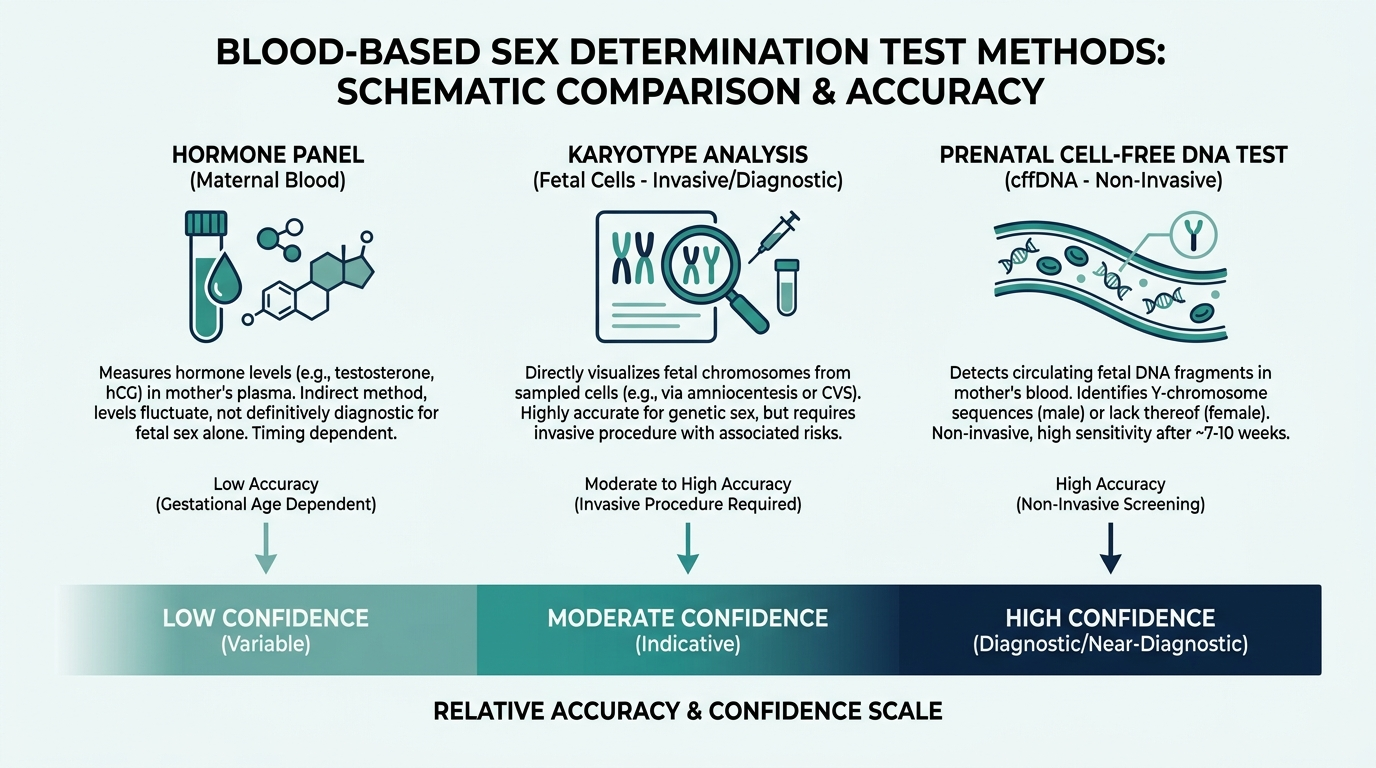
How accurate are blood tests for gender? When done correctly after about 10 weeks of pregnancy, a cell-free DNA blood test predicts fetal sex with roughly 95 to 99 percent accuracy, and several analyses put it even higher. A large systematic review of 57 studies found pooled sensitivity of 95.4 percent and specificity of 98.6 percent for fetal sex determination from a maternal blood sample (PMC, fetal sex determination meta-analysis). A separate review reported sensitivity near 98.9 percent and specificity near 99.6 percent for sex when cell-free DNA testing is used (PubMed, cell-free DNA NIPT accuracy review).
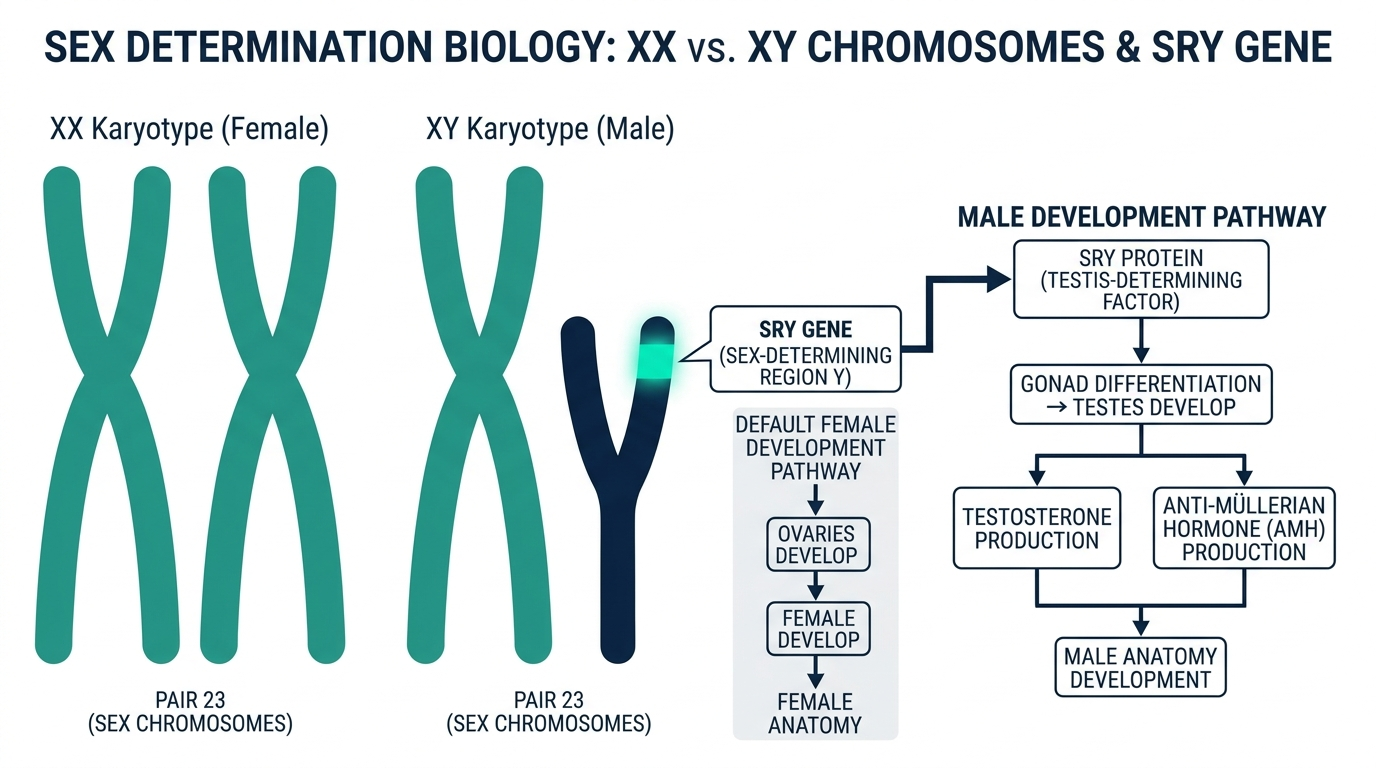
The test goes by several names. You may see it called noninvasive prenatal testing (NIPT), cell-free DNA screening, or simply a gender blood test. They all rely on the same trick: fragments of your baby’s DNA float in your own bloodstream, and the lab hunts for genetic material from the Y chromosome. Find Y chromosome DNA and the prediction is a boy. Find none and the prediction is a girl.

How does a gender blood test actually work?
A gender blood test works by reading tiny pieces of fetal DNA that cross into the mother’s blood, called cell-free DNA. During pregnancy, the placenta sheds DNA fragments into your circulation, and by around 10 weeks these fragments make up enough of your total cell-free DNA for a lab to analyze them reliably (Cleveland Clinic).
The logic is elegantly simple. Females have two X chromosomes and no Y. Males have one X and one Y. A mother carrying a daughter has no Y chromosome material in play, so any Y signal in her blood can only come from a son. Labs typically use real-time quantitative PCR or DNA sequencing to detect those Y chromosome sequences, and that method is part of why accuracy is so high (PMC, fetal sex determination meta-analysis).
One important distinction. For fetal sex and Rhesus D blood type, cell-free DNA testing performs well enough that some experts treat it as close to diagnostic. For chromosomal conditions like Down syndrome, the very same blood draw is only a screening test, not a diagnosis (MedlinePlus). Same tube of blood, very different levels of certainty depending on what you are asking it.
What is the most accurate timing for a blood gender test?
Timing is the single biggest lever on accuracy, and it is the part most people skip. Test too early and the result becomes a coin flip dressed up as science. The meta-analysis data make this brutally clear. Before 7 weeks of gestation, sensitivity for detecting a male fetus dropped to just 74.5 percent, while specificity stayed high at 99.1 percent (PMC, fetal sex determination meta-analysis).
Accuracy then climbs steadily as the pregnancy progresses:
- Before 7 weeks: sensitivity 74.5 percent. Far too early to trust a girl result.
- 7 to 12 weeks: sensitivity 94.8 percent, specificity 98.9 percent.
- 13 to 20 weeks: sensitivity 95.5 percent, specificity 99.1 percent.
- After 20 weeks: sensitivity 99.0 percent, specificity 99.6 percent (PMC, fetal sex determination meta-analysis).
This is why clinical NIPT is offered starting at 10 weeks rather than 6 or 7 (Cleveland Clinic). The reason early tests stumble is the amount of fetal DNA in your blood, known as the fetal fraction. Too little fetal DNA and the lab may simply fail to spot a faint Y signal, then default to predicting a girl. Notice the asymmetry in the numbers: specificity stays near perfect while sensitivity sags early. In plain terms, an early “boy” result is very trustworthy, but an early “girl” result might just mean the test could not find the boy yet.
How accurate are gender blood tests bought online versus clinical NIPT?
Clinical NIPT ordered through your obstetrician is far more reliable than an early at-home gender blood test mailed in from a kit. The accuracy figures you read in the research, the 95 to 99 percent numbers, come from samples drawn properly, at the right gestational age, and processed in accredited labs (PMC, fetal sex determination meta-analysis). Direct-to-consumer kits taken at 7 or 8 weeks on your kitchen counter operate at the shaky low end of that curve, where sensitivity has been measured as low as the mid 70s.
Two failure points wreck home kits in particular. First, timing: people use them as early as the box allows, which is often before the fetal fraction is high enough. Second, contamination. If a man handles the sample or the collection site, stray Y chromosome DNA can sneak in and flip a true girl result to a false boy. Researchers have specifically studied contamination as a source of error in noninvasive gender testing. The takeaway is not that the science is bad. It is that the science was validated under conditions a home kit cannot guarantee.
Why might a blood test for gender be wrong?
A blood gender test can be wrong for a handful of specific, identifiable reasons, and almost none of them mean the underlying technology failed. The most common culprits are low fetal fraction, testing too early, sample contamination, and a few rarer biological situations (MedlinePlus).
- Low fetal fraction. If not enough fetal DNA is present, the lab may miss a Y signal and report a girl by default. Higher maternal weight and earlier gestational age both lower the fetal fraction.
- A vanishing twin. If a pregnancy started as twins and one stopped developing, that twin’s DNA can linger in your blood and skew the result.
- Contamination. Stray male DNA from handling can produce a false boy result, which is why specificity, not sensitivity, is the number that holds up best in clean lab conditions.
- Sex chromosome differences. NIPT is sometimes ordered precisely because an ultrasound showed genitals that are not clearly male or female, which can reflect a sex chromosome condition (MedlinePlus). In these cases the chromosomal sex and the visible anatomy may not match.
The part most people never hear: a “girl” can be a false negative, but a “boy” almost never is
Here is the insider asymmetry that changes how you should read your own result. Because the test works by hunting for the Y chromosome, its two kinds of error are not equal. Finding Y where there is none (a false boy) is rare, which is why specificity sits up near 99 percent. Failing to find Y when it is actually there (a false girl) is the more common slip, especially early in pregnancy, which is why sensitivity is the weaker number and sags to 74.5 percent before 7 weeks (PMC, fetal sex determination meta-analysis).
Translate that into a practical rule. If your test says boy, trust it. The test does not invent Y chromosomes out of thin air. If your test says girl, especially from an early or at-home kit, hold it a little more loosely until an ultrasound confirms it around 18 to 20 weeks. This single insight explains the vast majority of the “the blood test was wrong” stories you find online. The test rarely turns a girl into a boy. It much more often turns an undetected boy into a “girl” because it could not find him yet.
It is also worth remembering what these tests measure and what they do not. A cell-free DNA test reads chromosomes, not gender identity. It tells you the chromosomal sex of the fetus, which usually but not always lines up with the anatomy seen at birth and says nothing about who your child will grow up to be.
Fetal fraction: the hidden number that decides your result
If you understand one concept behind these tests, make it fetal fraction. It is the share of the cell-free DNA in your blood that comes from the placenta rather than from you, and it quietly governs whether the test can work at all. Everything about early testing failures traces back to it.
Most laboratories require a fetal fraction of roughly 4 percent for a reliable result, and below that threshold the test may simply fail to give an answer rather than risk a wrong one (Nucleus). Between 10 and 20 weeks the average fetal fraction sits around 10 to 15 percent, comfortably above the cutoff, which is a large part of why 10 weeks is the recommended starting point. Test earlier and you are gambling that enough placental DNA has accumulated, and often it has not.
Several factors push fetal fraction down, and they are worth knowing because they predict who is most likely to get an unclear result:
- Earlier gestational age. The single biggest factor. The placenta sheds more DNA as pregnancy advances, so waiting a week or two can lift a borderline sample above the threshold.
- Higher maternal weight. Fetal DNA is diluted in a larger blood volume, so fetal fraction tends to fall as maternal weight rises. This is a well-documented, consistent relationship.
- Placental factors. How the placenta is developing and functioning influences how much DNA reaches your circulation.
When a sample comes back with a fetal fraction too low to interpret, the usual next step is a second blood draw after waiting a bit longer, since both the passage of time and, where relevant, lower body weight improve the odds of success (Nucleus). This is not a sign that anything is wrong with the baby. It simply means the sample did not carry enough fetal DNA to read confidently the first time.
What the same blood draw screens for beyond sex
Fetal sex is often the headline people care about, but the cell-free DNA draw is primarily a medical screen. Understanding its full scope, and the very different certainty levels within it, keeps you from over-trusting or under-trusting any single result.
| What the draw looks at | Level of certainty |
|---|---|
| Fetal sex (Y chromosome presence) | High, near diagnostic when properly timed. |
| Fetal RhD blood type | High, reliable enough to guide management in many settings. |
| Common chromosome conditions (trisomy 21, 18, 13) | Screening only. A high-risk result needs diagnostic confirmation. |
| Sex chromosome differences | Screening, with lower reliability than the common trisomies. |
The crucial distinction is that for fetal sex and RhD type, cell-free DNA performs close to diagnostic, while for chromosomal conditions like Down syndrome it is a screen and never a diagnosis (MedlinePlus). A high-risk screening result for a trisomy is a reason to pursue a confirmatory diagnostic test, not a final answer. Same tube of blood, very different weight depending on the question.
Medical reasons to learn fetal sex early, not just curiosity
It is easy to frame the gender blood test as a curiosity, but there are genuine clinical reasons a doctor may want to know fetal sex early, and these are where accuracy matters most.
- X-linked genetic conditions. Some serious inherited disorders, such as certain forms of muscular dystrophy and hemophilia, affect males far more than females. If a family carries one of these, knowing early that the fetus is female can spare an invasive diagnostic procedure, while a male result may prompt further testing.
- Congenital adrenal hyperplasia. In pregnancies at risk for this condition, early knowledge of fetal sex can inform management decisions during the pregnancy.
- Ambiguous genitalia on ultrasound. When an ultrasound cannot clearly determine sex, chromosomal information helps guide further evaluation, sometimes revealing a sex chromosome difference.
In these situations the asymmetry between a trustworthy boy result and a less certain early girl result is not trivia, it is clinically important. A family relying on the result to guide decisions needs to understand that an early girl reading may warrant confirmation before it is acted upon.
How the test is done, and how results get confirmed
The procedure itself is simple, which is part of the appeal. It is a standard blood draw from the mother’s arm, with no risk to the pregnancy, unlike the invasive procedures used for definitive diagnosis. There is usually no special preparation, and the recommended timing is from about 10 weeks onward to give the fetal fraction time to build.
Confirmation is where a careful approach pays off. The gold standard for visualizing fetal anatomy remains the ultrasound performed around 18 to 20 weeks, which sees the actual anatomy rather than reading chromosomes (Cleveland Clinic). Using the blood test and the ultrasound together gives the most reliable picture, since they answer slightly different questions: the blood test reports chromosomal sex, and the ultrasound shows the physical development. When the two agree, confidence is very high. When they disagree, that discrepancy is itself meaningful and worth investigating, since it can point to a sex chromosome condition.
How the blood test compares with other ways to learn fetal sex
The cell-free DNA test is one of several methods, and each trades timing against certainty and risk. Seeing them side by side clarifies where the blood test fits.
| Method | Timing and character |
|---|---|
| Cell-free DNA blood test | From about 10 weeks. No risk to pregnancy. Reads chromosomal sex with high accuracy when timed right. |
| Anatomy ultrasound | Around 18 to 20 weeks. No risk. Visualizes anatomy directly and is the standard confirmation. |
| Chorionic villus sampling or amniocentesis | Diagnostic procedures that sample tissue or fluid. Definitive for chromosomes but carry a small procedure-related risk, so reserved for medical need. |
For most people, the practical path is the blood test for an early prediction, followed by the anatomy ultrasound for confirmation. The invasive diagnostic procedures are used when there is a specific medical reason, not for curiosity, precisely because they carry a small risk that the noninvasive options do not.
Common misconceptions about blood tests for fetal sex
This topic attracts a specific set of misunderstandings, and clearing them up prevents both false alarm and false confidence.
- “A blood test result is always right.” No. Accuracy depends heavily on timing and fetal fraction, and an early or at-home girl result is the least reliable outcome because the test can miss a faint Y signal.
- “A boy result and a girl result are equally trustworthy.” They are not. Because the test hunts for the Y chromosome, a boy result is highly reliable, while a girl result, especially early, can be a false negative.
- “An at-home kit is as accurate as a clinical test.” Usually not. The high research accuracy comes from properly timed samples run in accredited labs. Home kits are prone to early testing and contamination by stray male DNA.
- “A no-result means something is wrong with the baby.” Not necessarily. It most often reflects a low fetal fraction from early testing or higher maternal weight, and a repeat draw later frequently succeeds.
- “The test tells me my child’s gender identity.” It does not. It reads chromosomal sex, which usually but not always matches the anatomy at birth, and it says nothing about who the child will grow up to be.
Turn what you just learned into action.
Superpower lets you test 100+ biomarkers from home, then re-check them over time so you can actually see progress, physician-reviewed at every step.
Frequently asked questions
How accurate is a blood test for gender at 10 weeks?
At 10 weeks, a clinical cell-free DNA blood test is generally about 95 to 99 percent accurate for fetal sex. In the 7 to 12 week window, one meta-analysis found sensitivity of 94.8 percent and specificity of 98.9 percent, and accuracy keeps climbing later in pregnancy (PMC, fetal sex determination meta-analysis).
Are blood tests accurate for gender, or should I wait for an ultrasound?
Yes, properly timed blood tests are accurate, but an anatomy ultrasound around 18 to 20 weeks is still the standard confirmation. A blood test predicts chromosomal sex while the ultrasound visualizes anatomy, and using both gives you the most reliable answer (Cleveland Clinic).
Why would a gender blood test say girl but the baby is a boy?
This happens when the test misses the Y chromosome, usually because of a low fetal fraction or testing too early. Sensitivity for detecting a boy falls to 74.5 percent before 7 weeks, so an early girl result is the least reliable outcome (PMC, fetal sex determination meta-analysis).
How accurate is the blood test for gender compared with screening for Down syndrome?
For fetal sex, cell-free DNA performs near diagnostic levels. For chromosomal conditions like Down syndrome, the same blood draw is only a screening test and a positive result needs confirmation with a diagnostic procedure (MedlinePlus).
Can a home gender blood test be trusted?
Treat home kits with caution. The high accuracy figures in research come from samples taken at the right gestational age and run in accredited labs, while at-home kits are vulnerable to early testing and contamination by stray male DNA, both of which can produce wrong results (MedlinePlus).
This article is for general educational purposes and is not medical advice. It cannot diagnose or treat you and does not replace your clinician. Always discuss your lab results and any health decisions with a qualified healthcare professional.
Related reading
Vital Signs Today may earn a commission if you buy through links on this page. It does not affect our editorial assessments.