Quick answer: Function Health and Lifeforce are both membership-based preventive labs aimed at optimizing, not just monitoring, your health. Function Health runs over 100 biomarkers annually at roughly $499 per year and does not sell supplements or treatments. Lifeforce bundles a quarterly diagnostic panel with physician-guided hormone optimization and branded supplements at a starting price around $129 per month. They serve different buyers: Function is for self-directed people who want data, Lifeforce is for people who want a clinician and a product protocol baked in.
What each service actually includes
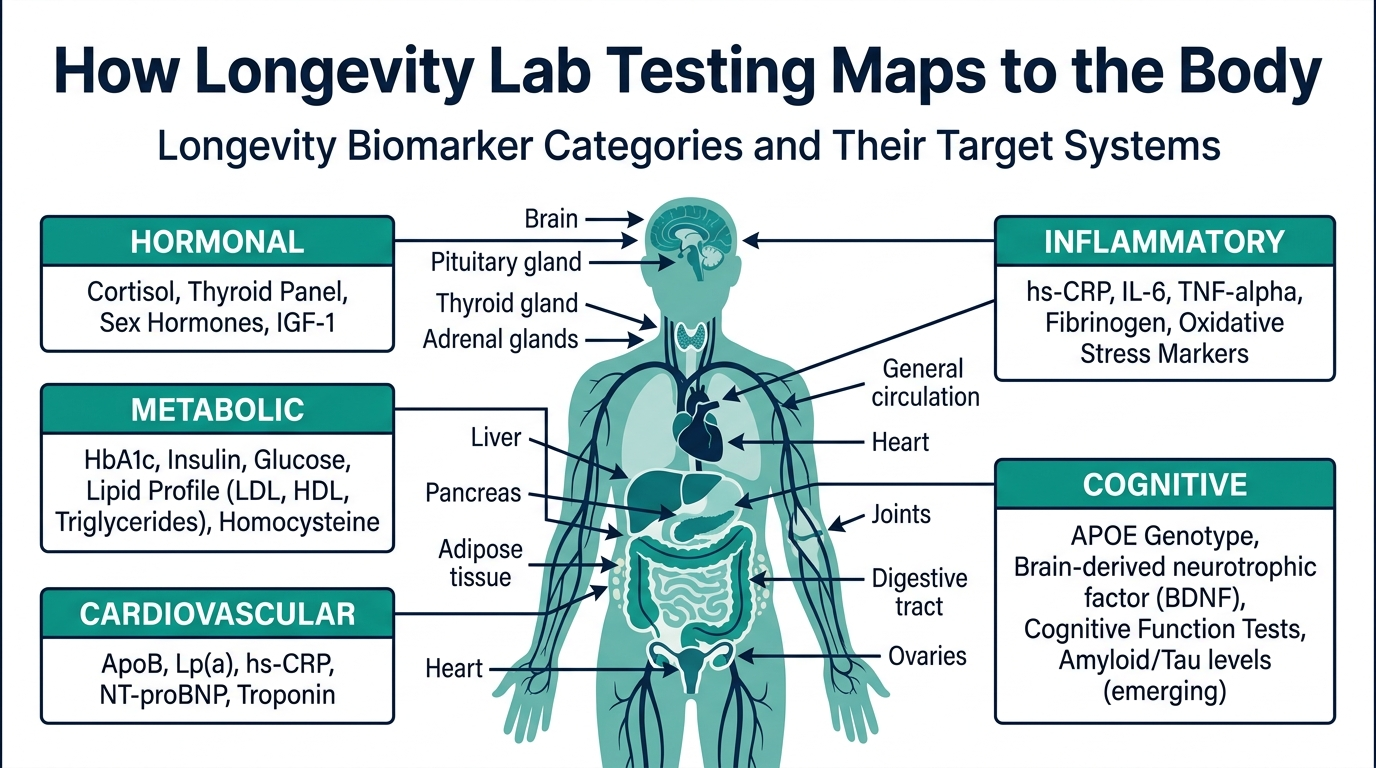
Function Health delivers a single annual blood draw covering 100-plus biomarkers, with every result reviewed by an internal physician. The company was co-founded by cardiologist Mark Hyman and is best known for running panels that most primary care offices never order: APOB, Lp(a), homocysteine, TMAO, advanced thyroid markers, and hormone metabolites alongside the standard metabolic and CBC panels. Results land in an app with explanations, and follow-up guidance is limited to what the app surfaces. Read the full function health review for a deep breakdown of the panel composition.
Weighing a $499 lab membership against a $129-a-month hormone program? See exactly what 100+ biomarkers gets you. One at-home Superpower draw checks 100+ biomarkers, physician-reviewed.
Lifeforce operates differently. It starts with a diagnostic blood panel run through a CLIA-certified lab, which tests roughly 40 to 50 biomarkers focused on hormones, metabolic health, and inflammation. A Lifeforce physician then reviews your results and, if appropriate, prescribes compounded hormone therapy (testosterone, estradiol, DHEA, progesterone) or lifestyle interventions. Lifeforce also sells its own supplement line, and members are routinely offered products after their diagnostic. The model is closer to a direct-to-consumer hormone clinic with a lab component than a pure data company.

Biomarker count and panel depth
Function Health runs substantially more biomarkers than Lifeforce. The gap is not marginal.
| Category | Function Health | Lifeforce |
|---|---|---|
| Total biomarkers | 100+ | ~40 to 50 |
| Draw frequency | Annually (add-ons available) | Quarterly |
| Cardiovascular (APOB, Lp(a)) | Yes, standard | Limited |
| Hormone panel | Comprehensive (free + total, metabolites) | Comprehensive (prescribing-focused) |
| Thyroid (TSH + Free T3/T4 + reverse) | Yes, full panel | Partial |
| Gut/microbiome markers (TMAO) | Yes | No |
| Prescription treatment included | No | Yes (if eligible) |
Lifeforce compensates for its smaller panel by testing quarterly rather than annually. For hormone optimization purposes, a quarterly check makes sense because testosterone or estradiol levels shift faster than, say, your Lp(a) or homocysteine. Function runs the broader academic-grade snapshot; Lifeforce runs a tighter clinical monitoring panel.
Lifeforce cost: what you are actually paying
Lifeforce starts at roughly $129 per month, billed monthly, or around $99 per month on an annual plan. That baseline covers the quarterly diagnostic draw and physician review. If you are prescribed hormone therapy, compounded medications typically run an additional $75 to $200 per month depending on what is prescribed. Supplements are sold separately and are not cheap. A realistic annual spend for a Lifeforce member who goes on TRT or hormone replacement is $2,000 to $3,500 per year once you add it all up.
Compare that to Function Health at roughly $499 per year for the annual panel, with no attached product line. Some members add individual specialty panels (gut health, continuous glucose monitoring integration, heavy metals) at extra cost. The base comparison: Lifeforce can cost three to seven times more annually, though it delivers physician oversight and treatment prescribing that Function simply does not offer.
One thing people miss on Lifeforce cost: the diagnostic draw itself is run through Quest or LabCorp depending on your region, and the cost is bundled into your membership. You are not billed separately for the lab work. For context on how Function stacks up on price, see the function health cost breakdown.
Is Lifeforce worth it?
Lifeforce is worth the cost for people who want a physician in the loop and are open to hormone therapy. The quarterly draw cadence, the prescribing capability, and the accountability check-ins have real value if you are on TRT, menopause HRT, or DHEA supplementation. You need someone tracking your levels and adjusting dose. Lifeforce does that. Your primary care doctor almost certainly will not.
It is not worth it if you are healthy, in your 30s, not yet symptomatic, and mainly want data to optimize from. You would pay a premium for a physician visit rhythm you do not yet need and end up with a narrower biomarker picture than Function gives you. The supplement upsell funnel also irritates a lot of members: Lifeforce is a business that sells supplements, and after your diagnostic you will be offered products. That is not disqualifying, but go in clear-eyed.
One honest shortcoming of Lifeforce worth flagging: the diagnostic panel is not published in granular detail on its website. Members have reported the panel running roughly 40 to 50 markers, heavily weighted toward hormone and metabolic markers the company’s prescribers work with. If you want to know your Lp(a), homocysteine, or advanced thyroid metabolites, ask explicitly whether they are included before you sign up.

The Lifeforce diagnostic test: what gets drawn
The Lifeforce diagnostic covers the markers a hormone optimization physician cares most about. Expect the following categories, based on member-reported results and what Lifeforce publicly discloses.
- Sex hormones: total testosterone, free testosterone, estradiol, DHEA-S, SHBG, LH, FSH
- Thyroid: TSH, typically Free T4 (Free T3 is not always included in the base panel)
- Metabolic: fasting glucose, insulin, HbA1c, full lipid panel
- Inflammation: CRP (high-sensitivity), sometimes IL-6
- Cortisol and adrenal: morning cortisol, sometimes ACTH
- CBC and CMP: standard complete blood count and comprehensive metabolic panel
- Vitamin D: 25-OH vitamin D
- IGF-1: proxy for growth hormone axis
What Lifeforce does not run routinely: APOB, Lp(a), homocysteine, TMAO, uric acid, ferritin outside of standard iron studies, or advanced thyroid antibodies. If those markers matter to you, you are in the wrong service, or you need to augment with a cash-pay panel from Quest or Labcorp.
Where Superpower fits in this comparison
Both Function Health and Lifeforce have a meaningful gap that a third option fills. Function gives you data but no physician prescribing and no ongoing clinical relationship. Lifeforce gives you prescribing but a narrower biomarker base and a product ecosystem layered on top.
Superpower runs 100-plus biomarkers, has every result reviewed by a physician who can flag abnormalities and discuss them with you, tracks your numbers year over year so trends are visible, and does not sell a supplement line. At about $199 per year, it sits at roughly one-third the price of a Lifeforce membership and delivers a broader snapshot. If your goal is comprehensive data with real physician eyes on the results, without the hormone prescription pipeline, Superpower is the structure that makes sense. Read the superpower blood test review for the full panel list and what physician review actually looks like.
The simplest way to actually get this done
Superpower is a full-body lab membership that runs 100+ biomarkers, has each result reviewed by a doctor, and tracks your numbers year over year (about $199/year). It is what we point readers to when they would rather get one clean, complete draw than chase single tests one at a time. Here is superpower reviewed in full.
What people get wrong about function health vs lifeforce
The most common mistake is treating these as competing services when they are built for different outcomes. Comparing Function Health vs Lifeforce like-for-like is like comparing a detailed MRI to a clinical follow-up protocol. One gives you a picture; the other manages a treatment. You might actually want both at different phases of your health journey.
Second mistake: assuming Lifeforce is for men only. It was heavily marketed toward testosterone optimization for men early in its history, but the service prescribes hormone therapy across sexes, including estradiol and progesterone for perimenopausal women. The quarterly monitoring cadence suits HRT management well regardless of sex.
Third: assuming that because Function runs more biomarkers, it catches more problems. It surfaces more data, which is not the same thing. A marker flagged in Function’s app with a generic explanation is not the same as a physician deciding whether it changes your treatment plan. More data with less clinical interpretation can generate anxiety without generating action. Lifeforce’s tighter panel with active physician involvement produces a different kind of output.
For anyone choosing between optimization lab subscriptions more broadly, the function health vs 10x health comparison and the function health vs empirical health comparison cover how the data-only model stacks up against other clinical programs.

Who should choose which service
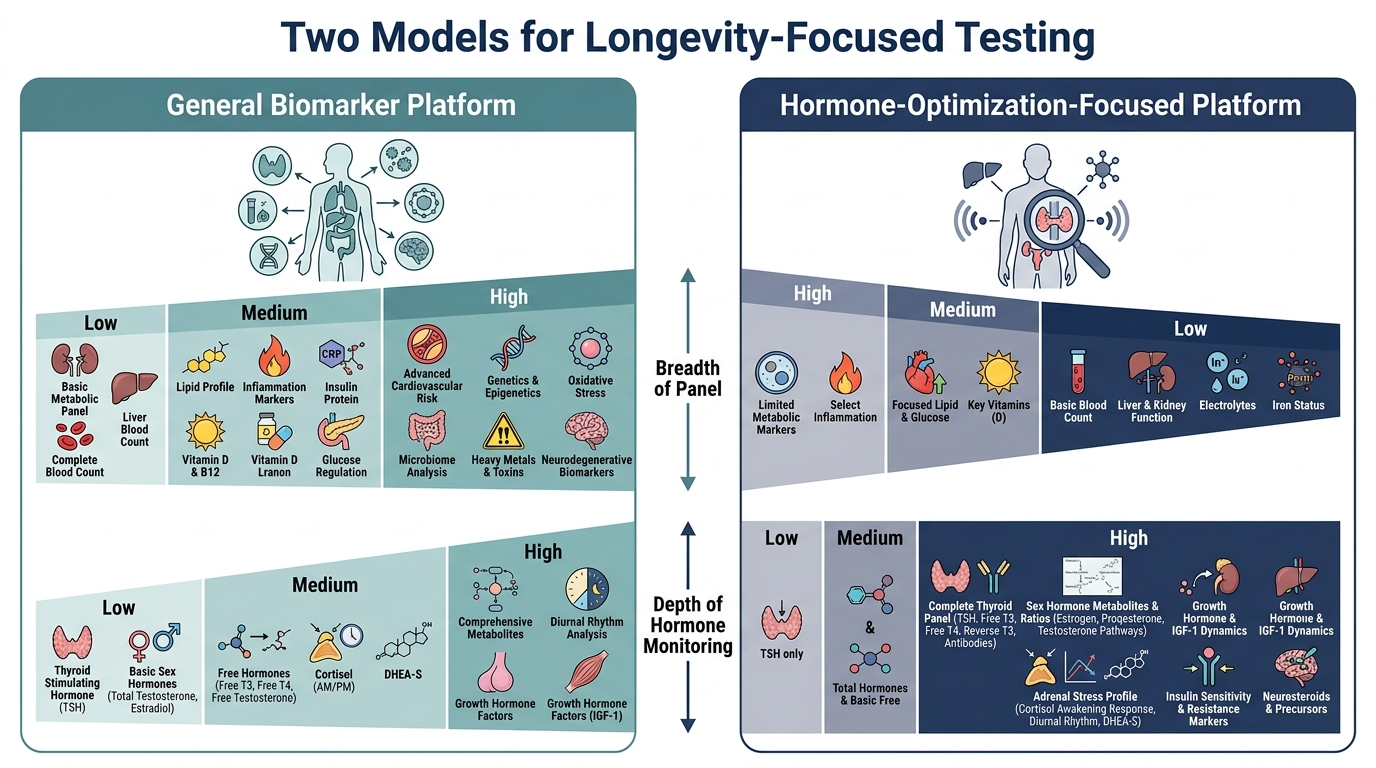
Choose Function Health if you are self-directed, comfortable interpreting lab data, want the broadest possible biomarker snapshot, and do not currently need or want physician-managed hormone treatment. It works well as an annual baseline for people aged 25 to 50 who are healthy but want to catch subclinical trends before a primary care physician would ever flag them.
Choose Lifeforce if you have hormone-related symptoms: low energy, low libido, poor sleep, body composition stalling despite decent lifestyle habits, or perimenopausal symptoms. The value is in the prescribing and the clinical follow-up cadence, not in the breadth of the panel. The cost is real, but physician-managed hormone optimization outside of Lifeforce typically runs more through a traditional men’s health or women’s health clinic.
Choose Superpower if you want Function’s depth of data paired with physician eyes on every result, at a price point closer to Function’s than Lifeforce’s, without a supplement or hormone prescription ecosystem attached. See how much does superpower cost for the full pricing picture.
Insurance, HSA, and FSA coverage
Neither Function Health nor Lifeforce is covered by standard health insurance for most members. Both are membership-based direct-to-consumer services, and the panel costs are bundled into the membership fee. You cannot bill your insurer separately for the draws.
HSA and FSA funds can generally be used for blood testing under the IRS category of medical expenses. The cleanest path is to pay your membership fee with an HSA or FSA card. Both services accept HSA/FSA cards directly. Lifeforce’s prescribed medications (compounded hormones) may also be HSA/FSA-eligible as prescription costs. Confirm with your benefits administrator, but in practice most members have no issue using HSA funds for either service.
Medicare does not cover either service for preventive optimization purposes. Medicare Part B covers specific lab tests when ordered by a physician for a diagnosed condition, which is a different frame than what these services provide.
Compounded versus FDA-approved hormones: the distinction that matters most
Because Lifeforce’s core value is prescribing, the single most important thing to understand before choosing it is the difference between compounded and FDA-approved hormone preparations. This is where the medicine gets real, and it is rarely spelled out in marketing.
FDA-approved bioidentical hormones, which include estradiol and micronized progesterone, are manufactured to consistent potency and have been studied in controlled trials. Compounded bioidentical hormones are mixed by a compounding pharmacy to a prescriber’s specification and are not FDA-tested for efficacy or purity. Professional bodies including the Endocrine Society and the American College of Obstetricians and Gynecologists have taken the position that there is no evidence compounded formulations are safer than FDA-approved options, and that potency can vary batch to batch. Studies have found compounded product levels can run meaningfully below or above the label claim.
What this means practically:
- Ask whether your prescription is compounded or FDA-approved. For many indications, an FDA-approved product exists and offers more consistent dosing.
- Understand that dose consistency is a real variable with compounded formulations, which is one argument in favor of quarterly monitoring, catching drift you cannot see.
- This is a clinician conversation, not a product-page decision. The tradeoffs depend on your specific hormone, your symptoms, and your risk profile.
None of this makes hormone therapy wrong for you. It means the prescribing relationship, which is exactly what you are paying Lifeforce for, should include a clear answer on what formulation you are getting and why.

What quarterly hormone monitoring is actually watching for
Lifeforce’s quarterly cadence is not arbitrary. If you go on testosterone therapy, there are specific safety markers a competent prescriber tracks, and knowing them helps you judge whether any hormone program is monitoring you properly.
- Hematocrit and hemoglobin. Testosterone stimulates red blood cell production, and the most common adverse effect of testosterone therapy is a rise in hematocrit, called secondary polycythemia. Guidance commonly cited from urology bodies flags a hematocrit above 54 percent as a threshold to reduce the dose, change formulation, or pause therapy, because elevated hematocrit raises clot and cardiovascular risk. A reasonable schedule is to check hematocrit at baseline, again around three to six months after starting, and then periodically.
- Estradiol. Testosterone can convert to estradiol, so a prescriber watches this to keep it in a reasonable band rather than assuming more testosterone is simply better.
- PSA in men. A baseline and periodic prostate-specific antigen check is standard practice before and during testosterone therapy.
- Lipids and blood pressure. Hormone therapy can shift these, so a monitoring program should track them rather than only the hormone level itself.
Here is the pointed takeaway for the Function versus Lifeforce decision: a data-only service that surfaces a testosterone number in an app does not manage any of this. If you are going to be on hormone therapy, you need the monitoring loop, which is the part Lifeforce sells and Function does not. Conversely, if you are not on therapy, you are paying for a safety-monitoring apparatus you do not yet need.
Questions to ask before you start any hormone optimization program
Whether you go with Lifeforce or a traditional clinic, the quality of the prescriber matters more than the brand. Bring these questions to the intake, and treat vague answers as a warning sign:
- Is my prescription an FDA-approved product or a compounded formulation, and why did you choose that?
- What is my baseline hematocrit, and at what level would you reduce my dose or pause therapy?
- How often will you recheck safety markers, not just hormone levels, and what are the specific thresholds that trigger a change?
- What is your plan if I want to stop? Some hormones require a taper or carry a recovery period, and you should know the exit before the entry.
- Which markers are not in your panel that I should get elsewhere, such as cardiovascular risk markers like ApoB and Lp(a)?
A prescriber who answers these crisply is doing the job. One who deflects to a supplement recommendation is selling, not treating. This checklist is also the honest reason a broad data panel and a prescribing service are complements: the panel can fill the cardiovascular and specialty gaps a hormone-focused clinic leaves open.
The exit cost nobody mentions when comparing subscriptions
Comparisons usually stop at monthly price, but the cost of leaving a service is a real part of the decision, especially with these two.
- Function Health. As an annual data membership, walking away is low-friction. You keep your exported results, and there is no medical protocol to unwind. The main consideration is whether you retain access to your historical dashboard after canceling, which is worth confirming before you sign up.
- Lifeforce. Leaving a prescribing service is more involved if you are on therapy. You either need to transfer your hormone management to another clinician or plan a supervised discontinuation. Stopping testosterone abruptly, for example, can leave you symptomatic while your own production recovers. This is not a reason to avoid Lifeforce, it is a reason to enter with an exit plan and to value continuity of care.
The broader lesson: a pure data service like Function or a comparable broad panel is easy to start and stop, which suits an annual baseline habit. A managed-treatment service creates a clinical dependency you should only take on when the symptoms justify it and you have a plan for continuity. Match the commitment to the need, not to the marketing.
Curious what your own levels look like?
Baseline 100+ biomarkers today and retest as life changes, all in one membership with physician review.
FAQ
What is the main difference between Function Health and Lifeforce?
Function Health is a lab data company: you get a large biomarker panel, app-based explanations, and physician review of results, but no prescribing and no ongoing clinical relationship. Lifeforce is a clinical optimization service: smaller panel, quarterly monitoring, and a physician who can prescribe hormone therapy and adjust your protocol over time. Function gives you data; Lifeforce gives you managed treatment.
How much does Lifeforce cost per year?
The base membership starts around $99 to $129 per month, putting the annual base at roughly $1,200 to $1,550. Add compounded hormone prescriptions ($75 to $200 per month depending on therapy) and any supplements you purchase, and a realistic all-in annual cost is $2,000 to $3,500. That is significantly higher than Function Health at approximately $499 per year.
Is Lifeforce worth it for women?
Yes, for women with perimenopausal or menopausal symptoms who want physician-managed hormone replacement. Lifeforce prescribes estradiol and progesterone (bioidentical compounded formulations) and monitors levels quarterly, which is exactly the cadence appropriate for HRT management. For women who are asymptomatic and primarily want a data snapshot, the cost-to-value ratio is harder to justify compared to a broader-panel service like Function or Superpower.
Does Lifeforce test Lp(a) or APOB?
Lifeforce’s standard diagnostic panel does not routinely include Lp(a) or APOB based on member reports and publicly available panel information. These are cardiovascular risk markers with significant predictive value that Function Health and Superpower run as standard. If cardiovascular risk stratification is a priority for you, Lifeforce’s panel has a meaningful gap here.
Can you do Function Health and Lifeforce at the same time?
Technically yes, but it is expensive overlap. A practical approach: use Function Health for the annual comprehensive data snapshot, and use Lifeforce or a comparable hormone clinic specifically for prescribing and quarterly hormone monitoring if you need managed treatment. You would be paying twice for some markers (lipids, CBC, metabolic panel) but only Lifeforce can prescribe and only Function runs the full cardiovascular and specialty markers.
How does Lifeforce compare to other lab subscription services?
Lifeforce sits in its own category because it combines a lab panel with physician prescribing and a supplement brand. Pure lab subscription services (Function Health, Superpower, Marek Health) run panels without the integrated product line. Lifeforce’s closest analogues are TRT clinics and hormone optimization practices that have added a branded lab component. If you compare it purely on biomarker coverage per dollar, other services win. If you compare it on managed hormone treatment with monitoring built in, it competes with concierge men’s health and women’s health clinics that typically charge more.
What is the Lifeforce diagnostic test?
The Lifeforce diagnostic is a blood draw run through a CLIA-certified partner lab (typically Quest or Labcorp depending on your market). It covers approximately 40 to 50 biomarkers, weighted toward sex hormones, thyroid, metabolic health, inflammation, and the markers relevant to hormone therapy decisions. Results are reviewed by a Lifeforce physician who then schedules a consultation to discuss findings and treatment options.
Is Function Health better than Lifeforce for longevity tracking?
For pure longevity data tracking, Function Health runs substantially more markers, including cardiovascular risk markers and specialty panels that are more informative for long-horizon health optimization. Lifeforce’s panel is narrower and optimized for hormone management decisions. If your goal is building a year-over-year longitudinal biomarker record covering metabolic, cardiovascular, hormonal, and inflammatory markers, Function Health or Superpower gives you more to work with than Lifeforce’s diagnostic alone.
Does Lifeforce accept HSA or FSA payments?
Yes. Lifeforce accepts HSA and FSA cards for both the membership fee and prescription medications. The diagnostic testing component qualifies as a medical expense under IRS guidelines. Keep your receipt and EOB from Lifeforce in case your HSA administrator asks for documentation, which is standard practice for any direct-to-consumer lab service.
Vital Signs Today may earn a commission if you buy through links on this page. It does not affect our editorial assessments.