Quick answer: Function Health for women covers more female-relevant biomarkers than most primary care panels, including sex hormones (estradiol, FSH, LH, progesterone), a full thyroid cascade, and key nutrient markers that women deplete faster than men (iron, ferritin, B12). That said, it is not a dedicated women's health panel. It skips DHEA-S, anti-Mullerian hormone, detailed adrenal testing, and cycle-phase context, so a woman in perimenopause or tracking fertility will hit real blind spots. For most women under 45 who want a rigorous annual baseline, it gets the job done. For anyone dealing with hormonal symptoms, it often raises more questions than it answers.
What Does Function Health Actually Test for Women?
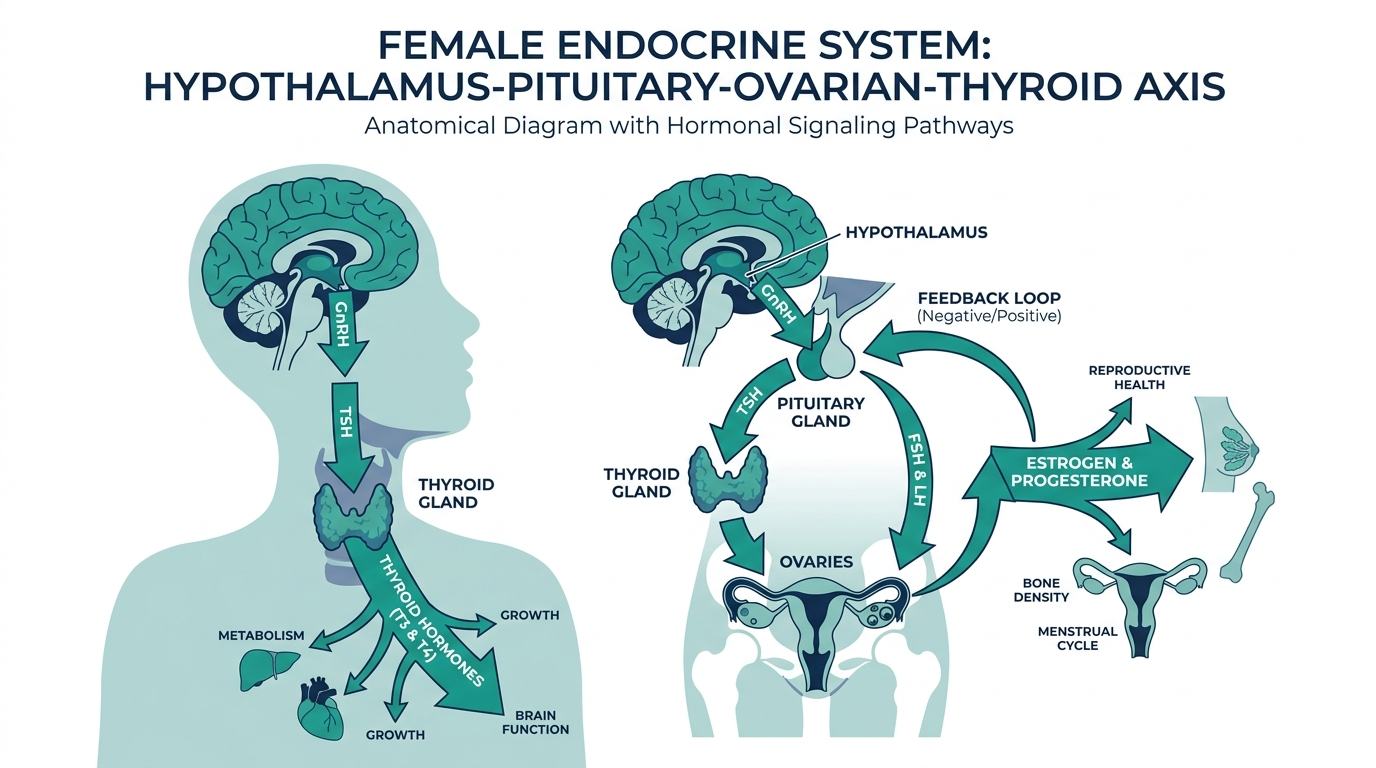
Function Health runs roughly 100 to 110 biomarkers depending on your draw date and any add-on tests. For women, the clinically meaningful ones cluster into four categories: hormones, thyroid, metabolic markers, and nutrients. The panel is the same for every member regardless of sex, which is both a strength (you get metabolic and cardiac markers most women never see) and a weakness (it was not designed around the female endocrine cycle).
Curious which hormone and thyroid markers a women’s panel should really cover? Compare against a 100+ biomarker option. One at-home Superpower draw checks 100+ biomarkers, physician-reviewed.
On the hormone side, every Function member gets estradiol (E2), FSH, LH, progesterone, testosterone (total), and SHBG. That is a reasonable hormone snapshot for a woman who is not actively trying to get pregnant. Estradiol and FSH together are especially useful for spotting early perimenopause: a rising FSH alongside falling or erratic estradiol is one of the earliest lab signals that ovarian reserve is declining, often years before symptoms become obvious. Read the full function health review for a breakdown of every included marker.
Thyroid coverage is where Function genuinely outperforms a typical annual physical. Most primary care doctors order only TSH. Function adds free T3, free T4, and thyroid antibodies (TPO and thyroglobulin). Women are five to eight times more likely than men to develop autoimmune thyroid disease, and TPO antibodies can be elevated for years before TSH moves. Catching that pattern early matters for symptom management and for women who plan to get pregnant, since subclinical hypothyroidism raises miscarriage risk.

How Well Does Function Health Cover Perimenopause?
Function Health gives you a useful snapshot for perimenopause surveillance, but it is not a perimenopause-specific panel and it does not guide dosing or timing the way a reproductive endocrinologist would.
The key perimenopausal markers Function includes: estradiol, FSH, LH, progesterone, and AMH (anti-Mullerian hormone) is notably absent. AMH is the single best marker for ovarian reserve and the clearest predictor of how close a woman is to menopause. Function does not include it by default. If you are in your late 30s or 40s and want to know "how much runway do I have," you would need to order AMH separately through your OB-GYN or a service like Labcorp or Quest.
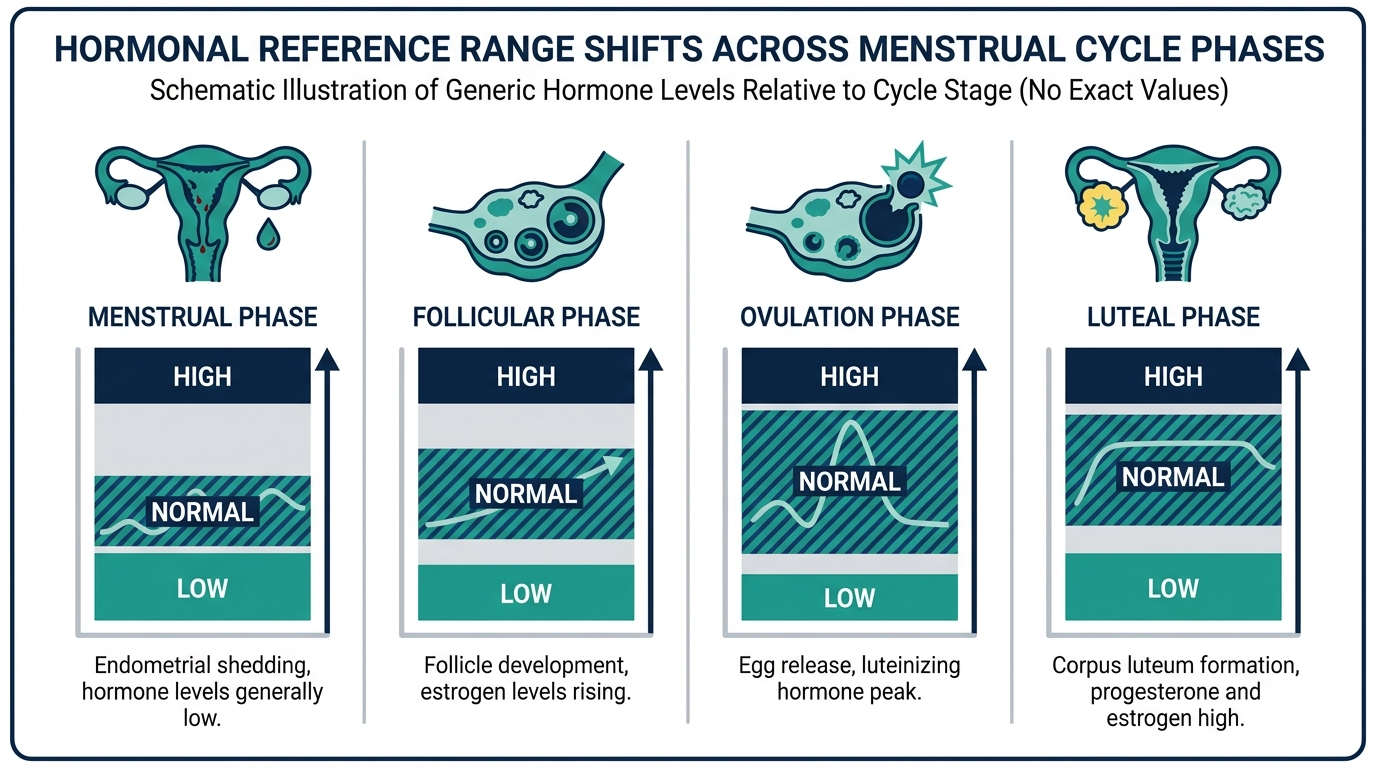
A second limitation is cycle-phase context. Estradiol and progesterone levels mean completely different things depending on where you are in your cycle. A progesterone of 1.2 ng/mL is normal in the follicular phase and a sign of anovulation in the luteal phase. Function draws blood on whatever day you schedule the appointment. The report will note your value but does not ask where you are in your cycle, which means the interpretation can be genuinely misleading if you do not already understand cycle-phase reference ranges. Women tracking perimenopause should note their cycle day on the draw date and cross-reference against the phase-specific ranges, not just the static "reference range" printed on the report.
For a comparison of how Function stacks up against dedicated hormone panels, see the function health 100 biomarkers explained breakdown.
Function Health Thyroid Testing for Women: Better Than Average
Function Health's thyroid panel is genuinely one of its strongest features for women, and the reason alone justifies the membership cost for many female members.
Here is what Function tests and why each marker matters specifically for women:
- TSH: the standard screening test, normal range roughly 0.4 to 4.0 mIU/L. Most labs stop here. Function does not.
- Free T4 (fT4): the storage hormone. Low fT4 with high TSH confirms primary hypothyroidism. Low fT4 with normal TSH can indicate pituitary dysfunction, which is rare but missed when only TSH is ordered.
- Free T3 (fT3): the active thyroid hormone. Some women convert T4 to T3 poorly (especially under chronic stress or with certain genetic variants), leaving them symptomatic even when TSH and T4 look fine. Without fT3 you cannot see this pattern.
- TPO antibodies: elevated in Hashimoto's thyroiditis, the most common cause of hypothyroidism in American women. Can be elevated 10 to 15 years before TSH rises.
- Thyroglobulin antibodies: a secondary marker for autoimmune thyroid disease; useful when TPO is borderline.
What Function does not include: a thyroid ultrasound referral pathway, reverse T3, or an assessment of thyroid-binding globulin. For most women this is fine. If you are already on levothyroxine and titrating dosage, you need more frequent fT3/fT4 draws than a once-a-year membership allows.

Iron and Ferritin for Women: Function Health Gets This Right
Iron deficiency is the most common nutritional deficiency in American women of reproductive age, and it is also one of the most under-tested in routine care. Function Health for women shines here: the panel includes serum iron, ferritin, TIBC (total iron-binding capacity), and transferrin saturation, which together form a complete iron panel rather than the single "serum iron" that many physicians order.
Ferritin deserves special attention. The conventional lab "normal range" for ferritin bottoms out around 12 to 15 ng/mL. Functionally, many women feel fatigued, lose hair, and struggle with focus at ferritin levels below 30 to 50 ng/mL, even with serum iron in the normal range. Function's clinician reviewers tend to flag ferritin below 50 in women with symptoms, which is more aggressive than what you will hear from most primary care doctors but consistent with current sports medicine and integrative medicine literature.
A worked example: a 34-year-old woman with heavy periods, hair thinning, and chronic fatigue gets a standard CBC. Her hemoglobin is 12.1 g/dL (just above the cutoff for anemia). Her PCP says everything is fine. If her ferritin is 18 ng/mL, she is iron-depleted without being anemic, a common pattern that standard care misses entirely. Function's complete iron panel would catch this. That alone is worth something.
What Function Health Misses for Women
No single panel covers everything, and being honest about the gaps is what separates useful health information from expensive reassurance theater.
Here are the markers Function Health does not include that a women's health clinician might want:
| Missing Marker | Why It Matters for Women | Where to Get It |
|---|---|---|
| AMH (Anti-Mullerian Hormone) | Best single marker for ovarian reserve; predicts distance to menopause | OB-GYN, reproductive endocrinologist, or direct-to-consumer (Modern Fertility, LetsGetChecked) |
| DHEA-S | Adrenal androgen; declines with age and is a key driver of low libido, fatigue, and skin changes | Can be added at Labcorp or Quest for $25 to $60 cash |
| Estrone (E1) and Estriol (E3) | Estradiol is only one of three estrogens; the ratio matters especially post-menopause | Specialty labs (DUTCH test, ZRT) |
| Prolactin | Elevated prolactin causes irregular periods, galactorrhea, and infertility; often missed | Standard at Quest and Labcorp, often covered by insurance |
| Saliva or urine cortisol | Serum cortisol (which Function does not test) misses diurnal patterns and free cortisol levels | DUTCH Complete test covers the HPA axis comprehensively |
| Day-3 and Day-21 cycle-specific panels | Baseline FSH/LH on cycle day 3 and progesterone on day 21 are diagnostic standards for fertility workup | OB-GYN or reproductive endocrinologist with timed draws |
This is not a criticism of Function specifically. These gaps exist because Function is a general comprehensive panel, not a reproductive medicine workup. If you are experiencing irregular cycles, suspect PCOS, or are actively trying to conceive, a single annual draw will not give you what you need regardless of which service you use.

Function Health Cost for Women: Is the Membership Worth It?
Function Health charges $499 for an annual membership that includes two full blood draws per year. For women who would otherwise pay out of pocket for a comprehensive panel, the math is usually favorable. A comparable set of markers ordered a la carte through Quest or Labcorp without insurance would run $400 to $900 depending on which markers you select and which lab negotiates better rates with your insurer.
The full breakdown of pricing is in the function health cost guide, but the short version for women is this: if you want estradiol, FSH, LH, progesterone, a full thyroid panel with antibodies, a complete iron panel, a comprehensive metabolic panel, a lipid panel, a CBC, and nutrient markers (B12, D, folate, magnesium) all at once, you are looking at ordering 12 to 15 separate tests. Function bundles them. The administrative friction of ordering piecemeal and the cognitive overhead of interpreting unconnected result PDFs is real, and Function's integrated report with flagged values and clinician review is worth something.
Function does not accept insurance. HSA and FSA dollars can be used for the membership cost at the time of this writing, which softens the blow for members with those accounts.
For comparison, see how how much does superpower cost stacks up for similar coverage.
The simplest way to actually get this done
Superpower is a full-body lab membership that runs 100+ biomarkers, has each result reviewed by a doctor, and tracks your numbers year over year (about $199/year). It is what we point readers to when they would rather get one clean, complete draw than chase single tests one at a time. Here is superpower blood test review.
Function Health vs. Superpower for Women: A Direct Comparison
Function Health and Superpower are the two most-discussed comprehensive lab membership services in 2026. For women specifically, the comparison comes down to hormone depth, price, and what happens after you get your results.
| Feature | Function Health | Superpower |
|---|---|---|
| Annual price | $499 (2 draws) | ~$199 (1 draw, physician consult included) |
| Total biomarkers | ~100 to 110 | 100+ |
| Estradiol, FSH, LH, progesterone | Yes | Yes |
| Full thyroid (TSH, fT3, fT4, antibodies) | Yes | Yes |
| AMH | No | No (add-on available at some locations) |
| DHEA-S | No | Yes (included in core panel) |
| Physician review and consult | Clinician review via app; no live consult included | Physician review plus a live consultation included |
| Longitudinal trend tracking | Yes | Yes |
| Insurance accepted | No (HSA/FSA eligible) | No (HSA/FSA eligible) |
The most meaningful difference for women dealing with hormonal symptoms is that Superpower includes DHEA-S in its standard panel and provides a live physician consultation to discuss results. A woman who gets her Function results and sees "estradiol: 38 pg/mL" with no idea whether that is concerning for a 43-year-old in the follicular phase is going to need to book a separate appointment somewhere to get an actual opinion. Superpower's included physician review closes that loop. Read the full superpower blood test review for a complete breakdown.
That said, Function's second annual draw is a genuine advantage for women tracking perimenopause, where values can shift significantly over six months. Two data points per year reveal a trend; one does not.
What Women Get Wrong About Reading Their Function Health Results
Several common misreadings show up when women interpret their Function Health results without clinical context.
The reference range trap. Function uses population-based reference ranges, not optimal ranges. A 47-year-old woman with estradiol at 22 pg/mL is technically "within range" if the lab's lower limit is 15 pg/mL. But a functional medicine clinician looking at the same number alongside her symptoms (hot flashes, disrupted sleep, vaginal dryness) would interpret it very differently than the green checkmark in the app suggests. The result display is not a clinical opinion.
Cholesterol context. Women often have higher HDL than men and lower LDL in their 30s and 40s, with the pattern shifting post-menopause. Function's lipid panel is comprehensive (includes Lp(a), ApoB, and sdLDL), but women with "normal" LDL and rising Lp(a) are at substantially elevated cardiac risk that is invisible unless someone explains what Lp(a) means and that it does not respond to statins or dietary intervention the way LDL does. Talk to a clinician about any Lp(a) result above 75 nmol/L.
Testosterone misread. Total testosterone in women is typically 15 to 70 ng/dL. Women who see a result in the low end of that range and feel fine often ignore it. Women with low libido, fatigue, and difficulty building muscle who are told their testosterone is "normal at 18 ng/dL" may want to ask their clinician about free testosterone and SHBG rather than accepting the total as the full picture. Function includes SHBG, which lets you estimate free testosterone, but the app does not always surface this calculation clearly.
Which Women Get the Most Value from Function Health?
Function Health works best for women who fit this profile: under 50, generally healthy, no active hormone-related diagnosis, and primarily motivated by establishing a detailed annual baseline. If your goals are prevention, catching subclinical nutrient deficiencies, and having numbers to bring to a primary care appointment, Function delivers genuinely useful data.
It is less suited for:
- Women actively managing a perimenopause or menopause hormone therapy regimen (you need more frequent draws and phase-specific timing)
- Women undergoing fertility treatment or investigating infertility (AMH, antral follicle count, cycle-timed panels are all outside Function's scope)
- Women with a known thyroid condition already on medication (you need draws every 6 to 12 weeks when titrating, not twice a year)
- Women investigating PCOS (needs testosterone with free fraction, androstenedione, DHEA-S, and cycle-timed LH/FSH ratio; Function partially covers this but not optimally)
For a comparison of how the panel differs for male members, see function health for men.
Turn what you just learned into action.
Superpower lets you test 100+ biomarkers from home, then re-check them over time so you can actually see progress, physician-reviewed at every step.
FAQ
Does Function Health test estrogen for women?
Yes. Function tests estradiol (E2), the dominant estrogen in premenopausal women. It does not test estrone (E1) or estriol (E3). For most women using Function for an annual baseline, estradiol is the relevant marker. Women post-menopause or on bioidentical hormone therapy may want a more complete estrogen panel ordered separately.
Is Function Health good for perimenopause tracking?
Partially. Function includes the core perimenopausal markers (estradiol, FSH, LH, progesterone) and tests twice per year, which is enough to identify a trend. The gaps are meaningful: no AMH, no cycle-phase context on the draw date, and no live clinician to walk you through what the trajectory means for your symptom management. Use it as a data layer, not as your only source of guidance.
Does Function Health check thyroid antibodies in women?
Yes. Function includes TPO antibodies and thyroglobulin antibodies in the standard panel for all members. This is one of the strongest parts of the female panel, because autoimmune thyroid disease is predominantly a women's condition and TPO antibodies rise years before TSH shifts.
Does Function Health test DHEA-S?
No. DHEA-S is not included in Function Health's standard panel. This is a notable gap for women in their 40s and 50s, as DHEA-S is a key adrenal androgen that affects energy, mood, libido, and skin integrity. You can order it separately through Quest or Labcorp for roughly $25 to $60 cash, or choose a service like Superpower that includes it by default.
Can Function Health diagnose PCOS?
No. A PCOS diagnosis is clinical, not purely lab-based. Function's panel gives you relevant data points (testosterone, LH/FSH ratio, insulin, glucose, androstenedione is not included) but is not a substitute for an OB-GYN evaluation that includes a pelvic ultrasound and a full history. If you suspect PCOS, bring your Function results to your clinician as context, not as a diagnosis.
Does Function Health include AMH for women?
No. AMH (anti-Mullerian hormone) is not part of Function Health's standard panel. This is the biggest gap for women interested in ovarian reserve or estimating their proximity to menopause. Services like Modern Fertility and reproductive endocrinology practices offer AMH testing, typically for $25 to $75 out of pocket.
Is Function Health the best blood test for women?
It is one of the best general comprehensive panels available direct-to-consumer. For women who want a thorough annual metabolic, cardiac, and hormonal baseline without going through insurance, it is among the top options. It is not the best option for reproductive medicine, perimenopause management, or fertility workups, where more specialized testing is warranted. Superpower offers a comparable marker count at a lower price point with an included physician consult, which is worth considering.
Can women under 30 benefit from Function Health?
Yes. Establishing baselines before symptoms appear is the whole point of preventive lab testing. Women in their late 20s who get a Function draw have a documented normal baseline for thyroid antibodies, iron stores, hormones, and metabolic markers that becomes a comparison point for every future draw. Catching TPO antibody elevation or iron depletion at 28 is substantially more useful than catching it at 42.
How do I interpret progesterone on Function Health as a woman?
Progesterone must be read in the context of your cycle phase. In the follicular phase (days 1 to 14), progesterone is typically below 1 ng/mL. In the luteal phase (days 15 to 28), it should rise to 5 to 20 ng/mL to confirm ovulation. Function does not ask which phase you are in on draw day. If your result is in the 0.5 to 1.5 range and you drew blood in the follicular phase, that is normal. The same result in the luteal phase suggests anovulation. Note your cycle day when you schedule your draw.
Vital Signs Today may earn a commission if you buy through links on this page. It does not affect our editorial assessments.