Quick answer: A fibrinogen test measures the concentration of fibrinogen, a clotting protein made in the liver, in your blood. Normal adult levels run from about 200 to 400 mg/dL. The test serves two distinct purposes: diagnosing bleeding or clotting disorders, and flagging chronic low-grade inflammation that raises cardiovascular risk. High fibrinogen above 400 mg/dL is an independent predictor of heart attack and stroke, which is why many preventive cardiologists order it alongside hs-CRP and lipids. Cash price typically ranges from $29 to $89 at commercial labs.
What does a fibrinogen test actually measure?
Fibrinogen (coagulation factor I) is a soluble glycoprotein that circulates in plasma and converts to fibrin when bleeding starts, forming the structural scaffold of a blood clot. The test quantifies this protein in milligrams per deciliter using one of two main assays: the Clauss method (functional, most common in US hospital labs) or a derived fibrinogen calculated from a prothrombin time. These two methods can produce readings that differ by 10 to 30 percent on the same blood draw, so if you are tracking trends over time, confirming that your lab uses the same method each time matters.
Beyond clotting, fibrinogen is an acute-phase reactant. The liver ramps up production during infection, tissue injury, or sustained metabolic stress, which is why elevated fibrinogen turns up in smokers, people with obesity, type 2 diabetes, and those with cardiovascular disease. It is, in that sense, both a structural molecule and a thermometer for systemic inflammation. For a broader look at which markers pair well with fibrinogen, see our guide to best biomarkers to test.
Fibrinogen normal range: what the numbers mean
The simplest way to actually get this done
Superpower is a full-body lab membership that runs 100+ biomarkers, has each result reviewed by a doctor, and tracks your numbers year over year (about $199/year). It is what we point readers to when they would rather get one clean, complete draw than chase single tests one at a time. Here is superpower reviewed in full.
Most US reference labs set the fibrinogen normal range at 200 to 400 mg/dL for adults, though Quest Diagnostics and Labcorp both report slightly different upper cutoffs (Quest: 393 mg/dL; Labcorp: 400 mg/dL). Age and sex influence baseline levels modestly: postmenopausal women average about 15 to 30 mg/dL higher than premenopausal women, and levels rise with age at roughly 10 mg/dL per decade after 40.
| Result | Range (mg/dL) | Clinical interpretation |
|---|---|---|
| Low | Below 150 | Possible hypofibrinogenemia, DIC, severe liver disease, or clot-busting drugs |
| Low-normal | 150 to 199 | Watch in surgical or trauma context; usually benign in otherwise healthy adults |
| Normal | 200 to 400 | Adequate clotting reserve, low inflammatory burden |
| Borderline high | 401 to 499 | Early inflammatory signal; consider lifestyle factors and repeat in 3 months |
| High | 500 and above | Significant inflammation or clotting disorder; evaluate with hs-CRP, CBC, liver panel |
One insider caveat: fibrinogen is so sensitive to acute inflammation that a mild cold or a sprained ankle can push a borderline result into the flagged range. A result above 400 mg/dL drawn during an active infection tells you almost nothing about chronic cardiovascular risk. Always interpret fibrinogen in context of how you felt in the two weeks before the draw.
What is an optimal fibrinogen level, not just a normal one?
Here is a distinction that gets lost in most patient handouts. The reference range (200 to 400 mg/dL) is a statistical range, not a health target. It describes where 95 percent of a general population falls, and that population includes plenty of smokers, sedentary people, and folks with early metabolic disease. Falling inside a normal range built on an unhealthy population is not the same as being optimal.
For cardiovascular risk specifically, the relationship is roughly linear across the normal band: lower fibrinogen within the normal range tends to track with lower coronary risk, not just lower risk once you cross 400. Many preventive and longevity-oriented clinicians therefore watch for a value comfortably in the lower half of normal, often quoted as under about 300 mg/dL, as a better personal goal than simply staying under the lab’s flag. Reference ranges and the exact target differ between labs and clinicians, so treat that number as a direction, not a hard line.
Two caveats keep this honest. First, lower is not infinitely better: fibrinogen exists to clot blood, and genuinely low levels carry bleeding risk, so the goal is the lower end of normal, not the floor. Second, a single reading is a snapshot of a molecule that swings with inflammation. What matters is your steady-state trend across several draws when you are well, which is exactly why tracking the same marker on the same assay over time beats reading a lone result.
High fibrinogen causes: the list is longer than most patients expect
Elevated fibrinogen almost always reflects either acute inflammation or one of several chronic metabolic or lifestyle drivers. Cigarette smoking is the single most consistent lifestyle cause: heavy smokers can run 50 to 100 mg/dL above age-matched non-smokers. Obesity, particularly visceral adiposity, independently raises fibrinogen through IL-6 secretion from adipose tissue. Other common causes include:
- Cardiovascular disease and metabolic syndrome: fibrinogen rises proportionally with arterial plaque burden and insulin resistance.
- Type 2 diabetes: impaired fibrinolysis (the system that breaks down clots) is compounded by elevated baseline fibrinogen.
- Chronic kidney disease: kidneys help regulate coagulation factors; even moderate CKD (eGFR below 60) raises fibrinogen.
- Hypothyroidism: thyroid hormones modulate hepatic fibrinogen synthesis; untreated low thyroid = higher fibrinogen.
- Pregnancy: fibrinogen roughly doubles by the third trimester as a normal physiologic change.
- Estrogen-containing hormonal therapy: oral estrogen (not transdermal) raises hepatic fibrinogen production.
- Active infection, injury, or surgery: can transiently spike levels above 600 to 700 mg/dL within 24 to 48 hours.
- Certain cancers: fibrinogen is produced by some tumor cells and is part of paraneoplastic hypercoagulability.
What people get wrong: a high fibrinogen result is often dismissed as “just inflammation.” The data says otherwise. A meta-analysis pooling more than 150,000 participants found that each 100 mg/dL increment in fibrinogen was associated with roughly a 25 percent increase in coronary heart disease risk, independent of LDL cholesterol and blood pressure. That is not a trivial signal.
Low fibrinogen: when the clotting system runs short
Low fibrinogen, below 150 mg/dL in adults, is less common and carries a different set of concerns. The most urgent is disseminated intravascular coagulation (DIC), a life-threatening cascade where the clotting system activates systemically, consuming fibrinogen faster than the liver can replenish it. DIC is almost always a hospital presentation tied to sepsis, obstetric emergencies, or major trauma.
Outside of acute DIC, low fibrinogen meaning in an outpatient context usually points to:
- Congenital hypofibrinogenemia or afibrinogenemia: rare inherited disorders (1 in 1 million for complete absence) where the liver produces little or no fibrinogen; presents with excessive bleeding from childhood.
- Advanced liver failure: the liver makes fibrinogen, so end-stage cirrhosis depletes it along with most other clotting factors.
- Thrombolytic drugs: tPA, streptokinase, and similar clot-busting agents deliberately consume fibrinogen; monitoring fibrinogen during administration is standard practice.
- Severe malnutrition: extreme protein deficit limits hepatic synthesis capacity.
A result in the 150 to 200 mg/dL range in an otherwise healthy person who is not on anticoagulants and has no bleeding symptoms generally warrants a repeat draw in 4 to 6 weeks, with attention to liver function via an albumin test and liver enzymes.
Fibrinogen and blood clot risk: why cardiologists care
Fibrinogen contributes to blood clot risk through at least three mechanisms that are distinct from its role in normal wound healing. First, elevated fibrinogen increases plasma viscosity, the literal thickness of blood, which slows flow through small vessels and creates conditions favorable for thrombus formation. Second, fibrin deposits on arterial plaques, contributing to plaque instability. Third, high fibrinogen levels impair fibrinolysis by competitively inhibiting tissue plasminogen activator, so clots that do form dissolve more slowly.
The clinical upshot: fibrinogen above 400 mg/dL in someone who already has elevated LDL-P, high hs-CRP, or calcified plaques on a CT scan is a converging signal, not a coincidence. Preventive cardiologists increasingly use fibrinogen as a secondary risk marker when standard lipid panels show borderline risk and the treatment decision is not obvious. It is also one of the markers tracked by comprehensive longevity panels. If you are ordering a complete blood panel for the first time, fibrinogen is worth including if cardiovascular risk is on your radar.
For anyone getting blood drawn anyway, it often makes more sense to capture a full inflammatory baseline at once. Here is how a full-body panel compares to ordering individual markers piecemeal.
How fibrinogen fits with your other inflammatory markers
Fibrinogen almost never earns its keep as a solo test. Its value shows up when you read it next to the other markers that describe inflammation and clotting from different angles. Ordering it alone is like judging a car by its tire pressure. Useful, but incomplete. Here is the cast it belongs with.
- hs-CRP: the fast-twitch inflammation marker. It rises and falls quickly, so it catches acute flares. Fibrinogen moves slower and reflects a more sustained state. High on both is a stronger, more durable signal than either alone.
- Ferritin: also an acute-phase reactant. A high ferritin with high fibrinogen and high hs-CRP points toward a real inflammatory process rather than a fluke draw.
- Lipoprotein(a): a largely genetic, independent driver of clotting and plaque. Elevated Lp(a) alongside high fibrinogen compounds thrombotic risk and is worth knowing once in your life since it barely changes.
- Homocysteine: another vascular-risk marker that can travel with a prothrombotic state and is modifiable with B vitamins in some people.
- White blood cell count: a blunt but free clue. A persistently high-normal WBC with elevated fibrinogen supports a chronic inflammatory read.
The practical takeaway is that a lone fibrinogen result rarely changes a decision, but a converging pattern across these markers does. That is why, if you are getting a needle in your arm anyway, capturing the whole inflammatory picture in one draw usually tells you far more than chasing fibrinogen by itself and coming back for the rest later.
How the fibrinogen test is done
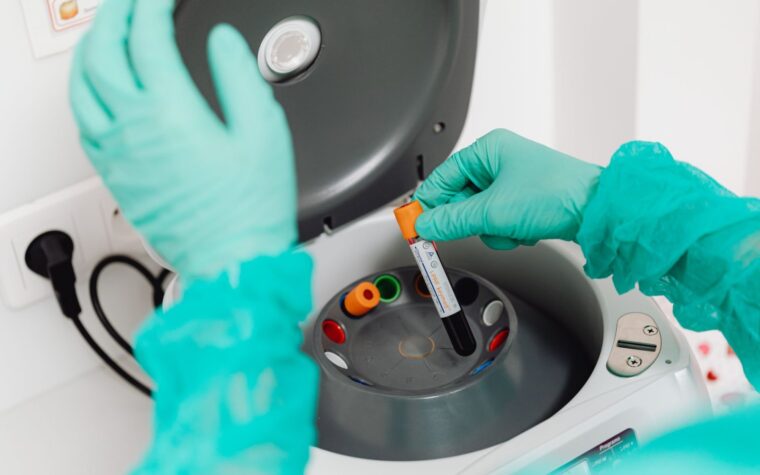
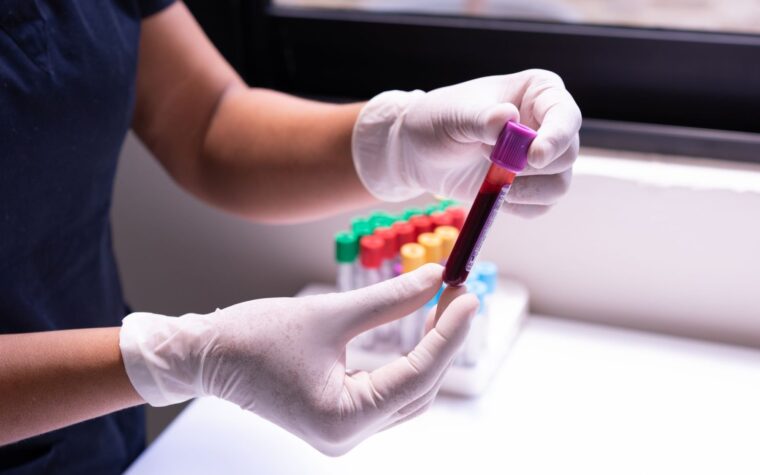
A fibrinogen test requires a standard venous blood draw, usually from the antecubital vein in your elbow. The sample goes into a blue-top (sodium citrate) tube, the same tube used for PT/INR and other coagulation tests. Fasting is not required for fibrinogen specifically, though many labs that include it in a panel prefer a 10 to 12-hour fast for the accompanying metabolic markers.
Processing takes 4 to 24 hours at most commercial labs. Results reported the next business day are the norm for outpatient draws. If you are hospitalized and the test is ordered emergently (as in suspected DIC), results can come back in under an hour from an on-site coagulation analyzer.
No special preparation is needed beyond disclosing any anticoagulants (warfarin, heparin, direct oral anticoagulants like rivaroxaban or apixaban) to your ordering clinician, since these drugs affect the clotting system but not fibrinogen directly. However, if you are on a fibrate medication (fenofibrate, gemfibrozil), worth noting that fibrates modestly lower fibrinogen by 10 to 15 percent, which can make a true underlying elevation look normal.
Fibrinogen test cost without insurance
Cash price for a standalone fibrinogen test varies by venue:
| Venue | Typical cash price range | Notes |
|---|---|---|
| Quest Diagnostics (direct) | $39 to $70 | QuestDirect.com; draw at any Patient Service Center |
| Labcorp (direct) | $35 to $65 | Labcorp OnDemand; order online, draw at retail location |
| Walk-in lab brokers (e.g., Walk-In Lab, Any Lab Test Now) | $29 to $55 | These use Quest/Labcorp labs; you pay the broker, often cheaper than ordering direct |
| CVS MinuteClinic or urgent care | $50 to $120 | Convenience premium; limited locations run on-site coagulation panels |
| Comprehensive longevity panel (fibrinogen included) | $200 to $500 for the full panel | Often 80 to 100 biomarkers; fibrinogen one of many; better per-marker value |
Insurance coverage: most major insurers cover fibrinogen testing when ordered by a physician for a diagnosed bleeding disorder, pre-surgical evaluation, or monitoring of a known coagulation abnormality. Coverage for cardiovascular risk stratification is spottier and often requires prior authorization. HSA and FSA funds can be used to pay for fibrinogen testing at any CLIA-certified lab, with no prescription required in most states.
Medicare Part B covers fibrinogen (CPT code 85384 for activity assay, 85385 for antigen) when medically necessary, meaning there must be a documented clinical indication on the order. Ordering fibrinogen “for baseline wellness” alone may not clear Medicare’s medical necessity bar, so confirm with the ordering provider before assuming coverage.
How to lower high fibrinogen naturally
If your fibrinogen is chronically elevated without an obvious acute cause, the interventions with the strongest evidence are not exotic:
- Smoking cessation: the most powerful single intervention. Fibrinogen drops measurably within 4 to 8 weeks of quitting, with continued decline over a year. Nothing else comes close for smokers.
- Aerobic exercise: regular moderate-intensity cardio (at least 150 minutes per week) lowers fibrinogen by 20 to 50 mg/dL on average across trials, likely via reduced visceral fat and improved insulin sensitivity.
- Weight loss: a 5 to 10 percent reduction in body weight reliably lowers fibrinogen, independent of exercise, in people with obesity.
- Omega-3 fatty acids: EPA and DHA at pharmacologic doses (3 to 4 grams per day of combined EPA/DHA) modestly reduce fibrinogen along with triglycerides, though the fibrinogen effect is smaller than the triglyceride effect.
- Statins: several statins have anti-inflammatory effects that modestly reduce fibrinogen beyond their LDL-lowering action, though this is a secondary benefit, not the primary reason to take them.
- Treat the underlying driver: correcting hypothyroidism, optimizing blood glucose in type 2 diabetes, or managing CKD tends to bring fibrinogen back toward normal as the primary condition improves.
What does not work well: isolated dietary changes without weight loss have minimal impact on fibrinogen. Antioxidant supplements (vitamin C, vitamin E) show inconsistent results across trials. Do not mistake a lower-inflammation diet for a guaranteed fibrinogen fix, especially if smoking, obesity, or metabolic disease is the root driver. Comparing fibrinogen against other inflammatory markers like the adiponectin test can help clarify whether the problem is inflammatory versus metabolic in origin.
When a clinician orders a fibrinogen test
There are two distinct clinical scenarios that prompt a fibrinogen test order, and they call for different follow-up.
Scenario 1: Unexplained bleeding or clotting. A person presents with excessive bruising, prolonged bleeding after a minor cut, or a first unprovoked deep vein thrombosis. The fibrinogen test is part of a coagulation workup alongside PT, aPTT, platelet count, and factor assays. Here the concern is a structural clotting disorder, either too little fibrinogen (rare hereditary deficiency) or dysfunctional fibrinogen (dysfibrinogenemia, which can paradoxically cause either bleeding or clotting depending on the specific mutation).
Scenario 2: Cardiovascular risk stratification. A person has borderline Framingham risk score, or has had a cardiac event despite “normal” cholesterol, and the clinician wants a fuller inflammatory picture. Fibrinogen here joins hs-CRP, lipoprotein(a), and sometimes homocysteine as secondary risk markers. The AHA and ACC do not include fibrinogen in their primary prevention guidelines as a routine test, but the European Society of Cardiology acknowledges it as a useful adjunct in unclear-risk patients. Talk to a clinician about where your result fits in your overall risk profile.
For a deep dive into which markers belong in a comprehensive evaluation, see the alkaline phosphatase test overview and our full guide to understanding your results as a system rather than isolated numbers.
How often should you retest fibrinogen?
There is no universal schedule, because the right interval depends entirely on why you tested. Match your retest to your reason.
- A borderline or high result with no acute illness: confirm it before you act. Repeat in about 3 months, drawn when you are well, on the same lab and assay. A single elevated fibrinogen is not a diagnosis, and confirming a trend prevents you from chasing a one-off spike.
- You are actively fixing a driver: if you quit smoking, started training, or are losing visceral fat, retesting at 3 to 6 months gives the intervention time to show up. Smoking cessation in particular produces a measurable drop within weeks and keeps falling over a year.
- Stable and optimizing: once you know your steady baseline and it sits in a healthy range, an annual recheck alongside the rest of your inflammatory and metabolic markers is plenty for most people.
Here is a realistic example of why the timing matters. A 52-year-old man with borderline cholesterol tests fibrinogen at 470 mg/dL and is understandably alarmed. On questioning, he had a heavy head cold the week before the draw. He retests six weeks later, fully recovered, and lands at 340 mg/dL. Nothing was wrong with his clotting system. The first number was an inflammation echo from a virus, and reading it in isolation would have triggered needless worry and possibly needless testing. Context and timing are not footnotes here. They are the whole interpretation.
FAQ
What is a fibrinogen test used for?
The fibrinogen test has two main uses: evaluating unexplained bleeding or clotting disorders, and assessing cardiovascular and inflammatory risk. Clinicians order it when a patient has excessive bruising, an abnormal PT or aPTT, a suspected DIC, or when building a complete inflammatory picture for cardiovascular risk stratification. The same lab value carries different clinical weight depending on the reason for ordering.
What is the normal fibrinogen range in adults?
Most US labs report a fibrinogen normal range of 200 to 400 mg/dL. Levels naturally trend higher with age and are somewhat elevated in postmenopausal women compared to premenopausal women. Results must always be interpreted alongside the clinical context, since acute illness or recent injury can push levels transiently above the upper limit without indicating chronic disease.
What causes high fibrinogen?
The most common causes of high fibrinogen are smoking, obesity, type 2 diabetes, cardiovascular disease, chronic kidney disease, hypothyroidism, oral estrogen therapy, and active infection or inflammation. Even a recent flu or sprained joint can transiently spike fibrinogen. If a result above 400 mg/dL is not explained by an acute event, it warrants investigation into chronic metabolic drivers.
What does low fibrinogen mean?
Low fibrinogen, below 150 mg/dL in adults, suggests either a congenital clotting disorder, severe liver disease (since the liver produces fibrinogen), active DIC (where fibrinogen is consumed rapidly), or the effect of thrombolytic medications. In an outpatient without bleeding symptoms or obvious liver disease, a mildly low result warrants a repeat draw and a liver function panel before drawing broader conclusions.
How does fibrinogen relate to blood clot risk?
High fibrinogen raises blood clot risk by increasing plasma viscosity, contributing to arterial plaque instability, and impairing the fibrinolysis system that breaks down clots naturally. Each 100 mg/dL elevation above normal is associated with roughly a 25 percent increase in coronary heart disease risk in population studies, independent of LDL cholesterol. This is why it functions as a secondary cardiovascular marker rather than just a clotting test.
Do I need to fast for a fibrinogen test?
Fasting is not required for fibrinogen specifically. However, if fibrinogen is ordered as part of a broader panel that includes a comprehensive metabolic panel, lipids, or fasting glucose, the lab will usually require a 10 to 12-hour fast for those accompanying tests. Check your specific lab order to see whether fasting applies to your draw.
Can fibrinogen be tested at home?
Not currently in any reliable consumer format. Fibrinogen requires a venous blood draw processed through a coagulation analyzer, and no FDA-cleared at-home fingerstick device exists for this marker as of 2026. You can order the test yourself at Quest or Labcorp without a doctor’s order in most states, but the draw must happen at a certified lab or draw site.
How much does a fibrinogen test cost without insurance?
Cash prices range from about $29 to $89 for a standalone fibrinogen test depending on the lab and whether you order through a direct-to-consumer broker or the lab directly. Walk-in lab brokers often offer the lowest prices. If fibrinogen is included in a comprehensive longevity panel with 80 to 100 other biomarkers, the per-marker cost drops substantially compared to ordering it standalone.
Should I be worried if my fibrinogen is 500 mg/dL?
A single result of 500 mg/dL is worth taking seriously but not panicking over. The first question is whether you were acutely ill, injured, or had surgery in the two weeks before the draw. If yes, repeat the test 4 to 6 weeks after full recovery. If you were healthy at the time of the draw, a level of 500 mg/dL paired with other cardiovascular risk markers warrants a conversation with a clinician about lifestyle modification and possibly broader inflammatory and coagulation workup.
Is fibrinogen the same as C-reactive protein?
No. Both are acute-phase reactants made by the liver during inflammation, but they are structurally and functionally different. CRP (especially the high-sensitivity assay, hs-CRP) spikes faster and higher during acute infection and subsides more quickly. Fibrinogen rises more slowly and reflects a more sustained inflammatory state. They are complementary markers: elevated hs-CRP with elevated fibrinogen in a cardiovascular risk context is a stronger signal than either alone.
Can dehydration affect a fibrinogen result?
Modestly, yes. Being significantly dehydrated concentrates the plasma and can nudge protein-based values, including fibrinogen, slightly higher, while being overhydrated can dilute them. This is one more reason a single borderline reading is worth confirming under normal conditions. It is rarely enough on its own to move a result from clearly normal to clearly high, but it can tip a truly borderline value one way or the other.
Does exercise before the test change the number?
A single hard workout can transiently shift fibrinogen because acute strenuous exercise briefly raises several clotting factors. For a clean baseline, avoid intense exercise in the 24 hours before the draw. This is separate from the well-established long-term benefit of regular aerobic training, which lowers your steady-state fibrinogen over weeks and months.
My fibrinogen is normal but my hs-CRP is high. What does that mean?
It usually reflects timing and tempo. hs-CRP reacts faster to a recent or acute inflammatory trigger, while fibrinogen climbs more slowly and reflects a more sustained state. A high hs-CRP with normal fibrinogen can mean a recent flare that fibrinogen has not caught up to, or simply that the two markers are responding to different inputs. The pattern is worth repeating in a few weeks and discussing with a clinician alongside your other risk markers rather than reading either number alone.