Quick answer: Watermelon is good for weight loss in normal portions because it is about 92 percent water and runs roughly 45 to 50 calories per cup of diced fruit, so it fills you up for very few calories. It can quietly work against you if you treat it as unlimited or drink it as juice, because the natural sugar adds up fast and a big bowl displaces the protein and fiber that actually keep you full. The fruit itself does not burn fat. It is a low-calorie swap that helps only when your total daily calories stay below what you burn.
Is watermelon good for weight loss, yes or no?
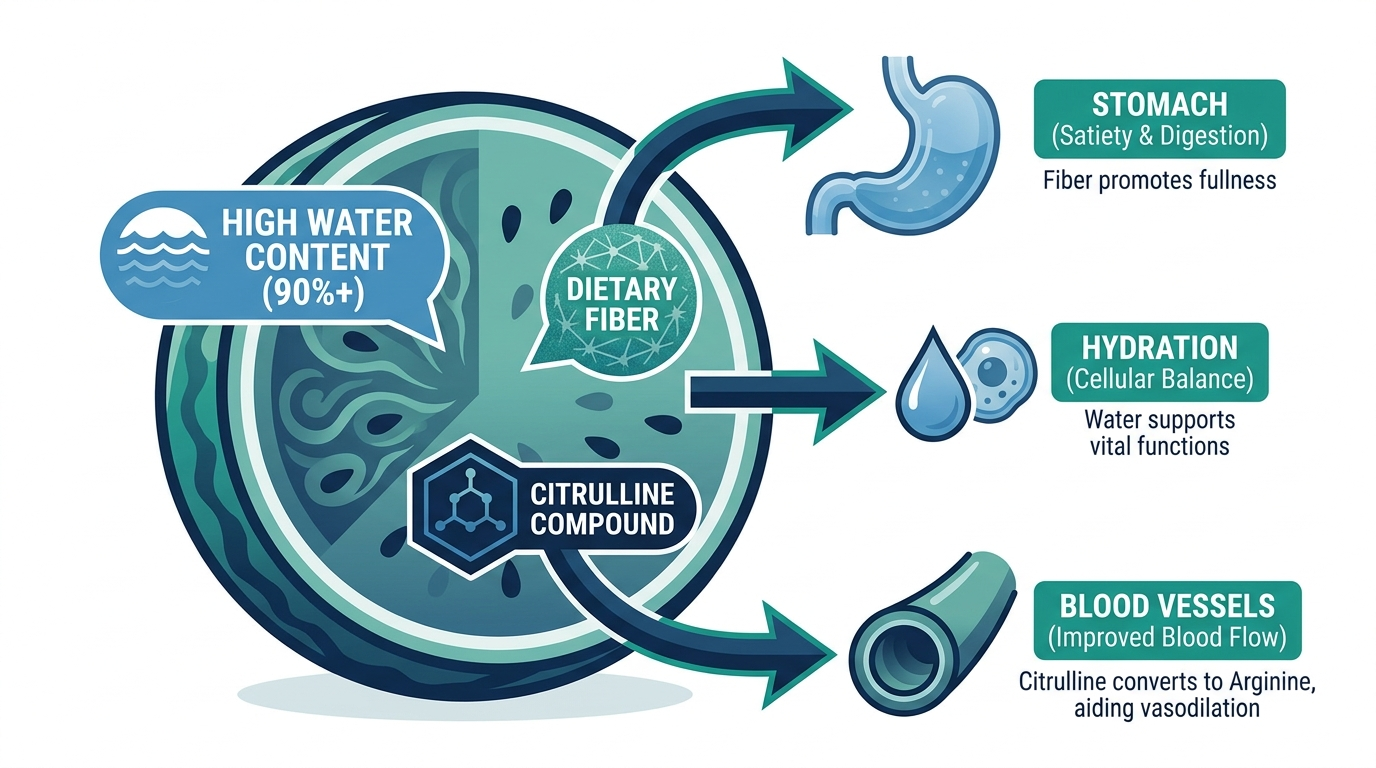
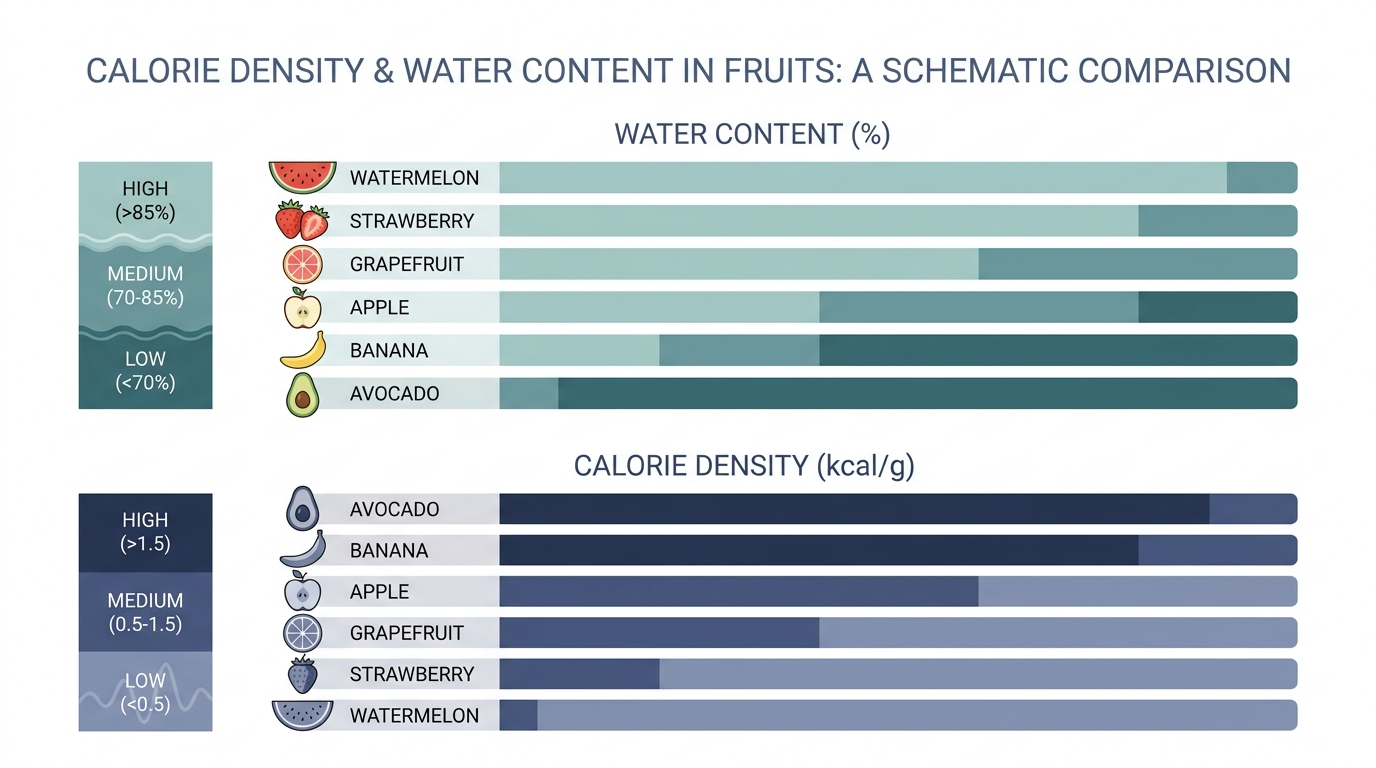
Yes, in sensible amounts, watermelon helps more than it hurts. A 1 cup serving of diced watermelon has about 46 calories, 11.5 grams of carbohydrate, almost no fat, and close to 140 grams of water. That water and volume is the whole point. Foods with high water and low calorie density let you eat a satisfying-looking plate while taking in fewer calories, which is the mechanism behind every credible “volume eating” approach.
Watermelon’s sugar load affects everyone differently. Curious how your own blood sugar and metabolic markers respond? One at-home Superpower draw checks 100+ biomarkers, physician-reviewed.
The honest caveat is that watermelon is mostly sugar and water once you remove the water. It has very little protein (under 1 gram per cup) and very little fiber (about 0.6 grams per cup), the two nutrients that blunt hunger for hours. So watermelon is a great way to add bulk and sweetness to a day, but a poor way to feel full on its own. Eat it alongside protein, not instead of it.
Does watermelon help weight loss, and how does it actually work?
Watermelon helps weight loss only through calorie displacement, not through any fat-burning property. There is no compound in watermelon that speeds up your metabolism in a meaningful way for fat loss. What helps is simple physics: when you reach for a cup of watermelon (about 46 calories) instead of a handful of chips (about 150 calories) or a cookie (about 200 calories), you save calories without feeling deprived.
The high water content also adds to short-term fullness through stomach stretch, which signals satiety. That effect fades within an hour or two, faster than the fullness from a high-protein or high-fiber food, because water empties from the stomach quickly. This is why watermelon is a smart snack to take the edge off a craving, but a weak choice as a meal. People who try a “watermelon diet” for several days lose scale weight fast, but most of that is water and glycogen, and it returns the moment they eat normally again.
Is watermelon healthy for weight loss beyond the calories?
Watermelon is healthy for weight loss because it delivers useful nutrients with almost no calorie cost. It is one of the richest food sources of lycopene, the red antioxidant also found in tomatoes, and a cup provides a meaningful share of your daily vitamin C and vitamin A. It also contains citrulline, an amino acid that the body converts to arginine and that supports blood flow, which is why some athletes use watermelon around workouts.
For someone losing weight, the practical wins are hydration and potassium. Many people confuse thirst for hunger and eat when a glass of water would have settled it. Watermelon hydrates and satisfies the urge to chew at the same time. Its potassium also helps counter the bloating that comes from a high-sodium day. None of this melts fat, but it makes a calorie-controlled diet easier to stick to, and adherence is the only thing that separates people who lose weight from people who do not.
How much watermelon is too much, and is watermelon bad for weight loss?
Watermelon becomes bad for weight loss when the portion stops being a snack and starts being a meal’s worth of sugar. The trouble is that watermelon is easy to overeat because it feels like “just fruit.” Here is where the calories actually land.
| Portion | Approx. calories | Sugar (g) | Reality check |
|---|---|---|---|
| 1 cup, diced | ~46 | ~9.5 | A genuine low-calorie snack |
| 1 standard wedge (1/16 of a melon) | ~86 | ~17 | Fine as dessert |
| 1/2 small melon | ~340 | ~70 | A meal’s worth of sugar, almost no protein |
| 16 oz fresh watermelon juice | ~140 to 170 | ~30+ | Fast sugar, no fiber, easy to overdrink |
Eating a couple of cups across a day is a non-issue for most people. Sitting down with half a melon while watching TV is how watermelon turns into a problem, because you can clear 300 to 400 mostly-sugar calories without registering them as food. The fix is not to fear the fruit. It is to portion it on a plate instead of eating from the rind.
Is watermelon juice good for weight loss?
Watermelon juice is the worst form of watermelon for weight loss. Juicing strips out what little fiber and structure the fruit has and leaves you with fast-absorbing sugar in liquid form. Liquid calories are poorly registered by your appetite system, so a 16 ounce glass that carries 140 to 170 calories does almost nothing to make you eat less later. You get the sugar load of two or three cups of fruit with none of the chewing, volume, or fullness.
If you love the flavor, eat the fruit instead of drinking it, or infuse plain water with a few cubes of watermelon for taste without the calories. Reserve actual watermelon juice for after hard endurance exercise, where the quick carbohydrate and citrulline have a real, if small, recovery rationale. For everyday fat loss, the glass works against you.
How to actually use watermelon in a weight-loss day
The difference between watermelon helping and hurting comes down to how you slot it in. Used as a planned, portioned snack that replaces something worse, it is one of the easiest wins in a diet. Used as an all-you-can-eat bowl in front of the TV, it quietly becomes a sugar meal. Here is the practical playbook that keeps it on the right side.
- Pre-cut and portion once. When you bring a melon home, cube it into 1 cup containers straight away. A pre-portioned cup gets eaten as a snack. A whole melon in the fridge gets eaten from the rind until it is gone.
- Use it as the craving-breaker, not the meal. The best moment for watermelon is the afternoon sweet-tooth window, where a 46 calorie cup replaces a 200 calorie cookie. That single swap, done daily, is a real calorie saving over a month.
- Anchor it to protein every time. A cup of watermelon with cottage cheese, Greek yogurt, or a boiled egg turns a fast sugar hit into a snack that actually holds you to the next meal.
- Front-load it earlier in the day if you can. Not because late calories count more, they do not, but because a large watery portion close to bed can wreck your sleep, and short sleep raises next-day hunger.
A realistic example: someone stuck at an afternoon vending-machine habit swaps the daily candy bar for a cup of watermelon and a string cheese. The swap saves roughly 150 calories a day and adds protein, and over a few weeks the scale starts to move without any dramatic diet. That is the entire mechanism. It is unglamorous, and it works only because the total for the day came down.
What about the rind and the seeds?
Two parts of the melon most people throw away are quietly useful. The white rind just under the green skin holds more citrulline than the red flesh and has even fewer sugars, so blending a little of it into water or a smoothie adds the amino acid without the sugar load. It is edible and mild, though the texture takes getting used to. The black seeds are also fine to eat and contain small amounts of protein, magnesium, and healthy fats, which is why roasted watermelon seeds show up as a snack in some cuisines. None of this changes the weight-loss math in a big way, but it does mean the fruit is more than just sugar water if you use the whole thing.
The simplest way to actually get this done
Superpower is a full-body lab membership that runs 100+ biomarkers, has each result reviewed by a doctor, and tracks your numbers year over year (about $199/year). It is what we point readers to when they would rather get one clean, complete draw than chase single tests one at a time. Here is superpower reviewed in full.
Is eating watermelon at night good for weight loss?
Eating watermelon at night is neither good nor bad for weight loss on its own, because the clock does not change how your body handles calories. The old idea that calories eaten after a certain hour “count more” or convert directly to fat is a myth. What matters is your total intake for the day, not the timestamp.
That said, two things make a late-night watermelon habit worth watching. First, evening eating is often mindless eating, and a low-calorie snack like watermelon is genuinely a better late choice than ice cream or chips. Second, watermelon is mostly water, so a large bowl right before bed can mean a 3 a.m. trip to the bathroom and worse sleep, and poor sleep reliably raises next-day hunger and cravings. A small bowl is fine. A giant one is a sleep problem dressed up as a diet choice.
Watermelon versus other “weight loss” fruits
Watermelon is one of the lowest-calorie fruits by volume, but it is also one of the lowest in fiber and protein, which is the trade-off. Here is how it stacks up against fruits people compare it to.
| Fruit (1 cup) | Calories | Fiber (g) | Why it matters for weight loss |
|---|---|---|---|
| Watermelon, diced | ~46 | ~0.6 | Lowest calories, but least filling |
| Strawberries | ~49 | ~3 | Similar calories, far more fiber |
| Raspberries | ~64 | ~8 | Highest fiber, most filling per bite |
| Apple slices | ~65 | ~3 | Fiber plus crunch, slow to eat |
| Banana, sliced | ~134 | ~3.9 | Denser, better around workouts |
The lesson is that no single fruit is magic. Watermelon wins on calories per cup, but berries win on fullness because of fiber. If you want to dig into how individual fruits compare, see what fruits are good for weight loss and the dedicated breakdown of whether bananas are good for weight loss. The smartest move is to rotate several low-calorie, higher-fiber fruits rather than going all-in on one.
The mistake that stalls people: fruit alone is not a meal
The most common way watermelon backfires is that people use it to replace protein, not junk food. A bowl of watermelon for “lunch” feels virtuous, but it leaves you with under a gram of protein and almost no fiber, so you are hungry again within the hour and end up snacking through the afternoon. The day’s calorie total ends up higher than if you had eaten a normal balanced meal.
- The pairing rule. Always anchor fruit to protein. Watermelon with a few ounces of cottage cheese, a hard-boiled egg, or a scoop of Greek yogurt turns a blood-sugar spike into a balanced snack that holds.
- The fiber gap. Watermelon has almost none, so it will not do the appetite work that an apple or berries do. Treat it as a treat, not a strategy.
- The liquid trap. Smoothies and juices made with watermelon look healthy and stack 30-plus grams of sugar with no off-switch.
- The “healthy food” halo. Calories from fruit still count. Three cups across a day is roughly 140 calories you may not be tracking.
If you are leaning on shakes or fruit to manage hunger, it is worth getting the protein side right too. See whether protein shakes are good for weight loss and the comparison of the best protein powder for weight loss, since protein, not fruit, is what actually keeps you full. For a slower, more filling carbohydrate at breakfast, oatmeal for weight loss outperforms watermelon by a wide margin on staying power.
Who should be careful with watermelon
Most people can eat watermelon freely in normal portions, but a few groups should pay attention to how their body responds. Watermelon has a high glycemic index (around 72) but a low glycemic load per serving because each cup contains so little actual carbohydrate. The practical effect depends entirely on your metabolism.
- Insulin resistance, prediabetes, or PCOS. If your body handles carbohydrates poorly, a large watermelon portion eaten alone can spike blood sugar and then crash it, driving hunger and fat storage. The fix is small portions paired with protein or fat, not avoidance.
- Type 2 diabetes. Watermelon is fine in controlled amounts but easy to overdo because it does not feel like sugar. A continuous glucose monitor often shows people exactly how their own glucose reacts to a bowl.
- FODMAP sensitivity or IBS. Watermelon is high in fructose and a known FODMAP trigger, so large amounts can cause bloating and gas that people mistake for a food allergy.
- Anyone who is stalled despite “eating clean.” If you are doing everything right with food and the scale will not move, the problem is usually not the watermelon. It is more often a thyroid, insulin, or hormone issue that food alone cannot reveal.
This last group is the one most people fall into without realizing it, and it is where guessing about fruit wastes months.
The real lever: test what your body does with food, do not guess
Here is the insider truth that no fruit article will tell you. Whether watermelon helps or hurts you specifically is not a question you can answer by reading a calorie chart. It depends on how your body handles sugar, whether your thyroid is keeping your metabolism on pace, and whether insulin resistance is quietly making fat loss harder than it should be. People spend months optimizing the small stuff (which fruit, what time of day) while a flagging thyroid or high fasting insulin makes the scale refuse to move no matter how clean they eat.
The way out of guessing is measurement. A simple at-home panel can show your HbA1c (your average blood sugar over three months), your thyroid markers, and whether a food sensitivity is driving inflammation and bloat. Those numbers tell you whether watermelon is a harmless snack for your body or a sugar load you should keep small. If you have been “eating right” and stalling, talk to a clinician before assuming the food is the problem, and get the labs that show what is actually happening.
Stalling on “clean eating”? See what your body actually does with sugar.
Everlywell is an at-home testing company with CLIA-certified labs for thyroid, metabolism, HbA1c, food sensitivity and women’s and men’s hormones, mailed to your door with physician-reviewed results (single tests from about $49 to $249). If watermelon and other “healthy” foods are not moving the scale, an HbA1c or food-sensitivity test shows whether sugar handling or a hidden trigger is the real issue. Here is Everlywell reviewed in full.
If you want a single full-body view rather than one marker at a time, a comprehensive panel like Superpower measures dozens of biomarkers including thyroid, metabolic, and inflammation markers in one draw, which is the fastest way to find the lab reason a diet has stalled.
Curious what your own levels look like?
Baseline 100+ biomarkers today and retest as life changes, all in one membership with physician review.
Want a real clinician to run the numbers, not a guess?
Joi + Blokes is a telehealth clinic that prescribes GLP-1 medication (Zepbound, compounded semaglutide and tirzepatide), hormone therapy (TRT, HRT), thyroid care, and peptides after a real lab panel and clinician review, with no membership or consult fee (prescriptions from about $59/month, lab panels from $149). If the scale will not budge, this is where you find out whether insulin, thyroid, or hormones are the real reason. Here is Joi + Blokes reviewed in full.
FAQ
Can watermelon help with weight loss if I eat it every day?
Yes, daily watermelon is fine for weight loss as long as you keep portions reasonable, roughly one to two cups, and pair it with protein. Eating it daily does not cause weight loss by itself. It only helps when it replaces higher-calorie snacks and your total daily calories stay below what you burn.
Are watermelons good for weight loss compared to other diet snacks?
Watermelon is one of the best low-calorie snacks for satisfying a sweet craving, at about 46 calories per cup. It beats chips, cookies, and ice cream easily. It loses to higher-protein snacks like Greek yogurt or a hard-boiled egg on fullness, so the smart move is to eat both together.
Does watermelon burn belly fat?
No food burns belly fat, and watermelon is no exception. Belly fat comes off only through an overall calorie deficit, and where you lose fat first is mostly determined by genetics and hormones. Watermelon can support a deficit as a low-calorie food, but it does not target any specific area.
Is the watermelon diet effective for fast weight loss?
A few-day watermelon-only diet drops scale weight fast, but most of that is water and glycogen, not fat, and it returns once you eat normally. These plans are also dangerously low in protein, which means you lose muscle. A balanced calorie deficit you can sustain beats any single-food crash diet.
How many carbs and how much sugar are in watermelon?
One cup of diced watermelon has about 11.5 grams of carbohydrate and 9.5 grams of natural sugar. That is modest per cup, but it climbs quickly with larger portions, and half a small melon can carry 70 grams of sugar. Portion control, not avoidance, is what keeps it diet-friendly.
Is watermelon good for weight loss on keto?
Watermelon is difficult to fit into a strict keto diet because its sugar uses up your carbohydrate allowance fast. A single cup at 11.5 grams of carbs can be most of a 20-gram daily keto limit. A few small cubes can work, but it is not a keto-friendly fruit in any real quantity.
Does eating watermelon at night cause weight gain?
No, watermelon eaten at night does not cause weight gain by itself, because total daily calories are what matter, not timing. A small bowl is a fine late snack. The only real downsides are that a large amount can disrupt sleep with bathroom trips, and evening grazing tends to add calories you did not plan for.
Should diabetics avoid watermelon for weight loss?
People with diabetes do not need to avoid watermelon, but they should keep portions small and pair it with protein or fat to soften the blood-sugar response. Because watermelon has a high glycemic index, checking how your own glucose reacts, ideally with a meter or monitor, tells you far more than any general rule.
Does watermelon make you retain water or lose water?
Watermelon actually helps you lose water weight rather than hold it. Its high potassium content counteracts sodium, and its water volume supports healthy hydration, both of which reduce the puffy bloating that a salty day causes. This is why a watermelon crash diet drops scale weight so quickly, it is shedding water, not fat, and the number rebounds once you eat normally again.
Is watermelon or cantaloupe better for weight loss?
They are close. Watermelon is slightly lower in calories per cup and higher in water, while cantaloupe edges ahead on vitamin A and has a similar low fiber content. Neither is meaningfully more fat-burning than the other, so the better choice is whichever one you will actually reach for instead of a higher-calorie snack. Both need a protein pairing to be genuinely filling.
Vital Signs Today may earn a commission if you buy through links on this page. It does not affect our editorial assessments.