Quick answer: The best fruits for weight loss are the ones with the most fiber and water and the least concentrated sugar per bite, so berries (raspberries, strawberries, blackberries), apples and pears with the skin on, grapefruit, kiwi, and stone fruit like peaches top the list. They keep you full on very few calories, around 50 to 90 calories per cup, and the fiber slows how fast their natural sugar hits your blood. Fruit is good for weight loss for almost everyone when eaten whole. It only works against you if you drink it as juice, pile on dried fruit, or your body handles carbohydrate poorly, which is something a blood test can show you directly.
Here is the part most articles skip. No single fruit “burns belly fat.” What decides whether fruit helps or hurts is fiber, portion, what it replaces, and how your own metabolism handles sugar. Two people can eat the same banana and get very different blood sugar responses. So the real question is not just what fruits are good for weight loss, but which fruits fit how your body works.
Building a weight-loss diet around fiber-rich fruit? See the metabolic numbers that show whether it’s actually working. One at-home Superpower draw checks 100+ biomarkers, physician-reviewed.
Is fruit good for weight loss, or is fruit bad for it?
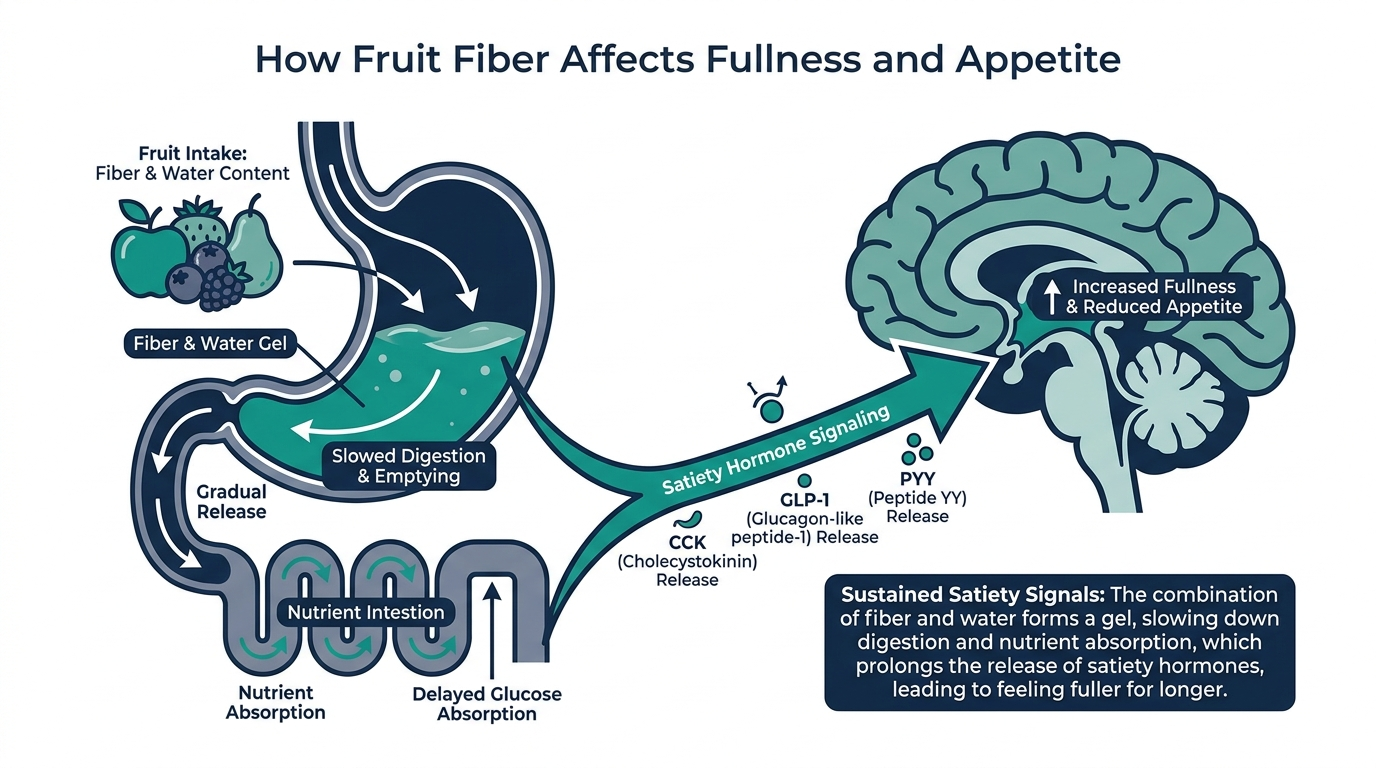
Whole fruit is good for weight loss for the vast majority of people, and the data is not close. Large cohort studies, including long-running Harvard analyses of more than 130,000 adults, found that people who ate more whole fruit, especially berries, apples, and pears, gained less weight over time, not more. The fear that “fruit has sugar so it makes you fat” confuses whole fruit with concentrated sugar.
The difference is fiber and water. A medium apple has about 95 calories and 4 grams of fiber wrapped around its sugar, so it takes time to chew and fills you up. Eight ounces of apple juice has roughly the same sugar, zero fiber, and goes down in 15 seconds without touching your appetite. So fruit is bad for weight loss in exactly three situations: when you drink it, when you eat it dried by the handful (raisins and dates are sugar bombs by volume), and when you treat it as a free add-on instead of a swap for chips, cookies, or a second helping.
One honest caveat. People with insulin resistance, prediabetes, or PCOS can see a sharper blood sugar spike from higher-sugar fruit like grapes, mango, or pineapple. They still benefit from fruit, but the choice and timing matter more, which is the theme of this whole piece.
What fruit is best for weight loss? The top picks ranked
The simplest way to actually get this done
Superpower is a full-body lab membership that runs 100+ biomarkers, has each result reviewed by a doctor, and tracks your numbers year over year (about $199/year). It is what we point readers to when they would rather get one clean, complete draw than chase single tests one at a time. Here is superpower reviewed in full.
The best fruit for weight loss is the one that gives you the most fiber and volume for the fewest calories, and by that measure raspberries win outright. A full cup of raspberries is about 64 calories and a remarkable 8 grams of fiber, more fiber per calorie than almost any food on earth. That fiber is why berries dominate this list.
Here is how the most common fruits stack up. These are good fruits to eat for weight loss because of the calorie-to-fiber ratio, not because of any special “fat-burning” property.
| Fruit (1 cup unless noted) | Calories | Fiber (g) | Sugar (g) | Why it ranks |
|---|---|---|---|---|
| Raspberries | ~64 | 8 | 5 | Most fiber per calorie of any fruit |
| Blackberries | ~62 | 8 | 7 | Same fiber, very filling, low spike |
| Strawberries | ~49 | 3 | 7 | Lowest calorie berry, high water |
| Grapefruit (half) | ~52 | 2 | 9 | High water, classic pre-meal appetite cut |
| Apple (medium, with skin) | ~95 | 4 | 19 | Portable, fiber in skin slows sugar |
| Kiwi (2 small) | ~84 | 4 | 13 | Vitamin C, fiber, gentle on blood sugar |
| Pear (medium, with skin) | ~101 | 6 | 17 | One of the highest-fiber whole fruits |
| Watermelon | ~46 | 1 | 9 | Mostly water, very low calorie by volume |
| Banana (medium) | ~105 | 3 | 14 | Filling, but higher sugar per piece |
| Grapes | ~104 | 1 | 23 | Easy to overeat, low fiber, high sugar |
| Mango | ~99 | 3 | 23 | Delicious, but one of the sweetest |
The pattern is clear. The fruits at the top deliver fiber and water with little sugar, so they fill you up and barely move your blood sugar. The ones at the bottom are still healthy, but they pack more sugar into less fiber, so they are easier to overeat. That does not make grapes or mango “bad,” it just means portion matters more.
Why berries beat almost everything
Berries are the answer to “what is the best fruit to eat for weight loss” because three things stack up: low calories, very high fiber, and lots of water. The fiber keeps you full, and because a cup is only 50 to 65 calories, you can eat a generous bowl for the cost of a few crackers. If you eat one fruit on repeat while losing weight, make it berries.
What fruits help with weight loss because of how they work in the body?
Fruits help with weight loss through four real mechanisms, and none of them is magic.
- Fiber slows the sugar curve. Soluble fiber forms a gel in your gut that slows how fast sugar enters your blood, which blunts the insulin spike and the crash-and-crave cycle that follows. This is why a whole apple satisfies and apple juice does not.
- Volume fills your stomach. Fruit is mostly water. Foods with high water and fiber content stretch your stomach and trigger fullness signals on very few calories, the principle behind volume eating.
- Fruit displaces worse calories. A cup of berries after dinner instead of ice cream is a real calorie swap. Most of fruit’s weight-loss benefit comes from what it replaces.
- Chewing buys time. Whole fruit takes time to eat, and your brain registers fullness about 20 minutes in. Slower eating means fewer total calories.
Notice what is missing. No fruit speeds up your metabolism, melts fat, or “detoxes.” Grapefruit earned a fat-burner reputation from a 1980s fad diet, but it works only because it is low calorie and filling. Eat half a grapefruit before a meal to curb appetite, not because it does anything chemical.
What fruits are best to eat for weight loss with insulin resistance or PCOS?
If you have insulin resistance, prediabetes, or PCOS, the best fruits to eat for weight loss are the low-glycemic, high-fiber ones, paired with protein or fat. Your body releases more insulin in response to carbohydrate, and chronically high insulin makes fat loss harder. So the fruit choice and the pairing matter more for you than for someone with normal metabolism.
Smart picks in this situation:
- Best: berries, cherries, plums, peaches, apples, pears, kiwi. Low to moderate glycemic load, plenty of fiber.
- Smaller portions: banana, grapes, pineapple, mango. Still fine, but keep to a half serving and pair with protein.
- Always pair, never solo. Eat fruit with a handful of nuts, a spoon of nut butter, or some Greek yogurt. Protein and fat flatten the blood sugar response substantially.
The honest problem is that “I have insulin resistance” is usually a guess. People assume it from belly weight or fatigue and never confirm it. You cannot see your insulin, your fasting glucose, or your HbA1c by looking in the mirror, and the right fruit strategy depends entirely on those numbers. This is where measuring beats guessing, and we will come back to that.
What are good fruits to eat for weight loss, and how should you eat them?
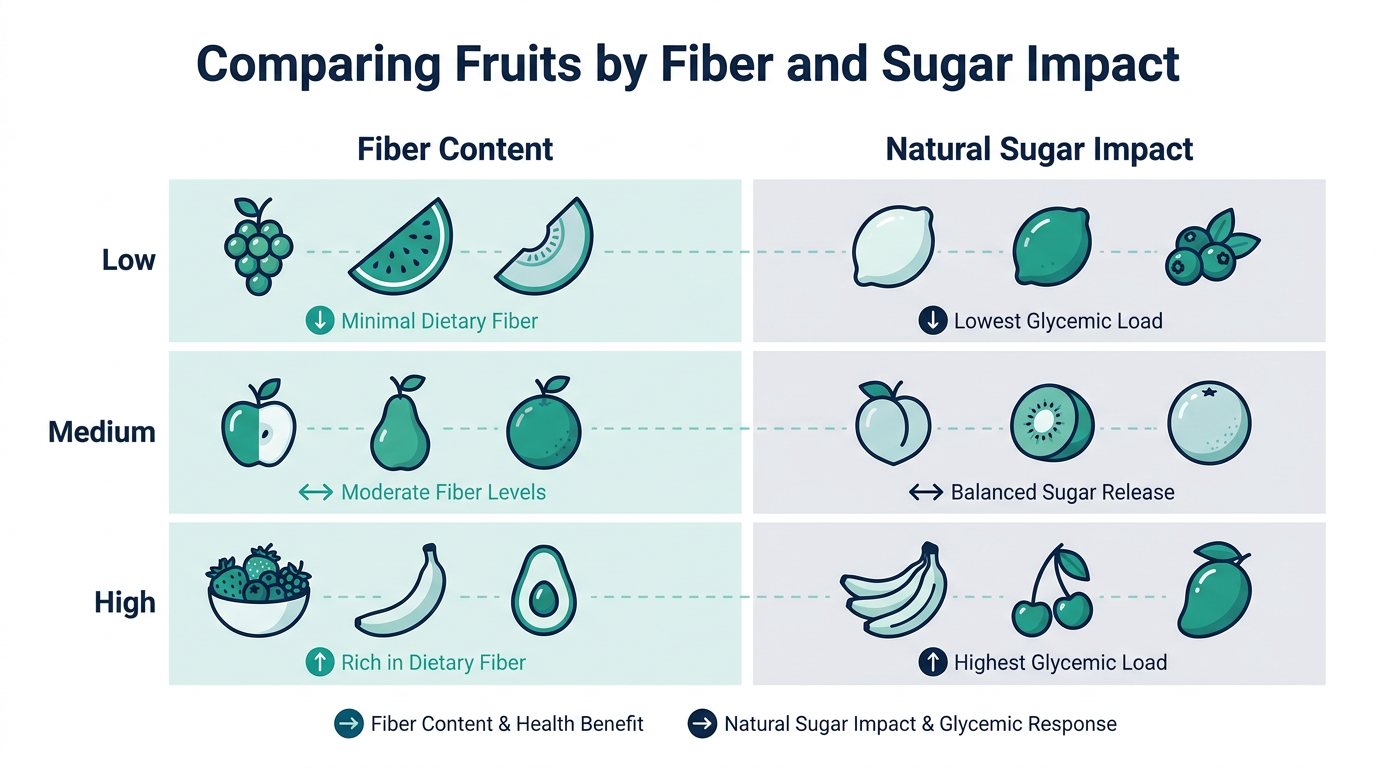
Good fruits to eat for weight loss are whole, fresh or frozen, and eaten as part of a meal or snack with some protein. How you eat fruit decides as much as which fruit you eat. A few rules that actually move the scale:
- Whole over juice, always. One orange has 3 grams of fiber and fills you up. A glass of orange juice has the sugar of three oranges, no fiber, and 110-plus calories you barely notice. Juice and smoothies are the single biggest way people accidentally sabotage a fruit-heavy diet.
- Frozen counts. Frozen berries are picked ripe and frozen fast, so they are nutritionally equal to fresh and far cheaper. A bag of frozen mixed berries is the best weight-loss grocery buy in the produce aisle.
- Cap dried fruit. Dried fruit is dehydrated, so the sugar is concentrated. A quarter cup of raisins has the calories of a full cup of grapes. Use it as a topping, not a snack.
- Time it around protein. Fruit after a protein-forward meal, or alongside yogurt or nuts, blunts the sugar spike and keeps you full longer than fruit eaten alone.
- Two to three servings a day is plenty. More fruit is not better. Two to three cup-servings hit your fiber and micronutrient targets without piling on sugar calories.
Fruit also works best as a swap inside a higher-protein eating pattern. Many people who reach for fruit are trying to fix a snack habit, and combining it with a protein source closes the gap. If you struggle to hit protein, fruit blended into a high-protein base is one place a shake earns its keep. See our take on whether protein shakes are good for weight loss and what is the best protein powder for weight loss before you buy one.
Common mistakes: why fruit stalls people on a diet
Most people who say “I eat healthy and still cannot lose weight” are tripping over the same fruit mistakes. The food is fine. The execution leaks calories or hides a metabolic issue.
- Smoothie creep. A “healthy” smoothie of two bananas, juice, honey, and a date can clear 500 to 700 calories before breakfast, and blending removes the fullness you get from chewing, so you are hungry again within the hour.
- Grazing all day. “It is just fruit” turns into six servings, and the sugar and calories add up. Calories from fruit still count.
- Fruit on top, not instead. Adding fruit to an already adequate diet without removing anything is just extra calories. It has to replace something.
- Dried fruit and “trail mix” snacking. A handful of trail mix heavy on raisins and banana chips can run 300 calories.
- Blaming the food when the problem is upstream. This is the big one. When the scale will not move despite a clean diet, the cause is often a sluggish thyroid, high insulin, perimenopausal hormone shifts, or a slow metabolism. Those are invisible until you test for them.
That last point is where most diet advice dead-ends. You can optimize your fruit choices perfectly and still stall, because the lever is not the food, it is your numbers.
The real lever: stop guessing what your body does with fruit, measure it
Here is the uncomfortable truth this site keeps coming back to. Most people fail at weight loss because they are guessing, not measuring. They guess they have a slow metabolism, guess they are insulin resistant, and then blame a banana when the scale sticks. The fruit you should eat, and whether fruit is even your problem, depends on data you cannot see without a test.
A few numbers change the whole picture:
- Fasting glucose and HbA1c tell you if you are insulin resistant or prediabetic, which decides how careful you need to be with higher-sugar fruit.
- Thyroid panel (TSH, and ideally free T4 and free T3) catches the sluggish thyroid behind many unexplained stalls, especially in women over 35.
- A food sensitivity screen can flag foods quietly driving inflammation and water retention that the scale reads as “not losing.”
- Sex hormones explain perimenopausal and andropausal weight shifts that no diet tweak will fix.
You can get most of these without a doctor’s visit. Everlywell ships at-home tests for thyroid, metabolism, HbA1c, food sensitivity, and hormones: you collect a small sample, mail it back, and a physician reviews the results. It is the fastest way to find out whether your fruit choices even matter, or whether something upstream is the real brake.
Want to know what your body actually does with sugar, before you blame the fruit?
Everlywell is an at-home testing company with CLIA-certified labs for thyroid, metabolism, HbA1c, food sensitivity and women’s and men’s hormones, mailed to your door with physician-reviewed results (single tests from about $49 to $249). If high-sugar fruit spikes you or a sluggish thyroid is stalling the scale, these numbers tell you in a week instead of months of guessing. Here is Everlywell reviewed in full.
If you want a fuller picture in one draw, a broad blood panel like Superpower bundles metabolic, thyroid, and hormone markers together so you are not ordering tests one at a time. Either way the move is the same: see your numbers, then build the diet around them.
How fruit fits the bigger weight-loss picture
Fruit is a tool, not a treatment. It helps you eat fewer calories while staying full and getting fiber, but it will not out-run a calorie surplus, a hormonal problem, or a diet built on guesswork. The approach that works is boring: protein at every meal, fruit and vegetables for volume and fiber, higher-fiber carbohydrates over refined ones, and numbers that tell you what your body is doing.
If you are curious how specific foods stack up inside that framework, we have broken down the usual suspects: whether bananas are good for weight loss, whether oatmeal is good for weight loss, and whether rice is good for weight loss. The pattern repeats every time. The food is rarely the villain. Portion, what it replaces, and your own metabolism decide the outcome.
Curious what your own levels look like?
Baseline 100+ biomarkers today and retest as life changes, all in one membership with physician review.
Want a real clinician to run the numbers, not a guess?
Joi + Blokes is a telehealth clinic that prescribes GLP-1 medication (Zepbound, compounded semaglutide and tirzepatide), hormone therapy (TRT, HRT), thyroid care, and peptides after a real lab panel and clinician review, with no membership or consult fee (prescriptions from about $59/month, lab panels from $149). If the scale will not budge, this is where you find out whether insulin, thyroid, or hormones are the real reason. Here is Joi + Blokes reviewed in full.
FAQ
What is the single best fruit for weight loss?
Raspberries, by the numbers. A cup is about 64 calories with 8 grams of fiber, more fiber per calorie than nearly any other food, so they keep you full on almost no calories. If you want one fruit to lean on while losing weight, berries in general and raspberries in particular are the strongest pick.
Which fruit is best for weight loss if I have diabetes or insulin resistance?
Stick to low-glycemic, high-fiber fruits like berries, cherries, apples, pears, and plums, and always pair them with protein or fat to flatten the blood sugar response. Keep higher-sugar fruits like grapes, mango, and pineapple to small portions. If you have not actually tested your fasting glucose and HbA1c, do that first, because the right strategy depends on those numbers and not on a guess.
Is fruit bad for weight loss because of the sugar?
No, whole fruit is not bad for weight loss, and the sugar fear is misplaced. Whole fruit comes wrapped in fiber and water that slow sugar absorption and fill you up. Fruit only works against you as juice, dried fruit eaten by the handful, or extra calories piled on top of an already adequate diet.
What fruits are healthy for weight loss but easy to overeat?
Grapes, cherries, mango, and dried fruit are healthy but easy to overeat because they are sweet, low in fiber relative to their sugar, or concentrated. Grapes especially disappear by the handful. Portion them into a bowl instead of eating from the bag, and treat dried fruit as a topping rather than a snack.
What is a good fruit for weight loss to eat at night?
A small bowl of berries or a few slices of apple with a spoon of nut butter is a good nighttime choice. The fiber and a bit of protein or fat keep blood sugar steady so you are not woken by a crash or a craving. Skip a big bowl of grapes or a banana smoothie late at night, since the quick sugar is more likely to spike then dip.
Are smoothies a good way to eat fruit for weight loss?
Usually not, and this trips up a lot of people. Blending breaks up the fiber and removes the chewing that signals fullness, so you drink a lot of calories fast and feel hungry again soon. A smoothie can work only if it is protein-forward, uses whole fruit not juice, and replaces a meal rather than adding to one.
How much fruit should I eat per day to lose weight?
Two to three cup-servings of whole fruit a day is plenty for most people trying to lose weight. That covers your fiber and micronutrient needs without adding too many sugar calories. More fruit is not better, and grazing on it all day is a common reason a “healthy” diet stalls.
Do any fruits actually burn fat or boost metabolism?
No fruit burns fat or meaningfully boosts metabolism, despite the marketing around grapefruit, lemon water, and the like. Fruit helps you lose weight by filling you up on few calories and replacing worse foods, not through any chemical fat-burning effect. If your metabolism genuinely feels slow, the answer is a thyroid and metabolic panel, not a special fruit.
Why am I eating healthy fruit and still not losing weight?
If your diet is clean and the scale will not move, the brake is usually upstream of your fruit bowl. Common culprits are an underactive thyroid, insulin resistance, perimenopausal hormone changes, hidden liquid calories, or simply eating more total food than you think. An at-home thyroid, metabolic, or hormone test from a service like Everlywell can tell you which of those it is in about a week, instead of guessing for months.
Vital Signs Today may earn a commission if you buy through links on this page. It does not affect our editorial assessments.