Disclosure: Vital Signs Today may earn a commission if you buy through links on this page, at no extra cost to you. This does not influence our evidence-based assessments. We are not a medical provider; talk to a clinician before acting on test results.
Quick answer: A homocysteine test measures an amino acid that accumulates when B12, folate, or B6 metabolism is impaired, and elevated levels are independently associated with coronary artery disease, stroke, and accelerated cognitive decline. The reference range most labs use is 5 to 15 micromoles per liter (mcmol/L), but functional medicine clinicians often target below 10. Cash pricing runs from $29 to $90 at Quest Diagnostics or Labcorp direct-order services, and results typically return within one to two business days.
What Is a Homocysteine Test and Why Does It Matter?
The homocysteine test is a blood draw that quantifies the concentration of homocysteine, a sulfur-containing amino acid that sits at the intersection of the methionine cycle and the transsulfuration pathway. Your body produces it continuously as a byproduct of metabolizing methionine, an amino acid abundant in meat and dairy. Under normal conditions, B vitamins immediately convert homocysteine into either cysteine or back into methionine. When those vitamins are insufficient, or when genetic variants like MTHFR slow the recycling enzymes, homocysteine backs up in the bloodstream.
That backup is not benign. Excess homocysteine oxidizes LDL cholesterol, damages the endothelial lining of arteries, promotes platelet clumping, and triggers inflammation, all through mechanisms that are distinct from traditional lipid-based risk. That is why clinicians who track cardiovascular disease prevention consider it a useful add-on to a standard lipid panel, not a replacement. It is one of the markers included in comprehensive panels like the complete blood panel that longevity-focused individuals use to build a full baseline.
It helps to picture where homocysteine sits in the machinery. The same methionine cycle that recycles homocysteine also produces S-adenosylmethionine, the body’s universal methyl donor, which is used to methylate DNA, neurotransmitters, and dozens of other molecules. A homocysteine level is therefore a window into whether that methylation engine is running smoothly. A high value usually means methyl groups are not moving efficiently, either because the B-vitamin inputs are short or the recycling enzymes are slow. That is why the marker touches both heart and brain: it is reporting on a metabolic process nearly every cell depends on, not the health of a single organ.
Homocysteine Normal Range: What the Numbers Mean in Practice
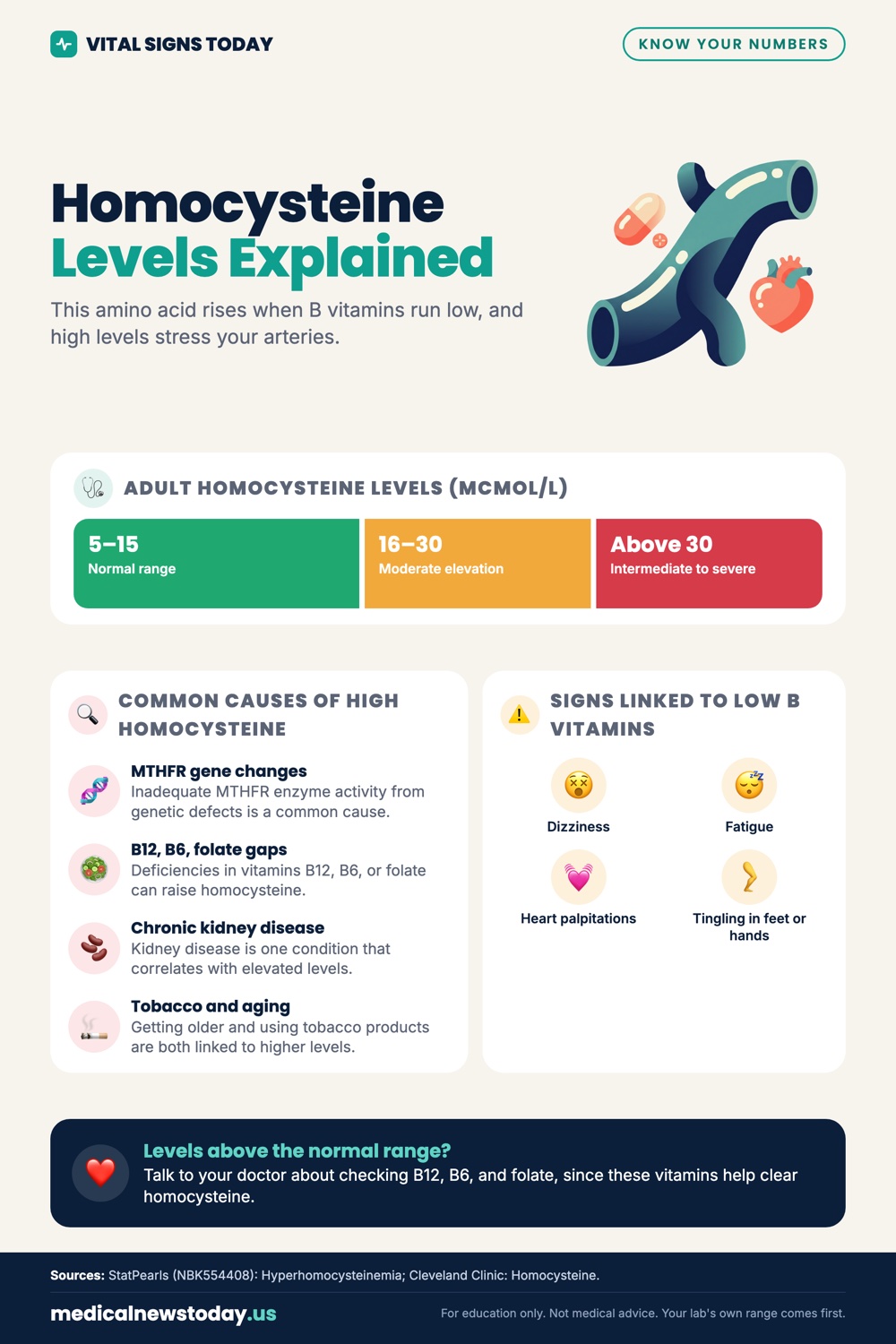
Most commercial labs flag results above 15 mcmol/L as elevated, but that threshold was set for a general population, not for cardiovascular risk optimization. Here is how the ranges break down clinically:
| Level (mcmol/L) | Category | Clinical Interpretation |
|---|---|---|
| Below 10 | Optimal (functional target) | Low cardiovascular and neurocognitive risk; B-vitamin status likely adequate |
| 10 to 15 | Borderline / Normal by lab reference | Within standard range but associated with modest increased risk in some studies; warrants a look at B12 and folate |
| 15 to 30 | Moderate hyperhomocysteinemia | Clearly elevated; meaningful increase in coronary artery disease and stroke risk; B-vitamin supplementation typically indicated |
| 30 to 100 | Intermediate hyperhomocysteinemia | Often involves genetic factors (MTHFR compound heterozygous) or renal impairment; requires full workup |
| Above 100 | Severe (homocystinuria) | Rare inherited enzyme defect; presents with early vascular disease, lens dislocation, bone problems; requires metabolic specialist |
Want to check your homocysteine?
Three ways to get it measured. Pick whichever fits you.
Affiliate links: we may earn a commission at no extra cost to you. A lab test does not replace a visit with your clinician.
One thing most patients do not realize: the lab reference range printed on your report does not distinguish sex or age, but homocysteine naturally runs higher in men than women (by roughly 1 to 2 mcmol/L) and rises with age independently of diet. A 65-year-old man at 13 mcmol/L and a 35-year-old woman at 13 mcmol/L are not at identical risk, even though both fall inside the normal band on paper.
How Much Does a Single Homocysteine Reading Move?
Homocysteine is more stable day to day than a marker like hs-CRP, but it is not fixed. Recent diet, a methionine-heavy meal before the draw, changes in kidney function, and starting or stopping a B-vitamin supplement all shift it. Because of that, a borderline result is worth confirming rather than acting on immediately, and any retest to judge treatment response should use the same conditions each time: ideally a morning fasted draw, processed promptly. Comparing a fasted baseline against a non-fasted follow-up is one of the more common ways people talk themselves into believing a supplement did or did not work when the real difference was the meal beforehand.
High Homocysteine Causes: What Is Actually Driving Your Number
The vast majority of elevated homocysteine results trace back to B-vitamin insufficiency, but the specific vitamin involved changes the clinical picture considerably.
B12 and Folate Deficiency
Low B12 and folate are the two most common drivers of elevated homocysteine in the US adult population. Both vitamins feed into the remethylation pathway where homocysteine is converted back to methionine. Without adequate 5-methyltetrahydrofolate (the active form of folate) and methylcobalamin (active B12), that conversion stalls. Vegans and vegetarians are disproportionately affected because B12 is found almost exclusively in animal products. Absorption problems from atrophic gastritis, proton pump inhibitor use, or post-bariatric anatomy can also deplete B12 even in people eating plenty of it.
MTHFR Gene Variants
MTHFR encodes an enzyme that converts dietary folate into the methylated form the body can use. Two common variants, C677T and A1298C, reduce enzyme activity by 30 to 70 percent. Compound heterozygosity (one copy of each variant) has a stronger effect on homocysteine than either alone. About 10 to 15 percent of the US population carries at least one C677T variant. The clinical significance is debated, but in practice many people with borderline-to-moderately elevated homocysteine have an MTHFR variant as an underlying contributor.
Renal Insufficiency
The kidneys play a significant role in clearing homocysteine, and chronic kidney disease consistently raises levels independent of B-vitamin status. Any patient with elevated homocysteine and a concurrent rise in creatinine or a low eGFR should have both managed in parallel.
Other Contributing Factors
- Hypothyroidism (TSH elevation slows homocysteine metabolism)
- High dietary methionine without adequate B-vitamin support (very high red-meat diets)
- Certain medications: methotrexate, phenytoin, colestipol, niacin at high doses, and some oral contraceptives
- Heavy alcohol consumption (disrupts folate absorption and metabolism)
- Smoking (mechanism not fully characterized but consistently elevates levels)
Homocysteine, Stroke, and Cardiovascular Risk: What the Evidence Actually Shows
The relationship between homocysteine and stroke is one of the more evidence-rich associations in the cardiovascular biomarker space. A meta-analysis of prospective cohort studies found that a 5 mcmol/L increase in homocysteine was associated with roughly a 59 percent increase in stroke risk and a 32 percent increase in coronary artery disease risk, after adjusting for other risk factors. These are observational numbers, not treatment trial outcomes, and the distinction matters.
The treatment picture is more complicated. Several large trials (HOPE-2, VISP, NORVIT) gave high-dose B vitamins to patients with established cardiovascular disease and found that lowering homocysteine with supplements did not reduce major cardiac events or stroke recurrence in that population. This disappointed many researchers expecting a clean benefit. The current interpretation is that chronic exposure to elevated homocysteine causes damage that is not reversed simply by normalizing the number in someone who already has disease. The prevention argument, testing and addressing elevated homocysteine before clinical events occur, remains plausible and is why cardiovascular prevention guidelines still include it in risk calculators even without a proven treatment-trial win.
For cognitive health, the picture is more encouraging on the treatment side. The VITACOG trial found that high-dose B vitamins in older adults with mild cognitive impairment and elevated homocysteine significantly slowed brain atrophy, particularly in those with adequate omega-3 levels. Homocysteine is thought to promote neurodegeneration through excitotoxicity and oxidative DNA damage, mechanisms that differ from the vascular pathway.
Homocysteine and B12 and Folate: Ordering the Right Follow-Up Tests
A homocysteine result above 12 mcmol/L without a known cause warrants at minimum a serum B12 and a folate level. If those come back normal, the next step is methylmalonic acid (MMA), which is a more sensitive marker for functional B12 deficiency than serum B12 alone. A high MMA with normal serum B12 indicates that B12 is present in the blood but not being used properly at the cellular level.
The sequence matters clinically. Folate supplementation without correcting B12 deficiency can mask a low B12 on a complete blood count (by fixing the macrocytic anemia) while neurological damage from B12 deficiency continues silently. That is a well-documented clinical pitfall. Always test B12 before high-dose folate supplementation if you do not know your B12 status.
To make this concrete, take a 58-year-old vegetarian woman with a family history of stroke and no symptoms. Her lipid panel looks fine, but her homocysteine comes back at 18 mcmol/L, clearly above the reference range. The mistake would be to reach straight for a high-dose B-complex. The better sequence is to order serum B12, folate, and, because she is vegetarian, methylmalonic acid, since her diet makes functional B12 deficiency the most likely single driver. Her B12 lands low-normal at the bottom of the range, but her MMA is elevated, confirming B12 is not being used well at the cellular level despite looking adequate on the standard test. She starts methylcobalamin along with methylfolate, and a retest at ten weeks shows homocysteine down to 11 mcmol/L. The number moved because the underlying deficiency was found first, not because a supplement was thrown at a lab value.
Now compare a 62-year-old man with well-controlled cholesterol on a statin whose homocysteine sits at 14 mcmol/L. His B12 and folate are both solidly normal. Here the more useful next questions are kidney function and thyroid, both of which raise homocysteine independent of B vitamins, and whether an MTHFR variant is quietly contributing. His eGFR turns out to be mildly reduced. In his case the homocysteine is partly a kidney signal, and hammering it with more B vitamins would miss the real story. Same number, two very different workups, decided entirely by context.
If you are assembling a full metabolic picture, homocysteine fits logically alongside an albumin test (overall nutritional status) and markers of hepatic methylation capacity. When someone is tracking multiple nutrient-dependent biomarkers, a single comprehensive draw is usually more practical than ordering them one at a time. If you are getting blood drawn anyway, it is often smarter to capture a full baseline at once. Here is how a full-body panel compares.
How to Lower Homocysteine: Evidence-Based Strategies
Homocysteine is among the more actionable biomarkers in metabolic medicine because supplementing the rate-limiting B vitamins produces measurable, dose-dependent reductions in most people within four to eight weeks.
B-Vitamin Supplementation
The combination of folate (400 to 800 mcg of the methylated form, 5-MTHF, is preferred over folic acid for anyone with MTHFR variants), methylcobalamin B12 (500 to 1000 mcg), and pyridoxine B6 (10 to 50 mg) lowers homocysteine by an average of 25 percent in people with nutritional deficiency. Using the active, methylated forms bypasses the enzymatic steps that MTHFR variants impair. Standard cyanocobalamin B12 and plain folic acid still work for most people without conversion enzyme issues, but switching to methylated forms is low-risk and often more effective for those who do not respond to conventional supplements.
Dietary Adjustments
Increasing dietary folate through leafy greens, legumes, and fortified foods helps, but food folate alone is unlikely to normalize homocysteine in someone with significant elevation or an MTHFR variant. Moderating very high meat intake (which loads the methionine cycle) is reasonable but rarely sufficient as the sole intervention.
Addressing Cofactors
Riboflavin (B2) is a cofactor for MTHFR activity and is sometimes overlooked. In people with the C677T variant, riboflavin supplementation at 1.6 mg per day has been shown to lower homocysteine independently. Trimethylglycine (betaine) is another methyl donor used in clinical protocols, particularly when folate and B12 alone do not achieve target levels.
Lifestyle
Stopping smoking, reducing alcohol, and treating hypothyroidism when present all produce secondary reductions in homocysteine. Regular aerobic exercise has a modest independent lowering effect, likely through improved renal clearance and reduced oxidative stress.
Homocysteine Test Cost: What You Should Expect to Pay in 2026
Cash pricing for a homocysteine test in the US ranges from $29 to $90 depending on the ordering channel.
| Ordering Channel | Approximate Cash Price | Notes |
|---|---|---|
| Quest Diagnostics (direct patient portal) | $29 to $50 | Order online, draw at any Quest PSC; results in 1 to 2 days |
| Labcorp (Labcorp OnDemand) | $35 to $55 | Similar self-pay model; nationwide draw sites |
| Everly Health / Ulta Lab Tests | $30 to $65 | Third-party ordering services that use Quest or Labcorp labs |
| Primary care with insurance | $0 to $40 copay | Coverage varies; not on standard preventive panels for healthy adults |
| Comprehensive baseline panel (e.g., Superpower) | $200 to $400 for 100+ markers | Homocysteine included with dozens of other markers in one draw |
HSA and FSA funds can be used for clinical laboratory tests ordered by or through a licensed clinician. Most direct-patient ordering services qualify because they involve physician oversight (typically a telemedicine physician review). Worth confirming with your plan administrator before assuming coverage.
Medicare covers homocysteine testing when ordered as part of a workup for B12 deficiency, cardiovascular risk, or documented cognitive decline. It is not covered as routine preventive screening in otherwise healthy beneficiaries under standard Medicare Part B rules.
Who Should Get a Homocysteine Test
Not everyone needs this test, but several groups have a clear reason to run it. A clinician can help you interpret results in context of your full history.
- Family history of early heart disease or stroke: Adds a non-lipid risk dimension that standard cholesterol panels miss.
- Vegans and long-term vegetarians: B12 deficiency is common and often asymptomatic until homocysteine is already elevated.
- Adults over 60 with cognitive concerns: Elevated homocysteine is one of the few modifiable risk factors for accelerated brain aging with a plausible treatment strategy.
- Anyone on methotrexate, phenytoin, or prolonged PPI therapy: These medications reliably push homocysteine up.
- Known MTHFR variant carriers: Confirms whether the variant is actually driving an elevation, since many C677T carriers have normal levels on a good diet.
- Post-bariatric surgery patients: Micronutrient malabsorption makes B12 and folate deficiency common even with supplementation.
For anyone building out a preventive health picture, homocysteine is one of the best biomarkers to test for a comprehensive baseline, especially when combined with a lipid panel, inflammatory markers, and metabolic markers. An adiponectin test and an alkaline phosphatase test round out the picture of vascular and hepatic health that cardiovascular risk screening can miss.
How the Test Is Performed: Fasting, Timing, and Specimen Handling
Homocysteine testing requires a standard blood draw, typically from a vein in the arm. The specimen is collected into an EDTA (purple-top) tube. Here is what most patients do not know about specimen handling: homocysteine continues to rise after the blood is drawn if the sample sits at room temperature, because red blood cells continue to release homocysteine from intracellular stores. Labs address this by spinning the sample immediately and separating plasma, but if your draw site has delayed processing, results can be falsely elevated by 1 to 2 mcmol/L. This is rarely an issue at Quest or Labcorp service centers, but it is worth knowing if you use a less streamlined draw site.
Fasting is not strictly required the way it is for a lipid panel or glucose, but most protocols recommend a 4-hour fast, because a large methionine-rich meal can temporarily raise homocysteine for several hours post-absorption. Fasting overnight (8 to 12 hours) is the cleanest option if you want a baseline result that is easy to compare across future draws.
FAQ
What is a normal homocysteine level?
Most US labs use a reference range of 5 to 15 mcmol/L. Clinicians focused on cardiovascular prevention often target below 10 mcmol/L as an optimal level. Values consistently above 15 are considered elevated and warrant follow-up with B12, folate, and methylmalonic acid testing. Men naturally run slightly higher than women at the same age.
Can a homocysteine test diagnose a heart attack or stroke?
No. A homocysteine test is a risk marker, not a diagnostic test for an acute event. Elevated levels indicate a higher background probability of future cardiovascular events but do not diagnose existing blockage or assess acute injury. Troponin and ECG are the tools for acute cardiac diagnosis; homocysteine belongs in the risk stratification and prevention conversation.
How quickly does homocysteine respond to B-vitamin supplementation?
Most people with nutritional-deficiency-driven elevation see meaningful reductions within four to eight weeks of consistent supplementation. Studies using folate plus B12 plus B6 typically show 20 to 30 percent reductions within that window. Genetic causes (MTHFR compound heterozygous) or renal impairment respond more slowly and incompletely. Retesting at eight to twelve weeks is a reasonable interval to assess response.
Is the homocysteine test the same as an MTHFR test?
No, they test different things. The homocysteine blood test measures the amino acid directly in your plasma. The MTHFR test is a genetic test that looks for specific DNA variants in the MTHFR gene. Many people with MTHFR variants have normal homocysteine levels because their diet compensates. Running homocysteine first is the more clinically useful starting point; MTHFR testing adds context if the number is elevated and B vitamins alone do not normalize it.
Should I be tested if I already eat a healthy diet?
Dietary quality does not guarantee normal homocysteine, because absorption, genetic variation, medications, and kidney function all affect the result independently. Someone eating plenty of leafy greens and taking a B-complex can still have elevated homocysteine from B12 malabsorption or a compound MTHFR variant. If you have cardiovascular risk factors or a family history of early disease, testing is worth doing regardless of how well you eat.
Does elevated homocysteine mean I will get dementia?
Elevated homocysteine is associated with a higher risk of cognitive decline and brain atrophy, but it does not predict dementia with certainty in any individual. The VITACOG trial showed that the combination of high homocysteine AND low omega-3s appears to accelerate brain volume loss more than either factor alone. Correcting a clearly elevated level is a reasonable preventive action, but it is one piece of a larger picture that includes blood pressure, sleep, physical activity, and glucose metabolism. Talk to a clinician about interpreting your result in context.
Can homocysteine be too low?
Values below 5 mcmol/L are uncommon and generally not considered clinically significant. Very low homocysteine does not carry the same disease associations as elevated levels. Some research suggests extremely low homocysteine may reflect a very low methionine intake or certain metabolic conditions, but this is rarely a clinical concern in practice.
What foods are highest in the folate and B12 that lower homocysteine?
Folate is concentrated in leafy greens, legumes, asparagus, and fortified grains, while B12 comes almost entirely from animal foods: meat, fish, eggs, and dairy. This split is exactly why long-term vegetarians and vegans are the group most prone to elevated homocysteine, since a plant-heavy diet can be rich in folate yet short on B12. Food alone often fails to normalize a clearly elevated level, especially with an MTHFR variant or an absorption problem, which is where targeted supplementation comes in.
Can I take too much B vitamins trying to lower homocysteine?
The B vitamins used here are water soluble and generally well tolerated, but more is not automatically better. High-dose B6 taken for long periods can cause peripheral nerve symptoms, and correcting folate without checking B12 first can mask an ongoing B12 deficiency while nerve damage continues silently. The safe approach is to identify which vitamin is actually short, dose to correct that one, and retest, rather than taking large amounts of everything indefinitely.
Does insurance cover a homocysteine test ordered by my doctor?
Coverage depends on the indication. Insurance is most likely to cover it when ordered as part of a workup for B12 deficiency, unexplained macrocytic anemia, suspected cardiovascular risk, or cognitive decline evaluation. It is typically not covered as routine preventive screening in healthy adults without documented risk factors. Cash pricing through direct lab services ($29 to $55) is often cheaper than pursuing insurance coverage for a single low-cost test.