Quick answer: If you want to know how to find a functional medicine doctor, start with the Institute for Functional Medicine’s (IFM) practitioner locator at ifm.org, filter for “IFMCP” (certified practitioners), and verify the clinician also holds an active MD, DO, ND, or PA license in your state. Telehealth practices such as Parsley Health, Wild Health, and Root Cause Medical Clinic serve all 50 states and are often faster and cheaper than local in-person offices. If cost is the sticking point, ordering a comprehensive baseline lab panel first, reviewing those numbers, and then bringing the data to a first appointment compresses the discovery phase and saves you one or two expensive intake visits.
What "functional medicine" actually means and why it matters for your search
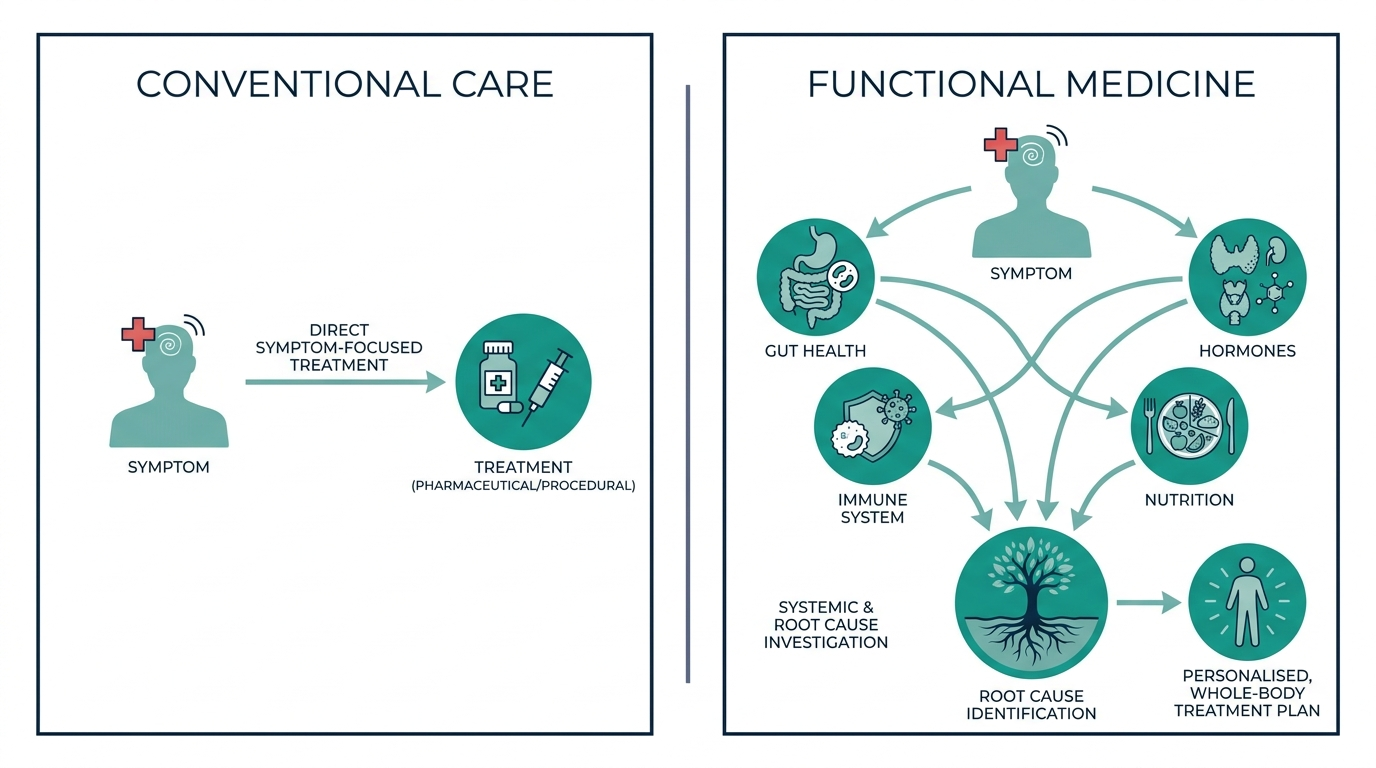
Functional medicine is a systems-biology approach that tries to find the underlying driver of a symptom rather than simply suppressing the symptom with a drug. A functional medicine doctor asks why your TSH is creeping up instead of just prescribing levothyroxine; she orders a full thyroid panel (TSH, Free T3, Free T4, reverse T3, TPO antibodies) instead of TSH alone. That distinction changes everything about how you vet a practitioner.
Before you book a functional medicine visit, see what a 100+ biomarker panel with physician review can tell you on its own. One at-home Superpower draw checks 100+ biomarkers, physician-reviewed.
The term is not federally protected. Any MD can call herself a functional medicine doctor after attending a weekend seminar. The credential that actually means something is the IFMCP (Institute for Functional Medicine Certified Practitioner), which requires completing the IFM Applied Clinical Training program, passing a written exam, and submitting a case audit. As of 2026, roughly 2,800 practitioners worldwide hold the IFMCP. That is a small pool, which is why telehealth options matter so much.
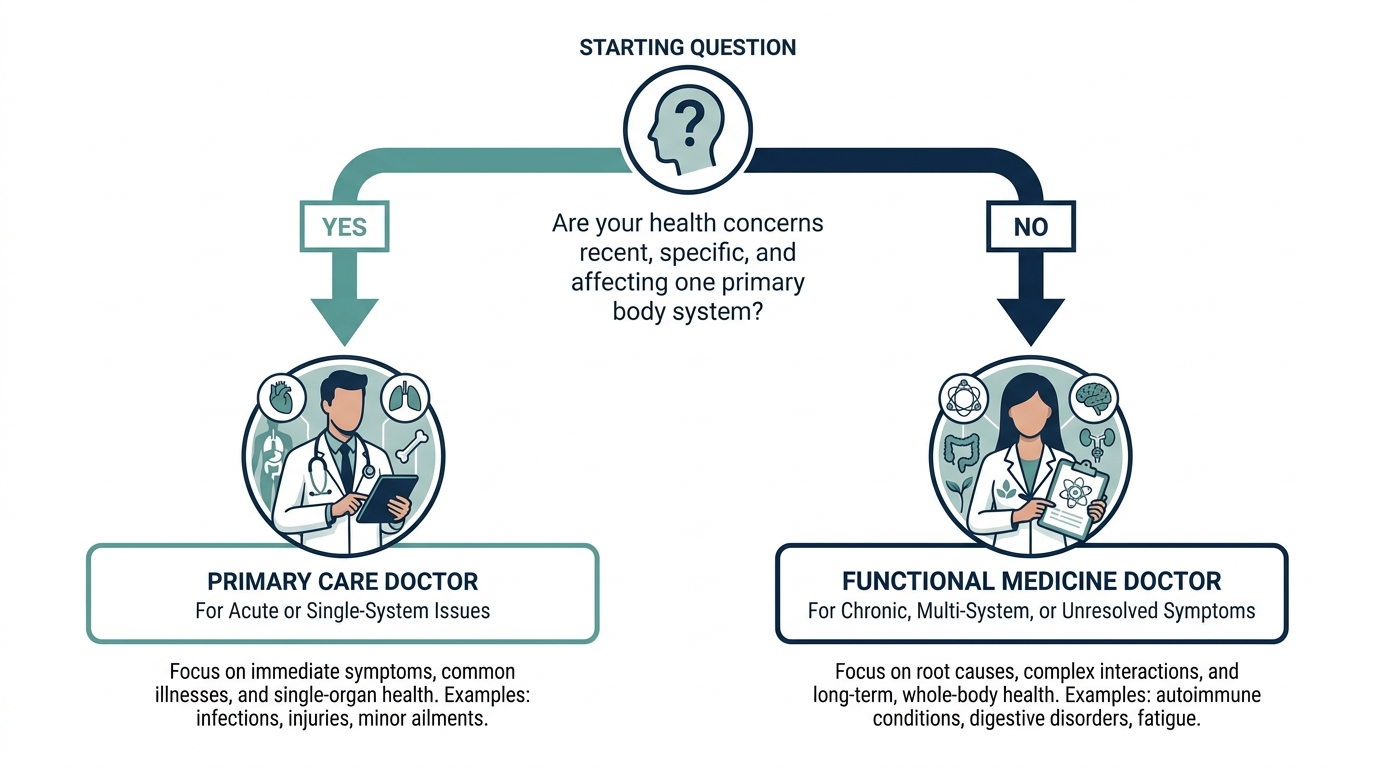
If you are still deciding whether this type of care is right for you, read our deep dive on do you need a functional medicine doctor before you start calling offices.
The IFM locator: the only starting point worth using
Go to ifm.org/find-a-practitioner and use the filter options. Here is what to look for and why each filter matters:
- Certification level: IFMCP. This filters out practitioners who took one IFM course but never completed full training. Unfiltered results show anyone who attended a single seminar.
- Credential type: MD, DO, ND, PA, NP. All can be excellent. MDs and DOs can prescribe across all 50 states without restriction. NPs and PAs can prescribe in most states but scope laws vary. NDs (naturopathic doctors) can prescribe in roughly 20 states.
- Distance radius. Start at 50 miles; if no IFMCP results appear, expand to 100 miles. If still sparse, switch to telehealth (more on that below).
- Specialty focus. IFM lists sub-focuses such as cardiometabolic health, autoimmune, hormones, and GI. Match to your primary concern.
Once you have a shortlist, cross-reference each name on your state medical board website to confirm the license is active and unencumbered. This takes two minutes and catches practitioners whose license lapsed or carries a disciplinary note.
Here is how this plays out in practice. A reader in a mid-sized metro filters ifm.org to IFMCP within 50 miles and gets four names. Two turn out to have lapsed certifications when she checks the state board, one is booked into next quarter, and the fourth wants $650 for the intake before she can even ask a question. That is not unusual. The IFMCP pool is small enough that in most of the country you will run out of local, available, appropriately credentialed options quickly. Knowing that in advance is why the telehealth and lab-first routes below exist, and why treating the locator as a shortlist rather than a guarantee saves you weeks of dead-end phone calls.
How to vet a functional medicine practitioner before you pay anything
Most functional medicine practices charge a non-refundable intake fee ranging from $300 to $800 for the initial 60 to 90-minute visit. Vetting before you pay is essential. Here is a practical checklist:
| Vetting factor | Green flag | Red flag |
|---|---|---|
| Credential | IFMCP or board-certified integrative MD (ABOIM) | "Certified holistic practitioner" with no licensure |
| Lab ordering | Orders through Quest, Labcorp, or DUTCH; gives you the raw data | Sells proprietary test kits at 3x retail markup as a revenue stream |
| Transparency on cost | Quotes total year-one cost including labs, follow-ups, supplements | Refuses to discuss fees until after the intake visit |
| Supplement sales | Recommends specific products but does not require purchase from the practice | High-margin supplement dispensary is the main business model |
| Scope of practice | Clear about when to refer to a specialist or ER | Claims to treat everything including cancer and autoimmune disease without specialist involvement |
| Follow-up structure | Defined follow-up visits at 4, 8, and 12 weeks with outcome tracking | Open-ended: "we will check in when you feel ready" |
| Insurance or billing | Provides superbill for HSA/FSA reimbursement even if out-of-network | Cash only, no paperwork offered |
Call the office and ask these three questions before booking: What is the total estimated cost for the first year of care? Do you accept HSA/FSA? Can I see the results of my own labs in a patient portal? Any hesitation on the third question is disqualifying.
Before you spend $500 on an intake, it is worth knowing what a functional medicine lab panel actually costs so you can assess whether the practice’s lab fees are reasonable or inflated.
Telehealth functional medicine: the fastest path for most people
Telehealth functional medicine has matured significantly since 2022. The three platforms most commonly recommended by clinicians in this space are:
- Parsley Health ($150 to $175/month membership): MD and NP-led, nationwide, includes unlimited messaging and quarterly labs. Best for people who want a primary-care-style relationship with a functional medicine lens.
- Wild Health ($99 to $299/month depending on tier): genomics-integrated care, strong cardiometabolic focus. Physicians order your genome once and incorporate it into every future recommendation.
- Root Cause Medical Clinic (fee-for-service, $400 to $600 initial): intensive intake, heavy nutrition focus, strong GI and hormones reputation. Works synchronously over video.
All three handle prescription refills, order Quest and Labcorp draws at your local service center, and provide superbills. The practical advantage of telehealth over finding a local functional health doctor near you is wait time: local IFMCP offices often have 8 to 14 week wait lists. Parsley typically books within two weeks.
One underrated option: several large hospital systems now have integrative medicine departments staffed by ABOIM-certified MDs who accept major insurance. Cleveland Clinic, Mayo Clinic, and UCSF Osher Center all have telehealth options. Insurance coverage is not guaranteed but partial coverage is common.
Choosing between the three comes down to what problem you are actually solving. Pick Parsley if you want an ongoing primary-care relationship with unlimited messaging between visits. Pick Wild Health if your concern is cardiometabolic and you want your genetics baked into every recommendation, since that one-time genome keeps paying off over years. Pick Root Cause if you have a stubborn GI or hormone issue and want an intensive, nutrition-heavy workup rather than a monthly membership. If you are mostly after a clean baseline and clear labs, none of the three is strictly necessary, which is exactly the point of the lab-first sequence in the next section.
When you do not actually need a functional medicine doctor first
This is the section most practitioners will not tell you: for a significant subset of patients, the first appointment with a functional medicine doctor is spent reviewing labs that could have been ordered six weeks earlier. That appointment costs $300 to $800 and teaches you nothing the labs would not have already told you.
A smarter sequence for anyone who is healthy but wants a comprehensive baseline, or who has vague symptoms and wants to know what to bring to a doctor:
- Order a comprehensive panel that covers at minimum: CBC with differential, CMP, lipid panel with ApoB, HbA1c, fasting insulin, full thyroid (TSH, Free T3, Free T4, TPO Ab), ferritin, vitamin D (25-OH), magnesium RBC, homocysteine, hsCRP, uric acid, and sex hormones (testosterone total and free, SHBG, DHEA-S, estradiol).
- Review the results against optimal ranges, not just the lab reference ranges (which are based on a diseased population average, not healthy people). For instance, a fasting insulin of 9 uIU/mL is within the lab reference range of 2.6 to 24.9 but is already a signal worth addressing; most functional clinicians target below 6.
- Bring the raw numbers to your first functional medicine appointment. You have now compressed two intake visits into one because the practitioner is not starting blind.
not starting blind.
Reading your own labs against optimal ranges
The reason a lab-first approach works is that most of the interpretive value lives in a handful of markers you can read yourself with a little context. Vitamin D is the clearest example: the lab flags you only below 20 or 30 ng/mL, but the range most functional clinicians aim for is 50 to 80 ng/mL, so a result of 32 that prints as normal is often worth addressing. HbA1c behaves the same way. Anything under 5.7 percent is officially non-diabetic, yet a 5.5 already signals glucose drifting upward, and pairing it with fasting insulin tells you whether your body is quietly working harder to hold that line. Ferritin below 30 ng/mL routinely causes fatigue and hair loss in women whose hemoglobin is perfectly normal, so a ferritin of 22 explains a lot that a standard CBC never surfaces. None of this requires a $600 visit to notice. It requires the numbers in front of you and the optimal ranges sitting beside them.
The caveat that keeps this honest: labs differ. Two reference intervals for the same marker at Quest and Labcorp can disagree by a few points because they validate against different local populations and analyzers, so treat any single value near a cutoff as a prompt to retest rather than a verdict. A trend across two or three draws beats any one number, which is another argument for building a baseline early and repeating it rather than reading a lone snapshot.
The simplest way to actually get this done
Superpower is a full-body lab membership that runs 100+ biomarkers, has each result reviewed by a doctor, and tracks your numbers year over year (about $199/year). It is what we point readers to when they would rather get one clean, complete draw than chase single tests one at a time. Here is superpower blood test review reviewed in full.
This approach works especially well if you are uninsured or your insurance does not cover functional medicine. You get objective data without paying a practitioner markup on labs. Read our functional medicine testing at home guide for DIY lab ordering options that do not require a practitioner order in most states.
How much a functional medicine doctor costs and what insurance covers
The cost structure of functional medicine care is genuinely confusing. Here is how the money actually flows:
| Cost component | Typical range (2026) | Insurance note |
|---|---|---|
| Initial intake visit (60-90 min) | $300 to $800 | Usually out-of-network; some PPO plans reimburse 40-60% |
| Follow-up visits (30-45 min) | $150 to $350 each | Same as above |
| Baseline lab panel (Quest/Labcorp) | $200 to $600 cash, $0 to $150 with insurance | Standard labs (CBC, CMP, lipids, thyroid) almost always covered; advanced markers (ApoB, Lp(a), DUTCH hormone panel) often not |
| Specialty testing (GI-MAP, DUTCH, organic acids) | $200 to $500 per test | Rarely covered; pay out of pocket |
| Supplements (if recommended) | $50 to $300/month | Not covered; some HSA-eligible |
| Telehealth membership (Parsley, Wild Health) | $100 to $300/month | Not covered as membership; individual visits may qualify for FSA reimbursement |
Year-one total cost for a typical functional medicine patient: $2,500 to $6,000. This is the number most practices will not quote upfront. Ask for it explicitly.
Medicare covers functional medicine visits when billed under standard E&M codes by a licensed MD or DO, but does not cover the extensive specialty testing. Medicare Advantage plans vary; call member services and ask specifically about "integrative medicine" or "lifestyle medicine" benefits, because some plans now include them.
HSA and FSA funds can pay for consultations with licensed practitioners and most standard lab work. They cannot pay for supplements, membership fees framed as wellness programs, or non-clinical coaching.
Functional medicine online: what to expect from a remote-only practice
Online functional medicine works differently than you might expect. The visit itself is video; labs are drawn at your nearest Quest or Labcorp service center (there are over 6,000 Quest locations in the US, so "near me" is almost always within 10 miles). The practitioner sends an electronic order, you walk in without an appointment at most locations, and results go directly to both you and the clinician through a shared portal.
What you cannot get fully remotely: physical examination findings. A functional medicine doctor who sees you in person might notice a goiter, check tendon reflexes for thyroid signs, or palpate lymph nodes. Good telehealth practitioners compensate by ordering more comprehensive lab panels and asking detailed intake questionnaires. But if your symptoms include unexplained lumps, neurological changes, or anything that could require imaging, telehealth is a starting point, not a full replacement for an in-person exam.
For a comparison of specific full-body panels available without a practitioner order, see our function health review, which covers a service that bundles physician interpretation directly into the lab membership.
What people get wrong when choosing a functional health practitioner
The most common mistake: choosing a practitioner based on testimonials and Instagram presence rather than credentials and scope. Functional medicine attracts a disproportionate share of wellness influencers who completed a six-week online certification and now sell $450/hour consultations. The credential check described above (IFMCP at ifm.org, state license verification) takes ten minutes and eliminates these practitioners entirely.
The second common mistake is not asking about the exit strategy. Functional medicine is supposed to be time-limited for most conditions: you identify the root cause, implement the intervention, retest in 90 days, and graduate to maintenance. If a practice has no defined endpoint and bills indefinitely, that is a business model, not a care model.
Third mistake: ignoring specialty. A practitioner who is excellent at autoimmune and Hashimoto’s may have limited depth in cardiometabolic optimization or sports performance. IFM practitioners list their focus areas on the locator. Match the specialty to your primary concern rather than defaulting to whoever is geographically closest.
Fourth: not checking whether the practitioner can actually prescribe. In states where NDs cannot prescribe, you may need a separate prescribing clinician for thyroid hormones, low-dose naltrexone, or HRT if those become indicated. Know this before committing to a year of care.
Fifth: paying for the intake before doing any homework. The most expensive version of functional medicine is the one where you walk in with no prior labs, spend the first and priciest visit ordering tests you could have ordered yourself, then pay again to review them. Anyone who runs a baseline panel first and reads it against optimal ranges arrives at that first appointment with a trend line and specific questions, which is the difference between a $650 discovery session and a $650 treatment-planning session.
Preparing for your first functional medicine appointment
A well-prepared patient gets dramatically more value from the first visit. Here is what to assemble before you show up or log in:
- Five years of lab results if available. Even a single old TSH or lipid panel gives the clinician a trend line. Request records from your primary care doctor; practices are legally required to provide them within 30 days, often sooner electronically.
- Symptom timeline. Write down when each symptom started, what was happening in your life at that time (major stressor, medication change, dietary shift, pregnancy), and what you have already tried. A timeline is worth more than a symptom list.
- Current medications and supplements with doses. Include everything: OTC, herbal, and hormonal contraceptives. Several common supplements interfere with lab interpretation (biotin above 5mg skews thyroid and cardiac troponin; zinc above 50mg daily affects copper and immune markers).
- Family history, at minimum first-degree relatives. Autoimmune conditions, early cardiovascular disease, diabetes, and cancer clusters change the testing priority list substantially.
- Insurance card and HSA/FSA card. Even out-of-network practices will give you a superbill for submission.
Curious what your own levels look like?
Baseline 100+ biomarkers today and retest as life changes, all in one membership with physician review.
FAQ
How do I find a functional medicine doctor near me who takes insurance?
Use the IFM locator filtered to IFMCP and call each practice to ask whether they bill any insurance plans. Practices affiliated with hospital systems (Cleveland Clinic, Scripps, UCSF) are the most likely to accept major insurance. When a practice is out-of-network, ask for a superbill so your PPO plan can reimburse a portion. Pure cash-only practices rarely work with insurance at all.
Is telehealth functional medicine as good as in-person?
For the majority of functional medicine use cases, including thyroid optimization, metabolic health, hormones, fatigue, and preventive baseline care, telehealth is clinically equivalent. The limitation is physical examination. If your complaint involves something a clinician needs to feel or observe directly, in-person is better for the initial assessment even if follow-ups move to telehealth.
What is the difference between a functional medicine doctor and a naturopathic doctor?
A functional medicine doctor can hold any clinical degree (MD, DO, NP, PA, ND) and has completed IFM training on top of it. A naturopathic doctor (ND) is a distinct profession trained in 4-year accredited ND programs with a philosophy that overlaps heavily with functional medicine but is not identical. Some NDs also complete IFM training and hold the IFMCP. Prescribing authority for NDs varies by state; MDs and DOs can prescribe without restriction anywhere in the US.
How much does a functional medicine doctor cost per year?
Budget $2,500 to $6,000 for year one including visits, labs, and recommended supplements. Telehealth memberships compress this: Parsley Health at $175/month is $2,100 annually and includes labs and visits. Year two is typically cheaper because you are not starting from scratch; expect $800 to $2,500 for maintenance visits and annual re-testing.
Can I do functional medicine testing without a doctor first?
Yes, in most US states. Direct-to-consumer lab services (Quest’s QuestDirect, Walk-In Lab, and similar) let you order most standard panels without a prescription. Some advanced tests (DUTCH hormone, GI-MAP, organic acids) require a clinician order in certain states. A full-body membership service reviews results with you and flags clinically relevant findings, which is a middle path between fully solo and full practitioner care.
What credentials should a functional medicine practitioner have?
At minimum: an active state license in a clinical profession (MD, DO, ND, NP, PA) plus either the IFMCP credential or board certification in integrative medicine (ABOIM or ABIHM). The IFMCP is the most rigorous functional-medicine-specific credential. Anything below that level, such as a "certified functional nutrition counselor" or "functional medicine health coach," is a health coaching designation, not a clinical credential, and those practitioners cannot order labs or prescribe.
How long does functional medicine treatment take to show results?
Most practitioners set a 90-day initial window to see objective lab improvement and symptom change. Some conditions (GI dysbiosis, hormonal optimization) respond within 60 days; others (autoimmune antibody reduction, significant metabolic dysfunction) take 6 to 12 months. If you have seen no objective improvement in labs after 6 months of adherence, the diagnosis or intervention needs revisiting, not just more time.
Does Medicare cover functional medicine?
Medicare Part B covers physician visits billed under standard E&M codes regardless of whether the physician practices functional medicine. It does not cover the specialty labs most functional medicine practices rely on (DUTCH, GI-MAP, organic acids), the supplements, or membership-based telehealth fees. Some Medicare Advantage plans include lifestyle medicine or integrative medicine benefits; call your plan directly and use those exact terms.
Should I get lab work done before seeing a functional medicine doctor?
In most cases yes, if you are healthy but curious or have vague symptoms. A comprehensive baseline panel run before the first visit turns an expensive discovery appointment into a treatment-planning appointment, because the clinician is reading your actual numbers instead of ordering them. The exception is anyone with acute or red-flag symptoms, such as chest pain, unexplained weight loss, or neurological changes, who should see a physician promptly rather than lab-shopping.
What is the difference between a functional medicine doctor and a health coach?
A functional medicine doctor holds a clinical license (MD, DO, NP, PA, ND) and can order labs, interpret them, and prescribe. A functional medicine health coach or nutrition counselor holds a coaching certification, cannot order labs or prescribe, and works on behavior change and adherence. Coaches can be genuinely useful for implementation, but they are not a substitute for a licensed clinician when you need a diagnosis or a prescription. Check which one you are actually paying for before you sign up for a package.