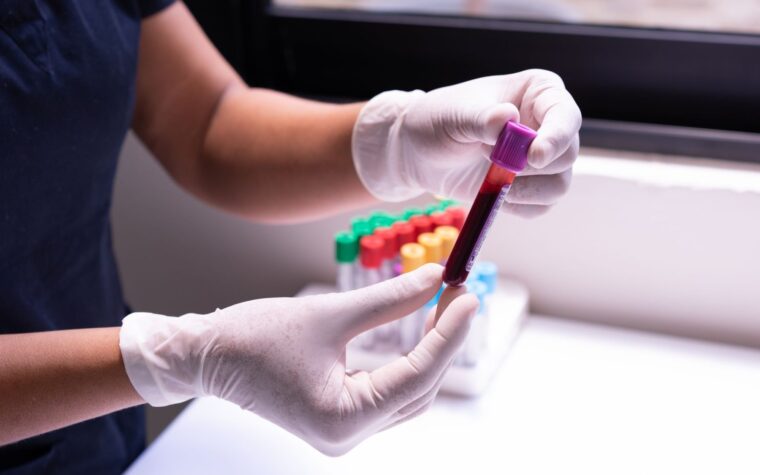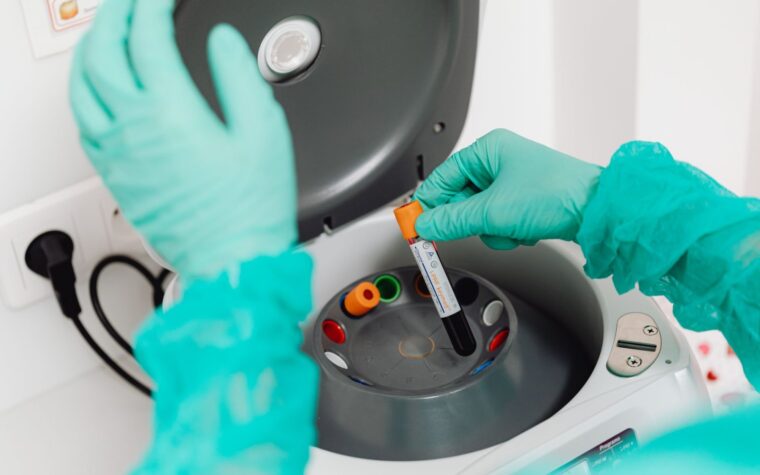
Quick answer: Online lab tests let you order your own bloodwork without a doctor’s referral, pick from a certified draw site near you, and get results in 1 to 3 business days, typically for 40 to 80 percent less than the same tests billed through insurance at a hospital lab. Walk-in labs at retail clinics, urgent care centers, and standalone patient service centers offer a similar self-pay model but with less price transparency and smaller panel options. For most healthy adults who want a routine metabolic, lipid, or hormone panel without involving their insurance, ordering online first and walking in at a Quest or Labcorp draw site is the faster and cheaper path.
What Are Online Lab Tests, Exactly?
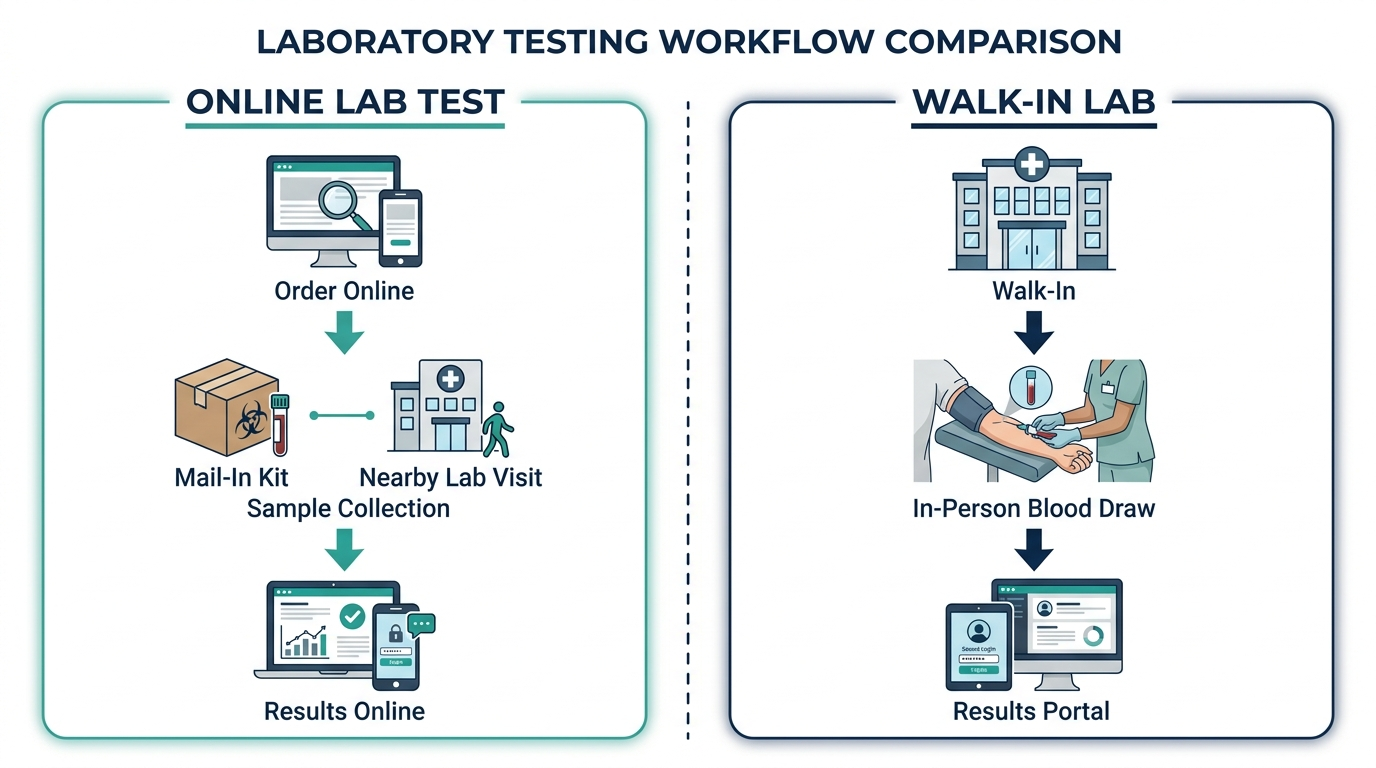
Online lab tests are diagnostic blood, urine, or saliva panels that you order directly from a web portal before setting foot in a lab. You pick the tests you want, pay at checkout, receive a requisition form by email, and then walk into any partnered patient service center (PSC) to have the blood drawn. The major players, including Ulta Lab Tests, Walk-In Lab, Any Lab Test Now, and the direct-ordering portals at Quest and Labcorp, all use CLIA-certified labs, so the methodology and reference ranges are identical to what your physician would order. If you want to learn more about how the whole system works, the guide on ordering your own lab tests online covers the full mechanics.
Weighing online labs against a walk-in clinic? See what a 100+ biomarker membership with physician review adds to the mix. One at-home Superpower draw checks 100+ biomarkers, physician-reviewed.
The key difference from a walk-in model is sequence: online, you pay and order before you arrive; at a walk-in clinic, you show up and decide at the counter. That sequence difference drives almost every cost and convenience gap between the two approaches.
How Do Online Lab Tests Compare to Walk-In Labs on Cost?
Ordering online is almost always cheaper for the same test, often by a meaningful margin. Walk-in pricing at retail kiosks and urgent care labs runs through a different cost structure: higher overhead, less volume, and markup on top of the reference lab’s wholesale fee.
| Test | Online (self-pay portal) | Walk-in urgent care / retail clinic | Hospital outpatient (insured billed) |
|---|---|---|---|
| Basic metabolic panel (BMP) | $14 to $29 | $45 to $120 | $150 to $400 (EOB) |
| Comprehensive metabolic panel (CMP) | $20 to $39 | $60 to $140 | $200 to $500 |
| Lipid panel | $18 to $35 | $40 to $110 | $150 to $350 |
| Thyroid panel (TSH + free T3/T4) | $35 to $75 | $80 to $180 | $250 to $600 |
| Testosterone (total) | $29 to $55 | $70 to $150 | $200 to $450 |
| Full CBC with differential | $15 to $30 | $40 to $100 | $100 to $300 |
The table above reflects 2026 self-pay cash prices, not negotiated insurance rates. The insurance column shows what the lab bills your insurer before any adjustment, which is why your EOB shows a number that looks shocking. Online portals cut that chain entirely. HSA and FSA cards work at checkout for most online portals, which makes the effective cost even lower for employees with a high-deductible health plan.
The pricing question comes up constantly, so if you want a deeper breakdown on one specific service, the how much does superpower cost page walks through what you actually pay per biomarker on a membership model versus a la carte ordering.
Where Can You Actually Walk In and Get Blood Drawn?
Whether you order online or walk in same-day, you are almost certainly going to a Quest Diagnostics or Labcorp patient service center. Those two networks account for the vast majority of CLIA-certified draw locations in the United States: Quest has roughly 2,200 PSCs nationwide, Labcorp has around 1,800. Both accept walk-ins (no appointment) at most locations, though appointment slots consistently have shorter waits.
Other options worth knowing:
- CVS MinuteClinic: Offers a limited menu of panels (lipids, A1c, STI screens) at walk-in pricing. Convenient but panel depth is shallow and prices are higher than ordering through a portal.
- Any Lab Test Now: A franchise chain that operates as a walk-in retail lab. You can order at the counter, no pre-registration needed. Good option in markets without a nearby Quest or Labcorp PSC. Prices sit between online portals and urgent care.
- Urgent care clinics: Most have on-site phlebotomists but send specimens to a reference lab the same way. You pay a facility fee on top of the lab fee. Useful when you want a clinician to review findings the same day.
- Mobile phlebotomy: Services like Getlabs or lab-specific mobile draws send a phlebotomist to your home or office. Adds $30 to $75 in travel fees but removes every trip entirely.

Is It Cheaper to Order Labs Online vs Ordering at the Counter?
Yes, with one main exception: when you are already paying for an urgent care visit for another reason and the clinic bundles a basic panel into the visit charge. Outside of that bundling scenario, ordering through an online portal before you arrive at a Quest or Labcorp PSC consistently beats counter pricing.
Here is the mechanism: online portals buy test capacity from Quest and Labcorp in volume, then pass a portion of that discount to consumers. When you walk up to a Quest PSC counter without a requisition, you are paying Quest’s published retail self-pay rate, which is higher than the rate the portals negotiate. The exact spread varies by test, but a lipid panel that costs $24 through Ulta Lab Tests often runs $59 at the same Quest PSC counter for walk-in pricing. You are using the same lab, the same machine, the same reference ranges, the same results portal. You are paying for the convenience of not pre-ordering, and it costs real money.
One nuance: not every state allows direct-order labs without physician involvement. California, Maryland, New York, New Jersey, and Rhode Island have restrictions that either require a clinician to authorize the order or limit which tests consumers can self-order. Residents of those states may find fewer portal options or need to use a service that includes a physician review step at checkout, which adds a few dollars per order.
What Do Online Labs Test For? Panel Depth Compared
Online portals can order essentially anything a physician can order through the same reference labs, which means the panel menu is enormous. Routine options include complete blood count, metabolic panels, lipid panel, thyroid (TSH, free T3, free T4, reverse T3), hormones (testosterone, estradiol, DHEA-S, cortisol, progesterone), inflammation markers (hsCRP, homocysteine, ferritin), vitamin levels (D, B12, folate, zinc, magnesium), and specialized cardiology panels (ApoB, Lp(a), Lp-PLA2).
Walk-in clinics at retail sites typically run a narrower menu focused on the most common orders: lipids, A1c, STI screens, and basic metabolic work. If you want testosterone plus ApoB plus a comprehensive thyroid panel in a single draw, ordering through a portal where you can build a custom order is far more practical than hunting for an urgent care that even stocks those requisitions.
Panel depth is where full-body membership services pull even further ahead. Services reviewed on the superpower blood test review page run 100+ biomarkers in a single draw, include physician-reviewed interpretation of every result, and track your trends year over year. No walk-in counter can replicate that experience at any price point.
The simplest way to actually get this done
Superpower is a full-body lab membership that runs 100+ biomarkers, has each result reviewed by a doctor, and tracks your numbers year over year (about $199/year). It is what we point readers to when they would rather get one clean, complete draw than chase single tests one at a time. Here is superpower reviewed in full.
How Fast Do You Get Results From Online Lab Tests?
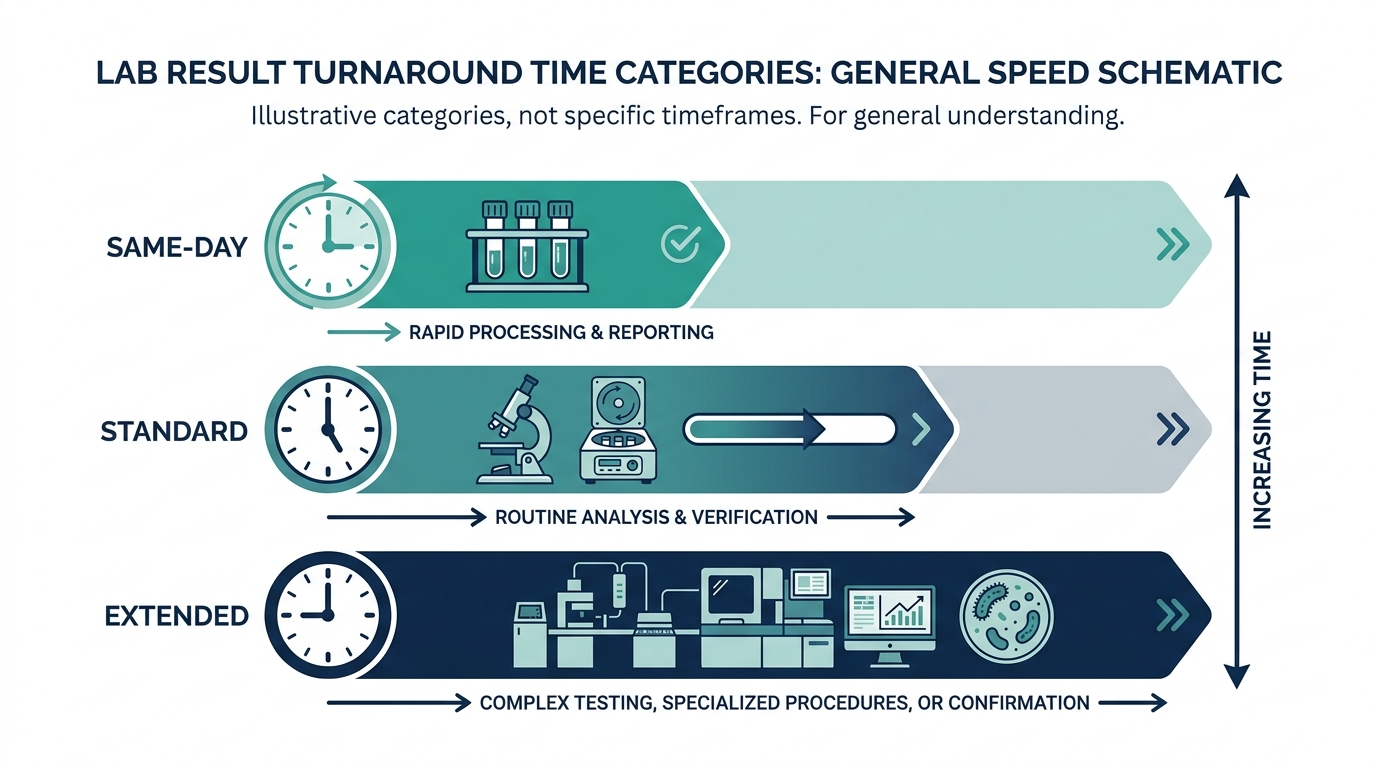
Most online lab tests return results to your patient portal within 1 to 3 business days from the time your specimen is received at the processing lab, not from when you schedule the draw. Routine panels like a CMP, CBC, or lipid panel often post within 24 to 48 hours. Specialty tests with longer assay cycles, like cortisol stimulation tests, reverse T3, or Lp(a), can take 3 to 5 business days.
Walk-in clinics that send to the same Quest or Labcorp reference labs operate on the same turnaround. The difference is the routing: a retail clinic may batch its specimens and ship once daily, adding 12 to 24 hours of pipeline. Clinics with on-site analyzers (most urgent care locations have a basic CLIA-waived analyzer for CBC, glucose, and strep) can give you a result in under an hour, but those are narrow panels on lower-complexity instruments.
If speed on a narrow test matters, an urgent care with on-site analysis wins. For a comprehensive multi-biomarker draw, the turnaround is essentially identical regardless of whether you ordered online or walked in, and you will save money by ordering ahead.
Are Online Lab Tests Legitimate and Accurate?
Yes. Online lab test portals do not run their own labs. They function as ordering intermediaries that route your requisition to CLIA-certified reference laboratories, primarily Quest Diagnostics and Labcorp, both of which are CAP-accredited. The same quality controls, instrument calibrations, and proficiency testing requirements apply whether your doctor ordered the test or you ordered it through a portal. The question of legitimacy gets deeper coverage on the are online lab tests legit page if you want the regulatory framework spelled out.
The one accuracy risk that is real: collection errors at the phlebotomy step. Hemolyzed specimens (from a rough draw or improper tube inversion) will invalidate potassium, LDH, and several other markers and trigger a recollection. This happens with doctor-ordered labs too. It is not an online-ordering problem, it is a phlebotomy technique issue. Fasting compliance also matters: lipids, glucose, and insulin results are meaningfully different on a fed versus fasted sample. Most portal requisitions note fasting requirements on the order form; follow them.
At-home collection kits sold by services like Everlywell use a finger-prick dried blood spot for some markers, which introduces slightly wider reference ranges than a venipuncture sample. Check our everlywell review for the specific tests where that collection method is and is not comparable to a standard draw. For anything hormonal or cardiovascular, venipuncture results are more reliable.
Who Should Order Online vs Walk In Same-Day?
The right choice depends on what you are testing, why you need it, and how much time you have.
Order online if:
- You want a comprehensive panel of 5 or more markers from a single draw.
- Price matters and you have at least a day’s lead time before your preferred draw window.
- You want your results in a personal health portal rather than a paper printout handed over a counter.
- You are uninsured or have a high deductible and want to avoid any chance of the test being billed to insurance.
- You want to build a longitudinal record of your biomarkers across multiple draws over months or years.
Walk in same-day if:
- You have an acute concern (unusual symptoms, possible infection, suspected thyroid crisis) and want a clinician to review results with you in real time.
- You need a STAT result that an urgent care can run on-site within an hour.
- You are in a state with direct-order restrictions and have not yet identified a compliant portal.
- You need a test that requires a clinician authorization step regardless, such as a controlled substance confirmation or certain genetic panels.
Consider both:
A hybrid approach works well. Order the full panel online the week before an annual physical, print the results, and bring them to your appointment. Your doctor gets a richer data set than what the office would have ordered, you paid a fraction of the insurance-billed price, and the draw was already done before you sat down. This is exactly what most of the preventive health community does.
What People Get Wrong About Online Lab Tests
The biggest misconception is that ordering your own labs is somehow a workaround or an unofficial channel. It is not. The federal CLIA framework and most state medical practice acts explicitly permit patients to order their own diagnostic tests, and the reference labs that run the assays do not treat physician-ordered and patient-ordered specimens differently on the bench.
The second misconception is about insurance. Online portals are cash-pay by design. You cannot submit your portal receipt to insurance for reimbursement in most cases, and some insurers will reduce coverage for a test your doctor later orders if they see you already had it drawn recently. If you are close to meeting your deductible and your insurer would cover the panel at a low copay, running it through your doctor may actually be cheaper. Do the math before assuming self-pay wins every time.
Third: some consumers assume a result delivered digitally to a portal without a physician note means no physician reviewed it. That depends on the service. Basic a la carte portals deliver raw results with standard reference ranges and nothing else. You interpret them yourself or bring them to your doctor. Some premium platforms include a physician review layer. Knowing which type you are using matters before you try to act on an out-of-range result. Talk to a clinician before making medication or major lifestyle changes based on any single lab value.
If you want a broader introduction to the self-pay lab landscape before committing to a service, the overview at can you buy blood tests online covers the main platforms and what each one includes.
Medicare, Minors, and Other Edge Cases
Medicare patients face a specific restriction: if you are enrolled in Medicare Part B, you are not supposed to use self-pay lab tests for services Medicare covers, because Medicare does not allow beneficiaries to waive coverage for covered services. In practice, some seniors do use online portals for tests Medicare does not cover (certain functional medicine panels, ApoB, micronutrient testing), but using a portal to avoid using Medicare for a covered test violates your enrollment terms. If you are on Medicare, order through your physician for covered services.
Minors (under 18) in most states cannot consent to their own medical testing, which means a parent or guardian must be the account holder when ordering online. Portals handle this differently; most require you to certify that you are the patient or are ordering on behalf of a dependent with legal authority. For adolescent hormone testing, acne-related androgen panels, or STI screens, some states have minor consent exceptions that may allow teens to order independently, but this varies significantly by state and test type.
Uninsured adults are the ideal user for online lab portals. The savings compared to an uninsured walk-in at a hospital system outpatient lab are often dramatic, sometimes $200 or more for a basic metabolic panel that runs $29 online. If affordability is the primary driver, online ordering is the clear choice.
Don’t just read about your health, track it.
A single result is a snapshot. Superpower re-tests 100+ markers over time so you can watch them move as you change sleep, food, and training.
FAQ
What is the difference between online lab tests and at-home test kits?
Online lab tests use a certified draw site for blood collection and send the specimen to a CLIA-accredited reference lab, the same labs your physician uses. At-home kits (finger-prick or saliva) collect the specimen at home and may use different analytical methods with slightly different reference ranges. Venipuncture online tests are generally considered equivalent to physician-ordered draws; at-home kits vary by marker and collection method.
Can I use my HSA or FSA to pay for online lab tests?
Yes, in most cases. Most online lab ordering portals accept HSA and FSA debit cards at checkout. Diagnostic lab tests are classified as qualified medical expenses under IRS rules, so the purchase is eligible. Check with your plan administrator if you are unsure, since some newer FSA plans have tightened eligibility verification requirements.
Do I need to fast before an online lab test?
It depends on what you ordered. Lipid panels, fasting glucose, and insulin tests require 9 to 12 hours of fasting before the draw for accurate results. Most thyroid, hormone, and inflammatory marker tests do not require fasting. Your requisition form from the portal will specify. When in doubt, a 10-hour overnight fast with only water covers most scenarios.
Will my doctor accept lab results I ordered myself?
Most physicians accept self-ordered results from Quest or Labcorp since those are the same reference labs they use. The results come with the same report format, reference ranges, and lab director signature. Some physicians prefer to order tests themselves for liability reasons, and some electronic health record systems cannot import results from outside the clinic’s ordering network, so you may end up with paper results in your own file rather than in the EHR. That is a documentation nuance, not a quality issue.
How do I read my online lab test results?
Your results come as a PDF or web report showing each marker, your value, the reference range, and a flag (H/L) if you are outside range. Standard reference ranges represent the middle 95 percent of a healthy population, not an optimal range for your goals. Markers like testosterone, vitamin D, and TSH have reference ranges that many functional medicine practitioners consider too broad. Bringing results to a clinician for interpretation in context of your symptoms and history is always the better move than acting on a flagged number alone.
Are walk-in lab results private from my insurance?
Self-pay lab tests ordered through a portal or paid in cash at a walk-in counter are not filed with your insurer, so they do not appear on your explanation of benefits. However, if a result reveals a condition (HIV, hepatic disease, diabetes) and you later seek treatment through your insurer, that treatment will create an insurance record. Ordering the test self-pay keeps the test private; it does not keep any downstream treatment private.
What is the cheapest way to get a comprehensive blood panel?
A bundled panel through an online portal is typically the lowest cash-pay price per biomarker. Many portals sell “executive” or “comprehensive wellness” bundles for $89 to $200 that include 15 to 30 markers. Full-body membership services like Superpower bring the per-biomarker cost even lower when you include physician review, since a 100+ marker panel reviewed by a doctor runs about $199 per year. Single-test a la carte ordering is the most expensive per-marker approach unless you only need one or two values.
Can I order lab tests online in any US state?
Most states allow direct-order lab testing with no restrictions. California, Maryland, New York, New Jersey, and Rhode Island have varying restrictions that may require physician authorization for certain tests or limit the menu available to consumers. Portals operating in restricted states typically handle the compliance requirement automatically by including a brief physician review step at checkout, adding a few dollars to the order. Check the portal’s state availability page before assuming a specific test is available in your state.
Vital Signs Today may earn a commission if you buy through links on this page. It does not affect our editorial assessments.