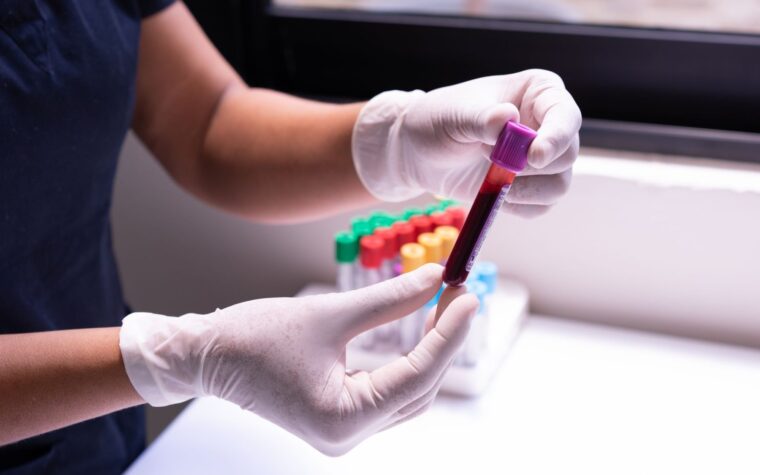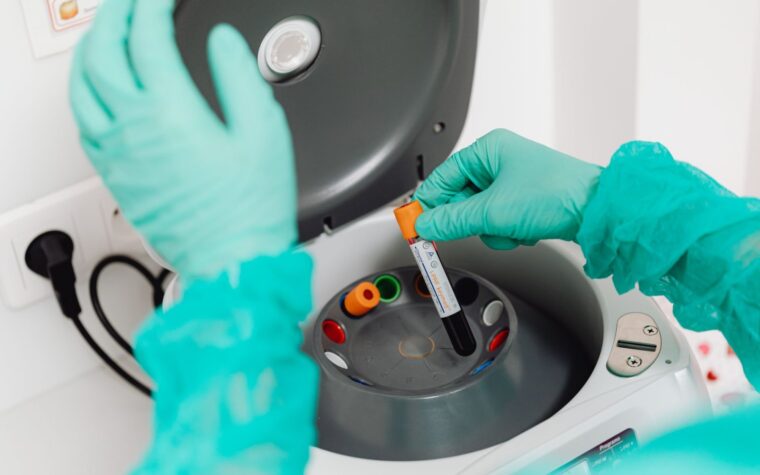
Quick answer: Yes, lab tests on line from reputable services are fully legitimate medical tests. The key is that they must use CLIA-certified labs (Quest Diagnostics and Labcorp process the vast majority) and must have licensed physician oversight either in-house or through a third-party telehealth partner. Results from services that meet both requirements are every bit as accurate as anything your primary care doctor orders. The red flags that signal a scam are easy to spot once you know what to look for.
What Makes an Online Lab Test Legitimate (and What Does Not)
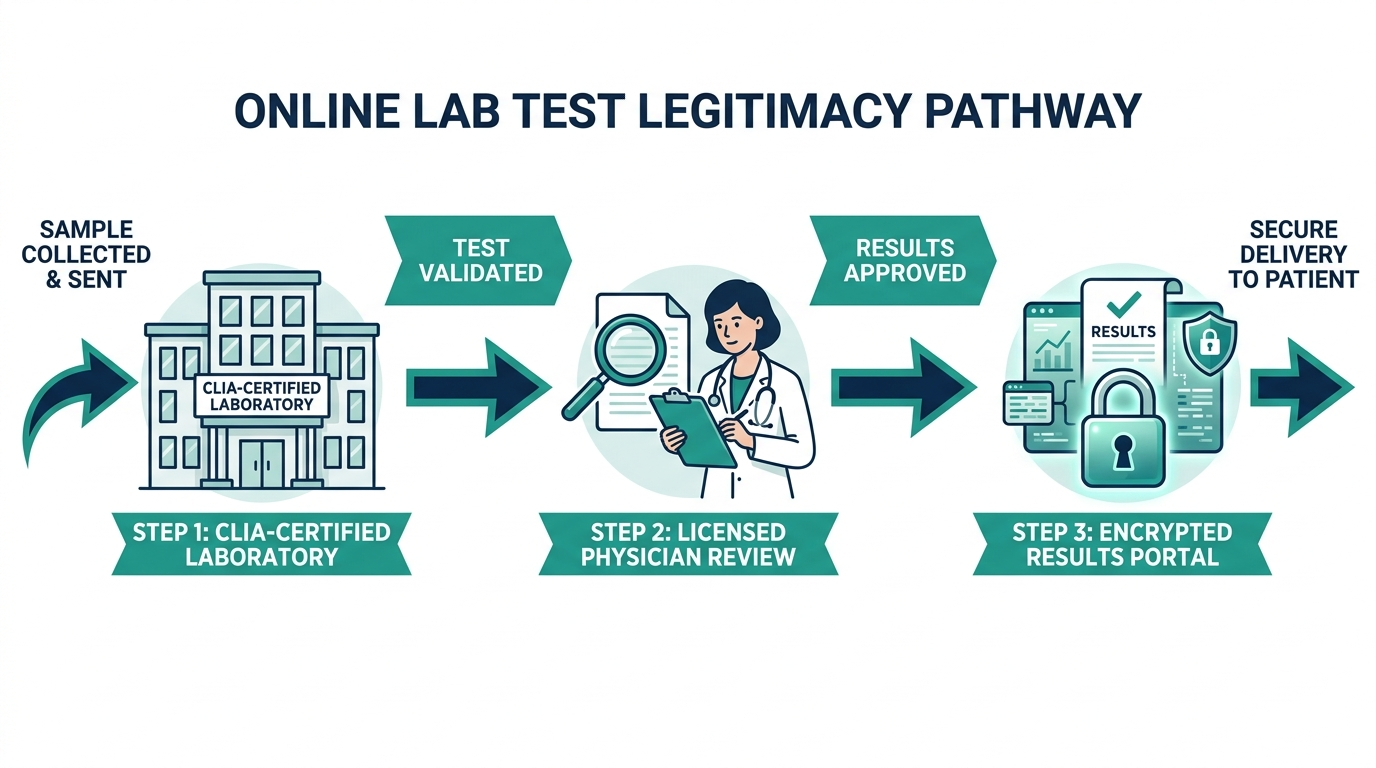
A legitimate online blood test order travels through exactly the same physical path as a doctor-ordered test. You order on a website, a licensed physician in your state approves the requisition, you walk into a Quest or Labcorp patient service center, a phlebotomist draws your blood, the sample goes to a CLIA-certified lab, and your results come back with reference ranges. The website is a front-end convenience layer, not a lab. The accreditation that matters is CLIA, which stands for Clinical Laboratory Improvement Amendments and is the federal certification that all labs processing human specimens must hold.
Checking whether a lab test service is legit? See what a CLIA-certified, physician-reviewed 100+ biomarker panel looks like. One at-home Superpower draw checks 100+ biomarkers, physician-reviewed.
Sketchy services break the chain at one of two points. Either the company claims to analyze specimens in-house without a CLIA certificate (a major red flag) or the physician “oversight” is a rubber-stamp auto-approval with no real clinician involved. A few companies operating out of state also try to skirt physician-ordering requirements, which vary by state. California, New York, New Jersey, and Rhode Island have stricter direct-access rules, so some services will flag those states during checkout.
If you are unsure how the ordering process works in general, the guide on how to order your own lab tests online walks through the mechanics step by step.

The CLIA Certification Check: How to Verify Any Service
Before handing over a credit card, run a three-minute check on any service you are considering for lab tests on line.
- Find the lab partner. Every legitimate service names its processing lab, usually in the FAQ or at checkout. Quest Diagnostics and Labcorp are both CLIA-certified and CAP-accredited (College of American Pathologists). If a company names neither, ask. If they say “our proprietary lab,” verify that lab’s CLIA number on the CMS CLIA database at cms.gov before proceeding.
- Confirm physician ordering. Look for language like “orders reviewed by a licensed physician” or “physician network.” Companies such as Ulta Lab Tests, Health Testing Centers, and Personalabs are transparent about this. If you cannot find any mention of a physician anywhere on the site, that is a problem.
- Check state availability. Most services list states they cannot serve at checkout. A company that claims it can ship test kits to New York and process them without New York-licensed physician oversight is either lying or operating outside compliance.
- Look for a real results portal with reference ranges. Legitimate results come with numerical reference ranges, units, and flagging (H/L). A PDF with just a number and no context is a sign the service is not connected to a real clinical laboratory information system.
The CMS maintains a searchable CLIA database at cms.gov/regulations-and-guidance/legislation/clia where you can type in any lab name and verify its certificate status, certificate type, and expiration date. Takes about ninety seconds.
What “LabTestOnline” Actually Is (and Why People Confuse It)
A lot of people searching for lab tests on line land on labtestonline.org, which is a completely different thing. It is an educational reference site run by the American Association for Clinical Chemistry (AACC), now called the Association for Diagnostics and Laboratory Medicine. It explains what individual tests measure and how to interpret results. It does not sell tests, process specimens, or connect you to a lab. It is essentially a glossary. Useful if you want to understand what your ALT level means, useless if you are trying to order a test.
The confusion is widespread enough that it is worth being explicit: labtestonline.org is a library, not a marketplace. Ordering services are companies like Ulta Lab Tests, Walk-In Lab, Health Testing Centers, Personalabs, Everlywell, Superpower, and Function Health.
Are Online Blood Tests as Accurate as Doctor-Ordered Tests?
If the service uses a CLIA-certified lab, the test is identical to what your doctor orders. The same Quest analyzer runs your complete metabolic panel whether the requisition came from a GP’s office or from your online account. Accuracy is a function of the laboratory and the specimen handling, not the ordering interface.
Two factors that CAN affect accuracy regardless of ordering method:
- Fasting requirements. A lipid panel ordered online has the same fasting protocol (typically 9 to 12 hours) as one ordered by a physician. Skipping the fast inflates triglycerides and affects calculated LDL-C. Most services remind you of this at checkout, but it is easy to miss.
- Sample timing. Testosterone, cortisol, and some hormone panels are time-sensitive. Morning draws (before 10 a.m.) give more consistent testosterone readings because levels can drop 20 to 35 percent by afternoon. This applies to any ordering channel, not just online.
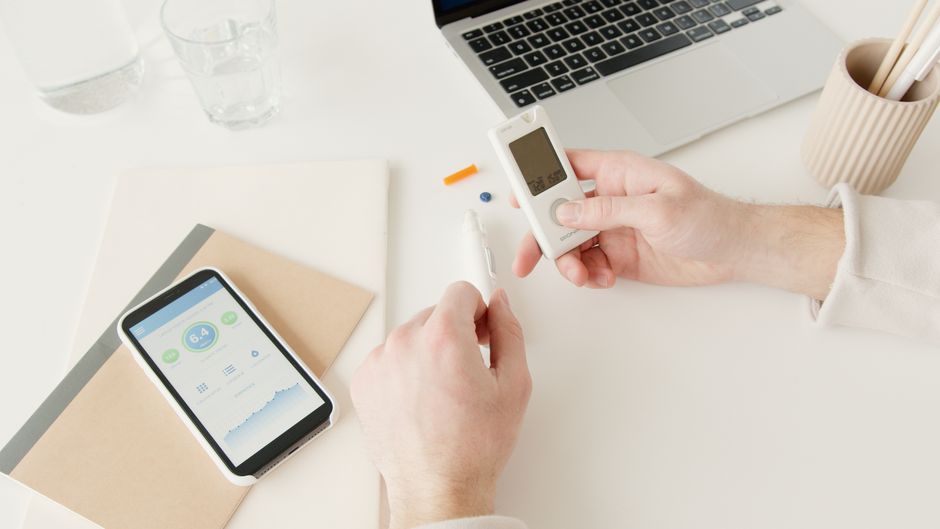
At-home collection kits, which are a separate category (finger-prick dried blood spot or saliva) do introduce some variability compared to a venipuncture draw at a patient service center. Companies like Everlywell use this model. For clinical precision on biomarkers like HbA1c or lipids, a standard venipuncture draw at Quest or Labcorp is more reliable. For a full breakdown of how Everlywell stacks up, the Everlywell review covers accuracy, kit quality, and which tests are worth doing at home versus in a lab.
How Much Do Online Lab Tests Cost, and Is It Worth It?
Price depends heavily on what you are testing and which service you use. Cash-pay pricing (no insurance) for common panels typically runs:
| Test | Typical cash price online | Typical doctor-office price (uninsured) |
|---|---|---|
| Complete blood count (CBC) | $9 to $35 | $30 to $100 |
| Comprehensive metabolic panel (CMP) | $14 to $45 | $40 to $130 |
| Lipid panel | $19 to $55 | $50 to $150 |
| Thyroid (TSH + free T4) | $29 to $75 | $80 to $200 |
| HbA1c | $19 to $49 | $50 to $120 |
| Testosterone (total + free) | $39 to $99 | $100 to $250 |
| Full-body panel (50+ biomarkers) | $149 to $399 (one-time) or $99 to $299/year (membership) | Rarely offered as a single panel; piecemeal ordering can run $500 to $2,000+ |
For uninsured or underinsured Americans, the savings on individual tests can be 40 to 70 percent versus hospital-system lab billing. HSA and FSA cards are accepted at most of the major services, so you can pay pre-tax.
The real value case for membership-based services is when you are tracking multiple biomarkers over time. Running 100+ markers twice a year through a la carte ordering at even discounted cash prices can easily hit $800 to $1,200. A membership service compresses that significantly. For a detailed cost breakdown, see the article on how much does Superpower cost.
Services That Are Actually Vetted: What Separates the Good Ones
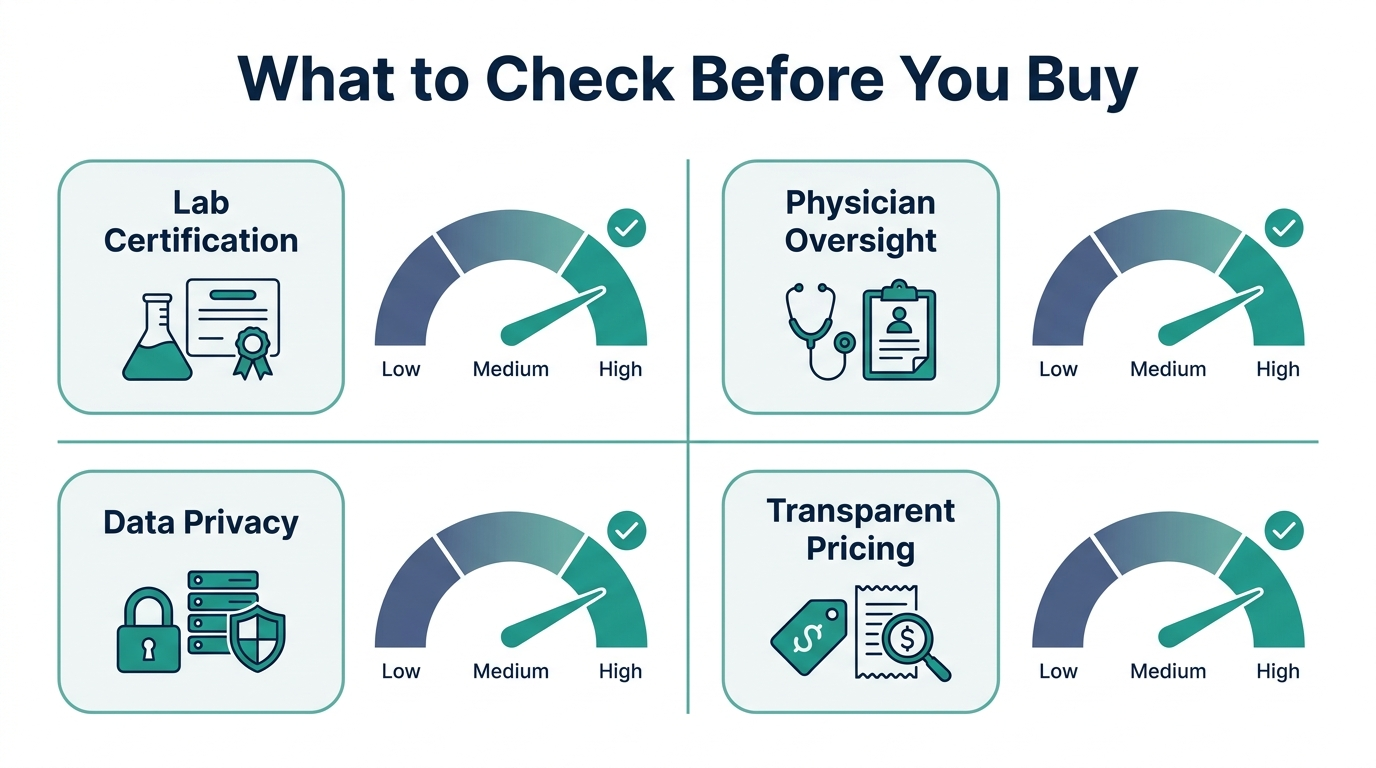
Not all legitimate services are equally useful. Here is what the better ones do that cut-rate options skip:
- Physician review of results, not just ordering. Some services have a physician approve the requisition but leave you alone with a PDF of numbers. Better services, like Superpower, have a clinician actually review your panel and flag anything worth following up on before you see results.
- Trending and longitudinal tracking. A single lipid panel is a snapshot. Useful clinical intelligence comes from comparing your numbers to your own history. Services that graph your biomarkers over time let you see if your LDL is trending up across three draws even if each individual result is technically in range.
- Transparent lab partnerships. Good services name their labs (Quest, Labcorp, BioReference) and provide the actual lab report with accession numbers, not just a consumer-friendly dashboard number.
- Sensible reference ranges. Some services use population-average reference ranges that are quite broad. Testosterone “normal” in a standard reference range might be 264 to 916 ng/dL. A better service flags the difference between technically normal and optimal-for-you given your age and symptom picture.
For anyone who wants a deeper look at how these services compare, the piece on online lab tests vs walk-in lab covers the tradeoffs between fully online services and hybrid in-person models.
The simplest way to actually get this done
Superpower is a full-body lab membership that runs 100+ biomarkers, has each result reviewed by a doctor, and tracks your numbers year over year (about $199/year). It is what we point readers to when they would rather get one clean, complete draw than chase single tests one at a time. Here is Superpower reviewed in full.
Red Flags That Signal a Scam or Substandard Service
A handful of warning signs should make you close the tab immediately:
- No mention of the processing lab. Any legitimate company names Quest, Labcorp, BioReference, or another specific CLIA-certified lab. Vague language like “our certified partner labs” without naming them is a yellow flag. No mention at all is a red flag.
- Prices that seem impossibly low. A comprehensive metabolic panel for $2 is not a deal. Either the test is not being run, or it is being run on equipment that would not pass a CAP inspection.
- No physician involvement at all. In most states, lab tests require a physician or authorized provider to sign the requisition. Services that claim to sell tests with zero clinician involvement are operating outside federal guidelines in most jurisdictions.
- Results promised in hours from an at-home kit. Real lab analysis takes time. A same-day fingerprick result claiming to measure a comprehensive metabolic panel is almost certainly not running full chemistry panels through a clinical analyzer.
- No HIPAA privacy policy or vague data sharing terms. Your lab data is protected health information. A company that sells or shares it without disclosure is a liability risk for you.
- Pressure to buy add-on supplements based on your results. Some companies use lab results primarily as a sales funnel for proprietary supplements. That is not illegal, but it is a conflict of interest that should prompt you to get a second opinion from an independent clinician.
Does Insurance Cover Online Lab Tests?
Usually not directly, but there are workarounds. Most online direct-to-consumer lab services do not bill insurance because the physician ordering the test is employed by the service, not by your in-network provider network. You pay out of pocket and the service gives you a superbill or itemized receipt you can submit to your insurer for potential reimbursement (less common than it used to be since most plans require in-network lab work for any coverage).
What does work without friction: HSA and FSA cards. The IRS classifies diagnostic lab testing as a qualified medical expense, so you can use pre-tax dollars at essentially every reputable online lab service. At a marginal tax rate of 22 to 32 percent, that effectively reduces your out-of-pocket by that percentage.
Medicare beneficiaries typically need a physician referral and must use in-network labs for Medicare to pay. Online DTC services fall outside that pathway. However, some Medicare Advantage plans cover a broader set of preventive tests, and some plans will accept a superbill for reimbursement. It is worth a five-minute call to your plan’s member services.
If your goal is a comprehensive baseline and you are paying out of pocket regardless, the math often favors a bundled online service over a la carte hospital-billed tests. A hospital-system lipid panel billed to an uninsured patient can carry a list price of $200 to $400 before any negotiation, versus $19 to $55 online at the same Quest facility.
What People Get Wrong About Online Lab Testing
Several misconceptions circulate that are worth correcting directly.
“Online tests are just for the worried well.” False. Internists and functional medicine physicians routinely recommend patients order their own follow-up tests between annual visits, particularly for conditions like prediabetes, thyroid disease, and iron deficiency that require frequent monitoring. Online ordering is faster and cheaper than scheduling a follow-up office visit to request a single repeat test.
“Results from online services are not accepted by doctors.” Mostly false. Physicians can review any lab report as long as it contains the lab’s accession number, the CLIA ID, reference ranges, and the reporting date. Quest and Labcorp results come with all of this regardless of who ordered them. Occasionally a specialist wants to re-order a test through their own system to ensure chain of custody for a specific diagnostic purpose, but for routine monitoring, your online results are clinically useful.
“At-home kits are just as accurate as venipuncture.” Not always. Fingerprick dried blood spot has acceptable accuracy for many analytes (HbA1c, lipids, TSH) but introduces more variability for others. If a specific test is guiding a clinical decision, a venipuncture draw at a patient service center is the more defensible option. If convenience and trend-tracking are the goal, at-home collection is reasonable for a lot of common panels.
The broader question of whether you can and should buy tests without a doctor is covered in can you buy blood tests online, including which states have restrictions worth knowing about.
Turn what you just learned into action.
Superpower lets you test 100+ biomarkers from home, then re-check them over time so you can actually see progress, physician-reviewed at every step.
FAQ
What does CLIA-certified mean for an online lab test?
CLIA (Clinical Laboratory Improvement Amendments) is the federal certification program for all labs that test human specimens. A CLIA certificate means the lab has passed inspections for quality control, equipment, personnel qualifications, and proficiency testing. Any online lab test service worth using routes samples to a CLIA-certified facility. You can verify any lab’s CLIA status on the CMS website at cms.gov.
Is labtestonline.org the same as ordering a test?
No. Labtestonline.org is an educational reference site run by a professional laboratory medicine organization. It explains what tests measure and how to interpret results but does not sell tests or process specimens. It is a dictionary, not a marketplace. To actually order tests, you need a separate direct-to-consumer service like Ulta Lab Tests, Walk-In Lab, or Superpower.
Can I use an online lab test result at my doctor’s office?
Yes, in most cases. A result from Quest or Labcorp carries the lab’s accession number and CLIA ID, which any physician can reference. Some electronic health record systems cannot import outside lab results automatically, but your doctor can review the PDF and enter relevant values manually. If your physician dismisses any legitimate CLIA lab result out of hand, that says more about the physician than the test.
Are online blood tests legitimate for diagnosing conditions?
The tests themselves are legitimate. Diagnosis is a clinical judgment that should involve a licensed clinician reviewing your results in context with your history and symptoms. An online lab service can tell you your fasting glucose is 118 mg/dL, which is prediabetic range. Deciding whether and how to treat that requires a conversation with a clinician. Talk to your doctor or a telehealth physician about any result that falls outside normal range.
What states have restrictions on ordering lab tests on line?
California, New York, New Jersey, Maryland, and Rhode Island have the most restrictive rules on direct-access lab ordering. Some services work around these restrictions by partnering with licensed physicians in those states. At checkout, most services will tell you if your state is unsupported. New York is the most restrictive and excludes a significant number of panels that are freely available in other states.
How do I know if an online lab test company is a scam?
The clearest warning signs are: no named processing lab, no mention of physician oversight, prices implausibly below market (a full CMP for $2, for example), results promised within hours from an at-home kit, and a vague or absent HIPAA privacy policy. Legitimate services are transparent about their lab partners, their physician review process, and their CLIA compliance.
Can I use HSA or FSA money for online lab tests?
Yes. The IRS classifies diagnostic lab testing as a qualified medical expense, so HSA and FSA cards work at virtually every reputable online lab service. This makes online testing a good use of pre-tax dollars, particularly for comprehensive panels you are paying out of pocket. Keep the receipt or itemized order summary for your records.
Do online lab tests show up in my medical record?
Not automatically. Online DTC lab results go to your account portal, not to your electronic health record unless you share them. This is a feature for some people (privacy, no insurance flagging) and a drawback for others (gaps in medical history). If you want your physician to have the results, share the PDF or the lab report directly.
What is the difference between a membership lab service and ordering individual tests?
Individual test ordering (Ulta Lab Tests, Walk-In Lab, Health Testing Centers) lets you pick specific tests at discounted cash prices, pay per draw, and get results once. Membership services (Superpower, Function Health) charge an annual fee for a comprehensive panel run on a schedule, with physician review included and longitudinal tracking built in. Memberships make economic sense once you are routinely monitoring more than five to eight biomarkers, because the per-marker cost drops sharply at volume.
Are at-home finger-prick test kits as accurate as going to a lab?
For many common analytes, close enough for screening and trend-tracking. HbA1c, TSH, total cholesterol, and hsCRP have acceptable dried-blood-spot accuracy in clinical validation studies. Biomarkers sensitive to hemolysis (red blood cell damage during collection), like potassium or LDH, are less reliable via fingerprick. For anything guiding a significant clinical decision, a venipuncture draw at a Quest or Labcorp patient service center is the more defensible option.
Vital Signs Today may earn a commission if you buy through links on this page. It does not affect our editorial assessments.